On this page
Quick answer: choose the flower, then the garden
For lavender, start with Farm Tomita in Nakafurano and check its flower reports for your dates. For broad rows of different flowers, look at Shikisai-no-oka in Biei. These are separate destinations, and a train to “Furano” or “Biei” does not place you at either garden entrance.
The best first decision is what you want to see: lavender at its seasonal peak, a mixed-flower landscape, or a wider countryside day with the Blue Pond. Then choose the base and transport that support it. Trying to visit every famous place in one day often means spending more time moving than in the gardens.
| Place | Location | Main reason to choose it | Planning issue |
|---|---|---|---|
| Farm Tomita | Nakafurano | Lavender and several garden areas | Bloom timing and the final walk from the station |
| Shikisai-no-oka | Biei | Wide, colorful flower-field views | Seasonal admission and transport from Bibaushi |
| Hinode Park | Kamifurano | A separate lavender destination | Do not confuse it with Farm Tomita |
| Shirogane Blue Pond | Biei area | Water and woodland scenery | A separate journey; it is not a flower garden |
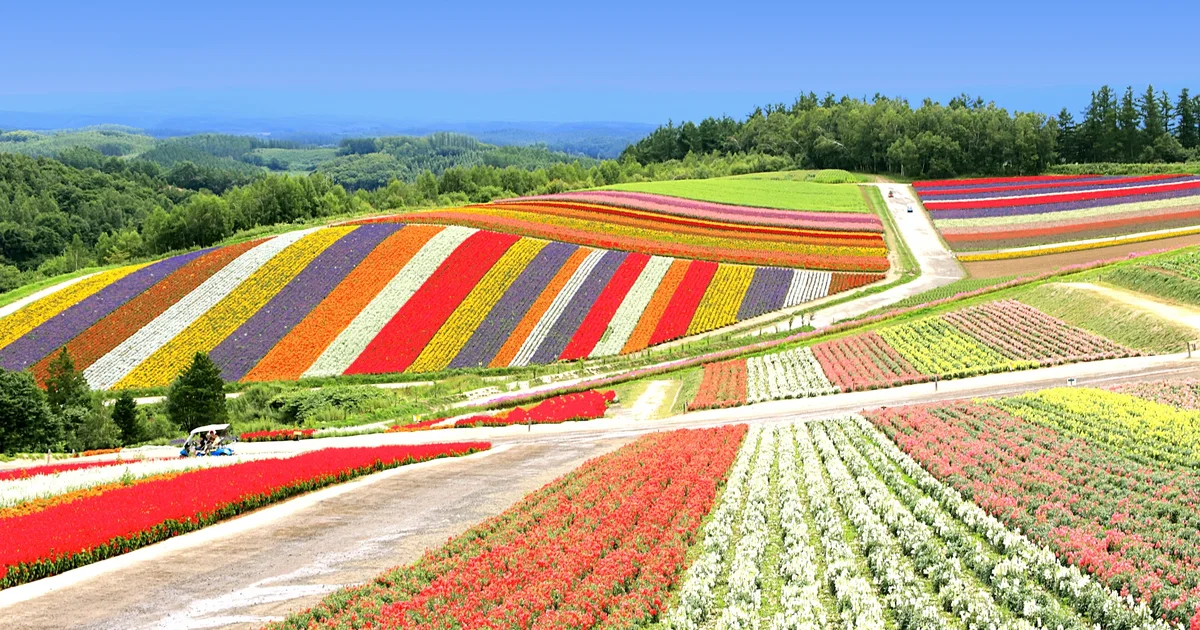
Details were checked on October 17, 2026. The photographs show several seasons, not a forecast for one travel date. For the overnight structure, start with the 7-day Hokkaido itinerary.
When to visit: lavender versus other flowers
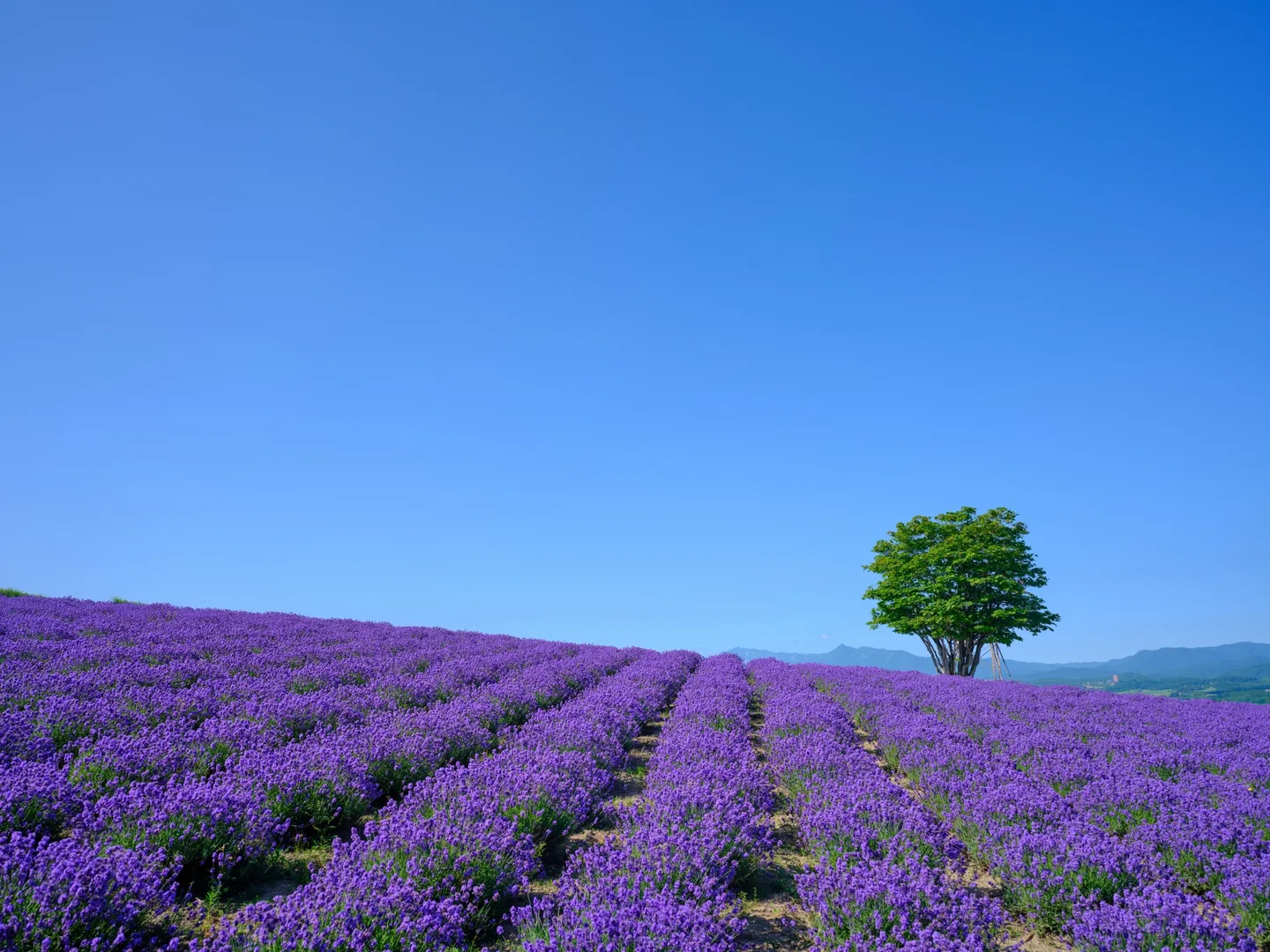
Lavender has a shorter season than the gardens themselves. Farm Tomita's Sakiwai Field flowering guide gives a typical flowering period from late June to early August, with the best viewing in early to mid-July. This is guidance for that field, not a promise that every lavender variety across the region peaks together.
If lavender is the main reason for the trip, choose dates around the garden's usual flowering pattern and check current reports again close to departure. Weather can shift progress. A tour operating in June or August does not guarantee the purple field shown in its promotional photograph.
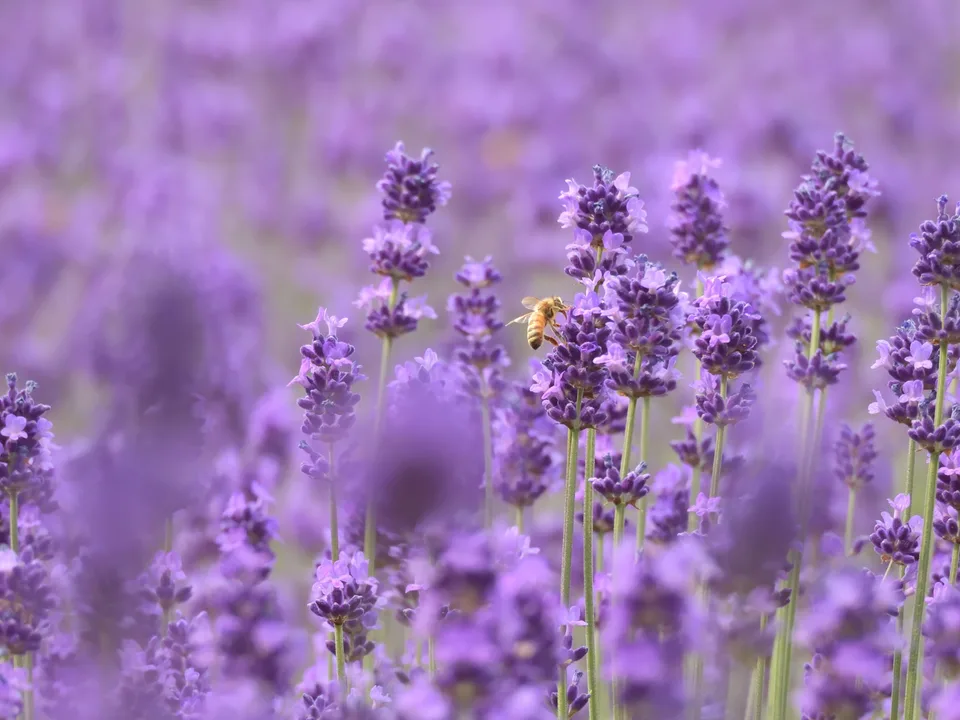
Another lavender stop: Hinode Park in Kamifurano
Hinode Park is in Kamifurano, a different destination from Farm Tomita in Nakafurano. The local tourism association publishes lavender updates for the park. Choose the garden that fits your route and the season rather than treating every lavender photograph as the same place.
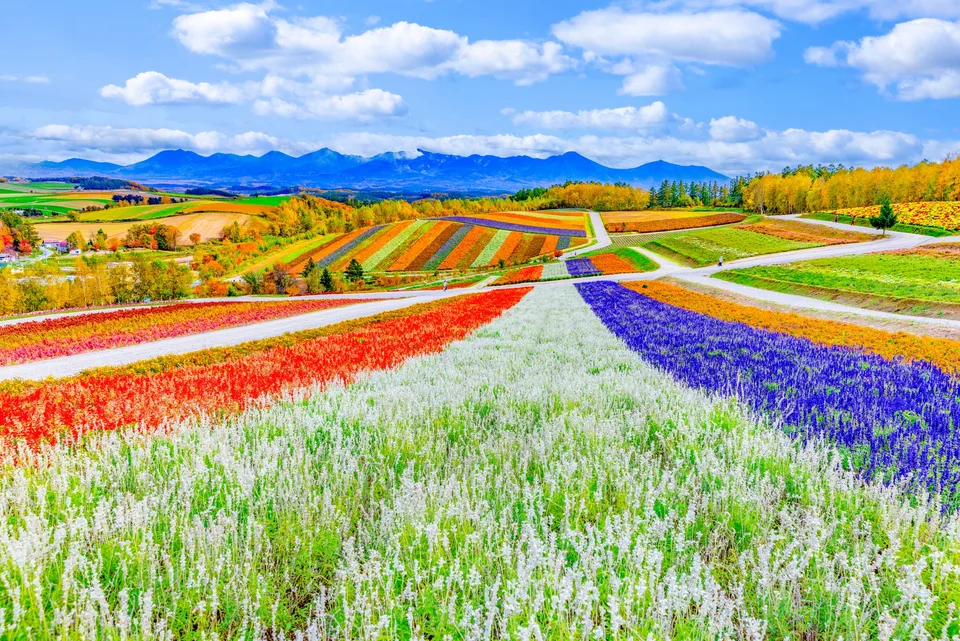
Other flowers extend the visual season. Shikisai-no-oka has changing plantings and publishes current garden updates; the October photograph above shows an autumn display, not summer lavender. Choosing a mixed-flower garden can make sense outside the lavender peak, but the colors and density will be different.
For spring, focus on what is currently open and blooming rather than assuming summer's full display is already present. For late autumn and winter, plan a different countryside experience. An operating shop, winter activity or illuminated landscape is not evidence that outdoor flower fields are in bloom.
Check event dates separately from flowering. A festival's lighting or evening access may last only a few days within a longer bloom period. Use the current year's announcement rather than repeating a previous summer's calendar.
Farm Tomita in Nakafurano
Plan Farm Tomita as a destination in Nakafurano, not in central Furano city or Biei. Its official access guide gives about 25 minutes on foot from Nakafurano Station. Include the walk both ways when checking trains; a short visit to the gardens can still occupy a substantial half-day by public transport.
The farm's official FAQ confirms that admission and parking are free. Meals and purchases are separate. Entry and parking are limited to operating hours, which vary by season, so free admission does not mean unrestricted early-morning or nighttime access.
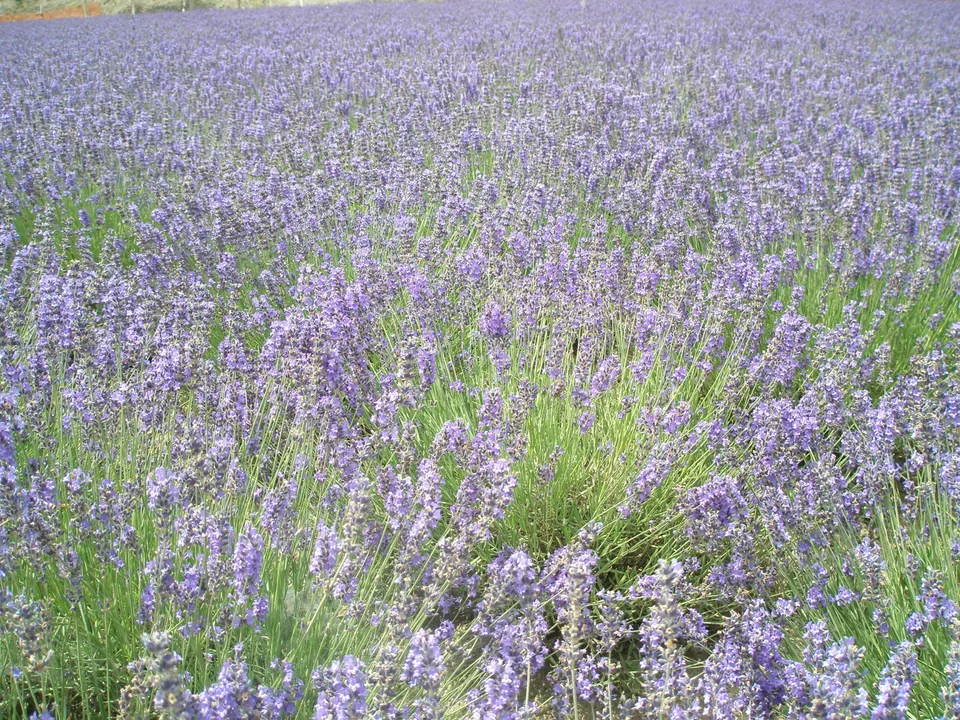
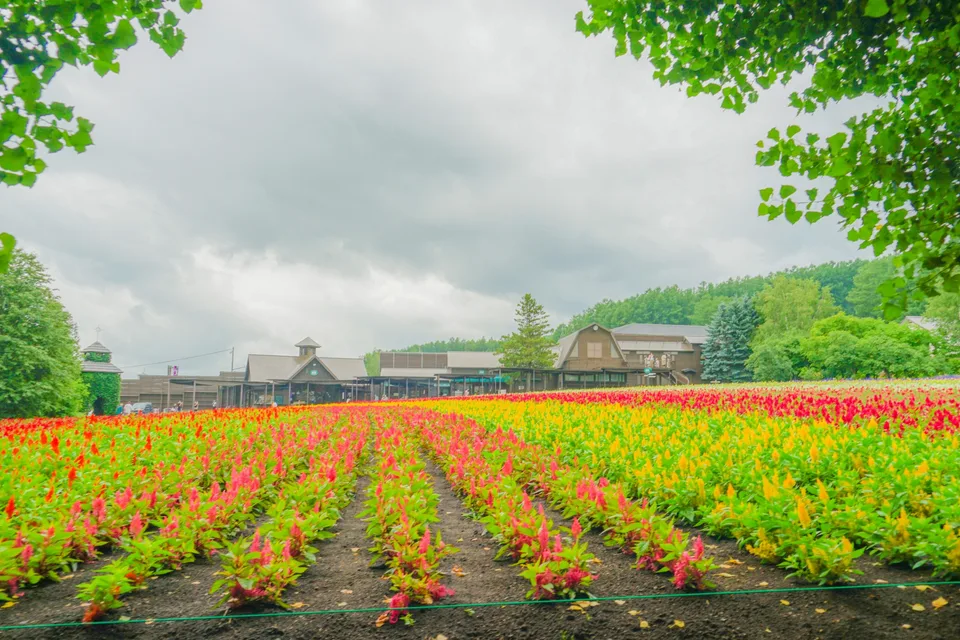
Give yourself time to explore more than one garden area, take a break and look at the current flower display. As a planning allowance, around 1½–2 hours can work for an unhurried first visit, with more time if photography or cafés are a priority. A tour stop may be considerably shorter, so compare the time allowed rather than just whether the name appears in the itinerary.
Do not confuse the main farm with Lavender East, which the official access guide places about four kilometers away. Adding it requires another transport decision. It is not a neighboring field to include automatically on the same station-to-farm walk.
There is an important change for future summer planning: JR Hokkaido announced the final operation of the Furano–Biei Norokko train on September 23, 2026. See the official final-season notice. Do not book a 2027 trip assuming that service, or its seasonal Lavender Farm Station stop, will operate again. Use the published timetable and service announcements for your travel year.
The farm's access page still describes the former seasonal approach. For planning after the train's final season, Nakafurano Station and its walking route provide a more dependable starting point to investigate, alongside any newly announced services. Check current JR schedules before fixing arrival and departure times.
Shikisai-no-oka in Biei
Choose Shikisai-no-oka when the broad arrangement of colored flower rows is the main attraction. Its location in Biei makes it a different outing from Farm Tomita, even though both commonly appear in the same tour listings.
The garden's official English information lists ¥800 admission for high-school-age visitors and older during July–September. Seasonal admission does not cover every optional ride or activity. Check the current rules for your group and visit date rather than treating a free-entry month as evidence that every activity is free.
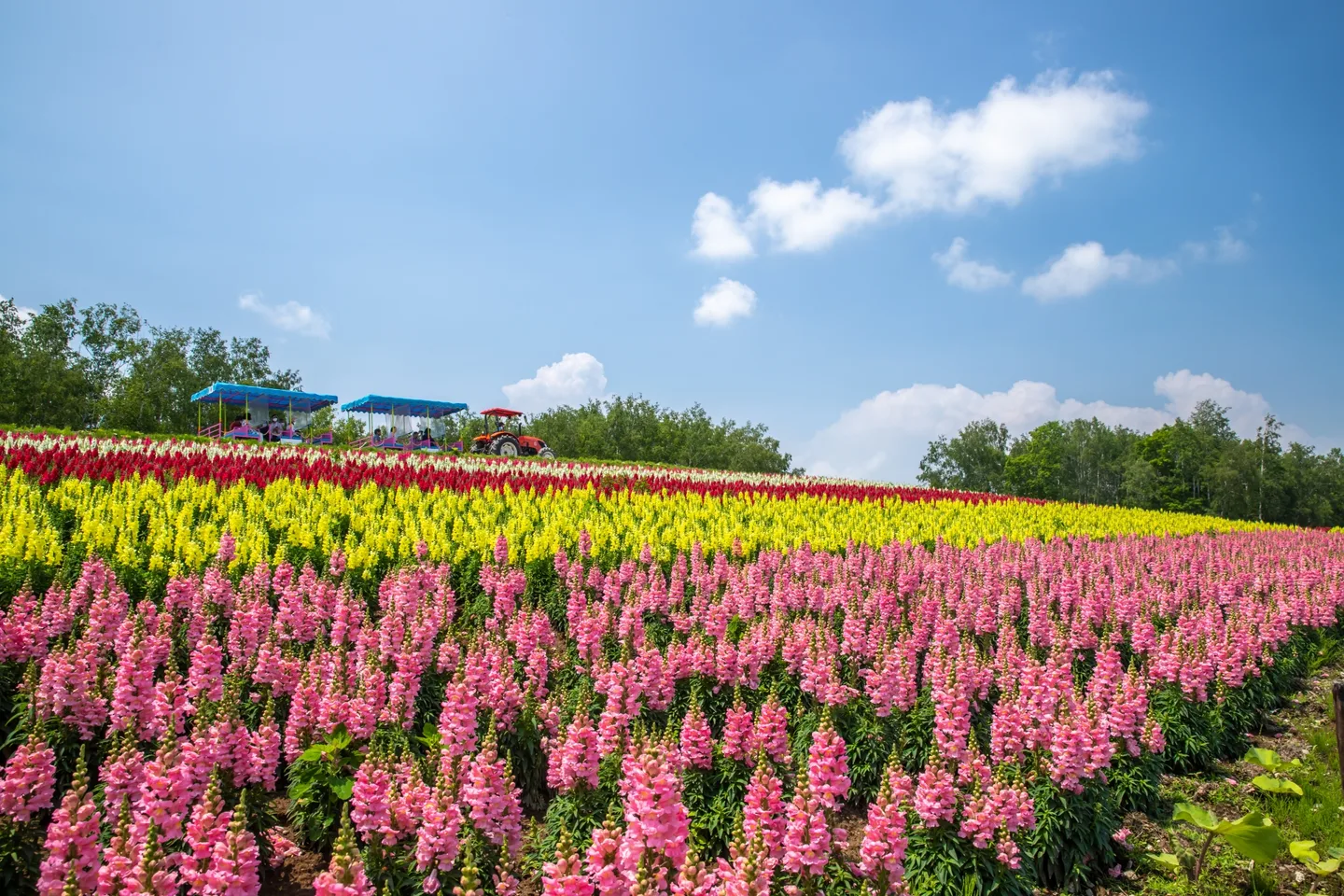
The official access page gives about 25 minutes on foot from Bibaushi Station, an unmanned station. Plan the walking route, weather and return train together. A rural station does not imply a taxi will be waiting when you arrive, and a map's walking estimate does not include photo stops or time at the garden.
For drivers, the operator lists ¥500 parking during June–September. Keep this separate from admission, which has a different seasonal window. The site's visitor guide provides current hours and activity information.
The garden also has a tractor-pulled sightseeing ride called Norokko. That is distinct from JR's retired Furano–Biei Norokko train; a reference to the garden ride does not mean the railway service still runs. Check whether you want the ride, a walk or both, and allow time for any queue.
Use roughly 1–2 hours as an initial planning allowance, depending on how much you want to walk and photograph. A one-hour tour stop may suit a quick overview, but it leaves less freedom for a slow visit, a ride and a meal together.
One day from Asahikawa, Furano or Sapporo
Choose your starting base before arranging a full day. Asahikawa works for a northern stay with the zoo on a separate day. Furano or Nakafurano can suit a flower-focused visit, but the exact hotel location matters. Sapporo is possible for a long excursion, with more of the day spent traveling.
For a public-transport day from Asahikawa, choose one main garden, check the JR Furano Line timetable, and include both station walks. Add a second place only after the return journey works on paper. Do not assume a taxi or seasonal bus fills every gap between trains.
For a locally based visit with a car or prearranged driver, two gardens may be reasonable if you leave room for traffic, parking, lunch and the return. Pick the one you most want to photograph first. A weather delay then affects an optional stop rather than the entire purpose of the day.
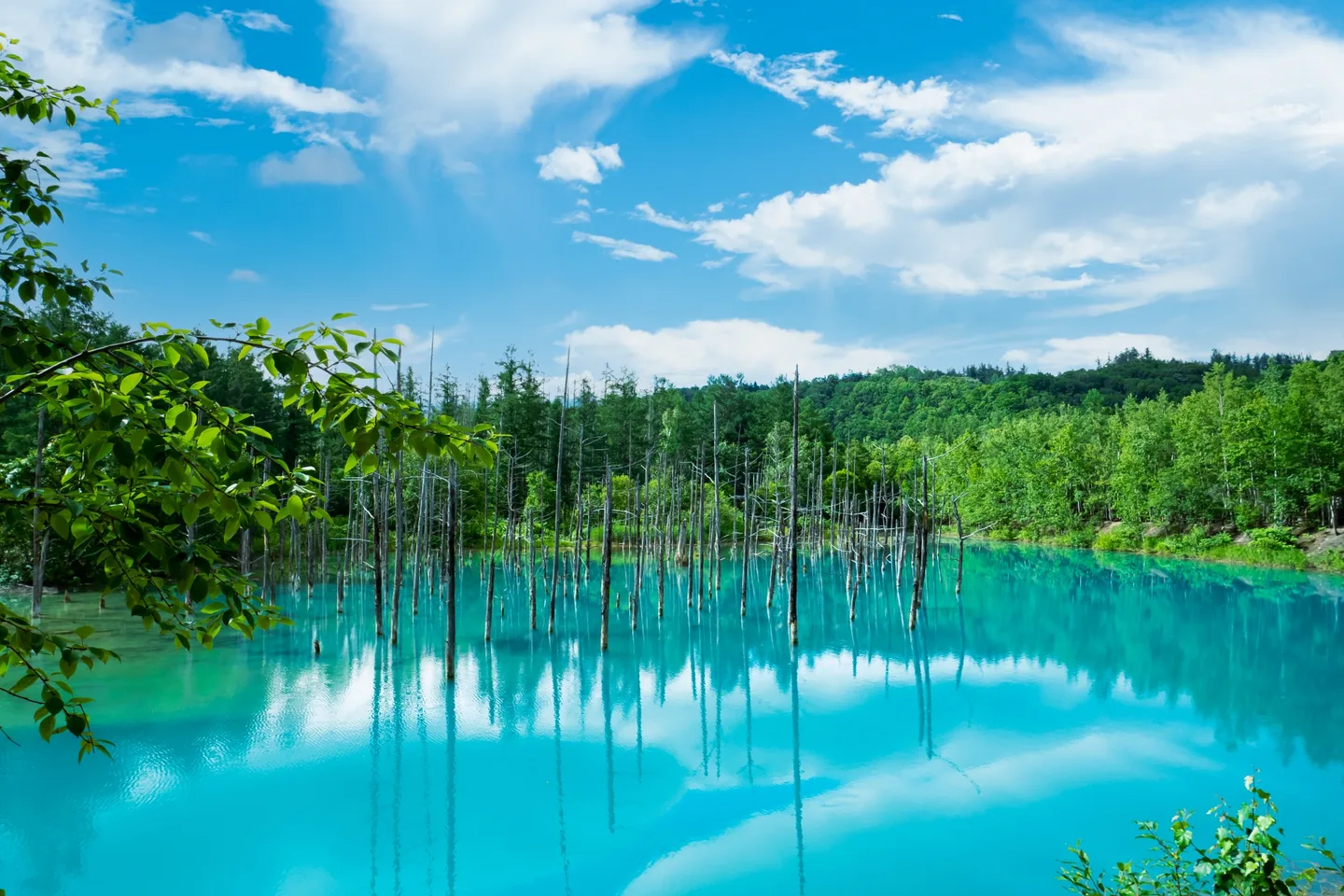
The Blue Pond is another destination, not a corner of either flower garden. Decide whether it replaces a garden or justifies a longer day with suitable transport. The color and appearance change with weather and season; a bright turquoise photograph is not a guarantee for your visit.
Avoid combining a long independent garden day with Asahiyama Zoo. Giving the zoo and countryside separate days is the more flexible choice. If you have only one available day from Sapporo, a tour can handle the transport, but examine the stops and time limits closely.
For an onward flight, return to your departure area the previous day instead of making a remote countryside visit the first part of the airport transfer. This also keeps a summer traffic delay from becoming a missed flight.
Car, public transport or a day tour
A rental car gives the most flexibility over garden order and smaller stops, but it comes with navigation, parking, rental conditions and the responsibility of driving. Collecting a car only for the countryside portion can be more useful than keeping one throughout a central Sapporo stay. Confirm the documents required by the rental company before booking.
Public transport suits a simpler day with one main garden and enough time for station walks. Look up the operating dates of seasonal sightseeing buses; do not assume that a route shown on a tourism map runs daily or throughout the year. Save the last useful return connection and keep a backup plan.
A day tour suits travelers based in Sapporo who want several stops without arranging each connection. The tradeoff is a long road day and fixed time in each location. Select the route by its actual garden stops, not a general “Furano and Biei” label.
Start with the gardens you want to see, then choose the matching departure. These Sapporo round trips work for a Sapporo base; they are not transfers from Asahikawa or Furano. The comparison describes the listings checked on October 17, 2026, not a guarantee of blooms or next summer's availability.
| Option | Garden stops | What to check |
|---|---|---|
| Both-garden route below | Farm Tomita and Shikisai-no-oka | Shikisai-no-oka admission is listed as included; group size, pickup and lunch depend on the package |
| Seasonal Biei Signature route | Shikisai-no-oka | Farm Tomita is not in this route; July–September garden admission is extra |
| Seasonal Biei & Furano route | Farm Tomita in June–August | A cheese-factory stop replaces it in April–May and September–October; this route does not list Shikisai-no-oka |
A tour visiting Farm Tomita in June or August does not guarantee lavender in bloom. Check the garden's current flower report as well as the selected tour itinerary.
Some booking links below are affiliate links. JAPANODE may earn a commission at no extra cost to you.
Farm Tomita and Shikisai-no-oka from Sapporo
A flower-focused day combining both gardens with the Blue Pond and Shirahige Waterfall.
Best for
Travelers who want both major flower-garden stops without arranging the inter-town transport.
Before booking
A driver-guide is different from a separate tour guide. Buffet and melon are only in the specified Saturday package. Check group size, pickup and child-seat arrangements.
Live price & availability
Powered by GetYourGuide · we may earn a commission at no extra cost to you.
Choose a seasonal route for one garden
Use the route comparison above to select Biei Signature or Biei & Furano. In winter, this product switches to a snow-scenery itinerary rather than a flower-field visit.
Biei Seasonal Day Tour from Sapporo
Compare a winter scenery route with two different green-season itineraries around Biei and Furano.
Best for
Travelers who want to choose countryside stops around the season and their priorities.
Before booking
The routes visit different places. Meals and July–September Shikisai-no-oka admission are extra; check the selected option and departure time.
Live price & availability
Powered by GetYourGuide · we may earn a commission at no extra cost to you.
For the both-garden listing, the checked itinerary allows about 50 minutes at Farm Tomita and one hour at Shikisai-no-oka within an approximately 10-hour day. That is a sightseeing overview, not a leisurely day in either garden. A product's old URL wording may differ from its current route, so read the date-specific itinerary shown at booking.
For either product, compare the meeting point, return time, cancellation terms and language provision. An English-speaking driver-guide is not the same service as a separate guide accompanying the group throughout. Families should confirm child-seat and seat-allocation rules directly if the listing is unclear.
Field etiquette and what to bring
Stay on visitor paths in the gardens and on permitted roads around working farmland. A field that appears open in a photograph may be private agricultural land. Do not step into planted rows for a portrait, move barriers or park where you obstruct local traffic. The farm's access information specifically warns against roadside parking.
Bring comfortable walking shoes, water, sun protection and a layer for cooler or windy conditions. A foldable umbrella or light rain shell can keep a changing forecast from ending the visit, but strong weather may still make an exposed garden less enjoyable. Use the summer clothing guide for the wider trip.
Carry enough cash for smaller payments and keep transport details offline. The Japan train guide helps with ticket basics; the eSIM comparison can help you arrange connectivity for live updates. Neither replaces checking the timetable before leaving the hotel.
On the evening before your visit, check the garden's latest flower report, opening information, weather and the precise return journey. If flowering is later or earlier than expected, choose another currently attractive garden or a landscape route. A flexible day built around the conditions is more useful than expecting one famous photograph to repeat itself.
Make it your trip
Still planning your Japan trip?
Pick the question on your mind. Compare your options, check the details and take one more thing off your list.

Which eSIM fits your Japan trip?
Maps, messages, hotspot use: compare five providers by data allowance, network and plan limits before you choose.
Find my Japan eSIM
What should your travel insurance cover?
Compare medical cover, cancellation and activity limits across five options, with the exclusions worth checking.
Compare cover & limitsWould a JR Pass save you money?
Add your train journeys and compare individual tickets with the nationwide pass. See which costs less for your route.
Calculate my rail costsFrequently Asked Questions
No. They are separate towns, and individual gardens are spread across the area. Choose the gardens first, then plan transport between their actual entrances.
No. Farm Tomita is in Nakafurano. Shikisai-no-oka is in Biei, so visiting both requires travel between different locations.
No. A garden's operating season is longer than the lavender bloom period. Check the field-specific flowering guide and current bloom reports before choosing dates.
Yes, but plan the last section from each station or bus stop. A seasonal sightseeing service or tour may help; never assume a summer train or bus operates year-round or on the same dates next year.

Written by
JAPANODE
Based in Japan, publishing practical travel guides researched against official transport and attraction sources.

