Bookmark this page or save it offline before you fly. It covers everything you'll need to know for a smooth first trip to Japan. Last fact-checked: May 2026.
Japan is unlike anywhere else you've traveled. It's a place where thousand-year-old temples sit alongside neon-lit skyscrapers, where convenience stores serve surprisingly high-quality meals, and where the trains are famously punctual — even short delays are announced clearly and often come with a written delay certificate.
But Japan also has its own set of customs, rules, and quirks that can catch first-time visitors off guard. This guide covers the 15 most important things you need to know before you go — from the practical (visa rules, cash, connectivity) to the cultural (temple etiquette, onsen rules, tipping).
Once the basics are clear, choose a pace: our 7-day first-timer itinerary covers the classic Tokyo-to-Kansai route, while the slower 10-day itinerary returns to Tokyo after Kawaguchiko, Kyoto, Himeji Castle and Ise Jingu.
When the route starts taking shape, use the Japan experience desk to compare the Fuji, food, sumo and Kyoto culture days most worth planning around.
1. Visa Requirements
Good news: Japan currently lists visa exemption arrangements with 74 countries and regions, including the United States, United Kingdom, Canada, Australia, and most EU nations.
Most short-term visa-exempt visitors can stay up to 90 days, but the allowed period depends on your nationality:
- 90 days: the countries and regions on the list other than the four below, including the US, UK, Canada, Australia, UAE, and most EU countries
- 30 days: Brunei and Qatar
- 15 days: Indonesia and Thailand
Those periods apply only when every passport condition is met. Read our current guide to Japan's 15-, 30-, and 90-day visa-free stays, then use the official counting method for intended length of stay when entering your dates.
Here's what you need:
- A passport valid for the duration of your stay
- A return or onward ticket
- Proof of sufficient funds (rarely asked, but technically required)
Visit Japan Web (Strongly Recommended)
Visit Japan Web is the official government platform for completing immigration and customs procedures online before you land. It is strongly recommended but not required — you can still fill out paper forms on the plane. However, completing Visit Japan Web lets you use the airport's electronic gates and skip the paper-form line, which can save significant time at busy airports.
We have a full walkthrough in our Visit Japan Web step-by-step guide, but here's the quick version:
- Create an account at the official Visit Japan Web site (vjw.digital.go.jp)
- Register your trip details and passport information
- Fill in both the immigration and customs sections
- Receive a unified 2D code to show at the airport
Not sure if you need a visa? Use our free Japan Visa Calculator to instantly check your visa-free allowance and calculate how long you can stay.
Complete your Visit Japan Web registration at least a few days before departure. Doing both the immigration and customs sections ahead of time lets you use the airport's electronic gates instead of waiting in the paper-form line.
2. Best Time to Visit
Japan has four distinct seasons, each with its own appeal. But some periods are significantly better than others for a first visit.
Spring (March - May) — The most popular time, and for good reason. Cherry blossom season (late March to mid-April in Tokyo/Kyoto/Osaka, slightly later in the north) is magical. Temperatures are mild (10-20°C / 50-68°F), and the entire country feels alive with hanami (flower viewing) parties.
For a 2027 spring trip, follow the cherry blossom booking timeline to reserve the expensive parts early while keeping the bloom-dependent parts flexible.
Autumn (October - November) — The other golden season. Japan's fall foliage (koyo) is spectacular, but timing varies by region: northern Japan and mountain areas peak in mid-to-late October, while Tokyo, Kyoto, and Osaka typically peak from mid-November to early December. Comfortable temperatures, clear skies, and fewer crowds than spring.
Winter (December - February) — Cold but beautiful. Great for skiing in Hokkaido and Nagano, seeing snow-covered temples, and enjoying onsen (hot springs). Winter illuminations in Tokyo and Osaka are stunning.
Summer (June - August) — Hot and humid. In major cities like Tokyo, Kyoto, and Osaka, July and August can feel extremely hot, with daytime highs sometimes reaching 35°C / 95°F or more. Hokkaido and highland areas stay cooler. June is rainy season (tsuyu) in most of Japan. The upside: fireworks festivals, summer festivals (matsuri), and Obon celebrations.
Avoid traveling during Japan's major holiday periods unless you plan far in advance: Golden Week (April 29 - May 5), Obon (mid-August), and New Year (Dec 28 - Jan 3). Accommodation prices can rise sharply, and trains and domestic flights often sell out early.
Our recommendation for first-timers: Visit in late March to mid-April (cherry blossoms) or mid-November to early December (autumn leaves in major cities). Book accommodation 3-6 months in advance for these periods. Not sure what to pack? Check our month-by-month clothing guide for exactly what to wear.
3. Cash Is Still Important
While cashless payments are growing rapidly in Japan, many smaller businesses still only accept cash. You'll want to carry some yen for situations where cards won't work.
Places that are often cash-only:
- Small ramen shops and local restaurants
- Shrines and temples (admission fees, charms)
- Street food vendors and market stalls
- Some small shops in rural areas
How to Get Cash
The most reliable option is 7-Eleven (Seven Bank) ATMs, which broadly accept international Visa, Mastercard, JCB, AMEX, UnionPay, and other foreign cards. In major cities, 7-Eleven stores are very easy to find. In rural areas they're less common, so plan ahead.
Other reliable options:
- Japan Post (JP) ATMs — found at post offices across the country, including small towns
- Lawson ATMs — convenience store chain with international card support
- Airport currency exchange — convenient but rates are usually less favorable than withdrawing from a 7-Eleven ATM. If you can, withdraw cash on arrival instead.
How much cash to carry: Keep around ¥10,000-20,000 in your wallet as a daily backup — for cash-only meals, shrine entrance fees, and small purchases. Withdraw more as needed. Daily spending budget (excluding accommodation) for a mid-range trip is roughly ¥8,000-15,000 per person.
Japan is extremely safe, so carrying cash is not the risk it would be in many other countries. Many Japanese people regularly carry ¥50,000+ in their wallets. That said, use common sense and don't flash large amounts.
4. Get an IC Card
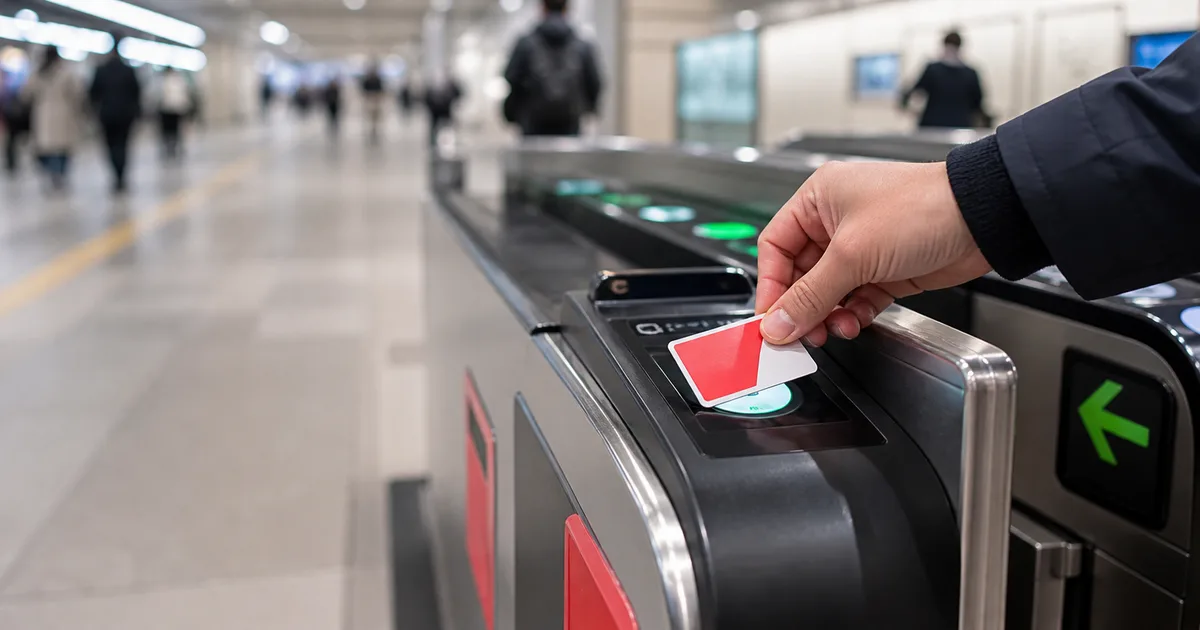
An IC card is a rechargeable transit card that works on virtually all trains, buses, and subways across Japan. It's also accepted at convenience stores, vending machines, coin lockers, and many restaurants. Think of it as your everyday payment card in Japan.
For current purchase locations, iPhone and overseas-Android compatibility, 28-day versus 180-day validity, and refunds, use our complete Suica and Welcome Suica guide.
The main IC cards are:
- Suica — JR East (Tokyo area)
- PASMO — Tokyo Metro and other private railways
- ICOCA — JR West (Osaka/Kyoto area)
The major IC cards are widely interoperable: Suica, PASMO, ICOCA, and others can be used across most major transit areas nationwide. However, IC cards do not work for long-distance travel across separate IC card areas (e.g., you can't ride from the Tokyo area to the Sendai area on a single IC tap), and they cannot be used to pay for Shinkansen tickets with a standard tap (separate ticketing required).
Welcome Suica Mobile App (Best Option for iPhone Users, 2025+)
Launched in March 2025, the Welcome Suica Mobile app is the easiest IC card option for foreign visitors with iPhones:
- iPhone only (iPhone 8 and newer)
- Valid 180 days from issue (much longer than the 28-day physical Welcome Suica)
- Top up through Apple Pay with an eligible payment card, subject to card and country restrictions
- Works across Suica, PASMO, ICOCA, and other interoperable areas
If you have an iPhone, this is the best choice for most first-time visitors. No deposit, no card pickup, no expiration before your trip ends.
Mobile Suica (For Residents and Some Visitors)
A standard Mobile Suica can also be added to Apple Wallet (iPhone) or Google Wallet (Android, only on FeliCa-equipped Japanese-market phones — most international Android phones cannot use Mobile Suica). Foreign credit card top-up has historically been limited; the Welcome Suica Mobile app is more visitor-friendly.
Most Android phones sold outside Japan do not have FeliCa hardware and cannot use Mobile Suica or Welcome Suica Mobile. If you're on Android, plan to get a physical Welcome Suica card on arrival, or use a Visa/Mastercard contactless on supported transit gates where available.
Physical IC Cards
Sales of unregistered (non-personalized) Suica and PASMO cards resumed in March 2025 after a chip-shortage pause from 2023-2024. They are again available at major stations.
For short-term visitors, the Welcome Suica physical card is purpose-built:
- No deposit required (regular Suica requires ¥500 deposit; Welcome Suica does not)
- 28-day validity from purchase
- Remaining balance is not refundable, whether or not the card is still valid — load conservatively
- Available at major airports (Narita, Haneda) and JR East stations
Note: PASMO Passport (the tourist version of PASMO) was discontinued in August 2024, so Welcome Suica is currently the main tourist-targeted physical IC card.
How much to load: Start with ¥3,000-5,000 for a few days of travel. You can reload at any station ticket machine or convenience store.
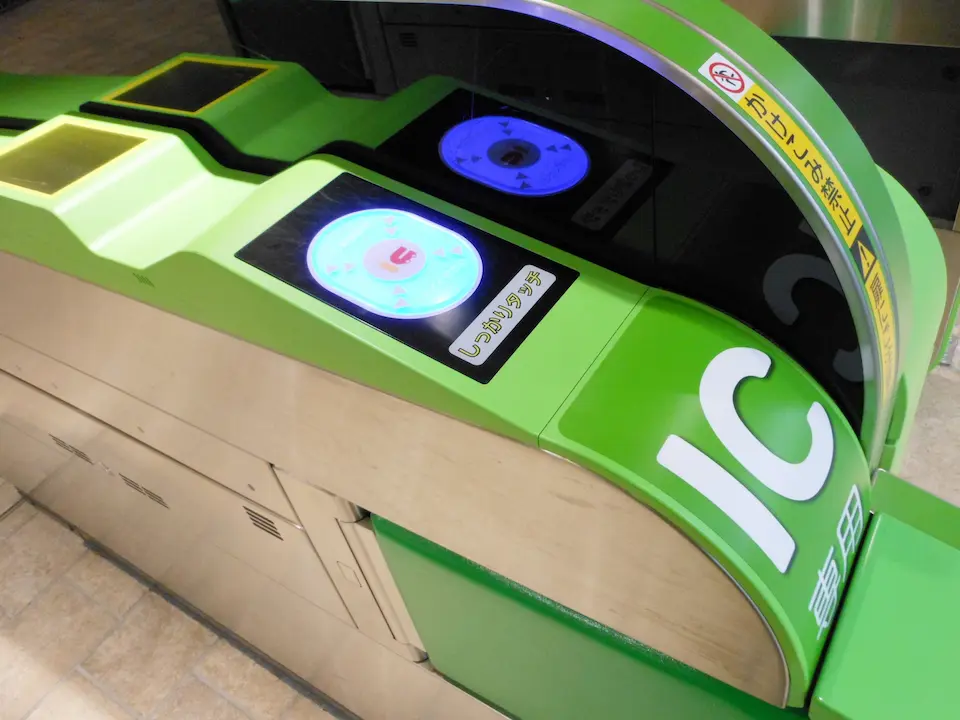 Essential
Suica IC Card (Welcome Suica)
Pre-loaded physical Welcome Suica with no deposit and 28-day validity. Pickup at major airports and stations.
On supported iPhone models with Express Mode enabled, Mobile Suica may continue to work briefly even after the phone shows a low battery warning. Don't rely on this completely — keep a small amount of cash or a backup IC card for peace of mind.
5. Learn Basic Japanese Phrases
You don't need to speak Japanese to travel in Japan — most tourist areas have English signage, and Google Translate works wonders. But learning a handful of phrases will make your experience significantly better. Japanese people deeply appreciate the effort, even if your pronunciation isn't perfect.
Essential phrases:
| Japanese | Pronunciation | Meaning |
|---|---|---|
| ありがとうございます | arigatou gozaimasu | Thank you (polite) |
| すみません | sumimasen | Excuse me / Sorry |
| こんにちは | konnichiwa | Hello (daytime) |
| お願いします | onegai shimasu | Please |
| はい / いいえ | hai / iie | Yes / No |
| いくらですか | ikura desu ka | How much is this? |
| これください | kore kudasai | I'll take this, please |
| 英語メニューありますか | eigo menyuu arimasu ka | Do you have an English menu? |
| トイレはどこですか | toire wa doko desu ka | Where is the restroom? |
| 大丈夫です | daijoubu desu | I'm fine / It's OK |
Tip: "Sumimasen" is arguably the most useful word in Japan. Use it to get someone's attention, apologize for bumping into someone, call a waiter, or ask for help. It covers about 80% of social interactions.
6. Download Essential Apps
Get these apps on your phone before you land:
Navigation:
- Google Maps — Works extremely well in Japan. Gives accurate train schedules, walking directions, and even indoor navigation in large stations.
- Navitime for Japan Travel — More detailed transit info than Google Maps, with real-time delay notifications and platform numbers.
Translation:
- Google Translate — Download the Japanese language pack for offline use. The camera mode is a game-changer: point your phone camera at any Japanese text (menus, signs, labels) and get instant translations on screen.
Food:
- Tabelog — One of Japan's most widely used restaurant review sites. Ratings above 3.5 are considered excellent (unlike Western sites where anything below 4.0 seems bad). Available in English, but the Japanese version has more reviews.
- Google Maps reviews — Also reliable for restaurant discovery in Japan.
Safety:
- Safety tips (JNTO official) — An essential disaster information app for travelers. It pushes real-time alerts for earthquakes, tsunami warnings, and severe weather in multiple languages.
- Japan Official Travel App (JNTO) — General practical info and tourist support, including English-speaking medical contacts.
Optional / Not essential for short-term visitors:
- PayPay — Japan's most popular mobile payment app, but registration typically requires a Japanese phone number, making it impractical for short-term tourists. For most visitors, an IC card + credit card + cash is more than enough.
7. Connectivity: Get an eSIM or Pocket WiFi
Staying connected in Japan is essential for navigation, translation, and keeping in touch. You have three main options:
- eSIM (recommended) — The easiest and most affordable option. Install before you leave home and have data ready when you land. Plans start from around ¥1,000 for a short trip.
- Pocket WiFi — A portable hotspot you rent at the airport. Good for groups of 3+, heavy laptop use, or if your phone doesn't support eSIM.
- International roaming — Convenient but typically the most expensive option.
Free WiFi exists in Japan but is unreliable for primary use. You'll find it at some airports, major stations, hotels, cafes (Starbucks, Tully's, McDonald's), and tourist information centers, but it often requires re-authentication and is slow at peak times. Don't rely on convenience store WiFi — 7-Eleven's 7SPOT and FamilyMart's Famima_Wi-Fi both ended in 2022. Lawson still offers it, but with limits (5 sessions × 60 minutes per day, email registration required).
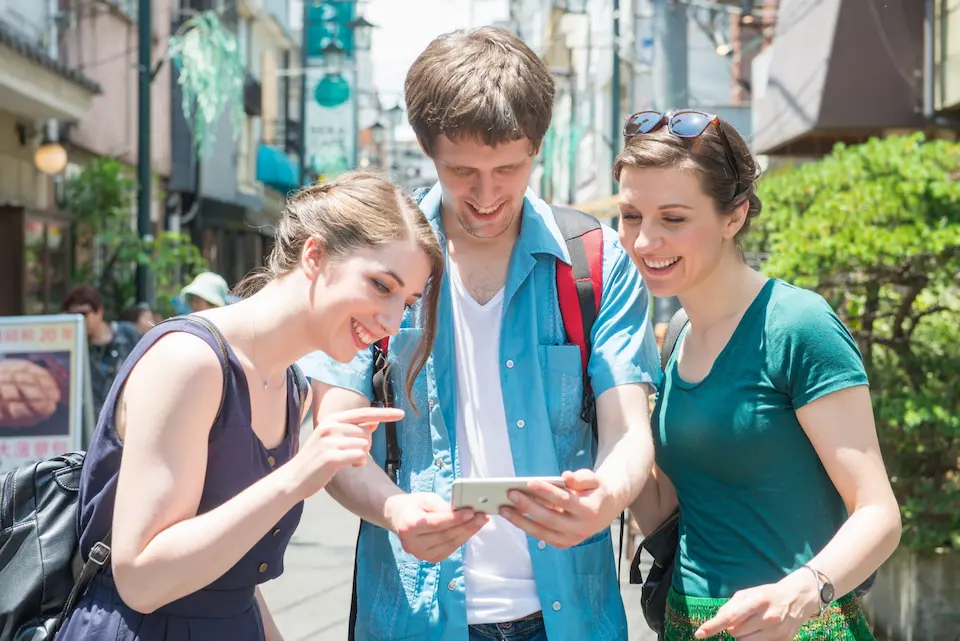 Recommended
Japan Travel eSIM
Unlimited data eSIM for Japan. Install before you fly and stay connected from the moment you arrive. Works with most modern smartphones.
For a detailed comparison of eSIM providers with pricing, networks, and hotspot rules, check out our complete eSIM guide for Japan.
8. Train System Basics
Japan's rail network is the backbone of travel in the country. Here's what you need to know at a high level:
- Shinkansen (bullet trains) connect major cities at speeds up to 320 km/h on the fastest routes (Tohoku Shinkansen Hayabusa). The most popular Tokaido Shinkansen (Tokyo–Kyoto–Osaka) runs at up to 285 km/h. Tokyo to Kyoto takes about 2 hours 15 minutes on Nozomi, or about 2 hours 40 minutes on Hikari.
- Local trains, rapid trains, and subways handle city and suburban travel.
- IC cards (see section 4) are the easiest way to pay for most rides.
- Trains run from about 5:00 AM to midnight. There are no 24-hour train services.
- Trains are almost always on time. If a train is more than a few minutes late, you can get a delay certificate (遅延証明書) from station staff.
The Japan Rail Pass — Read Before Buying
Since the October 2023 price hike (~70% increase), the JR Pass is no longer automatically worth it for every first-time visitor:
- 7-day Ordinary: ¥50,000
- 14-day Ordinary: ¥80,000
- 21-day Ordinary: ¥100,000
Two important rules many first-time buyers miss:
- Nozomi and Mizuho Shinkansen are NOT included in the standard JR Pass. You can pay a supplementary fare to use them, but if you ride the included Hikari/Sakura instead, your Tokyo–Kyoto journey takes ~25 minutes longer than the advertised "2:15."
- Pricing can change: JR Group has indicated further price changes are possible. Always check the official site before purchase.
For a Tokyo + Kyoto + Osaka loop alone, individual Shinkansen tickets are usually cheaper than a JR Pass. The pass really shines for fast-paced multi-city tours (e.g., Tokyo → Kyoto → Hiroshima → Tokyo in one week).
Use our free JR Pass Calculator to check your specific itinerary before buying.
For a complete breakdown of how to navigate the system, see our complete guide to Japan's train system and is the JR Pass worth it in 2026?.
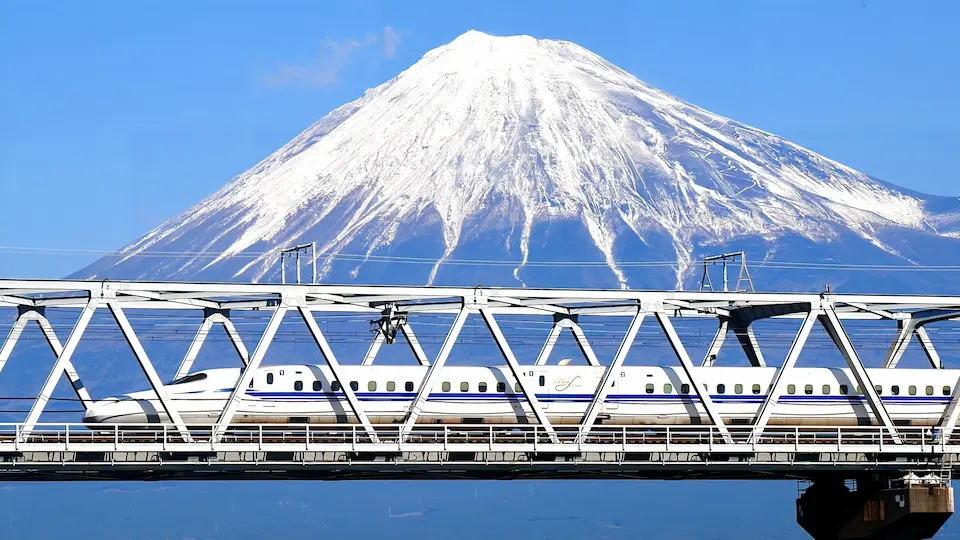 Multi-City
Japan Rail Pass (7-Day)
Unlimited rides on JR trains nationwide, including Hikari/Sakura Shinkansen (Nozomi/Mizuho excluded without supplement). Best for fast-paced multi-city itineraries.
9. Accommodation Types
Japan offers a range of unique accommodation options beyond standard hotels. Note: prices below are typical 2026 ranges for major cities. Expect higher rates during cherry blossom season, autumn foliage, Golden Week, and on weekends.
Hotels
Western-style hotels are widely available in all price ranges. Business hotels (like Toyoko Inn, APA Hotel, and Dormy Inn) offer clean, compact rooms — typically ¥7,000-15,000/night in major cities, though prices vary by season, location, and room size. Dormy Inn is a standout: most locations include a free onsen bath and a late-night ramen service.
That national range hides the biggest swings. We priced the same chains across four cities and four dates; use the measured Japan hotel price guide to see what the city and week can do before choosing a room type.
Ryokan (Traditional Japanese Inns)
A ryokan experience is a must for first-time visitors. You'll sleep on a futon on tatami floors, wear a yukata (light robe), and often enjoy a multi-course kaiseki dinner and breakfast. Expect to pay ¥15,000-50,000+ per person per night, including meals.
Hostels
Japan's hostels are among the cleanest in the world. Dorm beds typically run ¥3,000-6,000/night in major cities, depending on season and location. Many have excellent communal areas and organize social events. Great for solo travelers.
Capsule Hotels
A uniquely Japanese experience. You sleep in a small pod with a curtain or door, equipped with a light, outlet, and sometimes a TV. Prices are commonly ¥4,000-8,000/night in major cities. Many have excellent bath facilities. Not recommended if you're claustrophobic.
For ryokan and unique accommodations, also check Rakuten Travel or Jalan.net (Japanese booking sites) — they sometimes have lower prices and more options than international booking platforms. Google Translate can help navigate these sites.
10. Eating Etiquette and Food Tips
Japanese food is a major highlight of any trip, and there are a few customs to be aware of:
Chopstick Etiquette
- Never stick chopsticks upright in rice — this resembles a funeral ritual and is considered very rude.
- Don't pass food from chopstick to chopstick — another funeral association.
- It's fine to use the opposite end of your chopsticks to take food from shared plates, or ask for serving chopsticks (取り箸 / toribashi).
- If you struggle with chopsticks, it's perfectly acceptable to ask for a fork. Most restaurants have them.
Ordering at Restaurants
- Many restaurants use a ticket machine (食券機 / shokkenki) at the entrance. Select your meal, insert money, get a ticket, and hand it to the staff. Google Translate camera mode is your best friend here.
- Say "sumimasen" while lightly raising your hand to get a waiter's attention. Some restaurants also have a call button at the table.
- Water or tea is usually provided for free at casual restaurants. At cafes, bars, and upscale venues this isn't guaranteed.
- Set meals (定食 / teishoku) are excellent value — typically ¥800-1,500 for a main dish with rice, miso soup, and pickles.
Slurping Is Fine
Slurping noodles (ramen, soba, udon) is not only acceptable but expected. It cools the noodles down and is considered a sign of enjoyment. Don't be shy.
Restaurant Discovery
- Lunch is significantly cheaper than dinner at many restaurants. A place that charges ¥5,000 for dinner might have a lunch set for ¥1,000-1,500.
- Department store basements (depachika) are food paradises. Visit Isetan in Shinjuku or Daimaru in Tokyo Station for incredible prepared foods and bento boxes.
- Convenience store food (7-Eleven, Lawson, FamilyMart) is genuinely excellent — onigiri, sandwiches, bento boxes, and seasonal treats are all surprisingly high quality.
If you would rather have a guide choose several stops and explain what you are eating, our Tokyo food-tour comparison separates dinner-style routes in Shinjuku and Shibuya from daytime Tsukiji tours, including the options where the lowest displayed price does not include food.
Browse food tours & cultural experiences
Food walks, tea ceremonies, day trips and guided tours across Japan — an easy way to fill the days once your logistics are sorted.
Powered by GetYourGuide · we may earn a commission at no extra cost to you.
11. Temple and Shrine Etiquette
Japan has thousands of temples (寺 / tera, Buddhist) and shrines (神社 / jinja, Shinto). Here's how to visit respectfully:
At Shrines (Torii Gates)
- Bow slightly before passing through the torii gate.
- Walk to the side of the main path — the center is for the deity.
- Purify your hands at the water basin (手水舎 / temizuya): rinse left hand, then right, then cup water in your left hand to rinse your mouth, then rinse the left hand again.
- At the offering hall: throw a coin (¥5 coins are considered lucky), bow twice, clap twice, make a wish, then bow once more.
At Temples
- Bow at the gate before entering.
- You may light incense and wave the smoke toward you (believed to heal ailments).
- Put your hands together and bow once (don't clap — clapping is for shrines, not temples).
General Rules
- Remove shoes when entering indoor areas of temples and shrines (and many traditional buildings). There will usually be a shelf or shoe box at the entrance.
- Photography is usually fine in outdoor areas, but check for signs in indoor halls and sacred areas.
- Dress modestly — you don't need to cover up completely, but avoid very revealing clothing at religious sites.
12. Onsen (Hot Spring) Rules
Visiting an onsen is one of Japan's most relaxing experiences, but it comes with strict rules:
The Basics
- Wash thoroughly before entering the bath. Every onsen has a shower area with stools, showerheads, soap, and shampoo. Sit on the stool and clean your entire body before going anywhere near the communal bath. This is non-negotiable.
- You must be fully naked. Swimsuits are not allowed in traditional onsen (with very rare exceptions at resort-style facilities).
- Bring a small towel but do NOT put it in the water. Most people fold it and place it on their head or set it on the edge of the bath.
- Tie long hair up so it doesn't touch the water.
- Enter slowly — the water is usually 40-44°C (104-111°F).
Tattoo Policies
Historically, tattoos are associated with yakuza in Japan, and many onsen and public baths have "no tattoo" policies. This is evolving, but it's still common. Options for tattooed visitors:
- Cover small tattoos with bandages or special concealer patches (sold at some drug stores)
- Look for tattoo-friendly onsen — these are becoming more common, especially in tourist areas. The website Tattoo Friendly lists participating facilities.
- Book a private onsen (貸切風呂 / kashikiri buro) — many ryokan and onsen facilities offer private baths you can reserve by the hour.
Do not try to sneak into an onsen with visible tattoos at a facility that prohibits them. It will cause an uncomfortable situation for everyone. Check policies in advance.
Gender Separation
Most onsen have separate bathing areas for men (男 / otoko) and women (女 / onna). Mixed bathing (混浴 / konyoku) exists but is very rare and typically found only at rural traditional hot springs.
13. Trash Disposal
One of the most surprising things about Japan: there are almost no public trash cans, yet the streets are immaculate. Japanese people carry their trash with them and dispose of it at home or at designated spots.
How to Deal with Trash
- Carry a small plastic bag in your daypack for wrappers and other trash.
- Some convenience stores still have trash bins, generally intended for items purchased there. If you bought a drink at that store, it's fine to dispose of the can/bottle there. Otherwise, carry your trash with you until you find a proper bin.
- Train stations sometimes have bins near the ticket gates or on the platform (though many have been removed for security reasons).
- Vending machines have recycling bins right next to them — but only for cans and bottles, not general trash.
Recycling
When you do find bins, Japan separates waste meticulously:
- Burnable (燃えるゴミ) — food waste, paper, tissues
- Non-burnable (燃えないゴミ) — plastics, metals
- Cans (缶)
- Bottles (ビン)
- PET bottles (ペットボトル) — remove the cap and label
Buy a drink at a convenience store? Finish it nearby and toss the empty in their recycling bin before you go. This is what most locals do.
14. Tipping Is Not Customary
This is one of the simplest rules to follow: do not tip in Japan. Not at restaurants, not at hotels, not in taxis, not anywhere.
Tipping is not just unnecessary — it can cause genuine confusion. Staff may chase you down the street thinking you forgot your change. In some cases, it can be perceived as condescending, implying that the person needs extra help or that their standard wages aren't sufficient.
The price on the menu is the price you pay (plus 10% consumption tax for dining in; takeout food items are taxed at 8%). Speaking of that 10% tax — as a tourist, you can get it refunded on most retail purchases through Japan's tax-free shopping system. Service in Japan is consistently excellent because it's considered a professional standard, not something that needs to be incentivized with tips.
The only exception: at high-end ryokan, you may give a small gift or tip (called kokorozuke) placed in a decorative envelope and presented before service begins — but this is rare and not expected.
15. Safety and Emergency Information
Japan is one of the safest countries in the world for travelers. Violent crime is exceedingly rare, and you can walk alone at night in virtually any neighborhood without concern. People routinely leave bags unattended at cafe tables, and lost wallets are frequently returned to police boxes with all the cash still inside.
Emergency Numbers
- 110 — Police
- 119 — Ambulance and Fire
Operators may not speak fluent English, but stay calm and state your location. You can also ask your hotel or a nearby convenience store for help.
Police Boxes (交番 / Koban)
Small police stations located throughout cities and near major stations. Officers can help with:
- Directions (they often have detailed area maps)
- Lost property
- Emergencies
- General assistance for tourists
Natural Disasters
Japan is prone to earthquakes, typhoons, and (rarely) tsunamis. Important things to know:
- Small earthquakes happen frequently and are usually harmless. If you feel one, stay calm.
- For strong earthquakes, follow Drop, Cover, and Hold On:
- Drop to your hands and knees
- Cover your head and neck under a sturdy table if possible, away from windows, shelves, and falling objects
- Hold on until the shaking stops Modern Japanese guidance no longer recommends standing in a doorframe — most doorframes are not stronger than surrounding walls in current construction. Do not rush outside during the shaking.
- Typhoon season runs from June to October, with September being the peak month. Flights and trains may be disrupted.
- Download the Safety tips app (JNTO official) for real-time disaster alerts in multiple languages.
If you have non-refundable bookings, read how trip cancellation insurance handles typhoons, earthquakes and supplier refunds before the event is already known.
Hotels in Japan are built to withstand major earthquakes. If one occurs, stay in the building. Check your hotel room for the emergency exit map and earthquake safety card — it's usually on the back of the door.
Health
- Tap water is safe to drink everywhere in Japan.
- Pharmacies (薬局 / yakkyoku) are easy to find. Look for the green cross sign. Staff at larger chains like Matsumoto Kiyoshi and Welcia may speak some English.
- No special vaccinations are required for Japan.
- If you need to see a doctor, ask your hotel reception for help finding an English-speaking clinic. Major cities have hospitals with international departments.
Save our step-by-step guide to getting medical help in Japan, including 119, the official clinic finder, payment and pharmacy rules. Before buying separate insurance, use the credit card cover test to avoid paying twice. If it exposes a gap, the 60-second Japan travel insurance selector narrows the first quote by residence, trip length and activities.
Bonus: Quick Reference Cheat Sheet
| Situation | What to Do |
|---|---|
| Paying at a restaurant | Look for a tray near the register — place cash/card there instead of handing directly |
| Entering a home or ryokan | Remove your shoes at the entrance (genkan) |
| Riding an escalator | Historically: stand left in Tokyo, right in Osaka. Current safety campaigns ask people to stand still on both sides rather than walk — follow local flow but don't walk past stationary riders |
| Using the train | Keep your phone on silent, don't talk on the phone |
| Blowing your nose | Step away from others; sniffling is preferred over blowing in public |
| Crossing the street | Wait for the signal, even if there are no cars |
| Electrical outlets | Japan uses Type A plugs (two flat parallel pins) at 100V, 50Hz (east) / 60Hz (west). Most modern laptop/phone chargers are 100-240V compatible. Travelers from EU/UK/AU need a plug adapter (and check device voltage compatibility) |
Final Thoughts
Japan rewards the prepared traveler. By understanding these 15 essential things before you go, you'll avoid common mistakes, save money, and have a much smoother experience from day one.
The most important thing to remember: Japanese culture values respect, consideration for others, and attention to detail. If you approach your trip with genuine curiosity and a willingness to follow local customs, you'll find that Japan is one of the most welcoming and rewarding travel destinations on earth.
Last verified: 2026-05-13. This guide is updated quarterly to reflect changes in visa rules, IC card systems, JR Pass pricing, and travel regulations. Primary sources include the Ministry of Foreign Affairs of Japan, JNTO, JR Group, JR East, and the Digital Agency (Visit Japan Web). For time-sensitive details like prices and exchange rates, please confirm with official sources before your trip.