On this page
This guide compares every realistic transport option between Haneda Airport (HND) and central Tokyo — Tokyo Monorail, Keikyu Airport Line, Airport Limousine Bus, taxi and private transfer — using operator-published fares and timetables, last verified for 2026. It is built for first-time visitors, most of whom land at Terminal 3. Fares and schedules change, especially around timetable revisions; always confirm on the operator's official website before travel.
Haneda is the easy airport. It sits only about 15 km from central Tokyo, both of its rail lines run into the city in well under half an hour, and a taxi is genuinely realistic here in a way it usually is not from Narita. Unlike Narita, there is no single "best" express train to memorize — you pick by your hotel's nearest station, and almost every option is relatively cheap.
The two trains do most of the work. The Keikyu Airport Line reaches Shinagawa in about 13 minutes for ¥327 IC and through-runs onto the Toei Asakusa Line to Asakusa, Higashi-Ginza and Nihombashi with no transfer on many services. The Tokyo Monorail reaches Hamamatsucho in as little as 13 minutes for ¥519 IC and — usefully for pass holders — is covered by the Japan Rail Pass.
Here is the single most important difference from Narita: for normal trip planning, there is no practical direct train from Haneda to Shinjuku or Shibuya. Both usually require one transfer at Shinagawa or Hamamatsucho. This is the opposite of Narita, where the Narita Express runs directly to Shinjuku and Shibuya with reserved seats. If you are still choosing between airports, see our Narita Airport transport guide; if you are landing in Osaka instead, see our Kansai Airport transport guide.
The good news: because Haneda is so close, the transfer is short, the late-night options are real, and the whole arrival is lower-stress. This guide walks through trains, buses, taxis, Disney and Yokohama routes, the JR Pass question, IC cards, late-night arrivals and where to go next.
1. Best Way from Haneda Airport to Tokyo: Quick Answer
Still choosing your flight? Our Narita vs Haneda comparison helps you weigh the airfare difference against ground transport, your hotel location and arrival time. Use this guide for the transfer once you have chosen Haneda.
Pick by destination, not by brand. Keikyu wins for Shinagawa, Asakusa and Yokohama; the Tokyo Monorail wins for Hamamatsucho, the Tokyo Station side and JR Pass holders; both usually need one transfer for Shinjuku and Shibuya. The Airport Limousine Bus wins for hotel-area drop-off, families and Tokyo Disney Resort. Because Haneda is close, a flat-fare taxi is a realistic option for groups and late arrivals.
Haneda's options are simpler and cheaper than Narita's. The main thing to get right is which transfer station fits your hotel.
2. Pick Your Route in 30 Seconds
Answer four questions and the finder applies this guide's rule — pick by your hotel's nearest station, then let group size, luggage and landing time move you to the bus or a taxi — and links the page you need.
30-second transfer finder
Which way in from Haneda Airport (HND)?
Pick your hotel area, group size, luggage and landing time. The answer follows the same rule as this guide: destination first, then the cheapest option that still works with your bags and your arrival hour.
Take the Keikyu Airport Line to Shinagawa
Keikyu reaches Shinagawa in about 13 minutes for ¥327 IC. It is the fastest and cheapest airport-to-city hop in Tokyo.
- Fare
- ¥327 IC to Shinagawa · ¥505–¥599 IC beyond · ¥363 IC to Yokohama
- Time
- 11–35 min, direct to Shinagawa, Asakusa and Yokohama
- Tap in with Suica, PASMO or a foreign contactless card where accepted; no reservation needed
- Both airport trains carry suitcases fine, but avoid the 07:30–09:00 rush into the city
- Late landings after 23:00 should re-run this with the after-23:00 setting
Also worth comparing · Flat-fare taxi from the rank
from ¥7,600 daytime · from ¥9,000 late night, tolls extra · 20–40 min, no reservation needed
See the flat-fare taxi tableFares are adult one-way figures verified for 2026 and can change at timetable revisions; confirm on the operator or booking page. Links marked as booking pages are affiliate links, which may earn us a commission at no extra cost to you.
Prefer to scan? The table covers the same decisions:
| Staying in / going to | Best option | Why |
|---|---|---|
| Shinagawa | Keikyu Airport Line | Around 13 min, ¥327 IC, direct |
| Asakusa / Higashi-Ginza / Nihombashi | Keikyu via Toei Asakusa Line | Direct on many services, no transfer |
| Hamamatsucho / Tokyo Station side | Tokyo Monorail + JR | Scenic, simple, JR Pass covered |
| Shinjuku / Shibuya | Keikyu via Shinagawa, or Limousine Bus | Train = one transfer; bus = easier with luggage |
| Ikebukuro | Keikyu via Shinagawa, or Limousine Bus | Train = one transfer; bus = direct to area stops |
| Yokohama / Minato Mirai | Keikyu Airport Line | Direct, no transfer through Tokyo |
| Tokyo Disney Resort | Airport Limousine Bus / Keikyu Bus | Direct, easiest with kids and luggage |
| Hotel-direct access | Airport Limousine Bus | No station transfers with suitcases |
| Late-night arrival | Late-night bus or flat-fare taxi | Haneda has real overnight options |
| JR Pass holder | Tokyo Monorail | Covered by the pass |
3. Cross-Route Comparison Table
| From HND to | Best for | Service | Fare, adult one-way | Journey time |
|---|---|---|---|---|
| Shinagawa | Speed / budget | Keikyu Airport Line | ¥327 IC | 11–14 min |
| Hamamatsucho | JR Pass / scenic | Tokyo Monorail | ¥519 IC / ¥520 ticket | 13–20 min |
| Tokyo Station | Central Tokyo / JR transfer | Keikyu via Shinagawa or Monorail via Hamamatsucho | Around ¥505 IC by Keikyu route; Monorail route varies by JR segment | Around 20–30 min |
| Shinjuku | One-transfer train | Keikyu + JR Yamanote Line | ¥535 IC | Around 30–35 min |
| Shibuya | One-transfer train | Keikyu + JR Yamanote Line | ¥505 IC | Around 25–30 min |
| Asakusa | Direct eastern Tokyo route | Keikyu through-service to Toei Asakusa Line | ¥599 IC | Around 32 min |
| Hotel-direct | Families / luggage | Airport Limousine Bus | Around ¥1,200–¥1,400 depending on area | 45–60 min |
| Tokyo Disney Resort | Families | Airport Limousine Bus / Keikyu Bus | ¥1,300 | Around 45 min |
| Yokohama | Direct | Keikyu Airport Line | ¥363 IC from T3 | Around 23 min |
| Central wards | Groups / late night | Flat-fare taxi | From ¥7,600 daytime, plus tolls where applicable | 20–40 min |
All figures are as of 2026 and should be confirmed officially before travel. Fares and times vary by terminal, route, service pattern and exact destination.
In short: choose Keikyu for Shinagawa, Asakusa or Yokohama and to save money; the Tokyo Monorail if you hold a JR Pass or are heading toward Hamamatsucho / Tokyo Station; the Airport Limousine Bus for hotel-area access or Disney; and a flat-fare taxi for groups, families or late-night arrivals.
4. Train Options from Haneda Airport to Tokyo
Option 1 — Keikyu Airport Line
The most flexible and usually cheapest train, reaching Shinagawa in about 13 minutes for ¥327 IC. Keikyu through-runs onto the Toei Asakusa Line, so many services continue to Shimbashi, Higashi-Ginza, Nihombashi, Asakusa and Oshiage / Tokyo Skytree with no transfer.
Best for:
- Shinagawa and the Tokaido Shinkansen transfer
- Asakusa, Higashi-Ginza, Nihombashi and eastern Tokyo
- Yokohama, with direct trains from Haneda
- Travelers transferring at Shinagawa to the JR Yamanote Line for Shinjuku, Shibuya or Ikebukuro
- Budget-conscious travelers
Avoid if:
- You hold a Japan Rail Pass and want to use it for airport access — Keikyu is a private railway and is not covered.
- You want a guaranteed reserved seat. Keikyu is commuter-style seating.
If your arrival puts the Shinagawa transfer inside a weekday commuter peak, the train that looks fastest on paper may not be the easiest with suitcases. Check our Tokyo rush-hour guide for the main time windows, crowded directions and live congestion tools before choosing between rail and a direct bus.
Fares, IC adult one-way, as of 2026: Shinagawa ¥327, Tokyo Station ¥505 by transfer route, Shibuya ¥505, Shinjuku ¥535, Ikebukuro ¥601, Asakusa ¥599, Yokohama ¥363 from Terminal 3.
How to ride: At Terminal 3, follow the signs from the arrivals area to the Keikyu gate. Trains for central Tokyo and Yokohama can depart from the same airport-side system, so read the destination board carefully. For central Tokyo, look for destinations such as Shinagawa, Oshiage, Aoto or Asakusa Line through-services. For Yokohama, look for Yokohama, Kanazawa-Bunko, Zushi-Hayama or other southbound destinations. Avoid short shuttle services if they do not continue toward your destination.
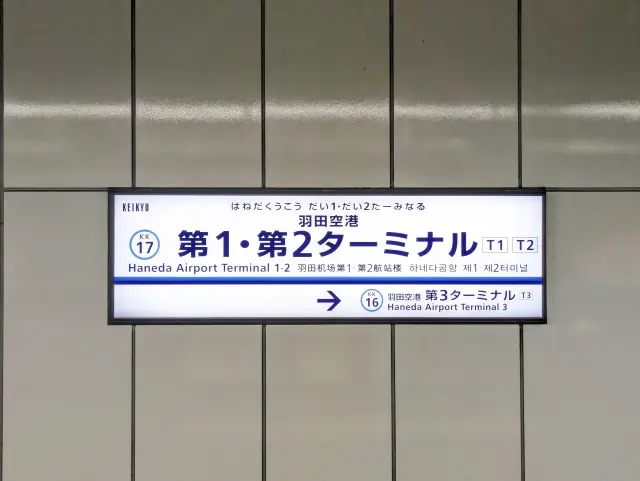
Keikyu and the Monorail get you into the city cheaply, but once you are in central Tokyo most first-timers spend their days on the subway. If that is you, a Tokyo Subway Ticket — 24, 48 or 72 hours of unlimited Tokyo Metro and Toei rides — is usually cheaper than paying per trip, and you can collect it by QR code at the Klook counter in the airport on arrival.
 Unlimited subway · Airport pickup
Tokyo Subway Ticket (24 / 48 / 72 Hours)
Why it may fit
Unlimited rides on all Tokyo Metro and Toei subway lines for 24, 48 or 72 hours — ideal once you've reached the city. Collect it by QR code at the airport on arrival. Note: it does not cover JR lines or the airport trains themselves.
Before booking
Check the live price, availability, eligibility, and terms before paying.
Option 2 — Tokyo Monorail
The scenic line, covered by the Japan Rail Pass, reaching Hamamatsucho in as little as 13 minutes for ¥519 IC. It runs elevated along Tokyo Bay; at Hamamatsucho you transfer to the JR Yamanote Line and Keihin-Tohoku Line.
Best for:
- JR Pass holders
- Hamamatsucho, Tokyo Station and the east side of the JR Yamanote Line
- Travelers who want a memorable first ride with bay and runway views
Avoid if:
- You are heading to Shinagawa or Yokohama — Keikyu is more direct.
- You want to reach Asakusa without a transfer — Keikyu through-services are better for that.
- You are trying to minimize cost without using a rail pass — Keikyu is usually cheaper.
Fare, as of 2026: ¥520 ticket / ¥519 IC adult, ¥260 ticket / ¥259 IC child.
The Monorail & Yamanote Line Discount Ticket is ¥590 adult / ¥290 child to any station on the JR Yamanote Line. It is sold on weekends, holidays and selected dates from March 14, 2026 to March 31, 2027. It is one-way only and stopovers are not allowed.
Transfer routes to Shinjuku, Shibuya & Tokyo Station
For normal trip planning, there is no practical direct train from Haneda to Shinjuku or Shibuya. Plan for one transfer.
- Shinjuku: Keikyu to Shinagawa, then JR Yamanote Line. Around 30–35 minutes, ¥535 IC.
- Shibuya: Keikyu to Shinagawa, then JR Yamanote Line. Around 25–30 minutes, ¥505 IC.
- Tokyo Station: Keikyu to Shinagawa, then JR Yamanote / Keihin-Tohoku Line; or Tokyo Monorail to Hamamatsucho, then JR. JR Pass holders should usually choose the Monorail route.
5. Bus & Taxi Options from Haneda Airport to Tokyo
Airport Limousine Bus
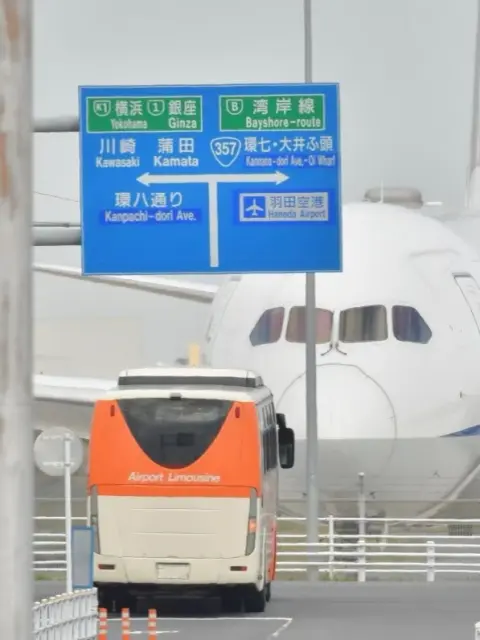
The easiest option for hotel-area drop-off with luggage handled at the curb. The network connects Haneda's terminals to Shinjuku, Shibuya, Ikebukuro, Tokyo Station / T-CAT, Yokohama, Tokyo Disney Resort and selected hotel areas.
Best for:
- Families with children
- Travelers with large suitcases
- First-time visitors nervous about train transfers
- Hotel-area access when your hotel is near a bus stop
- Direct access to Tokyo Disney Resort
Avoid if:
- You want the fastest or cheapest route.
- Your hotel is not near a bus stop.
- You are arriving during heavy traffic and have a tight schedule.
Typical fares, adult one-way, as of 2026:
- Tokyo Station / TEKKO Building: ¥1,200
- T-CAT / Nihombashi area: ¥1,000
- Shibuya area: ¥1,300
- Shinjuku area: ¥1,400
- Ikebukuro area: ¥1,400
- Tokyo Disney Resort: ¥1,300
- Yokohama YCAT: ¥800 by Keikyu Bus
Buy tickets at terminal vending machines, counters or online where available. IC cards and credit cards are accepted on many routes, but payment methods vary by operator and route.
 Hotel-direct · Best with luggage
Haneda Airport Limousine Bus to Central Tokyo
Why it may fit
Direct hotel-area drop-off from Haneda with luggage handled at the curb — the low-stress choice for families and anyone with big suitcases.
Before booking
Check the live price, availability, eligibility, and terms before paying.
Taxi / Private Transfer
Because Haneda is close, a taxi is genuinely realistic here — a key difference from Narita. Haneda has an official flat-fare taxi system to many Tokyo wards. These fares exclude expressway tolls and may vary by exact destination area and operator.
Example daytime flat fares from Haneda, as of April 2026:
- Chiyoda / Tokyo Station area: ¥7,600
- Shibuya: ¥8,500
- Shinjuku: ¥9,000
- Taito / Asakusa: ¥9,100
- Toshima / Ikebukuro: ¥11,200
Example late-night / early-morning flat fares, 22:00–05:00:
- Chiyoda / Tokyo Station area: ¥9,000
- Shibuya: ¥10,000
- Shinjuku: ¥10,700
- Taito / Asakusa: ¥10,800
- Toshima / Ikebukuro: ¥13,200
Expressway tolls are extra. From the airport taxi stand, you normally do not need a reservation; confirm the destination and fixed fare before departure. City-to-airport flat fares may require advance reservation and can include a reservation fee.
Some very close areas, including parts of Chuo, Minato and Shinagawa, may not use the flat-fare system and may be metered instead.
Best for:
- Groups of three to four splitting the fare
- Late-night arrivals
- Families with young children
- Travelers with lots of luggage
- Direct door-to-door access
Avoid if:
- You are a solo budget traveler arriving during train hours.
- Your destination is very close to Haneda and may be cheaper or simpler by train or metered taxi.
- You are traveling during heavy traffic and need a predictable arrival time.
Traveling with children, a stroller or several suitcases? Our Haneda airport transfers for families guide explains how to confirm child seats, vehicle capacity and the total cost before booking.
 Fixed Price · Groups & Late Night
Haneda → Tokyo Private Transfer (Kiwitaxi)
Why it may fit
Compare a pre-booked car from Haneda to your hotel with an upfront quote. Confirm the meeting point, child seats and luggage capacity before paying; a preferred driver language is not guaranteed. Compare the full group price with bus and train fares.
Before booking
Check the live price, availability, eligibility, and terms before paying.
6. Haneda Airport to Tokyo Disney Resort
For families heading straight to Tokyo Disney Resort, the direct airport bus is usually easiest. It runs from Haneda to Tokyo Disneyland, Tokyo DisneySea and resort-area hotels in about 45 minutes for ¥1,300 adult / ¥650 child, with no train transfers.
Terminal 3 can have fewer departures than Terminals 1 and 2, so check the timetable before relying on it. The Airport Limousine Bus operator publishes the Disney Resort schedule and fares on its official site — confirm the next departure there when you land. If the schedule does not fit, the rail fallback is Keikyu or the Tokyo Monorail into central Tokyo, then JR to Maihama. That route works, but it involves several transfers with luggage.
7. Haneda Airport to Yokohama
Yokohama is a Haneda strength: the Keikyu Airport Line runs direct to Yokohama Station in about 23 minutes for ¥363 IC from Terminal 3, with no transfer through Tokyo. This is far easier than the same trip from Narita.
For Minato Mirai, transfer at Yokohama Station to the Minatomirai Line for a couple of stops. If you prefer not to handle luggage on the train, the Keikyu Bus to YCAT, near Yokohama Station, is ¥800 adult and takes around 30–40 minutes depending on traffic. Late-night fares are higher.
8. JR Pass & Discount Tickets
The JR Pass benefit from Haneda is small. This is the reverse of Narita, where the pass can cover the much more expensive Narita Express. At Haneda, the pass covers the Tokyo Monorail, but not Keikyu or Airport Limousine Buses.
There is also no regular JR station inside Haneda Airport. If you want to use a Japan Rail Pass immediately after arrival, activate it first at the JR EAST Travel Service Center near the Tokyo Monorail gate at Terminal 3, then ride the Monorail to Hamamatsucho.
The practical takeaway: if your wider itinerary already justifies a JR Pass for Shinkansen travel, ride the Monorail for free. But do not buy a JR Pass for Haneda access alone — the saving is only about ¥520.
The most useful Haneda-specific rail deal is the Monorail & Yamanote Line Discount Ticket, which costs ¥590 adult / ¥290 child to any station on the JR Yamanote Line. It is available on weekends, holidays and selected dates, and is one-way only.
See Is the JR Pass worth it in 2026? and our JR Pass calculator before buying a pass.
9. IC Cards at Haneda: Suica, Welcome Suica or PASMO?
For current purchase locations, mobile compatibility, validity and refund differences, see the complete Suica and Welcome Suica guide.
IC cards are airport-independent. You do not strictly need one for the Monorail or Airport Limousine Bus because you can buy separate tickets, but you will want one for Tokyo's trains, subways, buses, vending machines and convenience stores.
- iPhone users: add Suica or Welcome Suica Mobile before you land if your card works with Apple Pay. This is usually the smoothest path.
- Android users: many overseas Android phones do not support the FeliCa system required for Japanese mobile IC cards, so plan on using a physical card.
- Physical Welcome Suica: available at selected JR East locations including Haneda. It is designed for short-term visitors, has no deposit and does not refund unused balance.
- Regular Suica / PASMO: sales of regular non-personalized cards resumed in 2025 after the chip-shortage restrictions eased.
- PASMO Passport: the tourist PASMO Passport card was discontinued in August 2024.
For most visitors, the simplest rule is: set up mobile Suica if you use an iPhone; otherwise buy a physical IC card after arrival and do not load too much money on a non-refundable tourist card.
See our Japan train system guide for the full IC-card breakdown.
10. Late-Night Arrival Playbook
Haneda is a 24-hour airport with many late international flights, and — unlike Narita — it has real late-night options. The trains stop around midnight, but late-night buses, taxis and airport hotels make Haneda much easier to handle after hours.
The last Tokyo Monorail from Terminal 3 toward Hamamatsucho is around 0:10. Keikyu's last practical central-Tokyo services are also around midnight, but exact final connections vary by date and destination. Always check the official timetable if you land after 23:00.
| Arrival situation | Best move |
|---|---|
| Lands before around 23:30 | Train still usually works — Keikyu or Monorail |
| Lands around 24:00–02:00 | Late-night Limousine Bus to Shinjuku / Ikebukuro if the timetable fits |
| Late-night bus to Shinjuku / Ikebukuro | Around ¥2,800 adult / ¥1,400 child |
| Any hour, group of 3–4 | Flat-fare taxi or pre-booked private transfer |
| Arriving with children or heavy bags | Taxi, private transfer or direct bus |
| Want to sleep first | In-terminal or airport-area hotel; first trains start around 5am |
Terminal 3 stays open overnight, and Haneda has in-terminal and airport-area hotels, including capsule-style options. If you would rather avoid a late-night taxi fare, sleeping near the airport and taking the first train can be a reasonable plan.
Compare Haneda-to-Tokyo private vehicles
Compare vehicle sizes and luggage limits for your route. You can change the destination to match your hotel area.
Prices are estimates per vehicle. Confirm your date, exact hotel, child seats, luggage and final total on Kiwitaxi before booking.
Scroll inside the search to compare all vehicle classes.
Loading transfer search…
Search not loading? You can also compare vehicles directly: Open this route on Kiwitaxi
* Affiliate link — JAPANODE receives a commission when a purchase is attributed to this link
11. Haneda vs Narita: Which Airport Is Better for Tokyo?
Haneda is closer to central Tokyo and usually easier and cheaper for airport access. Narita is farther away and adds time and money — but Narita still wins when the flight itself is significantly cheaper, or when only Narita has the route you want.
| Factor | Haneda | Narita |
|---|---|---|
| Distance to central Tokyo | Around 15 km | Around 60–70 km |
| Typical access time | 15–45 min | 36–90 min |
| Typical access cost | Lower | Higher |
| Direct train to Shinjuku / Shibuya | No practical direct train; usually one transfer | Yes, by Narita Express |
| JR Pass airport benefit | Small, Monorail only | Larger, Narita Express covered |
| Late-night arrival stress | Lower | Higher |
| Taxi realistic? | Yes, especially for groups | Rarely, because it is much farther |
If you can choose, Haneda is usually easier and cheaper. But if Narita has a much better flight, or saves roughly ¥10,000–¥15,000 or more per person on airfare, Narita can still make sense. See our Narita Airport transport guide for the full comparison.
12. Luggage Delivery vs Carry-On
After a long flight with big suitcases, the best route is not always the fastest one. Luggage delivery can make arrival day much easier, especially if you want to sightsee before hotel check-in or avoid carrying bags through busy stations.
Yamato's TA-Q-BIN counters at Haneda Terminals 1, 2 and 3 offer same-day delivery to many central-Tokyo hotels if you drop your bags early enough. A Haneda counter fee applies in addition to the delivery fee, and prices vary by suitcase size and destination.
This is especially useful if:
- You arrive in the morning and cannot check in yet.
- You are heading straight to sightseeing.
- You are traveling with children.
- You have multiple suitcases.
- Your hotel is not easy to reach by elevator-friendly stations.
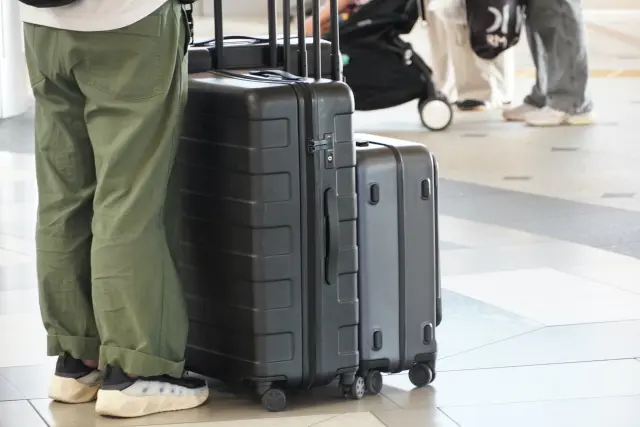 Heavy Luggage · Travel Light
Haneda ↔ Tokyo Hotel Luggage Delivery
Why it may fit
Door-to-door luggage delivery between Haneda Airport and Tokyo hotels — choose your pickup and drop-off points, hand off your suitcases at the airport counter, and skip carrying bags through stations.
Before booking
Check the live price, availability, eligibility, and terms before paying.
Want to keep your bags instead of sending them ahead? If check-in is still hours away, store your luggage by the day at a staffed spot near your first stop, explore hands-free, then collect it once your room is ready. See the Japan luggage-storage guide for a current comparison of lockers, Bounce, Radical Storage, ecbo cloak and delivery.


Radical Storage
Store luggage near stations & attractions
Why it may fit
Drop your bags by the day at vetted local spots near the sights.
Before booking
Check the live price, availability, eligibility, and terms before paying.
JAPANODE6% OFF
13. Haneda Terminals 1 / 2 / 3
| Terminal | Main flights | Rail access |
|---|---|---|
| Terminal 1 | Domestic, mainly JAL group | Keikyu & Tokyo Monorail |
| Terminal 2 | Domestic, mainly ANA group, plus some international flights | Keikyu & Tokyo Monorail |
| Terminal 3 | Main international terminal | Keikyu & Tokyo Monorail directly connected |
Most international visitors arrive at Terminal 3. From the arrivals area, follow the signs for either the Tokyo Monorail or Keikyu Line. Both are directly connected to the terminal, so you do not need a shuttle bus just to reach the trains.
A free inter-terminal shuttle bus links Terminals 1, 2 and 3. You may need it if your airport bus departs from a different terminal, if you are transferring between domestic and international flights, or if you are using a specific airport facility.
14. Outdated Beliefs Most Guides Still Repeat
- "The Monorail is the only way." False. Keikyu is often cheaper and more direct for Shinagawa, eastern Tokyo and Yokohama.
- "There's a direct train to Shinjuku." For normal trip planning, false. Shinjuku and Shibuya usually require one transfer by train. A direct bus is the no-transfer option.
- "Haneda is domestic-only." Outdated. Terminal 3 is Haneda's main international gateway, and Terminal 2 also handles some international flights.
- "You're stuck if you land late." False. Haneda has late-night buses, flat-fare taxis, private transfers and airport hotels.
- "The JR Pass covers Haneda access well." Misleading. It covers the Tokyo Monorail, but the fare is only about ¥520, so the airport-access benefit is small.
15. Pre-Arrival Checklist
- Confirm your arrival terminal. Most international flights use Terminal 3, but some use Terminal 2.
- Find your hotel's nearest station before choosing Keikyu, Monorail, bus or taxi.
- Set up mobile Suica if you use an iPhone and your card works with Apple Pay.
- Plan to buy a physical IC card if you use an overseas Android phone.
- If you hold a JR Pass, activate it at the Terminal 3 JR EAST Travel Service Center before using the Monorail.
- Check last-train times if landing after 23:00.
- Consider a late-night bus, taxi or airport hotel if landing around midnight or later.
- Decide whether to send large luggage to your hotel.
Helpful adjacent reading on JAPANODE:
In a hurry? Here's the short answer
Start with the route that matches your trip: broader stated network access and 5G, or a simple flexible data plan. Compare the live plan details before checkout.

Start here if stated Docomo + KDDI access and 5G matter for a route beyond the largest cities.

A straightforward alternative for Tokyo, Osaka and Kyoto when the live data allowance and validity fit your trip.
16. Where to Next
Once you are off the plane and into the city, the trip really begins. See Day 1 of our 7-Day Japan itinerary for first-timers, the complete Japan train system guide for the wider JR and private-rail network, and — if you are still choosing airports — the Narita Airport transport guide.
The rule from the Haneda vs Narita comparison above stands: if you can choose, Haneda is usually the easier, cheaper arrival. If only Narita has your flight, Narita is still fine — it just takes a little more planning.
Make it your trip
Still planning your Japan trip?
Pick the question on your mind. Compare your options, check the details and take one more thing off your list.
Would a JR Pass save you money?
Add your train journeys and compare individual tickets with the nationwide pass. See which costs less for your route.
Calculate my rail costs
Which eSIM fits your Japan trip?
Maps, messages, hotspot use: compare five providers by data allowance, network and plan limits before you choose.
Find my Japan eSIM
How much can you fit into one week?
Connect Tokyo, a Fuji or Hakone day trip, Kyoto and Osaka with a day-by-day route, travel costs and booking advice.
Explore the 7-day routeFrequently Asked Questions
The Keikyu Airport Line is usually the cheapest option — about ¥327 IC to Shinagawa in roughly 13 minutes, and around ¥535 IC to Shinjuku with one transfer. The Tokyo Monorail is also good value at ¥519 IC to Hamamatsucho. Fares are as of 2026 and should be confirmed officially before travel.
Choose Keikyu for Shinagawa, Asakusa, eastern Tokyo, Yokohama or the lowest fare. Choose the Tokyo Monorail if you hold a Japan Rail Pass or are heading toward Hamamatsucho, Tokyo Station or the JR Yamanote Line.
For normal trip planning, there is no practical direct train from Haneda to Shinjuku or Shibuya. Take Keikyu to Shinagawa and transfer to the JR Yamanote Line, or take a direct Airport Limousine Bus if you prefer fewer transfers with luggage.
Take Keikyu to Shinagawa and transfer to the JR Yamanote or Keihin-Tohoku Line, or take the Tokyo Monorail to Hamamatsucho and transfer to JR. JR Pass holders should usually choose the Monorail route.
Only a little. The JR Pass covers the Tokyo Monorail, but not Keikyu or Airport Limousine Buses. Because the Monorail fare is only about ¥520, the airport-access benefit is small compared with Narita, where the JR Pass can cover the much more expensive Narita Express.
Haneda is closer, cheaper and easier for getting into central Tokyo. Narita can still be worth choosing if it has a better flight route or the airfare is significantly cheaper, but airport access from Narita takes more time and planning.

Written by
JAPANODE
Based in Japan, sharing real travel tips & local insights for visitors. Follow us on Instagram @thejapanode for daily Japan content.
You Might Also Like
 Itinerary
7-Day Japan Itinerary for First-Timers: Tokyo, Hakone, Kyoto & Osaka (2026)
20 min read
 Transportation
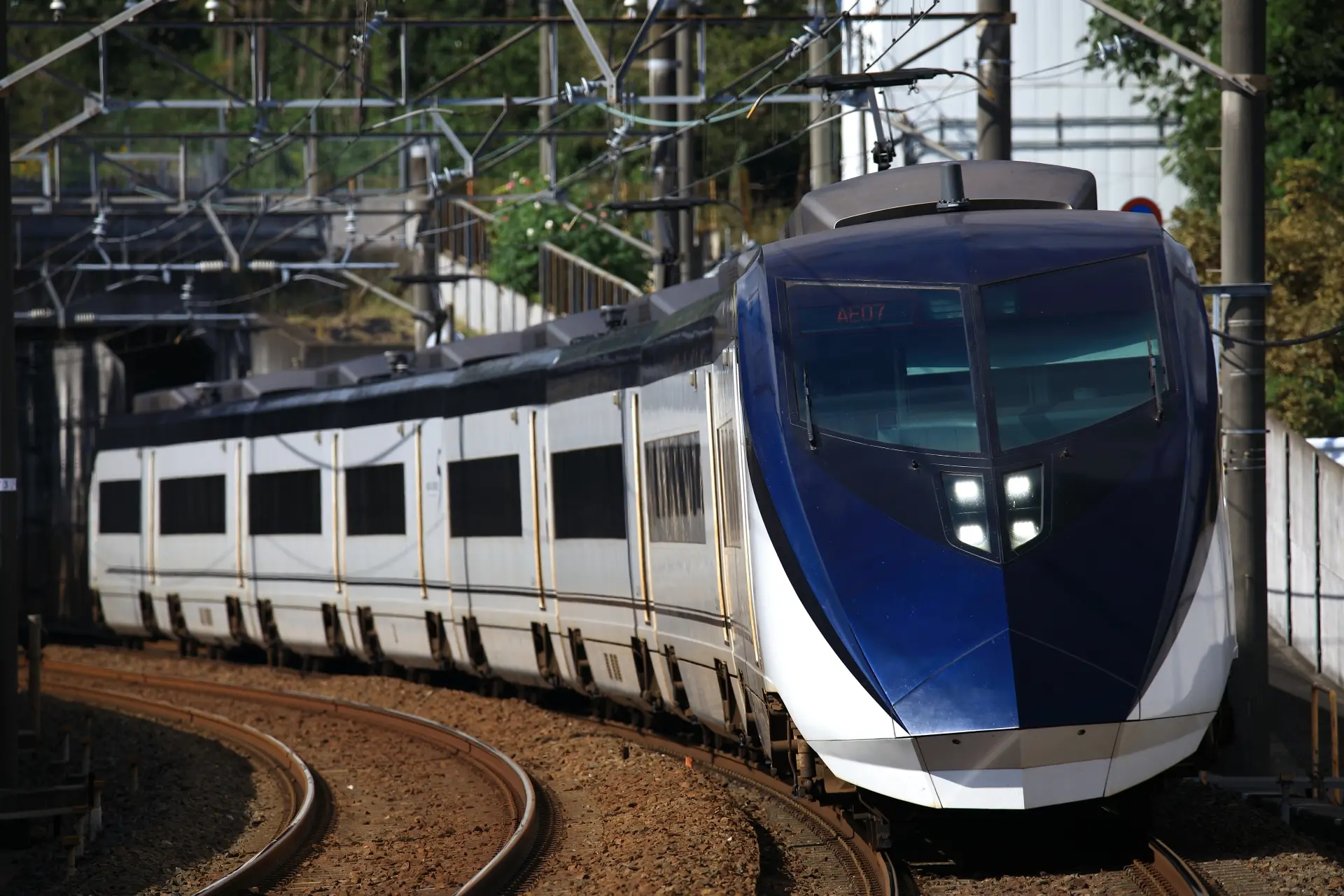
Narita Airport to Tokyo in 2026: Skyliner, N'EX, Bus & Taxi
22 min read
 Transportation
Is the JR Pass Worth It in 2026? Prices & Break-Even Routes
15 min read
ConnectivityBest eSIM for Japan 2026: 5 Providers Compared
20 min read
 Transportation
The Complete Guide to Japan's Train System for First-Time Visitors
16 min read