On this page
This guide compares every realistic transport option between Narita Airport and central Tokyo — Skyliner, N'EX, TYO-NRT, Airport Limousine Bus, Keisei local trains and private transfers — using operator-published fares and timetables, last verified September 19, 2026; November construction notice checked October 7, 2026. It is built for first-time visitors choosing between speed, budget, luggage, hotel-area access and late-night arrival.
Fares and schedules can change — especially around seasonal timetable revisions and temporary service suspensions. Always check the operator's official website before travel.
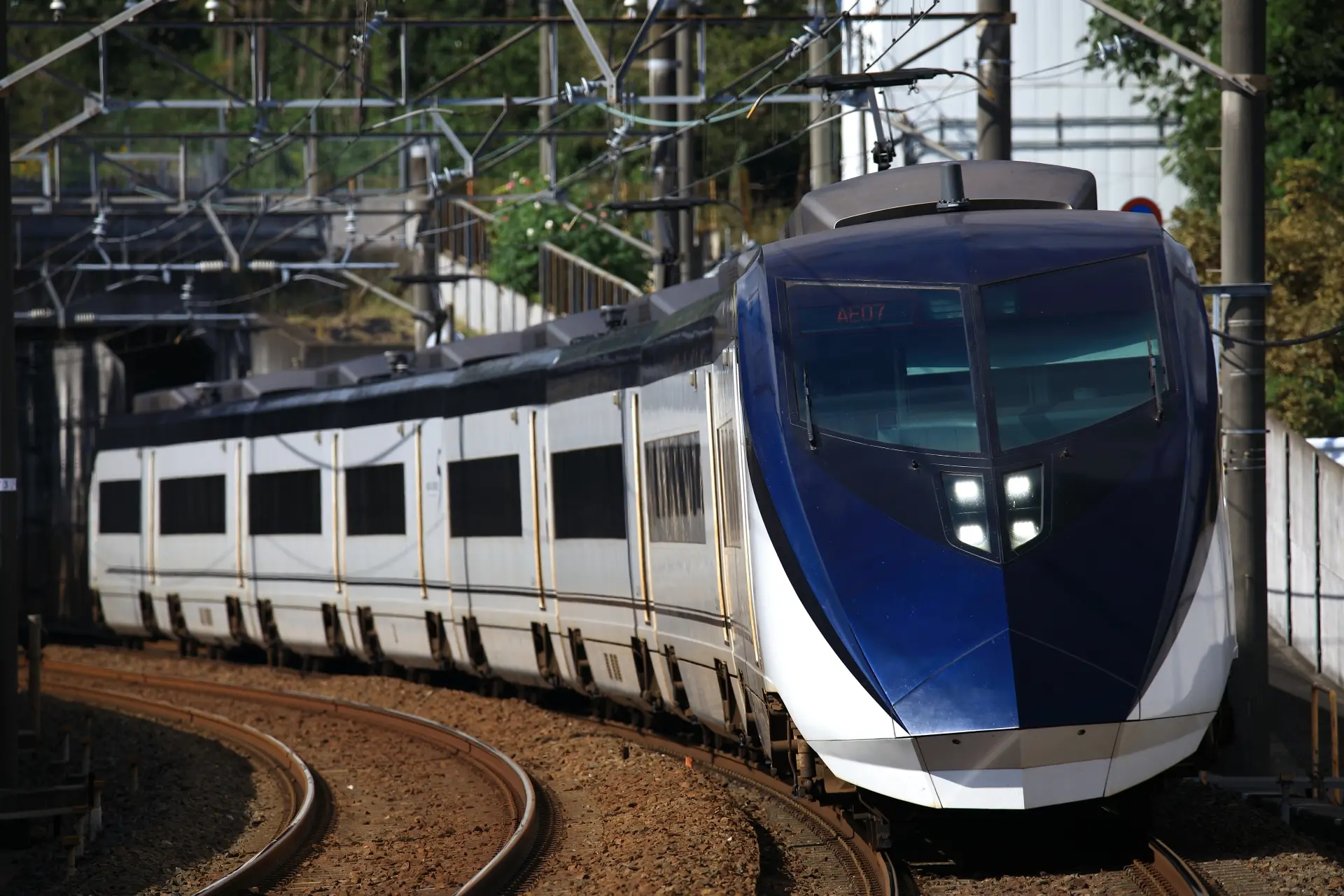
The fastest way from Narita Airport to central Tokyo is the Keisei Skyliner, which reaches Nippori and Ueno in about 36–41 minutes. If you are staying around Ueno, Asakusa or Akihabara, it is usually the best choice.
For Shinjuku, Shibuya, Tokyo Station, Shinagawa or Yokohama, the JR Narita Express (N'EX) is often easier because it runs directly to major JR stations with reserved seating and no transfer.
Budget travelers should compare the TYO-NRT Airport Bus to Tokyo Station at ¥1,500 one way. Families with heavy luggage may prefer the Airport Limousine Bus or a private transfer, especially for hotel-direct arrival or late-night flights.
If you are landing at Kansai International Airport instead, see our Kansai Airport (KIX) transport guide — the same decision framework, adapted for Osaka, Kyoto and Kobe.
JR East has announced tunnel construction from the evening of November 6 to the morning of November 8. On November 7, Narita Express trains operate between Narita Airport and Tokyo, with the Tokyo–Shinjuku/Ofuna sections suspended. Direct N’EX travel to Shibuya, Shinjuku, Shinagawa and Yokohama is affected. Some trains on the adjoining evening and morning are also changed. Check JR East’s train-by-train notice and plan an alternative connection; the airport–Tokyo section is not a blanket closure.
1. Best Way from Narita Airport to Tokyo: Quick Answer
Still choosing your flight? Start with Narita vs Haneda to compare the airfare difference with ground transport, your hotel location and arrival time. Once you have chosen Narita, use the routes below to plan the transfer.
Pick by destination, not by brand. The Skyliner wins for Ueno and Nippori; the Narita Express wins for Tokyo Station, Shinagawa, Shibuya, Shinjuku and Yokohama; the TYO-NRT bus wins for budget-direct to Tokyo Station; the Airport Limousine Bus wins for hotel-direct access and Tokyo Disney Resort. Late-night arrivals after the last train usually fall back to a private transfer or a Narita-area hotel for the first night.
Most "fastest train" debates between Skyliner and N'EX miss the real question: where is your hotel? A train that saves five minutes but lands you a 25-minute subway transfer from your hotel is not faster in any meaningful sense. The sections that follow are organized so you can pick by hotel area first, then by budget and luggage second.
2. Pick Your Route in 30 Seconds
Answer four questions and the finder applies the same rule as this guide — hotel area first, then group size, luggage and landing time — and links the booking page or the section you need.
30-second transfer finder
Which way in from Narita Airport (NRT)?
Pick your hotel area, group size, luggage and landing time. The answer follows the same rule as this guide: destination first, then the cheapest option that still works with your bags and your arrival hour.
Take the JR Narita Express (N'EX) to Tokyo Station / Marunouchi / Ginza
N'EX runs directly into Tokyo Station with reserved seats and luggage racks. If the price matters more than the time, the TYO-NRT bus does the same trip for ¥1,500.
- Fare
- about ¥3,070 Tokyo Station · ¥3,250 Shinjuku / Shibuya · ¥4,370 Yokohama
- Time
- 53–90 min, reserved seats, no transfer
- JR Pass holders: N'EX is fully covered, including the reserved seat
- Airport trains have luggage space, but reserve seats together so bags stay near you
- Trains stop earlier than many international arrivals; late landings should re-run this with the after-23:00 setting
Also worth comparing · TYO-NRT Airport Bus
¥1,500 regular · ¥3,000 late-night / early morning · 65–90 min to Tokyo Station
See the TYO-NRT bus detailsFares are adult one-way figures verified for 2026 and can change at timetable revisions; confirm on the operator or booking page. Links marked as booking pages are affiliate links, which may earn us a commission at no extra cost to you.
Prefer to scan? The table covers the same decisions:
| Staying in / going to | Best option | Why |
|---|---|---|
| Ueno / Nippori | Keisei Skyliner | Fastest and simplest |
| Asakusa / Higashi-Ginza | Keisei Access Express | Direct via subway network, no transfer |
| Tokyo Station / Marunouchi / Yaesu | N'EX or TYO-NRT Bus | N'EX is faster; bus is cheaper |
| Shinjuku / Shibuya | JR Narita Express | Direct reserved-seat train |
| Shinagawa | JR Narita Express | Direct access, useful for Shinkansen transfer |
| Ikebukuro | Skyliner to Nippori + JR, or a direct bus if available | Plan a train transfer; Ikebukuro is outside the regular N'EX route |
| Tokyo Disney Resort | Airport Limousine Bus | Easiest with children and luggage |
| Yokohama / Minato Mirai | JR Narita Express | Direct, no transfer through Tokyo |
| Minato / Roppongi / Akasaka / hotel-direct | Airport Limousine Bus or Private Transfer | Avoids a final train transfer or long walk with bags |
| Late-night arrival (after last train) | TYO-NRT if still running, otherwise Narita hotel or private transfer | Trains end earlier than many international flights |
| Very early departure (next morning) | Stay at a Narita-area hotel the night before | First trains may not be early enough |
3. Cross-Route Comparison Table
| From NRT to | Best for | Service | Fare (adult, one-way) | Journey time |
|---|---|---|---|---|
| Ueno / Nippori | Speed | Keisei Skyliner | ¥2,580 ticket / ¥2,567 IC (discount e-ticket available) | 36–41 min |
| Tokyo Station | Direct, premium | JR Narita Express (N'EX) | ¥3,140 | 53–60 min |
| Tokyo Station | Budget | TYO-NRT Airport Bus | ¥1,500 regular / ¥3,000 late-night or early morning | 65–90 min |
| Shinjuku / Shibuya | Direct, no transfer | JR Narita Express (N'EX) | ¥3,330 | 75–85 min |
| Asakusa / Higashi-Ginza | Direct via Sky Access | Keisei Access Express | confirm at booking | 60–70 min |
| Hotel-direct | Heavy luggage / families | Airport Limousine Bus | route-dependent | 80–120 min |
| Tokyo Disney Resort | Families with luggage | Airport Limousine Bus | route-dependent | 60–75 min |
| Yokohama | Direct | JR Narita Express (N'EX) | ¥4,480 | around 90 min |
| Late-night / group of 4 with large bags | After last train or hotel-direct | Taxi or private transfer | ¥22,000–30,000+ per vehicle estimate | 60–90 min |
Fares above use operator-published figures where stable; the Keisei Skyliner total is broken into the standard base fare (¥1,280 magnetic ticket / ¥1,267 IC) plus the Skyliner limited-express fee (¥1,300). The TYO-NRT bus uses the operator's published ¥1,500 regular and ¥3,000 late-night/early-morning fares. Always confirm at booking, especially around fare revision periods.
In short: choose the Skyliner for Ueno or Nippori, the JR Narita Express (N'EX) for Shinjuku, Shibuya, Tokyo Station or Yokohama, the TYO-NRT bus for the cheapest direct route to Tokyo Station, and the Airport Limousine Bus for hotel-direct access or Tokyo Disney Resort. Late-night arrivals usually fall back to a private transfer or a Narita-area hotel for the first night.
4. Train Options from Narita Airport to Tokyo
Four trains run between Narita Airport and central Tokyo. They are ordered below by typical visitor relevance, not by brand alphabetical.
Option 1 — Keisei Skyliner
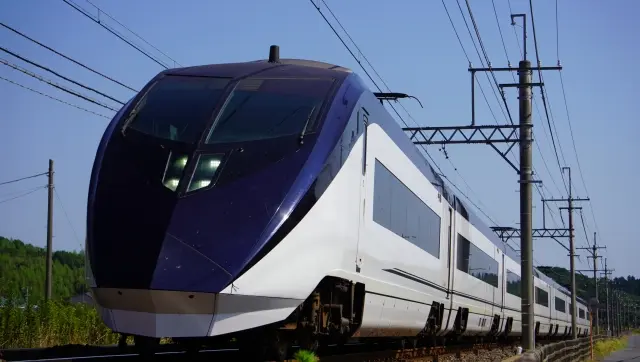
The fastest train from Narita Airport to central Tokyo, reaching Nippori and Ueno in about 36–41 minutes. The Skyliner is the Keisei rail group's reserved-seat limited express, running non-stop or near non-stop along the Narita Sky Access Line between Narita Airport and Nippori / Keisei-Ueno.
Best for:
- Hotels around Ueno, Nippori, Asakusa (with one transfer), Akihabara (Yamanote Line transfer at Ueno or Nippori)
- Travelers who prioritize speed and a guaranteed reserved seat
- Travelers comfortable with one transfer onto JR or subway at Ueno or Nippori
Avoid if:
- Your hotel is in Shinjuku, Shibuya, Shinagawa or Tokyo Station and you want no transfer — the N'EX is the better fit
- You have very large luggage and want to minimize any change of trains
- You arrive after the final Skyliner of the day
Fare: Operator-published figures for Narita Airport to Keisei-Ueno or Nippori:
- Base fare: ¥1,280 (magnetic ticket) or ¥1,267 (IC card)
- Skyliner limited-express fare: ¥1,300
- Total: ¥2,580 (ticket) or ¥2,567 (IC)
Unlike JR East fares, the Skyliner fare structure is set by Keisei. Always check the Keisei official fare page before purchase, especially if you are reading this after a fare-revision period.
How to buy:
- Keisei ticket counter or reserved-seat ticket machines at Narita Airport Station and Terminal 2 Station
- Keisei's online Skyliner e-ticket store (discount e-tickets are offered through partner channels for international visitors)
- Combination tickets such as the Skyliner + Tokyo Subway Ticket are sold for travelers who plan heavy subway use after arrival
 Fastest · Ueno / Nippori
Keisei Skyliner Discount E-Ticket
Why it may fit
Reserved-seat fastest train from Narita Airport to Ueno / Nippori in about 36–41 minutes. Discount e-ticket for international visitors, redeemable at the Keisei Skyliner counter on arrival.
Before booking
Check the live price, availability, eligibility, and terms before paying.
Option 2 — JR Narita Express (N'EX)
The easiest direct train from Narita Airport to major JR stations. The JR Narita Express, branded N'EX, runs reserved-seat services from Narita Airport to Tokyo Station, Shinagawa, Shibuya, Shinjuku and Yokohama. JR East's current route map shows branches to Shinjuku and Ofuna; plan a transfer for Ikebukuro.
Best for:
- Tokyo Station, Shinagawa, Shibuya and Shinjuku
- Yokohama and the Minato Mirai area
- JR Pass holders, since N'EX is fully covered including reserved seats
- Travelers who value all-reserved seating and through-running to JR stations
Avoid if:
- You are staying near Ueno or Nippori — the Skyliner is faster and cheaper for those areas
- You want the absolute cheapest train option
- You arrive after the last N'EX service of the day
Fare: JR East's current ordinary-car one-way fares are ¥3,140 to Tokyo Station, ¥3,330 to Shinagawa, Shibuya or Shinjuku, and ¥4,480 to Yokohama. JR East says these prices are the same throughout the year, but always confirm the official fare page before travel.
N'EX TOKYO Round Trip Ticket (foreign passport holders only):
| Item | Detail |
|---|---|
| Ticket | N'EX TOKYO Round Trip Ticket |
| Eligibility | Non-Japanese passport holders only |
| Price | Adult ¥5,200 / Child ¥2,600 |
| Validity | 14 days |
| Covers | Round trip between Narita Airport and the Tokyo area |
| Best for | Round-trip travelers using N'EX both directions |
For an eligible traveler making both airport journeys within 14 days, the ¥5,200 round-trip ticket saves ¥1,460 compared with two ¥3,330 ordinary-car single tickets to or from Shinjuku or Shibuya. It offers no round-trip saving if you use only one direction.
How to buy:
- JR East Travel Service Center at Narita Airport (Terminal 1 and Terminal 2)
- Designated reserved-seat ticket machines at the airport
- Reserve your outbound seat at purchase; reserve the return seat any time within the 14-day validity
If your itinerary already justifies a multi-day Japan Rail Pass for long-distance travel, the N'EX becomes effectively free on top of it — make sure to activate the pass at the JR East Travel Service Center before boarding.
Option 3 — Keisei Access Express
A cheaper, non-reserved train that can run directly toward Asakusa, Higashi-Ginza and parts of the Toei Asakusa Line network. The Access Express is a Keisei service via the Narita Sky Access Line and the Toei Asakusa Line, with direct through-running into the central Tokyo subway network on many services.
Best for:
- Asakusa, Higashi-Ginza, Nihombashi (direct subway through-running)
- Travelers who want a cheaper direct rail route with no reserved-seat surcharge
- Travelers with moderate luggage who do not need a guaranteed seat
Avoid if:
- You want a guaranteed reserved seat
- You want the fastest possible ride (the Skyliner is faster)
- You arrive during peak commute hours with large luggage
The airport portion is only half the decision: a non-reserved through-train can become a commuter service as it enters Tokyo. Our Tokyo rush-hour guide explains the weekday peaks and why the exact direction and transfer station matter more than the line name alone.
Fare: Lower than the Skyliner because there is no reserved-seat liner fee, but the journey is slower with more stops. Confirm current fares on the Keisei official site and any major transit-routing app before travel, since fares vary by destination station along the through-running network.
Option 4 — Keisei Main Line Limited Express
One of the cheapest direct rail routes from Narita Airport to Tokyo, but slower and less comfortable with luggage. The Keisei Main Line Limited Express follows the older Keisei Main Line via Aoto into Keisei-Ueno, with more stops than the Skyliner.
Best for:
- Solo budget travelers with small luggage
- Travelers staying near specific Keisei Main Line stations (such as Aoto or Yotsugi)
- Anyone treating the train ride itself as part of the experience
Avoid if:
- First-time visitors with large luggage
- Families with children
- Anyone trying to minimize transfer stress or arrival fatigue
For most foreign visitors arriving with luggage, the modest savings of the Keisei Main Line over the Skyliner do not justify the extra stops and discomfort. Use this option only if the price difference is genuinely meaningful for your trip.
5. Bus & Taxi Options from Narita Airport to Tokyo
Three road-based options cover the rest of the meaningful Narita-to-Tokyo space: a cheap city-direct bus, a hotel-direct service bus, and private cars.
Option 5 — TYO-NRT Airport Bus
The cheapest realistic direct option between Narita Airport and Tokyo Station. The TYO-NRT brand (originally a merger of the older "THE Access Narita" and "Tokyo Shuttle" services) runs frequent buses between Narita Airport and Tokyo Station's Yaesu side.
Best for:
- Tokyo Station / Yaesu / Marunouchi area hotels
- Budget travelers who do not mind road traffic variability
- Daytime arrivals while regular services are running
- Solo travelers and pairs with moderate luggage
Avoid if:
- You need a guaranteed arrival time (road traffic varies)
- You are arriving during peak rush hours
- Your hotel is far from Tokyo Station
- You are prone to motion sickness
Fare (operator-published):
- Regular adult fare: ¥1,500
- Late-night / early-morning adult fare: ¥3,000
The late-night / early-morning premium is one of the biggest pricing differences in the Narita Airport transport market — at ¥3,000, the TYO-NRT bus is no longer the obvious budget choice, and the calculation often shifts toward a Narita-area hotel for one night or a private transfer for groups.
Option 6 — Airport Limousine Bus
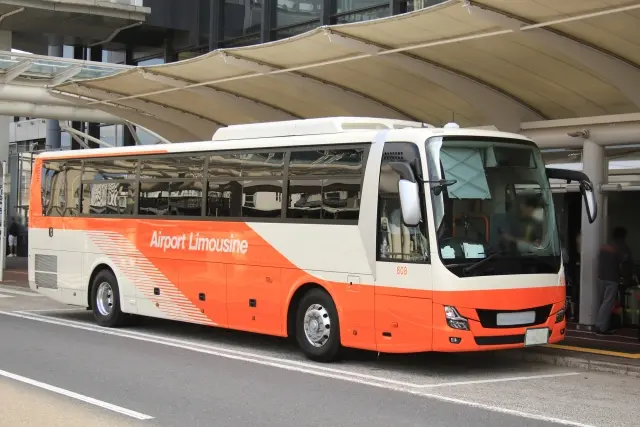
The easiest option for travelers who want hotel-area drop-off with luggage handled at the curb. Operated by Airport Limousine and partners, this network connects Narita Airport directly to dozens of central Tokyo hotels, key bus terminals (Shinjuku, Tokyo Station, Yokohama City Air Terminal) and Tokyo Disney Resort.
Best for:
- Families and travelers with heavy luggage
- Hotel-area drop-off in Roppongi, Akasaka, Shinjuku, Ginza and other major districts
- Tokyo Disney Resort guests
- Travelers nervous about train transfers with luggage
Avoid if:
- You need the fastest possible route to central Tokyo
- You are traveling during heavy road congestion
- Your hotel is not on or near a Limousine Bus stop
Fare: Route-dependent. Many central Tokyo routes are roughly in the ¥3,100–¥3,600 range one way, depending on destination. Confirm the exact fare on the Airport Limousine official site for your specific destination at booking.
 Best for Families · Hotel Direct
Airport Limousine Bus to Tokyo
Why it may fit
Direct hotel-area bus from Narita Airport to major Tokyo districts and hotels. Luggage handled at the curb, no train transfers required.
Before booking
Check the live price, availability, eligibility, and terms before paying.
Option 7 — Taxi / Private Transfer
A taxi or private transfer from Narita to central Tokyo is expensive for one traveler, but the calculation changes for a group sharing one vehicle. It can make particular sense for three or four travelers with several large suitcases, late-night arrivals, families with small children, or anyone going to a hotel that requires another train or subway after reaching central Tokyo. Standard Tokyo taxis are not the only option — pre-booked private transfers offer fixed pricing, airport pickup and clearer instructions than a standard metered taxi, often at a comparable or slightly lower total once tolls and surcharges are included. Some services offer English-language support, but do not assume every driver personally speaks English unless the booking page explicitly states so.
Best for:
- Groups of three to four splitting the fare
- Late-night arrivals after the last realistic train or bus
- Families with young children
- Travelers with three or more large suitcases
- Honeymoon and luxury-travel itineraries where in-airport ease matters
When a private transfer works especially well for Minato
Minato covers hotel areas such as Roppongi, Akasaka, Shiodome and parts of the Shinagawa/Tamachi waterfront. For many addresses there is no single airport train that takes you to the hotel door: the practical rail route usually ends with a subway change, local train, taxi or walk. That final step is manageable with light luggage, but it is where a four-person group with several suitcases loses much of the train's price and time advantage.
Compare the whole vehicle quote divided by your party size, then check the luggage allowance shown for that exact vehicle class. A four-seat sedan may not hold four large suitcases; choose a minivan or larger class only when the booking page explicitly shows enough capacity. Pre-booking also gives the driver the destination and arrival details before pickup, which removes a decision from the first hour after a long flight.
Avoid if:
- Solo budget traveler with daytime arrival and easy train access
- Destination is near Ueno or Nippori (the Skyliner is faster and far cheaper)
- Destination is Tokyo Station with daytime trains and buses still running
Fare: A taxi or private transfer from Narita Airport to central Tokyo can easily cost ¥22,000–¥30,000+, depending on destination, tolls and late-night surcharges. Pre-booked English-speaking private transfer services often quote a flat rate, which can be predictable and slightly lower than metered taxi totals for the same route.
For a group, compare the vehicle quote per person before dismissing it as too expensive:
| Travelers sharing one vehicle | If the quote is ¥22,000 | If the quote is ¥30,000 |
|---|---|---|
| 2 | ¥11,000 each | ¥15,000 each |
| 3 | about ¥7,300 each | ¥10,000 each |
| 4 | ¥5,500 each | ¥7,500 each |
This is a split-cost illustration, not a live quote. The train remains much cheaper for most travelers, especially to Ueno, Nippori or a hotel beside an N'EX station. A car becomes more rational when the alternative includes a final taxi, multiple train tickets, a missed last service, or moving several large bags through a transfer station. Run the route finder above, then confirm the vehicle's listed passenger and luggage capacity before paying.
 Fixed Price · Groups & Late Night
Narita → Tokyo Private Transfer (Kiwitaxi)
Best fit for 3–4 travelers with several large bags
Why it may fit
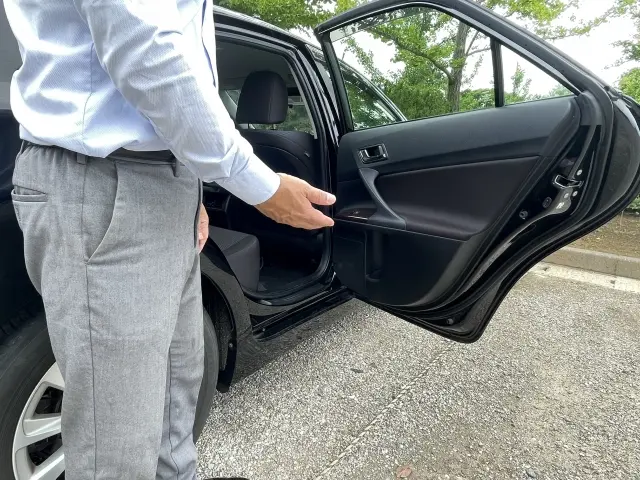
Pre-booked private car from Narita Airport to any Tokyo address. Fixed price quoted up front, with the driver meeting you in arrivals and luggage handled at the curb. Compare the per-vehicle quote across 3–4 travelers and select a class that explicitly fits every suitcase.
Before booking
Check the live price, availability, eligibility, and terms before paying.
If you prefer to book through GetYourGuide, the alternative below is a specific private transfer between Narita and an address in Tokyo's 23 wards. It includes 90 minutes of arrival waiting time, but extra waiting or a vehicle upgrade can cost more. Compare the final quote, cancellation terms and suitcase capacity for your exact group with Kiwitaxi before booking; neither service is automatically cheaper for every route.
Narita → Tokyo 23 Wards Private Transfer (GetYourGuide)
Alternative checkout for groups with luggage
Best for
Groups going to a Tokyo 23-ward address
Before booking
Extra waiting or more luggage than the selected vehicle allows can add cost.
Why it may fit
Pre-book a private car between Narita Airport and an address in Tokyo's 23 wards. The listing includes 90 minutes of arrival waiting time and offers vehicle sizes for groups of up to nine. Check the listed suitcase allowance and final price for your selected vehicle.
6. Narita Airport to Tokyo Disney Resort
For families going directly from Narita Airport to Tokyo Disney Resort, the Airport Limousine Bus is usually the easiest option when the schedule fits. The bus runs directly to Tokyo Disneyland, Tokyo DisneySea and selected Disney Resort-area hotels without any train transfers — a meaningful advantage with strollers, kids and multiple suitcases.
Departures are limited compared with the main Tokyo Station routes, so check the Disney Limousine Bus timetable before deciding. If your arrival does not match a convenient bus departure, the fallback is the JR Narita Express to Tokyo Station, then JR Keiyo Line to Maihama Station. This works but involves a long underground walk and a luggage-heavy transfer — usually not what tired children need on arrival day.
7. Narita Airport to Yokohama
For Yokohama, the Narita Express is usually the simplest rail option because it runs directly from Narita Airport to Yokohama Station on selected services. The ride is longer than Tokyo-bound routes (around 90 minutes), but the direct reserved-seat service is genuinely valuable with luggage, particularly compared with a multi-transfer route through central Tokyo.
The N'EX one-way Yokohama fare is ¥4,480. JR Pass holders ride this service without an additional fare; otherwise, the N'EX TOKYO Round Trip Ticket (¥5,200) also covers round-trip travel to eligible Yokohama-area destinations within the N'EX ticket area, making it a strong deal for travelers basing themselves in Yokohama.
For Minato Mirai, you can transfer at Yokohama Station to the Minatomirai Line for two stops to Minatomirai or Motomachi-Chukagai stations — under 10 minutes including the transfer.
8. JR Pass & Foreign-Passport Discount Tickets
The Narita Airport transport market has more discount-ticket structure than most Japanese airport-access routes, almost entirely thanks to the JR Pass and Keisei's tourist-oriented combo tickets.
N'EX TOKYO Round Trip Ticket
This is the most important single discount ticket on the route:
- Eligibility: Non-Japanese passport holders only
- Price: Adult ¥5,200 / Child ¥2,600
- Validity: 14 days
- Covers: Round trip between Narita Airport and the broader Tokyo area via N'EX (including Yokohama-area destinations on the N'EX network)
- Best for: Round-trip travelers using N'EX both directions
Confirm at the JR East Travel Service Center at Narita Airport (Terminal 1 or Terminal 2 location) on arrival.
Japan Rail Pass
The nationwide Japan Rail Pass covers the JR Narita Express, including reserved seats, for the full pass validity period. The pass does not cover the Keisei Skyliner, Keisei Access Express or any of the bus services. If your itinerary already justifies a JR Pass for long-distance Shinkansen travel, the N'EX from Narita is effectively free on top of it — see our Is the JR Pass worth it in 2026? guide for the full cost-benefit analysis.
Skyliner Discount E-Tickets
Keisei offers online Skyliner discount tickets through partner channels for international visitors. Pricing and conditions can change — check the Skyliner Special Discount Tickets page on the Keisei official site, or the Klook listing where the e-ticket is sold, before purchase.
Skyliner + Tokyo Subway Ticket Combo
This combo is one of the strongest first-visit deals on the market:
- Best for: travelers spending 24–72 hours in Tokyo with heavy subway use, arriving via Ueno
- Avoid if: your trip uses JR Pass for most movement, or you mostly stay near your hotel
The combo pairs a one-way or round-trip Skyliner with 24, 48 or 72 hours of unlimited Tokyo Metro and Toei subway rides. For couples doing a typical first-visit Tokyo itinerary (Asakusa, Ueno, Akihabara, Ginza, Shibuya, Shinjuku), the savings versus paying per ride are substantial.
9. IC Cards at Narita: Suica, Welcome Suica or PASMO?
Most travelers should set up an IC card or mobile IC card for Tokyo. You do not strictly need one to ride the Skyliner, N'EX or Limousine Bus — those use their own tickets — but you will want it for subway, bus, vending machine and convenience store payments after arrival.
For the full device-and-trip-length decision table, exact refund rules, and locations beyond the airport, see the complete Suica and Welcome Suica guide.
Welcome Suica
JR East's tourist IC card, available at major Narita Airport ticket counters:
- Valid for 28 days from issue
- No deposit required (a normal Suica requires ¥500 deposit)
- Unused balance is not designed to be refunded like a regular Suica
The third point is the one travelers most often miss. Do not load too much money onto a Welcome Suica on day one — it is designed for short-term visitors and the unused balance is not refunded at the end of your trip in the way a regular Suica's balance is.
Regular Suica or PASMO (or Mobile Suica)
For iPhone users, adding Suica, PASMO or Welcome Suica Mobile to Apple Wallet is often the easiest option — you can set it up before landing and tap-and-go from the first train. Android support is more complicated: mobile IC cards generally require Osaifu-Keitai / FeliCa-compatible devices, so many overseas Android phones cannot install Suica or PASMO at all. If you are unsure whether your Android phone supports FeliCa, plan to get a physical IC card at the airport or in Tokyo instead.
Physical IC card availability at airport machines has changed several times in recent years. Welcome Suica is the safest tourist-facing option to check first at JR East counters or ticket machines; regular Suica and PASMO availability is best confirmed on arrival.
Quick decision
- iPhone user: set up Suica or Welcome Suica Mobile in Apple Wallet before landing — easiest path
- Android user with FeliCa-compatible phone: Mobile Suica may work; check device compatibility before relying on it
- Android user without FeliCa, or want a physical card: Welcome Suica at the airport — do not over-load it
- Staying longer than 28 days or want a fully refundable card: regular Suica or PASMO if available at the airport machine
10. Late-Night Arrival Playbook
Late-night arrivals are where Narita Airport becomes more complicated than Haneda. Trains end relatively early for an international airport, buses may have limited departures, and taxis to central Tokyo are expensive enough that an airport-area hotel often beats them on cost.
If your flight lands after 22:00, the working assumption should be: confirm your actual gate arrival, immigration queue, baggage pickup, and any inter-terminal transfer time before counting on the last train or bus. The published "last service" times are when the train leaves the airport — not when you can comfortably reach it.
Late-night decision table
| Arrival situation | Best move |
|---|---|
| Flight lands before 21:30 | Train is still realistic — Skyliner or N'EX as normal |
| Flight lands 21:30–22:30 | Check the last Skyliner or N'EX carefully against your terminal and queue time |
| Flight lands 22:30–23:30 | TYO-NRT late-night bus may still be possible — confirm the schedule |
| After the last late bus | Narita-area hotel for the night, or pre-booked private transfer |
| Arriving with children | Skip the last-train gamble — Narita hotel or private transfer |
| Arriving with three or more large bags | Skip the last-train gamble — same reason |
| Next-morning early flight or transfer | Stay near Narita — first trains may not run early enough |
TYO-NRT late-night premium
The late-night and early-morning TYO-NRT buses cost more than daytime services. The regular adult fare is ¥1,500; late-night / early-morning services are ¥3,000. This is the single most important pricing fact for late-arriving budget travelers — at ¥3,000, a private transfer for two or three people is no longer clearly more expensive on a per-person basis, especially with the ease and predictability factored in.
A practical detail for the last TYO-NRT bus from Narita Airport: the operator notes that passengers should go directly to the bus stop and pay on board by cash or IC card — credit cards are not accepted on the last late-night service.
Compare Narita-to-Tokyo private vehicles
Compare vehicle sizes and luggage limits for your route. You can change the destination to match your hotel area.
Prices are estimates per vehicle. Confirm your date, exact hotel, child seats, luggage and final total on Kiwitaxi before booking.
Scroll inside the search to compare all vehicle classes.
Loading transfer search…
Search not loading? You can also compare vehicles directly: Open this route on Kiwitaxi
* Affiliate link — JAPANODE receives a commission when a purchase is attributed to this link
Narita-area hotels for late arrivals
For arrivals after the last realistic train and bus, or with very early next-day departures, a Narita-area hotel is often the calmer choice. Major options near the airport:
- Hotel Nikko Narita — one of the larger international-class hotels near the airport with regular shuttle service
- Hilton Tokyo Narita Airport — full-service Hilton with airport shuttle
- Tokyu Stay Narita — modern, mid-priced, well-located for short overnight stays
- nine hours Narita Airport — capsule-hotel format, the cheapest option for solo travelers needing a few hours of sleep before an early flight
Confirm current rates and shuttle availability with each hotel directly before booking, especially for very early-morning departures.
11. Narita vs Haneda: Which Airport Is Better for Tokyo?
Haneda is closer to central Tokyo and usually easier and cheaper for airport access. Narita is farther away and adds time and money — but Narita still wins when the flight itself is significantly cheaper, or when only Narita has the routes you want.
Landing at Haneda instead? See our Haneda Airport to Tokyo guide for the monorail, Keikyu, bus, and taxi options there.
| Factor | Narita | Haneda |
|---|---|---|
| Distance to central Tokyo | 60–70 km | ~15 km |
| Typical access time | 36–90 min | 15–45 min |
| Typical access cost | Higher | Lower |
| International routes | Very strong | Very strong |
| Low-cost carrier options | Stronger | More limited |
| Late-night arrival stress | Higher | Lower |
| Best for | Cheaper flights, long-haul, LCC | Convenience, short stays, central Tokyo base |
Compare the full flight price, including baggage, with ground transport for your whole group and any extra hotel night. The worthwhile airfare difference depends on your hotel, arrival time and value of time. Our Narita vs Haneda guide includes worked comparisons; the Haneda transport guide covers that airport's arrival options.
12. Luggage Strategy: Delivery vs Carry-On
Use our Japan Luggage Planner to check a hotel-to-hotel or departure-airport handover plan. It shows when your dates need carrier confirmation and what to keep with you between stops.
If you are arriving after a long flight with large suitcases, the best route is not always the fastest route. A direct bus or door-to-door luggage delivery can be more comfortable than carrying bags through crowded transfer stations.
Send your luggage ahead — door-to-door delivery from Narita
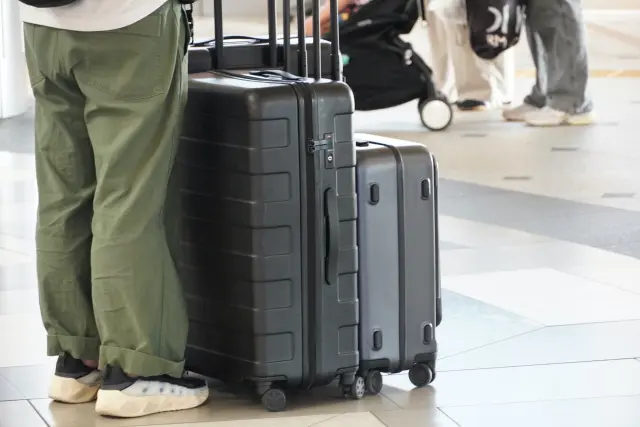
Japan's airport luggage delivery network — including providers such as Yamato Transport and JAL ABC, with Klook and other partners offering booking access — is available directly at Narita Airport. You can hand off your luggage at the airport counter and pick it up at your hotel the next day. Fees vary by suitcase size, delivery provider and destination — expect roughly a few thousand yen per item for a standard suitcase to central Tokyo. Same-day delivery is limited by counter, destination and cutoff time, so always confirm at the airport counter before handing over your luggage.
This is especially useful for:
- Couples with multiple suitcases hopping straight onto a Shinkansen or N'EX
- Travelers heading to a ryokan that does not have full bellhop staff
- First-day arrivals who want to do a few hours of light sightseeing before checking in
 Heavy Luggage · Travel Light
Tokyo Hotel ↔ Narita Airport Luggage Delivery
Why it may fit
Door-to-door luggage delivery between Narita Airport and Tokyo hotels. Hand off your suitcases at the airport counter (or from your hotel before flying out) and skip carrying heavy bags through trains and stations.
Before booking
Check the live price, availability, eligibility, and terms before paying.
When to carry vs send
| Situation | Recommendation |
|---|---|
| One or two carry-on bags | Carry — trains and buses are easy |
| Two large suitcases per person, daytime arrival | Send to your first hotel, then sightsee light |
| Multiple suitcases, late-night arrival | Send to hotel + take Limousine Bus or private transfer |
| Heading straight to a regional ryokan | Send directly to the ryokan — most accept Yamato |
| Skipping central Tokyo, going straight to Kyoto | Send to Kyoto hotel (next-day delivery from airport) |
13. Narita Terminals 1 / 2 / 3: Where to Catch Each Service
Narita has three passenger terminals. The rail access is the most important thing to know if you are not arriving at a specific train operator's preferred terminal.
| Terminal | Rail access | Bus access | Notes |
|---|---|---|---|
| Terminal 1 | Narita Airport Station (basement) | Bus stops outside arrivals | Full-service international terminal |
| Terminal 2 | Airport Terminal 2 Station | Bus stops outside arrivals | Also serves Terminal 3 rail access |
| Terminal 3 | No direct rail station | Bus stops available | Walk or shuttle to Terminal 2 for trains |
The key Terminal 3 fact: if you arrive at Terminal 3 (used by Jetstar Japan, Spring Japan, AirAsia and several other LCCs), there is no direct rail station at your terminal. You need to walk or take the inter-terminal shuttle to Terminal 2 to access the train network — including the Skyliner and N'EX. The walk is roughly 10–15 minutes from Terminal 3 arrivals to the Terminal 2 station, longer with heavy luggage. Build that into your timing.
For buses, both TYO-NRT and Airport Limousine Bus have direct stops at all three terminals.
14. 8 Outdated Beliefs Most Guides Still Repeat
Most English-language guides to Narita Airport transport repeat a handful of claims that have aged badly. Eight of the most common:
- "The Skyliner goes to Tokyo Station." It does not. It runs to Nippori and Keisei-Ueno only. From there, you transfer to JR or subway. For direct Tokyo Station access by train, the N'EX or the JR Sobu Rapid is what you want.
- "The Narita Express is always the best train." Not for Ueno, Nippori, Asakusa or Akihabara — the Skyliner is faster and cheaper there. The N'EX wins for Tokyo Station, Shinagawa, Shibuya, Shinjuku and Yokohama.
- "Tokyo Shuttle and THE Access Narita are separate services." They were merged some years ago and are now operated under the TYO-NRT / Airport Bus Tokyo-Narita brand. Many older guides still refer to them as separate services.
- "The cheapest route is always the best." Not with large luggage, with children, during peak commute hours, or with a late-night arrival. The cheapest option also rarely has the most direct or comfortable hotel access.
- "Welcome Suica works like a normal refundable Suica." It does not. Welcome Suica is a tourist IC card valid for 28 days, with no deposit but no full refund mechanism for unused balance. Treat it accordingly.
- "Narita is basically Tokyo." It is not. Narita is much farther from central Tokyo than Haneda, and even the fastest trains take 36–60 minutes. Build that into arrival-day plans rather than treating the airport-to-hotel time as negligible.
- "You can decide your transport after landing." This is fine for daytime arrivals but risky for evening arrivals — by the time you have cleared immigration and collected luggage, you may have lost the option you would have chosen.
- "Private transfer is always wasteful." For groups of three or four splitting the fare, for families with children, or for late-night arrivals where the alternative is a Narita-area hotel, a private transfer can be the rational choice — not the luxury choice.
15. Pre-Arrival Checklist
Before your flight to Narita lands, confirm:
- Your arrival terminal (Terminal 1, 2 or 3) — and if Terminal 3, your transfer to Terminal 2 for trains
- Your hotel's nearest station and walking time
- Whether your hotel is closer to Ueno, Tokyo Station, Shinjuku, Shibuya, Asakusa, Roppongi or Yokohama (this picks your transport, not the other way around)
- Final train and bus times if arriving after 21:30 — adjusted for your terminal and your immigration / baggage time
- Whether the N'EX TOKYO Round Trip Ticket makes sense (round-trip + N'EX both directions)
- Whether to buy a Skyliner discount e-ticket in advance
- Whether to set up Mobile Suica on your phone before landing
- Whether to send a suitcase via Yamato to your first hotel
- Whether to stay at a Narita-area hotel for a late-night arrival or a very early next-morning departure
Helpful adjacent reading on JAPANODE:
- Visit Japan Web setup guide for pre-arrival immigration steps
- Best eSIMs for Japan in 2026 for connectivity from the airport
- Japan travel insurance guide for cover that matters
- First-time Japan guide for trip-planning fundamentals
- Japan train system primer for understanding the broader JR / private rail network
- Is the JR Pass worth it in 2026? — particularly relevant if N'EX figures into your travel
- Landing at KIX instead? — sister guide for Kansai International Airport
16. Where to Next
Once you have picked your Narita-to-Tokyo transport, the rest of the trip is downstream. The trip-planning fundamentals (visa-free entry, Visit Japan Web setup, IC cards, eSIM, insurance) are covered in the linked guides above — and if you have not yet checked how long your passport actually lets you stay, the Japan visa calculator answers that against Japan's current exemption list. For hotel decisions in central Tokyo, our Tokyo honeymoon hotels guide curates the strongest 10 luxury picks for 2026, with notes on which airport routes pair best with each location.
If you have not booked your flight yet, use our Narita vs Haneda comparison to weigh the full cost and the route to your actual hotel. Narita can work well with the right flight and transfer; Haneda's shorter city journey may be worth a higher fare for your trip.
Make it your trip
Still planning your Japan trip?
Pick the question on your mind. Compare your options, check the details and take one more thing off your list.
Would a JR Pass save you money?
Add your train journeys and compare individual tickets with the nationwide pass. See which costs less for your route.
Calculate my rail costs
Which eSIM fits your Japan trip?
Maps, messages, hotspot use: compare five providers by data allowance, network and plan limits before you choose.
Find my Japan eSIM
How much can you fit into one week?
Connect Tokyo, a Fuji or Hakone day trip, Kyoto and Osaka with a day-by-day route, travel costs and booking advice.
Explore the 7-day routeFrequently Asked Questions
The Skyliner is usually faster and cheaper if you are going to Ueno or Nippori. The Narita Express (N'EX) is usually easier if you are going directly to Tokyo Station, Shinagawa, Shibuya, Shinjuku or Yokohama. The best choice depends less on the airport and more on your hotel's nearest station — pick by destination, not by brand.
The easiest direct train is the JR Narita Express, which goes to Tokyo Station with reserved seating in roughly 53–60 minutes. The cheaper direct option is the TYO-NRT Airport Bus, which costs ¥1,500 during regular hours and runs to Tokyo Station's Yaesu side in about 65–90 minutes depending on traffic. Late-night and early-morning TYO-NRT services cost ¥3,000.
Normally, take the JR Narita Express (N'EX) for a direct reserved-seat train to Shibuya or Shinjuku. During the November 6–8, 2026 tunnel works, affected trains terminate at Tokyo; check JR East's service notice for your date. The Skyliner does not go to Shinjuku or Shibuya — you would need to transfer at Nippori or Ueno and continue by JR or subway, which is rarely worth the savings if Shinjuku or Shibuya is your hotel area.
Yes. The nationwide Japan Rail Pass covers the Narita Express, including reserved seats. It does not cover the Keisei Skyliner, Keisei Access Express or TYO-NRT buses. If your itinerary already justifies a JR Pass for long-distance travel, the N'EX becomes effectively free on top of it.
Check the final train and bus times before you fly. If your flight lands after 22:00, immigration, luggage pickup and inter-terminal transfer can make train connections risky. TYO-NRT may still be useful if buses are running, but late-night and early-morning TYO-NRT services cost ¥3,000 instead of the regular ¥1,500. For arrivals after the last realistic train and bus, a Narita-area hotel for one night is often safer and less stressful than an expensive late-night taxi to central Tokyo.
The TYO-NRT Airport Bus to Tokyo Station is one of the cheapest direct options at ¥1,500 for adults during regular hours. Keisei local and limited express trains can also be cheap (cheaper for some destinations), but they are slower, less comfortable with luggage and involve more transfers. For Ueno or Nippori specifically, the Skyliner is fast and only modestly more expensive than the cheapest train alternatives.
Haneda is closer to central Tokyo and usually easier and cheaper for airport access. Narita is roughly 60–70 km from central Tokyo and adds time and money to your trip. Narita still wins when the flight itself is significantly cheaper or only Narita has the routes you want — common for long-haul carriers and low-cost airlines. If your Narita flight saves more than the extra transfer time and cost, Narita is still the right call.
The Airport Limousine Bus is usually the easiest option when the timetable fits, because it goes directly from Narita Airport to the Disney resort hotels and ticket gates without train transfers. Departures are limited, so check the bus timetable before flying. If the bus schedule does not match your arrival, you can route via central Tokyo and JR Keiyo Line to Maihama Station, but it will usually involve transfers with luggage.
Yes. The most important is the N'EX TOKYO Round Trip Ticket for non-Japanese passport holders. As of September 19, 2026, it costs ¥5,200 for adults and ¥2,600 for children and is valid for 14 days, covering a round trip between Narita Airport and the Tokyo area. Keisei also offers Skyliner discount e-tickets and Skyliner + Tokyo Subway Ticket combos through partner channels. Check the official operator sites for current prices and eligibility.
You do not need an IC card to ride every airport express service — the Skyliner, N'EX and Limousine Bus use their own tickets — but you will want one for Tokyo's trains, subways, buses, vending machines and convenience stores after arrival. Welcome Suica is convenient for short-term visitors (valid for 28 days, no deposit), but unused balance is not designed to be refunded the way a regular Suica is, so do not load too much money on day one.
It can be. Private-transfer prices are normally quoted per vehicle, so compare the total divided by your group size rather than comparing the vehicle price with one train ticket. A pre-booked minivan is especially useful when four travelers have several large bags, the hotel is in Minato, Roppongi or Akasaka, or the arrival time makes a final train or subway transfer inconvenient. Select a vehicle class that explicitly lists enough passenger and luggage capacity; do not assume every standard car fits four people and four large suitcases.

Written by
JAPANODE
Based in Japan, sharing real travel tips & local insights for visitors. Follow us on Instagram @thejapanode for daily Japan content.
You Might Also Like
 Transportation
KIX to Osaka, Kyoto & Kobe: 2026 Transport Comparison Guide
16 min read
 Transportation
Is the JR Pass Worth It in 2026? Prices & Break-Even Routes
15 min read
 Planning
Visit Japan Web 2026: How to Register (Step-by-Step) + QR Code Guide
13 min read
 Planning
First Time in Japan: 15 Things You Need to Know Before You Go
19 min read
ConnectivityBest eSIM for Japan 2026: 5 Providers Compared
20 min read
 Transportation
The Complete Guide to Japan's Train System for First-Time Visitors
16 min read