
On this page
March: Still cool. Bring a warm jacket and layers — mornings hover around 5°C in Tokyo. April: Cherry blossom season. A light jacket over a long-sleeve shirt is perfect for 10-20°C swings. May: Warming up. Light clothing works during the day, but carry a layer for cool evenings and increasing rain. Three things first-time spring visitors often miss: (1) cedar pollen can be brutal even for non-allergic travelers, (2) cherry blossom dates shift 1-2 weeks year to year, and (3) Golden Week packs trains and hotels — book early.
Spring is one of Japan's most popular travel seasons, especially for cherry blossoms — but it's also one of the trickiest to pack for. From Osaka, we see the pattern every year: tourists shivering through March mornings in t-shirts and sweating through May afternoons in heavy jackets. Neither is fun.
The secret to spring packing is layers. A single day in April can swing from 10°C at sunrise to 20°C by mid-afternoon and back down to 12°C after sunset. You need clothing you can add and remove throughout the day without hauling a suitcase around.
Part of our What to Wear in Japan series. For summer overlap in late May, see our summer clothing guide; for autumn and winter, see the autumn guide and winter guide. Temperatures throughout are rounded monthly averages from long-term JMA climate normals — recent years have trended slightly warmer, so always check the forecast 3-5 days out.
If you're visiting Japan between late February and April, prepare for Japan's intense cedar pollen (sugi) season — even if you've never had allergies before. About 40% of Japan's forests are post-war planted cedar, which makes pollen counts among the world's highest. Symptoms can blur your eyes, ruin photos, and turn your trip miserable.
Strategy:
- Start antihistamines 24-48 hours before symptoms appear (or before arrival, if you're sensitive)
- Buy Allegra (アレグラ) or Alesion (アレジオン) at any drugstore (Matsumoto Kiyoshi, Sundrug, Welcia) — no prescription needed, around ¥1,000-2,000 for a course
- Wear a mask outdoors on high-pollen days; eye drops formulated for pollen (花粉用目薬) help too
- Check daily forecasts on
tenki.jpor the JMA pollen page - Glasses over contacts — contact lenses trap pollen and make symptoms worse
- Wash your face and hair after outdoor activities
- Hokkaido is largely cedar-pollen-free — a reasonable escape if you're very sensitive
Which climate region is my destination?
Type a city or prefecture to find which section of this guide to follow.
March — Winter's Last Grip
March is the month that tricks people. The calendar says "spring," but the weather says "not yet." Early March in Tokyo still feels like late winter — mornings dip to 5°C, and the wind cuts through thin layers. By late March, cherry blossom buds appear in southern Japan and the first warm days tease at what's coming.
What to Wear in March
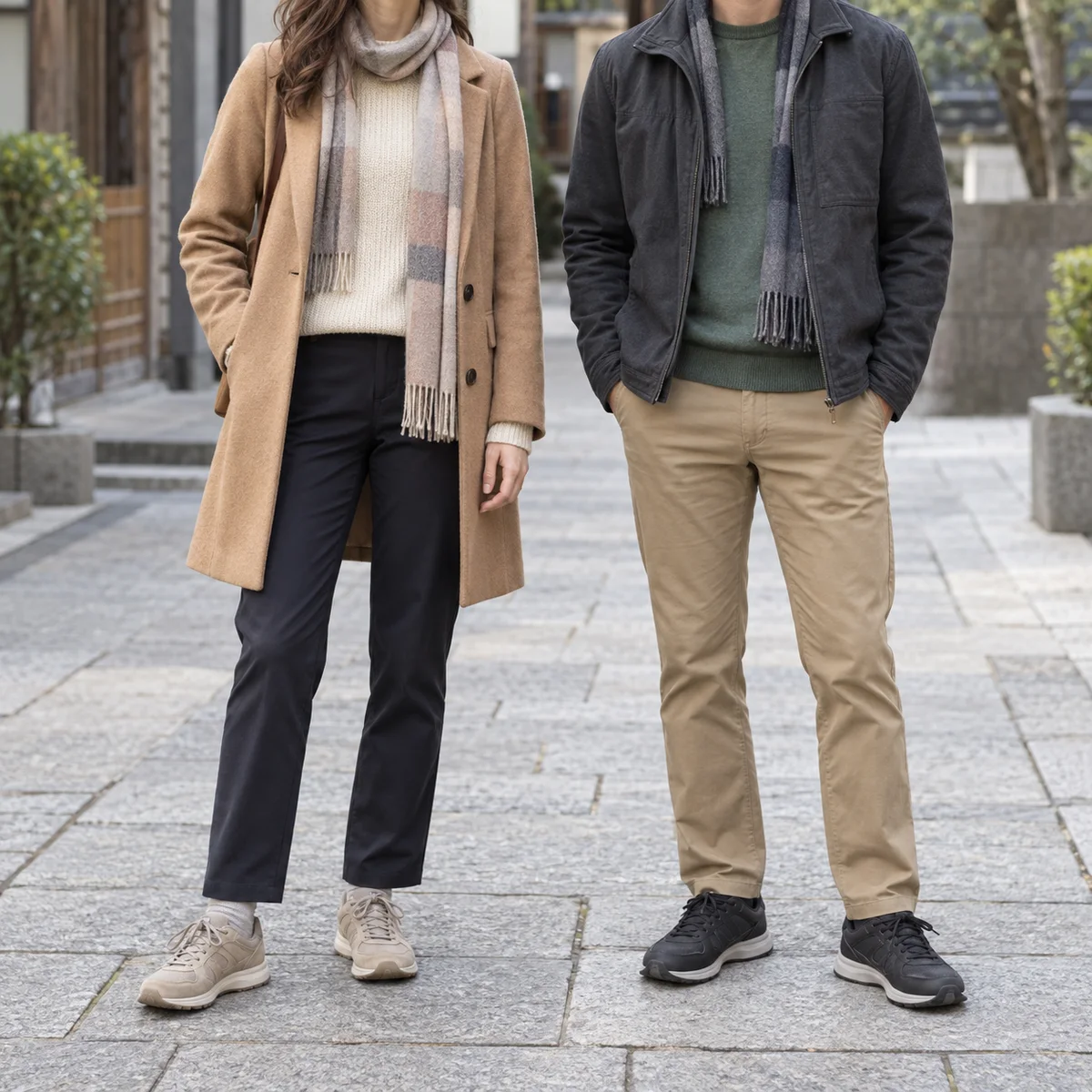
- Base layer: Long-sleeve shirts, light sweaters, or turtlenecks
- Mid layer: A fleece, light wool sweater, or hoodie
- Outer layer: A medium-weight coat or light down jacket. You'll want this every morning and evening
- Bottoms: Jeans, chinos, or full-length pants. Skirts with tights work too
- Shoes: Closed-toe walking shoes or sneakers. Waterproof is a bonus for rain
- Accessories: A light scarf and maybe thin gloves for early March mornings
There's a big difference between March 1 and March 31. Early March feels like winter — you'll want a proper coat and scarf. By late March, you can often get away with a lighter jacket during the day. Check the 10-day forecast before packing to fine-tune.
March Regional Breakdown
| Region | High / Low | Conditions | What to Wear |
|---|---|---|---|
| Tokyo | 14°C / 5°C | Cool, occasional rain. Osaka, Kyoto, and Fukuoka have similar climate — follow this section | Medium jacket, layers, scarf |
| Japan Sea Side (Kanazawa) | 12°C / 3°C | Cold, overcast, rain/snow mix | Warm coat, waterproof layer, rain gear |
| Hokkaido | 5°C / -3°C | Still winter. Snow on the ground | Full winter gear — warm coat, boots, gloves, hat |
| Okinawa | 22°C / 16°C | Warm and pleasant, light rain | Light long sleeves, t-shirts, light rain jacket |
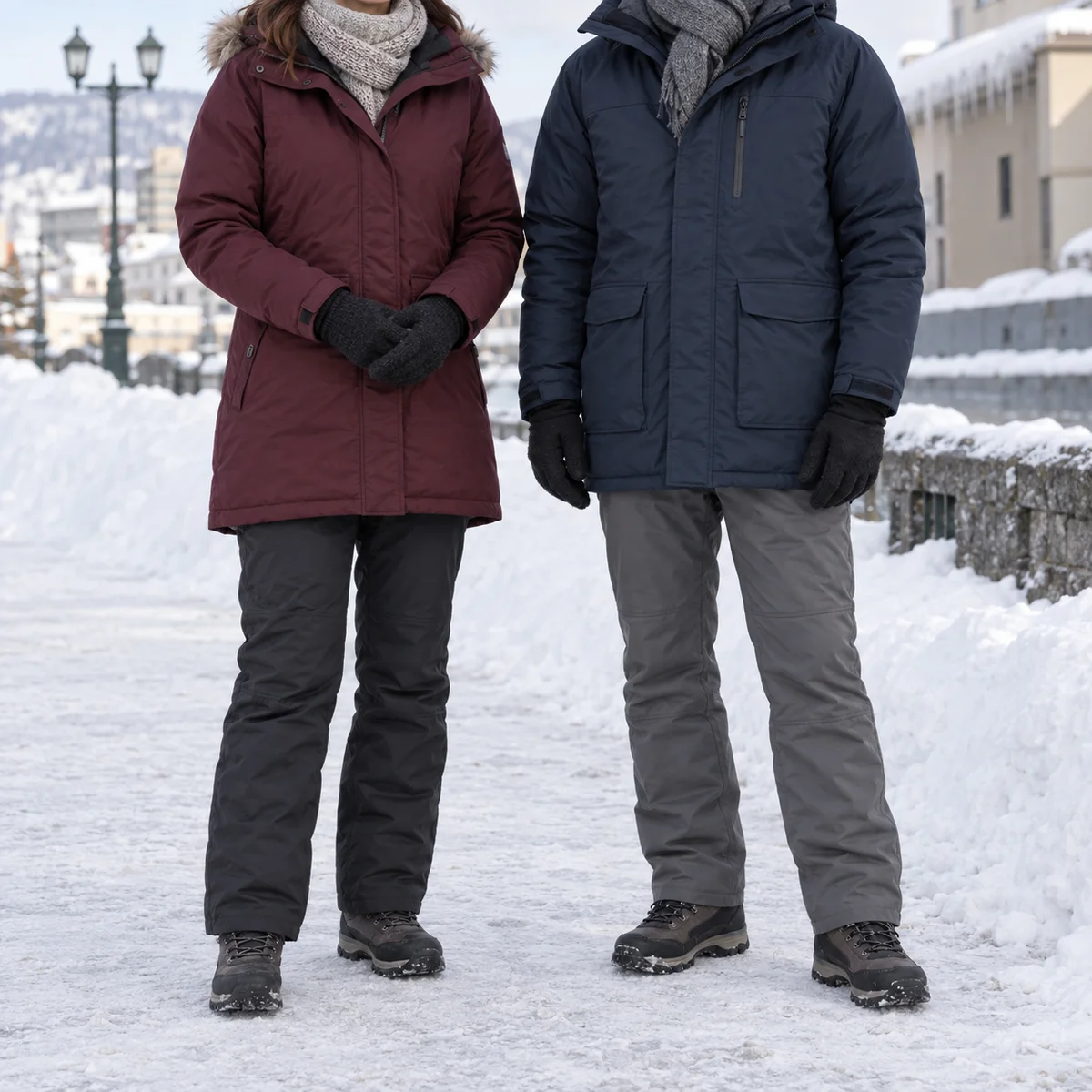
If you're heading to Hokkaido in March, ignore most of this section. Early March in Sapporo still feels like full winter (-5 to 0°C, snow on the ground); late March shifts toward slushy snow-to-melt conditions (0-5°C) with slippery sidewalks. Pack real winter clothing — insulated coat, waterproof boots with grip, thermal layers — at least through mid-March. Coastal southern Hokkaido (Hakodate) warms a few days earlier than Sapporo; inland areas stay colder.
Okinawa, on the other hand, is already beach-adjacent weather. A light jacket for evenings (lows around 16°C) and a t-shirt for the day is all you need. Note: sea water is still around 20°C in March — too cold for most swimmers. Snorkeling typically needs a wetsuit until late April.
April — Cherry Blossom Season
April is one of Japan's peak travel seasons, especially in Tokyo, Kyoto, Osaka, and other major cherry-blossom destinations. In those cities, sakura typically peak from late March to early April, but the exact timing changes every year — a warm winter pushes bloom up to a week or two earlier, while rain and wind can shorten the best viewing window. Recent years have trended earlier. For 2026, for example, much of the mainland peaked in the last week of March. Check Weather News (weathernews.jp/sakura) or the Japan Meteorological Corporation (sakura.weathermap.jp) weekly from January for that year's specific forecast.
If you are planning for 2027, use our cherry blossom booking timeline to decide when to reserve flights and cancellable hotels without treating an average bloom date as a promise.
Note on Okinawa: Okinawa has a different cherry-blossom variety (Kanhizakura, deeper pink) that blooms January to mid-February — long before mainland sakura. If your trip is January-February, Okinawa is the only place to see cherry blossoms in Japan.
The weather in April cooperates beautifully — warm enough to sit outside for hours, cool enough that you're not uncomfortable. But April also brings more rain than March, so come prepared.
What to Wear in April
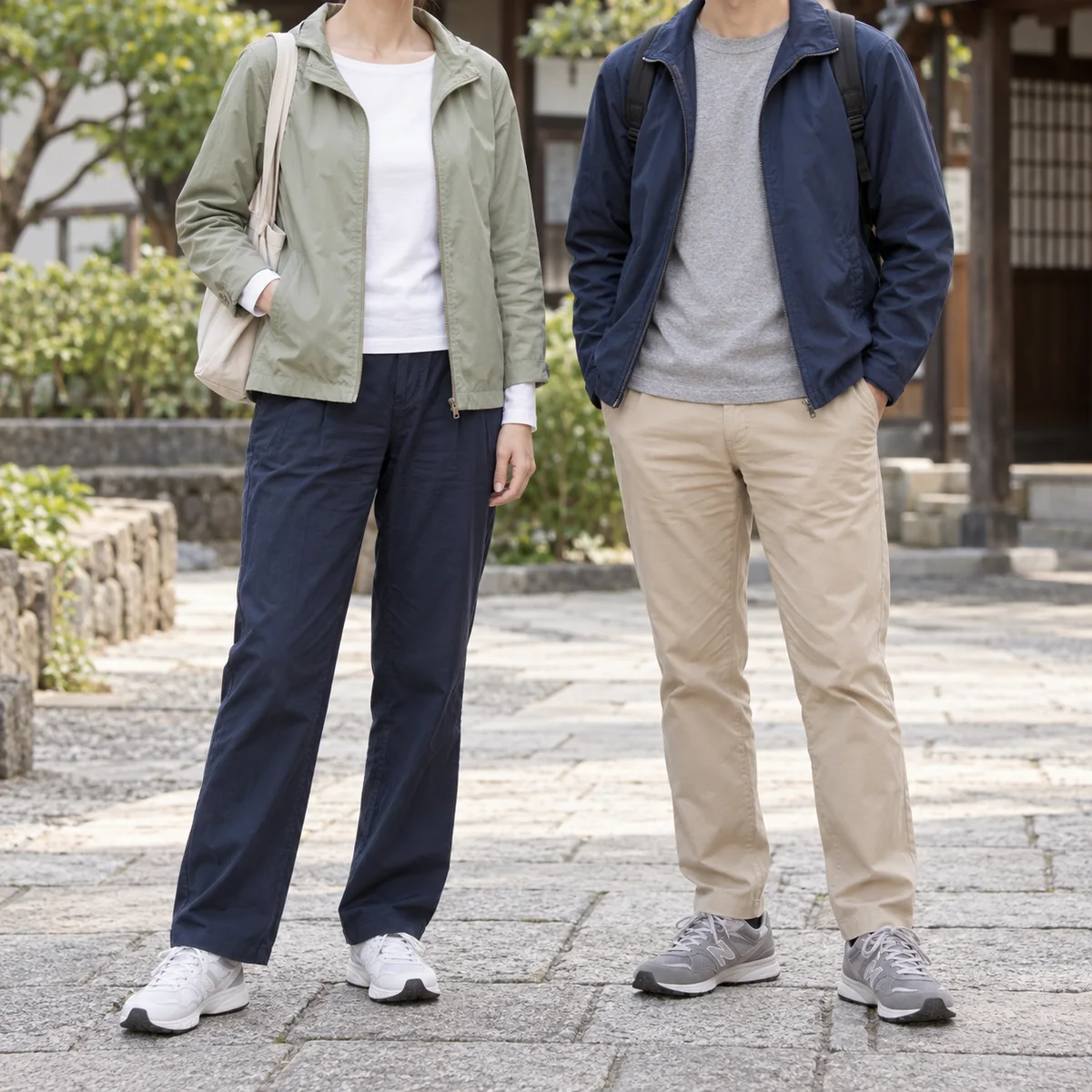
- Base layer: Long-sleeve shirts, light cotton tees (for warm afternoons)
- Mid layer: A light cardigan, hoodie, or thin sweater
- Outer layer: A light jacket, trench coat, or packable windbreaker. You'll shed this by midday and need it again after sunset
- Bottoms: Jeans, chinos, light pants. You can start wearing cropped pants or skirts without tights on warmer days
- Shoes: Comfortable broken-in walking shoes — expect 15,000-25,000 steps a day during cherry-blossom viewing. Avoid brand-new shoes (blisters by day two). Slip-on styles are ideal for temple visits.
- Rain gear: A compact folding umbrella is strongly recommended. You can also buy one at any convenience store for ¥500-700, but bringing a sturdy one saves money and time.
April Regional Breakdown
| Region | High / Low | Conditions | What to Wear |
|---|---|---|---|
| Tokyo | 19°C / 10°C | Pleasant, cherry blossoms peak late March-early April. Osaka, Kyoto, and Fukuoka have similar climate — follow this section | Light jacket, layers, umbrella |
| Japan Sea Side (Kanazawa) | 17°C / 8°C | Cool, frequent rain | Light coat, rain jacket essential |
| Hokkaido | 12°C / 3°C | Early spring, still cool. No blossoms yet | Medium jacket, sweater, layers |
| Okinawa | 24°C / 19°C | Warm and humid. Beach season starting | T-shirts, shorts, light rain layer |
Hanami picnics happen on the ground, often on a blue tarp in a park. You'll sit for hours under the trees, and the ground gets cold. Bring or wear an extra layer you can sit on. A scarf or shawl doubles as a blanket and sun shade. Evening hanami (yozakura) gets genuinely cold — temperatures drop to 8-10°C — so a proper jacket is essential.
What to Wear at Cherry Blossom Spots
Cherry blossom viewing is casual in Japan. You'll see everything from families in athleisure to couples in full spring fashion. There's no dress code, but keep these things in mind:
- Walking is constant. Popular spots like Ueno Park, Meguro River (Naka-Meguro), and the Philosopher's Path in Kyoto mean hours on your feet — and serious crowds. Meguro River's peak weekend afternoons get entry-flow restrictions; Ueno can be hard to walk through at peak hours. Consider going at opening time for fenced gardens (Shinjuku Gyoen, Hama-rikyu) or early-morning (6-8 AM) for open public spots (Ueno, Chidorigafuchi, Philosopher's Path) — you'll get the same blossoms with a fraction of the crowd.
- Layers save the day. Morning at Shinjuku Gyoen might be 11°C. By 2pm, it's 20°C in the sun. A jacket you can tie around your waist is ideal.
- Photo-friendly clothing. This is purely optional, but lighter colors (white, pastels, soft pink) photograph beautifully against the pale pink blossoms. Dark clothing can look heavy in cherry blossom photos.
 Best Value
Airalo Japan eSIM
Track bloom forecasts & crowds live — data from ~$4
Why it may fit
Sakura timing shifts week to week, and the difference between a packed afternoon and a quiet 7 AM visit is a live forecast check. With an eSIM you can follow bloom maps, weather radar, and train status from the moment you land. Airalo's Japan plans start from about $4.
Before booking
Check the live price, availability, eligibility, and terms before paying.
Beyond Sakura: Other Spring Flowers
Cherry blossoms get the headlines, but Japan's flower season actually runs from late April well into May, with several photogenic alternatives in case your trip misses the sakura window:
- Wisteria (fuji, 藤) — late April to early May. Ashikaga Flower Park (Tochigi, ~1.5h from Tokyo) and Kawachi Fuji Garden (Kitakyushu) are the most spectacular; Kameido Tenjin Shrine (Tokyo) is the easiest access.
- Azalea (tsutsuji, つつじ) — mid-April to early May. Nezu Shrine (Tokyo) and the Tokyo Metropolitan Government Building grounds.
- Nemophila (baby blue eyes) — late April to early May. Hitachi Seaside Park (Ibaraki) has 4.5 million plants on a single hillside.
- Shibazakura (moss phlox) — April to early May. Fuji Shibazakura Festival near Lake Motosu pairs pink carpet with Mt. Fuji backdrop.
- Roses — May. Kyu-Furukawa Gardens (Tokyo) and Old English Garden style locations across Kansai.
PM2.5 and Yellow Sand (Kosa)
Less famous than pollen but worth flagging: spring also brings yellow sand (kosa, 黄砂) from Mongolia and northern China, plus elevated PM2.5 from cross-border air pollution. Peak season is March-May, with worst-affected areas being Kyushu and western Honshu (more than Tokyo). Symptoms: throat irritation, watery eyes, occasional headaches.
A regular pollen mask helps. Real-time alerts: the Ministry of the Environment's taiki.go.jp and the Japanese Ministry of the Environment kosa map. If you have asthma or respiratory sensitivity, check daily forecasts and plan indoor activities on heavy-kosa days.
May — The Golden Sweet Spot
May is my personal favorite month to visit Japan. The cherry blossoms have moved north to Hokkaido, Golden Week crowds (late April to early May) thin out after May 6, and the weather is genuinely warm without the suffocating humidity of summer. Late May starts edging toward the rainy season, especially in Okinawa and southern Honshu.
What to Wear in May
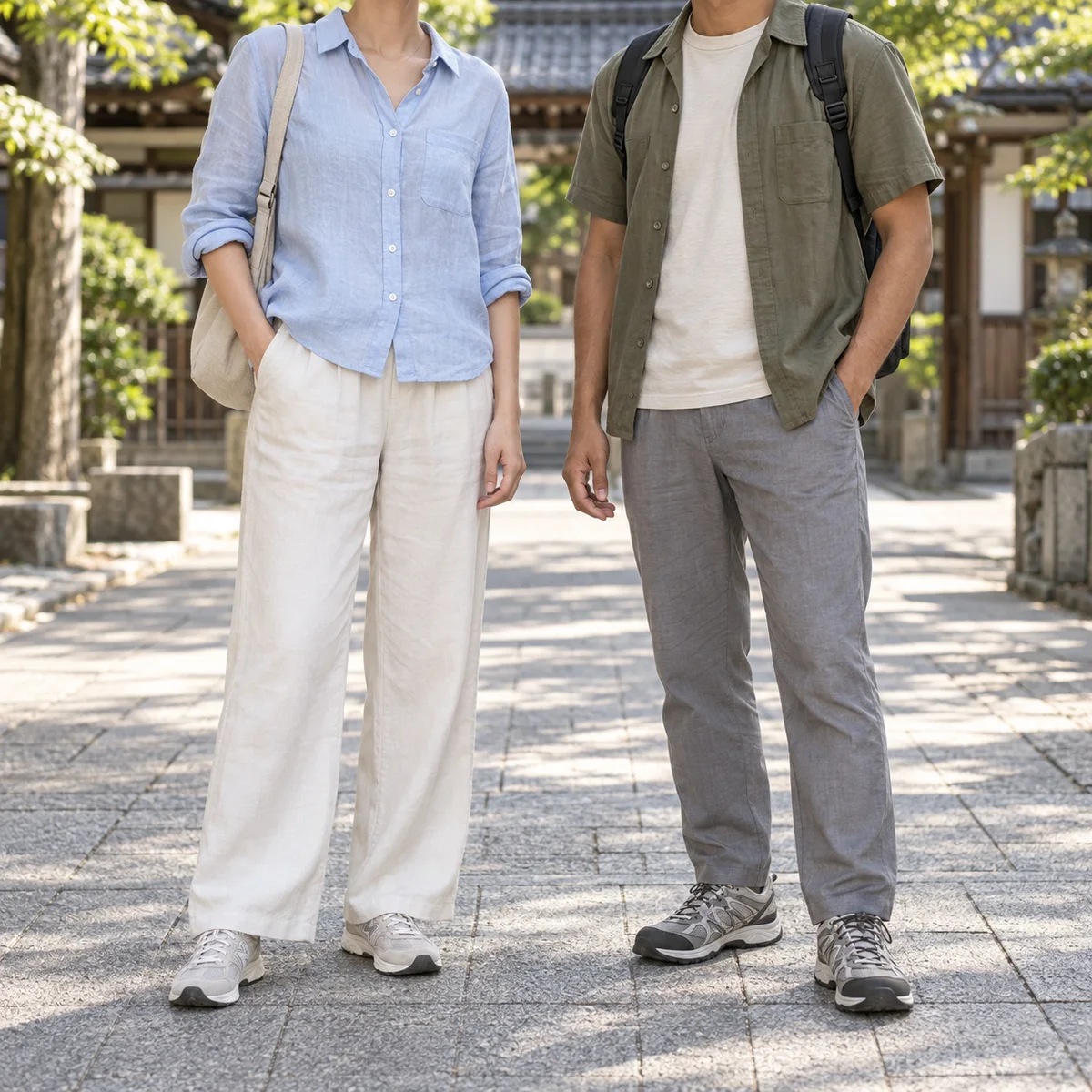
- Base layer: T-shirts, light cotton or linen shirts
- Mid layer: A light cardigan for evenings and indoor air conditioning (some shops and trains have started running AC by mid-to-late May)
- Outer layer: A packable rain jacket or light windbreaker. You won't need a heavy coat
- Bottoms: Light pants, chinos, shorts (late May). Skirts and dresses work well
- Shoes: Breathable walking shoes or sneakers. Quick-dry options help with increasing rain
- Sun protection: Sunscreen, sunglasses, and a hat — UV is strong by May
May Regional Breakdown
| Region | High / Low | Conditions | What to Wear |
|---|---|---|---|
| Tokyo | 24°C / 15°C | Warm, increasing rain and humidity. Osaka, Kyoto, and Fukuoka have similar climate — follow this section | Light clothes, rain jacket, sunscreen |
| Japan Sea Side (Kanazawa) | 22°C / 13°C | Often wetter than Tokyo, but not constant rain | Light layers, compact umbrella, water-resistant shoes |
| Hokkaido | 18°C / 8°C | Pleasant spring. Cherry blossoms bloom early-mid May | Light jacket, layers — like Tokyo in April |
| Okinawa | 27°C / 22°C | Hot and humid. Rainy season starts mid-May | Summer clothes, serious rain gear, sunscreen |
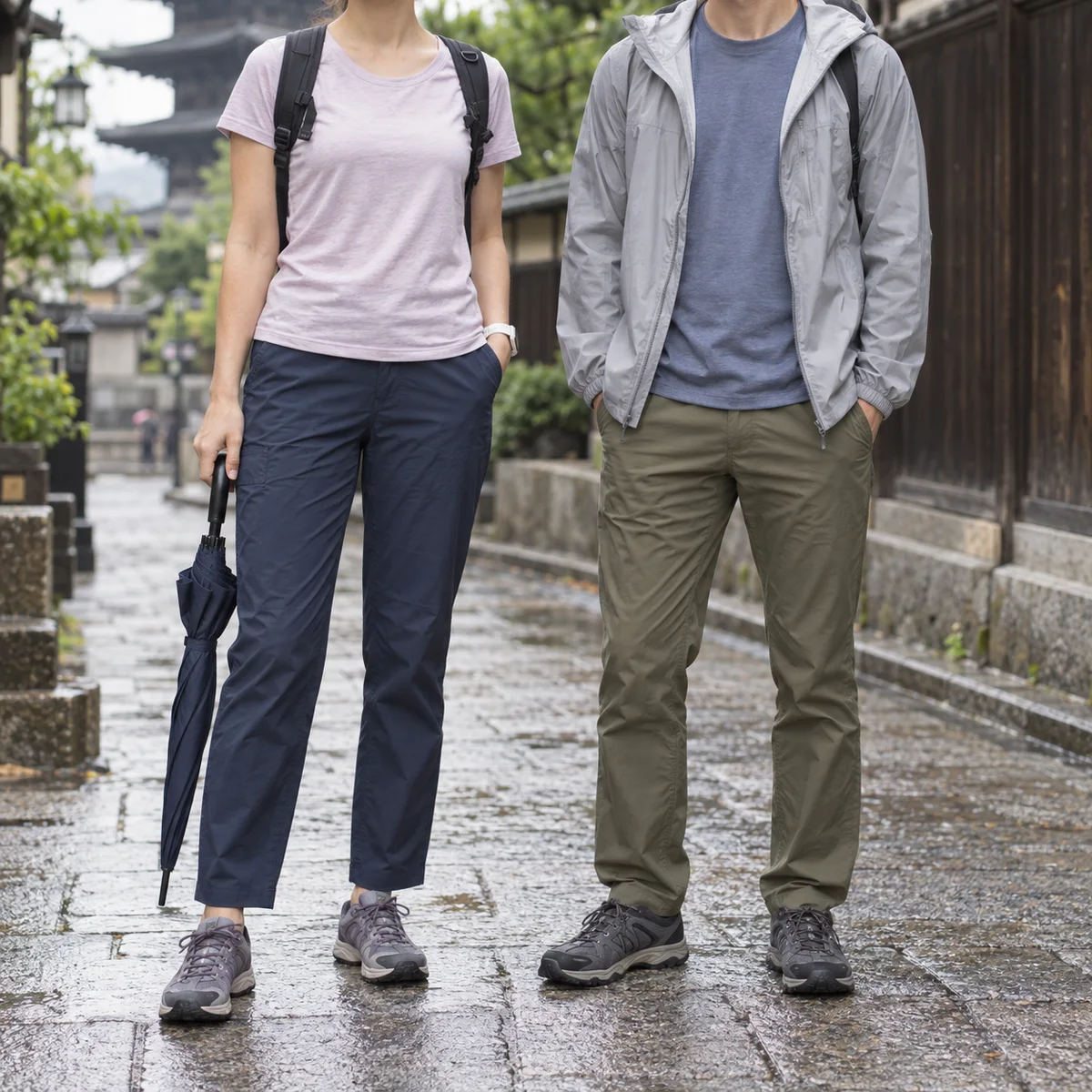
Okinawa's rainy season (tsuyu) often begins in early to mid-May (typically around May 10) and continues into late June. Expect humid weather, cloudy skies, and periods of heavy rain — it may not rain all day every day, but plan for wet conditions. Quick-dry clothes, water-resistant shoes or sandals, and a sturdy umbrella are more useful than a heavy jacket. For the rest of Japan, tsuyu doesn't hit until early June — see our summer clothing guide for details.
An Outfit for Okinawa's Rainy Season
Golden Week (Approximately April 29 - May 6)
Golden Week is Japan's biggest holiday period. The entire country travels domestically, so trains, hotels, and tourist sites are heavily booked. The exact length varies year to year depending on which weekdays the public holidays fall on — for 2026, Golden Week runs approximately April 29 through May 6, with some companies extending into an 8-day stretch. For clothing, the main thing to know is: you'll be in crowds. Wear comfortable shoes, avoid bulky bags, and dress in layers you can easily manage without space to spread out. Expect long lines at temples — you'll be standing outdoors for stretches at a time. Plan around closures of some smaller establishments around the holiday.
 Code JAPANODE · 6% off
Radical Storage — Luggage Storage Across Japan
Why it may fit
Golden Week and peak sakura mean the worst possible time to drag a suitcase through crowds — and station coin lockers fill up by mid-morning. Radical Storage lets you drop bags by the day at vetted shops near the sights, so you can sightsee hands-free between hotels. Use code JAPANODE for 6% off.
Before booking
Check the live price, availability, eligibility, and terms before paying.
Regional Differences at a Glance
This table gives you the full picture across all three months and four key regions:
| Region | March | April | May |
|---|---|---|---|
| Tokyo (also covers Osaka, Kyoto, Fukuoka) | 14°C / 5°C — Medium coat, layers | 19°C / 10°C — Light jacket, layers | 24°C / 15°C — Light clothes, rain jacket |
| Japan Sea Side (Kanazawa) | 12°C / 3°C — Warm coat, waterproof layer | 17°C / 8°C — Light coat, rain jacket | 22°C / 13°C — Light layers, umbrella |
| Hokkaido | 5°C / -3°C — Winter gear, boots | 12°C / 3°C — Medium jacket, layers | 18°C / 8°C — Light jacket, layers |
| Okinawa | 22°C / 16°C — Light layers | 24°C / 19°C — Summer clothes | 27°C / 22°C — Summer + rain gear |
The pattern is clear: Hokkaido often feels one season behind Tokyo (but conditions vary widely — coastal southern Hokkaido warms earlier, inland stays colder), and Okinawa runs about one month ahead. If you're combining regions on a single trip, you'll need to pack for two climates.
For getting between these regions efficiently, check our complete guide to Japan's train system. The Shinkansen connects Tokyo to Osaka in about 2.5 hours, and to Shin-Hakodate-Hokuto (gateway to southern Hokkaido) in about 4 hours. To continue to Sapporo, you transfer to the JR Hokuto / Super Hokuto limited express for an additional ~3.5 hours. For Sapporo specifically, flying Tokyo (Haneda/Narita) to New Chitose Airport is usually faster and often cheaper.
When Hokkaido Still Needs Winter Gear
Spring Packing List
Here's your complete packing checklist for spring in Japan. Adjust up (warmer clothes) for March and down (lighter clothes) for May.
Clothing
- 3-4 long-sleeve shirts or light sweaters
- 2-3 t-shirts (essential by May, useful as base layers in March)
- 1 light jacket or trench coat (your most important piece)
- 1 packable rain jacket or windbreaker
- 1 warm layer — fleece, hoodie, or cardigan (especially for March)
- 2-3 pairs of pants (jeans, chinos, or light trousers)
- 1 pair of comfortable walking shoes (slip-on style preferred)
- 5-7 pairs of socks (clean socks matter — you'll remove shoes often)
- 5-7 sets of underwear
- 1 light scarf (doubles as warmth, temple cover-up, and hanami blanket)
Accessories & Gear
- Compact folding umbrella
- Sunscreen (SPF 30+, especially May)
- Sunglasses
- Small day bag or backpack
- Reusable shopping bag (plastic bags cost ¥3-5 at stores)
- Allergy medication if sensitive to cedar pollen (February-April peak)
You don't need to pack every layer from home. UNIQLO stores are everywhere in Japan and sell excellent base layers, light down jackets, and affordable basics. Many UNIQLO stores offer tax-free shopping for eligible tourists when purchases meet the minimum amount, though rules and counters vary by store. UNIQLO's Ultra Light Down jacket (typically around ¥5,990-7,990 depending on style) packs into its own pouch and weighs almost nothing — a useful piece for the day-to-night spring temperature swings.
Spring-Specific Tips
Temple and Shrine Visits
Spring is peak temple-visiting season, and you'll likely visit many. A few clothing notes:
- Socks are useful. You may need to remove your shoes when entering some temple halls, traditional buildings, ryokan rooms, or certain restaurants. In March, those wooden floors can be cold — thick socks help. By May, lighter socks are fine. If you're wearing sandals, carry a pair in your bag.
- Most temples and shrines do not have a strict dress code. Modest clothing can feel more appropriate at major religious sites, temple halls, ceremonies, or formal settings. If you wear sleeveless tops, carrying a light scarf or cardigan is a good idea — but you won't be turned away from most sites.
- Skip the heels. Temple grounds have gravel paths, stone stairs, and uneven wooden floors. Even the most stylish Japanese visitors wear flat shoes to temples.
Hanami (Cherry Blossom Picnics)
Hanami is Japan's beloved spring tradition — spreading a tarp under cherry trees, eating bento, and drinking with friends. If you join one:
- Sit on something warm. A cushion, extra jacket, or even a folded scarf between you and the ground makes a huge difference. The ground stays cold well into April.
- Layer up for evening viewing. Yozakura (nighttime cherry blossom viewing) is magical, but temperatures drop fast after sunset. Bring your warmest spring layer.
- Dress practically. You'll sit on the ground, walk across grass, and possibly deal with crowds. Save the fashion statements for Omotesando — hanami is casual.
Rainy Day Strategy
Spring rain increases month by month. Based on long-term climate normals, Tokyo averages roughly 115mm in March, 135mm in April, and 140mm in May. A few practical tips:
- Carry a folding umbrella when rain is possible. Spring showers can appear with little warning, especially in April and May.
- Waterproof your shoes. Spray them before the trip or pack water-resistant sneakers. Wet cobblestone at Kiyomizu-dera is slippery.
- Quick-dry fabrics help. If you get caught in rain, synthetic or blended fabrics dry much faster than cotton.
- Convenience store umbrellas work fine as a backup. If you forget your umbrella, every 7-Eleven, Lawson, and FamilyMart sells clear vinyl umbrellas for about ¥500-700. You'll see locals carrying them everywhere.
Tattoos at Spring Onsen and Sento
Cherry blossom trips often combine sakura sightseeing with hot-spring stays (Hakone, Atami, Beppu, Kinosaki, Noboribetsu, Hakone Yumoto). Many traditional onsen and sento still refuse entry to anyone with visible tattoos, even small ones. For tattooed travelers:
- Adhesive tattoo cover stickers (タトゥーシール) at Don Quijote, drugstores, and Amazon Japan (¥500-1,500) handle small tattoos
- Tattoo-friendly facilities can be found at
tattoo-friendly.jpand reviews on Tabelog/Tripadvisor - Private alternatives — ryokan with in-room or reservable (kashikiri) baths bypass the question entirely
- Many ryokan permit tattoos in private rooms but not in communal baths — confirm at booking
Day-to-Night Temperature Swings
This is the single biggest challenge of spring in Japan. A day in April might look like this:
- 7:00 AM: 10°C — You need a jacket and scarf
- 12:00 PM: 18°C — Jacket comes off, you're comfortable in a long-sleeve shirt
- 3:00 PM: 20°C — You wish you'd worn a t-shirt
- 6:00 PM: 14°C — Jacket goes back on
- 9:00 PM: 11°C — You're glad you brought the scarf
The solution: a packable jacket and a base layer you're comfortable in alone. Tie the jacket around your waist or stash it in your day bag during warm afternoons.
Shorts, Shinkansen Layers, and Kimono Rental
A few more practical notes that come up every spring:
- Shorts: In March and early April, no — you'll be cold. By late April, shorts are fine on warm afternoons in Tokyo and Osaka, though you might get chilly in shade or indoor AC. May is generally warm enough for shorts during the day. Hokkaido remains too cool for shorts until late May.
- Shinkansen layers: Cars can be heavily air-conditioned even in spring. Keep a light layer accessible for the ride — a 2.5-hour Tokyo-Osaka ride in a cold car in just a t-shirt is unpleasant. See our Japan rail system guide for more.
- Kimono/yukata rental: Not needed for visiting temples or any tourist activity, but spring is the most popular time for kimono rental thanks to cherry blossom photos. Shops in Kyoto (Gion, Higashiyama), Asakusa (Tokyo), and Kanazawa offer day rentals from around ¥3,000-8,000, sometimes more with premium designs and hair styling. They provide everything including footwear, so nothing to pack.
Last verified May 17, 2026. Climate ranges based on long-term JMA monthly normals; cherry blossom forecasts and Golden Week dates vary year to year — always check current Weather News / JMA forecasts and the year's specific holiday calendar close to travel day. Cedar pollen severity varies year to year too.
Make it your trip
Still planning your Japan trip?
Pick the question on your mind. Compare your options, check the details and take one more thing off your list.

Which eSIM fits your Japan trip?
Maps, messages, hotspot use: compare five providers by data allowance, network and plan limits before you choose.
Find my Japan eSIM
What should your travel insurance cover?
Compare medical cover, cancellation and activity limits across five options, with the exclusions worth checking.
Compare cover & limitsWould a JR Pass save you money?
Add your train journeys and compare individual tickets with the nationwide pass. See which costs less for your route.
Calculate my rail costsFrequently Asked Questions
Layers are essential. April days can swing from around 10°C in the morning to 20°C by afternoon and back down to 12°C after sunset. A light jacket or trench coat over a long-sleeve shirt works perfectly. Bring a scarf for cool evenings during hanami (flower viewing). Comfortable broken-in walking shoes are a must — expect 15,000-25,000 steps a day during blossom-viewing trips.
In Tokyo, Kyoto, and Osaka, cherry blossoms often peak from late March to early April, but the exact timing changes every year — a warm winter can push bloom up to a week or two earlier, while rain and wind can shorten the best viewing window. Recent years have trended earlier as Japan warms. Hokkaido peaks late April to early May. Okinawa has a different cherry variety (Kanhizakura) that blooms January to mid-February. Check Weather News (weathernews.jp/sakura) or JMC forecasts updated weekly from January.
Yes, March is still cool — expect highs around 14°C and lows around 5°C in Tokyo. A light down jacket or warm coat is necessary, especially in the first half of the month. Hokkaido still has snow through much of March (Sapporo around 5°C / -3°C). By late March, temperatures start rising in Tokyo and the cherry blossom season begins in southern Japan.
Severe for sensitive travelers — even people who don't normally have allergies can be hit. About 40% of Japan's forests are post-war planted cedar (sugi), which makes pollen counts among the world's highest. Cedar pollen peaks late February through March; cypress (hinoki) follows late March to April. Start an antihistamine 24-48 hours before arrival if you're sensitive — Allegra (アレグラ) and Alesion (アレジオン) are available without prescription at any drugstore. Hokkaido has far less cedar pollen and works as an escape destination.
Often no. Many traditional onsen and sento still refuse entry to anyone with visible tattoos. Cherry blossom trips often combine sakura sightseeing with onsen stays (Hakone, Atami, Beppu, Kinosaki, Noboribetsu), so this is worth planning around. Adhesive cover stickers (タトゥーシール) are sold at Don Quijote and most drugstores for ¥500-1,500. Tattoo-friendly facilities can be found at tattoo-friendly.jp, and ryokan with in-room or private (kashikiri) baths bypass the question entirely.
Spring rain picks up in April and May. Pack a compact folding umbrella and a water-resistant jacket. Quick-dry shoes or waterproof sneakers help on wet temple paths. Convenience stores sell decent clear umbrellas for ¥500-700 if you get caught without one.
Golden Week 2026 is approximately April 29 to May 6, though the exact length varies year to year depending on which weekdays the public holidays fall on. Trains, flights, and hotels are heavily booked during this period — book transport and accommodation well in advance, expect peak prices and crowds, and plan around closures of some smaller establishments.
Yes — Hokkaido often feels one season behind Tokyo, but conditions vary widely within the prefecture. Sapporo may still feel like winter through early-to-mid March, with snow-to-slush transitions in late March. Coastal southern Hokkaido (Hakodate) warms earlier, while inland areas can stay much colder. By April, Sapporo runs around 12°C / 3°C; May is pleasant but evenings are cool. Pack closer to a Tokyo-one-month-earlier wardrobe.
Written by
JAPANODE
Based in Japan, sharing real travel tips & local insights for visitors. Follow us on Instagram @thejapanode for daily Japan content.
You Might Also Like
 Planning
Japan Tax-Free Shopping 2026: Current Rules & Nov. 1 Change
15 min read
 Planning
What to Wear in Japan in Winter: December, January & February Packing Guide
13 min read
 Planning
What to Wear in Japan in Autumn: September, October & November Packing Guide
12 min read
 Planning
What to Wear in Japan in Summer: June, July & August Packing Guide
13 min read
 Planning
What to Wear in Japan: Month-by-Month Clothing Guide
14 min read
 Planning
First Time in Japan: 15 Things You Need to Know Before You Go
19 min read