Tokyo at 10°C and Sapporo below freezing are both "winter in Japan," but they require completely different packing strategies. The Pacific side (Tokyo, Osaka, Kyoto, Hiroshima, Fukuoka) is cold, dry, and sunny; the Japan Sea Side (Kanazawa, Niigata, Toyama) is wetter, cloudier, and snowier — sometimes more snow than parts of Hokkaido; Hokkaido needs real winter gear; and Okinawa stays mild. A light wool coat that's perfect for sunny Tokyo will get soaked in Kanazawa. This guide covers every region so you can pack right.
Part of our What to Wear in Japan series. For late November overlap, see our autumn guide; for late February-to-March transition, see our spring guide; for the summer side of the year, see our summer guide. Temperatures throughout are rounded monthly averages from long-term JMA climate normals — recent years have trended slightly warmer; always check the forecast 3-5 days out.
Winter is one of Japan's most underrated travel seasons. The crowds thin out after New Year, the air is crisp and clear, and experiences like snow-covered temples, world-class skiing, and outdoor onsen in falling snow are genuinely unforgettable. The catch? You need to dress for it properly — and Japan's heated interiors make that trickier than you'd think.
Here's the month-by-month breakdown, followed by the layering strategy that actually works.
Which climate region is my destination?
Type a city or prefecture to find which section of this guide to follow.
December — Getting Cold, Getting Festive
December marks the real start of winter across most of Japan. The first half of the month can still feel like late autumn in Tokyo, but by mid-December the cold settles in. Hokkaido is already deep in snow, and the Japan Sea Side is turning grey and wet.
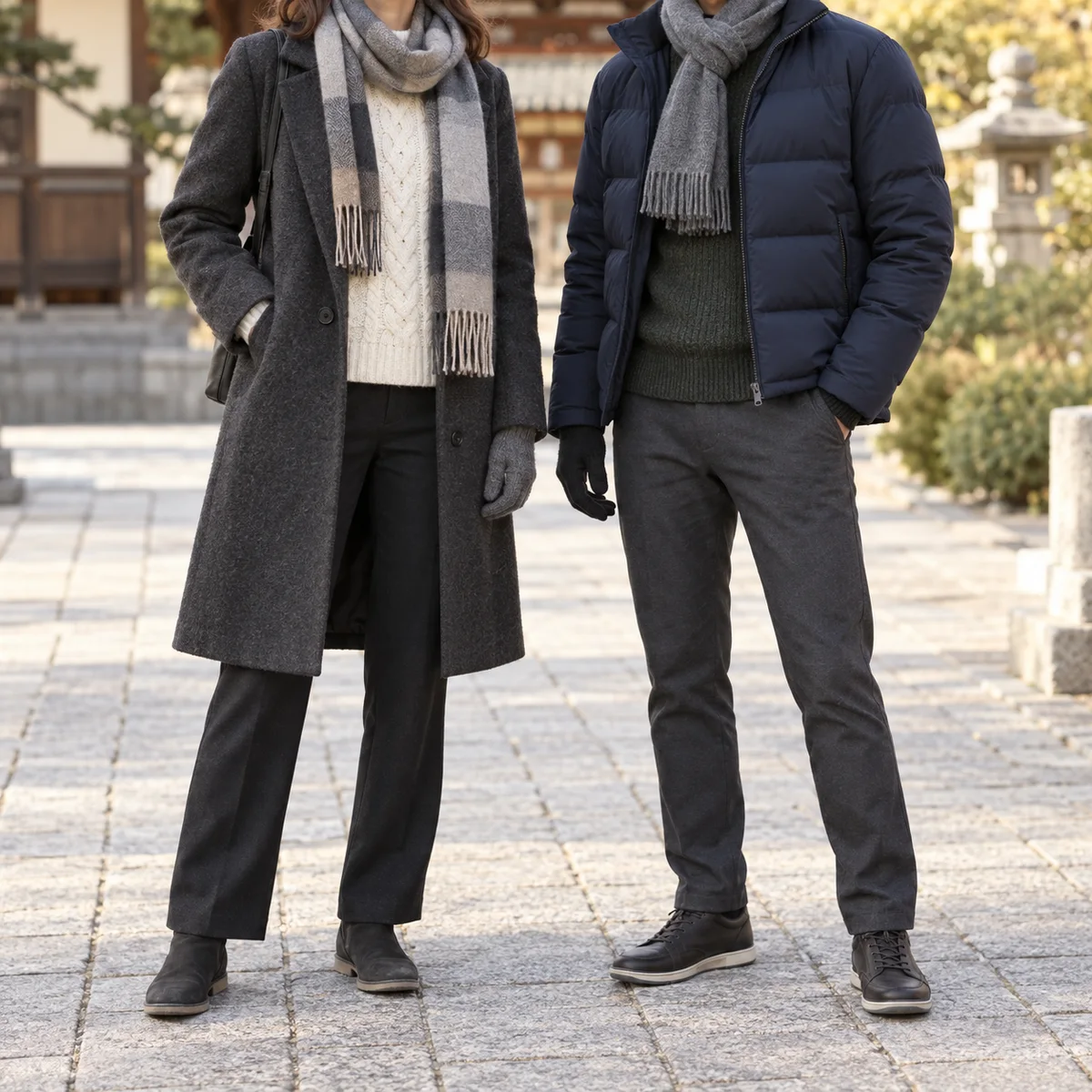
Tokyo (and Pacific Side) in December: Highs around 12°C, lows around 4°C. Clear, dry days are common — December is one of Tokyo's driest and sunniest months on average. Osaka, Kyoto, Hiroshima, and Fukuoka all share this Pacific-side climate pattern: cold but dry and sunny. You'll want a medium-weight coat, sweaters, and a scarf for evenings. The cold is noticeable but not harsh. Kyoto can feel a few degrees colder at dawn and dusk — it sits in a basin where cold air pools, and traditional machiya townhouses and older ryokan have weak insulation, so indoor floors can feel surprisingly cold (thick socks help).
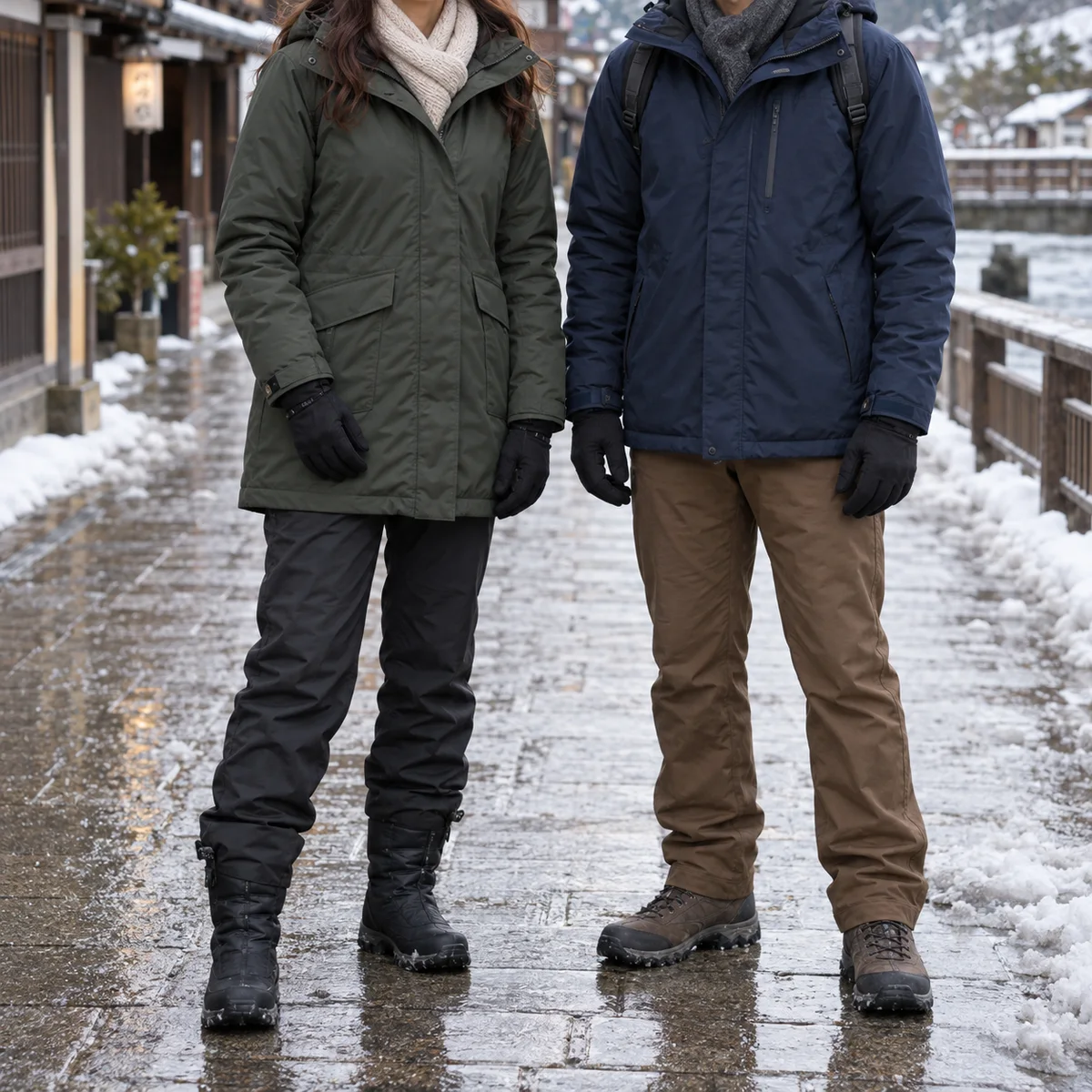
Japan Sea Side (Kanazawa, Niigata, Toyama) in December: 9°C / 2°C — only slightly colder than Tokyo but much wetter. Expect a rain/snow mix that turns increasingly snowy through the month, with frequent overcast skies. Heavy snow is possible, especially during cold spells or in inland/mountain areas. Waterproof footwear matters more than heavier insulation.
Hokkaido in December: Sapporo is already in full winter, with temperatures often around freezing during the day and below freezing at night. Snowfall builds quickly through the month (Sapporo typically receives around 170cm of total snowfall during December based on long-term averages, though year-to-year variation is significant). Even before deep snowpack accumulates, icy sidewalks and packed snow are already common — winter boots with grip matter as much as a warm coat.
What's Happening in December
- Winter illuminations across every major city. Tokyo's Marunouchi, Roppongi, and Omotesando displays are spectacular — and you'll be standing outside in 3-5°C weather admiring them. Warm gloves, a hat, and hand warmers make these enjoyable instead of miserable.
- Christmas markets and events in major cities. Japan treats Christmas as a romantic and commercial event rather than a religious holiday — expect lights, cake, and famously, fried chicken (a quirk from a 1970s KFC marketing campaign that stuck — many people pre-order KFC bucket sets weeks in advance for Christmas Eve dinner).
- Year-end preparations (nenmatsu). The last week of December, Japan shifts into holiday mode. Many shops, restaurants, museums, and small businesses close from around December 29 through January 3 — some stay closed through January 4. Convenience stores remain open 24/7; major chain stores and tourist-area restaurants usually open through the holiday with reduced hours.
If you're visiting both Tokyo and Hokkaido in December, pack for Hokkaido and dress down for Tokyo. It's easy to remove layers — impossible to add what you didn't bring.
January — The Coldest Month
January is Japan's coldest month everywhere. It's also one of the most culturally rich, with New Year celebrations driving the first few weeks. Expect cold, dry weather on the Pacific side (Tokyo, Osaka, Kyoto, Hiroshima, Fukuoka) and heavy snow on the Japan Sea Side and in Hokkaido.
Tokyo (and Pacific Side) in January: Highs around 9-10°C, lows around 2°C. Frost is common in the mornings. The days are short — sunset comes before 5pm. A proper winter coat, warm layers, and accessories (scarf, gloves, hat) are essential. This same pattern holds for Osaka, Kyoto, Hiroshima, and Fukuoka — all Pacific-side cities with dry, sunny winter days. Kyoto's basin geography means mornings can drop below freezing, and the stone temple floors radiate cold through your shoes — thick socks help.
Japan Sea Side (Kanazawa, Niigata, Toyama) in January: Around 7°C / 0°C — peak winter precipitation season. Expect frequent rain, sleet, snow, and overcast skies. Heavy snow is possible, especially during cold spells or in inland and mountain areas (parts of Niigata like Tokamachi and Tsunan are among the snowiest inhabited places on Earth). City streets range from wet to slushy to packed snow. Prioritize waterproof footwear — a water-resistant or waterproof outer layer is also useful, but for boots there's no substitute for true waterproofing. Your warm layers stay warm only if they stay dry.
Hokkaido in January: The deep freeze. Sapporo averages around -3°C for highs and -10°C for lows. Blizzards are routine. Icy sidewalks are the norm, not the exception. This is world-class powder snow season — and the Sapporo Snow Festival preparations begin late in the month.
What's Happening in January
- Hatsumode (first shrine visit of the year). At major shrines like Meiji Jingu, Fushimi Inari, and Tsurugaoka Hachimangu, the first three days of January bring huge crowds and long outdoor queues — sometimes an hour or more — in near-freezing temperatures. Dress warmly from head to toe, and stuff your pockets with disposable hand warmers. Smaller neighborhood shrines have much shorter (or no) queues if you want the experience without the wait.
- Winter sales (fukubukuro and New Year sales). January 2-3 marks the start of massive sales at department stores and shops. Lines form early in the cold — another reason layers and warmth matter.
- Skiing and snowboarding season is in full swing in Hokkaido, Nagano, and Niigata.
Disposable hand warmers (kairo / カイロ) are sold at every convenience store and drugstore in Japan for about ¥100-150 per pack. They last 10-12 hours and are a lifesaver at outdoor events. Stick-on versions attach inside your coat or shoes. Don't pack them from home — buy them locally.
February — Still Cold, Spring Approaching
February is nearly as cold as January in most of Japan, but by the end of the month, the first hints of spring appear. Plum blossoms (ume) start blooming in warmer areas, and the days gradually lengthen. The Japan Sea Side remains locked in heavy snow.
Tokyo (and Pacific Side) in February: Highs around 10-11°C, lows around 3°C. Very similar to January. Tokyo rarely gets accumulating snow — some winters see none, others get a brief dusting; when snow does accumulate, transport can be disrupted because the city is not built for regular snow, so allow extra time and avoid tight same-day transfers if snow is forecast. Osaka, Kyoto, Hiroshima, and Fukuoka remain dry and sunny. Plum blossoms begin to appear at Kyoto shrines like Kitano Tenmangu from mid-February — still cold, but there's a psychological lift knowing spring is approaching.
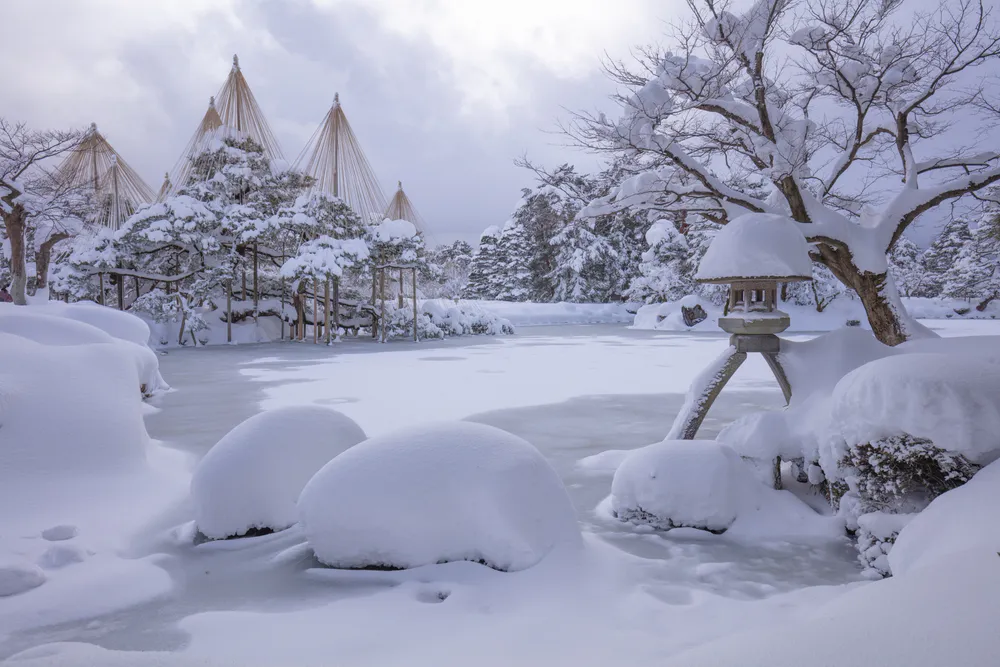
Japan Sea Side (Kanazawa, Niigata, Toyama) in February: Around 7°C / 1°C — wet and overcast conditions similar to January, with the same city-vs-mountain split (mountain areas remain deep in snow while city streets cycle between wet and slushy). Snow can persist on the Japan Sea Side long after the Pacific side has turned to spring. If you're visiting Kanazawa's Kenroku-en Garden in February, the yukitsuri (conical rope tree supports, set up from November) combined with snow makes for one of Japan's most photogenic winter scenes.
Hokkaido in February: Still deep winter, averaging around -2°C for highs and -9°C for lows. The Sapporo Snow Festival (early-to-mid February) is the marquee event — massive ice and snow sculptures viewed in sub-zero temperatures. Dress for serious cold if attending.
What's Happening in February
- Sapporo Snow Festival — Japan's biggest winter event. Plan around it if visiting Hokkaido, and dress for extended outdoor walking in -5°C to -15°C temperatures.
- Plum blossom season begins in warmer regions. A preview of cherry blossom season, with pink and white blossoms at shrines across Kansai and Kanto.
- Setsubun (around February 3) — traditional bean-throwing rituals (mamemaki) at shrines and temples to drive out winter spirits. Free, photogenic, and a quick cultural experience if you're in Japan that week.
- Valentine's Day — in Japan, women give chocolate to men (reversed on White Day, March 14). Shops are filled with elaborate chocolate displays.
- Late February marks the transition period. See our spring guide for what to pack if your trip spans late February into March.
Regional Differences: What Winter Actually Looks Like
This is the table that matters most. "Winter in Japan" means completely different things depending on where you go.
| Region | December | January | February | What You Need |
|---|---|---|---|---|
| Tokyo | 12°C / 4°C | 10°C / 2°C | 11°C / 3°C | Medium coat, layers, scarf, light gloves. Osaka, Kyoto, Hiroshima, and Fukuoka all share Tokyo's Pacific-side winter climate — dry, sunny, and mild. |
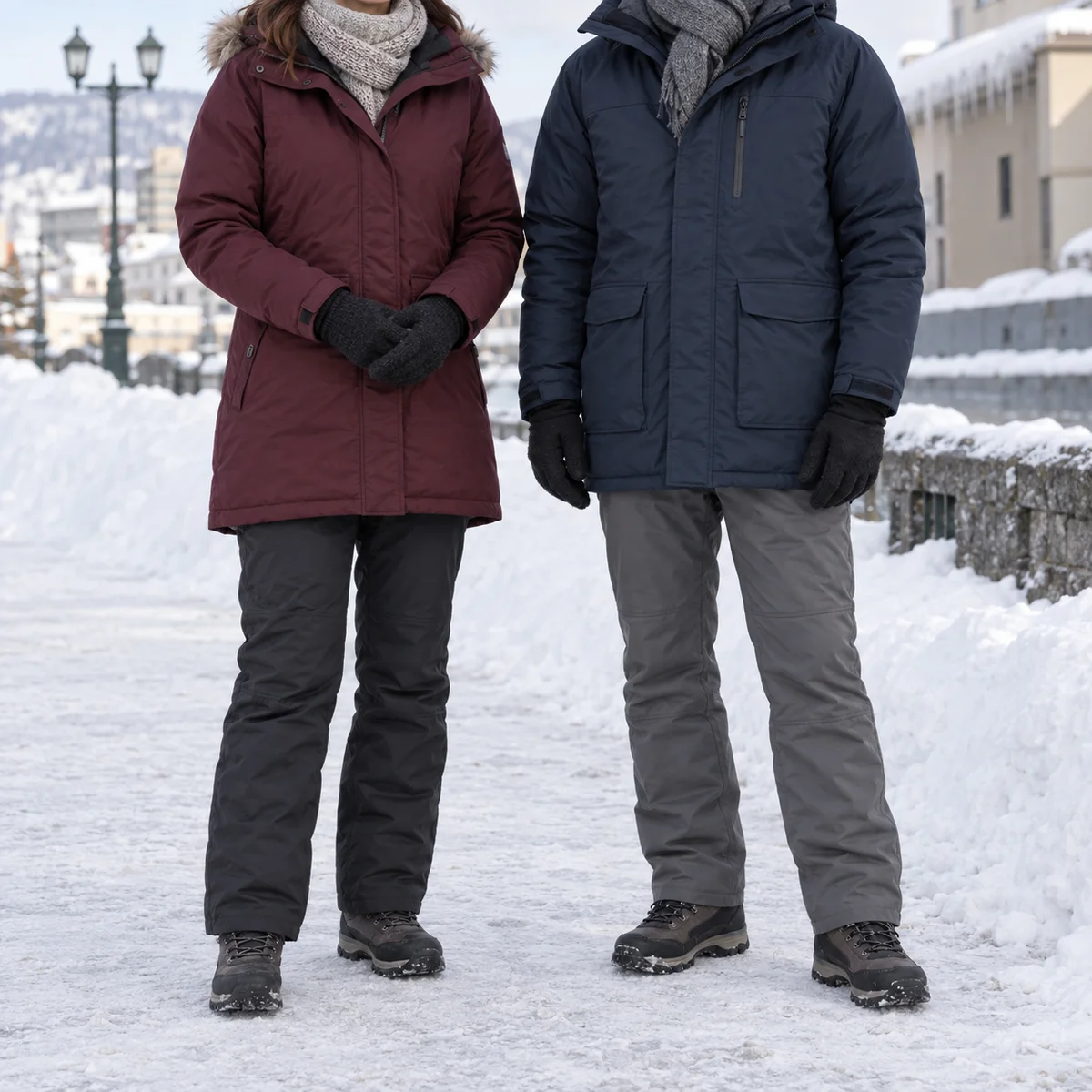
| Japan Sea Side (Kanazawa) | 9°C / 2°C | 7°C / 0°C | 7°C / 1°C | Waterproof boots first, water-resistant outer layer second, warm layers underneath. Temperatures similar to Tokyo but frequent rain/snow and overcast skies change the gear priority. |
| Hokkaido (Sapporo) | ~0°C / -7°C (varies) | -3°C / -10°C | -2°C / -9°C | Insulated waterproof coat, thermals, insulated waterproof boots with grip, full winter gear |
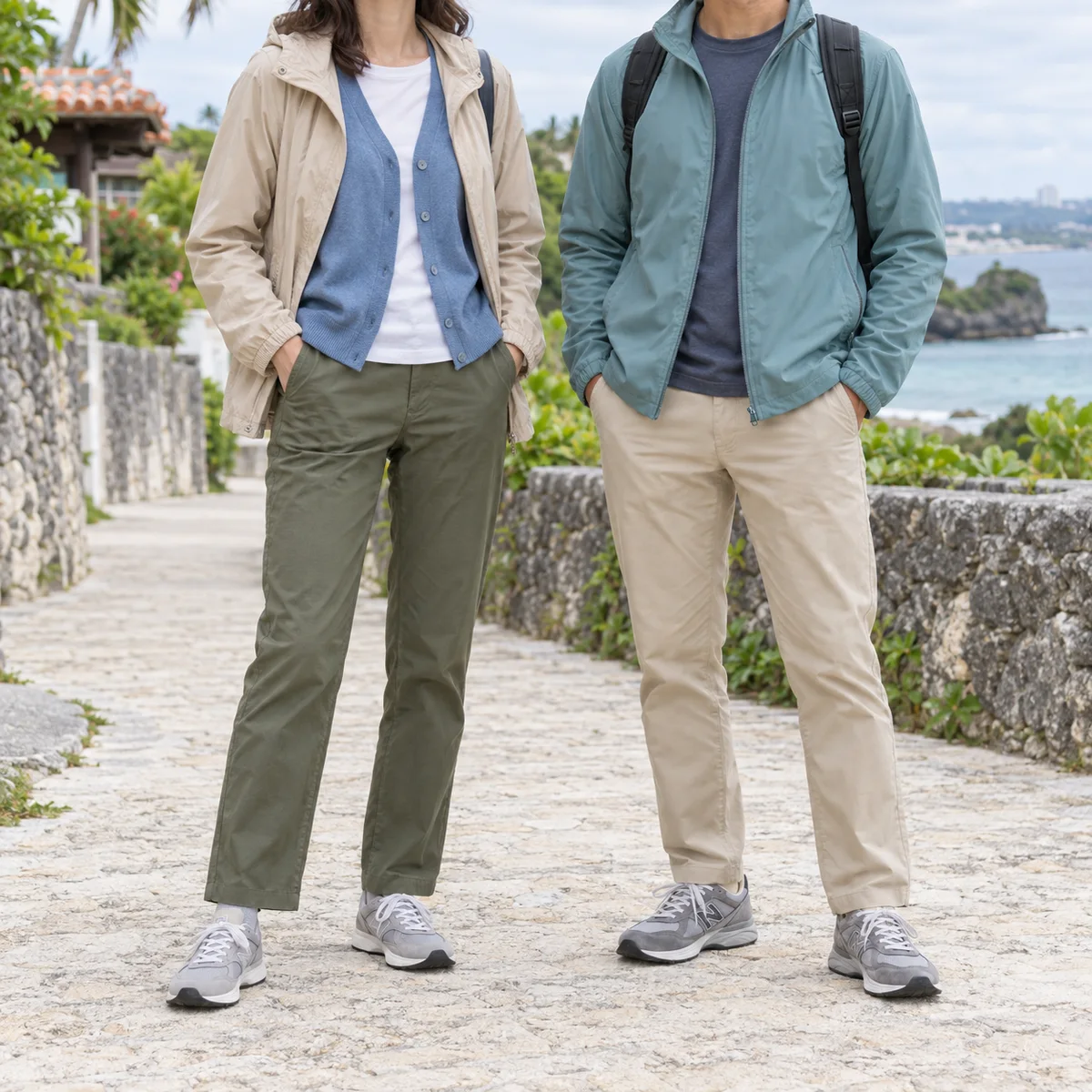
| Okinawa (Naha) | 21°C / 15°C | 19°C / 13°C | 20°C / 14°C | Light layers, windbreaker, long pants. Cool on windy or rainy days, evenings, ferries |
The takeaway: Tokyo and the Pacific side (Osaka, Kyoto, Hiroshima, Fukuoka) are cold-but-manageable with dry, sunny skies. The Japan Sea Side (Kanazawa, Niigata, Toyama) needs waterproof footwear and rain/snow protection more than heavy insulation. Hokkaido requires real winter preparation — boots with grip are as important as a warm coat. Okinawa is much milder but still benefits from a windbreaker for cool coastal days. If your itinerary combines regions, pack for the wettest and coldest leg, then strip down for warmer ones.
Wet Snow: Japan Sea Side Outfit
Mild and Windy: Okinawa Outfit
The Layering Strategy for Japan's Winter
This is the most important section of this guide. Here's the thing about winter in Japan that catches almost every visitor off guard: the temperature swings between indoors and outdoors are extreme, and they happen constantly.
Japanese trains, department stores, shopping malls, and restaurants can feel very warm compared with the cold streets outside — often somewhere in the low-to-mid 20s°C indoors. Then you step outside into 2-5°C air. Then you duck into a convenience store (warm again). Then you walk to a temple (cold again, and you may be removing your shoes onto a chilly wooden or stone floor). This cycle repeats all day long.
A single heavy parka with a t-shirt underneath is the worst strategy. You'll overheat on every train, sweat through your shirt, then freeze the moment you step outside with a damp base layer. Living here, I watch tourists make this mistake every winter.
The Three-Layer System
Here's what actually works:
Layer 1 — Base Layer (Moisture-Wicking)
UNIQLO HeatTech is the gold standard here. Lightweight, fitted thermal tops and bottoms that trap body heat without bulk. They come in three warmth levels:
- HeatTech (regular) — good for Tokyo and Pacific side cities, ¥990
- HeatTech Extra Warm — good for colder days or Hokkaido daytime, ¥1,500
- HeatTech Ultra Warm — good for Hokkaido outdoor activities, ¥1,990
Buy them in Japan — they're cheaper than abroad, take up almost no luggage space, and you can claim tax-free savings on purchases over ¥5,000 at any UNIQLO.
Layer 2 — Mid Layer (Insulation)
A sweater, fleece, or lightweight down vest. This is the layer you add or remove throughout the day. On a heated train, you might unzip or remove your mid layer entirely. Walking between sightseeing spots, you'll want it on.
Good options:
- Merino wool sweater (warm, breathable, doesn't trap sweat)
- Lightweight fleece jacket (easy to zip on/off)
- UNIQLO Ultra Light Down vest (packs tiny, adds serious warmth)
Layer 3 — Outer Layer (Wind and Weather Protection)
A coat that blocks wind and, ideally, handles light rain. The key requirement: it needs to be easy to take off and carry. You'll be removing your coat on trains, in stores, and at restaurants dozens of times a day.
For Tokyo and the Pacific Side (Osaka, Kyoto, Hiroshima, Fukuoka):
- A medium-weight wool coat or insulated jacket
- Packable down jacket (if you prefer minimal bulk)
- No need for heavy expedition parkas
For the Japan Sea Side (Kanazawa, Niigata, Toyama):
- A waterproof outer layer is critical — not just for warmth, but because you'll face constant rain and snow. A wool coat that works perfectly in sunny Tokyo will get soaked in Kanazawa.
- Waterproof boots, not just warm boots
- Hood is essential for daily precipitation
For Hokkaido:
- Insulated, waterproof coat (not just water-resistant — waterproof)
- Length should cover your hips for warmth
- Hood is essential for wind and snow
Why This Works
The beauty of layering is adaptability. On a 22°C train: base layer + open mid layer. Walking through Asakusa at 3°C: all three layers, coat zipped. Browsing a heated department store: coat over your arm, mid layer open. You regulate temperature all day without ever overheating or freezing.
Expect a large temperature swing between heated interiors and cold streets — sometimes close to 20°C in winter. This is why layering beats a single heavy coat. A puffy expedition parka with nothing underneath means you're either too hot or too cold — never comfortable. Three thinner layers let you adjust every time you go in or out.
A practical aside: Pacific-side winter air is very dry — Tokyo's indoor humidity often drops to 20-30% with heating on. Lip balm, hand cream, and eye drops earn their luggage space. Many business hotels can lend a small humidifier on request ("kashitsuki kashite kudasai").
Hokkaido Winter: A Separate Packing List
If your trip includes Hokkaido between December and March, treat it as a separate climate from the rest of Japan. Sapporo's winter is colder than most Central and Western European capitals — broadly comparable to Stockholm or Helsinki, but with far more snow. The combination of ice, snow, and wind demands specific gear.
Hokkaido is colder (sub-zero temperatures are routine), but parts of the Japan Sea Side actually receive more total snowfall than Sapporo. Inland Niigata towns like Tokamachi and Tsunan are among the snowiest inhabited places on Earth, with 8-10m of annual snowfall in some years versus Sapporo's roughly 4.8m. The difference: Hokkaido's challenge is extreme cold and ice on city sidewalks, while the Japan Sea Side's challenge is heavy, wet snow and persistent precipitation at relatively mild temperatures. Pack for cold in Hokkaido, pack for wet in the Japan Sea Side — and pack for both if you're visiting both.
Boots Are Non-Negotiable
This is where most Hokkaido winter visitors go wrong. Regular sneakers or city shoes will not work on Hokkaido's icy sidewalks. The ice is the primary danger — not the cold, not the snow, the ice. Packed snow on sidewalks becomes a smooth, invisible skating rink.
What you need:
- Insulated, waterproof boots with aggressive rubber soles
- Look for boots rated to at least -20°C
- Ankle-height or higher to keep snow out
- Brands that work well: Sorel, Columbia, Merrell, The North Face
If you don't want to pack bulky boots, you can buy clip-on ice grips (YakTrax-style crampon attachments) at shoe stores and even some convenience stores in Sapporo. They attach over regular shoes and provide grip on ice. Not as good as proper boots, but far better than nothing.
Hokkaido Gear Checklist
| Item | Why |
|---|---|
| Insulated waterproof coat | Daily temperatures below freezing |
| HeatTech Ultra Warm base layers | Lightweight warmth under everything |
| Thick wool or fleece mid layer | Insulation for extended outdoor time |
| Waterproof insulated boots | Ice grip is critical for safety |
| Thick waterproof gloves | Fingers go numb fast at -10°C |
| Ear-covering hat or beanie | Wind chill makes exposed ears painful |
| Neck gaiter or scarf | Protects face and neck from wind |
| Hand warmers (kairo) | Buy locally at convenience stores |
| Sunglasses | Snow glare is intense on sunny days |
Icy sidewalks cause thousands of injuries every winter in Hokkaido, including among locals. Walk with short, flat-footed steps (like a penguin). Avoid smooth-soled shoes entirely. If renting a car, winter tires are mandatory and included with all Hokkaido winter rentals.
Getting to Hokkaido
From Tokyo, the Hokkaido Shinkansen runs as far as Shin-Hakodate-Hokuto, where you transfer to the JR Hokuto / Super Hokuto limited express to reach Sapporo (about 3.5 hours, not a bus). The total Tokyo-Sapporo rail trip runs around 8 hours; for most travelers, flying Haneda/Narita to New Chitose Airport (about 1.5 hours flight + transit) is faster and often cheaper. The Shinkansen extension to Sapporo was originally targeted for 2030 but was delayed in 2024 due to tunnel construction challenges; current target is around 2038-2039.
Check our JR Pass calculator to see if a rail pass makes sense for your itinerary — it can cover the Shinkansen leg plus unlimited travel within Hokkaido.
Winter Packing List
Here's the consolidated packing list. Adjust based on your regions — Tokyo-only visitors can skip the Hokkaido-specific items.
Clothing Essentials (All Regions)
- HeatTech base layer tops (2-3) — buy at UNIQLO in Japan
- HeatTech base layer bottoms (1-2)
- Mid-layer sweaters or fleece jackets (2)
- Winter coat (weight depends on your coldest destination)
- Long pants / jeans (2-3)
- Warm socks (4-5 pairs — thick for Hokkaido)
- Comfortable walking shoes (waterproof preferred)
- Scarf
- Gloves (touch-screen compatible for phone use)
- Hat or beanie
Add for Hokkaido
- Insulated waterproof boots with grip soles
- Thick waterproof gloves (upgrade from city gloves)
- Ear-covering hat
- Neck gaiter or balaclava
- HeatTech Ultra Warm versions instead of regular
Accessories & Extras
- Compact umbrella (for occasional rain/sleet)
- Small packable bag (for carrying removed layers)
- Sunglasses (for snow glare, especially in Hokkaido)
- Lip balm and hand cream (dry winter air is brutal on skin)
- Reusable shopping bag
UNIQLO HeatTech, hand warmers, warm socks, and even compact down jackets are cheaper in Japan than abroad. Buy them after you arrive and claim tax-free savings on purchases over ¥5,000. This also means less to pack on the way over.
 Code JAPANODE · 6% off
Radical Storage — Luggage Storage Across Japan
Winter is the bulkiest packing season — coats, boots, and the UNIQLO haul you didn't plan for. On checkout days and city transfers, coin lockers often can't fit a winter-sized suitcase. Radical Storage lets you drop bags by the day at vetted spots near stations and sights. Use code JAPANODE for 6% off.
Winter Activities and What to Wear for Them
Onsen (Hot Springs)
Winter is arguably the best season for onsen. There's nothing quite like soaking in a steaming outdoor bath (rotenburo) while cold air hits your face and snowflakes melt on the water's surface.
How onsen work: At a traditional onsen or sento, swimwear is not worn in the bathing area. You bathe nude, and a small towel is used outside the bath — not inside the water. Wash thoroughly at the seated washing stations first, then enter the bath. Tie up long hair so it doesn't touch the water. Ryokan provide yukata robes and sometimes warm tanzen overcoats for walking between your room and the bath; bring your own small towel or rent one if your accommodation doesn't provide it. After bathing, your body stays warm for a surprisingly long time.
Many traditional onsen and sento still refuse entry to anyone with visible tattoos, even small ones. Winter is peak onsen-trip season (Hakone, Nikko-Yumoto, Kinosaki, Kusatsu, Jozankei, Noboribetsu), so this is worth planning around:
- Adhesive tattoo cover stickers (タトゥーシール) at Don Quijote, drugstores, or Amazon Japan (¥500-1,500) handle small tattoos
- Tattoo-friendly facilities can be found at
tattoo-friendly.jpand Tabelog reviews - Private alternatives — ryokan with in-room rotenburo or reservable family baths (kashikiri-buro) bypass the question entirely
Skiing and Snowboarding
Hokkaido and Nagano have world-class powder snow. If you're skiing, you likely know what to wear, but a few Japan-specific notes:
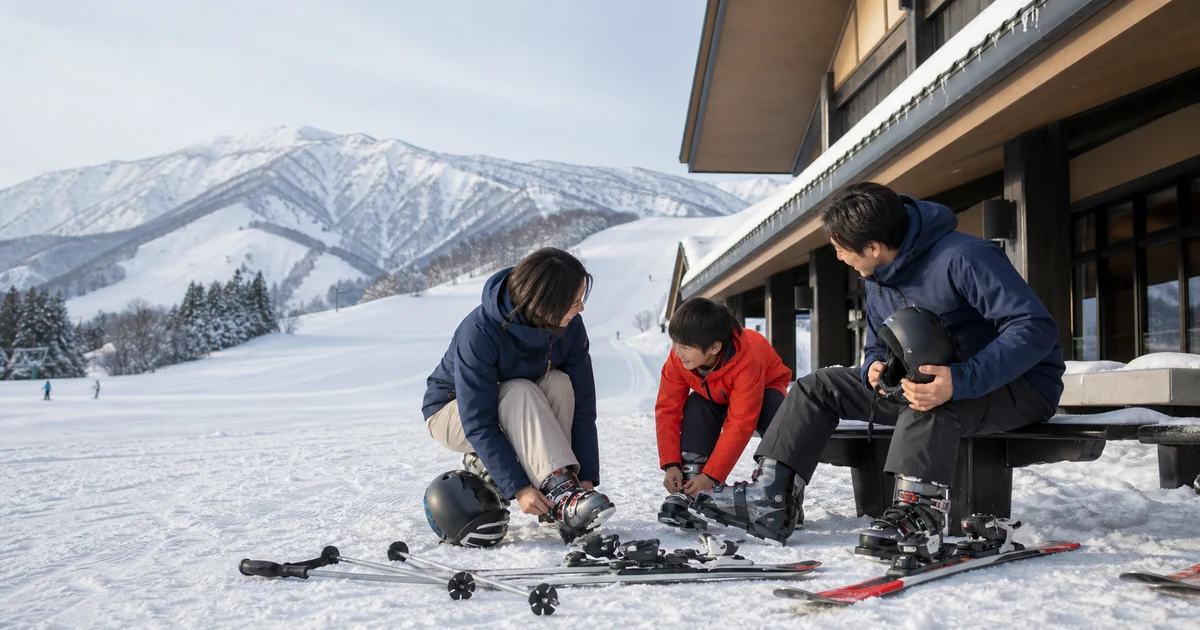
If this is your first snow trip, start with our guide to skiing in Japan to choose between a Tokyo day trip, a short beginner stay, and a ski-first holiday. Clothing is only half the preparation: use our Japan ski travel insurance checklist to separate marked runs, official gates, backcountry, search and rescue, liability and rented equipment.
- Casual skiers and snowboarders: renting gear in Japan is often easier than hauling it. Rental shops in Niseko, Hakuba, and other resort towns are well-stocked and affordable. Serious skiers may still prefer to bring their own boots or specialist gear.
- Goggles over sunglasses — Hokkaido powder means low visibility days.
- Japan's ski resorts have heated lodges and onsen at the base. Layering still applies.
 Fixed-trip first quote
Heymondo Travel Insurance
Medical and cancellation cover for a fixed-date winter trip
Icy sidewalks injure travelers every winter, and Japan has no free healthcare for tourists. For a set-date holiday, compare the Heymondo quote and issued medical limits before you fly. Skiing and rescue require an exact policy check. Heymondo excludes US residents; readers receive 5% off where eligible.
Winter Illuminations
Every major city in Japan puts on spectacular light displays from November through February. Tokyo Midtown, Kobe Luminarie, Nabana no Sato near Nagoya — these are all outdoor events where you're walking and standing in cold weather for 1-2 hours.
What to wear: Your full three-layer setup. Add hand warmers in your pockets and a warm hat. Touch-screen gloves let you take photos without exposing your fingers. A hot canned coffee from a vending machine (¥130) doubles as a hand warmer.
Hatsumode (New Year Shrine Visits)
Visiting a shrine on January 1-3 is a beloved Japanese tradition — and it involves standing in long outdoor queues. Major shrines like Meiji Jingu in Tokyo or Fushimi Inari in Kyoto draw millions, meaning wait times of 30-90 minutes in near-freezing temperatures.
What to wear: Everything warm you have. Full layers, thick scarf, hat, gloves, and hand warmers. The queue barely moves, so you don't generate body heat from walking. Your feet will get coldest — thick-soled shoes and warm socks are crucial. Many people buy warm amazake (sweet rice drink) from shrine vendors to warm up.
Temple and Shrine Sightseeing
Standard winter sightseeing in Kyoto and Nara means lots of time outdoors on stone paths and wooden floors. You'll remove your shoes at many temples — and those wooden floors are cold. Thick socks or wool socks make a genuine difference.
What to wear: Standard three-layer setup. Slip-on shoes speed up the constant shoe removal. For Kyoto's bamboo groves and temple gardens, the shade makes it feel 2-3 degrees colder than the city.
Mount Fuji in Winter: Where to See It
Winter is the best season for clear Mount Fuji views — dry Pacific-side air means more days when Fuji is visible from Tokyo and surrounding areas:
- Tokyo Metropolitan Government Building observation deck (Shinjuku) — free, open evenings, sunset views are particularly good
- Tokyo Tower / Tokyo Skytree — paid, both have winter Fuji visibility on clear days
- Kawaguchiko (Fuji Five Lakes) — about 1.5-2 hours from Tokyo, the classic close-up view; very cold (pack accordingly). We compare all six ways to get there in our Mt Fuji day trip guide
- Enoshima / Kamakura — coastal Fuji views, easy day trip from Tokyo
- Hakone (Komagatake ropeway) — combine Fuji views with hot-spring stay
Bring a hat and gloves for outdoor observation decks — wind chill at height can drop perceived temperature significantly.
Cold-Air Practicalities
A few small things that come up every winter trip:
- Smartphone battery drains noticeably faster in cold air. Carry a power bank.
- Lithium-ion drain also affects camera batteries — keep spares in an inside pocket to stay warm
- Static electricity is intense in dry winter air (especially Pacific-side). Touching a metal door handle or elevator button can give you a noticeable shock; locals touch a wall or wooden surface first to discharge.
- Influenza and cold viruses peak December-February. Carrying a few disposable masks is normal in Japan and useful in crowded trains; drugstores stock cold medicine, fever reducers, and thermometers. For non-emergency medical English service, Tokyo Medical and Surgical Clinic and similar international clinics in major cities accept walk-ins. In emergencies, dial 119 for an ambulance.
Last verified May 16, 2026. Climate ranges based on long-term JMA monthly normals; year-to-year snowfall, ice conditions, illumination event dates, and Hokkaido Shinkansen extension timeline can change. Always confirm Sapporo Snow Festival dates, ski-resort opening conditions, and ryokan-specific tattoo policies directly with the operator close to travel day.