On this page
A lot of English-language guides to Zen Japan blur three different things: Zen Buddhism, the broader Japanese aesthetic of wabi-sabi, and Koyasan temple stays (which aren't actually Zen — they're Shingon). This guide separates them cleanly, gives current 2026 prices for each option from free drop-in zazen to ¥150,000 private sessions, and links to operators and temples we've cross-checked. Written from Kansai with regular on-site access to Kyoto's Zen temples.
Prices, schedules, and policies are verified at time of writing — always confirm with the temple or operator directly before booking, since these change without notice.
Zen experiences in Japan are accessible to visitors at every budget — from free 45-minute drop-in zazen at Kyoto temples like Nanzen-ji and Kennin-ji to overnight shukubo temple stays at Koyasan and premium ¥150,000 private sessions in subtemples normally closed to the public. This 2026 guide covers what Zen and wabi-sabi actually mean, where to try them, current prices, and how to book — written from Kansai with regular on-site access to the temples covered.
If you're at an earlier planning stage, our first-time Japan guide covers the trip-planning fundamentals. For an overview of the accommodation styles mentioned here (shukubo, ryokan, hotels), see japan accommodation types — that guide handles cross-format comparison; this one focuses on the temple-stay experience itself. For getting to Kyoto and Koyasan from the nearest international airport, our Kansai Airport transport guide covers the route in detail.
1. What Zen and Wabi-Sabi Actually Mean (and Why They Matter for Visitors)
Zen is a school of Japanese Buddhism centered on meditation rather than scripture. Wabi-sabi is a related aesthetic — the appreciation of beauty in imperfection, age, and impermanence. The two share Buddhist roots and the same emphasis on direct, lived experience over abstract explanation, which is why visitors often encounter them together at temples and in tea rooms.
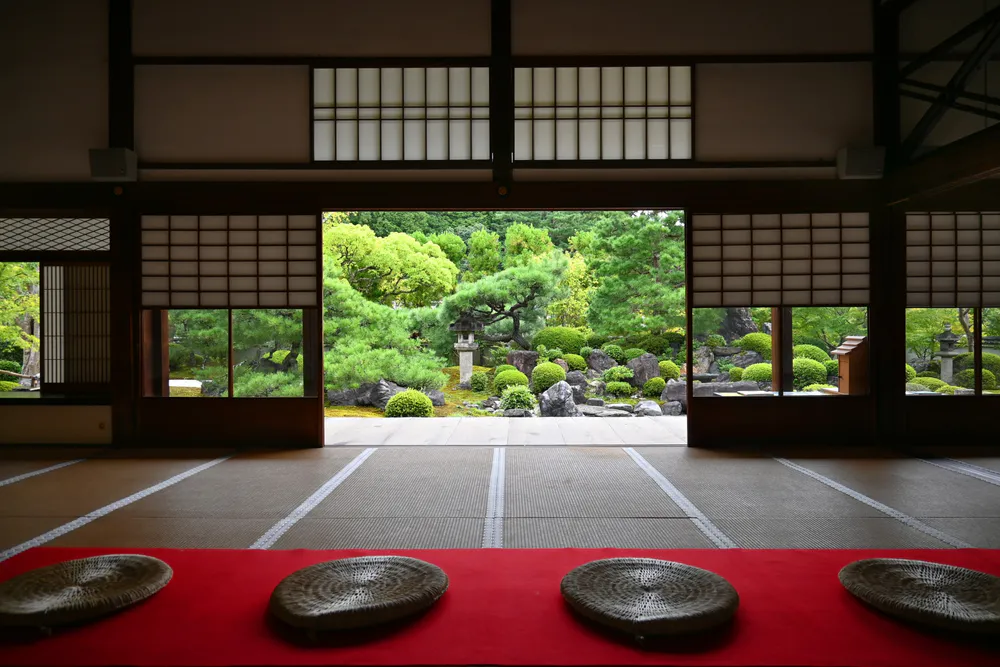
A small piece of this distinction matters when booking. "Zen" is a school of Mahayana Buddhism that places strong emphasis on direct practice — zazen and teacher-student transmission — rather than on doctrinal explanation alone. It still has its own sutras, rituals, and lineages, but the practice itself is central, which is why a one-hour zazen sitting can give visitors a real taste of the tradition without requiring any belief commitment. "Wabi-sabi" is a way of seeing the world, embodied in tea bowls, gardens, and weathered architecture — you don't really book a wabi-sabi experience, you visit a place where the aesthetic is strong. The crossover sits in tea ceremony, where the practice is literally drinking matcha from an irregular hand-thrown bowl, surrounded by deliberately understated decor.
Zen Buddhism in 60 seconds
Zen arrived in Japan from China in the late 12th century. It has three main branches:
- Rinzai (founded in Japan by Eisai, 1191) — uses koan, paradoxical questions a student wrestles with under a teacher's guidance, and emphasizes sudden insight. Dominant in Kyoto; the largest Rinzai head temple is Myoshin-ji.
- Soto — introduced to Japan by Dogen (1200–1253) after his return from China. Emphasizes shikantaza or "just sitting" as the practice itself, with no goal beyond the sitting. Eihei-ji, founded by Dogen in 1244, is one of the school's two head temples (the other is Soji-ji in Yokohama).
- Obaku — founded by the Chinese monk Ingen Ryuki (Yinyuan Longqi), who arrived in Japan in 1654 and founded Manpuku-ji in Uji in 1661. The smallest of the three branches, with a distinctly Chinese Ming-era aesthetic that sets its temple architecture and chant styles apart. Manpuku-ji is reachable from Kyoto by the JR Nara Line to Obaku Station (~25 min) or via the Keihan Uji Line.
Most visitor-friendly zazen sessions you'll encounter in Kyoto are Rinzai. Sessions typically combine two sittings of zazen with a short walking meditation called kinhin between them.
Wabi-Sabi: not a design trend
Wabi-sabi is a 15th–16th century Japanese aesthetic centered on the beauty of things that are old, asymmetrical, weathered, modest, and quietly natural — not a generic "imperfection is beautiful" design trend. It emerged through tea masters Murata Shuko, Takeno Joo (the bridging figure), and especially Sen no Rikyu, who shaped the rough, modest, deliberately incomplete aesthetic of the modern tea ceremony. Most English-language coverage flattens it into "imperfection is beautiful," which misses most of it. The original concept is more specific: it points to beauty in old, asymmetrical, weathered, modest, quietly natural — and rejects ostentation and the merely new. You feel it in a moss-covered roof, a tea bowl with an intentional repair line, or a temple garden left austere instead of decorated.
How they connect — and why visitors confuse them
Both Zen and wabi-sabi share Buddhist roots and the same suspicion of explanation-over-experience. Tea rooms, dry-stone gardens, and shojin-ryori (Buddhist vegetarian cuisine) sit at the intersection — places where the two are practically inseparable. This is also where most visitors first encounter them, which is why English coverage often conflates the two.
2. Zen Experiences in Japan: Your Five Options
Visitors can experience Zen in Japan five ways: free drop-in zazen at Kyoto temples (Nanzen-ji, Kennin-ji), guided English zazen sessions (¥8,000–¥20,000), premium private temple sessions (¥30,000–¥150,000), overnight shukubo temple stays at Koyasan or Eihei-ji (¥12,000–¥40,000 per night), and multi-day retreats. The mid-tier guided session is the best entry point for most first-time visitors.
We've ordered these by price and depth, from lightest to heaviest commitment.
Option 1 — Drop-in zazen at a Kyoto temple (free–¥3,000)
The lowest-commitment way in. Several Kyoto temples open their meditation halls to the public on specific days. A few that take walk-ins or open booking:
- Nanzen-ji — Free Gyo-ten Zazen on the 2nd and 4th Sunday of the month, 6:00 am (6:30 am from November to March), Rinzai. The session is suspended for all of August, plus the 4th Sunday of December and the 2nd Sunday of January. Individuals can drop in; groups need to book ahead. We recommend confirming on the temple's official site before going.
- Kennin-ji — Senko-kai zazen, 2nd Sunday of each month only, free, no reservations required. No session in August. Start time is typically around 7:30–8:00 am — confirm on the official Kennin-ji site before going (sources vary). Format: two ~20-minute sittings + a short lecture + tea (about 60 minutes total). Kennin-ji is Kyoto's oldest Zen temple (founded 1202 by Eisai).
- Bishamondo Shorin-ji (Higashiyama, a short walk from Tofukuji Station) — beginner-friendly zazen and shakyo sutra-copying sessions. Reservations required via the temple's website (shourin-ji.org).
- Shunko-in (Myoshin-ji subtemple) — runs regular English-led zazen sessions with the Deputy Head Priest. The most accessible Kyoto temple for English-speakers who want a genuine zazen sitting without a paid tour package.
Who this is for: visitors who want a no-fee, authentic atmosphere and can handle the language barrier (Shunko-in being the English exception). Skip if you need clear English instruction at a Japanese-language temple, or specific accommodations for seated position.
Option 2 — Guided English zazen + tea (¥8,000–¥20,000)
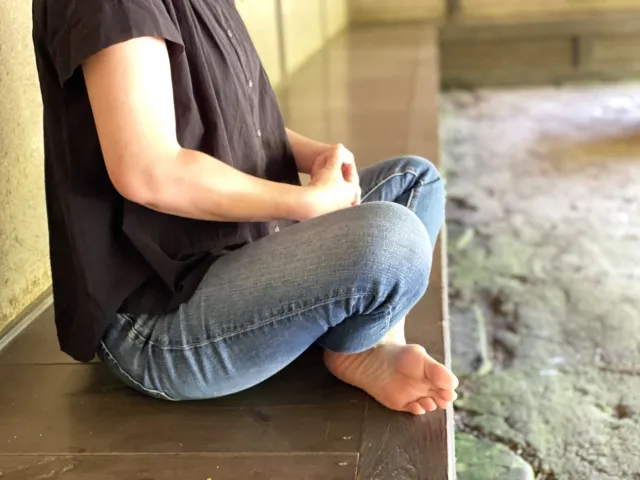
The category most foreign visitors actually end up booking, and the one we recommend as a first try. Operators run a 90–120 minute session at a real temple, with a monk leading the meditation and a translator framing each step. Many include matcha and a short garden walk afterwards.
 Mid-tier · Recommended Start
Kyoto Zazen + Garden Walk + Shojin Lunch (3hr, English Monk)
Why it may fit
A 3-hour zazen session at a working Kyoto Zen temple, followed by a vegetarian Buddhist lunch and a guided walk through the temple garden. English support throughout.
Before booking
Check the live price, availability, eligibility, and terms before paying.
Who this is for: first-time visitors who want a genuine session with the comfort of English instruction. Skip if you specifically want a free public-temple atmosphere, or you want the deepest possible immersion.
Option 3 — Private temple experience with a monk (¥30,000–¥150,000)
Premium operators (Wabunka being the most prominent) arrange access to subtemples normally closed to the public — Taizo-in (Myoshin-ji), Komyo-in (Tofuku-ji), and other Myoshin-ji and Kodaiji subtemples that rotate with seasonal availability. The experience typically includes private zazen with a senior priest, a guided tour of normally off-limits halls and gardens, and often a tea ceremony or kaiseki meal afterwards. Sessions run two to four hours.
The basic sitting practice may be similar to Option 2; what you're mainly paying for is access, undivided priest attention, privacy, and entry into rooms most Japanese visitors never see. For most visitors, Option 2 covers what they came for. Option 3 is the right call for once-in-a-lifetime trips, honeymoon trips, or repeat visitors looking for depth beyond the standard tourist circuit.
If Wabunka's price tier is too steep, a Klook small-group "private" session offers similar intimacy at roughly one-tenth the cost:
 Private · Budget Alternative
Private-Temple Zazen with a Monk, Kyoto (Small Group)
Why it may fit
A smaller-group zazen at a private Kyoto temple guided by a resident monk, with English interpretation. Roughly 90 minutes, including tea and a Q&A at the end. A budget alternative to Wabunka-tier private bookings.
Before booking
Check the live price, availability, eligibility, and terms before paying.
Option 4 — Temple stay (shukubo) in Koyasan or Eihei-ji (¥12,000–¥40,000 per night)
Overnight stays at working monasteries. The two main destinations for foreign visitors:
- Koyasan (Wakayama) — a mountain town with 51 shukubo (lodging temples) out of 117 temples total, about 2 hours from Osaka Namba by Nankai limited express, cable car, and local bus. Critically, Koyasan is Shingon Buddhism — the school founded by Kūkai (better known by his posthumous title Kōbō Daishi, 774–835) — not Zen. The visitor experience is similar in shape — overnight stay, shojin-ryori meals, optional morning prayer participation, Okunoin (the 2-km cemetery path leading to Kobo Daishi's mausoleum) walks at dusk — but the meditation tradition is different. Beginner-friendly temples include Eko-in, Rengejo-in, Yochi-in, and Sakurai-in.
- Eihei-ji (Fukui) — the head temple of Soto Zen (alongside Soji-ji in Yokohama), founded by Dogen in 1244. Direct stays inside the monastery are reserved for serious practitioners, but the affiliated Hakujukan hotel next door (opened July 2019, ~¥16,000+ per person) offers structured zazen and morning-chant participation packages designed for visitors. The most accessible way to encounter Soto Zen in practice without committing to full monastic discipline.
The Koyasan experience is by far the more accessible for visitors, both linguistically (most major shukubo have some English) and logistically (regular booking platforms cover the major temples). For where shukubo fits in the broader Japanese accommodation landscape (versus ryokan, hotels, capsules), see our accommodation types guide.
 Overnight · from ¥12,000/night
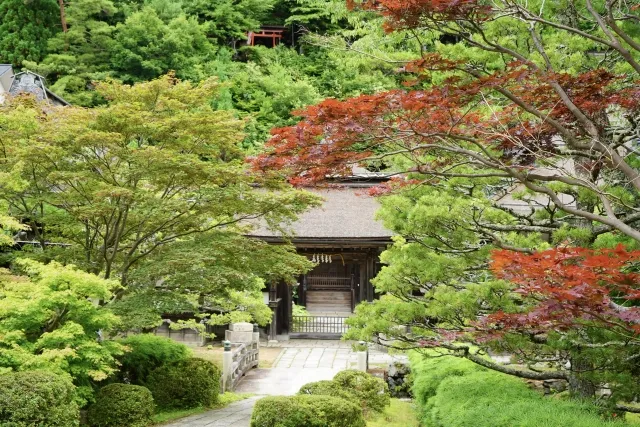
Koyasan Shukubo Temple Stay (from ¥12,000/night)
Why it may fit
Overnight stays at Koyasan's lodging temples (shukubo), including shojin-ryori dinner and breakfast, and the option to join morning prayer. Eko-in and Sakurai-in are beginner-friendly. Note: Koyasan is Shingon Buddhism, not Zen.
Before booking
Check the live price, availability, eligibility, and terms before paying.
Who this is for: visitors with at least one night to spare and an appetite for the immersive version. The morning prayer (around 6:00 am) is the genuine highlight. Skip if you have only day-trip time, or you specifically want a Zen tradition (in which case Eihei-ji via Hakujukan is the answer).
Option 5 — Multi-day Zen retreat (¥30,000–¥100,000+)
A handful of operators run structured 2–5 day retreats designed specifically for foreign visitors. The two we're aware of as currently active:
- Zenbo Seinei (Awaji Island, Hyogo) — a contemporary retreat space designed by Shigeru Ban (completed 2022), built along the 135°E meridian that defines Japan Standard Time. Single-day and overnight programs both available, accessible from Kansai.
- Shoganji Zen Retreat (Oita) — a small-group, homestay-style retreat with a Rinzai priest in rural Kyushu (typically limited to a handful of guests with a multi-night minimum). Opened to international visitors in 2004 at a 600-year-old temple site.
These are committed-traveler choices: significant time, real cost, deep immersion.
3. Tea Ceremony: The Wabi-Sabi You Can Drink
A Kyoto tea ceremony (chanoyu or sado) is a 45–90 minute ritualized preparation and drinking of matcha green tea, rooted in Zen practice and wabi-sabi aesthetics. Visitor-friendly options range from ¥3,500 shared sessions in Gion to ¥15,000 private ceremonies in a Kinkaku-ji-area machiya (a traditional Kyoto townhouse). Tokyo also offers tea ceremony in Asakusa and Shinjuku, with comparable quality.
"The wabi-sabi you can drink" is a metaphor, of course — tea ceremony isn't "wabi-sabi itself," but one of the clearest places where visitors can encounter the aesthetic in practice, from the irregular hand-thrown bowl to the deliberately understated tea room.
If you have already decided on Kyoto and need to choose a specific session, our Kyoto tea ceremony comparison ranks five options by location, time, group size, kimono, accessibility and current booking evidence. This section explains the cultural context; that guide handles the purchase decision.
What happens in a tea ceremony
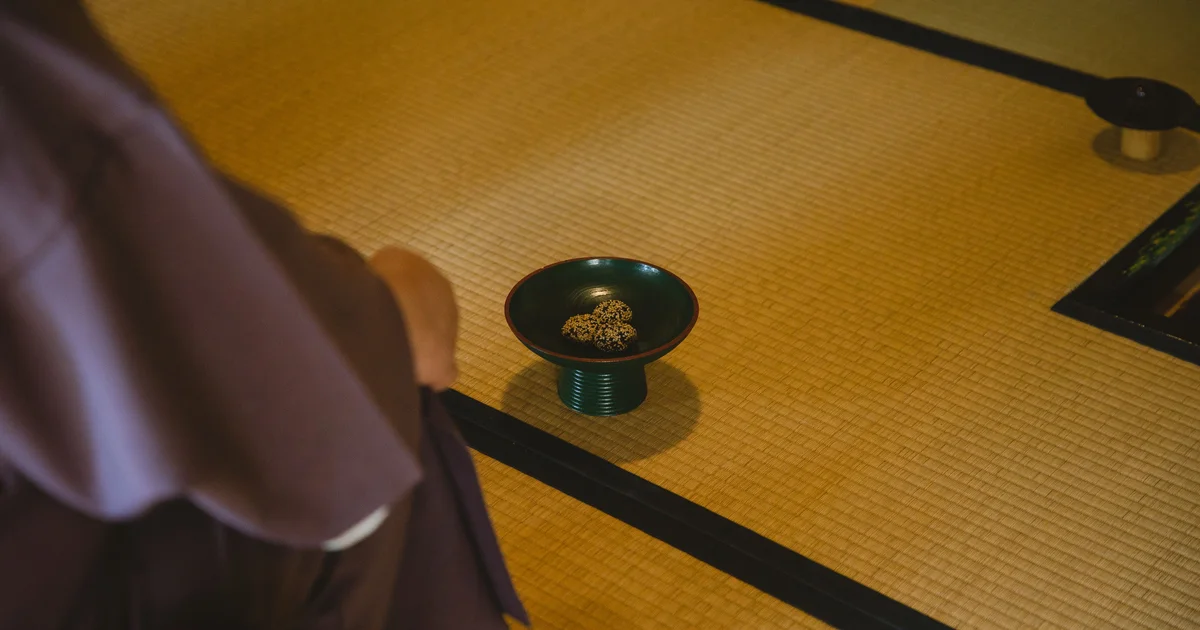
In a traditional tea room, you may enter through a deliberately low door (a humility reset), though many visitor-friendly sessions use a more accessible room layout. You kneel or sit on tatami and watch the host prepare a bowl of matcha — most visitor-friendly sessions serve usucha (thin tea); koicha (thick tea) is more formal and less common in casual tourist sessions. You are usually served a small wagashi sweet first, then the tea. There are specific motions for receiving the bowl, turning it, drinking in three sips, and returning it. The whole thing is unhurried and deliberately quiet.
Kyoto vs Tokyo: where to book
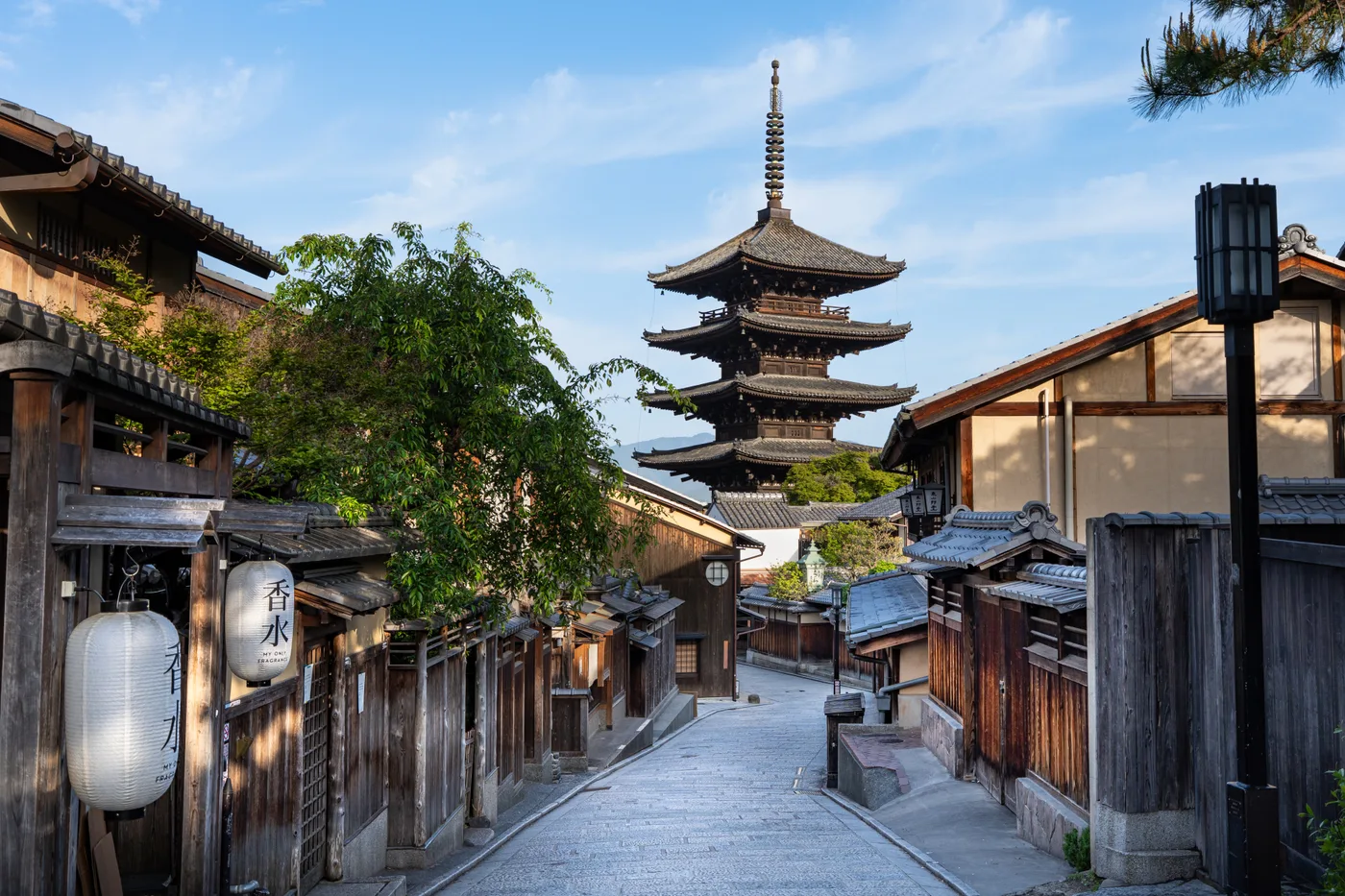
Kyoto remains the cultural heart of tea ceremony for many visitors. The three main tea schools (Urasenke, Omotesenke, Mushakojisenke — collectively the san-Senke) are headquartered here, machiya tea rooms preserve the spatial language of the practice, and the surrounding garden context (Daitoku-ji, Kinkaku-ji, Nanzen-ji) reinforces the aesthetic.
Tokyo is operationally easier to combine with a city-focused itinerary and has solid options in Asakusa and Shinjuku. For visitors with two or three days in Tokyo and no Kyoto leg, it's a perfectly real and worthwhile experience — Kyoto simply offers a denser historical setting if you want tea ceremony, temples, and gardens in the same cultural context.
Shared session vs private: what you actually get
Shared sessions (¥3,500–¥5,000) typically host eight to fifteen guests in a single sitting. The host explains each step in English, often with a brief background on the tools and the room. You get an authentic ceremony, but with limited interaction.
Private sessions (¥10,000–¥25,000) host one to four guests. The host can engage with your questions, the pace is slower, and you often get to try whisking your own bowl of matcha afterwards. For most visitors, a shared session is enough; the private upgrade is worth it if you want to actually understand what you are doing.
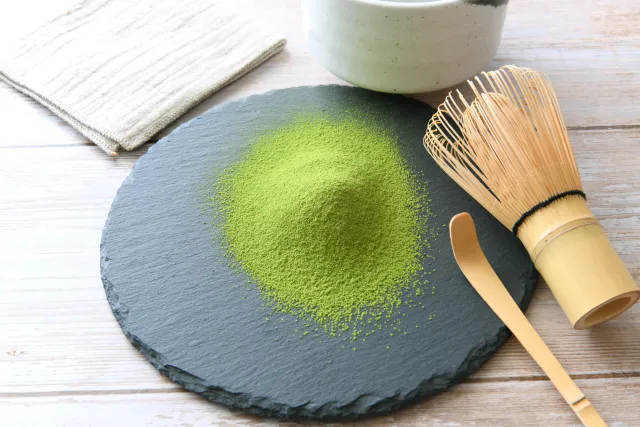 Shared · ¥3,500–¥5,000
Kyoto Tea Ceremony in Gion (Shared, English Host)
Why it may fit
A 45-minute tea ceremony at a traditional Gion venue with an English-speaking host. Includes a wagashi sweet, the ceremony itself, and a short explanation of utensils and history.
Before booking
Check the live price, availability, eligibility, and terms before paying.
If your itinerary skips Kyoto entirely, an Asakusa or Shinjuku tea ceremony is a real and worthwhile substitute:
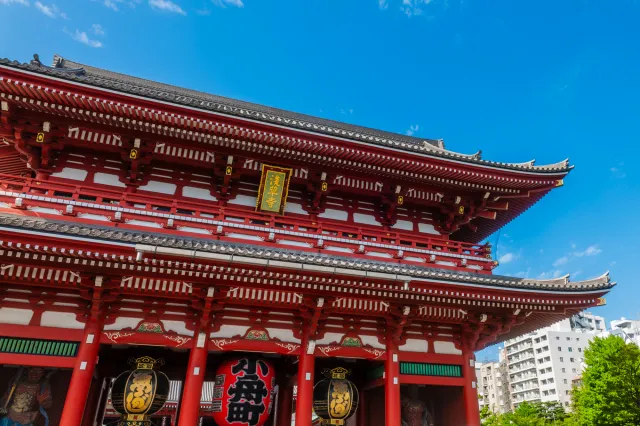 Tokyo Alternative · ¥3,500–¥8,000
Tokyo Tea Ceremony (Asakusa Machiya, English Host)
Why it may fit
Shared and private formats in a traditional Asakusa machiya. Useful if your itinerary skips Kyoto or you only have a Tokyo leg.
Before booking
Check the live price, availability, eligibility, and terms before paying.
4. Wabi-Sabi in the Wild: Places to Feel It (Not Just Read About It)
The four best places to feel wabi-sabi in Japan are Tofuku-ji's dry-stone gardens, Daitoku-ji's reliably-open subtemples (Daisen-in and Zuiho-in) in Kyoto, Ginkaku-ji's moss garden, and Okunoin cemetery at dusk in Koyasan. Wabi-sabi cannot be booked as an experience — but at these four locations, the 600-year-old aesthetic of imperfection, weathering, and impermanence is most tangible for visitors.
Tofuku-ji's dry-stone gardens
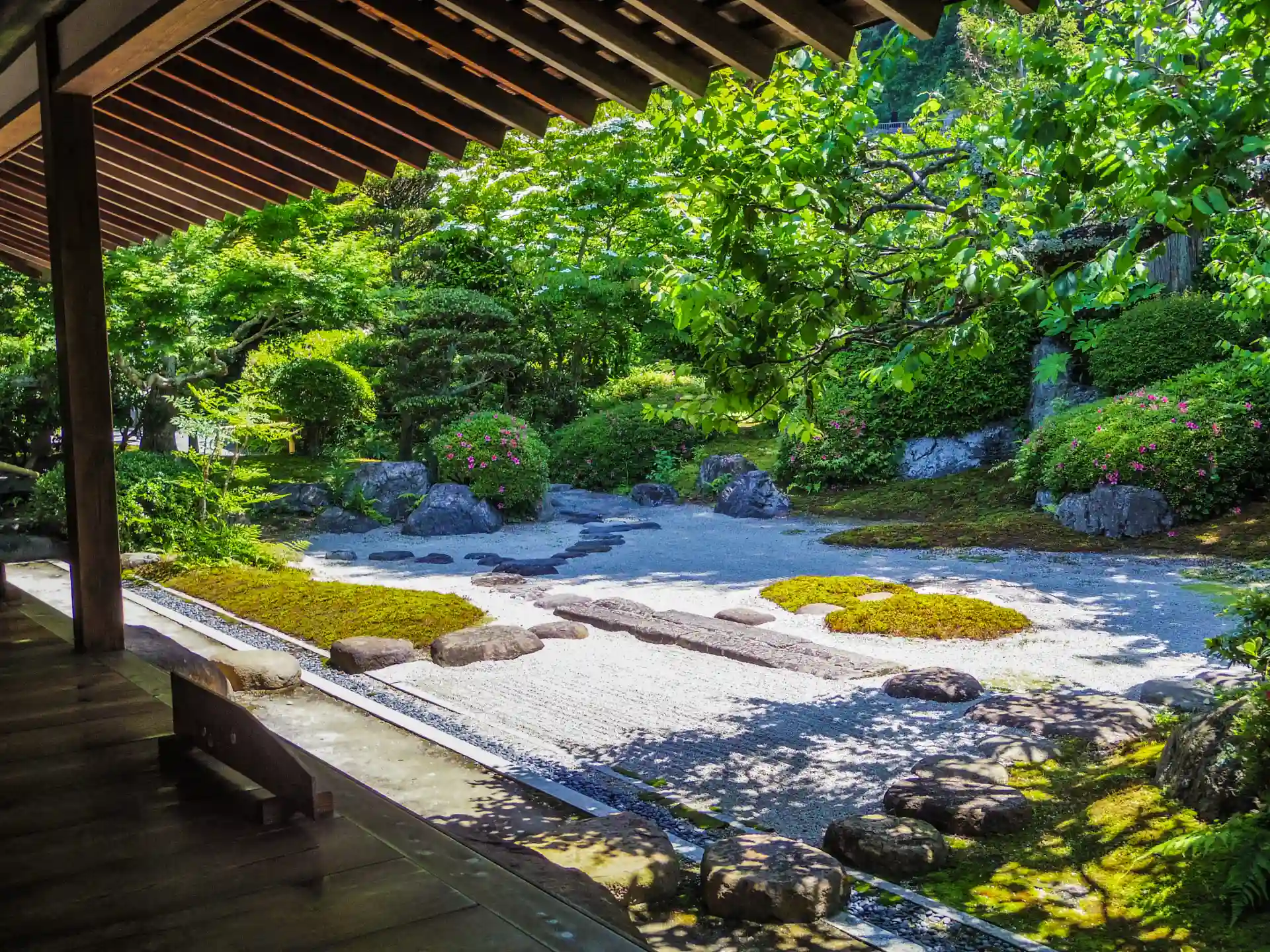
The Hojo (abbot's quarters) at Tofuku-ji is surrounded by four gardens designed by the modernist Mirei Shigemori in 1939. The south garden places massive stones representing the four Mythical Isles in a sea of raked white sand, with five moss mounds for the great Zen mountains; the equally famous east garden arranges cylindrical column stones as the Big Dipper, and the north garden is the modernist checkerboard of square stones and clipped moss — Shigemori's signature move, easy to spot once you've seen one of his other gardens. In autumn, the surrounding maple canopy turns the temple complex into one of Kyoto's quietest, most photographed places. Get there before 9:00 am to feel it without crowds.
On a weekday morning in early November, the abbot's wooden floor was cold enough through socks to make me alert in a way I usually associate with caffeine — which I think is part of the point.
Daitoku-ji subtemples
Daitoku-ji is a temple complex made of more than twenty subtemples. Most are closed to the public on any given day, but two stand out for visitors:
- Daisen-in — a Special Place of Scenic Beauty (the most concentrated wabi-sabi garden in Kyoto, in our view) attached to a hojo (abbot's hall) designated a National Treasure. The sliding-door paintings inside are Important Cultural Properties.
- Zuiho-in — a reliably-open subtemple featuring a 20th-century cross-shaped raked-gravel garden designed (again) by Mirei Shigemori. The cross is a reference to the founding patron's Christian-era history; the garden reads as wabi-sabi in the same Shigemori-modernist register as Tofuku-ji.
Ryogen-in (one of Daitoku-ji's oldest subtemples, multiple small gardens) and Obai-in (seasonal openings, very strong moss) are worth visiting if you have time. Koto-in has been closed to the public since the COVID period with no confirmed 2026 reopening date — older guides recommending it will send you to a closed gate.
Ginkaku-ji's moss and silence
The "Silver Pavilion" is the visitor-facing draw, but the real Ginkaku-ji experience is the moss garden behind it. The path circles up through stone steps that have been worn for centuries, past a moss carpet that feels like a different ecosystem. Like Tofuku-ji, early morning is the only honest time to visit.
Okunoin at dusk (Koyasan)
The two-kilometre path through Okunoin cemetery on the way to Kobo Daishi's mausoleum is lined with about 200,000 tombs and ancient cedars. At dusk, lanterns illuminate the path while the cedars darken. Wabi-sabi here is not about a single object but the cumulative weight of weather, lichen, and time on every stone surface. This is the experience that surprises most visitors to Koyasan.
The temperature drop after sunset is the part that surprises Osaka day-trippers — even in October the cedars hold the cold, and the lanterns light just enough of the path that you stop checking your phone.
5. Calligraphy, Sutra Copying, and Other Adjacent Practices
Three Zen-adjacent practices are bookable by visitors in Japan: shodo (calligraphy, ¥4,000–¥8,000), shakyo (sutra copying, ¥1,000–¥2,000 walk-in at many temples), and shojin-ryori meals (¥3,000–¥8,000 at dedicated restaurants or as part of a shukubo stay). All three can be combined with a temple visit in a single afternoon.
Shodo (calligraphy) — guided 60–90 minute introductions are available in both Kyoto and Tokyo, typically ¥4,000–¥8,000. The instructor demonstrates basic brush handling, you copy a few characters, and you take home what you made.
Shakyo (sutra copying) — the practice of tracing the Heart Sutra by hand. Many temples accept walk-in shakyo for around ¥1,000–¥2,000 including paper and ink. The practice is meditative and surprisingly absorbing; an hour passes in a sitting. Available at Daisen-in (Daitoku-ji), Bishamondo Shorin-ji (Higashiyama), and many Koyasan shukubo for guests.
Shojin-ryori — Buddhist vegetarian cuisine, traditionally served without meat, fish, alcohol, or pungent vegetables like onion and garlic. It is usually plant-based and often vegan, especially at temple-run restaurants, but strict vegans should still confirm ingredients in advance, as modern interpretations vary (some venues use dashi or dairy). The best places to try it are Koyasan shukubo dinners and dedicated restaurants like Shigetsu inside Tenryu-ji in Arashiyama, Kyoto — Tenryu-ji describes its cuisine as using no animal-derived ingredients (Michelin Bib Gourmand + Green Star 2025; reservations required at least 3 days ahead for parties of 2+, ¥500 garden admission also required).
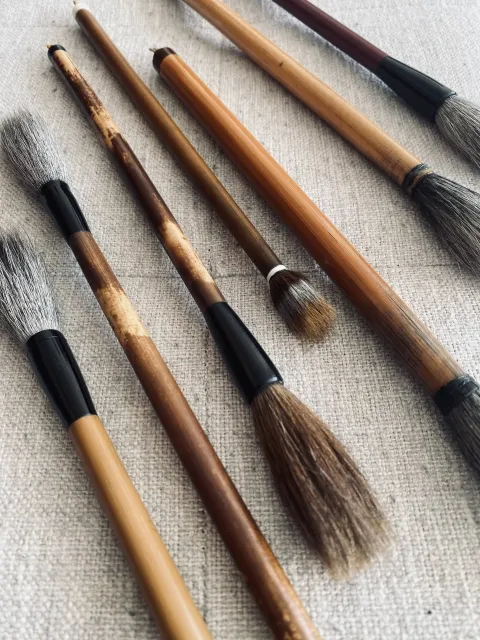 Adjacent · ¥4,000–¥8,000
Kyoto Shodo Calligraphy Workshop (60–90 min, English)
Why it may fit
A guided calligraphy introduction in a Kyoto studio: basic brush handling, copying a few characters, and a piece to take home. Often combinable with a temple visit the same afternoon.
Before booking
Check the live price, availability, eligibility, and terms before paying.
Browse more bookable Kyoto experiences
Zen sessions, tea ceremonies, calligraphy and temple tours — live availability and instant booking.
Powered by GetYourGuide · we may earn a commission at no extra cost to you.
6. Practical: Booking, Etiquette, and What to Bring
How early to book
Booking lead times for Zen and tea experiences in Japan range from same-day walk-in for free drop-in temple zazen to 2–3 months ahead for Koyasan shukubo during cherry blossom and autumn foliage windows. Most Klook-style guided sessions need 1–2 weeks; Wabunka-style premium private sessions need 4–8 weeks.
- Drop-in temple zazen — same-day, just show up
- Klook / GetYourGuide guided sessions — 1–2 weeks ahead for normal periods, 3–4 weeks for sakura (late March) and autumn foliage (mid-November)
- Wabunka-style premium sessions — 4–8 weeks ahead
- Koyasan shukubo — 1–2 months ahead for normal periods, 2–3 months ahead for sakura and autumn-foliage weekends, when the major beginner-friendly temples (Eko-in, Sakurai-in) sell out
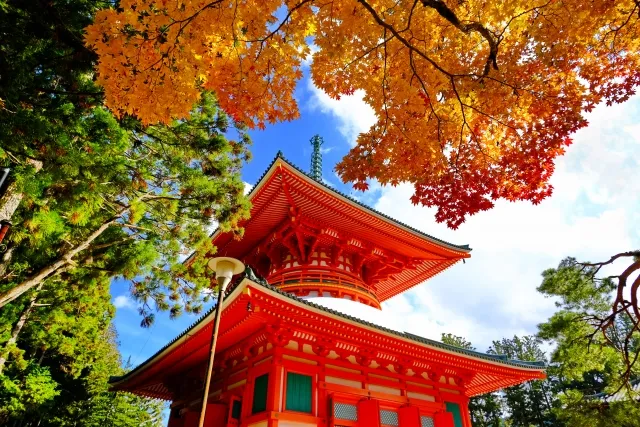 Time-Sensitive
Koyasan Shukubo: Book Now if You're Visiting in Sakura or Autumn
Why it may fit
Reminder: the major Koyasan shukubo (Eko-in, Sakurai-in, Rengejo-in) fill 2–3 months ahead during cherry blossom and autumn foliage windows. If your trip lands in those periods, book sooner rather than later.
Before booking
Check the live price, availability, eligibility, and terms before paying.
Practical notes on Koyasan access
The Nankai cable car periodically closes for maintenance (typically 1–2 weeks in early spring). Check the operating schedule in your travel window. Once you arrive in town, your shukubo may be uphill from the bus stop — pack lighter than you think you need to, especially if you're going overnight only. Standard temple admission fees (e.g. Kennin-ji ¥800, Daisen-in around ¥500, Tofuku-ji autumn special pricing) are on top of any guided-experience cost.
What to wear and bring
Comfortable clothing that does not restrict your hips and knees. Avoid strong perfume (a serious distraction in tea rooms and meditation halls). Bring socks if you are visiting in summer when you might be wearing sandals — tatami floors are typically socks-on. For Koyasan, layer warmly: the mountain town runs 5–10 degrees colder than Osaka year-round. At structured retreats you may be loaned a rakusu or similar garment; nothing to bring of your own.
Etiquette: 8 things not to do
- No loud conversation inside temple compounds — even in the gardens, voices carry
- No flash photography near altars, statues, or in meditation halls
- No photos of monks without explicit permission
- Do not bring food or drink other than what the host provides into tea rooms
- Phones off (not silent) inside meditation halls and tea rooms
- No perfume or strong cosmetics for tea ceremony — it interferes with the experience for everyone in the room
- Respect the shukubo gate-close time (usually 21:00) — this is not a hotel
- Stay on marked paths in temple gardens — the moss in particular is genuinely fragile
The crossover with onsen etiquette is real — our onsen guide covers a similar set of quiet-space conventions.
Can you take photos?
Outside areas (gardens, temple exteriors): almost always yes. Interior public halls: usually yes without flash unless signposted otherwise. Altars, Buddha statues, and meditation halls in use: ask first or assume no. Tea ceremonies: the host will tell you (most allow a photo at the start of the session). Koyasan Okunoin past the Gobyo-bashi bridge: no photography permitted.
7. Sample Itineraries
Three concrete shapes for fitting these experiences into a Japan trip.
Half-day in Kyoto: a tea ceremony plus a temple visit
A late-morning guided tea ceremony in Gion (90 minutes including arrival and ceremony), lunch nearby, then an afternoon at Kennin-ji (Kyoto's oldest Zen temple, walking distance from Gion) for the dry-stone garden and the Twin Dragons ceiling painting by Junsaku Koizumi (commissioned 2002 for the temple's 800th anniversary) in the Dharma Hall. Total: 4–5 hours. Budget: ¥6,000–¥10,000 per person plus ¥800 Kennin-ji admission.
Itinerary CompanionKyoto Gion Tea Ceremony (bookable for the itinerary above)
Why it may fit
The exact Gion tea ceremony described in the half-day itinerary — bookable here. Shared format, English host, 45 minutes.
Before booking
Check the live price, availability, eligibility, and terms before paying.
One full day: zazen morning, garden afternoon, kaiseki evening
Early start: an 8:00 am guided zazen at a Rinzai temple. Late morning: walk to Daitoku-ji for Daisen-in and Zuiho-in. Lunch: shojin-ryori at one of the Daitoku-ji subtemple restaurants. Afternoon: train to Tofuku-ji for the dry-stone gardens, especially in autumn. Evening: kaiseki dinner in a Higashiyama machiya. Total: a full physical day. Budget: ¥25,000–¥45,000 per person depending on the dinner choice.
Two nights at Koyasan: the immersive route
Train from Osaka (Nankai Limited Express + cable car, around 2 hours total). Two nights at a beginner-friendly shukubo such as Eko-in or Sakurai-in. Day 1 afternoon: arrival, settle in, shojin-ryori dinner. Day 2: morning prayer at 6:00 am, Okunoin cemetery walk (we recommend doing it twice: once mid-morning for the architecture, once at dusk for the atmosphere), afternoon at one of the cluster of subtemples around Kongobu-ji. Day 3: morning prayer again, return to Osaka by midday. Budget: ¥35,000–¥80,000 per person all-in (lodging + meals + train, excluding the JR Pass if you have one).
The cable-car leg is short but steep enough that even with a small backpack you'll feel it; pack lighter than you think you need to, especially if your shukubo is uphill from the bus stop.
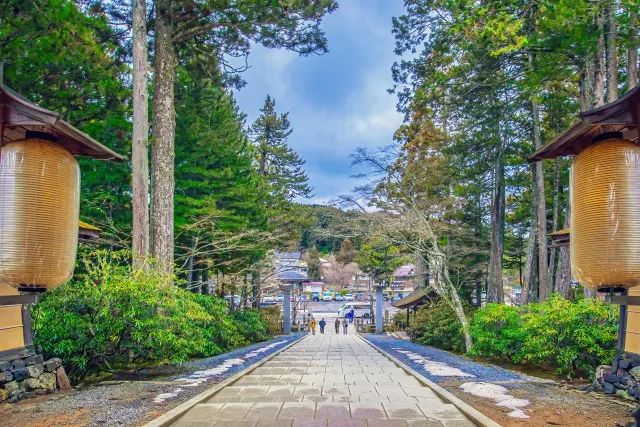 Itinerary Companion
Koyasan Shukubo Booking
Why it may fit
The two-night immersive route benefits from a beginner-friendly shukubo with English support. Eko-in, Sakurai-in, and Rengejo-in are common picks. Book 2–3 months ahead for sakura or autumn windows.
Before booking
Check the live price, availability, eligibility, and terms before paying.
8. A Note on Health, Insurance, and Realistic Expectations
Zen experiences are physically gentle but not zero-risk. Long sitting on tatami can flare up knee or back issues if you are not used to it; shukubo are often older buildings with steep stairs and uneven floors; Koyasan in winter has genuinely icy paths. Travel insurance is worth thinking about for any rural-Japan portion of a trip — see our travel insurance guide for the full picture.
 Fixed-trip first quote
Heymondo Travel Insurance
Single-trip cover for a fixed-date Japan itinerary
Why it may fit
A practical first quote when your temple stays and rural-Japan dates are set. Check the issued medical, cancellation, and activity wording before buying. Heymondo excludes US residents; JAPANODE readers receive 5% off where eligible.
Before booking
Check the live price, availability, eligibility, and terms before paying.
Related Reading
- Japan Experience Desk — Compare Kyoto culture with Fuji, food and sumo before fixing the itinerary
- First-Time Japan Travel Guide — Trip-planning fundamentals before the booking starts
- Japan Accommodation Types Guide — Where shukubo fits among ryokan, hotels, and capsules
- Japan Onsen Etiquette & Tattoo Guide — A different quiet-space tradition with overlapping etiquette
- Kansai Airport to City Guide — KIX to Kyoto and Koyasan in the routes worth booking
- Japan Travel Insurance — Why coverage matters more for rural-Japan portions of a trip
Sources verified during research include JNTO Travel Japan, Kyoto City Tourism, Japan-Guide.com, Koyasan Shukubo Association (eng-shukubo.net), individual temple websites (Nanzen-ji, Kennin-ji, Tofuku-ji, Daitoku-ji, Bishamondo Shorin-ji, Shunko-in), Klook activity pages, Wabunka, the Shigeru Ban Architects record for Zenbo Seinei, Shoganji Zen Retreat, and on-site visits to Kansai facilities by the author. Reach out via Instagram @thejapanode if a policy or price has changed — we update this guide quarterly.
Make it your trip
Still planning your Japan trip?
Pick the question on your mind. Compare your options, check the details and take one more thing off your list.
How much can you fit into one week?
Connect Tokyo, a Fuji or Hakone day trip, Kyoto and Osaka with a day-by-day route, travel costs and booking advice.
Explore the 7-day route
Which eSIM fits your Japan trip?
Maps, messages, hotspot use: compare five providers by data allowance, network and plan limits before you choose.
Find my Japan eSIM
What should your travel insurance cover?
Compare medical cover, cancellation and activity limits across five options, with the exclusions worth checking.
Compare cover & limitsFrequently Asked Questions
Zen is a school within Mahayana Buddhism focused on meditation (zazen) rather than scripture. Other major Japanese Buddhist schools include Pure Land (Jodo), Nichiren, and Shingon — each with different practices. The temple stays at Koyasan, often described as 'Zen' in older English guides, are actually Shingon: a related but separate esoteric tradition.
You do not need to be religious to try zazen in Japan. Most temples that accept visitors — including Nanzen-ji and Kennin-ji in Kyoto — treat zazen as a meditative practice open to anyone willing to follow basic etiquette, regardless of background or belief.
Rinzai uses koan (paradoxical questions) and emphasizes sudden insight; Soto emphasizes shikantaza, or 'just sitting,' as the practice itself. Most visitor-accessible Kyoto temples are Rinzai. Eihei-ji in Fukui is one of the two head temples of Soto Zen (the other is Soji-ji in Yokohama), and offers structured overnight stays through the affiliated Hakujukan hotel.
Koyasan is not a Zen temple stay. Koyasan is the global center of Shingon Buddhism, an esoteric school distinct from Zen. The visitor experience is structurally similar to a Zen temple stay (overnight shukubo lodging, shojin-ryori vegetarian meals, optional morning prayer), but the meditation tradition is different. Most English-language guides conflate the two.
A zazen session in Japan typically lasts 20 to 45 minutes per sitting, often with a short walking meditation (kinhin) between two sittings. Beginner-oriented sessions designed for visitors usually run 60 to 90 minutes in total, including a brief explanation, the meditation itself, and tea afterward.
Yes — sitting on the floor cross-legged is not required for most visitor-oriented zazen sessions in Japan. Most temples and tour operators provide chairs or low stools as an alternative. If you have knee or back issues, confirm seating options when booking, particularly for the longer multi-hour sessions.
At free drop-in temple sessions in Kyoto, English support is usually not available — they are conducted in Japanese with minimal translation. Klook-booked or Wabunka-style premium experiences include English interpretation as standard. Shunko-in (a Myoshin-ji subtemple) runs regular English-led zazen sessions. Koyasan shukubo staff at most temples speak basic English for accommodation logistics.
The cheapest way to try zazen in Japan is a free or symbolic-fee (around ¥500) drop-in session at temples such as Nanzen-ji and Kennin-ji in Kyoto, typically on specific Sundays of the month. These are Japanese-language only, but the structure is universal enough that beginners can follow along.
Year-round, but late October to mid-November (autumn foliage) and late March to early April (cherry blossoms) are especially good for combining indoor practice with temple-garden visits at Tofuku-ji, Daitoku-ji, and Ginkaku-ji. Book Koyasan shukubo and premium private sessions two to three months ahead during these peak windows.
You do not need to bring anything to a Japanese tea ceremony. The host (sensei) provides all utensils, including the bowl and whisk. Wear modest, non-distracting clothing without strong perfume. Some operators include a kimono rental as an optional add-on; this is purely cosmetic and not required.

Written by
JAPANODE
Based in Japan, sharing real travel tips & local insights for visitors. Follow us on Instagram @thejapanode for daily Japan content.
You Might Also Like
 Culture
5 Best Tea Ceremony Experiences in Kyoto (2026 Comparison)
16 min read
 Culture
Japan Onsen Tattoo Rules: Etiquette & Where to Bathe (2026)
24 min read
 Transportation
KIX to Osaka, Kyoto & Kobe: 2026 Transport Comparison Guide
16 min read
PlanningBest Travel Insurance for Japan? 5 Options Compared (2026)
16 min read
 Planning
Japan Accommodation Types Explained: Hotels, Ryokan, Capsule Hotels & More
16 min read
 Planning
First Time in Japan: 15 Things You Need to Know Before You Go
19 min read