
On this page
For a first sake brewery trip from Osaka, start with Hakutsuru, Kikumasamune and Hamafukutsuru in eastern Kobe. This gives you a manageable sequence of historic brewing displays, shops and tasting opportunities, with a glass-fronted brewery viewing route at the final stop. Allow roughly half a day, including a break, rather than trying to visit every producer in Nada Gogo.
The simplest version is independent: arrive by train, visit two or three facilities and return when you have had enough. Choose an English guided experience if explanations and an organized tasting matter more than choosing your own pace. The shorter Nishinomiya tour discussed below visits a different part of the sake region; its longer option combines Kobe and Nishinomiya.
This guide is based on official facility information and booking descriptions checked on October 18–19, 2026. Suggested timings are our planning allowances, not a record of a tour we personally took. Affiliate disclosure: JAPANODE may earn a commission from the booking links below, at no extra cost to you.
Choose your sake outing
| Option | Best fit | Time to allow | What you organize |
|---|---|---|---|
| Eastern Kobe independently | Museums, a flexible pace and a modest starting budget | Around 3–4 hours locally; add travel from Osaka | Trains, walking, meals and any paid tasting |
| Nishinomiya with an English guide | Explanations and several tasting stops arranged for you | The linked listing has a 3-hour option and longer alternatives | Select the right option and reach its meeting point |
| Itami on a separate half-day | Historic houses, sake heritage and lunch in a compact town center | Around 3–4 hours locally | Choose a self-guided visit or a private English experience |
If your Osaka stay is short, choose one of these. A longer list of breweries is rarely a better introduction than two well-chosen visits with enough time to understand the displays and enjoy lunch. Our four-day Kansai itinerary helps you decide which existing sightseeing day to replace or extend.
Where is Nada Gogo?
Nada Gogo means the five sake districts: Nishi-go, Mikage-go, Uozaki-go, Nishinomiya-go and Imazu-go. They extend across the Kobe–Nishinomiya area. It is a regional grouping, so searching for a single “Nada brewery” station or entrance will not give you a complete itinerary. The Nada Gogo Brewers Association's directory identifies the districts and their producers.
This guide concentrates on the eastern Kobe cluster around Sumiyoshi and Uozaki. Nishinomiya is a separate choice farther toward Osaka. Itami is outside the five districts, although its brewing history is closely connected to them.
It also helps to distinguish three different experiences. A brewery museum explains how sake was made, often through tools and recreated work scenes. A production viewing route lets visitors look toward working facilities, with activity depending on the day. A tasting experience focuses on the drinks and may take place in a shop, restaurant or dedicated room. A booking described simply as a “brewery tour” can combine these in different proportions.
Getting to the Kobe sake district from Osaka
Two useful arrival points are Hanshin Sumiyoshi for Hakutsuru and Hanshin Uozaki for Kikumasamune and the Uozaki area. Search the full station name, including the railway. JR Sumiyoshi and Hanshin Sumiyoshi are different stations.
| Your first stop | Useful station | Official access guidance |
|---|---|---|
| Hakutsuru Sake Brewery Museum | Hanshin Sumiyoshi | About 5 minutes on foot |
| Hakutsuru, if arriving on JR | JR Sumiyoshi | About 15 minutes on foot |
| Kikumasamune Sake Museum | Hanshin Uozaki | About 10 minutes south along the Sumiyoshi River path |
| Kikumasamune via the Rokko Liner | Minami-Uozaki | About 2 minutes from the elevator at ground level |
These walking estimates come from Hakutsuru and Kikumasamune. Kikumasamune gives roughly 35 minutes of train travel from Osaka-Umeda to Uozaki, excluding transfer time. Your full journey also includes reaching the correct railway in Umeda and walking to the first venue.
For the west-to-east route below, enter Hanshin Sumiyoshi in your route planner and check whether the suggested train requires a change. Do not assume a fast service stops at every small station. On the return, use the station convenient to your final stop rather than walking back merely to repeat the outward journey.
If you already have a JR pass, compare the JR Sumiyoshi approach with the Hanshin route. A rail pass does not automatically cover another operator; our Japan train-system guide explains the distinction. Buying a nationwide pass specifically for this outing would be an unnecessarily large purchase.
A practical three-stop Nada walking plan
Start after breakfast and keep lunch flexible. The schedule below is an example for a normal Wednesday–Sunday, with walking and breaks included in the gaps. It assumes the facilities are open; check their calendars for your date.
| Approximate time | Plan | Walking and visit allowance |
|---|---|---|
| 10:00–10:50 | Hakutsuru Sake Brewery Museum | About 50 minutes for the museum and shop |
| 10:50–11:00 | Walk to Kikumasamune | About 10 minutes |
| 11:00–11:50 | Kikumasamune Sake Museum | About 50 minutes, without a separate reserved workshop |
| 11:50–12:00 | Walk to Sakuraen at Sakuramasamune | About 10 minutes to the lunch stop |
| 12:00–13:00 | Lunch at Sakuraen, if booked or a table is available | Around an hour; allow longer for a leisurely meal |
| 13:00–13:05 | Walk to Hamafukutsuru | About 5 minutes |
| 13:05–13:45 | Hamafukutsuru's viewing route and shop | About 40 minutes; longer if you add a tasting |
| From 13:45 | Walk to Hanshin Uozaki Station | About 10 minutes; take the train toward Osaka-Umeda or central Kobe |
The walking estimates come from the corresponding sections of Feel KOBE's official sake-district route, used here in the opposite direction. Its complete route includes many more stops; the table above is our shorter itinerary. Save each named destination in a map and allow extra time for crossings and shopping. From Hanshin Sumiyoshi to Hakutsuru, add the five-minute approach described above.
Sakuraen (櫻宴) is the restaurant at Sakuramasamune's memorial hall, between the two Uozaki brewery stops. Its official dining page lists lunch from 11:30 to 15:00, last order 14:00, with Tuesday normally closed. Reserve if lunch is an essential part of your plan. If you prefer to eat elsewhere, move Hamafukutsuru earlier and return via Uozaki for a meal after the walk.
If two museums are enough, finish after Kikumasamune and lunch. If seeing a brewery behind glass is your main reason for coming, prioritize Hamafukutsuru and reduce time elsewhere. You do not need to buy or taste something at every stop for the outing to be worthwhile.
Stop 1: Hakutsuru Sake Brewery Museum
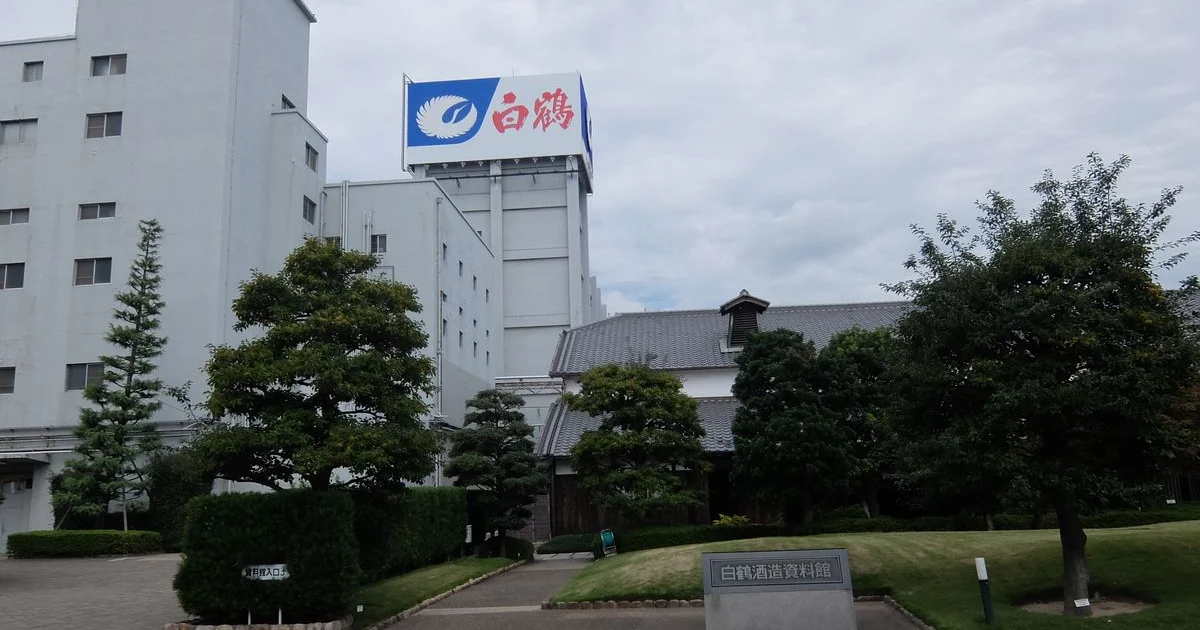
Hakutsuru's visitor museum occupies an old brewhouse and introduces traditional sake production through equipment and displays. It is a useful first stop because you can establish the brewing sequence before comparing individual tools elsewhere. There is a tasting area and a shop, but the main visit is the museum rather than unrestricted access to the modern factory.
The official visitor page lists free admission, 9:30–16:30, with entry by 16:00. Groups of 10 or more need a reservation. Check the calendar for temporary closures and year-end holidays.
Ask about the day's tasting selection and how any bottle you buy should be stored, especially if you still have several days of travel ahead.
When searching, use Hakutsuru Sake Brewery Museum. The similarly named Hakutsuru Fine Art Museum is another destination and would send you to the wrong place for this walk.
Stop 2: Kikumasamune Sake Museum
Kikumasamune adds another view of the tools and labor behind sake production. Treat the exhibits as a chance to notice a specific part of the process: how rice was handled, how large vessels were used, or how the work was organized. Comparing one theme between museums is often more rewarding than attempting to read every panel at both.
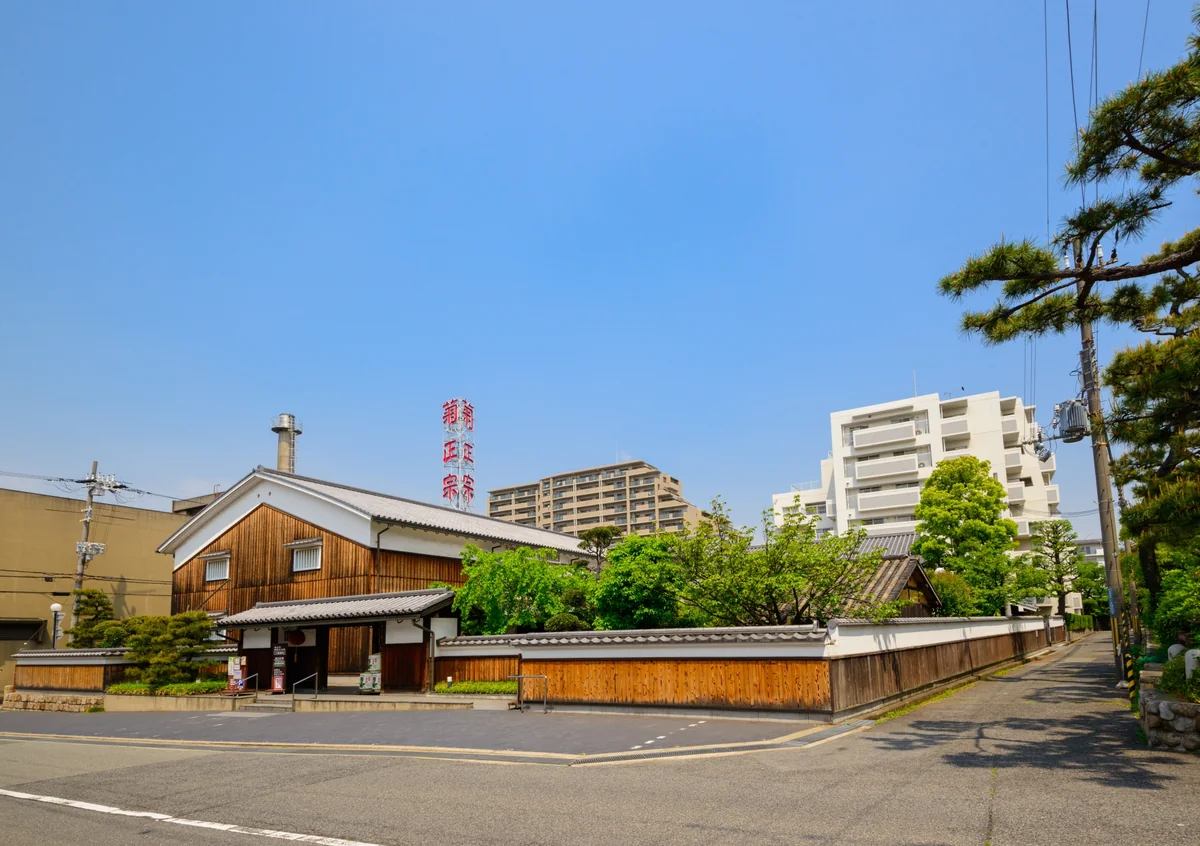
The official access and reservation page lists free entry and opening hours of 9:30–16:30. A significant change took effect in April 2026: Tuesday is normally a closing day, with substitutions around public holidays. Check the linked calendar if you are traveling during a holiday week.
The associated Tarusake Meister Factory offers a separate, free, approximately 30-minute visit about cedar sake barrels, with reservations required at least two days ahead. Barrel-making work does not take place on weekends or public holidays; a video is shown when work is not taking place. Children of elementary-school age and younger cannot enter this particular facility. Allow time around your reserved slot and confirm any English-language assistance when booking.
Stop 3: Hamafukutsuru Ginjo Kobo
Hamafukutsuru gives the route a different emphasis: its official visitor information describes a glass-fronted route overlooking brewing facilities. What is happening behind the glass depends on operations, so ask ahead if a particular stage is essential to your visit.
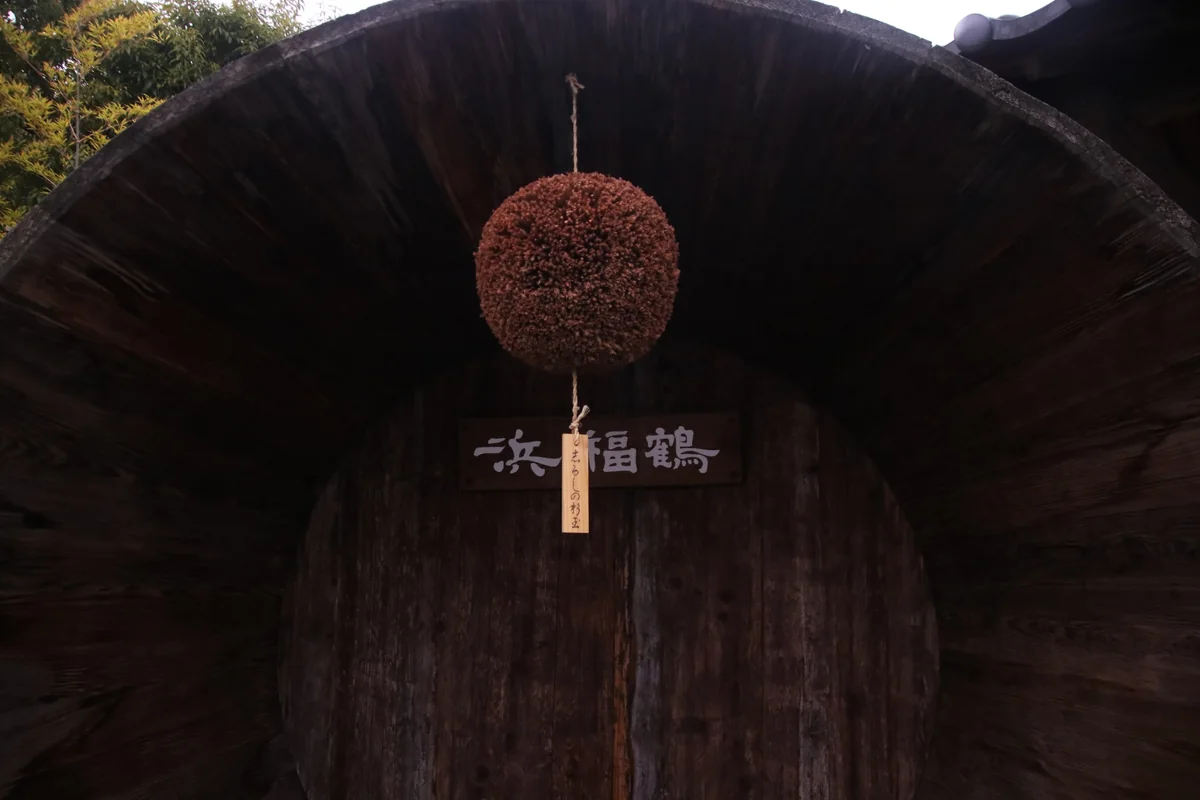
Admission is free and the usual hours are 10:00–17:00. Monday is normally closed, with a following-day closure when Monday is a public holiday. Groups below 10 can visit without a reservation under the published rules. The paid tasting counter's last order is 16:15.
Visit this stop earlier if tasting is important; arriving just before the building closes may be too late for the service you want. Keep purchases and paid samples within a budget you chose beforehand. The third stop is optional, especially if you have already spent longer than expected at the museums or booked a special experience.
Hamafukutsuru's usual Monday closure and Kikumasamune's usual Tuesday closure make midweek through Sunday a simpler choice for this complete route. Public holidays and temporary closures still need a date-specific check.
Museum admission, lunch and other costs
The three visitor facilities above list free admission. Your outing budget therefore depends mainly on return transport, lunch, paid tastings and shopping. Keep those categories separate when comparing an independent visit with a guided tour.
For a concrete lunch reference, the restaurant booking page linked from Sakuraen's own site listed its Hankiri Bento at ¥3,000 per person when checked. This is a particular lunch option with limited daily servings, not the price of every meal there. Check the current restaurant menu and booking options for your visit.
| Cost item | How to budget |
|---|---|
| The three museums/viewing facilities | ¥0 admission under their ordinary visitor rules |
| Lunch | ¥3,000 for the listed Sakuraen bento example; other choices vary |
| Train travel | Add the fare from your starting station to Hanshin Sumiyoshi and from Uozaki on the return |
| Paid samples and bottles | Optional; choose these separately from the meal and transport budget |
That example totals ¥3,000 for admission and lunch, before trains, additional drinks or shopping. Sakuraen announced a July 2026 price revision, so use its current booking menu rather than older lunch-price pages.
Free admission also does not mean every experience on the grounds is included. Look for the specific price attached to a reserved workshop or tasting menu. A guide's fee can be worthwhile for interpretation, conversation and organization, even when the buildings on the itinerary can be entered independently.
An English guided alternative in Nishinomiya
The linked Nishinomiya experience lists Hakushika, Hakutaka and Nihonsakari among its visits and offers English guiding. The booking page combines a shorter three-brewery outing with longer options, so choose the itinerary before comparing the price. Its meeting point depends on the option.
The operator's three-hour Nishinomiya itinerary visits a different area from the independent Kobe walk and meets at Hanshin Nishinomiya Station. Its 6.5-hour itinerary starts at Hanshin Sumiyoshi and includes Hakutsuru, Kikumasamune and Hamafukutsuru before continuing to Nishinomiya. That longer option overlaps with all three stops in our self-guided route, so avoid booking both as if they were separate sightseeing days.
Nishinomiya Sake Brewery Tour
An English-guided three-brewery outing in Nishinomiya, including Hakushika, Hakutaka and Nihonsakari. The longer 6.5-hour option also includes the three Kobe breweries in our independent walk.
Best for
Travelers who want regional explanations and organized tasting stops.
Before booking
The 6.5-hour option repeats all three stops in our Kobe walk; duration and meeting point depend on the selected option.
Live price & availability
Powered by GetYourGuide · we may earn a commission at no extra cost to you.
Before booking, establish whether you want a shared or private outing, and read the inclusions for your selected option. Ask specifically about tasting charges and any museum admissions rather than assuming every purchase is covered by the phrase “brewery tour.”
Extend your sake trip to Itami
Itami offers another way into the region's sake story: historic merchant and brewing buildings, a museum complex and lunch around Chojugura. The shared Japan Heritage story of Itami Morohaku and Nada no Ki-ippon provides a historical connection between the two destinations.
Give Itami its own half-day if you can. The point is to enjoy the buildings and town center at a different pace, rather than add more tasting stops to an already full Kobe itinerary. Read our Itami half-day trip from Osaka for the two railway approaches, free historic exhibits, lunch planning and an English private-tour option.
For a mixed-interest group, Itami may be the better initial choice if architecture and lunch matter as much as the drinks. Choose the Nada walk when comparing several producers is the main purpose. Both can work without participating in every tasting.
Make the visit comfortable
Use public transport if you will taste alcohol. Japan's drinking age is 20, as explained by the Japan Sake and Shochu Makers Association. Carry water, eat normally and feel free to decline another sample. The objective is to discover what you like, not complete a tasting quota.
Ask a shop for the bottle's name in writing or photograph its label with permission. Record why you liked it in ordinary words: fruity, savory, light, rich, dry or sweet. That makes it easier to explain your preferences at your next restaurant without needing to master a classification system first.
If buying a bottle to take home, ask whether it needs refrigeration and consider the remaining days of your trip. Transport and destination-country import rules require their own checks; a shop purchase is not confirmation that your airline or home customs will accept it under every condition.
For a wider evening after the museums, choose a meal rather than another tightly scheduled tasting. Our Osaka food-tour comparison helps if you want an organized food outing on another day. Travelers continuing to the capital can compare sake tasting in Tokyo, where a short English session may fit more easily than another trip to a brewing district.
Photographs: The hero image, Hakutsuru Sake Brewery Museum 2018 a, is by 桂鷺淵, CC BY-SA 4.0. The cropped WebP adaptation retains that license. It is a 2018 reference photograph. The Kikumasamune and Hamafukutsuru photographs are credited individually to their PhotoAC contributors; their capture dates have not been verified.
Make it your trip
Still planning your Japan trip?
Pick the question on your mind. Compare your options, check the details and take one more thing off your list.

Which eSIM fits your Japan trip?
Maps, messages, hotspot use: compare five providers by data allowance, network and plan limits before you choose.
Find my Japan eSIM
What should your travel insurance cover?
Compare medical cover, cancellation and activity limits across five options, with the exclusions worth checking.
Compare cover & limitsWould a JR Pass save you money?
Add your train journeys and compare individual tickets with the nationwide pass. See which costs less for your route.
Calculate my rail costsFrequently Asked Questions
Yes. Hakutsuru, Kikumasamune and Hamafukutsuru have visitor facilities that can be visited independently, subject to their calendars and group rules. Use Hanshin Sumiyoshi or Uozaki for the walking route. An English guided tour is a separate option if you want interpretation and organized tastings.
Wednesday through Sunday is the simplest starting point for the three-stop route in this guide. Hamafukutsuru normally closes on Monday, and Kikumasamune on Tuesday from April 2026. Holiday substitutions, year-end closures and special events can change the pattern.
Hakutsuru and Kikumasamune focus on brewing history and equipment. Hamafukutsuru has a glass-fronted viewing route into its brewery, but visible production depends on operations that day. A museum visit does not automatically include access to a working production floor.
The three visitor facilities in the self-guided route list free admission. Transport, meals, purchases and paid tastings are separate. Guided tours and some special experiences have their own booking conditions.
No. Nada Gogo consists of Nishi-go, Mikage-go, Uozaki-go, Nishinomiya-go and Imazu-go. Itami is a separate sake heritage destination connected to Nada through a shared Japan Heritage story. It works well as another half-day trip from Osaka.
The museums and historic brewing equipment can be enjoyed without tasting alcohol. For an organized tour, ask whether a non-drinking participant can join and what their price includes. Anyone tasting alcohol must be at least 20, and should travel without driving.

Written by
JAPANODE
Based in Japan, researching practical routes, official visitor information and clearly explained booking options.
You Might Also Like
 Food & Drink
Itami Day Trip from Osaka: Sake Heritage & a Half-Day Walk
10 min read
 Food & Drink
Sake Tasting in Tokyo: English Experiences Compared
9 min read
 Food & Drink
Best Osaka Food Tours: Food Walks, Bar Hopping and DIY
11 min read
 Itinerary
4-Day Kansai Itinerary: Kyoto, Osaka & Nara (2026 Local's Guide)
18 min read