On this page
Four days in Kansai is enough to see the icons properly — not in a blur, the way a quick national loop forces you to. The best plan is two days in Kyoto, one in Osaka and one in Nara, with your arrival and departure built around Kansai International Airport (KIX). This guide is written from inside the region, so the focus is less on what to see (you already know Fushimi Inari and the deer) and more on how locals actually do it — the hour to show up, the train that beats the bus, the small mistakes visitors make.
If you are planning a wider trip across the whole country, our 7-Day Japan Itinerary for first-timers covers Tokyo, Hakone and the bullet train down to Kansai. Think of this article as the Kansai-only deep dive: same region, far more detail on how to move within it.
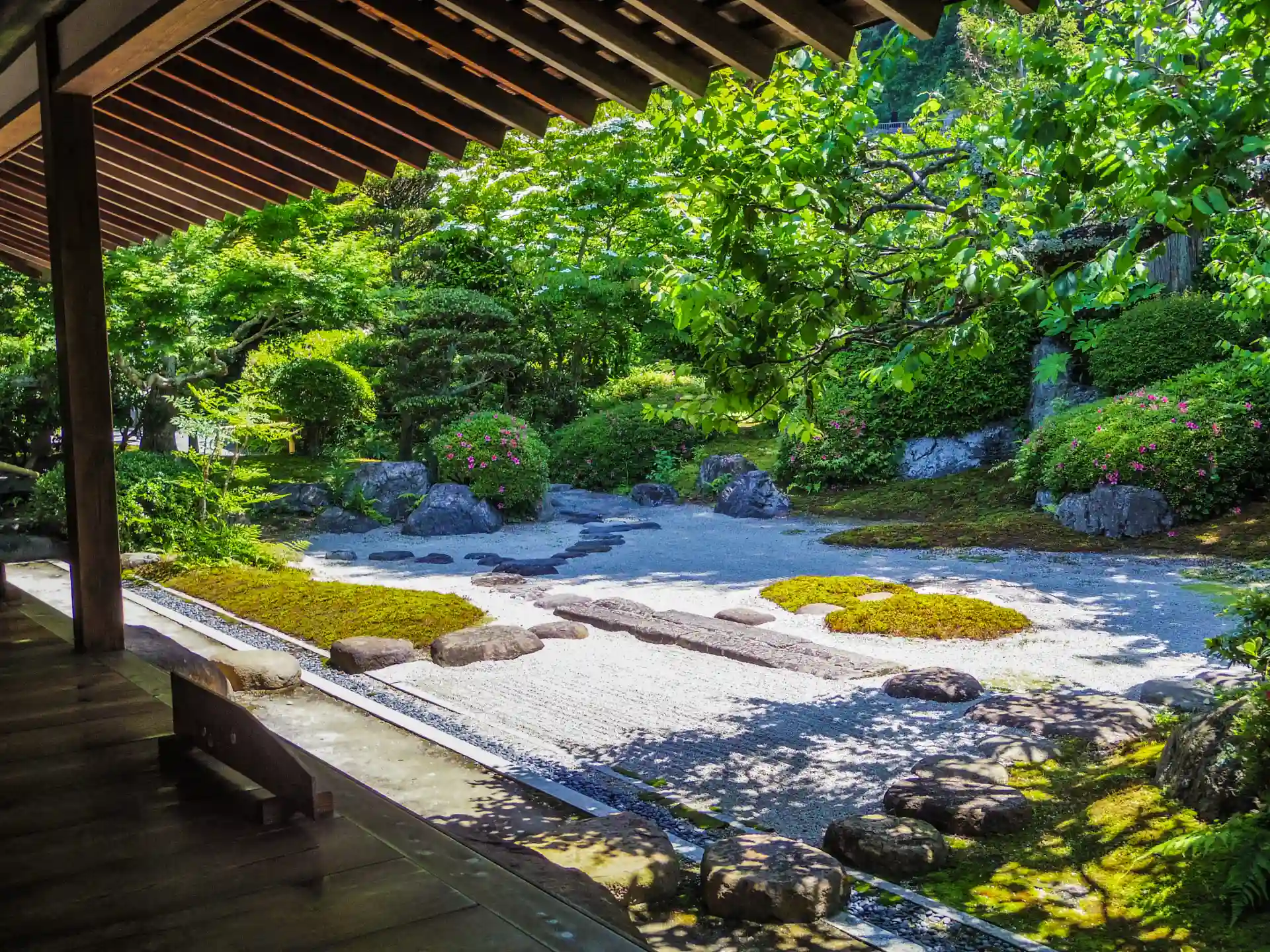
For tea, zazen and temple stays that can become the emotional center of these four days, start with the Kyoto section of our Japan experience desk.
Quick answer: the 4 days at a glance
Here is the whole trip in one table. Costs are rough per-person estimates for transport, entry fees and food, excluding accommodation, as of 2026 — confirm current figures officially before you go.
| Day | Base / area | Highlights | Est. daily cost |
|---|---|---|---|
| 1 | Arrive KIX → Kyoto or Osaka | Airport transfer, check in, easy first evening (Dotonbori or a Kyoto stroll) | ¥1,500–4,000 |
| 2 | Kyoto (east side) | Fushimi Inari, Kiyomizu-dera, Gion — Arashiyama bamboo grove optional | ¥3,000–5,000 |
| 3 | Nara day trip (+ more Kyoto) | Todai-ji, the deer of Nara Park, Kasuga Taisha | ¥3,000–5,000 |
| 4 | Osaka → KIX (evening international flight) | Osaka Castle, Dotonbori, Den Den Town / Shinsaibashi, fly out | ¥3,500–6,500 |
Day 4 assumes an evening international flight. For a morning or early-afternoon departure, skip Osaka sightseeing and travel directly from your accommodation to KIX.
If Universal Studios Japan is a priority, give it a separate full day instead of squeezing it into Day 4. Replace the Osaka sightseeing day, stay another night, and use our USJ Express Pass decision guide to check whether Pass 4, 5, 7 or 8 is worth the extra cost for your date and must-do rides.
The single most useful decision you will make is which city to sleep in — see Where to base yourself below. JR Kyoto Station and JR Osaka Station are about 29 minutes apart, but accommodation-to-sight travel usually takes longer. You can still stay in one city and day-trip the other without moving your luggage.
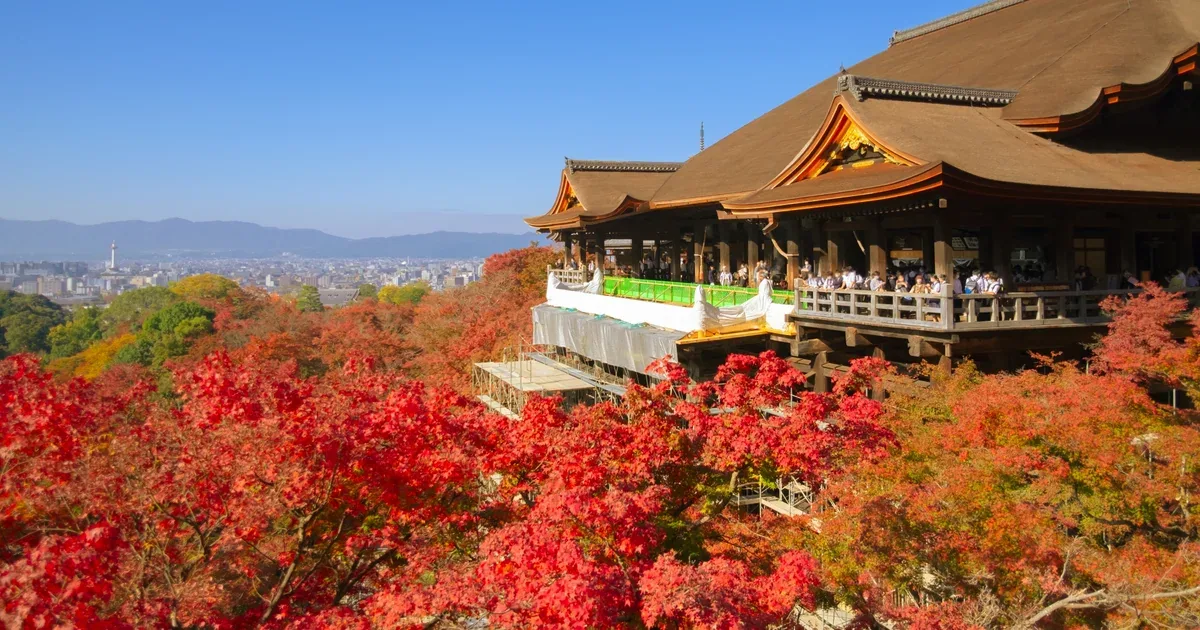
Traveling in late October or November? Osaka also works as a practical base for autumn leaves day trips across Kansai, from early mountain color at Koyasan to Kyoto, Nara, Katsuoji and Kyorinbo. Choose the destination by your dates rather than assuming every area peaks together.
Before you go: a Kansai-specific prep list
A few things to sort before you land, most of which we cover in depth elsewhere so this stays a checklist rather than a lecture.
Get from KIX to your base. Kansai International Airport sits on a man-made island and has several rail options into both Osaka and Kyoto at different price points. We have mapped every route, including which one is fastest and which is cheapest, in the Kansai Airport transport guide — start there rather than deciding at the airport with luggage in hand.
Buy a physical ICOCA if you are starting in Kansai. ICOCA is JR West's rechargeable IC card and the most natural local choice for the region — it taps you through almost every train, subway and bus, and you can buy one at the JR or Nankai counters in Kansai Airport Station the moment you land. New KANSAI ONE PASS issuance has ended, and sales have been ending location by location as remaining stock runs out since November 2025. Buy one only if a location in the official sales list still has stock; otherwise, a regular ICOCA works perfectly well. Welcome Suica (a JR East card) also works on Kansai's IC-compatible trains and shops but cannot be bought at KIX. Mobile IC can work too — especially Suica or ICOCA in Apple Wallet on iPhone — but overseas Android support is patchy, so a physical card is the safest default for most visitors.
Sort connectivity before you arrive. Kyoto's backstreets and Nara Park have patchy free Wi-Fi, and you will be checking train times constantly. An eSIM you activate before landing is the least painful option.
In a hurry? Here's the short answer
Start with the route that matches your trip: broader stated network access and 5G, or a simple flexible data plan. Compare the live plan details before checkout.

Start here if stated Docomo + KDDI access and 5G matter for a route beyond the largest cities.

A straightforward alternative for Tokyo, Osaka and Kyoto when the live data allowance and validity fit your trip.
Starting prices shown above are indicative and vary by provider, plan length and current promotions — check the live price before you buy.
Pack for a lot of walking and temperature swings. Kansai summers are humid and hot, winters are cold, and you will easily clock 15,000+ steps a day on stone paths and temple steps. Comfortable closed shoes matter more here than anywhere. See what to wear in Japan for season-by-season specifics.
Know the basic geography. Kyoto, Osaka and Nara form a tight triangle. Kyoto–Osaka is under 30 minutes, Kyoto–Nara about 35–50 minutes, and Osaka–Nara around 45 minutes. Most city-to-city hops in this itinerary are under about an hour — excluding airport transfers and the longer cross-city moves inside Kyoto, like the haul out to Arashiyama — and that compact geography is exactly why four days in Kansai goes so far.
Day 1 — Arrive at KIX and settle in
Keep the first day light. Between the flight, immigration and the trip in from the airport, most people land with less energy than they expect, so this is a check-in-and-orient day rather than a sightseeing one.
Take the train from KIX to your chosen base (routes and fares are in the airport guide — this article won't second-guess them). Drop your bags, then do one easy thing: in Osaka, walk the neon canyon of Dotonbori and eat your first takoyaki; in Kyoto, stroll the Kamogawa riverbank or the lanes around your hotel and find dinner.
If you arrive late, do not try to cram in a temple — most close by 17:00–18:00, so they will simply be shut. Save them for the morning when they are quiet.
The IC card machines and JR ticket counters at KIX are often easier to deal with before you head into the city. Buy a regular ICOCA and load ¥3,000–5,000 when you land. Choose KANSAI ONE PASS only if the sales counter still has stock. You will skip most ticket-machine queues for the next four days.
Day 1 cost: mostly the airport transfer plus a casual dinner. Budget ¥1,500–4,000 per person depending on the route you take from KIX.
Day 2 — Kyoto's east side and Arashiyama
This is the big Kyoto day, and the order matters more than the list. The trick is to front-load the most photogenic, most crowd-prone spots into the early morning and work outward as the tour buses arrive.
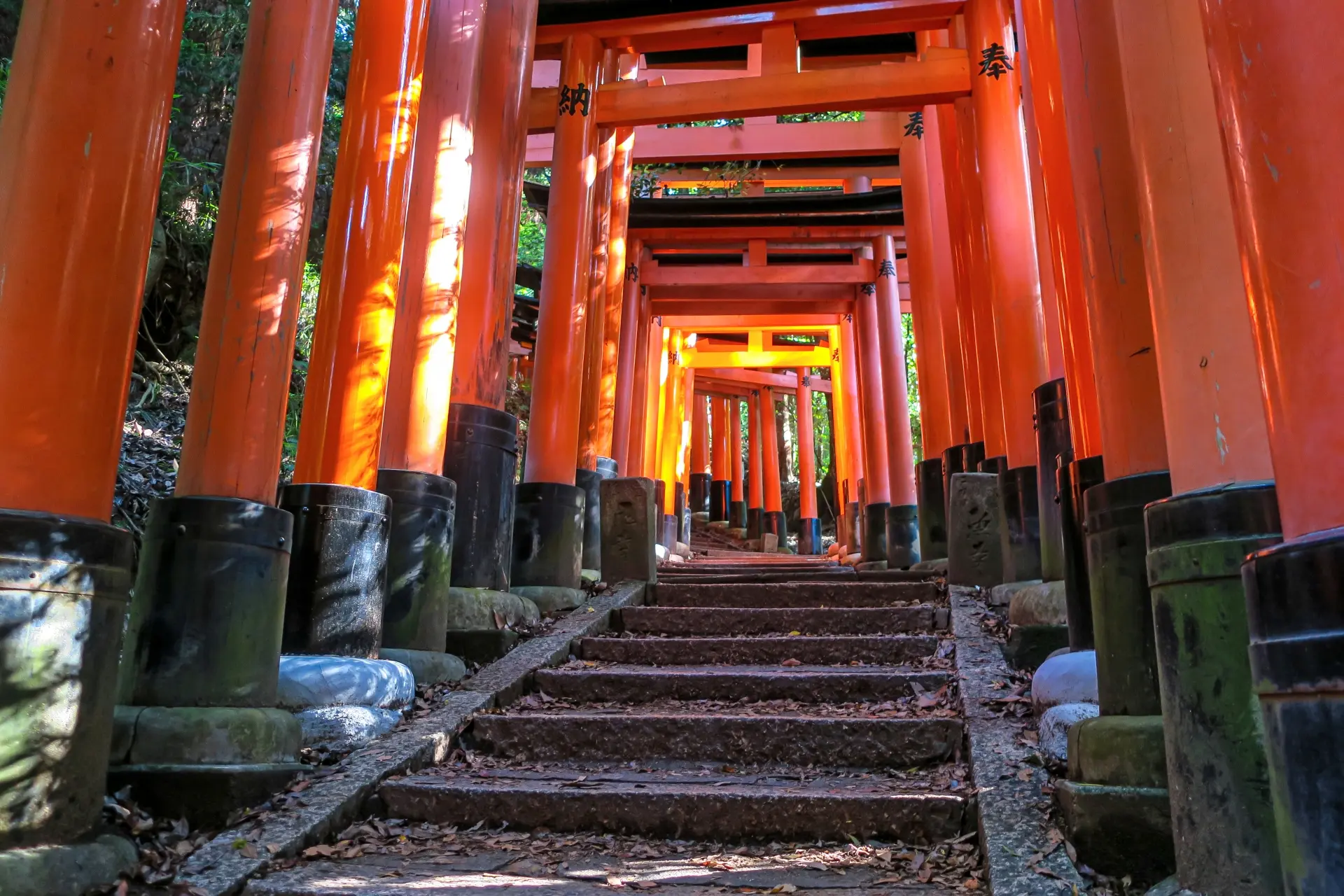
Start at Fushimi Inari before 8:00. The shrine with its endless vermilion torii gates is free, and the shrine grounds are open 24 hours, which is the single most important fact about it: there is no opening time to wait for. Shops and shrine offices keep daytime hours, but the famous gate trails can be visited early. Locals and serious photographers arrive at dawn precisely because the tunnel of gates is nearly empty before about 8:00. By 10:00 it is shoulder-to-shoulder. To reach it, take the JR Nara line two stops south from Kyoto Station to Inari, or the Keihan line — do not try to bus there.
From Fushimi Inari, head to Kiyomizu-dera, which opens at 6:00 and costs ¥500. Bring cash or coins for temple admissions, as smaller temples and ticket windows may not always support cards or mobile payments. The wooden stage and the views over Kyoto are worth the early start, and the approach lanes of Sannenzaka and Ninenzaka are magical before the shops fill up.
Spend late morning to early afternoon in Gion, Kyoto's geisha district, walking Hanamikoji and the canal-side Shirakawa. A word of caution that trips up a lot of visitors: photography is restricted in some private alleys in Gion, and signs may indicate fines. Public streets are not all photo-banned, but avoid photographing geiko or maiko without permission and follow local signs carefully.
Browse Kyoto tours & cultural experiences
Guided day tours, tea ceremonies, kimono rentals and small-group experiences across Kyoto — live availability.
Powered by GetYourGuide · we may earn a commission at no extra cost to you.
If steady rain makes the outdoor route unrealistic, switch to the Kyoto rainy-day activity guide instead of crossing the city between exposed temple approaches. It compares indoor workshops and shows with museum and Kyoto Station backups.
Treat Arashiyama as optional on this day. Fushimi Inari, Kiyomizu-dera and Gion already make a strong, full Kyoto day; add Arashiyama only if you started early, travel light and do not mind a packed schedule. If you do go, ride out for the bamboo grove and the Togetsukyo bridge — but know that Arashiyama is on the opposite side of the city, so this is where Kyoto's geography costs you the most time. If it feels like too much, drop it or roll it into Day 3's afternoon. Kyoto is better when you leave space between sights.
For a foliage-focused visit, use our Kyoto autumn leaves guide to choose a local pair such as Kiyomizu-dera and Kodai-ji, or give Arashiyama and Jojakko-ji a separate outing.
Kyoto's city buses are charming and they are also where time goes to die — a single bus can sit in tourist-season gridlock around Higashiyama. On the key stretches, rail is dramatically faster: use the JR Nara line for Fushimi Inari, the Keihan and Hankyu lines along the river, and the subway across the centre. Reserve buses for the last short hop to a temple, not for crossing the city.
For Arashiyama experiences and skip-the-line activities, this is the kind of thing worth booking ahead in peak season:
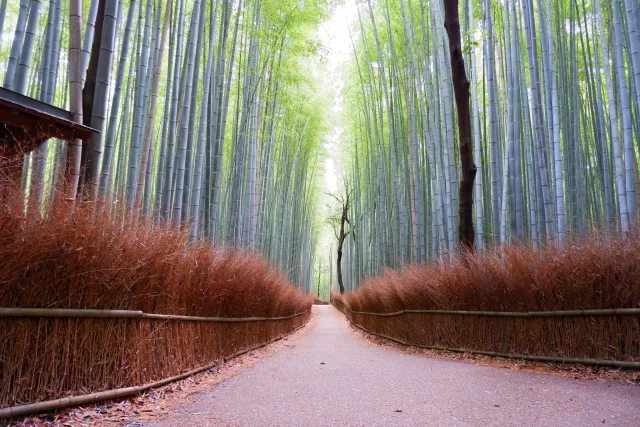 Arashiyama · Book ahead
Arashiyama Experiences & Activities
Why it may fit
Bamboo grove walks, kimono rentals, riverboat rides and guided day activities around Arashiyama — easy to lock in before peak season fills up.
Before booking
Check the live price, availability, eligibility, and terms before paying.
Day 2 cost: entry fees (Kiyomizu ¥500, most shrines free), local transport and meals — roughly ¥3,000–5,000 per person.
Day 3 — Nara day trip, plus more of Kyoto
Nara was Japan's capital before Kyoto, and a half-day here gets you the Great Buddha and the famous free-roaming deer. If you base in Kyoto, this pairs neatly with a relaxed Kyoto afternoon (Arashiyama spillover, or the calmer north and west of the city).
Take the Kintetsu line, and here is why it matters: Kintetsu trains arrive at Kintetsu-Nara station, which is a short walk from Nara Park and Todai-ji. JR Nara station is about a kilometre further out — a 15-to-20-minute walk or another bus. From Kyoto, a Kintetsu Express (kyūkō) reaches Kintetsu-Nara in about 45–50 minutes for around ¥760 with no reserved-seat surcharge; the Limited Express takes about 35 minutes but requires an additional limited express ticket of around ¥520. The JR Miyakoji Rapid is comparable at about 45 minutes and around ¥720 but leaves you with the longer walk. Confirm current fares officially, but the takeaway holds: for the deer, Kintetsu drops you closer.
At Todai-ji, the Great Buddha Hall costs ¥800 and houses one of the world's largest bronze Buddha statues. Walk up to Kasuga Taisha through the lantern-lined forest paths, and let the deer find you along the way.
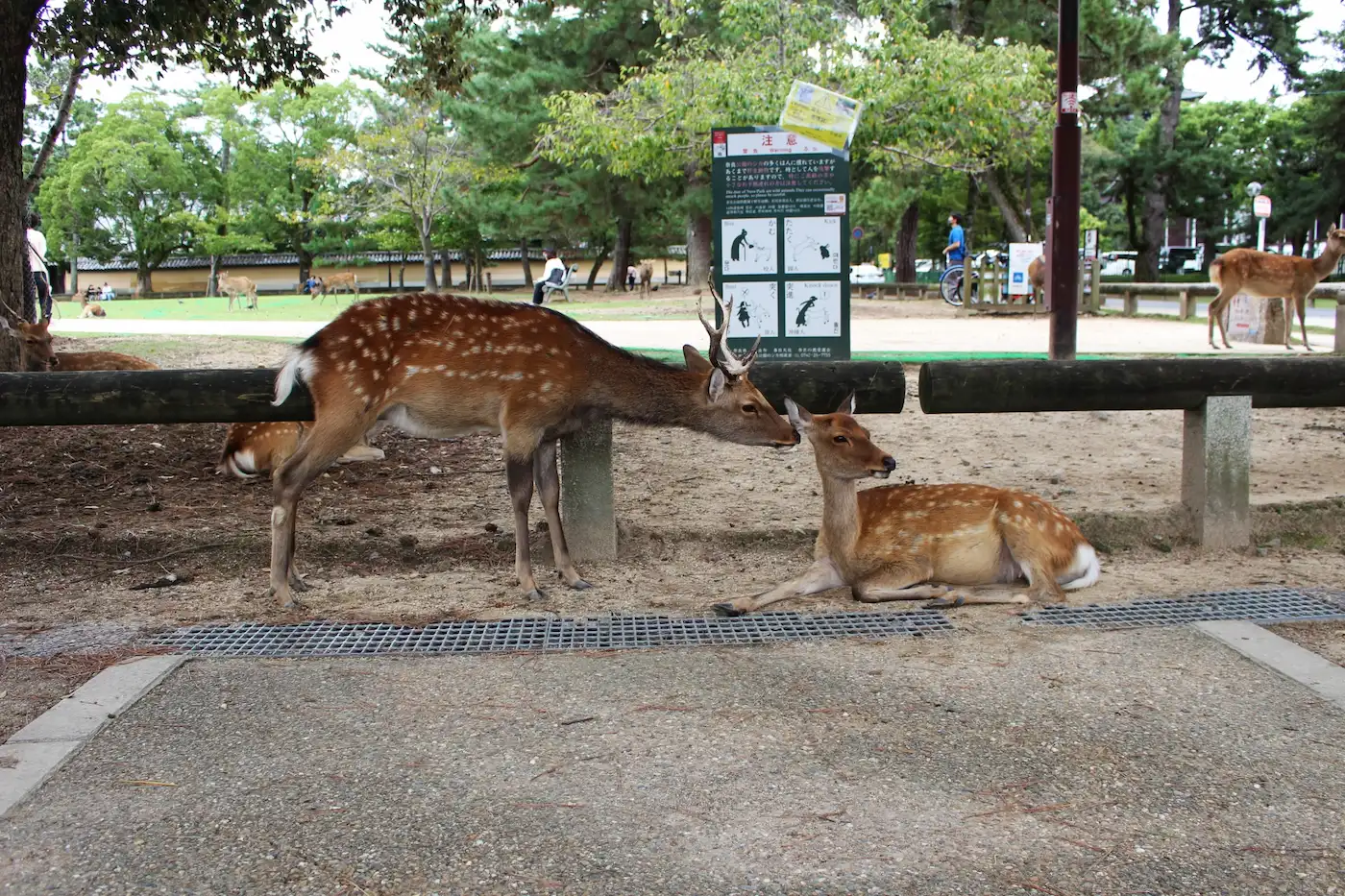
The deer have learned to bow, and they have also learned to mug tourists who fumble. Buy shika senbei from licensed vendors — usually around ¥200 per bundle, though prices can change and boxed vending-machine versions may cost more. Keep the stack hidden until you are ready, then feed them out quickly one or two at a time — do not wave the crackers around or tease the deer to "get the photo," which is exactly when they headbutt or nip. When you are out, show open palms; they understand the gesture and move on. Crackers are the only thing you should feed them.
Back in Kyoto for the afternoon, this is the natural slot for Kinkaku-ji, the Golden Pavilion (¥500). It sits in the far north-west of the city, well away from the eastern sights you did on Day 2, which is precisely why it belongs on a separate half-day rather than crammed in alongside Kiyomizu — visitors who try to do both in one go lose an hour to the cross-city transfer and arrive frazzled. The viewing route is a one-way loop and takes only 30–45 minutes, so it pairs well with a slower end to the day. Aim for late afternoon on a weekday if you can; mid-morning weekends are when the tour buses stack up.
If tea ceremony is one of your priorities, KOTO is one minute from Kinkaku-ji's gate; our Kyoto tea ceremony comparison compares it with central Kyoto, Higashiyama, kimono-inclusive and Uji alternatives before you reserve a time slot.
After that, leave room for the things that don't need a schedule — a tea house, a quieter temple, or simply wandering. If you want to fold a calmer, more contemplative experience into the trip, our guide to Zen and wabi-sabi experiences is built around exactly this region.
Day 3 cost: Nara round-trip transport plus Todai-ji ¥800, Kinkaku-ji ¥500 and meals — about ¥3,000–5,000 per person.
Day 4 — Osaka, then back to KIX
This plan assumes an evening international flight. If your flight leaves in the morning or early afternoon, the Osaka sightseeing below is not realistic; travel directly from your accommodation to KIX instead.
Osaka is the loud, hungry counterweight to Kyoto's restraint, and one full day covers the icons. Time it backwards from your flight (see the tip below) so the airport run doesn't ambush you.
You've checked out of your Kyoto hotel but won't fly until later, so don't tour Osaka chained to a suitcase. Drop it at a luggage-storage spot in Osaka for the day (code JAPANODE saves 6%) and collect it on your way to KIX.
Start at Osaka Castle in the morning, when the grounds are pleasant and the queues for the main tower are shortest. The Osaka Castle Museum / Main Tower costs ¥1,200 for adults, with discounted or free admission for younger visitors depending on age and student status. Then move to the Dotonbori / Namba area for the canal, the Glico running-man sign, and the city's signature street food — takoyaki, okonomiyaki and kushikatsu. For shopping, split by interest: Den Den Town (Nipponbashi) for electronics, anime and hobby goods; Shinsaibashi for fashion and department stores.
The annual March Grand Sumo tournament can replace this entire sightseeing day if your dates overlap it. Check our sumo tournament guide for the Osaka dates, official ticket-sale timing and the trade-offs between chair and box seats.
If steady rain makes the castle grounds and canal walk unappealing, use our Osaka rainy-day activity guide to choose one indoor activity near your route. Keep any reservation comfortably before your airport transfer; evening shows do not fit an airport-bound sightseeing day unless your flight schedule genuinely allows them.
For a compact neighborhood alternative, visit Osaka Tenmangu Shrine and the nearby sweets shops. Our original-photo guide combines a roughly 30-minute shrine visit with warabi mochi and a short Tenjinbashisuji Shopping Street walk.
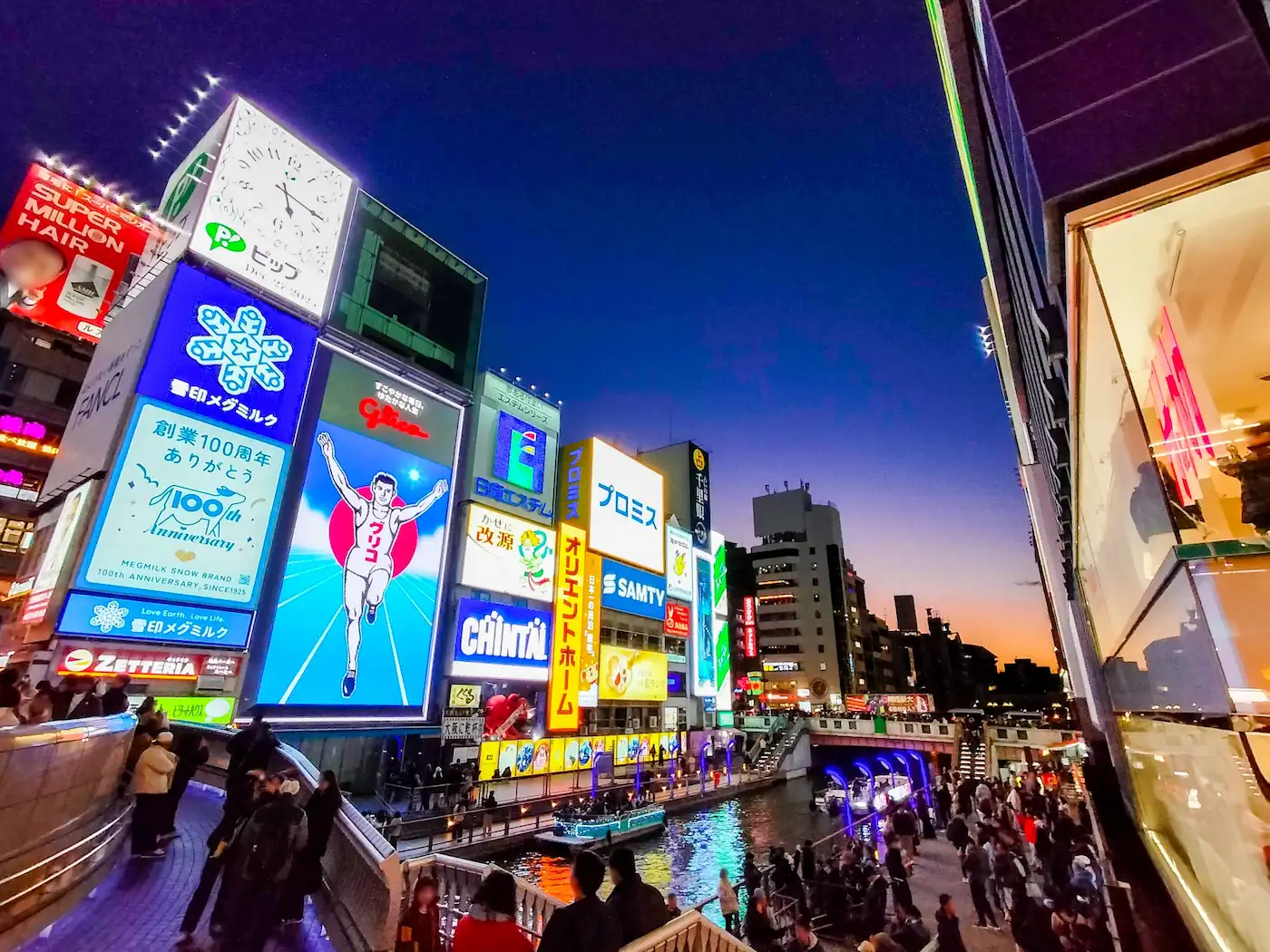
If you are staying another night in Osaka, compare our Osaka food tours to choose between a food-inclusive Shinsekai outing, a sightseeing walk and bar hopping. Keep an evening tour for a night without an airport transfer:
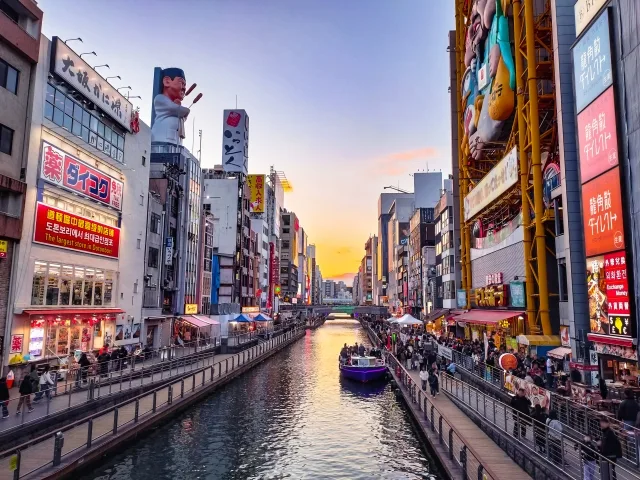 Osaka · Evening
Osaka Street Food & Dotonbori Tours
Why it may fit
Guided food walks through Namba and Dotonbori — a low-risk way to taste takoyaki, okonomiyaki and kushikatsu without guessing at which stall is good.
Before booking
Check the live price, availability, eligibility, and terms before paying.
On the shopping front, Japan's tax-free system is scheduled to change on November 1, 2026. From that date the in-store exemption ends: instead of getting the discount on the spot, you pay the full price including consumption tax at the register and claim the refund at the airport before you fly home. That makes your travel dates matter — so if you are planning bigger purchases, read how tax-free shopping works in 2026 before you buy, and keep your passport on you either way.
Two things visitors get wrong in Osaka. First, the street-food etiquette: eat near the stall, standing, rather than walking and eating through the Dotonbori crush — and wait, because fresh takoyaki is molten inside and burns are a rite of passage no one needs. Second, the airport timing: for an international flight, plan to be at KIX about 2.5–3 hours before departure, and add buffer if you intend to claim a tax refund or buy last-minute, because those counters have their own queues. Work backwards from that to fix your last Osaka train.
Day 4 cost: Osaka Castle Museum entry, transport, a generous food budget and the run to KIX — roughly ¥3,500–6,500 per person.
A snack stop in Namba: 551 HORAI's butaman
Add 551 HORAI's steamed pork buns (butaman) to your Osaka food list. The pork-and-onion filling sits inside a slightly sweet dough; a takeaway box is a simple snack to share between sightseeing stops. The official product page lists two hot buns for ¥500 or four for ¥1,000, checked October 9, 2026. Eat-in and online prices differ.
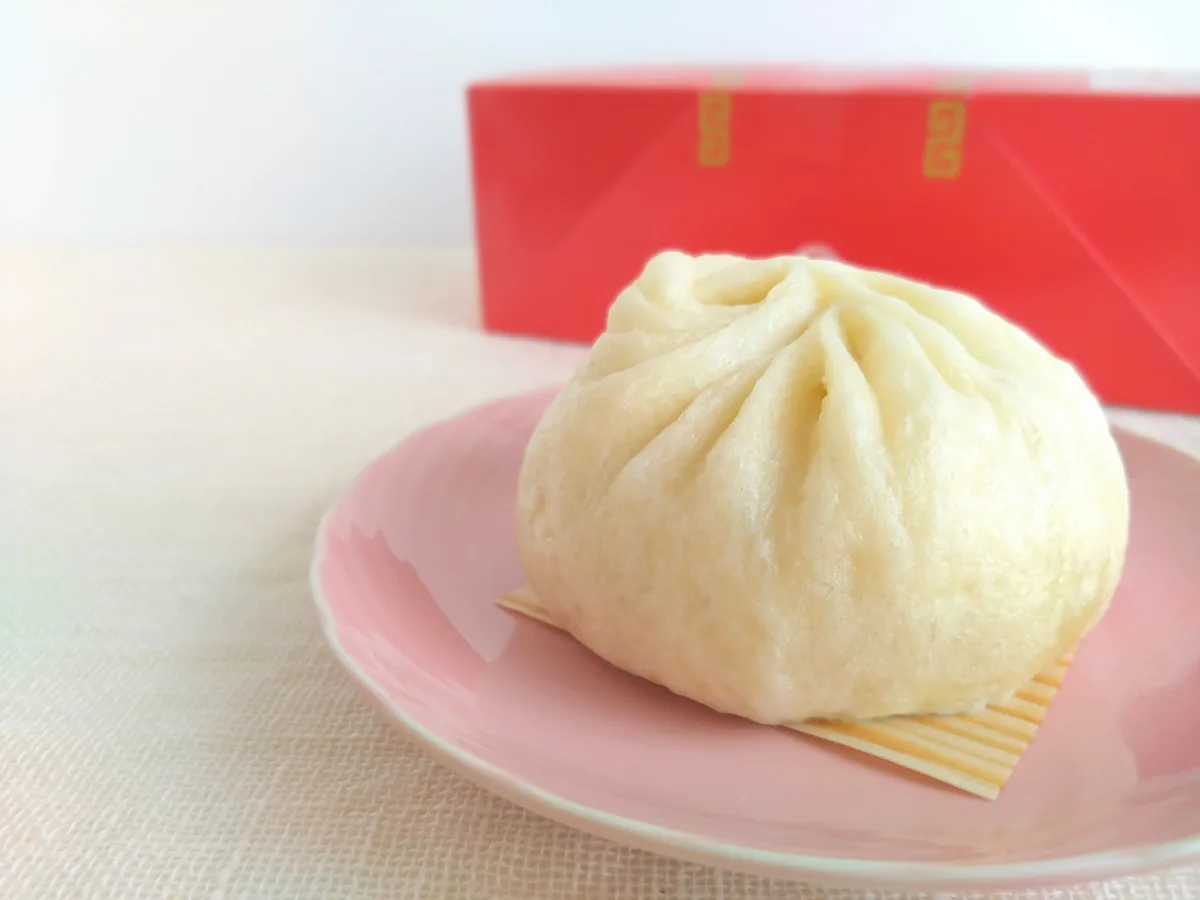
For this route, the Namba main store on Ebisubashi-suji is a convenient choice: takeaway is on the first floor, with restaurants upstairs. Check its official opening calendar and leave time for the queue before your airport transfer. If your route takes you through Umeda instead, see our Osaka Station 551 counter guide: the Midosuji counter sells hot food, while the Central Gate counter is chilled-only.
Where to base yourself: Kyoto vs Osaka
This is the question that shapes the whole trip, and the good news is there is no wrong answer. JR Kyoto Station and JR Osaka Station are about 29 minutes and ¥580 apart on the special rapid train. That is station-to-station ride time only: reaching the station from your accommodation and continuing to the sights takes extra time. A trip such as Gion or Higashiyama to Namba can take roughly 45–75 minutes with walking and transfers. Allow for that difference, then pick one base, unpack once, and day-trip the other city instead of dragging luggage between hotels mid-trip.
Stay in Kyoto if you want calmer mornings and the easiest early access to the temples (which is when they are worth seeing), and a shorter, more direct hop to Nara. The trade-off is higher accommodation prices and a quieter night scene.
Stay in Osaka if you want cheaper food and hotels, a livelier evening, and a faster final morning to KIX on Day 4. The trade-off is travelling between your Osaka accommodation and Kyoto sights on two days. Although the JR station-to-station ride is about 29 minutes, allow 45–75 minutes each way depending on your hotel and destination.
A common hybrid that works well: base in Osaka for value and energy, accept the short daily ride into Kyoto. Whichever you choose, one base beats two.
Choose one Kansai base, then price all 3 nights
Keep one room for the whole itinerary. Choose the base that fits your mornings and evenings, then check your exact dates.
Leave blank to browse first and choose dates on Booking.com.
Kyoto
For the difference between hotels, ryokan, hostels and capsule options, see our Japan accommodation types guide.
Getting around Kansai
Kansai's rail map looks intimidating and is actually very forgiving once you know who runs what. You will tap the same ICOCA card across almost all of it.
- JR West — the backbone. JR special rapid trains connect Kyoto and Osaka in about 29 minutes (¥580, no surcharge), and the JR Nara line serves Fushimi Inari and Nara.
- Keihan and Hankyu — private railways running between Kyoto and Osaka along different routes, often cheaper and dropping you at different, sometimes more convenient, central stations.
- Kintetsu — the line that links Kyoto, Osaka and Nara, and the one that puts you closest to Nara Park.
- Osaka Metro — the city subway, your main tool inside Osaka.
The general rule for visitors: prefer trains over buses, and use an IC card for everything. A regular ICOCA is the most reliable choice if you are starting in Kansai. New KANSAI ONE PASS issuance has ended and only remaining stock is being sold, so do not build your plans around finding one. Kyoto is the one city where buses are tempting because they pass the famous sights, but they are also the slowest option in heavy season. There are various regional and single-day passes (subway-and-bus day passes, private-railway tourist tickets and so on), and the line-up changes year to year, so check the current options officially against your actual route before buying — a pass only saves money if you ride enough.
A nationwide JR Pass is almost never worth it for a Kansai-only trip, since the savings come from long Shinkansen rides you won't be taking. If you are combining Kansai with Tokyo, run the numbers on our JR Pass calculator and read is the JR Pass worth it in 2026. For the full picture of how Japanese trains, tickets and IC cards fit together, see the complete train system guide.
What it costs in 2026
Rough per-person ranges, current as of 2026 — always confirm before you travel.
If Kansai is part of a longer route, the complete Japan trip budget guide adds accommodation, food and intercity transport into 7-, 10- and 14-day totals.
| Category | Typical range (per person) | Notes |
|---|---|---|
| Local transport (4 days) | ¥4,000–7,000 | ICOCA pay-as-you-go; Kyoto–Osaka ¥580 each way |
| Temple / castle entries | ¥2,500–4,500 | Many shrines free; Kiyomizu ¥500, Todai-ji ¥800, Kinkaku-ji ¥500, Osaka Castle Museum ¥1,200 |
| Food | ¥3,000–6,000/day | Street food and casual meals; more if you sit down properly |
| Accommodation | ¥8,000–25,000/night | Varies hugely by city, season and room type |
The figure most likely to surprise you is Kyoto's lodging tax, which was overhauled on 1 March 2026 into five bands charged per person, per night. The full structure: under ¥6,000 a night is ¥200; ¥6,000–20,000 is ¥400; ¥20,000–50,000 is ¥1,000; ¥50,000–100,000 is ¥4,000; and ¥100,000 or more is ¥10,000 per person, per night. Many mid-range travellers will fall into the ¥400 band, but budget stays may still be ¥200, while high-end ryokan and luxury hotels can trigger much higher bands. This is a Kyoto city tax — it does not apply to nights spent in Osaka or Nara — which is one more small point in favour of an Osaka base if budget is tight.
Make it longer: Kobe, Himeji, Koyasan or the Kyoto coast
If you have a fifth day, Kansai rewards it. Choose a city day trip, an overnight mountain stay or a full day on the Kyoto coast:
Not sure which extra day to choose? Our day trips from Kyoto and Osaka comparison weighs Nara, Uji, Himeji, Kobe and the coast by starting station, travel time and when a guide adds value.
- Kobe — about 30 minutes from Osaka, known for its beef, the cosmopolitan port, and the hot-spring village and ropeway at Arima Onsen tucked behind the mountains. If a ryokan soak is on your list, brush up on onsen etiquette and the tattoo question first.
- Himeji — home to Himeji Castle, the finest original castle in Japan, reachable by train from Osaka or Kyoto. Our slower 10-day Japan itinerary gives Himeji a full day from Kyoto instead of squeezing it together with Kobe.
- Koyasan — a mountaintop Buddhist monastic complex south of Osaka where you can stay overnight in a temple lodging. It is technically possible as a long day from Osaka, but it works much better as an overnight stay and a complete change of pace.
- Amanohashidate and Ine — use an extra day for the coastal sandbar and waterfront boathouses. Our Amanohashidate and Ine day trip guide compares four tour styles with public transport, including when organized transfers are worth it.
Choose one extension for the time you have rather than trying to add all four.
Where to next
- Doing the whole country, not just Kansai? Start with the 7-Day Japan Itinerary for first-timers.
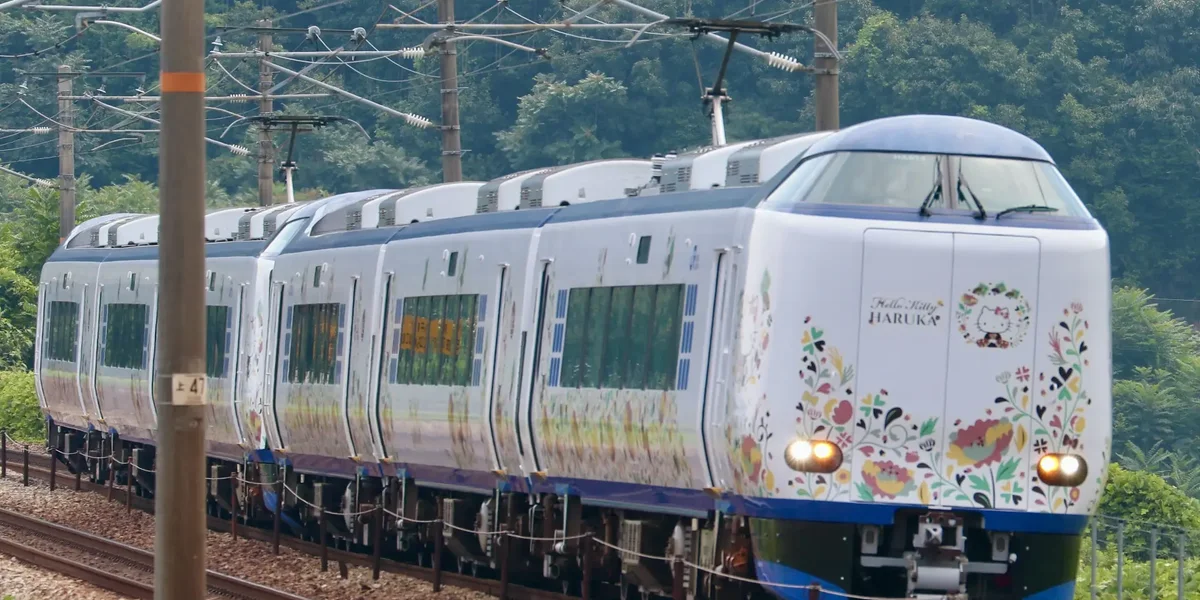
- Landing at KIX? The Kansai Airport transport guide has every route in and out.
- Want the slower, more reflective side of Kyoto? See Zen and wabi-sabi experiences in Japan.
- Sorting logistics? The train system guide, JR Pass calculator and best eSIM for Japan cover the rest.
Four days, one base, the icons done at the right hour instead of the crowded one — that's the Kansai trip locals would point you toward.
Make it your trip
Still planning your Japan trip?
Pick the question on your mind. Compare your options, check the details and take one more thing off your list.
Would a JR Pass save you money?
Add your train journeys and compare individual tickets with the nationwide pass. See which costs less for your route.
Calculate my rail costs
Which eSIM fits your Japan trip?
Maps, messages, hotspot use: compare five providers by data allowance, network and plan limits before you choose.
Find my Japan eSIM
What should your travel insurance cover?
Compare medical cover, cancellation and activity limits across five options, with the exclusions worth checking.
Compare cover & limitsFrequently Asked Questions
Four days is the sweet spot for a first Kansai trip: two days for Kyoto, one for Osaka, and one for a Nara day trip, with your arrival and departure built around Kansai International Airport (KIX). Three days feels rushed once you account for airport transfers; five or more lets you add Kobe, Himeji or Koyasan without cutting the core sights.
Base yourself in one city and day-trip the other. A proven order is: Day 1 arrive at KIX and settle in, Day 2 Kyoto's east side and Arashiyama (Fushimi Inari, Kiyomizu-dera, Gion, the bamboo grove), Day 3 a Nara day trip for Todai-ji and the deer plus more of Kyoto, Day 4 Osaka (Dotonbori, Osaka Castle, shopping) before heading back to KIX.
JR Kyoto Station and JR Osaka Station are about 29 minutes and 580 yen apart by special rapid train, but that does not include travel between your accommodation and the stations or onward to the sights. A trip such as Gion or Higashiyama to Namba can take 45 to 75 minutes with walking and transfers. Choose Kyoto for calmer mornings and early temple access; choose Osaka for cheaper food, hotels and livelier nights.
Yes. Nara is a half-day to full-day trip and home to Todai-ji's Great Buddha and the free-roaming deer of Nara Park. From Kyoto, the Kintetsu line reaches Kintetsu-Nara in roughly 35 to 50 minutes and drops you within walking distance of the park, which the JR station does not.
For a Kansai-only trip the nationwide JR Pass is almost never worth it, because you are not riding the Shinkansen long distances. A rechargeable IC card such as ICOCA covers nearly all local trains, subways and buses. Check our JR Pass calculator if you are also visiting Tokyo.
Use an ICOCA IC card and lean on trains over buses. JR, Keihan and Hankyu connect Kyoto and Osaka; the Kintetsu line links Kyoto, Osaka and Nara; and Osaka Metro covers the city. Kyoto city buses are scenic but get gridlocked, so the subway or private railways are often faster on key stretches.

Written by
JAPANODE
Based in Japan, sharing real travel tips & local insights for visitors. Follow us on Instagram @thejapanode for daily Japan content.
You Might Also Like
 Day Trips
10 Best Autumn Leaves Day Trips from Osaka in 2026: Kyoto, Nara, Koyasan & More
8 min read
 Itinerary
7-Day Japan Itinerary for First-Timers: Tokyo, Hakone, Kyoto & Osaka (2026)
20 min read
 Culture
Zen & Wabi-Sabi in Japan: Tea Ceremony, Zazen, Koyasan (2026)
20 min read
 Transportation
KIX to Osaka, Kyoto & Kobe: 2026 Transport Comparison Guide
16 min read
 Planning
Japan Tax-Free Shopping 2026: Current Rules & Nov. 1 Change
15 min read
 Transportation
The Complete Guide to Japan's Train System for First-Time Visitors
16 min read