On this page
Mt Fuji is the most popular day trip from Tokyo — but "Mt Fuji" can mean a dozen different places, and the way you get there decides how much of your day you spend in transit versus in front of the mountain. This guide compares the six realistic routes from Tokyo, with real 2026 prices and times, and then tackles the question that actually makes or breaks the trip: will you be able to see the mountain at all on the day you go?
At a glance: the 6 routes compared
Most "day trips to Mt Fuji" head for Lake Kawaguchiko in the Fuji Five Lakes area — the classic spot where the mountain rises straight out of the lake. Here is how the six ways to get there stack up (all costs are one-way and as of 2026 unless noted; confirm current fares before you travel).
| # | Route | Time to the Fuji area | Typical cost | Booking | Best for |
|---|---|---|---|---|---|
| 1 | Fuji Excursion limited express (direct train) | ~1h54 | ¥4,200 | Reserved (required) | Fastest, no transfers |
| 2 | JR + Fujikyu Railway (via Otsuki) | ~3–3.5h | ~¥2,510 | Partly reserved | Flexible timing, partial JR Pass use |
| 3 | Highway bus (Busta Shinjuku → Kawaguchiko) | ~1h45–2h | ¥2,200 | Recommended | Cheapest direct route |
| 4 | Guided day bus tour from Tokyo | Full day (~10–11h) | ¥9,000–12,000 | Required | First-timers, zero logistics |
| 5 | Via Hakone (Odakyu / Free Pass) | ~80 min to Hakone | ¥7,100 (2-day pass) | Romancecar reserved | Scenery + onsen, Fuji if clear |
| 6 | Rental car / private charter | ~2h drive | ¥7,000–12,000/day + tolls | Book ahead | Groups, chasing clear skies |
Notes: Route 4's cost is per person, round trip (it bundles transport, a guide, and several stops). Route 5 reaches Hakone, where Mt Fuji is visible from Lake Ashi and the ropeway only on clear days — it is a "Fuji-adjacent" scenery-and-onsen route rather than a guaranteed-Fuji one, and its Free Pass is sold as a 2-day ticket (there is no 1-day version).
If you want the simplest possible day and don't want to manage transfers, take a guided bus tour. If you'd rather travel independently and move at your own pace, take the direct Fuji Excursion train (book the reserved seat the moment it opens, one month ahead). Either way, the single biggest factor in a good Mt Fuji day trip isn't the route — it's the weather. See When can you actually see Mt Fuji? before you lock in a date.
Choose the tour format that fits your day
These are three different ways to solve the same problem. Start with the format, then check the live itinerary, pickup point and cancellation terms before booking.
Classic highlights coach
The established, no-planning route for the 5th Station, Lake Kawaguchiko, Chureito Pagoda and Oshino Hakkai.
- 10 hours
- Tokyo/Shinjuku meeting
- 5,000+ reviews
Fixed schedule and no hotel pickup; peak-day traffic can make the return late.
Check the classic tourFuji Five Lakes small group
A highly rated route built around lakes, seasonal flowers, Oshino Hakkai and the pagoda viewpoints rather than the 5th Station.
- 10 hours
- Small group available
- 24h cancellation
More photo stops means less time at each; the listing has mobility and age restrictions.
Check the small-group tourPrivate adjustable day
Door-to-door pickup and a flexible route for families or groups who want to control the pace and choose their Fuji stops.
- 10–11 hours
- Tokyo pickup
- Private vehicle
Costs more for one or two people; meals, entry fees and optional activities are extra.
Check the private tourMt Fuji visibility is never guaranteed, and return traffic can add hours. Avoid a timed dinner, flight or last train after any full-day tour.
* Affiliate link — JAPANODE receives a commission when a purchase is attributed to this link
For a deeper decision check—including current review evidence, exact stop times, age limits and the trade-off between a coach and private car—read our comparison of the three best Mt Fuji tours from Tokyo.
Can you climb Mt Fuji on a day trip?
Short answer: no — and the article you're reading is about seeing Mt Fuji, not summiting it. That distinction matters, because the search "Mt Fuji day trip" mixes two completely different activities.
The official 2026 climbing season is July 1 – September 10 for the Yoshida and Subashiri trails, and July 10 – September 10 for Fujinomiya and Gotemba. All four trails now charge a mandatory ¥4,000 entry fee (doubled from the ¥2,000 introduced on the Yoshida Trail in 2024) and require advance online reservation. The Yoshida 5th Station gate is closed from 2:00 pm to 3:00 am except for confirmed mountain-hut guests, with a daily cap of 4,000 climbers.
A summit round trip is roughly 10 hours of hiking on top of about 2.5 hours of travel each way from Tokyo — so a same-day climb is unsafe and effectively impossible under the gate rules. If you genuinely want to summit, plan a 2-day / 1-night hut stay instead.
A note on insurance — especially if you might climb. A Mt Fuji viewing day trip is low-risk, but an actual summit climb is not: at 3,776 m, many standard travel policies exclude or cap high-altitude trekking. If you'll be climbing Fuji — or skiing or doing serious hiking elsewhere in Japan — check that your policy's adventure-activity terms actually cover it before you go. Our Japan travel insurance guide explains the basics, and the Japan ski insurance checklist shows how activity, terrain and rescue exclusions work. For a fixed-date Japan holiday, start with a Heymondo single-trip quote but rely only on the activity wording in the policy issued to you:
 Fixed-trip first quote
Heymondo Travel Insurance
Single-trip cover for a fixed-date Japan holiday
Why it may fit
Start here for a set-date trip, then verify the exact activity and altitude in the policy issued for your residence. Do not assume a Fuji summit climb, skiing, or rescue is covered. Heymondo excludes US residents; JAPANODE readers receive 5% off where eligible.
Before booking
Check the live price, availability, eligibility, and terms before paying.
For everyone else, the goal is to get a clear, photogenic view of the mountain — from a lakeside, a pagoda, or a ropeway — and that's what the rest of this guide is built around.
When can you actually see Mt Fuji?
This is the part most guides skip, and it's the most important one. Mt Fuji is shy: it spends much of the year wrapped in cloud, especially in summer. Picking the right season and time of day matters more than which train you take.
Best season: winter (December–February). Cold, dry continental air produces the clearest, highest-contrast views, with a full snow cap on top. Worst: the June rainy season and mid-summer (July–August), when humid air builds cloud around the peak by late morning.
For a winter visit, check the forecast at your actual viewpoint and use our winter clothing and footwear guide. A lakeside morning or exposed viewpoint needs its own packing decision, even when your hotel is in Tokyo.
Based on 2025 observation data from the Fuji area (reported by Live Japan, from an 8 am daily check — treat it as a useful guide rather than official meteorological statistics):
| Month | Full mountain visible | Notes |
|---|---|---|
| February | ~79% of days | Clearest month, full snow cap |
| January / November | ~61–63% | Reliably good |
| December | ~61% (+23% partial) | Good, crisp air |
| August | ~10% of days | Worst — summer haze and cloud |
| July | view on ~29% of days | Rainy-season hangover |
Best time of day: early morning, roughly 6–9 am, before daytime heating and onshore breezes push moist air up the slopes and form summit cloud after about 11 am. The famous "Sakasa Fuji" (the upside-down reflection in the lake) needs windless conditions, most common in the first hour after sunrise.
Before you commit to the trip, look at a live webcam to see whether the mountain is out:
- Fujigoko TV live cameras — the most comprehensive Kawaguchiko / Yamanakako webcam network
- FUJISANWATCHER (yamanashi-kankou.jp) — official Yamanashi Prefecture tourism feeds
If seeing Fuji is your priority and your dates are flexible, build in a buffer day, and have a cloudy-day Plan B (onsen, museums, Fuji-Q). You'll want mobile data to check cameras on the move — see our best eSIM for Japan guide.
The Fuji Five Lakes area is rural, and a day trip leans heavily on your phone — checking those live webcams on the move, pulling up the next loop-bus or train time, and navigating between viewpoints where English signage thins out. If you haven't sorted connectivity yet, an eSIM is the simplest option (install before you fly, switch on when you land):
In a hurry? Here's the short answer
Start with the route that matches your trip: broader stated network access and 5G, or a simple flexible data plan. Compare the live plan details before checkout.

Start here if stated Docomo + KDDI access and 5G matter for a route beyond the largest cities.

A straightforward alternative for Tokyo, Osaka and Kyoto when the live data allowance and validity fit your trip.
The 6 routes in detail
Route 1 — Fuji Excursion limited express (fastest, direct)
The Fuji Excursion (富士回遊) is the only direct, no-transfer train from Shinjuku to Kawaguchiko, running on the schedule valid from March 14, 2026.
Its early departure overlaps with Tokyo's weekday commute. You are not necessarily following the heaviest inbound direction, but you still need to navigate Shinjuku Station while it is busy. Read the Tokyo rush-hour guide, locate the platform area in advance and leave extra time rather than planning a tight station transfer.
- Fare: ¥4,200 one way Shinjuku → Kawaguchiko (¥2,580 basic fare + ¥1,620 limited express fee). Some older blogs still cite ¥4,130/¥4,300; ¥4,200 is the current official figure.
- Time: about 1 hour 54 minutes.
- Reservations: all seats are reserved — there are no non-reserved cars. Tickets go on sale 10:00 am one month before travel and sell out in peak seasons. A cheaper "unreserved limited express" ticket lets you board without a guaranteed seat (you may have to stand).
- Important boarding tip: the train runs coupled to a Kaiji or Azusa between Shinjuku and Otsuki, and only cars 1–3 continue to Kawaguchiko — the rest decouple at Otsuki. Confirm your car number.
- Frequency: 4 round trips daily, with extra seasonal trains in spring.
The nationwide Japan Rail Pass covers only the Shinjuku–Otsuki (JR) section — the Otsuki–Kawaguchiko leg is the privately owned Fujikyu Railway and needs a separate fare (~¥1,570). The JR Tokyo Wide Pass (¥16,000 adult / 3 days) does cover the full route, including the Fujikyu section. If you're weighing rail passes, see is the JR Pass worth it in 2026?.
Route 2 — JR + Fujikyu Railway (via Otsuki)
The flexible budget option: take the JR Chuo Line from Shinjuku to Otsuki (local train, or a Kaiji / Azusa limited express), then transfer to the Fujikyuko Line to Kawaguchiko.
- Cost / time: about ¥2,510 one way and 3–3.5 hours all-local; faster with a limited express to Otsuki. The Fujikyu add-on is roughly ¥1,570.
- Scenic upgrade: the Fujisan View Express runs the Otsuki–Kawaguchiko stretch (~55 min) for a small surcharge.
- This route is handy if you want to stop at Shimoyoshida for the Chureito Pagoda (see below) on the way.
IC cards (Suica / PASMO / ICOCA, etc.) work across the whole Fujikyuko Line — tap in and out as normal. The catch is through-trains: a limited express like the Fuji Excursion settles both the JR and Fujikyu fares automatically when you tap out at your destination, but on some through services the IC reader can't register the JR ↔ Fujikyu boundary, so you'll need a staffed window to adjust the fare. Paper tickets and free passes are settled separately at Otsuki. Carry some cash as a backup — not because the line is cash-only, but because IC top-up is limited to staffed windows during business hours (bills only, no change). For how IC cards work elsewhere, see our Japan train system guide.
Route 3 — Highway bus (cheapest direct)
Operated jointly by Keio Bus and Fujikyu Bus from Busta Shinjuku (the expressway terminal above JR Shinjuku's New South Exit).
- Fare: ¥2,200 one way to Kawaguchiko — the cheapest direct option.
- Time: about 1 hour 45 minutes to 2 hours, but traffic-dependent — it can be much longer on weekends, holidays, and return trips.
- Reservations: effectively required; book at highway-buses.jp or via Klook up to a month ahead. Buses sell out on weekends and in peak seasons.
- Direct Shinjuku → Mt Fuji 5th Station buses run seasonally only (daily in July–August; weekends in shoulder months), so for a year-round day trip, aim for Kawaguchiko.
Route 4 — Guided day bus tour (easiest, and the one we recommend for first-timers)
A full-day coach tour from Tokyo is the lowest-effort way to see the highlights without juggling timetables. A typical loop covers Lake Kawaguchiko / Oishi Park, Oshino Hakkai, and Arakurayama (Chureito Pagoda), sometimes adding the Mt Fuji 5th Station.
- Meeting points: usually Shinjuku and/or Tokyo Station; many tours offer hotel pickup.
- Duration: about 10–11 hours.
- Price: roughly ¥9,000–12,000 per person for a group coach tour; private tours cost more.
- Trade-off: a fixed schedule (sometimes rushed at Chureito) in exchange for zero logistics and a guide who adapts the route if one viewpoint is clouded over.
Use the three-option shortlist near the top of this guide to compare a classic coach, a photo-focused small group, and a private adjustable tour before booking.
Route 5 — Via Hakone (scenery, onsen, and Fuji if you're lucky)
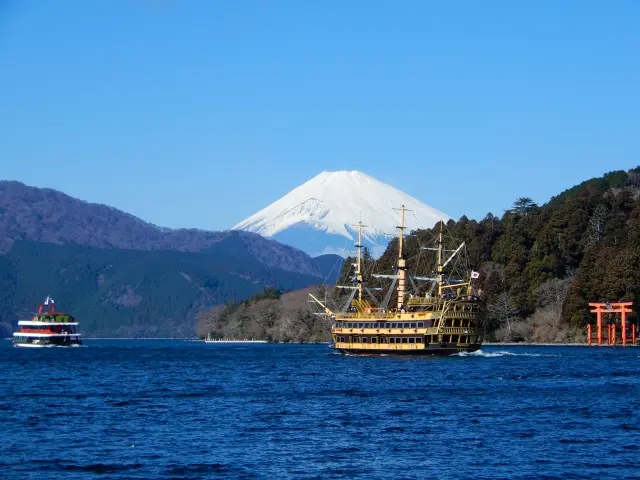
Hakone isn't a Mt Fuji destination in the way Kawaguchiko is — but on a clear day you can see the mountain across Lake Ashi and from the Owakudani ropeway, while also enjoying hot springs, art museums, and the pirate sightseeing ships.
- Hakone Free Pass (2026): ¥7,100 for 2 days from Shinjuku (there is no 1-day version). It covers the round-trip Odakyu Line plus the Hakone Tozan railway, cable car, ropeway, Lake Ashi ships, and area buses.
- Romancecar surcharge: ¥1,200 one way (¥1,150 as a digital ticket); all seats reserved. Shinjuku → Hakone-Yumoto is about 80 minutes.
- Owakudani (2026): open, with a renovated station and glass observatory; the ropeway suspends on volcanic-gas or wind alerts, so check Hakone Navi on the day.
- Reality check: Hakone is more mountainous and often cloudier than the Fuji Five Lakes, so treat any Fuji sighting as a bonus rather than the main event.
 2-day · Hakone loop
Hakone Free Pass (2-Day)
Why it may fit
Unlimited rides on the Hakone loop — Tozan railway, cable car, ropeway, and Lake Ashi sightseeing ships — plus the round-trip from Shinjuku. The easy way to combine onsen, Lake Ashi, and clear-day Fuji views.
Before booking
Check the live price, availability, eligibility, and terms before paying.
Route 6 — Rental car or private charter (door-to-door)
Driving gives you the freedom to chase clear skies — if Kawaguchiko is socked in, you can reposition to the south (Fujinomiya) or east (Gotemba) side. Tokyo → Kawaguchiko is about 2 hours via the Chuo Expressway.
- Cost: a compact rental runs roughly ¥7,000–12,000/day, plus Chuo Expressway tolls of about ¥5,300–6,000 round trip (ETC vs. cash; more if you start from central Tokyo) and fuel around ¥170/L. A private chartered car with driver costs substantially more — get a specific quote.
- Parking: attraction lots typically ¥200–1,500. The Arakurayama (Chureito) municipal lots run ¥1,000–1,500 per 6 hours, and the park-adjacent lot closes to cars during the cherry-blossom and autumn peaks — at those times, take public transport (see the Chureito note above).
To drive in Japan you need an International Driving Permit (IDP) issued under the 1949 Geneva Convention, obtained in your home country before you arrive — Japan accepts only the paper booklet type, not card or digital IDPs. Exceptions: licence holders from Switzerland, Germany, France, Belgium, Monaco, and Taiwan cannot use an IDP and instead need their national licence plus an official Japanese translation (from JAF or their embassy). Japan drives on the left, and you must carry your passport showing your entry date when you rent.
What to see and do around Mt Fuji
Once you're in the Kawaguchiko area, these are the highlights worth building a day around:
- Arakurayama Sengen Park / Chureito Pagoda — the iconic five-storey pagoda framed with Mt Fuji. Free, open 24 hours, a ~10-minute walk from Shimoyoshida Station plus the 398 "Sakuya-hime" steps to the deck. There's no elevator or ramp to the pagoda, the deck is small, and queues are long at cherry-blossom peak (mid-April) — go at sunrise. Note: the Chureito cherry-blossom festival has been discontinued from 2026 due to overtourism, and traffic restrictions run for roughly the first three weeks of April, so use public transport rather than driving at peak.
- Oshino Hakkai — a UNESCO-listed village of eight crystal-clear spring-fed ponds. Walking the ponds is free (a couple of small attractions charge ~¥300). Reach it by bus from Kawaguchiko Station (~25 min). Many stalls are cash-only.
- Owakudani — the volcanic valley above Hakone (Route 5), famous for its black eggs; reached by the Hakone Ropeway.
- Fuji-Q Highland — the amusement park beside Fujikyu-Highland Station (one stop before Kawaguchiko). Entry has been free since 2018 — you pay per ride or buy a 1-Day Pass (around ¥6,000–7,900 depending on the date). Strong option if you're travelling with teens.
 Theme park · QR e-ticket
Fuji-Q Highland 1-Day Pass
Why it may fit
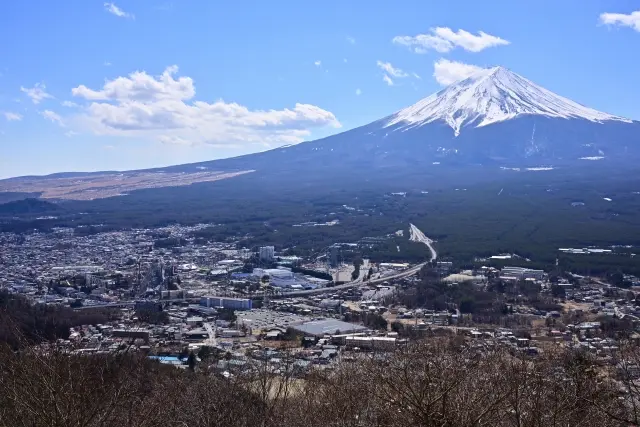
Mobile QR pass for Fuji-Q Highland's record-breaking roller coasters and Thomas Land, right at the foot of Mt Fuji. Prices vary by date — check the live calendar.
Before booking
Check the live price, availability, eligibility, and terms before paying.
Browse Mt Fuji & Fuji Five Lakes tours
Guided day tours, Kawaguchiko boat rides and Hakone combos — compare options and book ahead for peak season.
Powered by GetYourGuide · we may earn a commission at no extra cost to you.
Two sample day-trip plans
Plan A — independent, by train (for confident travellers):
- Reserve the first morning Fuji Excursion from Shinjuku (book one month ahead).
- Arrive Kawaguchiko mid-morning; take the sightseeing loop bus to Oishi Park for lakeside views.
- Lunch by the lake, then Oshino Hakkai in the afternoon.
- Optional: stop at Shimoyoshida / Chureito Pagoda on the way back.
- Catch a late-afternoon train back to Shinjuku.
Plan B — guided tour (for first-timers):
- Book a full-day coach tour with hotel or Shinjuku/Tokyo Station pickup.
- Let the guide run the Kawaguchiko → Oshino Hakkai → Chureito loop, adjusting for weather.
- Return to Tokyo in the early evening — no timetables to manage.
Practical tips
- Suica / IC cards: work broadly on JR, the Fujikyuko Line, and most buses (see the Fujikyu note above for the through-train catch) — keep some cash as backup. On the Fuji Excursion and Romancecar, an IC card can cover the base fare, but you still need a separate reserved/limited-express ticket.
- Cash: Oshino Hakkai stalls, mountain toilets, and some food stalls are cash-only. Withdraw at 7-Eleven or Japan Post ATMs.
- Clothing: the Fuji Five Lakes area runs about 5°C cooler than central Tokyo, and mornings are cold even in shoulder seasons — layer up, and wear proper shoes for the 398 Chureito steps. See what to wear in Japan.
- Crowds: the Chureito deck and the Fuji Excursion / highway buses sell out on weekends and in peak seasons (cherry blossom late March–mid-April, autumn foliage, Golden Week, Obon) — book ahead.
- Last service back to Tokyo: in the 2026 timetable, the last Fuji Excursion from Kawaguchiko departs around 17:41; highway buses run later. Times shift with seasonal revisions, so confirm before you travel — and don't cut the last train too fine if the weather has you lingering at a viewpoint.
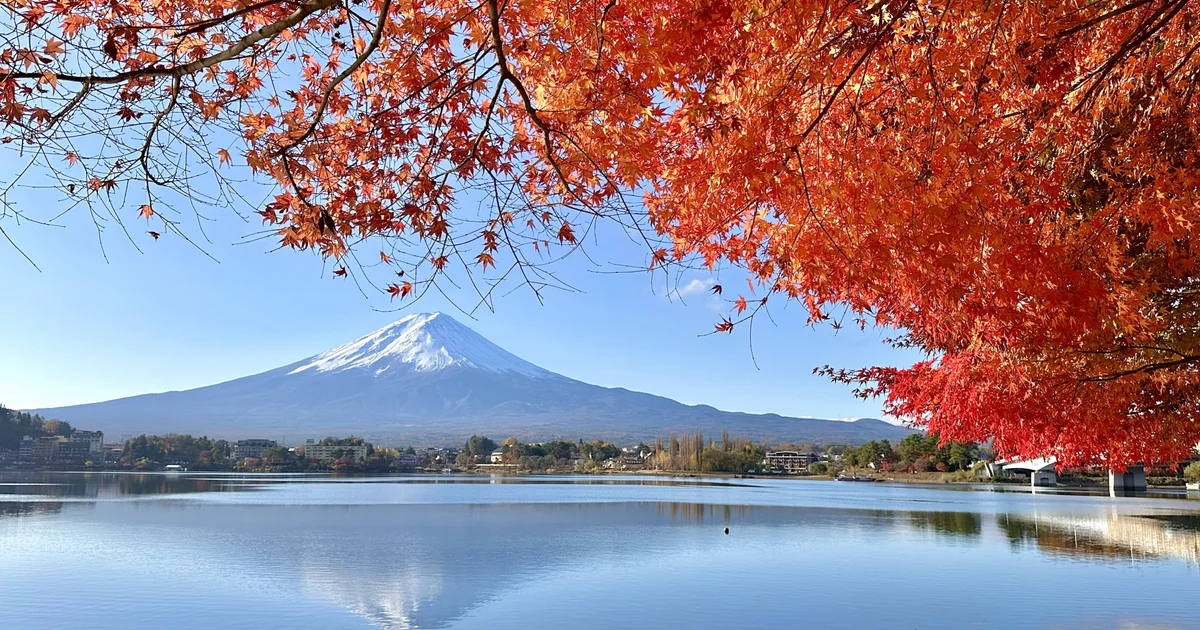
If autumn color matters more than seeing Mt Fuji alone, compare Kawaguchiko with Nikko, Hakone, Mt. Takao and other autumn leaves day trips from Tokyo before choosing your date.
What changed in 2024–2026
A few recent updates worth knowing when you compare older guides against this one:
- Fuji Excursion whole-route online booking has been available since August 28, 2025 via the JR-EAST Train Reservation system.
- Climbing: the ¥4,000 fee + mandatory reservation/gate system now applies on all four trails (it began as ¥2,000 on Yoshida in 2024 and became a uniform ¥4,000 from May 2025).
- Odakyu Romancecar: digital-versus-paper pricing since October 2025; contactless credit-card tap at gates from March 25, 2026.
- JR Tokyo Wide Pass: the price rose to ¥16,000 (adult, 3 days) on March 14, 2026 — older guides may still quote ¥15,000.
- QR / mobile tickets: the Fuji Excursion, Hakone Free Pass, and Fuji-Q passes are now widely sold as QR/mobile e-tickets.
Planning your wider trip? Start with our first-time Japan guide, and if you're flying into Tokyo, see how to get in from Narita or Kansai.
Make it your trip
Still planning your Japan trip?
Pick the question on your mind. Compare your options, check the details and take one more thing off your list.
Would a JR Pass save you money?
Add your train journeys and compare individual tickets with the nationwide pass. See which costs less for your route.
Calculate my rail costs
Which eSIM fits your Japan trip?
Maps, messages, hotspot use: compare five providers by data allowance, network and plan limits before you choose.
Find my Japan eSIM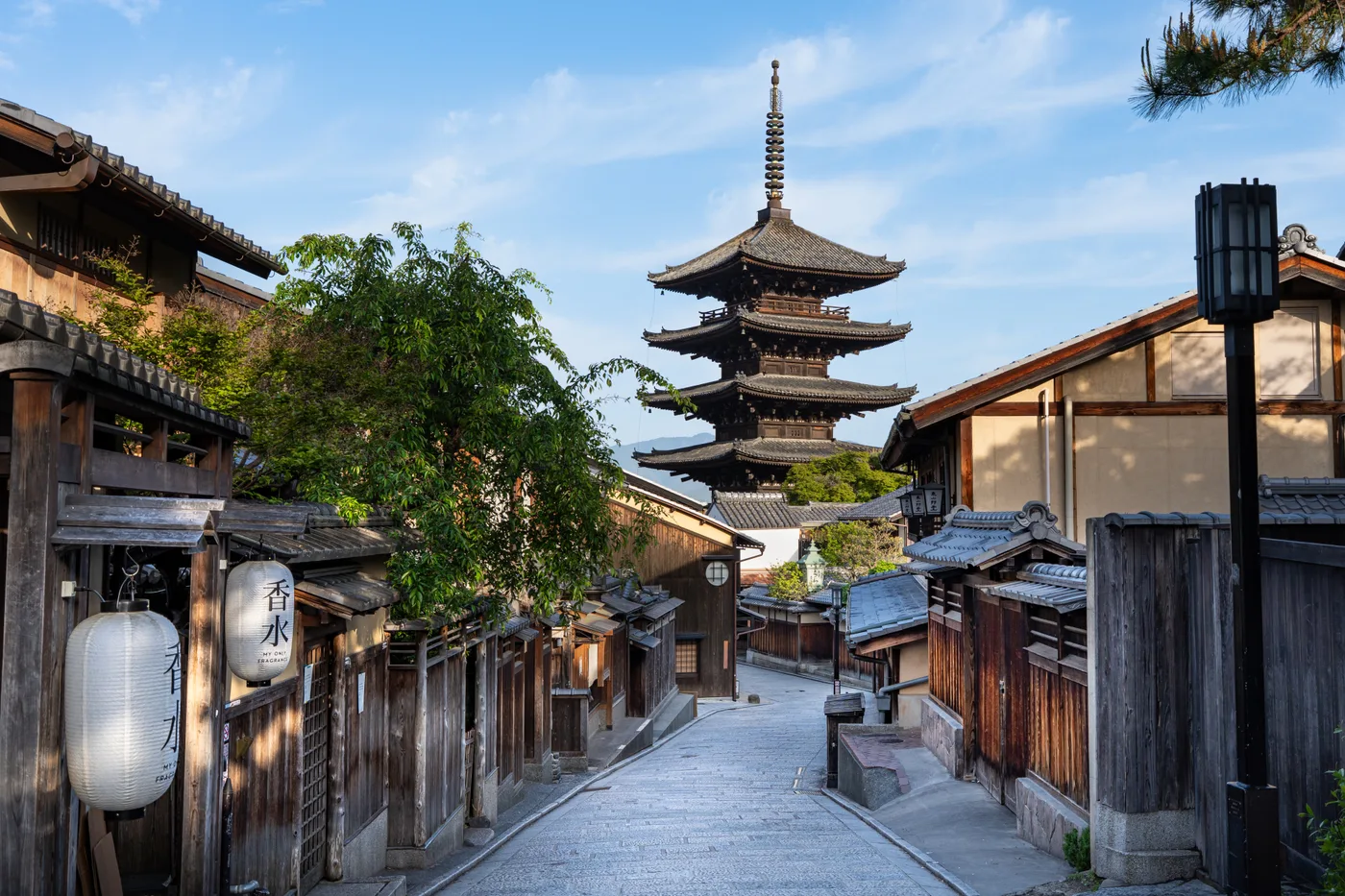
How much can you fit into one week?
Connect Tokyo, a Fuji or Hakone day trip, Kyoto and Osaka with a day-by-day route, travel costs and booking advice.
Explore the 7-day routeFrequently Asked Questions
Lake Kawaguchiko, the main Mt Fuji viewing base, is about 100 km west of Tokyo. The fastest direct option is the Fuji Excursion limited express from Shinjuku at roughly 1 hour 54 minutes; highway buses take about 1 hour 45 minutes to 2 hours depending on traffic. A comfortable day trip runs 10 to 12 hours door to door, so start early.
The cheapest direct option is the highway bus from Busta Shinjuku to Kawaguchiko at about 2,200 yen one way (as of 2026). Taking JR to Otsuki and transferring to the Fujikyu Railway costs a little more and is slower. Guided bus tours cost more (around 9,000 to 12,000 yen) but bundle transport, an English-speaking guide, and several stops.
Not realistically. The official 2026 climbing season is July 1 to September 10, the round-trip hike takes around 10 hours plus about 2.5 hours of travel each way, and the Yoshida Trail gate is closed from 2:00 pm to 3:00 am. A safe summit attempt needs an overnight stay in a mountain hut. A day trip from Tokyo is for viewing and photographing Mt Fuji, not climbing it.
Winter, from December to February, gives the clearest views thanks to cold, dry air and a full snow cap. Based on 2025 observation data from the Fuji area, the full mountain was visible on roughly 79% of days in February but only about 10% of days in August. Early morning, before about 9 to 10 am, gives the best odds in any season. Always check a live webcam the morning you travel.
Yes. Every seat on the Fuji Excursion limited express is reserved; there are no non-reserved cars. Reserved tickets go on sale at 10:00 am one month before the travel date and sell out on weekends and during cherry-blossom and autumn seasons, so book early. A cheaper unreserved limited-express ticket exists, but it does not guarantee you a seat.
For reliable Mt Fuji views, choose Kawaguchiko and the Fuji Five Lakes, where the mountain dominates the skyline. Hakone is excellent for onsen, Lake Ashi, and the Owakudani ropeway, but it is more mountainous and often cloudier, so Mt Fuji appears only on clear days. Choose Hakone for scenery and hot springs, Kawaguchiko if seeing Fuji is the priority.

Written by
JAPANODE
Based in Japan, sharing real travel tips & local insights for visitors. Follow us on Instagram @thejapanode for daily Japan content.
You Might Also Like
 Day Trips
9 Best Autumn Leaves Day Trips from Tokyo in 2026: Nikko, Mt. Fuji, Hakone & More
9 min read
 Transportation
Is the JR Pass Worth It in 2026? Prices & Break-Even Routes
15 min read
 Planning
What to Wear in Japan: Month-by-Month Clothing Guide
14 min read
 Planning
First Time in Japan: 15 Things You Need to Know Before You Go
19 min read
ConnectivityBest eSIM for Japan 2026: 5 Providers Compared
20 min read
 Transportation
The Complete Guide to Japan's Train System for First-Time Visitors
16 min read