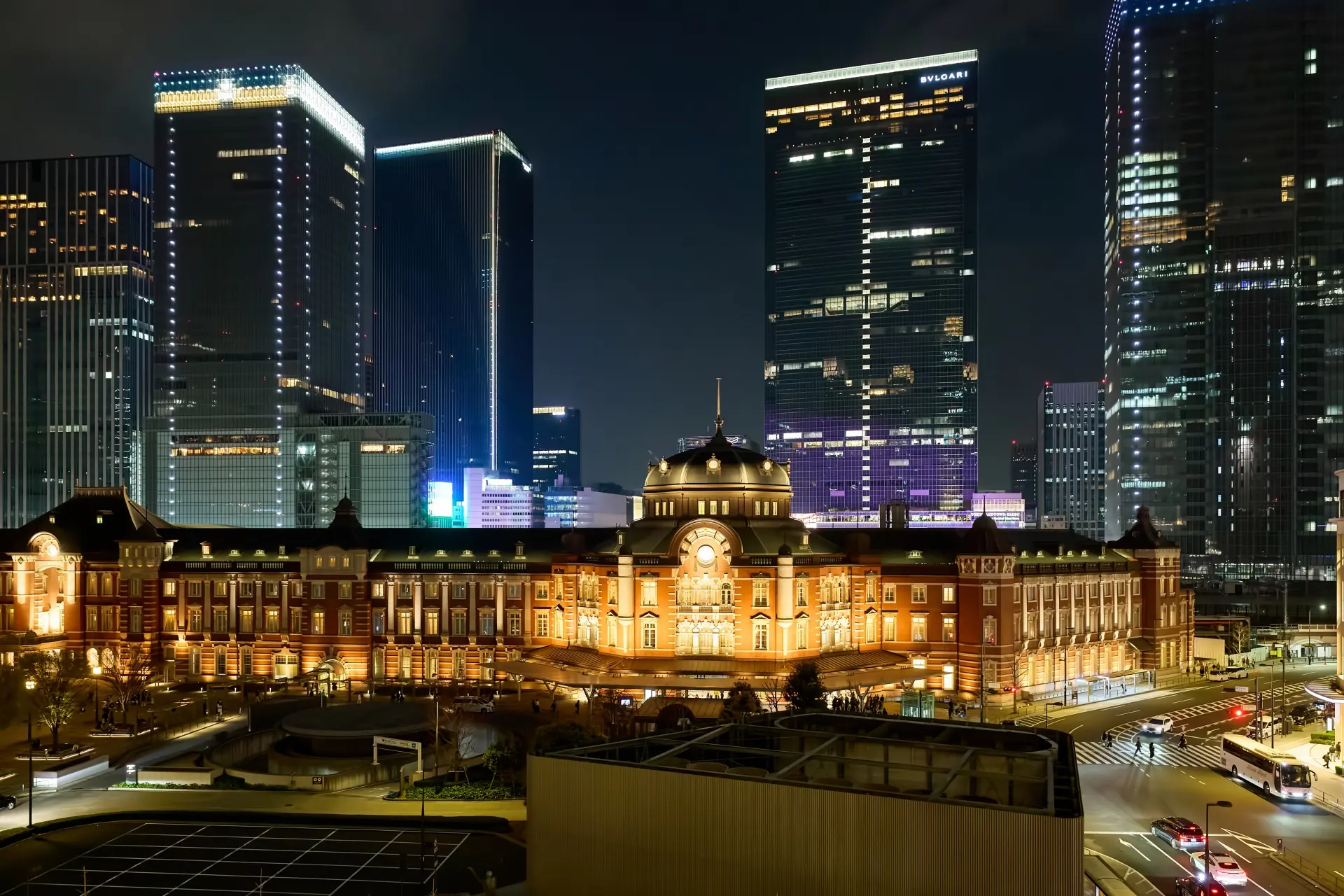
On this page
Most "Best Tokyo Honeymoon Hotels" lists are either OTA scrape-ups (30+ hotels sorted by review count, with no real curation) or travel-agency pages designed to push you into a packaged tour. This guide is a 10-hotel curation built specifically for couples planning a honeymoon — including the three new luxury openings most lists still miss (Bulgari Hotel Tokyo opened 2023, Janu Tokyo opened 2024, and the redeveloped Azabudai Hills district). Each hotel is presented with the same template — room to book, dining & spa, who should book — so you can compare directly. Prices reflect 2026 listings; rates fluctuate ±20–40% by season.
The best honeymoon hotels in Tokyo for 2026 combine iconic Japanese hospitality with five-star international standards, and the strongest field of new openings the city has seen in a decade. We've curated 10 properties spanning $400 to $2,700+ per night, across four prime neighborhoods, with deliberate variety in vibe — minimalist Aman, Italian Bulgari, tower-ryokan HOSHINOYA, garden-retreat Chinzanso. Whether you want sweeping Mt. Fuji views from the 53rd floor, a Michelin-starred Niko Romito dinner, or a contemplative kaiseki-and-onsen stay, this guide names the right room to book and the right neighborhood for the trip you actually want.
If this is your first time planning Japan, our first-time Japan guide covers the broader itinerary fundamentals; for an overview of how Tokyo's hotels compare to ryokan and other Japanese accommodation styles, see our accommodation types guide.
1. How We Chose These Tokyo Honeymoon Hotels
Our selection criteria: a 50 m² minimum room size as the baseline for couples (most listed start at 60–70 m²), a signature spa or onsen, dining quality at Michelin-listed or otherwise notable kitchens, proven honeymoon-traveler reviews, and deliberate geographic spread across Tokyo's four prime hotel districts.
We are based in Japan and write about hotels as one of several travel categories, with no commercial relationship to any of the properties listed. The selection mixes three categories: three 2023–2024 luxury openings (Aman, Bulgari, Janu) that most existing English-language lists still under-cover; four established legacy luxury hotels (Park Hyatt, Mandarin Oriental, Ritz-Carlton, Palace) with multi-decade track records; and three properties offering a uniquely Japanese honeymoon experience (HOSHINOYA, Four Seasons Marunouchi's intimate 57-room boutique format, and Hotel Chinzanso's seven-hectare garden). All prices in this guide are rough 2026 reference ranges based on publicly available listings and typical luxury-hotel pricing patterns. Actual rates vary by room type, exchange rate, booking channel, taxes, service charges, and event periods; cherry blossom and year-end periods routinely add 20–40%. Always confirm current rates and inclusions on the hotel's official site before booking.
2. Quick Comparison: 10 Best Tokyo Honeymoon Hotels at a Glance
Compare at a glance — sortable details follow in the individual sections below.
| # | Hotel | Neighborhood | Price/night (USD) | Best for |
|---|---|---|---|---|
| 1 | Aman Tokyo | Otemachi | $1,700–$2,700+ | Minimalist luxury seekers |
| 2 | Bulgari Hotel Tokyo | Yaesu | $1,300–$2,500+ | Italian-glamour couples |
| 3 | Janu Tokyo | Azabudai Hills | $900–$1,400+ | Younger couples (30s) |
| 4 | Park Hyatt Tokyo | Shinjuku | $700–$1,200 | Iconic cinematic romance |
| 5 | HOSHINOYA Tokyo | Otemachi | $1,100–$1,800 | Tower-ryokan immersion |
| 6 | Hotel Chinzanso Tokyo | Mejiro | $400–$900 | Garden retreat in the city |
| 7 | Four Seasons Marunouchi | Marunouchi | $900–$1,500 | Boutique intimacy |
| 8 | Palace Hotel Tokyo | Marunouchi | $800–$1,400 | Imperial Palace views |
| 9 | Mandarin Oriental Tokyo | Nihonbashi | $900–$1,600 | Foodie couples |
| 10 | The Ritz-Carlton Tokyo | Roppongi | $900–$1,500 | Skyline & Fuji views |
Ten strong options can still be too many when every hotel solves a different kind of honeymoon. Use the matcher below to narrow the list by your budget and priority, then carry your dates into a live search for each of the three best fits.
If you're traveling all the way to Japan for your honeymoon, our strongest single piece of advice is this: include at least one night at HOSHINOYA Tokyo or Hotel Chinzanso Tokyo, even if your main base is one of the high-rise international hotels. HOSHINOYA gives you a working tower-format ryokan with kaiseki dinner and natural-spring onsen in the heart of Otemachi; Chinzanso gives you a seven-hectare classical Japanese garden with a centuries-old three-story pagoda (Entsukaku, with origins in the early 15th century, relocated to the garden grounds). Neither experience exists anywhere else in the world, and neither is something you can fully understand from photos alone. The cleanest pattern: two or three nights at the international luxury hotel, then one or two nights at the uniquely-Japanese property — a two-hotel honeymoon that captures both sides of modern Tokyo.
3. The 10 Best Honeymoon Hotels in Tokyo
1. Aman Tokyo — Best for Minimalist Luxury
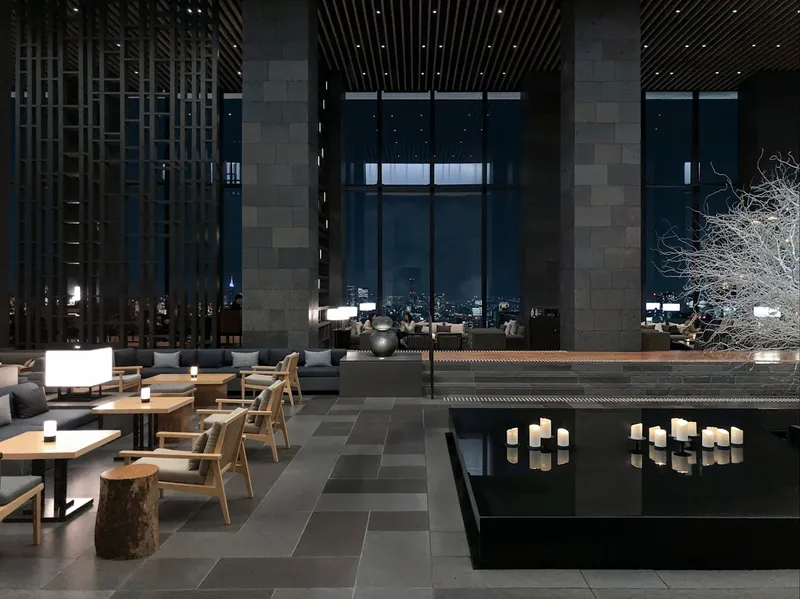
The honeymoon benchmark in Tokyo, full stop. Aman Tokyo opened in 2014 on the top six floors of Otemachi Tower (33rd to 38th), and remains the city's quietest five-star sanctuary for couples who want stillness over spectacle. The 84 rooms and suites — all over 71 m² — are designed in deliberate restraint: washi paper walls, hinoki-cypress soaking tubs at the window line, and views that stretch over the Imperial Palace gardens to Mt. Fuji on clear days.
The room to book: the Deluxe Premier Room (71 m², from $1,700/night) offers Imperial Palace–facing views and the signature hinoki tub; the Premier Suite (97 m²) and Aman Suite (157 m²) add separate living rooms and corner exposure. For a once-in-a-lifetime honeymoon splurge, the Aman Suite is the room.
Dining & spa highlights: Arva (Aman's signature Italian) and Musashi by Aman (sushi counter, ten seats) anchor the dining program. The Aman Spa, spanning floors 33–34, is 2,500 m² with a 30-meter indoor pool flanked by floor-to-ceiling onsen-style stone — among the largest and most photographed hotel spas in central Tokyo. The "Aman Romance" add-on packages private spa, in-room dining, and a couples' bath ritual; availability and details vary by season, so confirm at booking.
Practical info: nearest station is Otemachi (Marunouchi/Tozai/Chiyoda/Mita/Hanzomon lines). Check-in 3 pm, check-out 12 pm. Aman periodically publishes long-stay incentives directly on the brand's site — worth checking before defaulting to an OTA.
Who should book this: couples who prioritize quiet, space, and Japanese craftsmanship over partying or scene. Less ideal for couples who want a buzzy lobby and a nightlife base — Otemachi after 7 pm is a financial-district quiet zone, by design.
 #1 Pick · Ultra-Luxury
Aman Tokyo — Otemachi Sanctuary
Why it may fit
The honeymoon benchmark in Tokyo. 71 m² minimum rooms, hinoki tubs at the window, Imperial Palace and Mt. Fuji views from the 33rd–38th floors of Otemachi Tower. Best for couples who want minimalist Japanese luxury.
Before booking
Check the live price, availability, eligibility, and terms before paying.
2. Bulgari Hotel Tokyo — Best for Italian Glamour
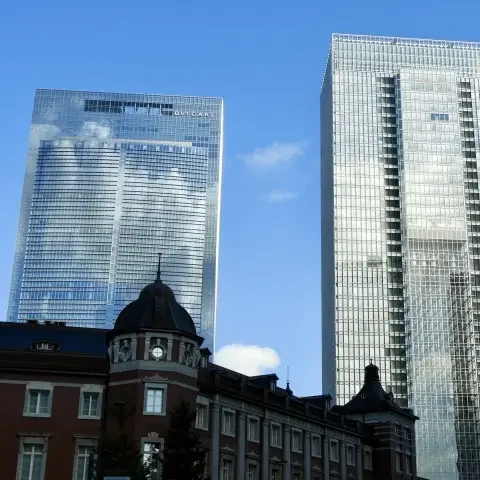
Tokyo's most glamorous 2023 opening. Bulgari Hotel Tokyo occupies the 40th to 45th floors of the Tokyo Midtown Yaesu skyscraper, directly above Tokyo Station's Yaesu exit. With 98 rooms and suites, it's the eighth and largest property in the Bulgari Hotels collection, and it lands a confident punch of Italian design — bold marbles, dramatic lighting, and a 1,300 m² spa wrapped around a 25-meter indoor pool overlooking the city.
The room to book: the Deluxe Premium Room (60 m², from $1,300/night) gives you the full Bulgari design language plus a city-facing window; the Bulgari Suite (400 m², top-floor corner) is the showpiece for milestone honeymoons. Mid-tier couples should consider the Bulgari Premium Suite (90 m²) for the upgraded marble bath without the full suite price.
Dining & spa highlights: Il Ristorante – Niko Romito (the chef's tenth Bulgari outpost) holds Michelin recognition for contemporary Italian; the dramatic Bulgari Bar is the city's most photographed cocktail destination of 2024–2025. The spa's signature "Roman Bath" couples ritual is the property's strongest honeymoon-specific offering.
Practical info: directly connected to Tokyo Station (Yaesu side) by underground passage, with the Shinkansen entry hall a five-minute walk — the single best base for couples planning a Kyoto leg by bullet train. Check-in 3 pm, check-out 12 pm.
Who should book this: couples who want statement design, vibrant dining, and the easiest Shinkansen access of any luxury hotel in Tokyo. Less ideal for couples seeking quiet Japanese restraint — the design language here is loudly Italian by intent.
 2023 Opening · Italian Luxury
Bulgari Hotel Tokyo — Yaesu (Tokyo Station)
Why it may fit
The city's most glamorous 2023 opening. Floors 40-45 of Tokyo Midtown Yaesu, directly above Tokyo Station. Michelin-recognized Niko Romito Italian, 25-meter indoor pool, and the easiest Shinkansen access in Tokyo.
Before booking
Check the live price, availability, eligibility, and terms before paying.
3. Janu Tokyo — Best for Younger Couples
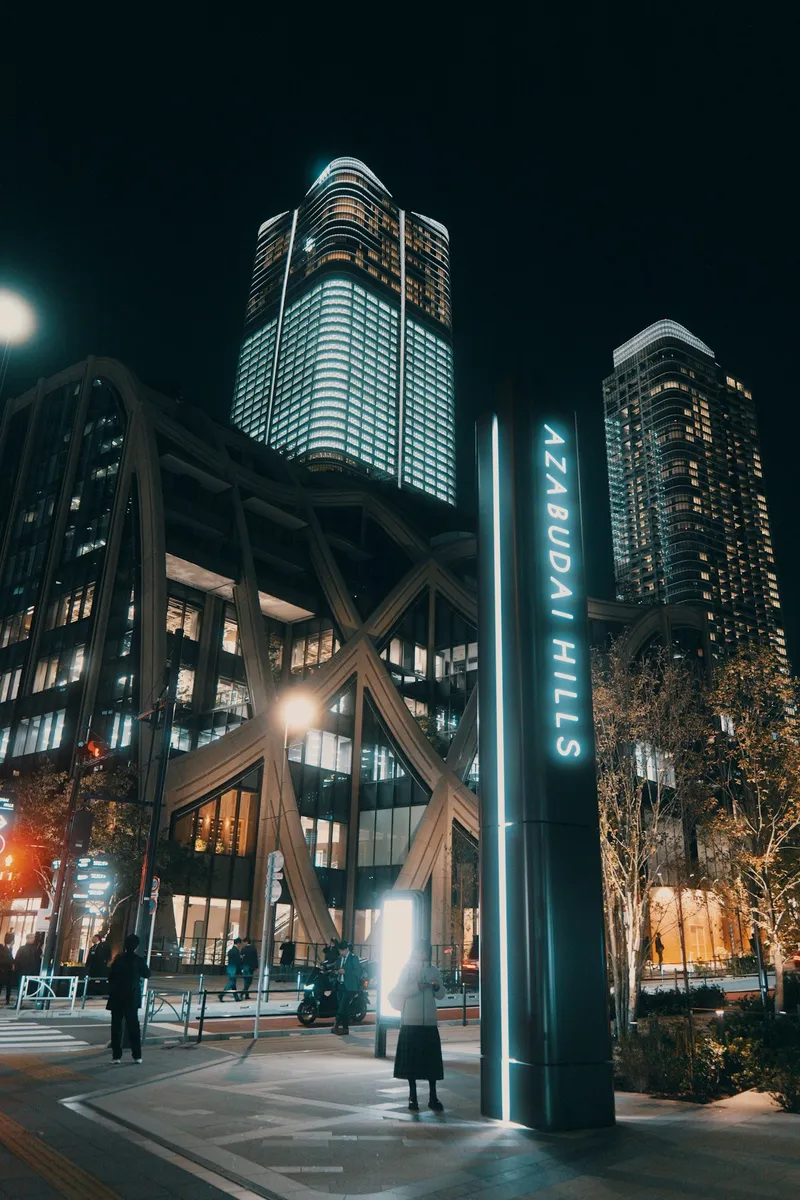
Aman's younger sister, designed for the social honeymoon. Janu Tokyo opened in March 2024 as the first property of Aman's sister brand — same parent group, intentionally different mood. It occupies the lower floors of the Azabudai Hills tower, the largest urban redevelopment to open in Tokyo in a generation, and centers the experience on what may be the city's most ambitious wellness offering: a 4,000 m² spa-and-fitness complex spanning four floors, with Japanese-style bathing facilities, hammam, sound bath, pilates studio, and a 25-meter pool.
The room to book: the Deluxe Room (55 m²) is the entry point, but the Garden Room is the better honeymoon pick — direct access onto landscaped outdoor gardens, a rarity in central Tokyo. The two-bedroom Janu Suite is a separate consideration for couples traveling with parents on the trip.
Dining & spa highlights: eight restaurants and bars on the property, including Sumi (a 13-seat sumibiyaki charcoal-grill omakase counter), Hu Jing (Cantonese), and Janu Mercato (an all-day Italian in the lobby with open kitchens). The wellness floor's couples' private bathing suites can be booked by the hour — a private spa-style bathing ritual without leaving central Tokyo, at a fraction of HOSHINOYA's rate.
Practical info: nearest stations are Kamiyacho (Hibiya Line) and Roppongi-Itchome (Namboku Line). Directly inside Azabudai Hills — a complex worth a full afternoon on its own. Check-in 3 pm, check-out 12 pm.
Who should book this: couples in their 30s and early 40s who want luxury without the formality, an enormous wellness program, and a vibrant base for Tokyo nightlife. Less ideal for couples seeking pure stillness — Janu is intentionally social by design.
 2024 Opening · Best for 30s Couples
Janu Tokyo — Azabudai Hills
Why it may fit
Aman's younger sister brand, opened March 2024. 4,000 m² spa-and-fitness complex across four floors with private spa houses, eight restaurants, and direct access to Azabudai Hills — Tokyo's largest new urban redevelopment in a generation.
Before booking
Check the live price, availability, eligibility, and terms before paying.
4. Park Hyatt Tokyo — Best for Iconic Cinematic Romance
The "Lost in Translation" hotel — and freshly reopened. Park Hyatt Tokyo occupies floors 39 to 52 of Tange Kenzo's Shinjuku Park Tower, opened in 1994 and reopened on December 9, 2025 after a 19-month full-property renovation — the largest in the hotel's history, marking its 30th anniversary. Over two decades after the Sofia Coppola film, the New York Bar still serves the same cocktails in the same setting, and the hotel remains a top-tier honeymoon pick for couples who want Tokyo's most cinematic skyline view from their room.
The room to book: the entry-level Park Room is the practical honeymoon pick (rates from ~$700/night); a west-facing room category is the upgrade to target — direct line-of-sight to Mt. Fuji on clear winter mornings. A corner suite is the property's signature for milestone trips. Note: Park Hyatt's room categories and dimensions were refreshed with the December 2025 reopening, so confirm current names and sizes on the official site at booking.
Dining & spa highlights: the 52nd-floor New York Grill remains the iconic dinner; Kozue (40th floor, kaiseki) is the quieter, more romantic alternative. Club On The Park spa offers a 20-meter pool under a curved skylight at the top of the tower — one of Tokyo's most photographed spa pools.
Practical info: nearest station is Shinjuku (12-minute walk) or Tochomae (Oedo Line, 8-minute walk). The hotel runs a complimentary shuttle to Shinjuku Station — check the current schedule directly with the hotel before arrival. Check-in 3 pm, check-out 12 pm.
Who should book this: couples who want the iconic Tokyo skyline experience and don't mind paying mid-tier prices for a legacy property over a brand-new opening. Less ideal for couples who specifically want walking-distance access to historic Tokyo — Shinjuku is firmly modern.
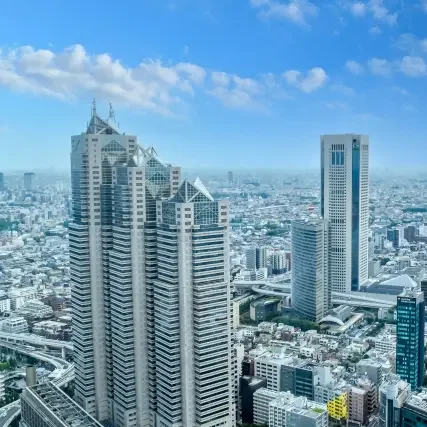 Iconic Legacy
Park Hyatt Tokyo — Shinjuku Skyline
Why it may fit
The 'Lost in Translation' hotel, still earning the reputation. Floors 39–52 of Shinjuku Park Tower, west-facing rooms with Mt. Fuji views on clear days, and the New York Bar that still serves the cocktail you came for.
Before booking
Check the live price, availability, eligibility, and terms before paying.
5. HOSHINOYA Tokyo — Best for Tower-Ryokan Experience
A working ryokan inside a 17-story tower in the financial district. HOSHINOYA Tokyo opened in 2016 as the flagship of Hoshino Resorts' urban-ryokan format — guests slip off their shoes at the entrance and wear them no more until check-out, tatami floors run throughout the rooms, and a natural hot-spring onsen on the 17th floor draws bath water from 1,500 meters below the building. There is nothing else like it in Tokyo.
The room to book: the Sakura room (41 m², the entry tier from ~$1,100/night) is the standard double or twin layout; the Yuri room (41 m², the same size but corner exposure with a King-bed configuration) is the upgrade for couples who specifically want corner views and a King bed. The largest category is the Kiku room (83 m², corner, sleeps up to three) for honeymoon couples who want significantly more space. Check whether kaiseki dinner and breakfast are included with your specific rate plan — meal inclusion varies by booking channel and season.
Dining & spa highlights: the underground Nippon Cuisine restaurant serves a French-influenced kaiseki dinner by Chef Hamada (typically reserved for hotel guests). The 17th-floor onsen — open to the sky through a slatted skylight — is reserved for hotel guests only and offers one of the few authentic hot-spring soaks in central Tokyo. Morning tai chi sessions and evening tea-ceremony classes round out the cultural programming.
Practical info: nearest station is Otemachi (any of five lines). Five-minute walk to the Imperial Palace east garden. Check-in 3 pm, check-out 12 pm. Onsen access is included for staying guests; dinner and breakfast inclusion varies by rate plan and booking channel.
Who should book this: couples who want a fully immersive Japanese ryokan honeymoon without leaving the city, and welcome the all-tatami aesthetic (with Western-style beds placed on the tatami floor) and ryokan service patterns. Less ideal for couples expecting a Western-style luxury hotel — this is closer to a Hakone ryokan in tower form.
 Tower Ryokan · Cultural Immersion
HOSHINOYA Tokyo — Tower Ryokan in Otemachi
Why it may fit
A working ryokan inside a 17-story tower in the financial district. Tatami throughout, a French-influenced kaiseki dinner program, and a 17th-floor open-air onsen with natural hot-spring water drawn from 1,500 meters below the building.
Before booking
Check the live price, availability, eligibility, and terms before paying.
6. Hotel Chinzanso Tokyo — Best for Garden Retreat in the City
A seven-hectare garden inside a city block — and the other Japan-only honeymoon experience on this list. Hotel Chinzanso Tokyo, originally founded in 1952 in Bunkyo's Mejiro district, surrounds itself with a seven-hectare garden that includes a centuries-old three-story pagoda (Entsukaku, with origins in the early 15th century, relocated to the garden grounds), a cascade waterfall, and the cherished evening sea-of-clouds light effect that draws Instagram crowds. The hotel building itself is a Western-style tower, but the garden is the reason to book — and the reason we pair it with HOSHINOYA as the two stays we recommend every honeymoon couple include in some form.
The room to book: the Deluxe Garden View Room (44 m², from $400/night — significantly cheaper than the rest of this list) is the entry honeymoon pick; the Imperial Floor rooms (floors 9–10, 50 m², with lounge access) are the splurge tier and still well under $1,000/night. The Chinzanso Suite (Tower Penthouse, 130 m²) is the property's largest, with a panoramic garden view.
Dining & spa highlights: Il Teatro (Italian, glass-walled kitchen overlooking the garden) and Mokushundo (traditional Japanese, in a dedicated wooden building on the property) are the two dinner picks. The spa offers a 20-meter pool and a private hinoki-cypress bath suite bookable by the hour — the most affordable couples-bath option on this list.
Practical info: nearest stations are Edogawabashi (Yurakucho Line, 10-minute walk) and Mejiro (Yamanote Line, with the hotel's complimentary shuttle). Check-in 3 pm, check-out 12 pm.
Who should book this: couples who want a garden-immersive Tokyo honeymoon at the most accessible price point on this list, ideal as a one- or two-night stay paired with an international luxury hotel as the main base. Less ideal for couples who need to be on the Yamanote Line directly — Chinzanso's location is the trade-off for the garden setting.
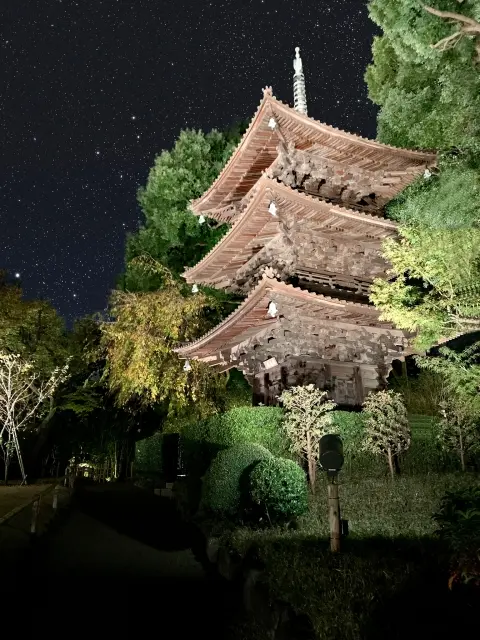 Editor's Pick · Garden Setting
Hotel Chinzanso Tokyo — Mejiro Garden Retreat
Why it may fit
A seven-hectare garden inside a city block, with a centuries-old three-story pagoda (Entsukaku, with origins in the early 15th century, relocated to the garden grounds) and cascade waterfall. The most affordable hotel on this list ($400–$900/night) and the strongest pick for couples who want greenery without leaving Tokyo.
Before booking
Check the live price, availability, eligibility, and terms before paying.
7. Four Seasons Hotel Tokyo at Marunouchi — Best Boutique Luxury
The 57-room boutique alternative. Four Seasons Marunouchi is the smallest five-star hotel in central Tokyo, occupying floors 3 to 7 of the Pacific Century Place building directly attached to Tokyo Station's Yaesu side. The intimacy is the entire point — staff often know your name by the second day, the lobby is so small you can cross it in five steps, and the experience is closer to a refined city residence than a tower-format hotel.
The room to book: the Premier Park View Room (50 m², from $900/night) is the entry-level honeymoon pick; the Imperial Suite (108 m²) and Presidential Suite (158 m²) are the splurge tiers. Worth noting: this is the smaller of Four Seasons' two Tokyo properties — Four Seasons Tokyo at Otemachi (opened 2020, a separate hotel) is the larger high-rise sister, with different views and a different vibe.
Dining & spa highlights: SÉZANNE, on the 7th floor of Four Seasons Marunouchi, is the property's marquee restaurant and one of Tokyo's most acclaimed French kitchens — with top-tier Michelin recognition and a regular presence on Asia's 50 Best Restaurants. MAISON MARUNOUCHI is the more relaxed alternative, a bistro-style room overlooking the Tokyo Station area. The spa is small but the in-room couples' massage service is excellent and a hallmark of the boutique-scale operation.
Practical info: directly connected to Tokyo Station via the Yaesu underground concourse — a one-minute walk from the Shinkansen entry hall. Check-in 3 pm, check-out 12 pm.
Who should book this: couples who specifically prefer boutique-scale intimacy over tower-format scale, and want the easiest possible Shinkansen access to Kyoto. Less ideal for couples who want a buzzy lobby and broad dining choice — the property is intentionally compact.
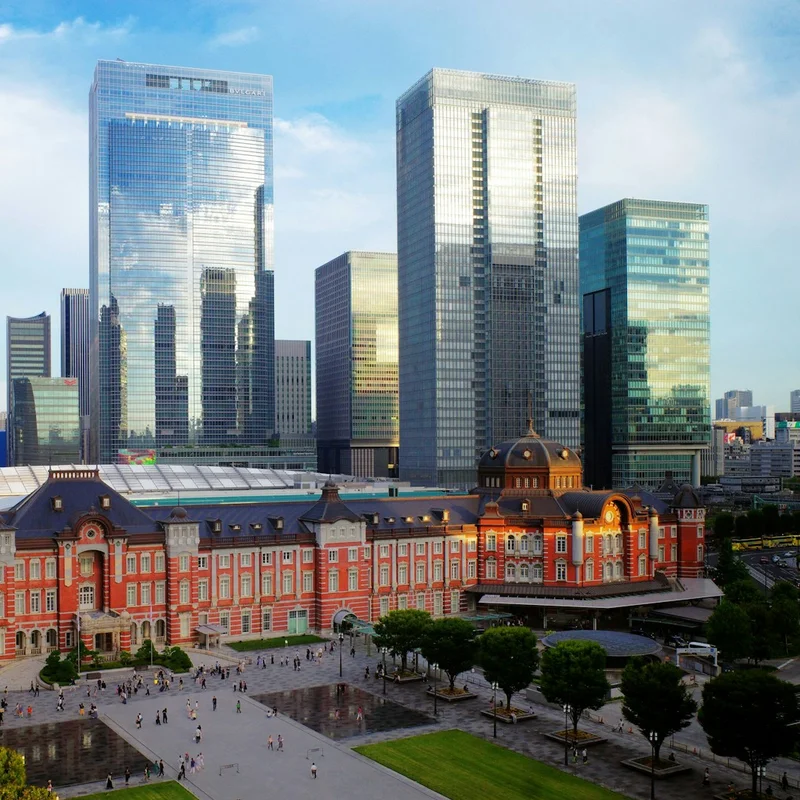 57 Rooms · Boutique Luxury
Four Seasons Hotel Tokyo at Marunouchi
Why it may fit
The smallest five-star hotel in central Tokyo — 57 rooms, directly attached to Tokyo Station's Yaesu side. The intimacy is the point: staff know your name by day two, and the Shinkansen entry hall is a one-minute walk away.
Before booking
Check the live price, availability, eligibility, and terms before paying.
8. Palace Hotel Tokyo — Best for Imperial Palace Views
The Japanese-owned grand hotel. Palace Hotel Tokyo sits directly across the moat from the Imperial Palace's east garden, with floor-to-ceiling palace views from most of its 290 rooms. The current building reopened in 2012 as a complete reconstruction of the original 1961 hotel, and it remains one of the few luxury hotels in Tokyo owned by a Japanese company — a quiet but meaningful distinction in service style and seasonal programming.
The room to book: the Premier Balcony Room (53 m², from $800/night) is the signature — a private balcony directly facing the palace moat, rare in central Tokyo and a defining honeymoon-photo opportunity. The Palace Club rooms (floors 10–17) include lounge access with breakfast, afternoon tea, and evening canapés — often the better value over a standalone breakfast booking.
Dining & spa highlights: Esterre (sixth floor, Alain Ducasse, Michelin-starred French) is the marquee dining; Wadakura (Japanese, with view of the Imperial Palace garden) is the more romantic choice for couples. The Evian Spa (basement) is one of only two Evian-branded spas in Asia and centers around a 20-meter pool.
Practical info: nearest stations are Otemachi (3-minute walk) and Tokyo Station (10-minute walk). Check-in 3 pm, check-out 12 pm. The hotel offers complimentary courtesy car service to nearby destinations.
Who should book this: couples who want the most direct Imperial Palace view in Tokyo, a private balcony, and Japanese-owned hospitality. Less ideal for couples who specifically want a new-build hotel — the property is now over a decade old since its 2012 reopening.
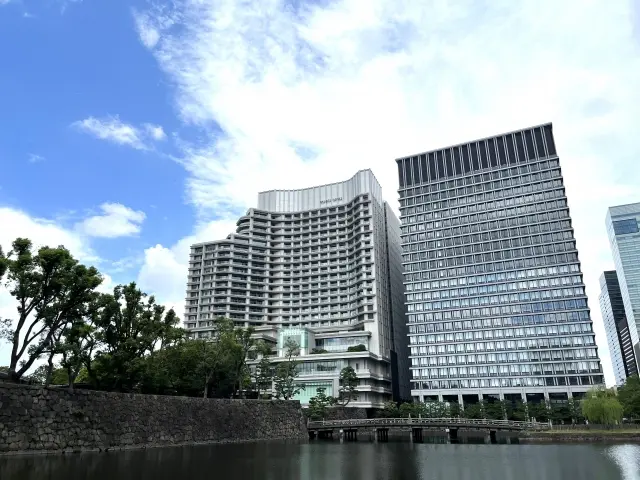 Japanese-Owned · Palace Views
Palace Hotel Tokyo — Imperial Palace Views
Why it may fit
The Japanese-owned grand hotel directly across the moat from the Imperial Palace. Most rooms have floor-to-ceiling palace views, and the Premier Balcony Rooms offer a private balcony — a defining honeymoon-photo opportunity in central Tokyo.
Before booking
Check the live price, availability, eligibility, and terms before paying.
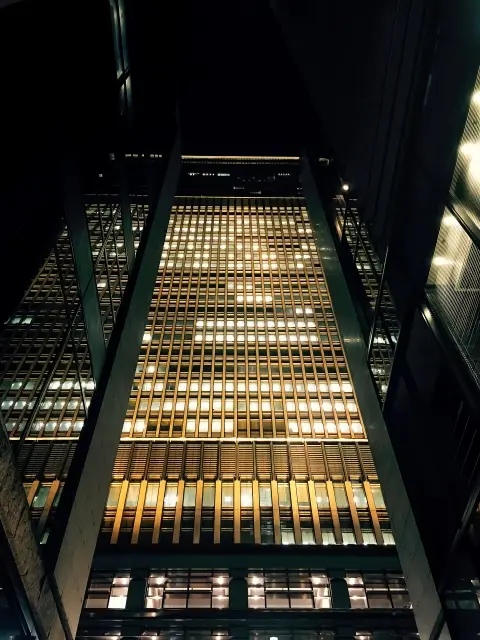
9. Mandarin Oriental Tokyo — Best for Foodie Couples
Tokyo's dining-density hotel. Mandarin Oriental Tokyo occupies floors 30 to 38 of the Nihonbashi Mitsui Tower, with one of the highest concentrations of high-end restaurants of any hotel in the world — the property has run a multiple-Michelin-listed dining program continuously since opening in 2005, with the lineup evolving over the years. For honeymooning couples who want their hotel to be the dinner destination as well as the bed, this is the Tokyo answer.
The room to book: the Deluxe Mandarin Room (50 m², from $900/night) is the entry tier; the Premier Room (55 m², floor-to-ceiling east view) catches sunrise over Tokyo Bay and Skytree. The 200 m²+ corner suites on the 38th floor are the property's most spectacular rooms — direct line of sight to Mt. Fuji on winter mornings.
Dining & spa highlights: Mandarin Oriental Tokyo runs one of the densest in-house dining programs of any hotel in the world — Sushi Shin by Miyakawa, Tapas Molecular Bar, Sense (Cantonese), K'shiki (international), and The Pizza Bar on 38th among them. The combined offering makes a strong case for treating the hotel as a dining destination as much as a place to sleep. The 37th-floor spa runs an indoor pool with dedicated couples' treatment suites — the dedicated honeymoon massage menu is among the city's best.
Practical info: nearest station is Mitsukoshimae (Ginza/Hanzomon lines), with Tokyo Station an eight-minute walk. Check-in 3 pm, check-out 12 pm.
Who should book this: couples for whom dining is the trip's spine, who want to make multiple in-house restaurants the centerpiece of the stay. Less ideal for couples on a tighter food budget — top-tier dinners at the property's marquee restaurants are firmly in the high-end pricing band.
 Multiple Michelin Stars
Mandarin Oriental Tokyo — Nihonbashi
Why it may fit
Tokyo's dining-density hotel, with Sushi Shin by Miyakawa, Tapas Molecular Bar, Sense, K'shiki, and The Pizza Bar on 38th all in-house. Floors 30–38 of Nihonbashi Mitsui Tower, with Mt. Fuji visible from the highest west-facing rooms.
Before booking
Check the live price, availability, eligibility, and terms before paying.
10. The Ritz-Carlton Tokyo — Best for Skyline Romance
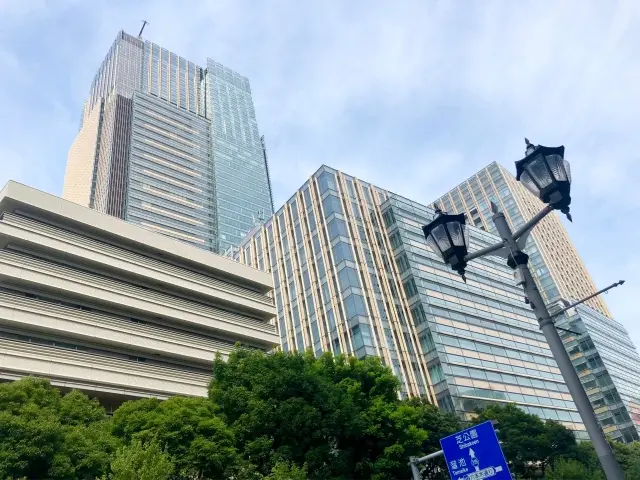
Tokyo's highest-floored five-star hotel. Ritz-Carlton Tokyo occupies floors 45 to 53 of Tokyo Midtown's Midtown Tower in Roppongi — the highest hotel rooms in central Tokyo by a comfortable margin, and the single most reliable place in the city to wake up to Mt. Fuji on a clear winter morning. Opened in 2007, the hotel has matured into a classic of the new-Tokyo skyline era.
The room to book: the Deluxe Room (52 m², from $900/night) is the entry tier; the Club Tower Suite (78 m², 53rd floor, west-facing) is the honeymoon room — Mt. Fuji from the bath, lounge access on the 53rd floor with all-day canapés and complimentary Champagne in the evening. The Ritz-Carlton Suite (300 m², full corner of the 53rd floor) is one of Tokyo's most spectacular hotel suites.
Dining & spa highlights: Héritage by Kei Kobayashi (French, 45th floor) is the marquee restaurant — overseen by Kei Kobayashi, the chef behind the three-Michelin-starred Restaurant KEI in Paris, and currently a one-Michelin-star restaurant. Hinokizaka (Japanese, kaiseki) is the property's traditional alternative on the same floor. The 46th-floor spa runs a 20-meter pool and dedicated couples' treatment suites. The afternoon tea in the lobby lounge is one of Tokyo's most-photographed.
Practical info: nearest stations are Roppongi (Hibiya/Oedo lines, direct underground connection to Tokyo Midtown) and Nogizaka. The Tokyo Midtown complex itself includes major shopping, the Suntory Museum of Art, and several other notable dining options. Check-in 3 pm, check-out 12 pm.
Who should book this: couples who want the highest-floor Mt. Fuji views in Tokyo and a vibrant Roppongi base for dining and shopping. Less ideal for couples seeking quiet — Roppongi is the city's most active nightlife district by night.
 Highest Hotel · Fuji Views
The Ritz-Carlton Tokyo — Roppongi Skyline
Why it may fit
Tokyo's highest-floored five-star hotel — floors 45–53 of Tokyo Midtown's Midtown Tower in Roppongi. The single most reliable hotel in the city to wake up to Mt. Fuji on a clear winter morning.
Before booking
Check the live price, availability, eligibility, and terms before paying.
4. How to Choose the Right Tokyo Honeymoon Hotel for You
Pick based on what matters most to you as a couple: budget, signature experience, neighborhood vibe, or specific view. The 10 hotels above are deliberately spread across all four axes so you can narrow by elimination.
If your budget tops out at $1,000/night: Hotel Chinzanso Tokyo ($400–$900) is the obvious value pick, with Park Hyatt Tokyo ($700–$1,200) as the iconic-experience alternative. Palace Hotel Tokyo's Premier Balcony Rooms ($800–$1,400) sit right at the upper edge of this range and deliver the most distinctive single feature (palace-facing private balcony) for the money.
If the signature experience is your priority: HOSHINOYA Tokyo for the tower-ryokan format with onsen and kaiseki; Mandarin Oriental Tokyo for the in-house Michelin dining program; Hotel Chinzanso Tokyo for the garden setting; Ritz-Carlton Tokyo for the highest skyline view; Aman Tokyo for the deepest spa.
If neighborhood vibe matters most: Otemachi (Aman, HOSHINOYA) is quietest, Marunouchi (Palace, Four Seasons) is refined-central, Nihonbashi (Mandarin Oriental) is the traditional-classical pocket of central Tokyo, Yaesu (Bulgari) and Roppongi (Ritz-Carlton) are the most active. Shinjuku (Park Hyatt) is the modern-iconic answer.
If you specifically want Mt. Fuji views: book a west-facing high-floor room at Aman, Ritz-Carlton, Mandarin Oriental, or Park Hyatt — clear winter mornings are the best chance, and always request "west-facing" explicitly at the time of booking. Don't forget to plan for the practical layer as well: see our Japan travel insurance guide for honeymoon-trip coverage, particularly if you're combining the city with Hakone or a Hokkaido ski extension.
5. When to Visit Tokyo for Your Honeymoon
The best months for a Tokyo honeymoon are late March to mid April (cherry blossoms) and late October to early December (autumn foliage and clear skies). May and early November are the smartest off-peak alternatives — both seasons deliver excellent weather without the cherry-blossom or year-end premium.
Cherry blossom season is the most photographed but also the most expensive — luxury hotels routinely add 30–40% to rates from March 25 through April 8, and the Imperial Palace garden walks become genuinely crowded. If cherry blossoms are essential to the honeymoon, book six months out — peak bloom dates shift each year and central Tokyo's window is usually late March to early April rather than a fixed week. For a wider safety net, combine central Tokyo spots with later-blooming districts (Shinjuku Gyoen, Mount Takao), which typically extend the season by about 10 days.
Autumn foliage (mid November through early December in central Tokyo) is the better-value peak season — comparable weather to cherry-blossom season, distinctly less crowded, and the Tokyo gardens dressed in red and gold. Rikugien Garden and Koishikawa Korakuen are the city's autumn-foliage anchors.
The seasons to avoid: mid-June through mid-July (rainy season — tsuyu — brings 70% humidity and frequent rain), mid-August (peak heat and humidity, plus Obon vacation crowds), and the week between Christmas and New Year's (the year's biggest Japanese travel surge, with luxury-hotel rates jumping 40%+ and many restaurants closing for the holiday).
6. Where to Stay in Tokyo for a Honeymoon (Best Neighborhoods)
Otemachi & Marunouchi — The Refined Imperial-Palace Heart
Anchored by the Imperial Palace, this area is Tokyo's quietest and most refined hotel district. Aman, HOSHINOYA, Palace Hotel, and Four Seasons Marunouchi all sit within a 15-minute walk of each other. Best for couples who want stillness, morning palace-garden walks, and direct access to the Shinkansen at Tokyo Station. The trade-off: evenings after 8 pm are unusually quiet (this is a business district), and dining options outside the hotels are limited.
Roppongi & Azabudai — Dining, Art, Nightlife
Anchored by Ritz-Carlton (Roppongi) and Janu Tokyo (Azabudai Hills), this is the active corner of central Tokyo — multiple Michelin restaurants per block, major art museums (Mori Art Museum, Suntory Museum, National Art Center), and the most reliable late-night dining. Best for couples whose honeymoon includes evenings out and gallery visits. The trade-off: prices for everything (dining, taxis, drinks) sit at the city's top end.
Shinjuku — Iconic Skyline, Easy Transit Hub
Park Hyatt Tokyo anchors the luxury option here, with the wider Shinjuku district offering Tokyo's most active transit hub (Shinkansen connections, plus the JR Yamanote and multiple subway lines). Best for couples who want the cinematic-Tokyo skyline experience and a base for day trips (Kamakura, Hakone, Mount Takao). The trade-off: Shinjuku Station's volume is genuinely overwhelming the first time you encounter it.
Nihonbashi — Classical-Central Pocket
Mandarin Oriental Tokyo anchors this area — a slightly more traditional pocket of central Tokyo, with the old kabuki-era merchant streets still visible in places, and the Bank of Japan and Mitsui Memorial Museum nearby. Best for couples who want central location with a more contemplative pace than Marunouchi.
7. Plan Your Tokyo Honeymoon: Next Steps
The 10 hotels above are the strongest honeymoon picks in Tokyo for 2026 — what to read next depends on where the trip is going from here.
For honeymooners combining Tokyo with a Japanese cultural-immersion experience, our Zen and wabi-sabi guide covers tea ceremony, zazen, and Koyasan temple stays — the kind of experience that pairs especially well with HOSHINOYA Tokyo or Aman Tokyo as the city anchor. For an overview of how Western hotels, ryokan, and shukubo compare as accommodation formats, our accommodation types guide handles the cross-format comparison; this guide focuses on the luxury-hotel layer specifically.
Honeymoon trips usually involve significant trip-protection considerations — particularly if you're booking 6+ months out, combining destinations, or adding pre-honeymoon flights. Our Japan travel insurance guide walks through what cover actually matters for honeymoon trips. If onsen experiences are on the wish list — and they often are for honeymoon couples — our onsen etiquette and tattoo-friendly guide covers what to know before your first soak, including which honeymoon-friendly ryokan towns are fully tattoo-open.
Phase 1 of our honeymoon series continues with detailed individual reviews of the highest-rated properties — Aman Tokyo, Park Hyatt Tokyo, and a head-to-head Bulgari vs Aman vs Janu comparison — publishing through mid-2026.
Image Credits
The following hotel card images are licensed via Unsplash (free license, attribution as a courtesy). All other images on this page are JAPANODE editorial:
- Aman Tokyo: Photo by Marek Okon on Unsplash
- Janu Tokyo: Photo by Leo Okuyama on Unsplash
- Four Seasons Hotel Tokyo at Marunouchi: Photo by Dmitrijs Tokyo on Unsplash
Make it your trip
Still planning your Japan trip?
Pick the question on your mind. Compare your options, check the details and take one more thing off your list.
How much can you fit into one week?
Connect Tokyo, a Fuji or Hakone day trip, Kyoto and Osaka with a day-by-day route, travel costs and booking advice.
Explore the 7-day route
Which eSIM fits your Japan trip?
Maps, messages, hotspot use: compare five providers by data allowance, network and plan limits before you choose.
Find my Japan eSIMWould a JR Pass save you money?
Add your train journeys and compare individual tickets with the nationwide pass. See which costs less for your route.
Calculate my rail costsFrequently Asked Questions
For most couples, Aman Tokyo is the top honeymoon pick in 2026 — a 5-star urban sanctuary occupying the top six floors of Otemachi Tower with rooms starting at 71 m² and Imperial Palace views. If Italian glamour fits your style better, Bulgari Hotel Tokyo (opened 2023) is the strongest alternative; for younger couples, Janu Tokyo at Azabudai Hills offers a more social, contemporary experience at roughly half Aman's price.
Luxury honeymoon hotels in Tokyo range from about $400 per night at the lower end (Hotel Chinzanso Tokyo) to $2,700+ per night at the top (Aman Tokyo signature suites). The mid-tier sweet spot — Park Hyatt Tokyo, Four Seasons Marunouchi, Palace Hotel Tokyo — sits between $800 and $1,500 per night for a base king room. Cherry blossom season (late March to mid April) and the year-end holidays add a 20–40% premium.
On clear days, Mt. Fuji is visible from west-facing high floors at Aman Tokyo (33rd–38th floors of Otemachi Tower), Mandarin Oriental Tokyo (37th–38th floors at Nihonbashi), The Ritz-Carlton Tokyo (45th–53rd floors in Roppongi), and Park Hyatt Tokyo (39th–52nd floors in Shinjuku). When booking, request a 'west-facing' or 'Mt. Fuji view' room — note that visibility depends on weather, and winter mornings offer the best chance.
Aman Tokyo is best for couples who want quiet, minimalist Japanese luxury and the highest room-size baseline (from 71 m²). Bulgari Hotel Tokyo is best for couples who prefer Italian glamour, bold design, and Niko Romito's Il Ristorante for contemporary Italian dining. Janu Tokyo is the choice for younger couples (30s–early 40s) who want a more social vibe, an enormous wellness floor, and a noticeably lower price point — roughly $900–$1,400 per night vs $1,300+ for Bulgari and $1,700+ for Aman.
Yes. HOSHINOYA Tokyo is a tower-format ryokan in Otemachi with full English support, a 17th-floor open-air onsen with natural hot-spring water drawn from 1,500 meters below the building, and a French-influenced kaiseki dinner program. Meal inclusion varies by rate plan and booking channel — check at time of booking. The catch: shoes-off ryokan etiquette applies from the elevator up, the rooms have a fully tatami-floor Japanese aesthetic (with Western-style beds set on the tatami), and the experience leans contemplative rather than glamorous. Best for couples who specifically want a cultural-immersion honeymoon without leaving the city.
Otemachi and Marunouchi (around the Imperial Palace) offer the quietest, most refined atmosphere — best for couples who want stillness and walking-distance access to the palace gardens. Roppongi and Azabudai are the best base for dining and nightlife. Shinjuku, anchored by Park Hyatt, suits couples who want the iconic cinematic-Tokyo experience. Nihonbashi balances central location with a slightly more traditional pace.
Many do, but specific promotion availability changes seasonally. Aman Tokyo periodically publishes 'Aman Romance'-style add-ons with private dining and spa; Hotel Chinzanso Tokyo and HOSHINOYA Tokyo both run dedicated anniversary or honeymoon plans from time to time. Most other hotels in this guide will arrange a complimentary in-room amenity (champagne, sweets, a hand-written card) when you mention the honeymoon at the time of booking — always confirm current packages on the hotel's official site and email the hotel directly after booking, not just through the OTA.
Late March to mid April for cherry blossoms and late October to early December for autumn foliage and the year's clearest air. May is also excellent — warm, dry, and significantly less crowded than the cherry-blossom window. Avoid mid-June through mid-July (rainy season), mid-August (peak heat and humidity, Obon crowds), and the week between Christmas and New Year's (year-end Japanese holiday rush and 30%+ rate premiums).
Three to four nights in Tokyo is the sweet spot for most honeymoon itineraries, leaving time to combine the city with Kyoto (three nights), Hakone (one to two nights for ryokan and Mt. Fuji), or a beach extension to Okinawa. If Tokyo is your only stop, five to six nights lets you split between two hotels — for example, two nights at Park Hyatt Tokyo for the Shinjuku skyline, then three at HOSHINOYA for the ryokan finale.
Smart casual is the baseline across all 10 hotels in this guide — collared shirt or smart top, no athletic wear, no shorts in restaurants for dinner. Michelin-starred restaurants inside these hotels (Aman, Bulgari, Mandarin Oriental, Palace) lean smart-elegant — a blazer or jacket is welcome at dinner but rarely strictly required for foreign guests. HOSHINOYA Tokyo provides yukata loungewear and encourages guests to stay in it within the property.
Written by
JAPANODE
Based in Japan, sharing real travel tips & local insights for visitors. Follow us on Instagram @thejapanode for daily Japan content.
You Might Also Like
 Itineraries
The Luxury Japan Itinerary: 10 Nights of Privacy, Access & Exceptional Stays
16 min read
 Culture
Zen & Wabi-Sabi in Japan: Tea Ceremony, Zazen, Koyasan (2026)
20 min read
 Culture
Japan Onsen Tattoo Rules: Etiquette & Where to Bathe (2026)
24 min read
 Planning
Best Travel Insurance for Japan? 5 Options Compared (2026)
16 min read
 Planning
Japan Accommodation Types Explained: Hotels, Ryokan, Capsule Hotels & More
16 min read
 Planning
First Time in Japan: 15 Things You Need to Know Before You Go
19 min read