On this page
Yes, you can visit Hiroshima and Miyajima in one day if you focus on the Peace Memorial area, Itsukushima Shrine and the island's waterfront. A guided tour suits travelers who want the transport and sightseeing organized. Choose an independent visit for control over your time, or stay on Miyajima if the illuminated torii and a slower morning are part of the trip you want.
I've visited Miyajima several times, though not recently, and it still feels like a special place to me. When I think of the island, I think of the shrine, deer, momiji manju, wooden rice paddles and grilled oysters, with the ropeway as another reason to spend longer. Those familiar pleasures deserve some breathing room in an itinerary.
I have not taken the tour featured here. The tour and accommodation suggestions are based on published information checked on October 7, 2026, rather than a personal tour or hotel review.
Some booking links in this guide are affiliate links. JAPANODE may earn a commission if you book through them, at no extra cost to you.
Can you visit Hiroshima and Miyajima in one day?
Think of a combined visit as an introduction to both places. Give Hiroshima's Peace Memorial area a meaningful part of the day, then use the island portion for the shrine, a waterfront walk and a few stops in town. Mount Misen, an open-ended museum visit and time waiting for a particular tide make a much more demanding plan.
The starting point matters. A day beginning in Hiroshima is different from a day beginning at your hotel in Kyoto or Osaka. Add the journey to Hiroshima, station transfers and your return trip separately. If you are already fitting several cities into a week, adding another destination should not mean squeezing every part of it into the shortest possible stop.
Before choosing, decide what you would most regret rushing: the museum, the island's scenery, or simply the chance to explore without a schedule. That answer is more useful than trying to tick off every landmark.
Guided tour or DIY: which fits your trip?
| Your priority | A good starting point | The trade-off |
|---|---|---|
| An organized day with English-language explanation | The guided tour below | You follow the group's pace |
| Lower spending and control over each stop | Independent travel | You arrange transport and admission |
| A long museum visit | Two days, with Hiroshima given its own time | Another day in the itinerary |
| Mount Misen, night views or photography around the tide | Miyajima overnight | Accommodation adds to the budget |
The case for a tour is strongest when planning several connections feels like work you would rather hand over. Its value includes the guide and organization, so comparing its price only with a ferry ticket misses much of what you are buying. At the same time, a tour is an optional convenience: independent travel is a reasonable choice if you are comfortable navigating stations and watching opening times.
For a budget-led decision, compare the full tour quote with your own transport, admission and meal costs. For a time-led decision, compare the activities that actually fit. An inexpensive day that leaves out your main reason for visiting is not necessarily the best use of the trip.
The Hiroshima and Miyajima tour: what you get
The featured Hiroshima & Miyajima UNESCO Sites Day Tour, operated by Japan Panoramic Tours, combines the Peace Memorial area, Itsukushima Shrine, Daisho-in and island free time. The operator's itinerary describes an approximately eight-hour trip from Hiroshima Station, returning there afterward.
Included arrangements cover an English-speaking guide, coach transport, the return ferry and museum and shrine admission. Lunch depends on the option selected. Getting to Hiroshima is a separate booking. Check your date's final price and cancellation terms on the booking page.
Who should book it, and who should choose a different plan?
Choose this option if your priority is to experience both places with help on the history and connections. Choose DIY or two days if you want to linger whenever something catches your attention. About one hour is scheduled inside the museum, with independent viewing time; that may not suit someone who wants to read the exhibits extensively.
The listing marks the tour unsuitable for wheelchair users and does not offer vegan, halal, gluten-free or allergy-free lunches. Anyone with access or dietary requirements should confirm suitability before paying. Admission restrictions can also lead to an itinerary change; museum entry is not unconditional.
Hiroshima & Miyajima UNESCO Sites Day Tour
English-guided sightseeing from Hiroshima Station, with coach transfers, the return ferry and listed admissions. Lunch depends on the selected option.
Best for
Travelers who want English-language context and coordinated transport in one day.
Before booking
A fixed pace, with about one hour scheduled in the Peace Memorial Museum. Travel to Hiroshima and Mount Misen are not included.
Live price & availability
Powered by GetYourGuide · we may earn a commission at no extra cost to you. Check dates and lunch options
What fits into the day?
Hiroshima Peace Memorial Park and Museum
The Atomic Bomb Dome is the preserved ruin of a building near the hypocenter of the atomic bombing on August 6, 1945. UNESCO recognizes it as a World Heritage Site for its testimony to the destruction and its significance for peace. The surrounding memorial area and the museum provide different ways to engage with that history.
Treat this part of the visit as time for remembrance and learning. The Atomic Bomb Dome, memorials and museum should not become a race between photo stops. Give yourself permission to slow down, even if that means removing something else from your independent itinerary.
For DIY planning, I would protect a generous morning for the Peace Memorial area instead of assigning the museum whatever time is left before a ferry. This is a planning suggestion, not a claim that a particular number of hours will be right for everyone. If you expect the museum to be the main focus of your visit, separating Hiroshima and Miyajima across two days gives you more control.
The museum's official visitor information recommends an advance web ticket and requires one during its extended early and late entry periods. Even a ticket with a time slot can involve waiting when the museum is crowded. Check the day's opening and entry arrangements before settling the rest of your route. If admission is already included in your tour, follow its instructions before buying another ticket.
Miyajima: the shrine, Daisho-in and time to explore
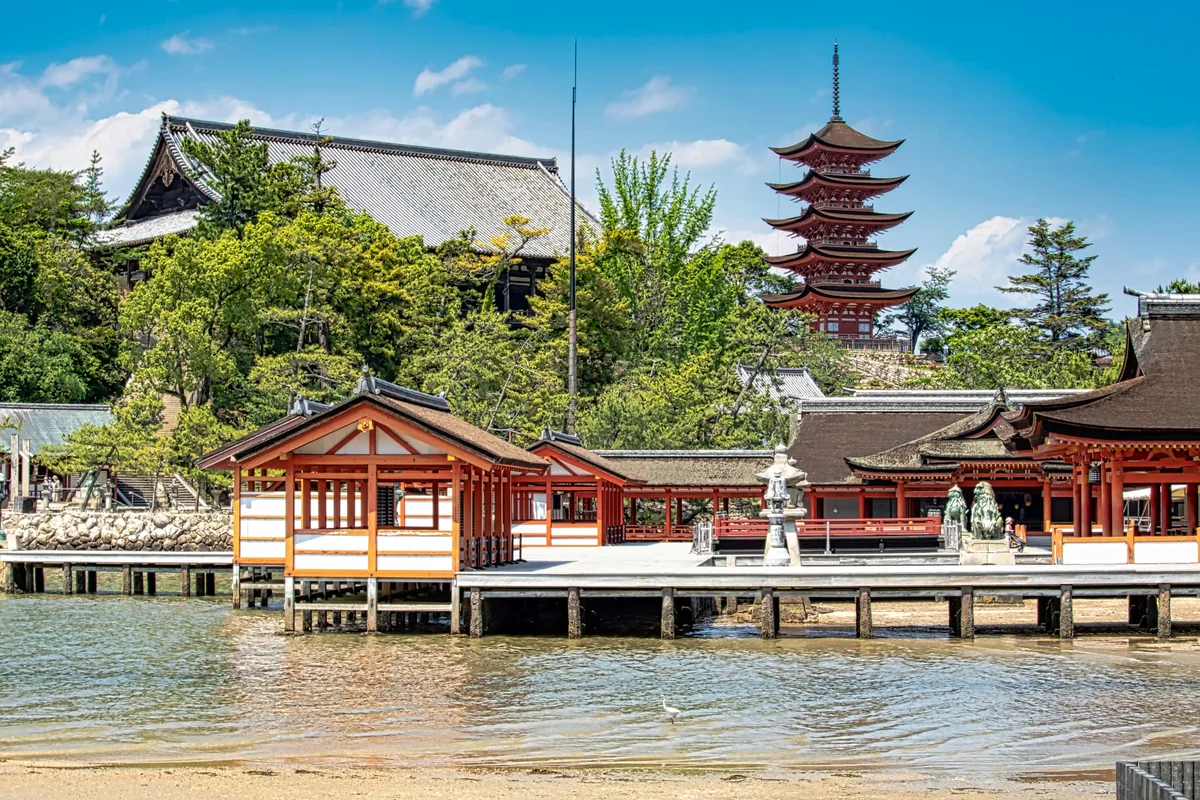
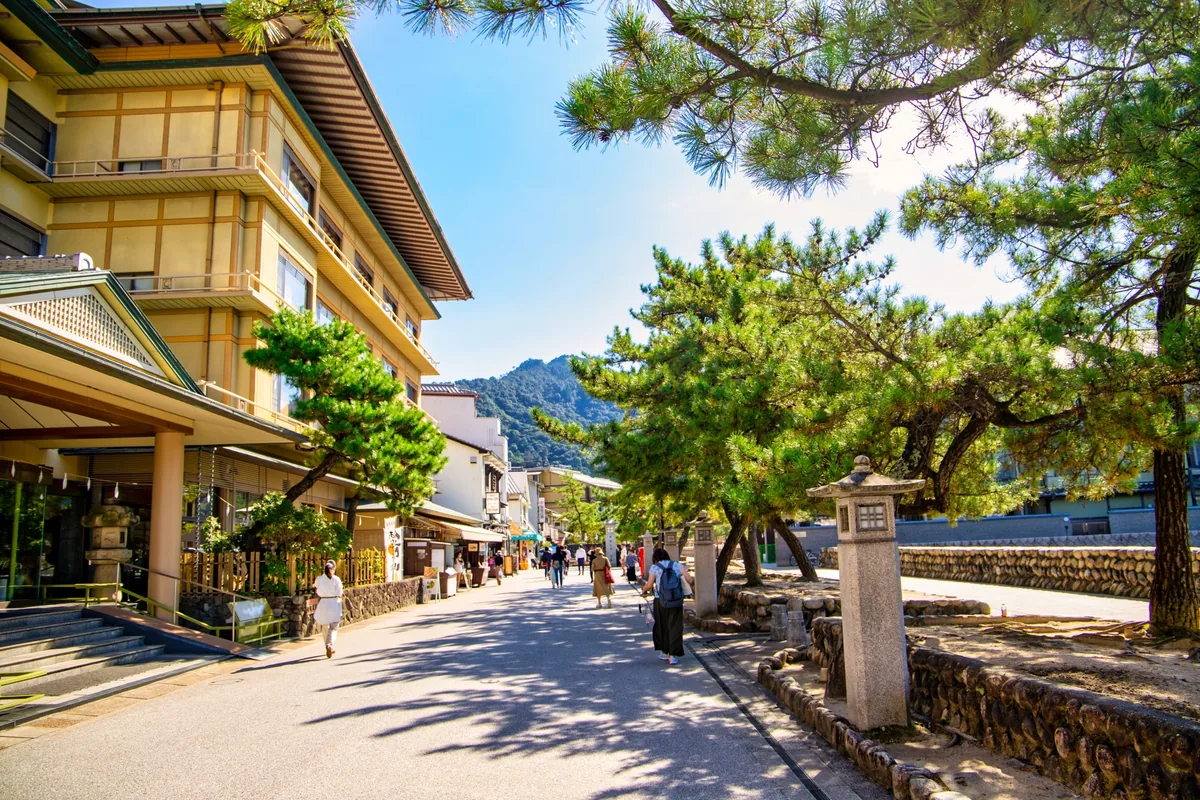
Make the shrine and waterfront the center of a short island visit. Itsukushima Shrine's covered corridors and the torii are separate parts of the experience: seeing the gate from the shore does not replace visiting the shrine itself. Check the shrine's seasonal opening hours before leaving admission until late afternoon.
If you are traveling independently, choose your next stop according to the time and energy you have. Daisho-in can be part of the day, but a walk through town and a relaxed food stop are worthwhile too. Leave enough time to get back to the pier; a departure time is not the time to start walking there.
Miyajima is also familiar to Japanese school groups. The tourism association's guide arrangements include school trips, reflecting how the island forms part of travel and learning within Japan as well as an international visitor's itinerary.
Deer, momiji manju and the island's familiar souvenirs
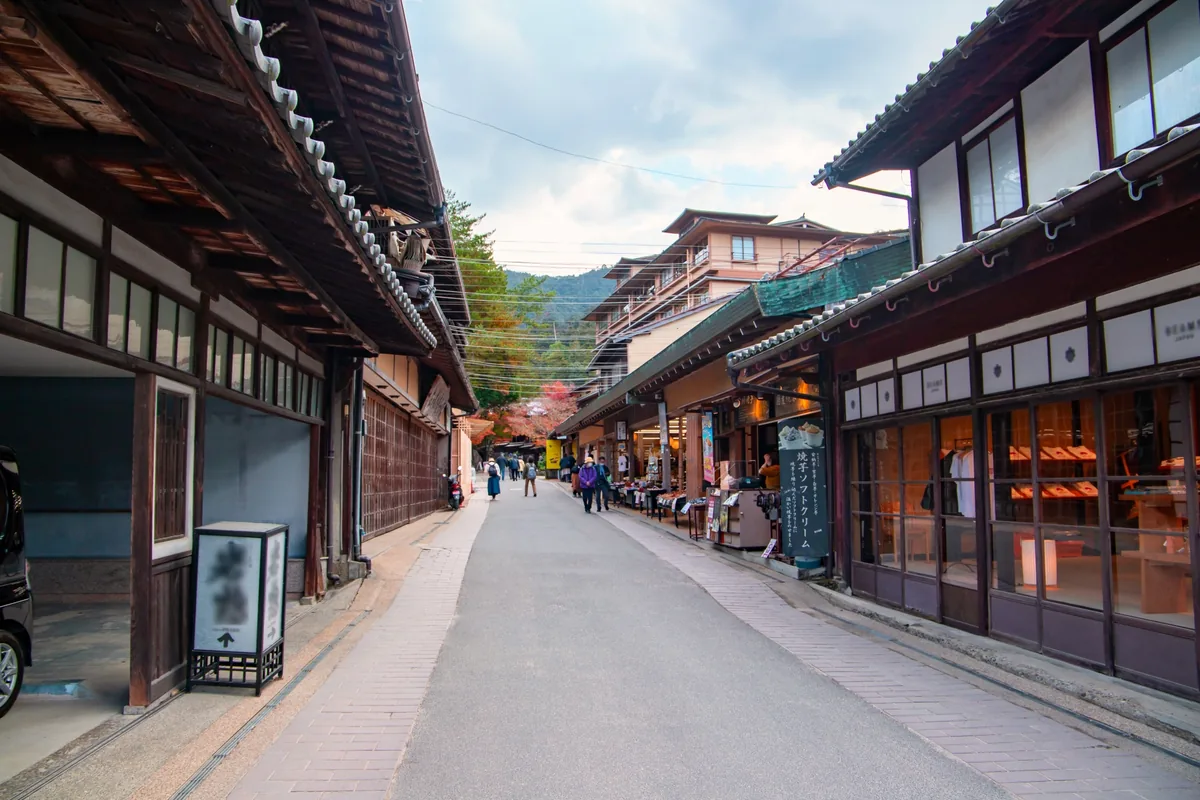

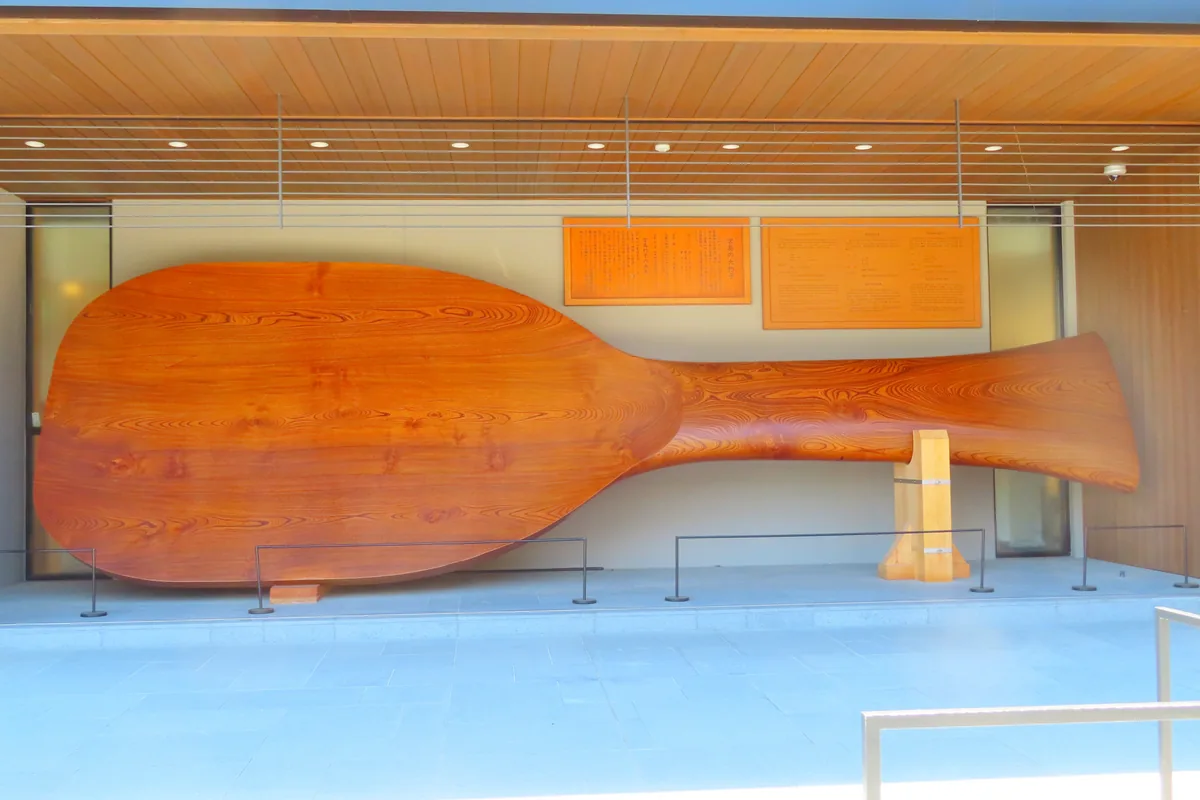
The shrine may bring you here, but the smaller stops help make the island visit memorable. Momiji manju are maple-leaf-shaped sweets, and shamoji are rice paddles associated with Miyajima's woodcraft tradition. Both appear in the tourism association's souvenir guide. A normal-sized paddle is easier to take home than the enormous display version in the photograph below.
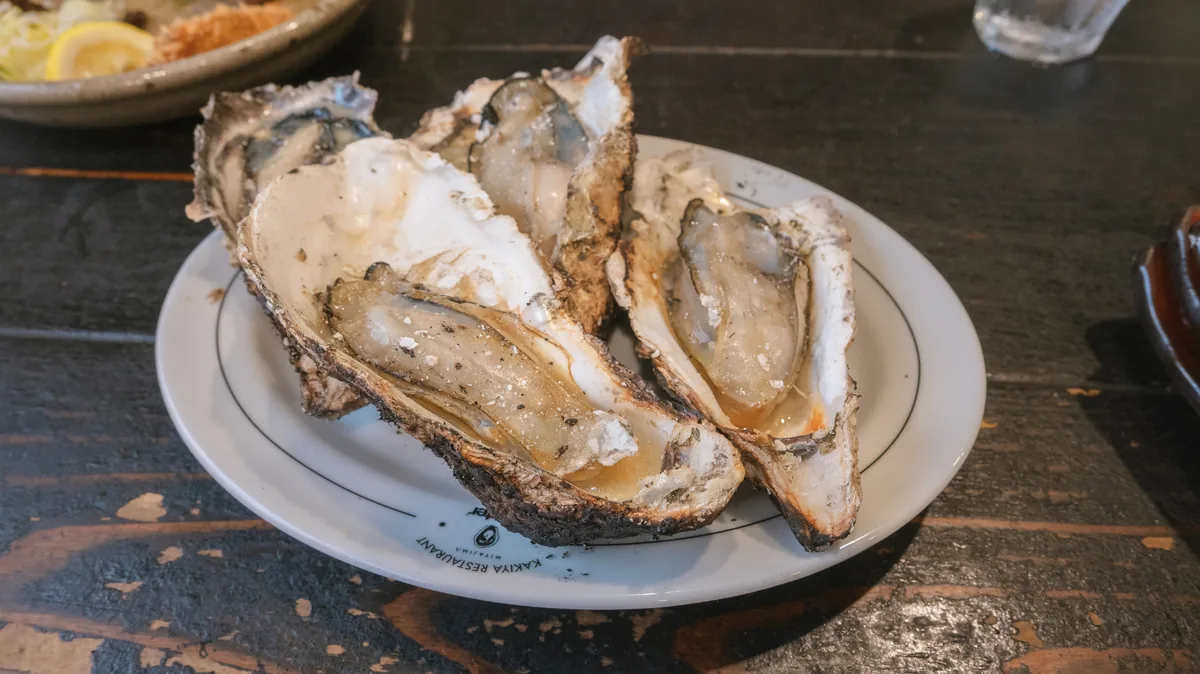
For food, grilled oysters are one of the island's familiar choices; the tourism association lists local shops serving them. Allow money and time for snacks and souvenirs separately from a tour's included meal. There is no need to turn this into a tasting checklist: choose what appeals to you and leave room to enjoy it.
The deer are wild animals. Keep food and packaging secured, give them space and do not feed them. The tourism association's deer guidance also asks visitors to take their rubbish away. A shopping bag or paper wrapper should not become part of a deer's meal.
Want to add the ropeway and Mount Misen?
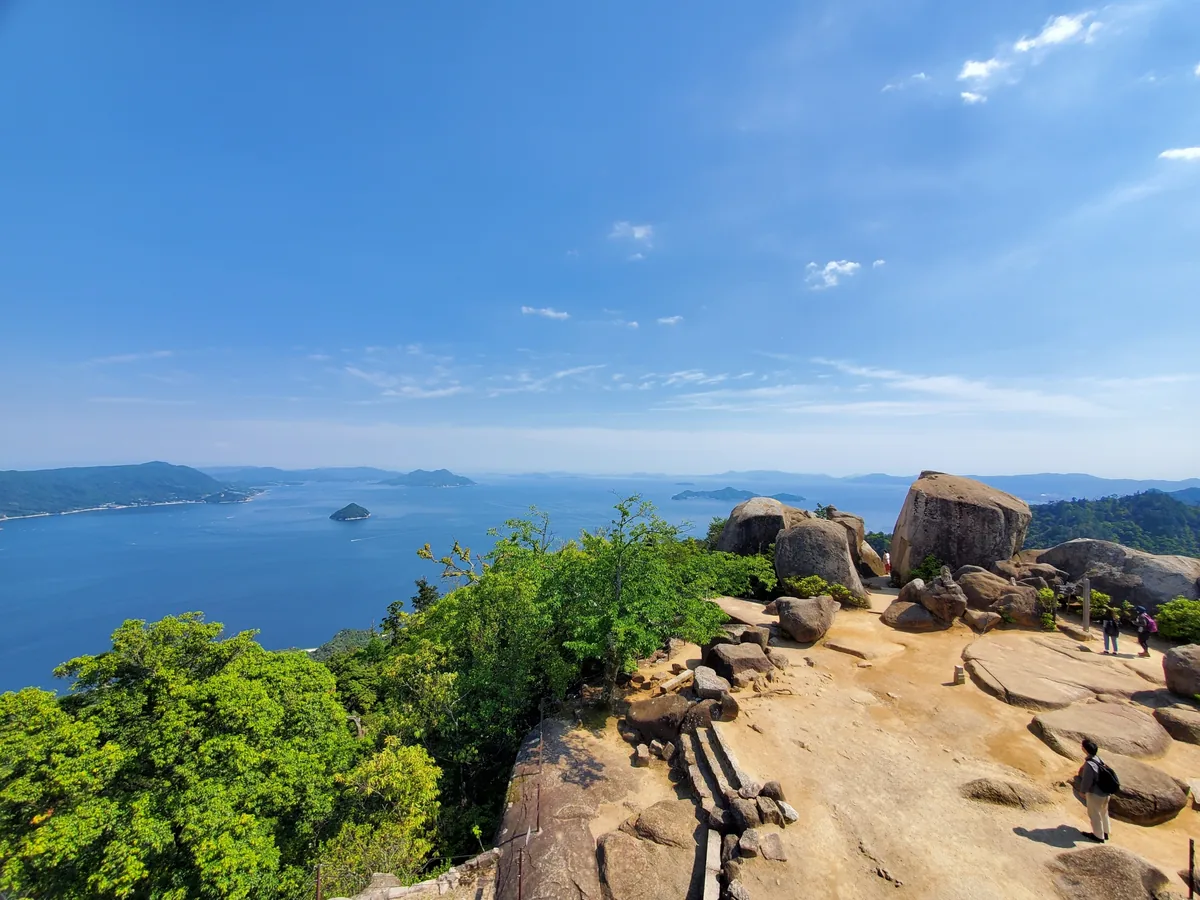
Mount Misen is a reason to give Miyajima more time. The ropeway's upper Shishiiwa Station is not the summit: the official walking map describes a circuit from that station to the summit taking about an hour, with steep sections and stone steps. Getting to the lower station, queuing and riding the ropeway take additional time.
The featured tour does not include this mountain outing. Do not book a tightly scheduled tour on the assumption that you can squeeze it into free time. If the mountain view is high on your list, a Miyajima-focused day or overnight visit is a better starting point.
Check the ropeway's operating information before your visit: advance reservations are required on designated busy days. Plan the walk for the weather, daylight and your walking ability. Comfortable shoes matter more here than collecting another stop on a map.
How to visit independently
A practical rail-and-ferry route starts with the JR Sanyo Line from Hiroshima Station to Miyajimaguchi, a walk to the ferry terminal, then the crossing to Miyajima. Itsukushima Shrine's official access guide gives roughly 30 minutes for the train and 10 minutes for the ferry. Walking, waiting and travel from the Peace Memorial area to the station are additional.
A sample day from Hiroshima Station
Allow about 9½ hours, from 8:30 am to 6 pm, for this independent plan. These are planning windows with walking and connection time, not published tram, train or ferry departures. The official Hiroshima tourism access guide allows about 20 minutes by tram to the Atomic Bomb Dome, while the Miyajima Tourism Association allows about an hour from Hiroshima Station to the island, including connections.
| Planning window | What to do |
|---|---|
| 8:30–9 am | From Hiroshima Station, take tram 2 or 6 to Genbaku Dome-mae and walk into the Peace Memorial area. |
| 9–11:45 am | Visit the Atomic Bomb Dome, park memorials and museum. Arrange the museum entry time within this window and adjust if you want longer with the exhibits. |
| 11:45 am–1:15 pm | Walk back to the tram stop, return to Hiroshima Station, then take the JR Sanyo Line to Miyajimaguchi and the ferry to Miyajima. This window includes transfers and waiting. |
| 1:15–4:30 pm | Have lunch, visit Itsukushima Shrine within its opening hours, and explore the waterfront and town. Choose Daisho-in only if time remains; leave Mount Misen for a longer visit. |
| 4:30–6 pm | Walk to the pier, take the ferry to Miyajimaguchi and return to Hiroshima Station by JR. Allow extra time before any onward Shinkansen. |
This route uses Hiroshima Station for the rail connection in both directions. Museum queues, lunch waits and busy ferries can extend the day, so reduce optional stops when needed. If you are staying on the island, replace the final return journey with check-in at the time agreed with your ryokan.
You can reverse the order if your museum entry time or the tide makes that more useful. Do the scheduling on paper first: shrine closing, museum entry and your last comfortable return connection are the constraints to work around. Our Japan train guide covers the basics if the rail network is new to you.
What does DIY cost?
For the sample route above, local transport, admission and the visitor tax total ¥2,320 per adult, using ordinary individual tickets without a rail pass or discount. These charges were checked on October 7, 2026:
| Item | Amount | Official source |
|---|---|---|
| Hiroshima Station–Genbaku Dome-mae tram, two rides | ¥480 (¥240 × 2) | Hiroden fares |
| Hiroshima Station–Miyajimaguchi JR train, return | ¥840 (¥420 × 2) | Miyajima Tourism Association access guide |
| JR Miyajima Ferry, return | ¥400 | Ferry fares |
| Miyajima visitor tax, one entry | ¥100 | Ferry operator's tax note |
| Hiroshima Peace Memorial Museum | ¥200 | Museum admission |
| Itsukushima Shrine, shrine-only ticket | ¥300 | Shrine admission |
| Local transport, admission and tax total | ¥2,320 | Hiroshima Station departure and return |
Add lunch, snacks and your journey to Hiroshima. Accommodation and the ropeway are separate if you choose them. The ¥2,320 covers the transport and admissions in this sample itinerary; other routes and passes can change the amount. Open the booking page from the widget above to compare the tour's current no-lunch price, or add your meal budget before comparing a lunch-included option. The tour also pays for an English-speaking guide and coordinated coach travel.
Arriving from Osaka or Kyoto
The featured product starts in Hiroshima. Before buying it, open your rail itinerary and check the station-to-meeting-point connection, not only the train's arrival time. The operator's meeting instructions give a 10 am meeting in front of the second-floor Shinkansen ticket gate, North Gate, and ask guests to arrive 15 minutes early: aim to be at the meeting point by 9:45 am. The tour returns at approximately 6 pm. The operator advises booking an onward Shinkansen for 6:30 pm or later; delays remain possible. Follow the meeting instructions on your own booking.
If you dislike an early departure or have several changes before the Shinkansen, spending the previous night in Hiroshima is a sensible option. It adds a hotel night but lets the sightseeing day begin locally. Alternatively, allow more space at the end of your day rather than planning a connection at the earliest suggested departure.
Use our Shinkansen booking guide to arrange the intercity journey. For Osaka, the Shinkansen station is Shin-Osaka; include the local trip there from your accommodation when planning the morning.
A Hiroshima extension does not automatically make a rail pass the right purchase. Put your actual journeys into the JR Pass calculator, then read the pass comparison guide if the numbers are close. If your tour already includes a ferry, do not count that same crossing again as money saved by a pass.
Miyajima tides: what a fixed itinerary cannot guarantee
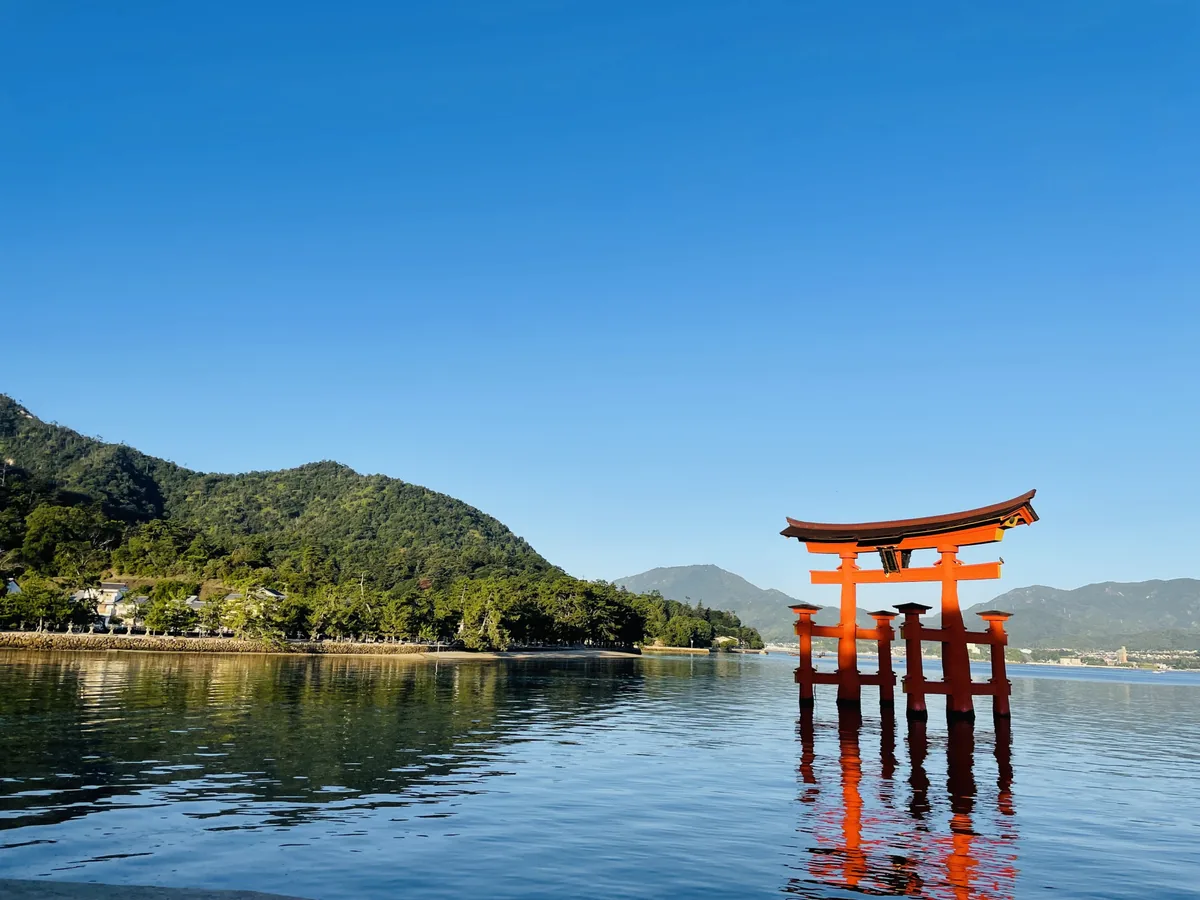
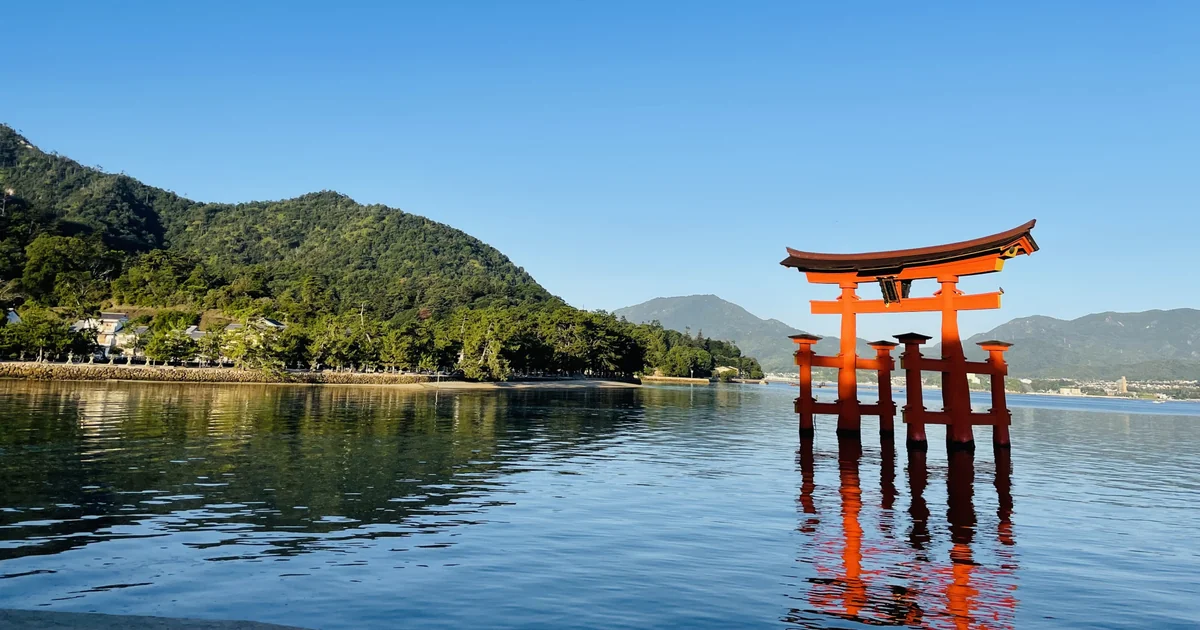
The classic water-surrounded view depends on the tide during your visit. The Miyajima Tourism Association's tide page uses water levels above 250 cm as a guide to the shrine appearing to float and below 100 cm for walking toward the torii. Select your actual date: the words “high tide” or “low tide” alone are not a promise of either scene.
A tour timetable cannot guarantee your preferred water level. If the photograph is the main reason for your visit, decide whether you want water around the shrine, access toward the gate at lower water, or an evening view, then plan around that priority. An independent visit gives more flexibility; an overnight stay gives a wider window. Follow local access guidance on the day.
When two days is the better choice
Two days are worth considering when you already know which part of the combined visit would feel rushed. You could spend the first day with Hiroshima's museum and memorials, stay in the city, then devote the next day to Miyajima. That gives the mountain or a longer island walk room in the plan.
If the evening scenery below is what draws you, choose an island night instead. A Hiroshima city hotel and a Miyajima ryokan solve different needs: one makes the mainland portion easier, while the other lets you remain on the island after dark. Put that decision into your itinerary before choosing a room solely by its nightly price.
Want to see Miyajima at night? Stay on the island
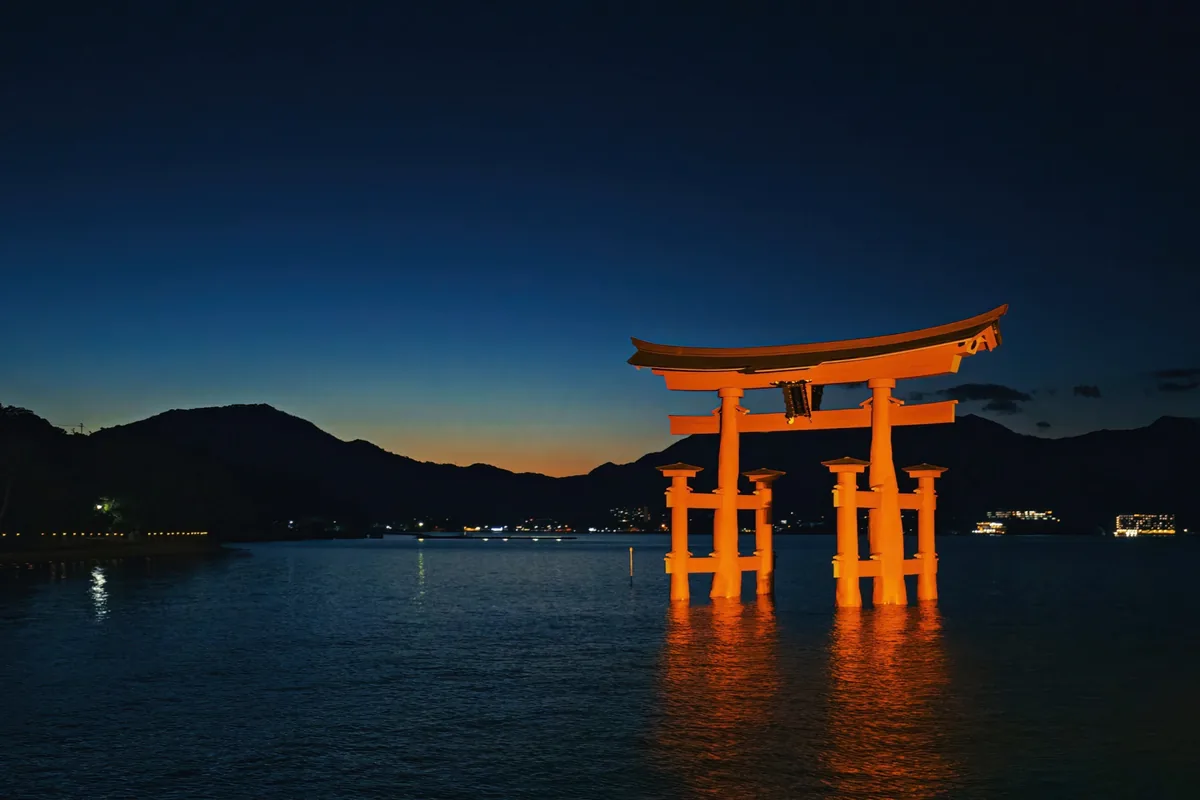
If this is the Miyajima you want to see, plan one night on the island. An overnight stay gives the evening room to breathe: you can go out to see the illuminated torii, return to your ryokan, and explore again the following morning. If photography is a priority, the extra time also gives you more flexibility around the tide and weather, although no stay guarantees the conditions in these photographs.
The Miyajima Tourism Association's illumination guide normally lists the lights from 30 minutes after sunset until 11 pm, with possible suspensions for events. You view the illuminated shrine from outside; Itsukushima Shrine is closed to entry during the light-up period.
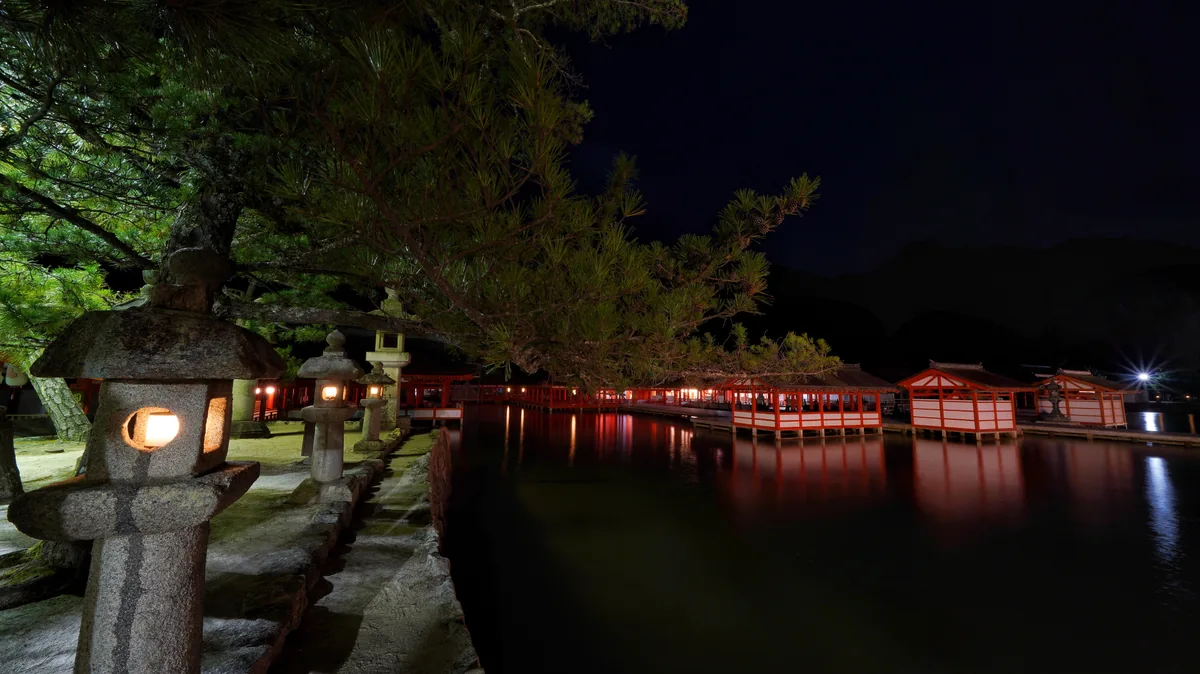
You can see the lights without staying overnight: evening ferries also run back to Miyajimaguchi. Check the JR Miyajima Ferry timetable for your date and allow time for your onward journey. The reason to stay is a more relaxed evening and an early start on the island the next day.
Three Miyajima ryokan to consider
All three properties below are on Miyajima itself. They were selected for their location and the facilities described on their official websites, checked on October 7, 2026. These are researched suggestions, not accounts of personal stays. Compare the exact room, meal plan, check-in deadline and cancellation terms for your dates.
The featured day tour returns to Hiroshima Station. If you want to leave the group to stay on Miyajima, obtain the operator's agreement before booking your hotel; an island drop-off is not promised. The independent overnight plan below lets you arrange your arrival around the ryokan's check-in and dinner times.
Kinsuikan — for a waterfront stay and a rooftop terrace. Its official facilities guide describes the guest rooftop terrace overlooking the Seto Inland Sea and the O-torii. That makes it worth considering if you want an island stay with a place to linger over the view. The terrace and your bedroom are separate choices: do not assume every room has a torii view.
Kinsuikan
An evening on the island, with a rooftop view
Best for
Travelers who want a waterfront base and access to a terrace overlooking the torii.
Before booking
The rooftop view does not mean every bedroom has the same outlook. Check the exact room and meal plan.
Why it may fit
A Miyajima ryokan with a guest rooftop terrace overlooking the sea and O-torii. Check the room category for its own view.
Jukeiso — for choosing a room with a torii view. This hillside ryokan is the option to examine closely if the view from your room matters. Its official room descriptions distinguish between categories: the Premium Suite and Types C and D describe torii views, while Type B's torii view is obscured by trees. Room names on a booking site may differ, so confirm the outlook of the exact room you reserve.
Jukeiso
Make the room's outlook part of the trip
Best for
Travelers who want to select a room specifically for a shrine or torii view.
Before booking
Not every category has a torii view. The hillside location also deserves an access check if walking uphill is difficult.
Why it may fit
A hillside ryokan with selected rooms overlooking Itsukushima Shrine and the O-torii. Views differ by room category.
Iwaso — for a traditional ryokan beside Momijidani Park. Consider Iwaso if you like the idea of a leafy setting close to the shrine. Its official access guide places it beside Momijidani Park, about 300 meters from Itsukushima Shrine and a 15-minute walk from the ferry pier. Choose it for that setting and plan a walk to the waterfront for the night view.
Iwaso
A ryokan stay between the shrine and the wooded valley
Best for
Travelers who prefer a park-side setting with the shrine within walking distance.
Before booking
This recommendation is for the location, not a guaranteed torii view from your room. Check arrival and dinner times before booking.
Why it may fit
A traditional Miyajima ryokan beside Momijidani Park, around 300 meters from Itsukushima Shrine according to its official access guide.
How to fit an island stay into your trip
One workable independent plan is to visit Hiroshima's Peace Memorial area on the first day, then travel to Miyajima in time for your ryokan's check-in and dinner arrangements. Stay for the evening, and use the next day for the shrine, town and, if you allow enough time, Mount Misen. If that would rush your museum visit, give Hiroshima another night. Our first-time Japan itinerary and trip budget guide can help you make room for the extra night.
Before you book
Check five things before committing: how you will reach Hiroshima, the selected lunch option, your walking and dietary needs, the cancellation terms, and the time available afterward. For an island stay, also check the exact room view, dinner arrangements and check-in deadline. “Sea view” is not automatically a promise of the torii outside your window.
If you have one day and want a guide and coordinated transport, check the tour's availability below. If Miyajima after dark is the priority, compare the island ryokan above and allow an overnight stay in your itinerary.
Hiroshima & Miyajima UNESCO Sites Day Tour
Have one day? Check the guided option
Best for
Visitors with a full day available in Hiroshima who prefer arranged sightseeing and transport.
Before booking
The published itinerary returns to Hiroshima Station; it is not an overnight Miyajima package.
Why it may fit
An English-guided day from Hiroshima Station combining the Peace Memorial area and Miyajima. Review the current inclusions for your selected option.
Make it your trip
Still planning your Japan trip?
Pick the question on your mind. Compare your options, check the details and take one more thing off your list.
Would a JR Pass save you money?
Add your train journeys and compare individual tickets with the nationwide pass. See which costs less for your route.
Calculate my rail costs
Which eSIM fits your Japan trip?
Maps, messages, hotspot use: compare five providers by data allowance, network and plan limits before you choose.
Find my Japan eSIM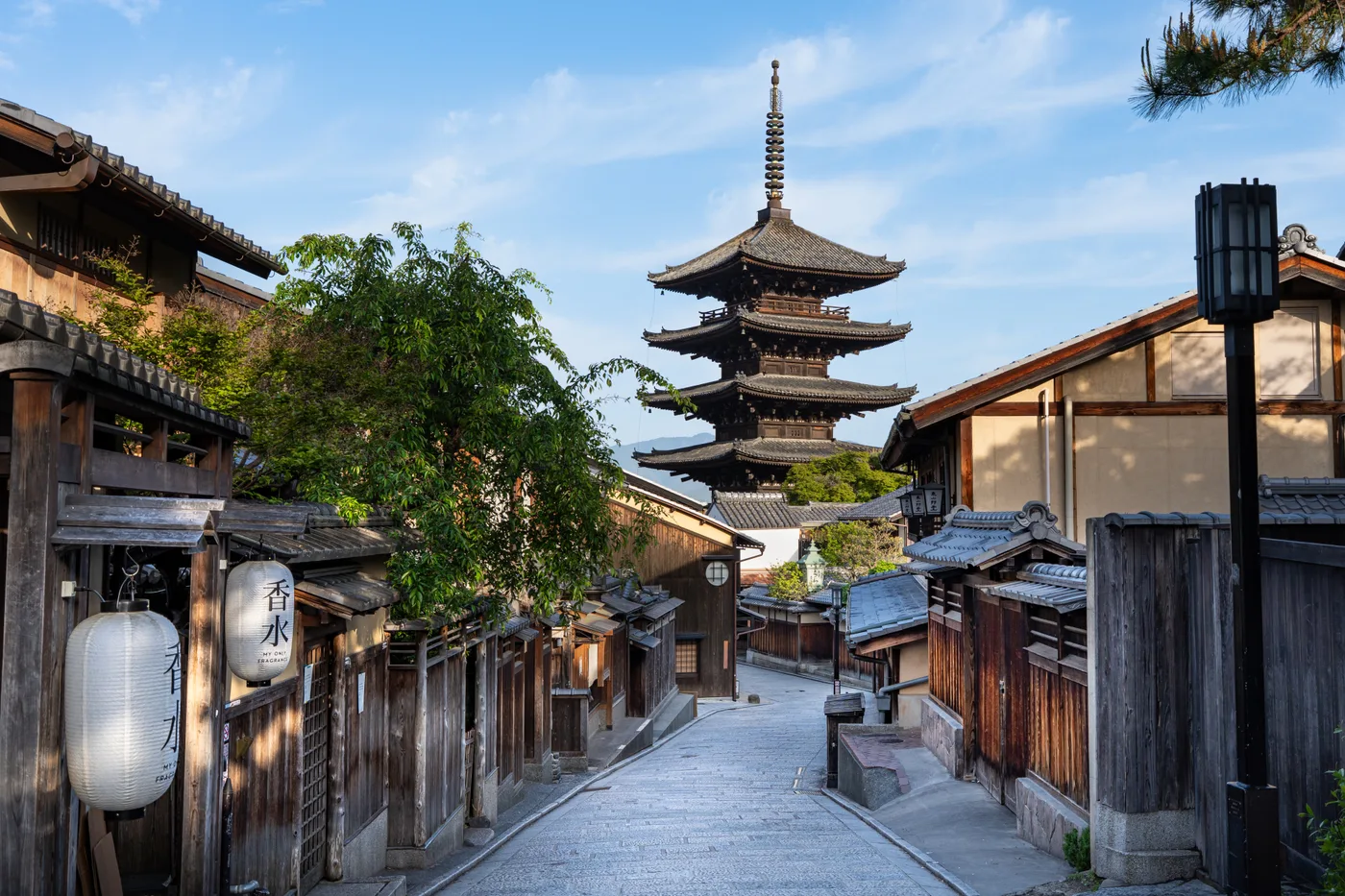
How much can you fit into one week?
Connect Tokyo, a Fuji or Hakone day trip, Kyoto and Osaka with a day-by-day route, travel costs and booking advice.
Explore the 7-day routeFrequently Asked Questions
Yes, if you focus on the Peace Memorial area and Miyajima's shrine and waterfront. A guided day tour combines these highlights from Hiroshima Station. Allow two days if you want a longer museum visit, Mount Misen or more control over the tide conditions you see.
It can be worthwhile if you value English-language context and coordinated transport between both places. Independent travel gives you more control over spending and sightseeing time. Choose by the pace you want, not just the number of stops.
No. This listing starts and finishes at Hiroshima Station. Arrange your journey to Hiroshima separately and check the meeting time before booking trains. Leave a buffer for your return train.
The listed inclusions cover the Peace Memorial Museum, Itsukushima Shrine, coach transport, an English-speaking guide and the round-trip Miyajima ferry. Lunch depends on the option you select. Admission restrictions or operating conditions can change the itinerary, so review the selected option's current inclusions before paying.
That depends on the tide during your visit. Check the Miyajima Tourism Association's tide information for your date. A fixed tour schedule does not guarantee a particular water level or time to see both high- and low-water views.
The museum recommends buying a web ticket in advance and requires one during its extended early and late opening periods. A timed ticket does not guarantee immediate entry when the museum is crowded. If your tour includes admission, follow the tour's instructions before buying a separate museum ticket.
An island stay is worth considering if you want an unhurried evening and time to explore again the next morning. You can also visit after dark and return by ferry; check the timetable for your date. The tourism association normally lists illumination from 30 minutes after sunset until 11 pm, with possible event-related suspensions. Night views are from outside Itsukushima Shrine, which is closed to entry during illumination.

Written by
JAPANODE
Based in Japan, sharing real travel tips & local insights for visitors. Follow us on Instagram @thejapanode for daily Japan content.
You Might Also Like
 Transportation
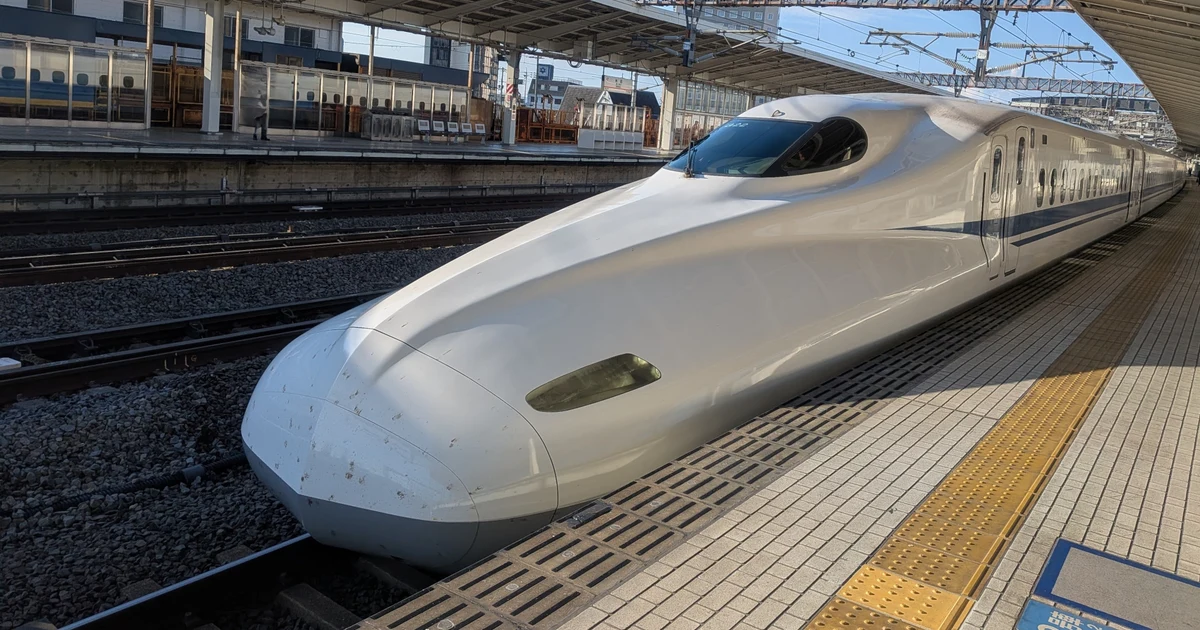
How to Book Shinkansen Tickets in Japan: SmartEX, Seats & Luggage (2026)
12 min read
 Planning
Japan Trip Budget 2026: What Travel Really Costs
11 min read
 Itinerary
7-Day Japan Itinerary for First-Timers: Tokyo, Hakone, Kyoto & Osaka (2026)
20 min read
 Transportation
Is the JR Pass Worth It in 2026? Prices & Break-Even Routes
15 min read