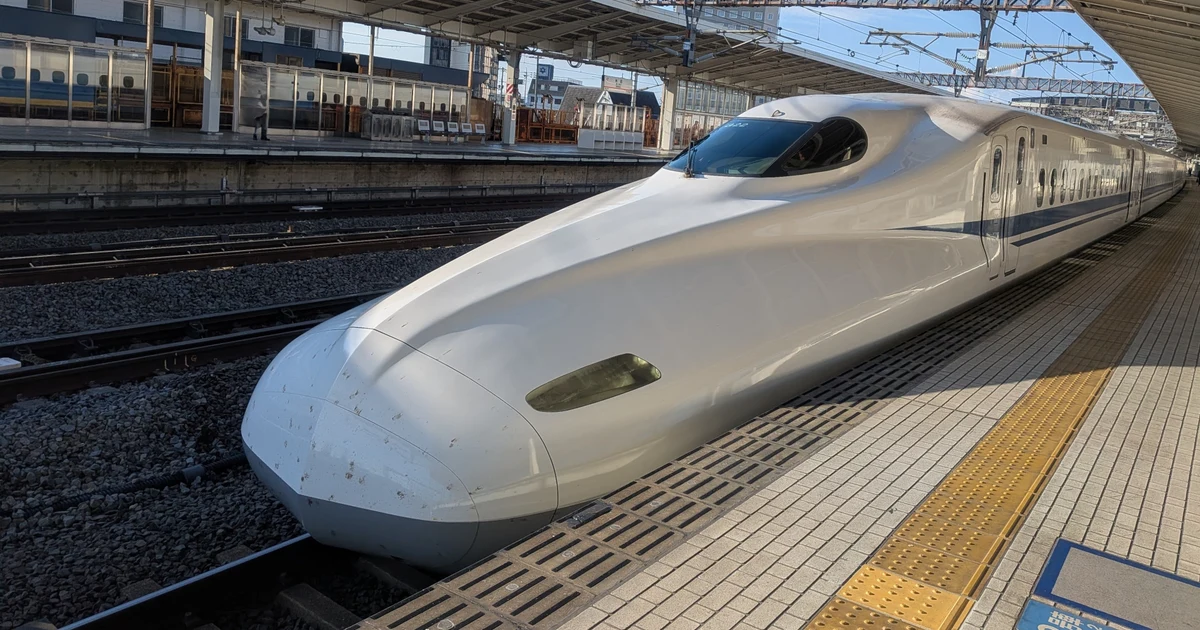
For a trip from Tokyo to Kyoto, Shin-Osaka or Hiroshima, start with SmartEX's official English website. It lets you book the train directly, choose a seat and arrange how you will pass through the gate. You do not need to buy a rail pass or use a ticket reseller first.
The decisions that matter are your route, fare conditions, luggage and boarding method. Get those right before paying, and the station visit becomes much simpler.
How this guide was checked: We reviewed the official JR and SmartEX instructions on September 24, 2026. The steps below explain their documented process; they are not a report of a personal test booking. Booking links lead to official railway services.
First, Choose the Right Booking Service
SmartEX serves the Tokaido, Sanyo and Kyushu Shinkansen. It does not cover every bullet train in Japan. Use this table before opening an account.
| Your journey | Official starting point | Important distinction |
|---|---|---|
| Tokyo or Shinagawa → Nagoya, Kyoto or Shin-Osaka | SmartEX | The Tokaido Shinkansen corridor |
| Shin-Osaka → Hiroshima or Hakata; onward toward Kumamoto and Kagoshima-Chuo | SmartEX route information | Sanyo and Kyushu Shinkansen services; check connections |
| Tokyo → Kanazawa, Nagano, Niigata, Sendai or northern Japan | JR-EAST Train Reservation information | A separate system for JR East, JR Hokkaido and the Hokuriku Shinkansen |
| Other JR West journeys or a JR West regional pass | JR-WEST ONLINE TRAIN RESERVATION | Check the product's pickup locations before purchasing |
| A journey covered by a rail pass you already hold | Your pass's reservation instructions | A SmartEX purchase is a separate paid ticket |
These services cover different routes and products. For this guide's Tokyo → Kyoto example, start with SmartEX; for Tokyo → Kanazawa, use a service that covers the Hokuriku Shinkansen. Our Japan train system guide explains the wider network if you are still choosing an itinerary.
For Osaka, search for Shin-Osaka, the Shinkansen station. Then plan the local journey to your hotel separately. Write down the actual stations you need instead of relying only on city names.
Before You Book: Four Things to Prepare
A payment card in your own name
The SmartEX account holder must be at least 18, and the registered payment card must be issued in that person's name. Bring that card on the trip: railway staff can request it for verification. These requirements are set out in the SmartEX membership agreement.
SmartEX recommends an ordinary physical credit card. Debit and prepaid cards can encounter temporary withdrawals or overlapping charges during changes and refunds; virtual cards have limitations for some procedures. Membership has no annual fee, and the English website provides an alternative if the app is unavailable in your country's app store.
Access to your email and bank authentication
Use an email account you can access while traveling. Registration, account security and ticket pickup can involve emailed messages or codes. Enable your bank's authentication method before departure, including any app approval or text messages you may need abroad. SmartEX uses 3-D Secure authentication; a supported card brand alone does not guarantee acceptance.
Returning users should also check their cardholder name. SmartEX's 2026 cardholder-name notice says new bookings and changes are unavailable from May 25, 2026 until the card's Roman-letter name has been registered.
Your luggage measurements
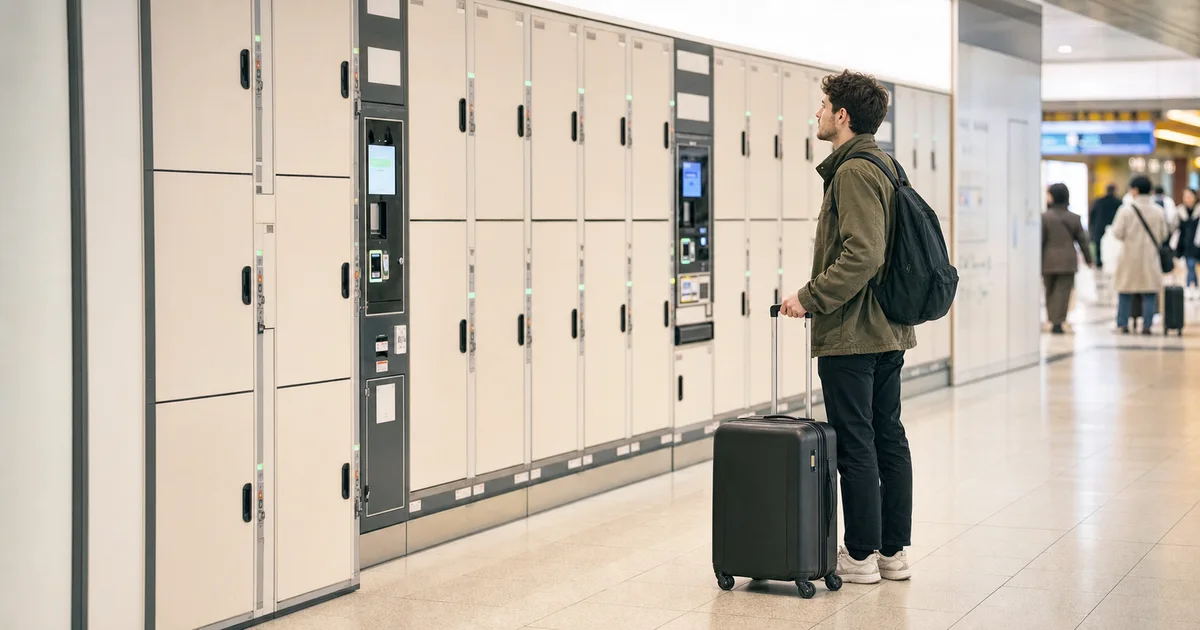
Measure height + width + depth, including protruding handles and wheels. Do this before selecting seats. “Large suitcase” is too vague to decide whether a baggage reservation is required.
A realistic departure time
For an airport arrival followed by a Shinkansen trip, allow time for immigration, bags, the airport transfer and finding the correct gate. Our recommendation is to avoid a tight, inflexible train booking immediately after an international flight. Compare the discount with the consequences of missing that particular train.
How to Book on SmartEX
1. Register on the official website
Open SmartEX, choose registration, enter your email and follow the link sent to you. Complete the membership details, payment-card information and authentication. An IC card can be added later. Save the membership ID from the completion email somewhere you can retrieve it. The official registration walkthrough illustrates each screen.
Create the account before the day you urgently need a train. That gives you time to resolve a bank rejection or an email problem without doing it beside the ticket gates.
2. Search your date, stations and passengers
After logging in, choose the train search, enter the date, departure or arrival time, stations and passenger numbers, then review the results. Times are Japan Standard Time. Check arrival times as well as departure times, and inspect every leg if the journey includes a connection. The official booking walkthrough shows the sequence.
For the Tokyo–Kyoto corridor, Nozomi makes the fewest stops and is the fastest choice; Hikari serves additional stations; Kodama stops at every station along its route. These are stopping patterns, not seating classes. Compare the actual arrival times before choosing. JR Central's service overview explains the three types.
For most visitors, ages 12+ count as adults and ages 6–11 as children. Children under 6 need a child ticket if they occupy their own reserved seat. Without their own reserved seat, infants normally travel free with a paying adult or child, but only two children aged 1–5 per paying passenger are free; the third and subsequent infants need tickets. JR also lists school-status exceptions at ages 6 and 12 for elementary schools established under Japanese law. See JR Central's child-ticket rules.
3. Choose the fare before choosing the seat
The regular smartEX Service combines the Shinkansen basic fare and limited express fare. It offers ordinary reserved, ordinary non-reserved and Green Car options. Local trains before or after the Shinkansen cost extra. The official product page also warns that the combined local-train and SmartEX cost can sometimes exceed a conventional through-ticket.
SmartEX does not allow sightseeing stopovers on one through-ticket. If you book Tokyo → Hiroshima and exit the gates in Kyoto, the unused onward section becomes invalid. Buy separate journeys if you plan to stop and explore.
| Your priority | What to compare |
|---|---|
| A specific seat or sitting together | Ordinary reserved seats; check the seat map |
| A flexible day with no need to sit together | Non-reserved fare, if available for your intended service |
| More room and a higher budget | Green Car price against ordinary reserved seats |
| A fixed schedule and an advance discount | The exact Hayatoku product and its change conditions |
Our default recommendation for a first visit is an ordinary reserved seat: you know where you are sitting, which helps when carrying luggage or traveling with others. Green Car is an optional comfort choice.
Do not assume every discount ticket has the basic fare's flexibility. EX Hayatoku 21 generally cannot be changed after purchase: changing trains means refunding and booking again. Changing only the seat position on the same train, in the same class and at the same price is an exception. Discount inventory is limited even when ordinary seats remain. See the EX Hayatoku 21 rules.
Also ignore old advice promising the former SmartEX round-trip discount: the booking instructions state it ended for travel from April 1, 2026.
4. Select the correct luggage option
For ordinary luggage on these Shinkansen lines, JR West's baggage rules distinguish:
| Combined height + width + depth | What to do |
|---|---|
| Up to 160 cm (about 63 in) | Use an appropriate rack or space; no oversized-baggage reservation required |
| Over 160 cm, up to 250 cm (about 63–98 in) | Reserve a seat with an oversized baggage area |
| Over 250 cm (about 98 in) | The bag cannot be brought aboard |
The general carriage limits also apply: up to two pieces, each no more than 30 kg (about 66 lb) and 2 m long (about 79 in), excluding items such as small personal bags. Inch and pound figures are rounded; use the metric limits when measuring. Strollers, sports equipment and musical instruments have special treatment; check the official rules for those items.
A seat with the oversized baggage area costs the same as the corresponding reserved seat. Traveling with oversized baggage without the required reservation incurs about US$6.35 (¥1,000) under JR Central's baggage rules. Dollar equivalents in this guide use US$1 = ¥157.5, rounded from the Bank of Japan's September 18, 2026 rate; the yen amounts are the actual charges.
In SmartEX, select the oversized baggage option when searching, then check its seat availability. An available ordinary seat does not mean baggage seats are available. Oversized baggage seats cannot be booked through the one-year advance or overnight request process; book from one month before travel. If transferring trains, arrange the required seat for every leg. See SmartEX's baggage booking instructions.
Some deck compartments are currently being trialed as storage without reservations. That does not remove the reservation requirement for bags over 160 cm. Do not treat empty space behind someone else's seat as unassigned storage.
5. Review, pay and check the reservation
Check the date, stations, passengers, fare, seats and baggage arrangement before confirming payment. SmartEX charges in yen when you purchase; your card issuer controls conversion and any foreign transaction fees. A purchase is not a free hold. These conditions appear in SmartEX's reservation notes.
Confirm the result in your account and email. If payment appears to fail or the screen stalls, check your reservations before starting again. Seeing a pending bank charge alone does not tell you whether the train booking completed.
How to Board: QR-Ticket, IC Card or Paper Ticket
Choose a boarding method in advance. A booking email or card-payment receipt alone is not your gate credential.
QR-Ticket: useful if you do not want to link an IC card
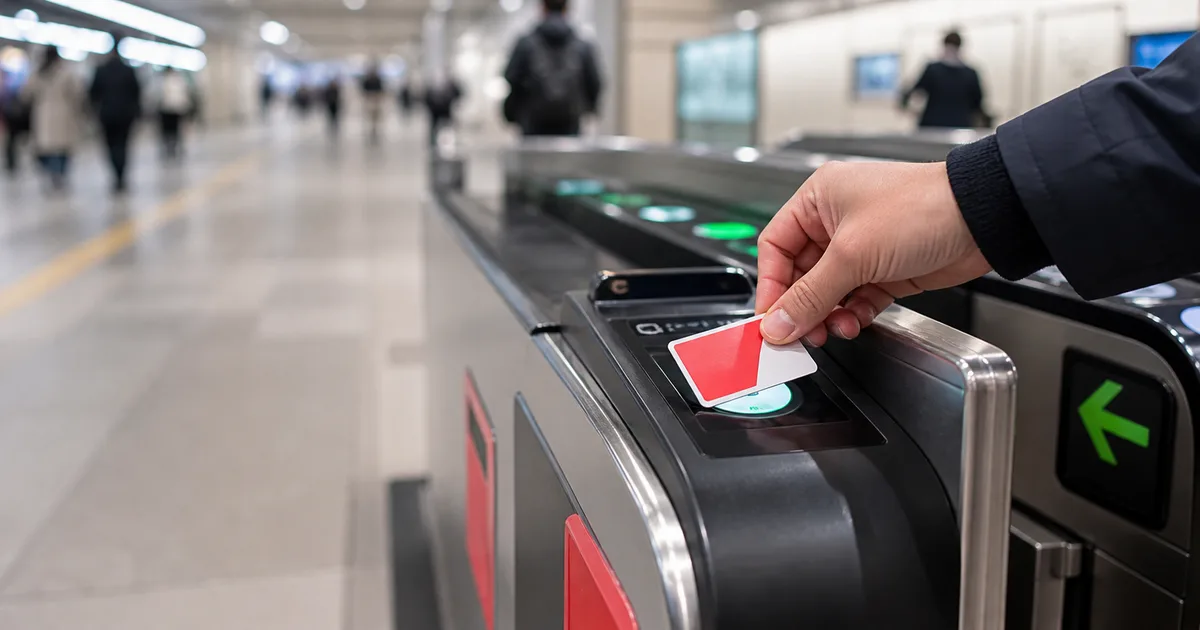
In your reservation details, display the QR-Ticket for each passenger. Distribute the separate tickets to your companions; one code cannot admit the entire group. You can print the QR-Ticket, and supported iPhones can add it to Apple Wallet.
Use a Shinkansen gate marked for QR scanning. Keep the code available for exiting, and collect the Seat Information slip dispensed on entry. The slip records your train and seat; it is not a substitute for the QR-Ticket at the exit.
If transferring from a local train paid with an IC card, scan the QR first and then tap that IC card at the transfer gate. For a local paper ticket, insert the ticket first and then scan the QR. Follow the official QR boarding diagrams for your situation.
Linked IC card: useful if each traveler already has one
Assign a valid supported IC card to each passenger's reservation before travel. For a group, verify the assignments individually; simply owning Suica does not connect it to a booking.
Tap the assigned card at the Shinkansen gate and collect the Seat Information slip. The Shinkansen fare has already been paid by credit card. Your IC balance pays for separate local journeys, so keep it topped up for those. SmartEX explains the transfer procedure in its IC-card boarding guide.
If you are still choosing a transit card, see our Suica and Welcome Suica guide. You can use QR boarding without purchasing an IC card first.
Paper tickets: useful if you prefer a physical ticket
You need the pickup code and your login password at a supported machine. Bring the payment card too; staff may need to inspect it. A pickup QR code is for collecting paper tickets, while a QR-Ticket is for boarding.
The current SmartEX pickup guide states that machines issue tickets from three days before travel; staffed counters at major JR Central, JR West and JR Kyushu stations can issue them from one month before. Pickup is available only at designated locations, including certain JR East machines. Do not assume any JR counter can issue your SmartEX booking.
Collecting the paper ticket ends ordinary online changes and refunds. If you want flexibility, consider leaving the booking ticketless until you are ready to travel.
When Should You Book?
For eligible fares, SmartEX accepts advance reservations up to a year before travel. Payment happens at booking, but the exact train, departure and arrival times, and seat are finalized one month before travel. Check the confirmation email and reservation details then.
Advance inventory is limited. Oversized baggage seats, Hayatoku products and some special seats are excluded from this one-year process. If an early search fails, it does not necessarily mean every seat is sold out; check again when ordinary sales open one month before travel. SmartEX reservation windows explain the restrictions.
Seat maps are unavailable between 11:30 p.m. and 5:30 a.m. JST, and overnight requests have additional limits. For a family selecting adjacent seats, use daytime hours in Japan.
Our recommendation is to book once your travel day is firm if sitting together or taking oversized baggage matters. For major holiday periods, check JR Central's Nozomi peak-period notice: all Nozomi seats become reserved during designated dates. A non-reserved ticket does not entitle you to an empty reserved seat.
If Something Goes Wrong
Your payment card is rejected
- Check the number, expiry date and cardholder name.
- Confirm that your bank permits the payment and that authentication works.
- If the details are correct, contact the issuer or try another compatible card in your own name.
- If the problem remains, buy through a staffed JR ticket counter or suitable reserved-seat machine in Japan.
SmartEX lists these payment issues in its card-registration FAQ. Some cards are rejected for security reasons even when the brand is accepted; there is no reliable promise that a particular overseas card will work.
At the station, bring a written note of the date, route, preferred time, passenger ages and luggage dimensions. Ask for the complete journey fare. If using another official online service, first check that it sells your route and that you can reach its pickup location.
Your preferred seats are unavailable
Try a different departure time first. If the group can sit apart, check the available arrangement before paying. If oversized baggage seats are full, an ordinary seat alone does not solve the luggage requirement: change trains or arrange another way to handle the bag. Our luggage guide covers storage and forwarding options.
You need to change or cancel
For the basic smartEX Service, repeated online changes are allowed before the original departure, provided you have not entered the gate or collected paper tickets. The replacement train must still be bookable; availability and fare differences apply. A change charges the new fare before refunding the old one, potentially affecting your card limit and foreign transaction fees. See the change conditions.
Canceling is a separate operation. For a basic smartEX Service reserved-seat ticket, the predeparture refund charge is approximately US$2.03 (¥320) per passenger. You can process it online before the reserved train departs, provided you have neither entered the Shinkansen gate nor collected paper tickets. See the basic product's refund table. Check other products' own fees; no change handling fee does not mean free cancellation.
After paper-ticket pickup, bring the tickets and payment card to the appropriate staffed counter. The refund guide explains deadlines and unused-booking treatment.
You are running late or have missed the train
Before departure: change the reservation promptly if your fare permits it. If already through the gate or holding paper tickets, ask station staff immediately.
After departure: show staff your booking and fare name. The basic fare permits travel in a non-reserved ordinary seat on a later train the same day over the same route. This does not guarantee a seat. Hayatoku fares do not have that ordinary missed-train fallback; additional tickets are required. See the official missed-train FAQ.
If you have oversized baggage, you still need an appropriate reserved seat on the replacement train. The ordinary non-reserved fallback does not cover that situation; JR West's baggage FAQ says a new reserved-seat limited express ticket with the baggage space is required.
For a railway disruption, ask about the specific disruption arrangements before buying a replacement. Significant delays on a connecting JR service may receive different treatment; SmartEX's JR connection-delay guidance explains this. Do not assume an airline delay has the same protection.
Do You Need a Japan Rail Pass Instead?
Only compare a pass if it might suit your whole itinerary. Add up the journeys you intend to take within its validity period, then compare that total with the relevant pass and its restrictions. Use our JR Pass Calculator as a planning estimate, followed by official fares for your travel dates.
SmartEX cannot reserve seats using a nationwide Japan Rail Pass: buying through SmartEX creates a separate ticket purchase. If you already hold a pass, use its own reservation process. This is explicit in the SmartEX reservation notes.
Your Final Check Before Leaving for the Station
- The reservation shows the correct date, boarding station and destination.
- You know the fare name and what it allows if plans change.
- Every passenger has a usable QR-Ticket, assigned IC card or paper ticket.
- Your luggage matches the reservation and carriage rules.
- You can access the account and email, and have your payment card with you.
- You have allowed time to locate the Shinkansen gate and platform.
For a first trip, keeping the choice simple usually helps: pick the right official booking service, reserve the seat and luggage arrangement you actually need, and prepare the gate credential before reaching the station.