On this page
A family night beside Toba Bay
Dinner in a private room and the chance to try different baths were highlights of our stay at Toba Seaside Hotel. With two young children, having a dining space to ourselves meant I could relax and enjoy the food without feeling self-conscious around other diners. Later, I enjoyed visiting different baths in the evening and again the following morning.
We stayed for one night on April 16–17, 2026, with two adults and two young children sharing a sea-facing Japanese-style room in Migiwa-kan (汀館). The hotel is in Toba, Mie Prefecture, overlooking Toba Bay. The view beside the hotel's escalator was another highlight for me: the sea was part of the experience well beyond our room.
This review brings together my memories, our booking record and photographs from the stay. Official hotel photographs are credited separately and used with the hotel's permission. The station, pearl island and Meoto Iwa images are reference photographs for trip planning. Current room and meal options, and the bath renovation notices below, should be checked for your own travel dates.
The FAQs also include practical information from an official Q&A the hotel supplied directly to JAPANODE on October 30, 2026.
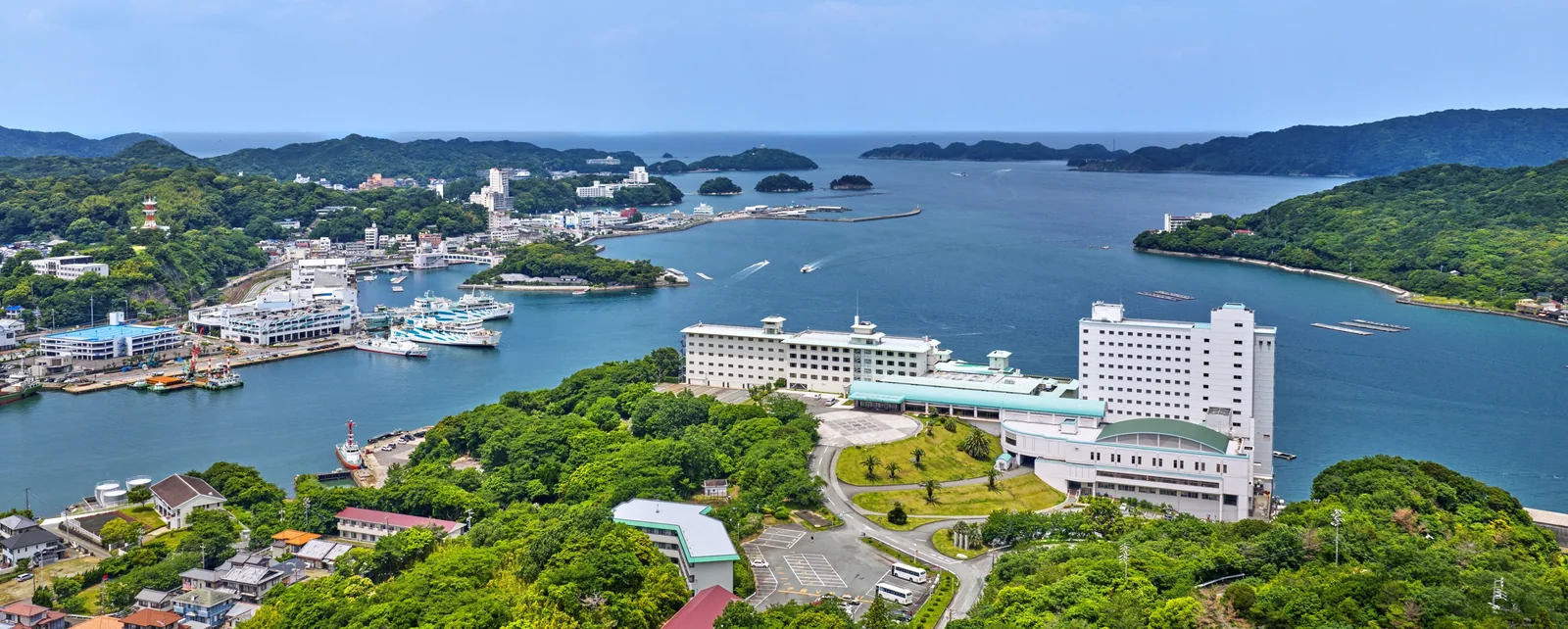
The official reservation site shows the hotel’s current room categories and meal plans. The combination we booked matters: a different building, view or dining arrangement can make for a different stay.
Our April 2026 booking: room, meals and total
Our reservation was for a nonsmoking Migiwa-kan room, listed as 12.5 tatami mats plus a 3-tatami area, with dinner and breakfast. We chose the spring/summer 2026 Kaoru kaiseki plan, which specified dinner in a private dining room.
| Detail | Our April 2026 booking |
|---|---|
| Stay | April 16–17, 2026; one night |
| Party | Two adults and two young children; one room |
| Room | Migiwa-kan, sea-facing Japanese-style room, nonsmoking |
| Meals | Dinner and breakfast for both adults and one child |
| Children's arrangements | One child with meals and bedding; one with neither |
| Listed total | ¥63,250 (about US$400) |
The USD estimate uses the Frankfurter reference exchange rate dated October 30, 2026: approximately US$1 = ¥158. It converts our April 2026 reservation total for comparison; card exchange rates and fees may vary.
The plan name specified Ise-ebi lobster, Matsusaka beef and abalone, with a 21-day early-booking offer. The amount above is the total shown on our historical reservation. It is a useful reference for what our particular family booking included, rather than a rate you can expect on another date.
For a meaningful comparison, enter the children’s details as carefully as the adults’. In our case, one child’s meals and bedding were included and the other child had neither. A quote for four guests with different inclusions would not be the same package, even if it showed the same room photograph.
Our Migiwa-kan room and the sea view
The hotel's official English site names its three buildings Migiwa-kan (汀館), Nozomi-kan (望館) and Misaki-tei (岬亭).
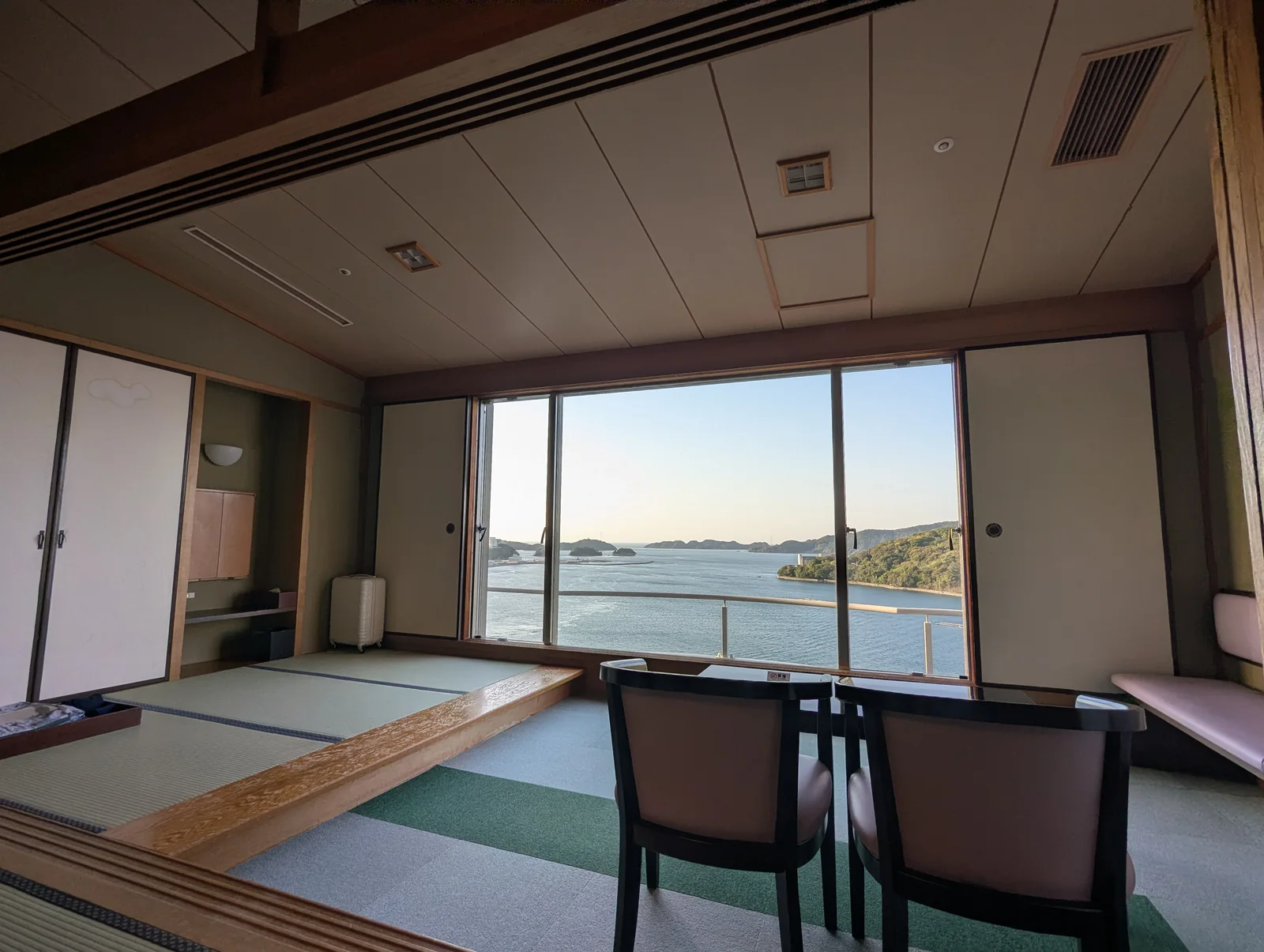
The room we booked was in Migiwa-kan (汀館), with a Japanese-style tatami interior and a sea-facing view. Its listed size was 12.5 tatami mats plus a 3-tatami area. Keeping that full description is more useful than simply calling it a “family room”: the hotel has several buildings and room categories, and the exact listing helps you compare like with like.
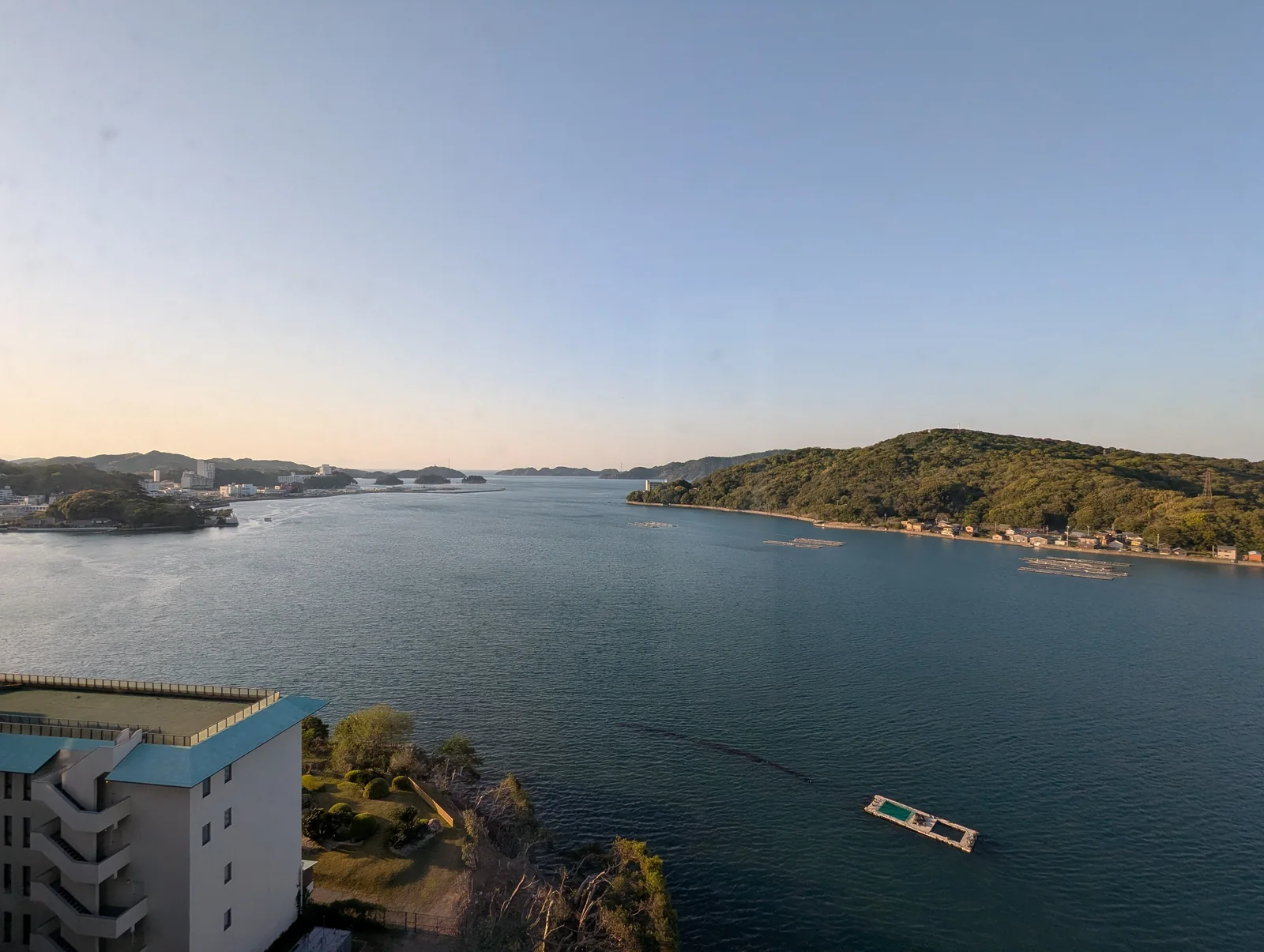
Our photograph shows the tatami floor and chairs beside the large window. The seating by the glass faces out towards the water. The second photograph gives a closer look at the bay and wooded shores visible during our stay. Together, they show both the room’s layout and the coastal setting that was such a memorable part of this visit.
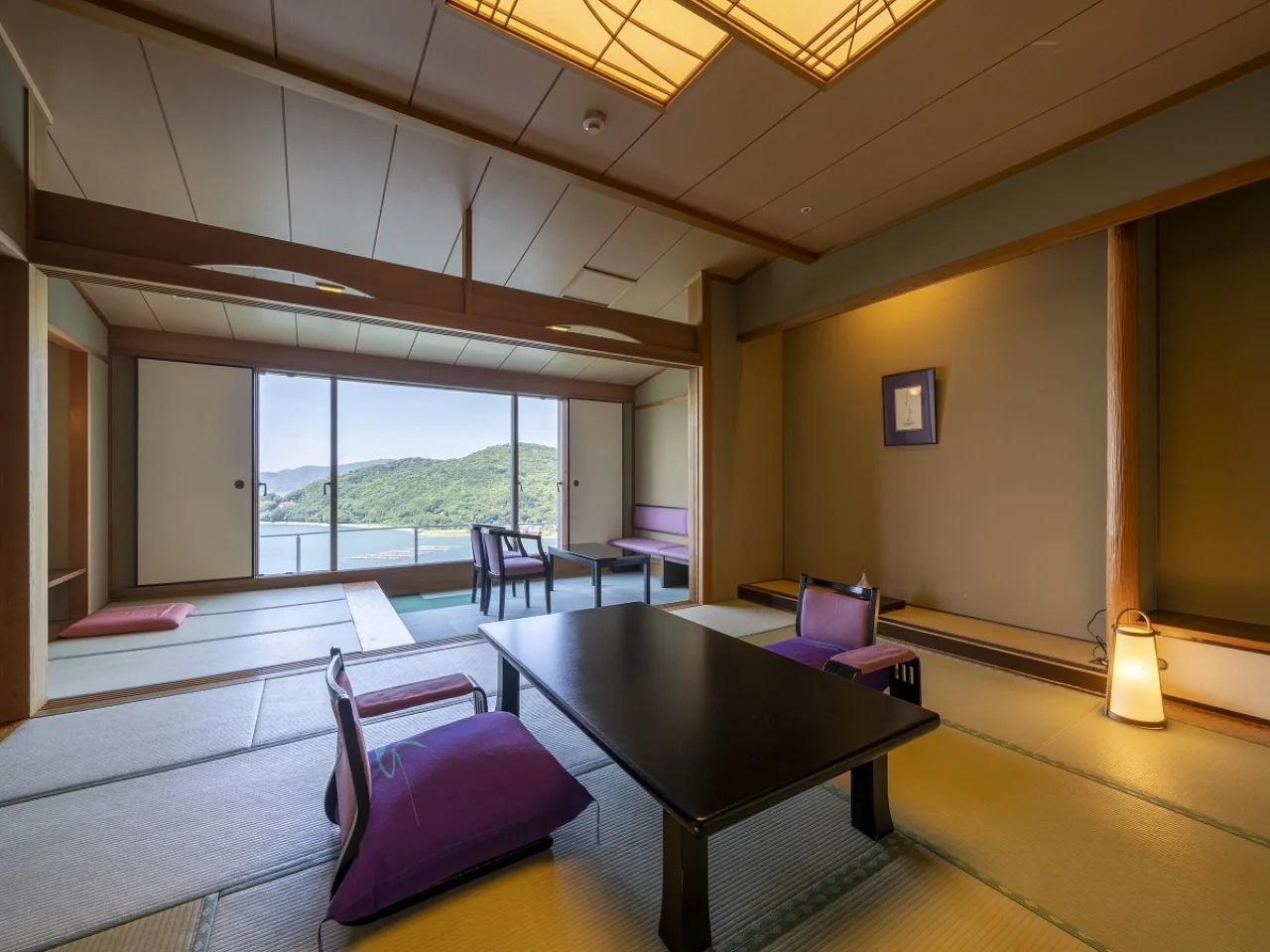
The official room photograph above provides another view of a Migiwa-kan Japanese-style room. It is a category example, so use our own photograph when looking at the room we actually stayed in.
Do not assume every room at the hotel has the same outlook. The official room listings also include mountain-facing Nozomi-kan rooms. If the sea view is one of your reasons for booking, confirm it in the room description. Check the sleeping arrangement too: a Japanese-style room and a room with beds are separate choices, even within the same hotel.
Private-room kaiseki: our Kaoru dinner plan
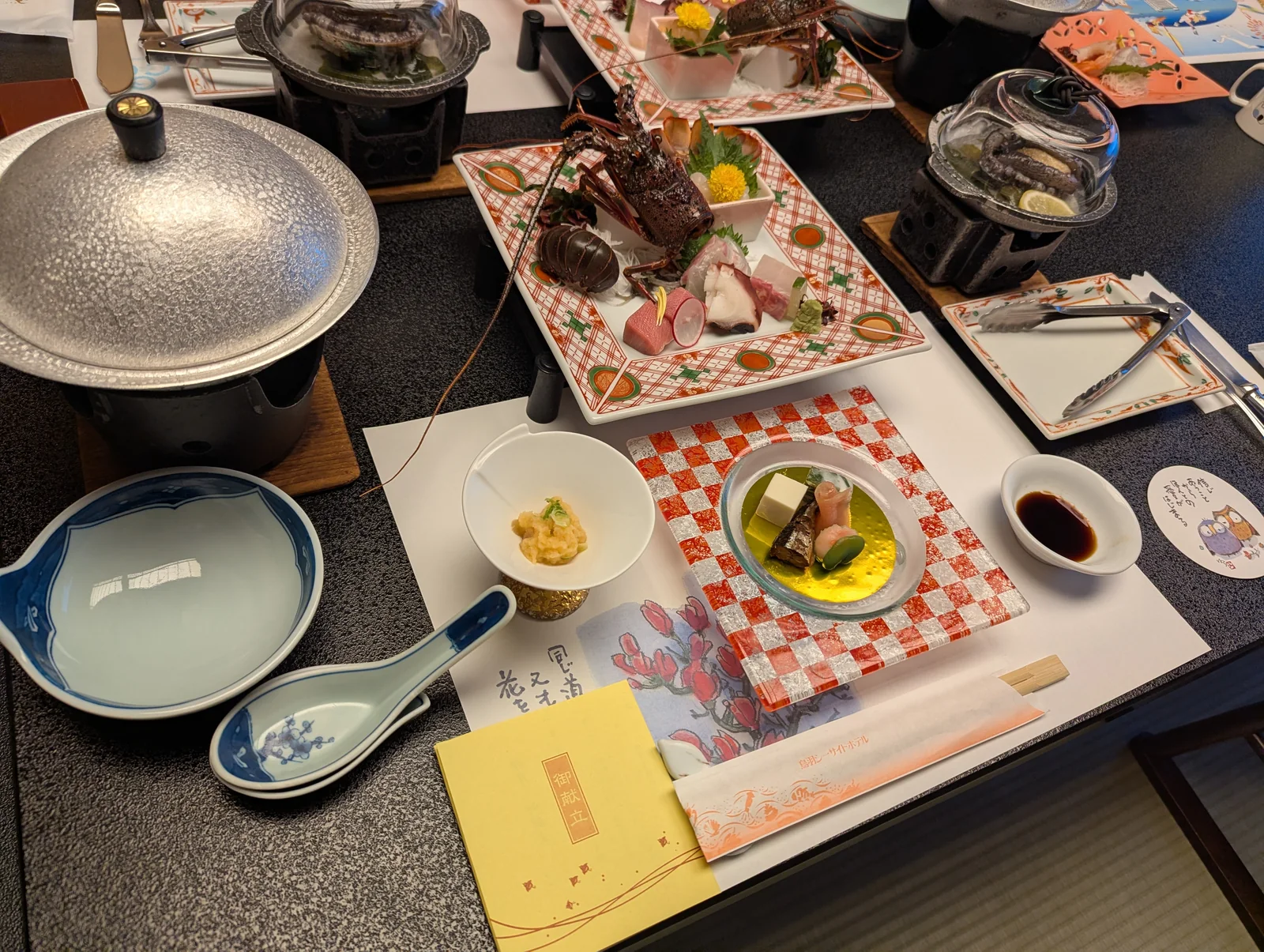
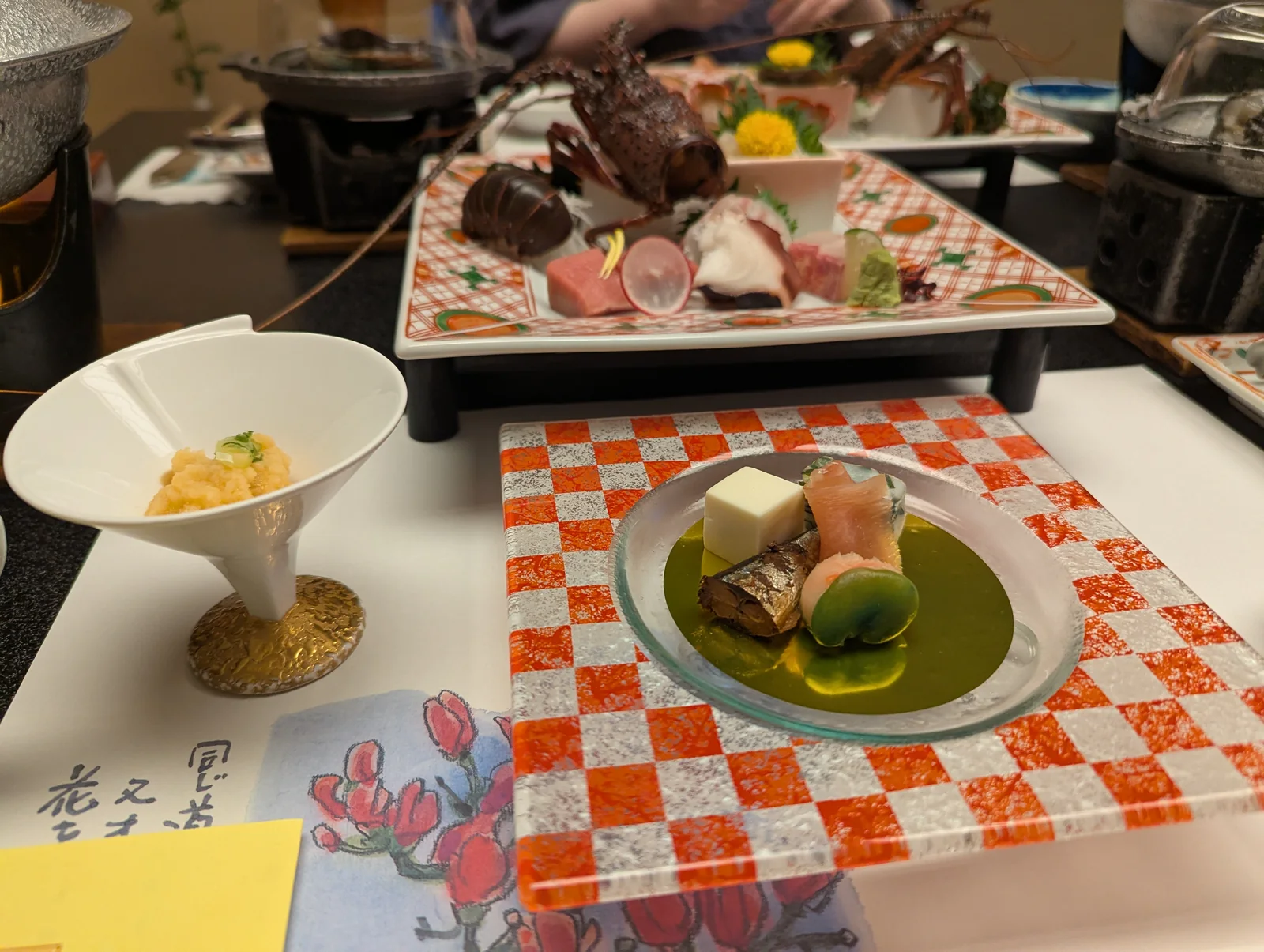
The private dining room made dinner especially enjoyable with small children. We could take our time over the meal without feeling self-conscious around other diners, and I found the food delicious. That combination of good food and a space for our family was a real strength of the stay for me.
Our plan was kaiseki served in a private dining room. It was not a buffet, and the private dining room was separate from our guest room. The photographs below show our actual dinner from the spring/summer 2026 Kaoru plan. They are a record of that meal; a current menu may be different.
For another family considering the hotel, I would pay close attention to the meal plan. The private dining arrangement was one of the most valuable parts of our booking. Look for an explicit promise of private-room dinner, rather than assuming that every half-board rate includes it.
The hotel’s official dining and stay plans include different meal styles, including buffet options. The food photographs here belong to our Kaoru kaiseki dinner; they are not an illustration of the buffet. If the meal is a major part of your trip, compare the plan description and seasonal menu along with the room.
Breakfast was also included for the two adults and one child. This review focuses on the dinner we photographed and remember, so it does not assess the breakfast selection.
The onsen: different baths around the hotel
I enjoyed having several different baths to visit, and I tried all three main bathing areas during our stay. I went in the evening and again the following morning, returning several times and choosing different baths. Trying them all was part of the fun.
I believe my favourite was Kazami no Yu (風見の湯), the bathing area reached along the long corridor. The view from the outdoor bath was wonderful and is the part I remember most clearly.
The hotel's official onsen guide distinguishes the three main areas:
| Bath | Location | What distinguishes it |
|---|---|---|
| Kazami no Yu / 風見の湯 | Nozomi-kan, sixth floor | Bay views from outdoor rock and pot-shaped baths |
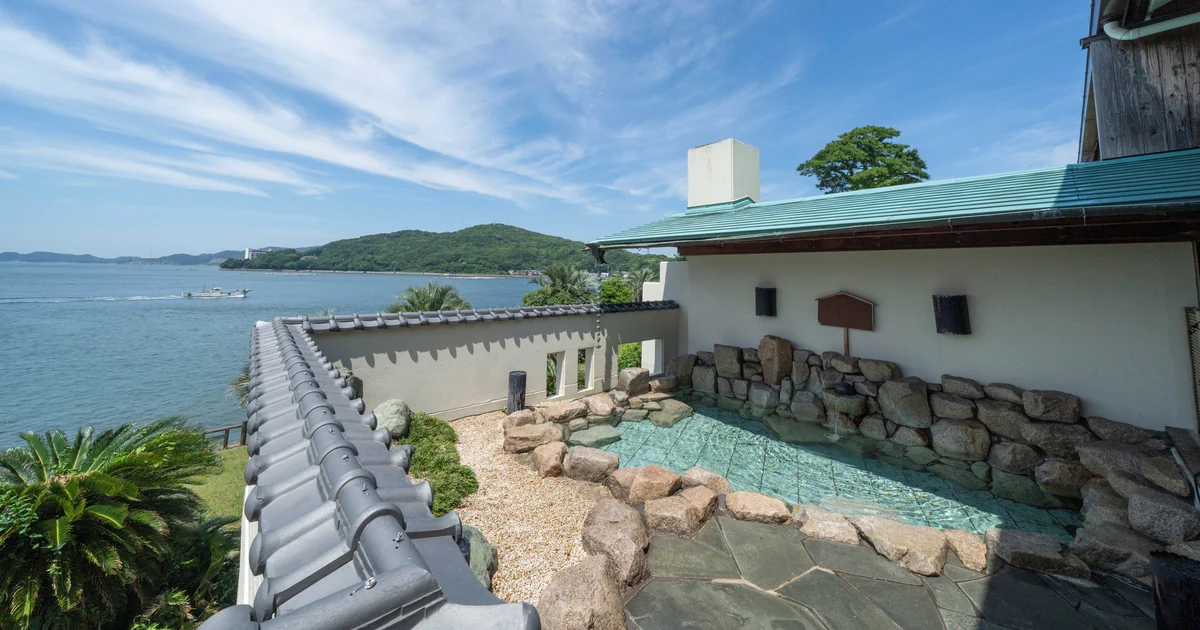
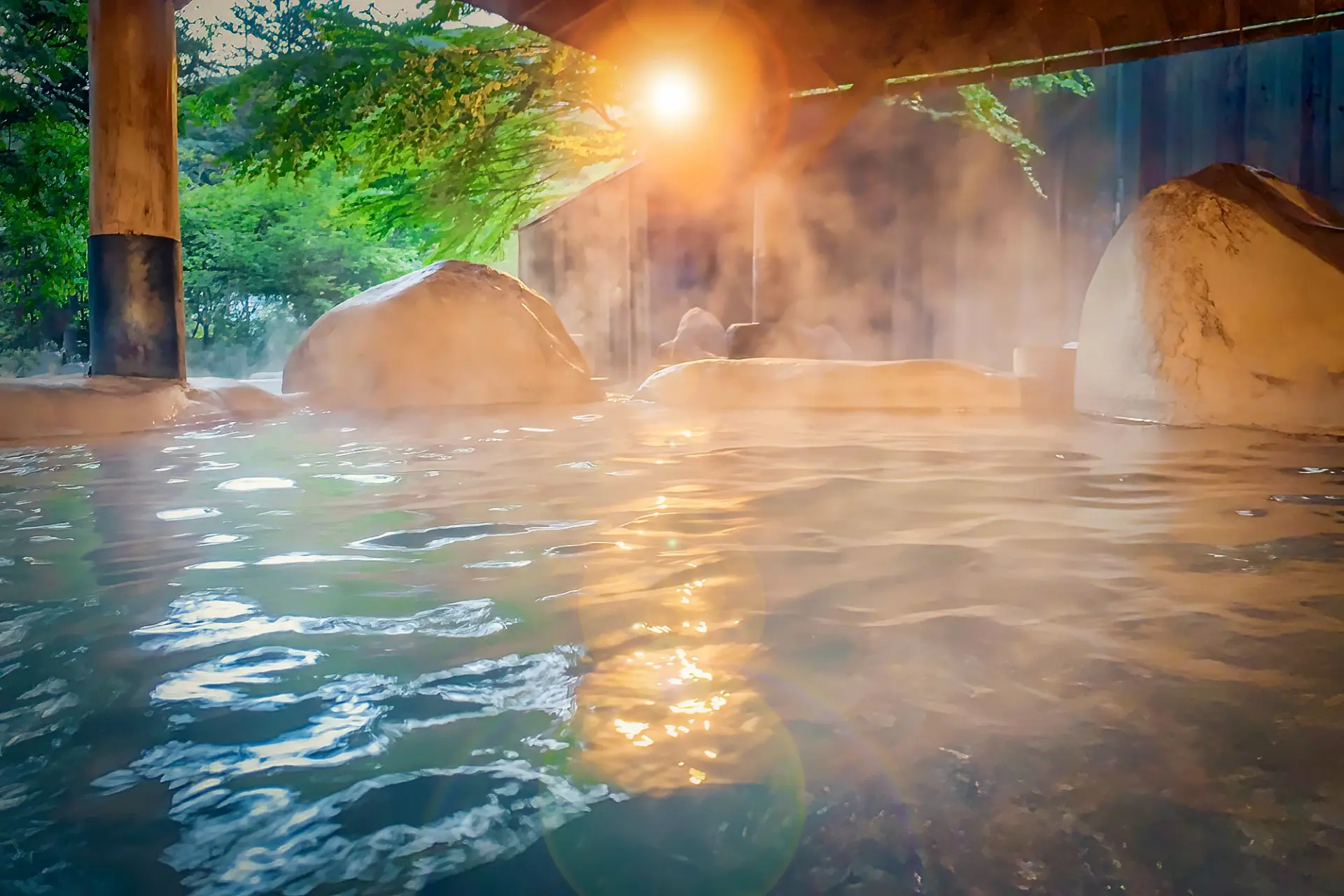
| Misaki no Yu / 岬の湯 | Misaki-tei, first floor | Indoor and outdoor baths close to the sea; pictured at the top of this article |
| Migiwa no Yu / 汀の湯 | Migiwa-kan, third floor | Indoor bathing with a whirlpool and sauna facilities |
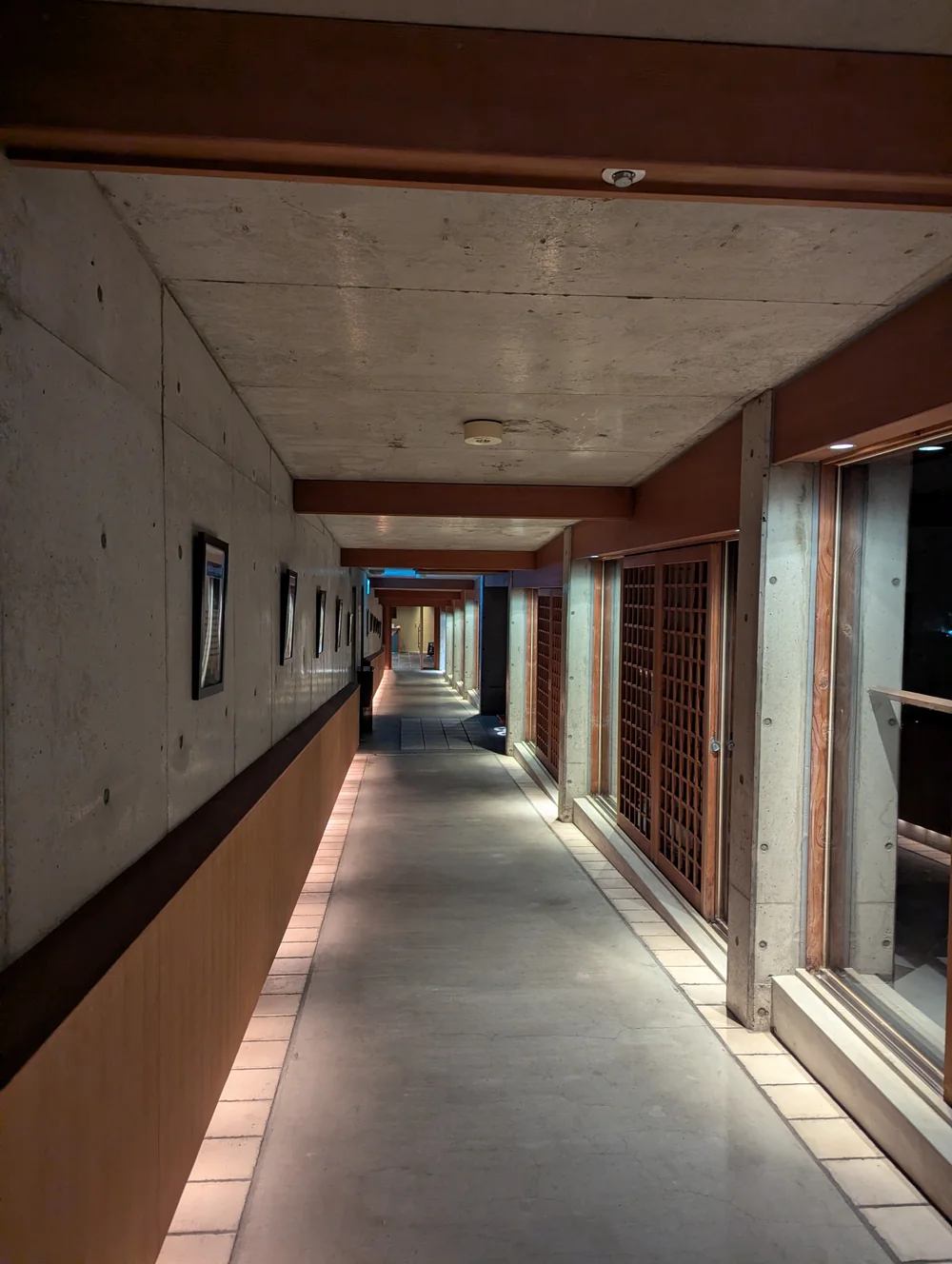
The Ise-Shima Barrier-Free Tour Center's site survey describes the long Kazami corridor leading from the Ippuku area to Kazami no Yu, with a footbath near the far end. This helps explain the route between the shared spaces and the baths.
As checked on November 18, 2026, the Kazami no Yu outdoor baths are closed for renovation from November 1 to December 22, 2026, according to the hotel’s notice. Kazami’s indoor bath remains open from 5:30–9 a.m. and 5:30 p.m.–midnight. Misaki no Yu, Migiwa no Yu, the private family baths and the footbath operate as usual. The work dates may change, so check the latest notice before booking. Our April stay took place before this work.
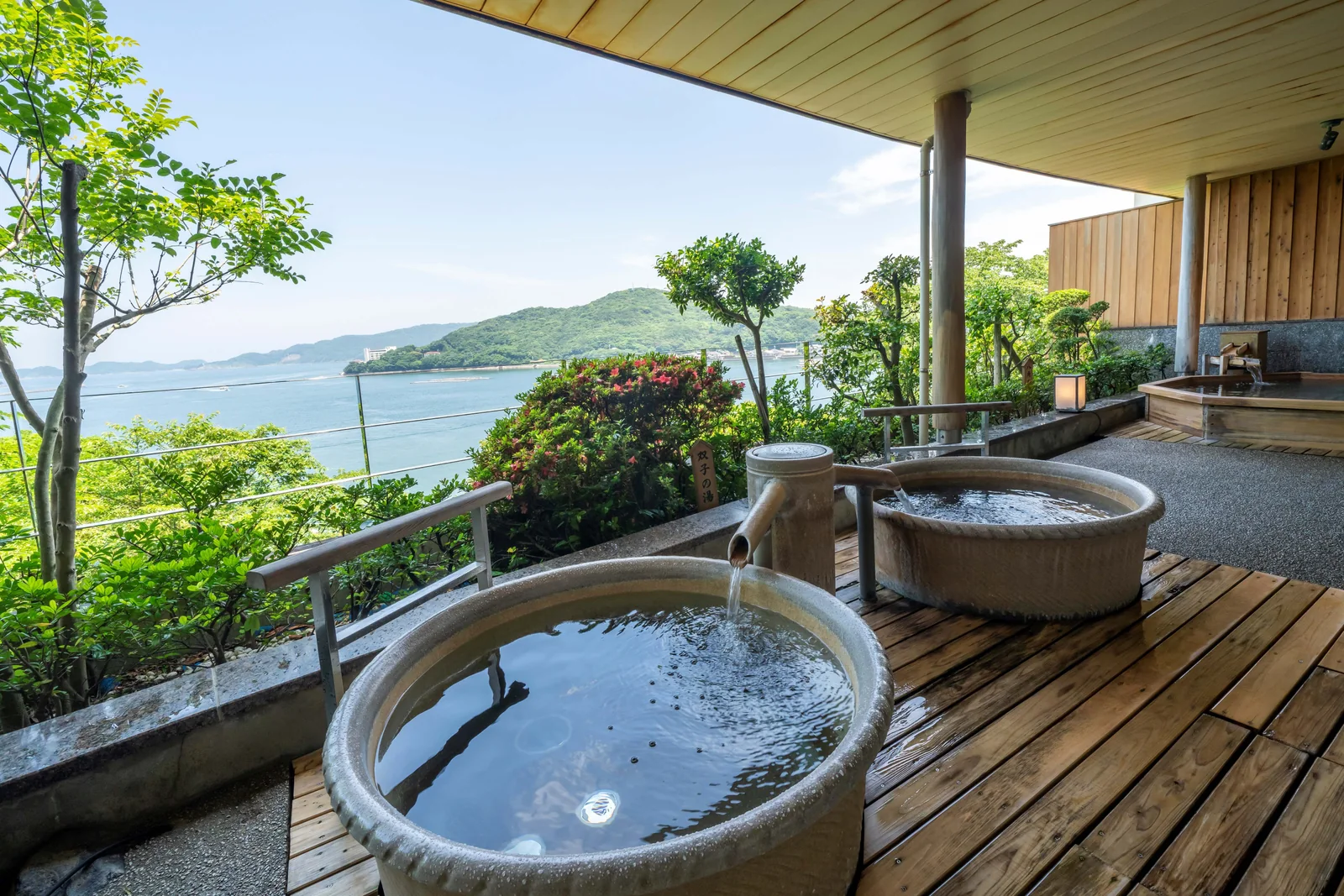
The variety was a large part of the appeal for me. Moving between the baths gave the evening and morning a different rhythm from a stay built around just one bathing room. I would leave room in the itinerary for that, rather than treating the onsen as a quick stop after a late arrival.
There is also a practical trade-off: the baths are in different parts of the hotel, with corridors between them. If walking distance, stairs or step-free access will affect your stay, ask the hotel about the route from your specific room category before booking. The regional accessibility survey linked above is a useful starting point, but individual needs and current arrangements still matter.
Guests with tattoos cannot use the communal baths, according to the official Q&A the hotel supplied to JAPANODE on October 30, 2026. This is a booking consideration if the onsen is one of your main reasons for choosing the hotel.
If this is your first Japanese bath experience, read our onsen etiquette guide before you go. For bathing arrangements with young children, confirm the current policy directly with Toba Seaside Hotel.
Around the hotel with two young children
With two young children, the dinner arrangement made a clear difference to how relaxed I felt. It is the detail I would prioritise when comparing another family stay here. Our children’s meal and bedding inclusions also differed, so the party size alone does not explain what the booking provided.
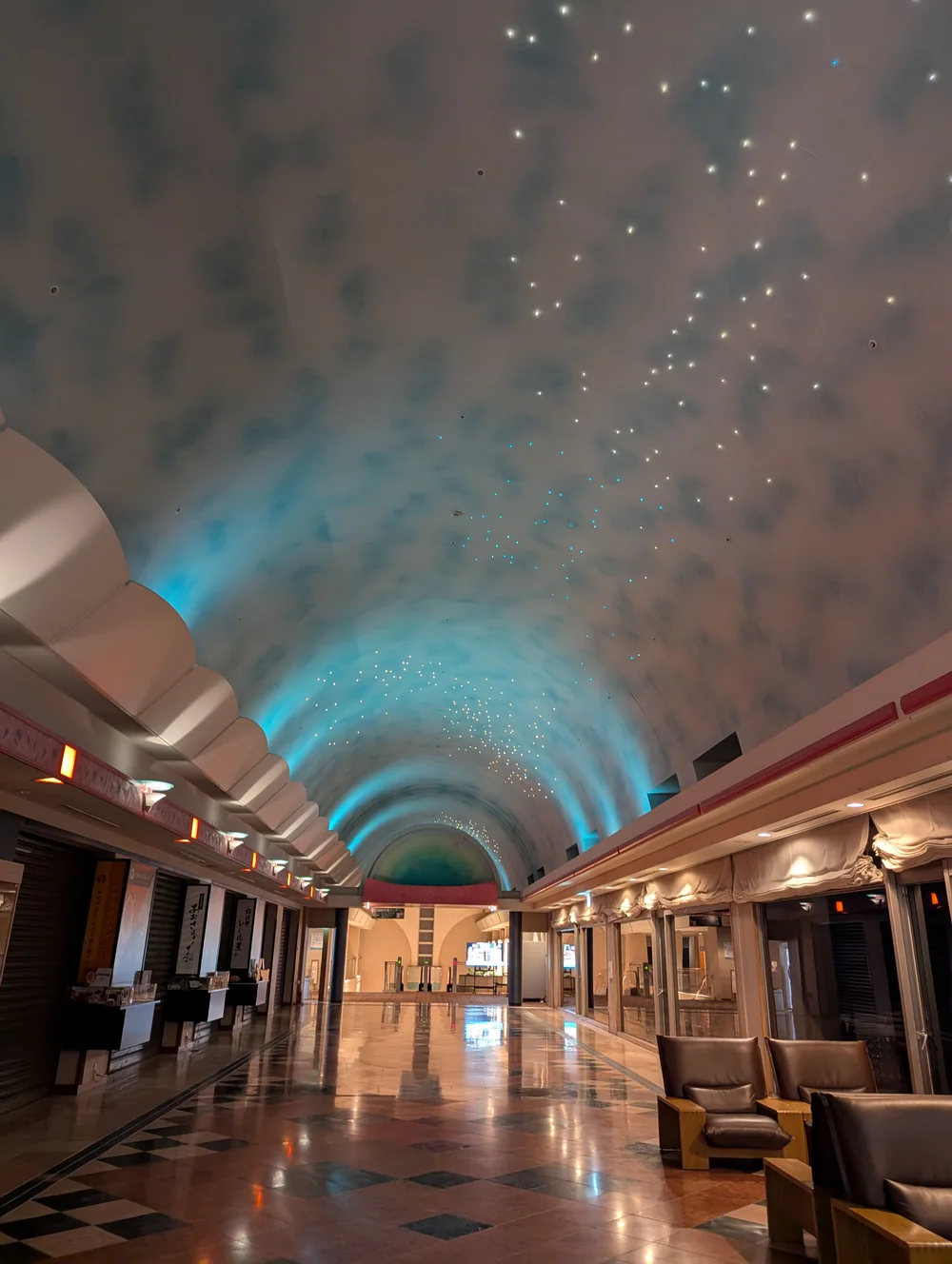
The hotel’s appeal extended beyond the room. Our photographs include the bay-facing shared spaces, the route through the building and a corridor lit blue in the evening. Those images help show what it feels like to move around a larger coastal hotel, while the view beside the escalator was a particular highlight for me.
The view beside the escalator
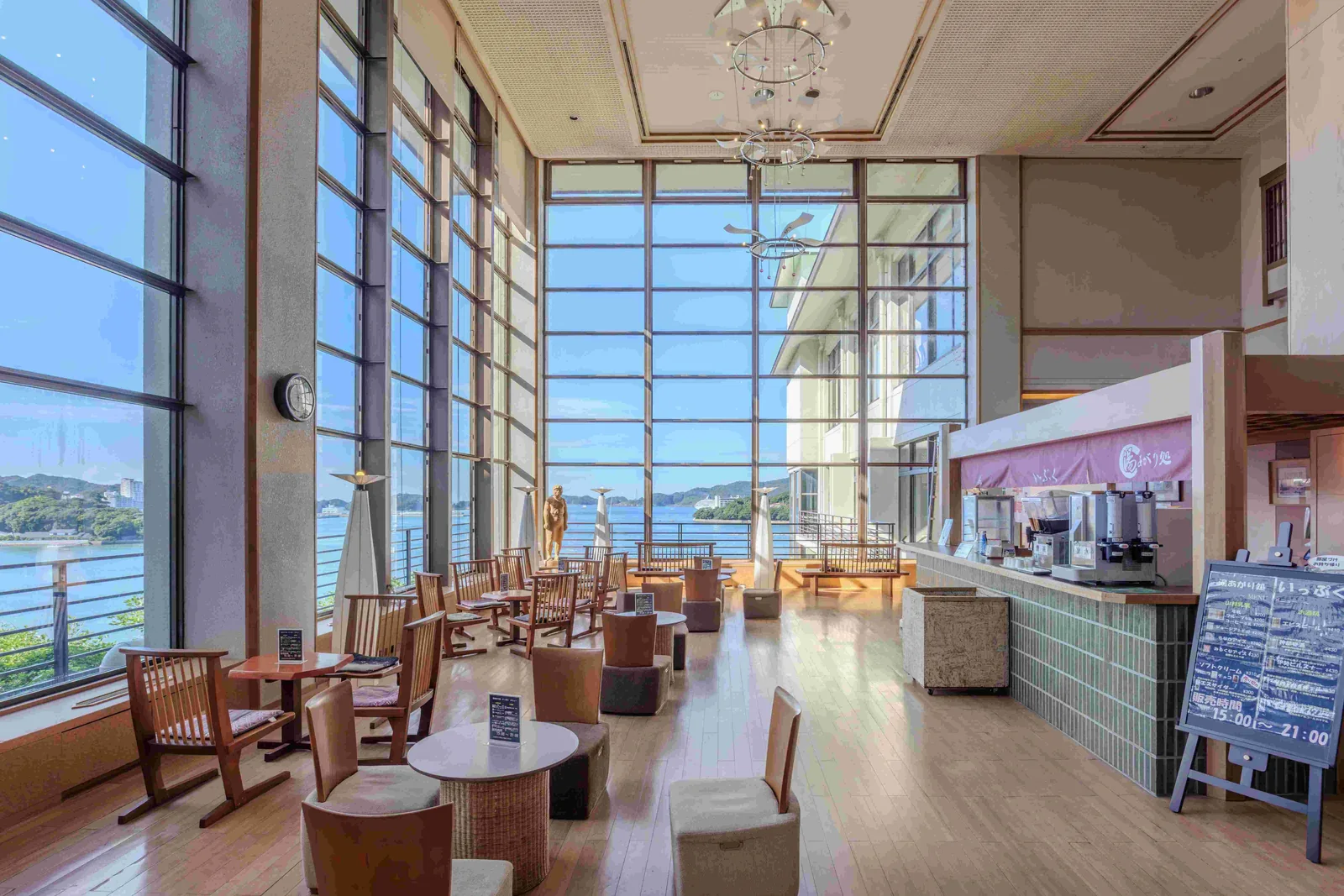
The scenery beside the escalator was another highlight for me. The tall windows look across Toba Bay, with the water visible beyond the seating area below. I loved that view. It deserves a place in the story of the stay alongside the room and the baths.
The official photograph below shows the Ippuku relaxation area from another viewpoint. The broad windows and seating make the relationship between the hotel and the bay especially clear. It also helps put the closer view from my video into context.
Getting to the hotel and planning an Ise-Shima trip
Plan Toba as a one- or two-night coastal stay within a Nagoya, Osaka or Kyoto trip. From Tokyo, travel via Nagoya. This gives you time for dinner and the baths alongside the aquarium or an Ise visit. The routes below are planning suggestions, rather than a record of how our family travelled.
From Nagoya, Osaka, Kyoto or Tokyo
| Starting point | Rail route to Toba Station | Approximate journey |
|---|---|---|
| Nagoya | Kintetsu Limited Express from Kintetsu-Nagoya to Toba | Around 1 hour 40 minutes–2 hours |
| Osaka | Kintetsu Limited Express from Osaka-Namba to Toba | Around 2–2½ hours |
| Kyoto | Kintetsu Limited Express from Kyoto; choose a direct departure or check the required connection | Around 2¼–2½ hours |
| Tokyo | Tokaido Shinkansen to Nagoya, then walk to Kintetsu-Nagoya for a Limited Express to Toba | Allow roughly 3½–4 hours, depending on the connection |
These are broad planning estimates to Toba Station, based on the hotel's access guide and Toba's official tourism information, checked on October 30, 2026. Add time for the hotel shuttle and its departure schedule. Use Kintetsu's route search for your actual departure; slower trains and longer connections can take more time.
Flying into Chubu Centrair (NGO): take Meitetsu to Meitetsu Nagoya, then transfer to Kintetsu-Nagoya for Toba. The airport lists 28 minutes for the fastest μ-SKY train to Nagoya; that is only the airport leg. Follow the airport rail guide and Kintetsu's Nagoya transfer directions.
Flying into Kansai Airport (KIX): take Nankai to Namba, then walk to the separate Osaka-Namba Station for Kintetsu. Kintetsu's airport connection guide allows about 40 minutes for the Rapi:t airport leg, plus the walk, connection and onward train. Our Kansai Airport transport guide explains the first leg. Allow for immigration and baggage collection before committing to a dinner-inclusive arrival day.
The nationwide Japan Rail Pass does not cover Kintetsu; see the official JR Pass coverage. Kintetsu Limited Express trains require both a basic fare and a reserved-seat Limited Express ticket, as explained in Kintetsu's ticket guide. If you are making several Kintetsu journeys, compare the Kintetsu Rail Pass 5day with individual fares; the Limited Express supplement is still separate. Our JR Pass Calculator is for the JR parts of your wider itinerary.
Toba Station to the hotel: Kintetsu side, Exit 1
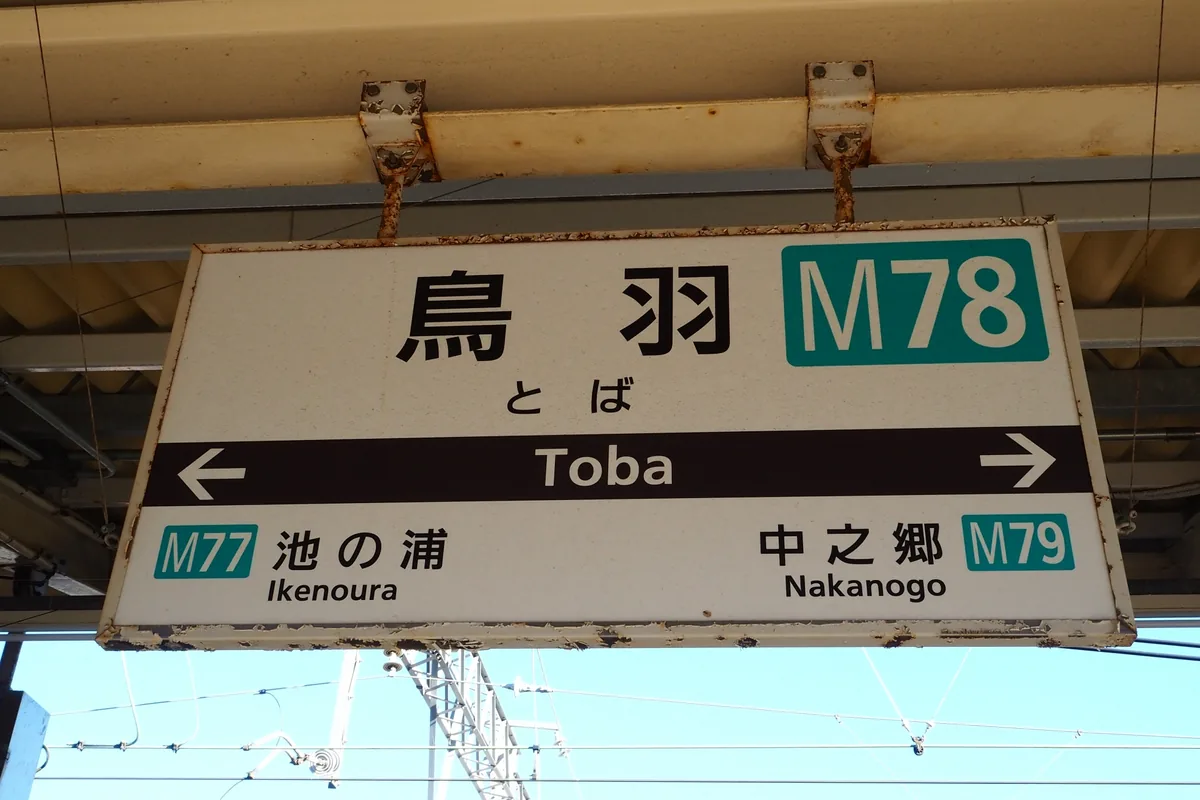
Both JR and Kintetsu serve Toba, but the hotel's free shuttle boards on the Kintetsu side, at east-side Exit 1. From the Kintetsu ticket gate, turn left towards Exit 1 and go down to ground level. The ride takes about ten minutes. Check the hotel's boarding directions and timetable: there are gaps between departures.
For JR arrivals, the hotel's directions say to leave the JR gate and take the stairs to the second-floor Kintetsu side. It notes no elevator on that described connection. If you have a pushchair or need step-free access, confirm a suitable route with station staff or the hotel before travelling.
Where a Toba stay fits in a Japan itinerary
From Nagoya or Kansai, one option is to visit Ise first, continue to Toba for the night, then visit the aquarium or pearl island before returning. With young children, choose one main outing each day; allow two nights if you want both a fuller Ise visit and Toba's sights.
On a Tokyo–Kyoto trip, you could leave the Shinkansen route at Nagoya, spend one or two nights in Ise-Shima, then continue to Kyoto by Kintetsu or return to Nagoya for the Shinkansen. This is an added coastal excursion requiring extra travel time, rather than a stop directly on the Tokyo–Kyoto train line.
Our Ise-Shima travel guide explains the local connections between Ise, Toba and Kashikojima. If you are comparing coastal stays, our Kashikojima Hojoen review covers another family stay on Ago Bay; Toba Seaside Hotel faces Toba Bay. Our Japan train guide explains how the different railway operators fit together.
Things to do near Toba Seaside Hotel
Toba Aquarium makes a natural addition to a family stay here. You can give it a morning or afternoon, then leave time at the hotel for the sea views, dinner and baths. Pearl culture, a coastal shrine and an Ise visit offer other ways to build the trip around your interests.
The driving estimates below come from the hotel's official sightseeing guide, checked on October 29, 2026. Allow extra time for traffic, parking and the walk from the car park. These are driving times; the hotel shuttle serves Toba Station.
| Nearby outing | What to go for | Approximate drive from the hotel |
|---|---|---|
| Toba Aquarium | Sea otters, aquatic life and the seaside setting | 7 minutes |
| Mikimoto Pearl Island | Pearl cultivation, jewellery and ama diving demonstrations | 9 minutes |
| Meoto Iwa and Futami Okitama Shrine | The paired rocks and a walk beside the sea | 20 minutes |
| Ise Jingu and Okage Yokocho | Shrine grounds, traditional streets and a lunch stop | About 30 minutes to Ise Jingu; 26 minutes to Okage Yokocho |
Toba Aquarium: our children loved the sea otters
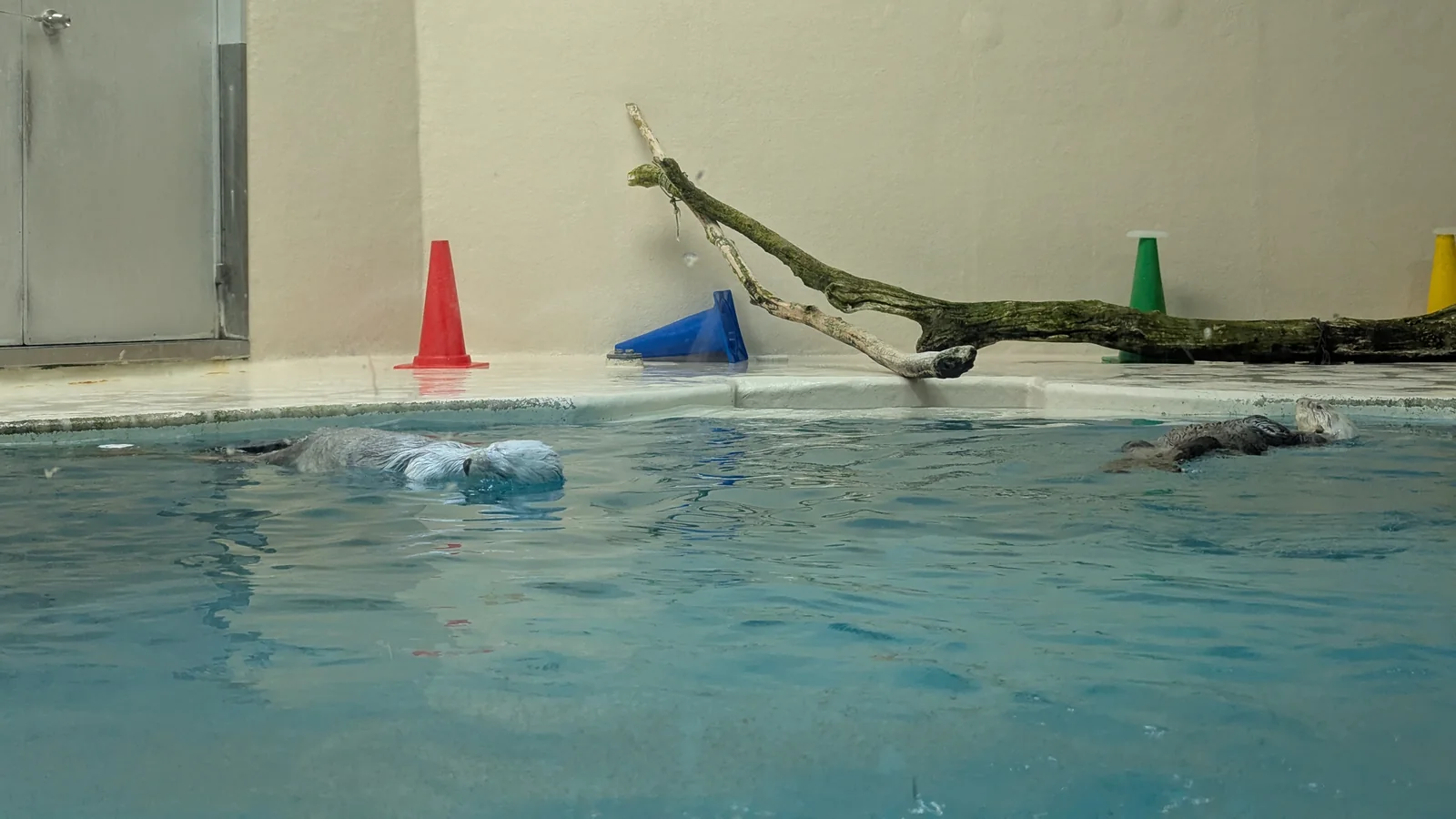
We visited Toba Aquarium on this trip, and the children were delighted by the sea otters.
There is a particular reason to see the sea otters here: the aquarium's official sea-otter history records that, in 2025, Toba became Japan's only aquarium exhibiting sea otters.
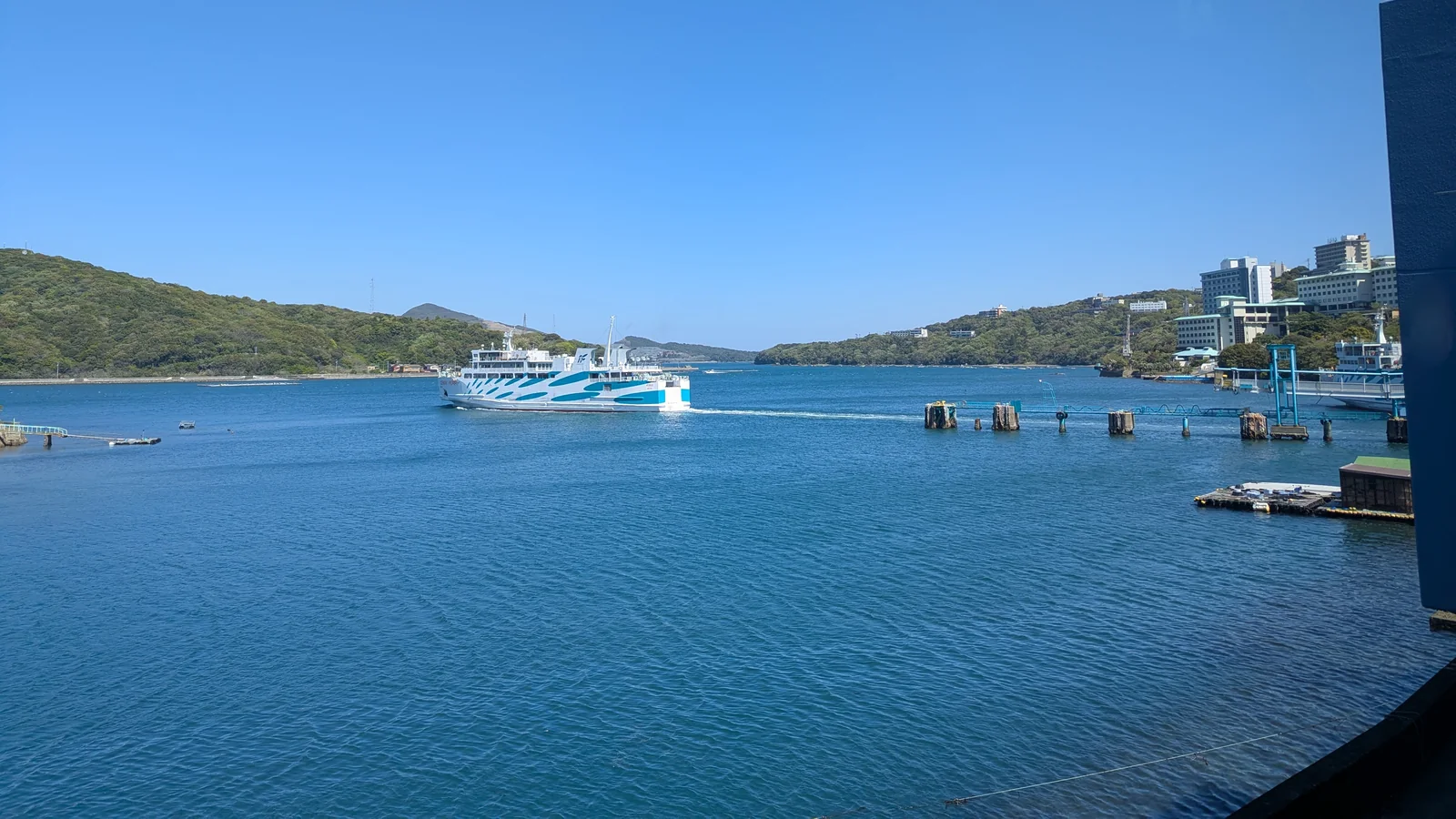
The setting was a highlight for me too. The aquarium is right beside the sea, and I thought the coastal scenery was beautiful. It added another memorable view of Toba to the ones we enjoyed at the hotel.
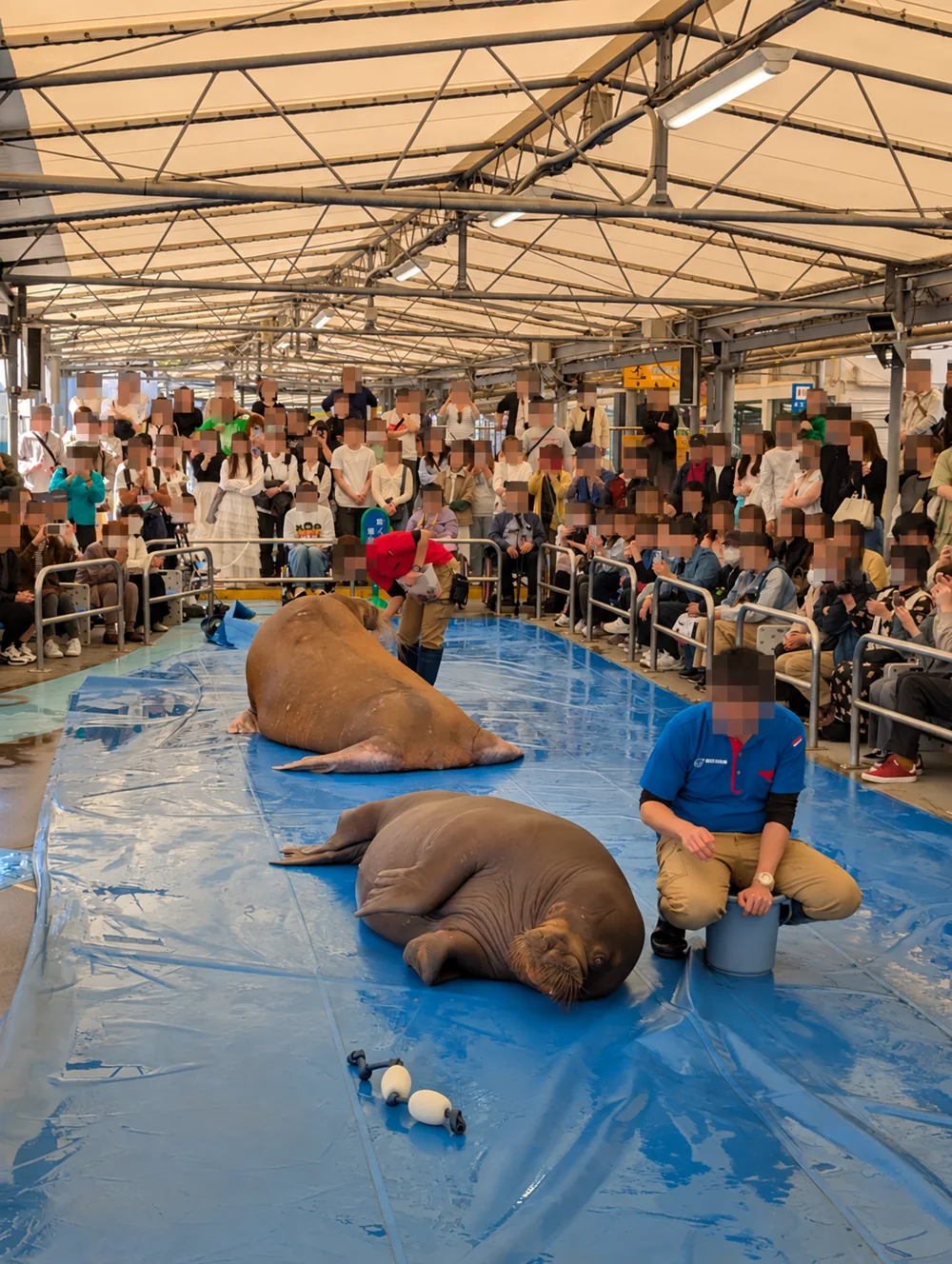
Its English visitor information suggests roughly two hours to see the areas. For family planning, allow a half-day with young children to leave room for breaks and queues. Standard opening hours are 9:30 a.m.–5 p.m., with last admission one hour before closing. Seasonal hours can differ, so check the official information for your date.
Sea-otter viewing has its own queue and rules. The official viewing notice describes approximately one minute at the viewing space before moving on. Check the day's arrangements if this is your main reason for going; animal care and crowd levels can affect viewing.
Without a car, take the hotel's scheduled shuttle to Toba Station, then follow the aquarium's access directions for the roughly ten-minute walk. Build in the wait for the shuttle as well as the walk, especially with children and bags.
Mikimoto Pearl Island: the story behind the pearls
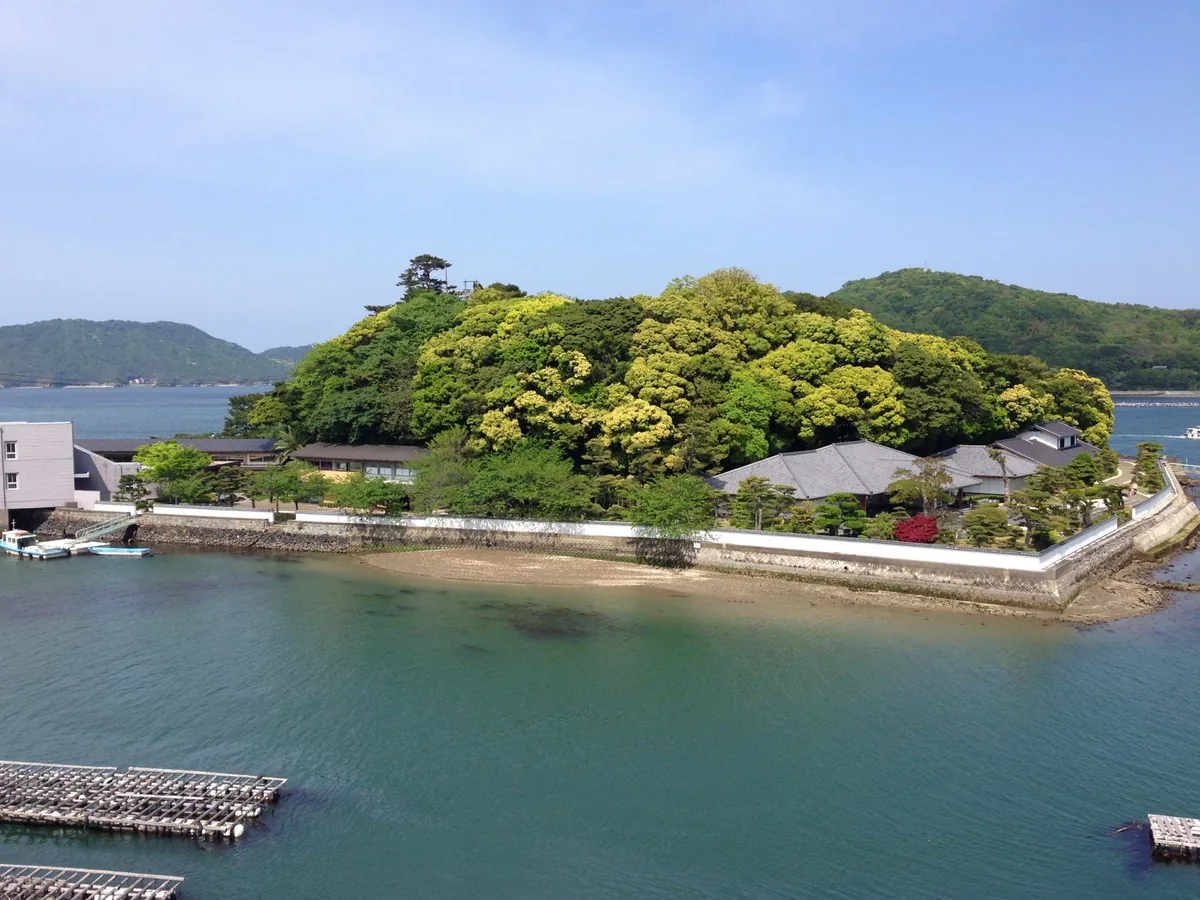
Choose Mikimoto Pearl Island if you would like to connect the bay scenery with the region's pearl industry. Its pearl museum explains how pearls form and how they are cultivated, with jewellery and pearl artworks also on display. The island publishes a separate ama diving demonstration timetable, so check it before deciding when to arrive.
The official access page places it about five minutes on foot from Toba Station. It is another option after returning to the station by shuttle. For a short family trip, choose it as your main outing or leave it for a second day if the aquarium takes most of your sightseeing time.
Meoto Iwa: a coastal stop at Futami Okitama Shrine
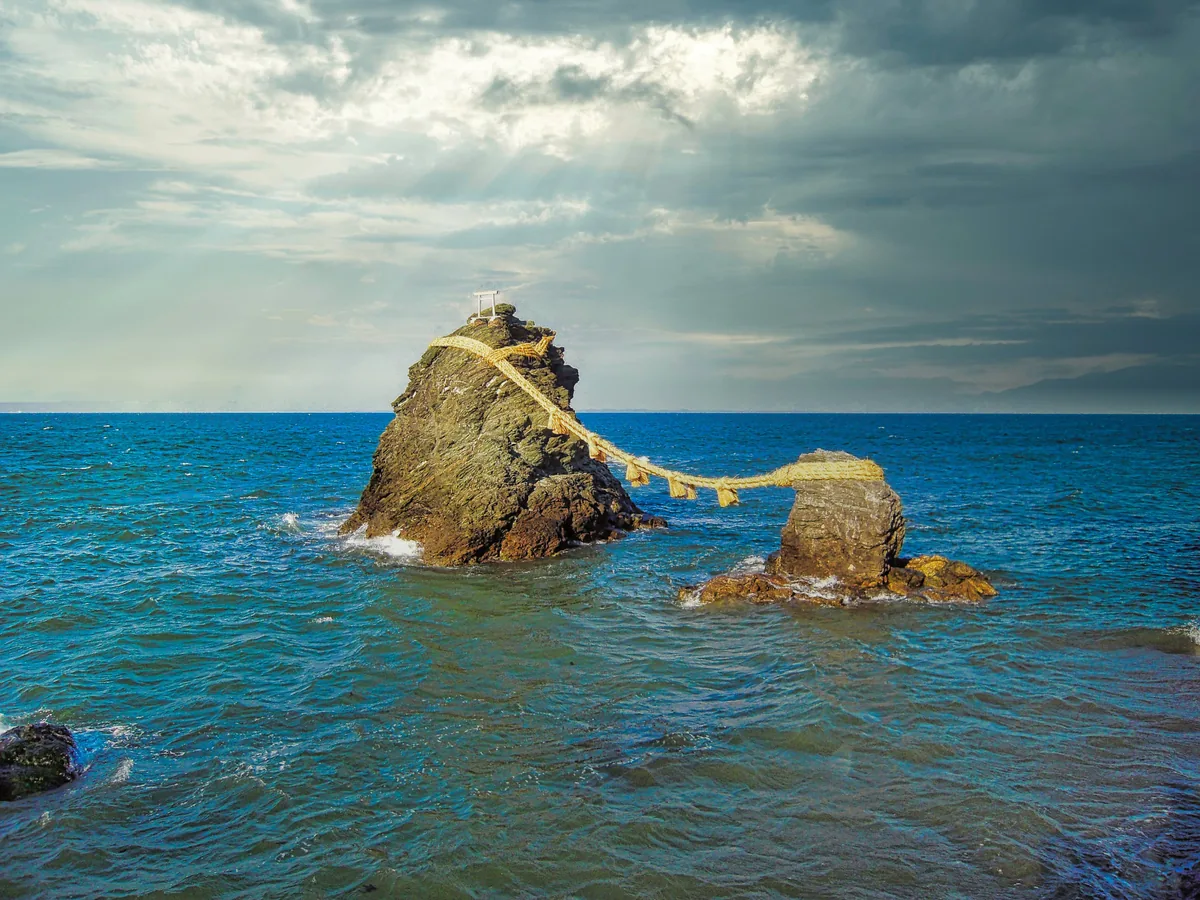
The paired rocks of Meoto Iwa, joined by a sacred rope, stand offshore at Futami Okitama Shrine. This is an option for a walk by the sea and a shrine visit, particularly when travelling between Toba and Ise by car. The Ise tourism association's guide introduces the rocks, shrine and surrounding area.
For public transport, plan the connection to Futamiura separately. The tourism association's access guide gives a walk of about 15 minutes from JR Futaminoura Station to the shrine. Choose this outdoor stop around the weather and the time available for the onward journey.
Ise Jingu and Okage Yokocho: allow a separate part of the day
Ise Jingu works well on the way into or out of the region. Geku and Naiku are separate shrine sites, while Oharaimachi and Okage Yokocho belong to the Naiku side of the visit. Allow time for the shrine grounds and food stops, alongside the journey from Toba. The official shrine access page and Okage Yokocho directions help with the final connections.
If you have one night, choose whether the aquarium or a longer Ise visit is the priority. Our Ise-Shima travel guide explains the shrine connections and how Ise, Toba and Kashikojima fit together.
A relaxed two-day plan with children
This is a suggested arrangement based on the nearby sights and the parts of the hotel stay we enjoyed:
- Day 1: arrive in Toba and visit the aquarium. Leave a morning or afternoon for the visit, then travel to the hotel with time before dinner. Confirm your booked check-in and dining times when choosing the connection.
- Day 2: enjoy the hotel morning, then choose one outing. After breakfast and checkout, consider Mikimoto Pearl Island before your onward train, or Meoto Iwa if it fits a drive towards Ise. You can also put the aquarium on this day if arrival day is mainly travel.
With two nights, there is more room for both Toba's attractions and a fuller Ise shrine visit. The aim is to keep time for the private dinner and baths that made our own hotel stay enjoyable.
What to compare before booking
This stay’s strongest combination was a sea-facing room, a private kaiseki dinner and time for several baths. Those are the features I would use to compare prices. A cheaper listing may still suit you, but check which parts of that combination it includes.
| What to check | Why it matters |
|---|---|
| Building, room category and view | Our stay was in a sea-facing Migiwa-kan Japanese-style room; other categories differ. |
| Dinner style and venue | Our private dining room was tied to the selected Kaoru plan. Check the wording on your own rate. |
| Children’s meals and bedding | Our two children had different inclusions. Enter ages and arrangements before comparing totals. |
| Bath availability | Our April experience preceded the autumn renovation work. Confirm which baths will be open. |
| Total and cancellation terms | Compare the full party’s booking and the conditions attached to that rate, not just a headline price. |
For travellers who mainly need a quick overnight stop, the room-to-bath distances and the time set aside for dinner deserve consideration. For a stay where the hotel itself is part of the trip, those same shared spaces and different baths offer more to explore. The private dinner and the views are what I would most want to recreate from our visit.
You can use the official reservation link below to check current availability. Our ¥63,250 booking (about US$400 at the October 30, 2026 reference rate) remains a record of one night in April 2026, for our particular mix of adults, children, meals and bedding.
Check the exact building, sea view, dinner arrangement and children's inclusions on the official Toba Seaside Hotel reservation site. JAPANODE earns no affiliate commission through this direct hotel link.
Make it your trip
Still planning your Japan trip?
Pick the question on your mind. Compare your options, check the details and take one more thing off your list.

Which eSIM fits your Japan trip?
Maps, messages, hotspot use: compare five providers by data allowance, network and plan limits before you choose.
Find my Japan eSIM
What should your travel insurance cover?
Compare medical cover, cancellation and activity limits across five options, with the exclusions worth checking.
Compare cover & limitsWould a JR Pass save you money?
Add your train journeys and compare individual tickets with the nationwide pass. See which costs less for your route.
Calculate my rail costsFrequently Asked Questions
Check-in is at 3 p.m. and check-out is at 10 a.m. The hotel's official FAQ states that early check-in and late check-out are generally not available. Check the conditions of your booked plan when arranging your arrival and departure.
Yes. The hotel confirmed in its official FAQ that English-language assistance is available.
Yes. The hotel's official FAQ confirms that it can hold your luggage after check-out. Allow time to return to the hotel to collect your bags before your onward journey.
Yes. According to the hotel's official FAQ, free Wi-Fi is available in all guest rooms, the lobby and some restaurants.
No. The hotel's official FAQ states that guests with tattoos are not permitted to use the communal baths. Consider this policy before booking if bathing is an important part of your stay.
Yes. The hotel's official FAQ lists day-use bathing from 2 p.m. to 10 p.m.; visitors should ask at the front desk. Confirm current availability and charges before travelling, particularly during bath renovations.
We booked a nonsmoking, sea-facing Japanese-style room in Migiwa-kan, listed as 12.5 tatami mats plus a 3-tatami area, for April 16–17, 2026.
The booking record listed a total of 63,250 yen for one night in one room, for two adults and two young children. That is about US$400 using the reference exchange rate checked on October 30, 2026. One child had meals and bedding included; the other had neither. This is a historical booking total, not a current hotel rate; card exchange rates and fees may vary.
Yes. Our early-booking Kaoru kaiseki plan specified private-room dinner and named Ise-ebi lobster, Matsusaka beef and abalone. We found the private dining room particularly helpful with two young children: we could relax and enjoy the food without feeling self-conscious around other diners. Other meal plans may differ.
No. The official reservation site also lists mountain-facing rooms in Nozomi-kan. Choose the exact building, room category and view when comparing prices.
The free hotel shuttle leaves from the Kintetsu side of Toba Station, at east-side Exit 1, and takes about ten minutes. JR passengers should follow the hotel's directions to the second-floor Kintetsu side. Check the current timetable and station route before arrival; there are gaps between departures, and the hotel's described route from JR involves stairs.
Yes. Use the hotel's scheduled shuttle to Toba Station, then walk about ten minutes to the aquarium. The shuttle journey is about ten minutes, but allow extra time for the scheduled departure and walking with children. The hotel also lists an approximate seven-minute drive directly to the aquarium.
The hotel lists Kazami no Yu, Misaki no Yu and Migiwa no Yu. The Kazami outdoor baths are closed for renovation from November 1 to December 22, 2026, according to the hotel’s current notice. Kazami’s indoor bath remains open from 5:30 to 9 a.m. and 5:30 p.m. to midnight; Misaki no Yu and Migiwa no Yu operate as usual. Check the hotel’s latest notice for your dates.
Written by
JAPANODE
Based in Japan, sharing real travel tips and firsthand photographs for visitors.
You Might Also Like
Accommodation
Why I Recommend Kashikojima Hojoen for an Ise-Shima Stay
13 min read
Itinerary
Ise-Shima Travel Guide: Ise Jingu, Bay Views & a Ryokan Stay
16 min read
Culture
Japan Onsen Tattoo Rules: Etiquette & Where to Bathe (2026)
21 min read

Transportation
The Complete Guide to Japan's Train System for First-Time Visitors
16 min read