On this page
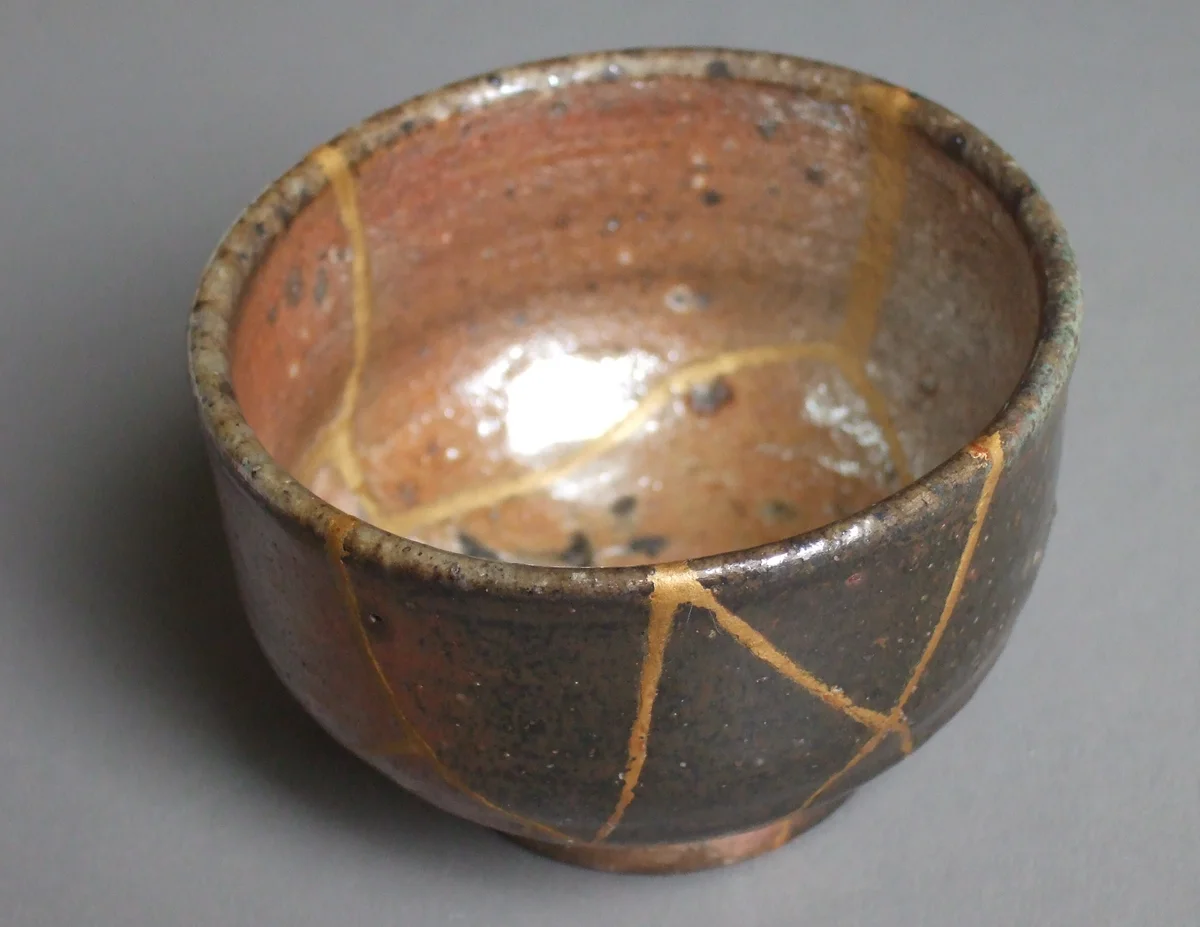
A fine gold line runs across the glaze of a cup. It branches near the rim, changes direction, and disappears around the other side. Follow it with your eyes and the vessel becomes more interesting: you begin to see how it broke, how the pieces fitted together, and where someone took the trouble to save it.
That is the invitation of kintsugi, the Japanese craft of repairing ceramics with lacquer and a precious-metal finish. A repaired bowl carries its history in a form you can see. The original shape and decoration remain, joined by a pattern that belongs to that particular object.
For a visitor to Japan, kintsugi offers a different kind of cultural encounter. Instead of moving on to another sight, you can spend time with one small object: looking closely, listening to a craftsperson and trying a carefully defined part of the work yourself. The appeal begins with the finished gold line, then grows as you discover what lies beneath it.
This guide introduces the craft before comparing ways to experience it in Tokyo. Museum, tourism and workshop information was checked on November 8, 2026. The workshop descriptions are researched comparisons, not accounts of classes personally tested by JAPANODE. The photographs illustrate repaired objects, not the outcomes promised by the featured studios.
The Viator booking buttons contain affiliate links. JAPANODE may earn a commission at no extra cost to you. Direct studio resources are included so you can compare the materials and teaching as well as the booking channel.
What is kintsugi?
Kintsugi is often translated as golden joinery. In its traditional form, lacquer-based materials join and fill damaged ceramics; a finishing layer is dusted with gold powder. The Smithsonian's National Museum of Asian Art describes this use of lacquer and powdered gold to make the repaired areas part of an object's beauty.
The gold is the visible finish. It is not molten metal poured between the pieces to hold them together. Beneath the line are the practical tasks of joining, filling, leveling and allowing materials to cure.
Japan's national tourism organization places the craft's development roughly five centuries ago. It also explains that contemporary approaches vary, including synthetic adhesives alongside natural lacquer. That distinction matters when you move from admiring an object to choosing a class.
Two workshops can produce similarly gold-coloured photographs while teaching quite different techniques. Understanding the materials lets you appreciate each experience on its own terms.
Why a repaired bowl can hold your attention
The line gives you another way to look
Look first at the form: the curve of the rim, the depth of the bowl, the foot on which it rests. Then follow the repair. Does it cross an existing painted motif? Does it frame a pale area of glaze or draw your eye toward a missing piece that has been filled?
A repair can be restrained: a small golden interruption on the rim, easy to miss until you turn the cup. On another vessel, a branching network becomes the first thing you notice. Both invite close looking. The pleasure is in the relationship between the original object and the decisions made during its repair.
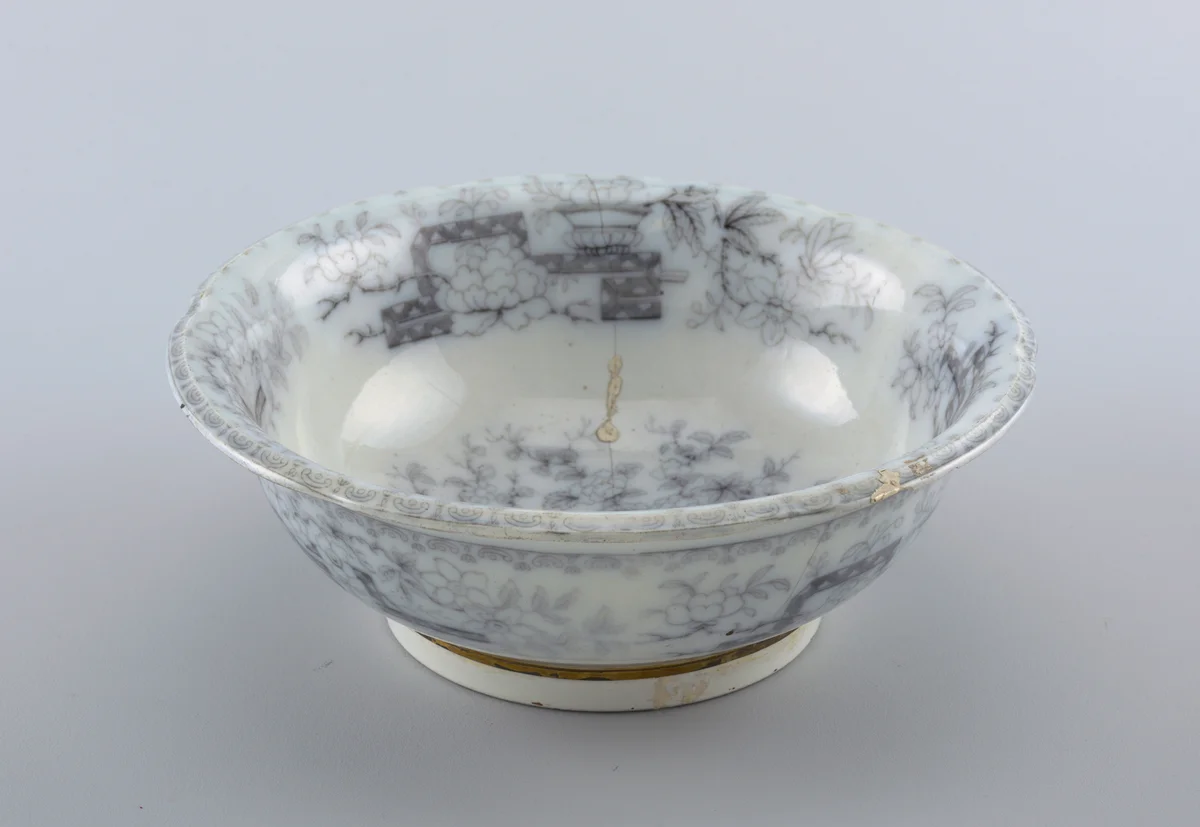
Collection image: Bowl, 19th century, Cooper Hewitt. Resized and converted to WebP. This is a historical example, not a workshop sample.
Keeping an object can be a creative act
Think of a cup someone gave you, or a bowl that fits particularly well in your hands. Its value may be difficult to replace even if another cup would do the same practical job. Repair gives that attachment somewhere to go.
The idea connects with mottainai, a concern for the value lost when useful things are wasted. JNTO discusses kintsugi as one expression of Japan's culture of mindful consumption. A repaired piece can prompt a useful question: what is worth keeping, and what care would allow it to continue?
The most personal version of the idea may come later, when you decide to have something of your own restored. A workshop can be the first step toward noticing which possessions you would miss, and finding out whether they can be repaired.
Time becomes visible in the object
From a distance, the gold can look like a simple decorative stroke. Learning about the layers underneath changes that impression. The final line represents repeated attention to a damaged edge, a gap or an uneven surface.
There is also room to appreciate a beginner's work. The practice piece in this article's opening photograph has visible variation in its repair. Looking at it is a reminder that making a controlled line takes practice. An introductory class can give you a new respect for that skill even if your own first result is uneven.
Kintsugi, wabi-sabi and the meaning of repair
Kintsugi is frequently discussed alongside wabi-sabi, an appreciation of qualities such as age, irregularity and impermanence. JNTO makes that connection in its introduction to the craft. Our Zen and wabi-sabi guide places these ideas in a broader travel context.
The connection encourages attention to a worn surface, an asymmetrical shape and evidence that an object has been cared for. Try turning a repaired cup slowly in your hands, when its owner permits it. Different angles bring the glaze, the shape and the repair into view in a different order.
You can enjoy kintsugi as skilled repair, as a visual art, as an approach to keeping possessions, or as an occasion to reflect. Curiosity about the brush, the ceramic and the person teaching you is a good reason to attend.
Likewise, a photograph cannot tell you everything about a repaired piece. Its appearance does not reveal the adhesive, the metal powder, the curing process or whether it can be used for food. Those are questions for the maker.
How traditional kintsugi is made
Traditional work uses urushi, Japanese lacquer. The stages depend on the damage and the maker's method, but a useful way to understand the sequence is:
- Bring the pieces together. The repair starts with the broken edges and how they fit.
- Fill and refine. Gaps and missing material need attention before the surface is ready for its finish.
- Build the lacquer surface. Working and curing happen in stages.
- Apply the metal finish. Gold powder reveals the prepared repair line.
The apparent simplicity of the last step rests on the earlier work. Tsugu Tsugu's explanation of its classes distinguishes repeated lessons for repairing an object over time from a single introductory visit. Natural lacquer needs curing intervals, so a complete repair cannot simply be compressed into a short holiday class.
The right sequence and handling depend on the materials and the condition of the object. If you have a precious or old vessel, a repair assessment can help you understand what work it needs and how long that will take.
For a short visit, the interesting question is which part of that process you will get to do.
What can you do in a one-day kintsugi workshop?
A short traditional workshop can use ceramics prepared through earlier stages. You might practice one intermediate task and finish a different, prepared vessel with gold. This gives you contact with the materials while respecting the time the whole repair takes.
Other workshops use modern adhesives and a metallic finish that suit a shorter craft session. The object may be intended for display or made into an accessory. That can be a satisfying experience if it is what you came to make.
| Format | What to look for | What to expect |
|---|---|---|
| Traditional discovery workshop | Natural urushi, stated metal, explanation of prepared stages | Selected tasks and a prepared piece to finish; follow curing instructions afterward |
| Modern or kintsugi-style activity | Clearly identified resin or adhesive and decorative finish | A short making session; check whether the result is strictly decorative |
| Ongoing lessons or a repair commission | Assessment of your own vessel and a realistic schedule | A process extending beyond a single sightseeing afternoon |
Before booking, look for photographs of what a beginner actually makes. A large, complex bowl in a studio gallery may be an example of the maker's work rather than the ceramic included in your ticket. Ask about the size, choice of pieces, optional upgrades and what is supplied.
Tokyo workshops: choose the craft experience you want
Tsugu Tsugu: natural urushi and genuine gold
If learning about traditional materials is your priority, start with Tsugu Tsugu's workshop information. Its traditional discovery session is 90 minutes, with natural urushi and 23K gold powder. The English page lists ¥22,000 per person and ages 13 and older when checked. Confirm the current conditions for the selected venue; the company has multiple locations.
The class includes an intermediate task and gold finishing on a prepared vessel. You do not complete every stage on one freshly broken bowl. Take-home work comes with curing instructions, which are part of the experience rather than something to skip when the class ends.
The Viator option below identifies the Asakusa studio. This is a good fit if you want the materials and process to be central to your visit. Compare the final price, date and conditions with the studio's direct booking options.
Asakusa · Traditional materials
Asakusa 90-Minute Traditional Kintsugi Workshop with 23K Gold
Operated by Tsugu Tsugu — Asakusa studio
An introduction to natural urushi and genuine gold, including work on ceramics prepared for the workshop.
- Approximately 90 minutes
- Natural urushi and 23K gold listed
- Prepared ceramic vessel
Best forVisitors particularly interested in traditional lacquer and the craft behind the gold finish.
Before you bookA prepared vessel makes the short format possible. Check current age conditions and follow the studio's curing instructions.
Choose your date
Check the total for your date, group size and selected option.
Confirm inclusions and cancellation terms before paying.
The same studio also advertises a separately labeled kintsugi-style activity using epoxy and a brass-coloured finish. Its published price is ¥6,600 and its age threshold is six. It is an accessory-making format, not the natural-lacquer workshop above or a promise of repaired food-use tableware. View Tsugu Tsugu's separate kintsugi-style workshop and select that program if it is the experience you want.
TNCA in Minami-Aoyama: a decorative piece to take home
The TNCA class sold through Viator takes place at its Minami-Aoyama studio, with Yobitsugi and Edo Komon plate options. Yobitsugi combines contrasting fragments; the plate option uses small modern dishes with Edo-period patterns. TNCA's own course descriptions specify synthetic lacquer and a decorative gold-coloured finish for these two courses. The studio also offers separate natural-urushi courses, so check the exact program.
The listing specifies decorative use only, supplies the ceramic and excludes children under six. If your goal is a cup you can drink from, discuss that with a studio before choosing a class.
Allow some flexibility in your schedule: TNCA describes these courses as about 90 minutes, while Viator lists approximately one hour. Confirm the duration of your selected option before arranging your next stop.
It also marks the venue wheelchair accessible while describing basement stairs. Confirm access directly if this affects your visit.
Minami-Aoyama · Decorative keepsake
Kintsugi Experience in Tokyo — TNCA
Operated by Taku Nakano Ceramic Arts
A short creative session for a decorative souvenir.
- Confirm duration before booking
- Ceramic piece and equipment included
- Yobitsugi or Edo Komon plate options
Best forVisitors who want a short creative activity and a decorative souvenir.
Before you bookDecorative use only; no personal pottery. Confirm access if stairs are a concern.
Choose your date
Check the total for your date, group size and selected option.
Confirm inclusions and cancellation terms before paying.
Questions to ask before you book
The most useful questions are specific to what you want to learn and take home:
- Which materials will I use? Ask about the adhesive, lacquer and metallic finish, not simply whether the class is described as authentic.
- Which stages will I do? Find out what has already been prepared and whether you work on one piece or several practice items.
- What exactly is included? Confirm the ceramic's size, choice of pieces, packing and any optional upgrade.
- How may I use it afterward? Ask for written curing and care instructions and an explicit answer about food contact.
- Can everyone in my group participate? Check ages, instruction language, seating and access for the actual studio.
Tell the studio about any known sensitivity to lacquer and ask about the materials and protective arrangements. Wear clothes you can work in and follow the instructor's handling guidance. A natural material should not be assumed suitable for everyone's skin.
If you hope to repair a personal object, send photographs to the studio first and ask about an appropriate service. Carrying a broken, sentimental bowl across Japan without an agreement is unlikely to improve the experience.
Make the workshop part of a slower Tokyo day
An Asakusa session can sit alongside a neighborhood walk rather than compete with an itinerary full of distant stops. For Minami-Aoyama, leave time to enjoy the surrounding area before collecting your finished work. Use our five-day Tokyo itinerary to keep the day's activities geographically sensible.
The indoor format also makes a workshop worth considering for a rainy day in Tokyo, subject to availability and the journey to the studio. Avoid treating it as something to hurry through between train connections.
Before leaving, confirm when the piece can come out of its packaging, whether further curing is needed and how to carry it. Keep pressure off repaired areas and follow the studio's packing instructions. Do not assume a piece that can travel home is already ready for washing, heat or food.
A useful final question for the instructor is how to keep learning. They may be able to suggest a longer course, a repair service or examples to look for when you next encounter ceramics. A tea experience can also give you another reason to pay attention to the form and handling of a bowl.
The souvenir is only part of what a kintsugi class can offer. Once you have watched a repair take shape, a small gold line on an old vessel becomes easier to read: as a series of choices, a measure of skill, and evidence that someone wanted the object to have more time.
Opening photo: Haragayato, Kintugi, CC BY-SA 4.0. Resized and converted to WebP; the adapted image is available under the same license.
Make it your trip
Still planning your Japan trip?
Pick the question on your mind. Compare your options, check the details and take one more thing off your list.
How much can you fit into one week?
Connect Tokyo, a Fuji or Hakone day trip, Kyoto and Osaka with a day-by-day route, travel costs and booking advice.
Explore the 7-day route
Which eSIM fits your Japan trip?
Maps, messages, hotspot use: compare five providers by data allowance, network and plan limits before you choose.
Find my Japan eSIM
What should your travel insurance cover?
Compare medical cover, cancellation and activity limits across five options, with the exclusions worth checking.
Compare cover & limitsFrequently Asked Questions
Kintsugi is a Japanese craft of repairing ceramics using lacquer and finishing the repaired areas with powdered gold. The joins remain visible and become part of the object's appearance. Modern workshops may use different adhesives and metallic finishes, so check the materials used in the particular class.
In traditional kintsugi, lacquer-based materials perform the joining and filling work. Gold powder is applied as a finishing layer. It is not a process of pouring molten gold into a crack.
A complete repair with natural urushi lacquer needs curing intervals. A short traditional workshop can teach selected stages and let you finish a vessel prepared in advance. Ask which stages you perform and which piece you take home.
That depends on the materials, completed repair and curing. Obtain instructions for the exact piece from the studio. The TNCA Viator class linked here explicitly describes its finished work as decorative and not for food use. A gold-coloured repair alone does not establish suitability for tableware.
Do not assume so. Visitor workshops commonly supply prepared ceramics, and the TNCA class linked here expressly excludes visitors' own pieces. For a personal vessel, contact a studio about repair services or a course with enough time for the relevant stages and curing.
For natural urushi and genuine gold, start with Tsugu Tsugu's traditional workshop and confirm the venue and current conditions. For a short decorative souvenir activity, compare the TNCA class or Tsugu Tsugu's separately labeled kintsugi-style session. The materials, tasks and intended use differ.

Written by
JAPANODE
Based in Japan, sharing cultural context and independently researched travel guides for visitors.