On this page
For a first Tokyo visit, use five full days to explore a few areas properly instead of moving between opposite sides of the city at every meal. Keep one hotel base, anchor each day with one main experience, and leave the fifth day flexible enough to follow an interest or recover from bad weather.
This itinerary means five sightseeing days. If you land during day one or depart during day five, shorten those days rather than pretending an airport transfer is free time. The suggested order is editorial planning, not a claim that the operator personally completed this exact trip.
For arrival logistics and the wider country, start with the first-time Japan guide. The route below focuses on Tokyo itself.
Disclosure: The GetYourGuide booking option below is an affiliate link. JAPANODE may earn a commission at no extra cost to you.
Five Days at a Glance
| Day | Main area | Main decision | What to leave flexible |
|---|---|---|---|
| 1 | Asakusa and Ueno | Temple streets plus one museum or park block | Shopping and the evening meal |
| 2 | Meiji Jingu, Harajuku and Shibuya | A west-side walk and contemporary city streets | A paid viewpoint |
| 3 | Shinjuku | Shinjuku Gyoen, Shinjuku-sanchome and dinner | An optional food tour or city view |
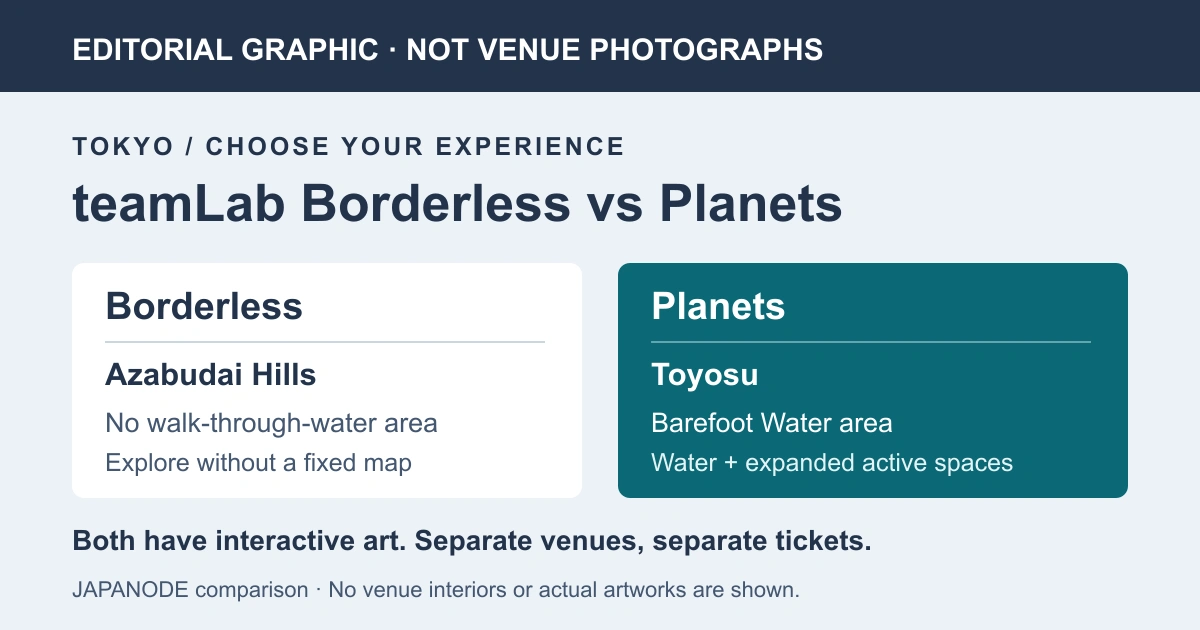
| 4 | One teamLab venue and its surrounding area | Borderless or Planets | An additional waterfront or neighborhood stop |
| 5 | Your strongest interest | Museums, shopping, a quieter neighborhood or a day trip | Weather-dependent activities |
You can swap days around reservations and opening calendars. Do not preserve the order at the cost of missing the one ticketed experience you most want. Keep activities from the same day together when moving them.
Before You Choose the Hotel
Choose a base using your evening plans, airport route and the stations you expect to use repeatedly. A location that is convenient for the first transfer may not be the best fit for every day that follows.
Check the hotel entrance and station exit, not just the district name. Large station complexes can add walking that is invisible in a simple “near the station” description. With children, mobility needs or large luggage, the last part of the journey deserves as much attention as the train ride.
Use the Narita airport guide or Haneda airport guide once you have a real property shortlist. Keep the airport transfer outside the sightseeing schedule on arrival day.
Day 1: Asakusa and Ueno
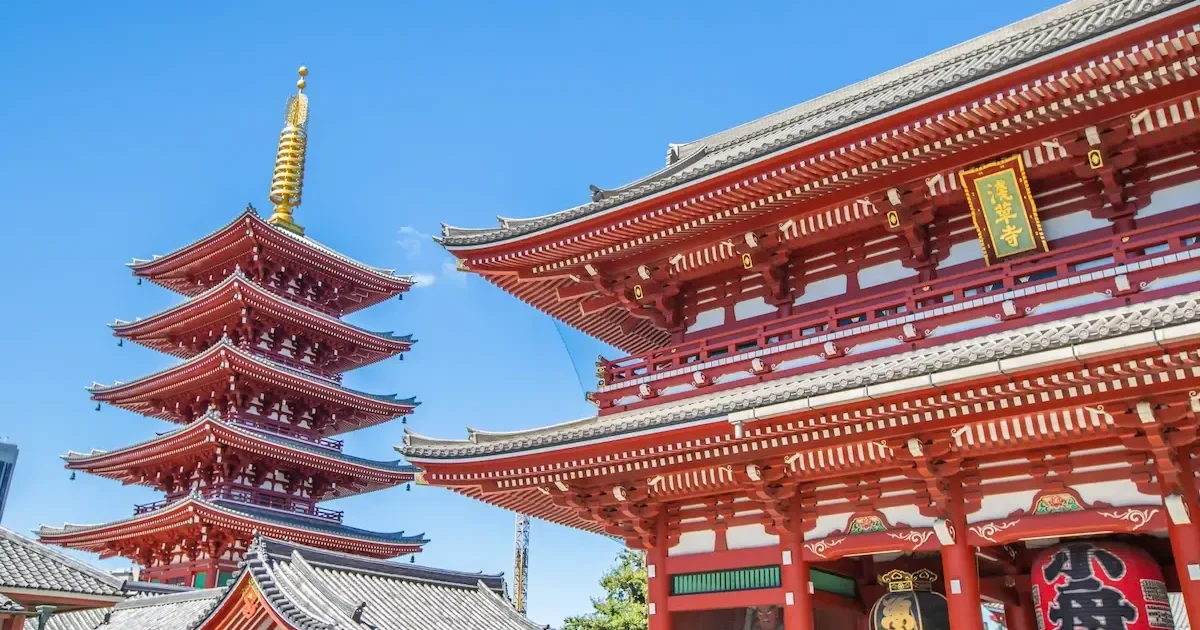
Start with Asakusa's temple streets and the area around Sensoji. Give yourself time to understand the place as a neighborhood rather than rushing through a gate photograph and immediately boarding another train.
The official GO TOKYO Asakusa guide is a useful orientation source. Our suggested flow is a morning around the temple and nearby streets, lunch in the area, then a separate Ueno block if you still have energy.
For Ueno, choose one main attraction or an unhurried park walk. The official Ueno guide shows the area's range of museums, park spaces and shopping. Verify the selected museum's current calendar before assigning it to a particular weekday.
If this is your first day after a long flight, end earlier. Jet lag can make an optimistic evening reservation feel very different after several hours on foot. Keeping dinner close to the hotel is a legitimate improvement to the itinerary, not a failure to see enough.
An Easy Adjustment
If you want more time in Asakusa, keep Ueno for day five. If a museum is the main reason for the day, begin with that reservation and use the rest as flexible time. You do not need to fit both halves into one day simply because they share a line in the table.
Day 2: Meiji Jingu, Harajuku and Shibuya
Use this day for a connected west-side route. Start with the part you most want to experience before the day becomes busy, then move through Harajuku and toward Shibuya at a pace that leaves room for lunch and browsing.
The point is the change in atmosphere, not a requirement to enter every shop. Choose a manageable walking route and a place to stop indoors. Travelers who do not enjoy retail browsing can shorten Harajuku and give more time to another interest.
The official Shibuya area guide provides current orientation. If you want a paid observation deck or another timed attraction, place that booking in the itinerary before reserving dinner elsewhere.
A skyline view is an optional experience, not a compulsory proof that you visited Tokyo. Compare the cost, weather flexibility and cancellation conditions with how much you value the view. Avoid booking two similar viewpoints merely because both appear on a popular checklist.
For character shopping, use our Tokyo Pokémon Center guide to choose a relevant stop rather than visiting every branch. Store trips can absorb more time than expected when browsing is the actual attraction.
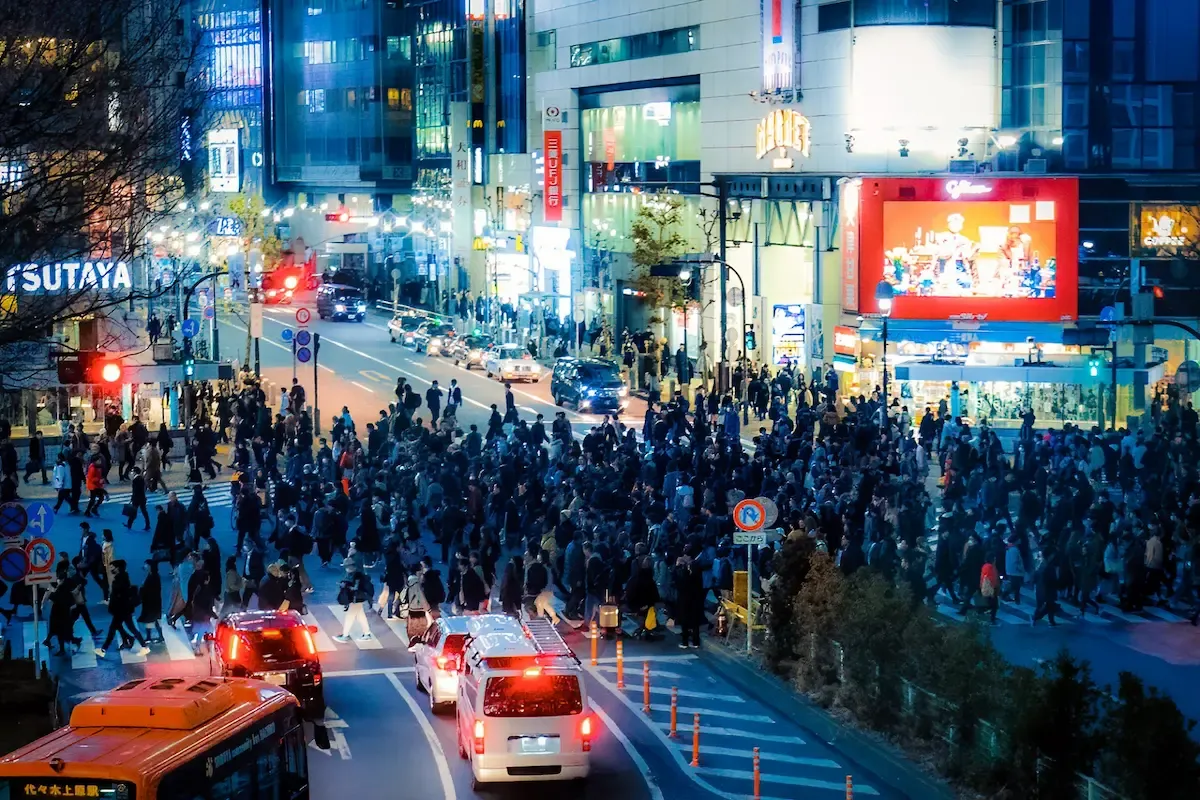
Day 3: Shinjuku With Room for the Evening
Start with Shinjuku Gyoen in the morning, walk toward Shinjuku-sanchome for lunch, then leave the afternoon for shopping or a hotel break before dinner. This gives the day a clear route without filling every hour. The garden's official calendar lists Monday closures, usually shifting to the next weekday after a Monday public holiday, plus seasonal exceptions and a December 29–January 3 closure. Swap the day if needed.
The GO TOKYO Shinjuku guide distinguishes the station's surrounding areas. Use that geography to avoid repeatedly crossing the station just because two places share “Shinjuku” in their names.
For an admission-free view option, check the Tokyo Metropolitan Government observatories. Current opening information matters, and a clear view is never guaranteed by a booking date.
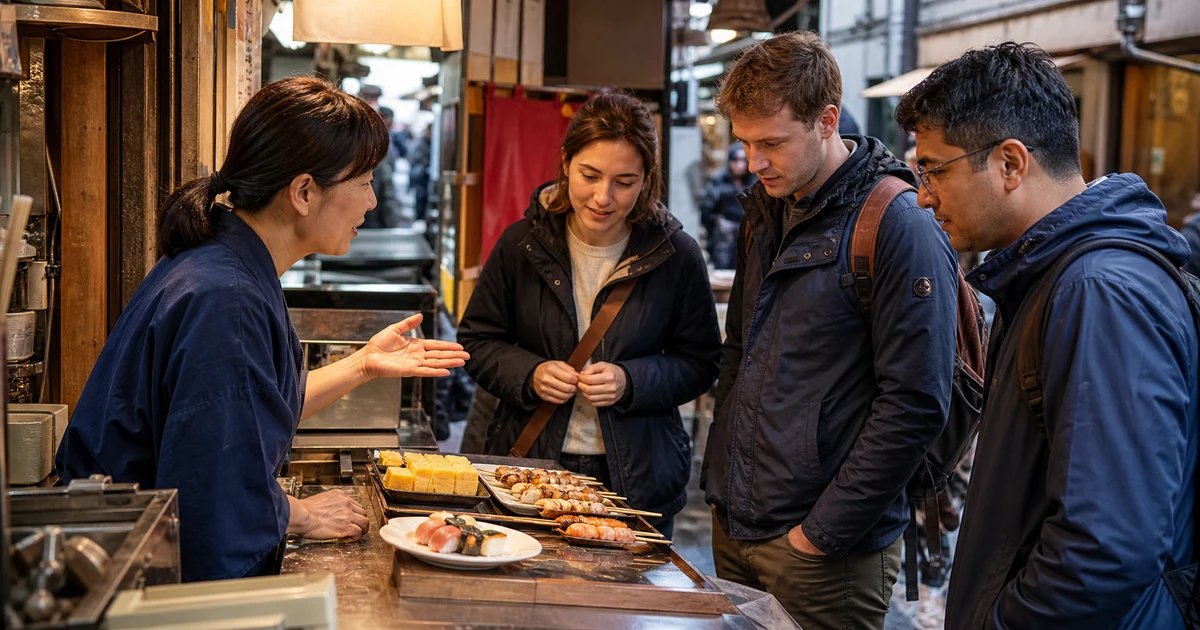
Choose the evening around your interests and comfort level. A guided food outing can be useful if you want help understanding venues and ordering, but a self-guided meal is also a complete plan. Our Tokyo food tour comparison explains which experiences may fit.
If you choose the food tour below, use it instead of a separate dinner reservation and leave its full three-hour block free. It starts and ends in Shinjuku; check the exact meeting point rather than aiming for any station exit. Confirm dietary restrictions before booking. A self-guided meal remains the simpler choice when you want to spend less or eat at your own pace.
Shinjuku Food Tour
An optional dinner outing with an English-speaking guide to help with venue choices and ordering.
Best for
Visitors who want a guided evening meal and conversation after the Shinjuku sightseeing day.
Before booking
It costs more time and money than choosing your own meal. Check dietary suitability and do not book another dinner afterward.
Live price & availability
Powered by GetYourGuide · we may earn a commission at no extra cost to you.
Check how you will return to the hotel before deciding to stay out late. Do not assume a city's busy nightlife means your chosen rail route operates all night.
Day 4: Choose One teamLab Venue
Borderless and Planets are separate places with different experiences and locations. Choose the one that fits your interests, mobility needs, companions and preferred part of the city. Our teamLab comparison covers the practical differences and current booking choices.
If you choose Planets, build the rest of the day around Toyosu or the waterfront rather than treating it as a quick stop between unrelated western Tokyo neighborhoods. If you choose Borderless, keep the surrounding Azabudai or Roppongi area as the starting point for the rest of the day.
Leave a generous block around the timed entry. The ticket time is not the moment you will necessarily finish queuing, enter every room or be ready for another appointment. Avoid a tightly timed meal on the other side of Tokyo immediately afterward.
You do not need to visit both venues unless that is a particular interest. If digital art is not appealing, replace the day with another museum, architecture walk or neighborhood rather than buying a ticket out of obligation.
Rain Does Not Remove Every Outdoor Segment
Even an indoor attraction usually involves station access, queues or walking between buildings. Check the venue's current rules and keep a practical route back. For other indoor options, use the Tokyo rainy-day guide.
Day 5: Follow an Interest, or Leave Tokyo for the Day
Keep this day open until you know which parts of Tokyo you enjoy. A flexible final day can be used for a missed museum, more time in a favorite neighborhood, shopping or a slower meal without displacing a prepaid booking.
If you want a day trip, replace the whole day. Do not append a substantial excursion to a full Tokyo schedule. Our Mount Fuji day-trip guide compares transport and tour choices, with the important limitation that a clear mountain view depends on weather.
If you have a timed Ghibli Museum ticket, use it as the anchor for a western suburban day and check the actual journey from your hotel. A reservation in Mitaka is not a visit to Ghibli Park in Aichi; they require different travel plans.
If you fly out the next morning, consider using this day for a lighter schedule and packing. A final evening close to the hotel can be more pleasant than spending it monitoring a long return journey.
Station Anchors and a Usable Daily Rhythm
Choose the morning's station and the final evening's route before filling the space between them. The station names below are orientation anchors, not a claim that every hotel has the same fastest connection. Check your route in the official subway map and the relevant operator's journey search.
| Day | Useful station anchors | Suggested pacing |
|---|---|---|
| Asakusa / Ueno | Asakusa, then Ueno; the Ginza Line connects them | One main area before lunch, one optional block after |
| Meiji / Harajuku / Shibuya | Harajuku or Meiji-jingumae, finishing toward Shibuya | Shrine approach and walking, lunch, then browsing |
| Shinjuku | Match Shinjuku, Shinjuku-sanchome or Tochomae to the chosen attraction | One daytime attraction, a break, then dinner |
| Borderless option | Kamiyacho and the venue's published entrance instructions | Timed art visit plus the surrounding area |
| Planets option | Follow the venue's Toyosu / Shin-Toyosu directions | Timed art visit and one waterfront addition |
For an ordinary sightseeing day, we suggest reserving a morning block of roughly two to three hours, a genuine lunch break, and one substantial afternoon block. These are planning allowances rather than measured attraction durations. Add your hotel-to-area journey before the morning block and the return journey afterward. This makes it easier to see when an apparently modest list actually becomes a twelve-hour day.
If Five Days Includes Your Flights
Keep the first afternoon near the hotel. Use two full days for the east and west routes, one day for the attraction you most want, and the last morning only for something compatible with checkout and airport travel. That version leaves less time for Shinjuku as a separate day or a long excursion, so remove them deliberately.
If you land late on the first day and leave early on the fifth, you have three sightseeing days. Do not buy five days of timed experiences and hope the transfers fit. Preserve the three strongest blocks and save the rest for another visit.
Choose the Base and Budget Together
Use where to stay in Tokyo to compare the six main areas against these routes. Then calculate your daily costs with the Tokyo budget guide. A slightly more expensive room can still make sense if it supports the evenings you want and reduces repeated travel.
For ticket decisions, use the Tokyo Subway Ticket calculation. This itinerary is not designed to maximize pass rides. For the optional Mitaka day, follow the separate Ghibli booking calendar before committing the rest of the schedule.
Booking Order
- Fix the arrival, departure and hotel nights.
- Choose any one or two ticketed experiences that genuinely matter.
- Place those reservations into the five-day framework.
- Check the calendars for museums and other selected venues.
- Reserve any important meals with enough travel margin.
- Keep walking, shopping and less time-sensitive activities flexible.
Booking everything early can remove useful flexibility. Booking nothing can make a specific high-demand attraction impossible. The balance depends on how many experiences are essential to you.
Transport, Budget and Luggage
Use an IC card for convenient eligible travel, then compare any pass against the actual journeys. The Suica guide is the starting point. Do not buy a citywide-sounding product until you have checked which operators it covers.
Separate the room, local transport, food and reserved attractions in your budget. The Japan trip budget guide provides the broader framework. Five days with a shared room will not have the same per-person cost as five days traveling alone.
Ask the accommodation about luggage storage around check-in and checkout. If you need another option, use the Japan luggage-storage guide. Carrying full-size luggage through an entire sightseeing day can change the route much more than a small fare saving.
Adapting the Plan
For children, reduce the number of changes and add predictable breaks. For limited mobility, inspect station exits and the actual walking surface rather than assuming a short distance is easy. For hot, wet or cold weather, choose an indoor alternative in the same area before setting out.
The route works best when you give yourself permission to remove a stop. Keep the one experience that makes the day worthwhile, enjoy the surrounding area and let the rest depend on how the trip is going.
Make it your trip
Still planning your Japan trip?
Pick the question on your mind. Compare your options, check the details and take one more thing off your list.
Would a JR Pass save you money?
Add your train journeys and compare individual tickets with the nationwide pass. See which costs less for your route.
Calculate my rail costs
Which eSIM fits your Japan trip?
Maps, messages, hotspot use: compare five providers by data allowance, network and plan limits before you choose.
Find my Japan eSIM
What should your travel insurance cover?
Compare medical cover, cancellation and activity limits across five options, with the exclusions worth checking.
Compare cover & limitsFrequently Asked Questions
Five full sightseeing days allow a useful first visit with several distinct neighborhoods and some flexibility. Arrival and departure days should be added separately or treated as partial days.
Usually one base is simpler. A hotel change can use time and create luggage logistics without saving enough travel to justify it.
Yes, but treat it as a replacement for one Tokyo day. Allow for weather uncertainty and use the dedicated Mount Fuji guide to compare a tour with public transport.
Choose based on your interests and available time. Borderless and Planets are separate venues, and neither needs to be included simply to complete a Tokyo checklist.

Written by
JAPANODE
Based in Japan, sharing practical travel planning guides for visitors.