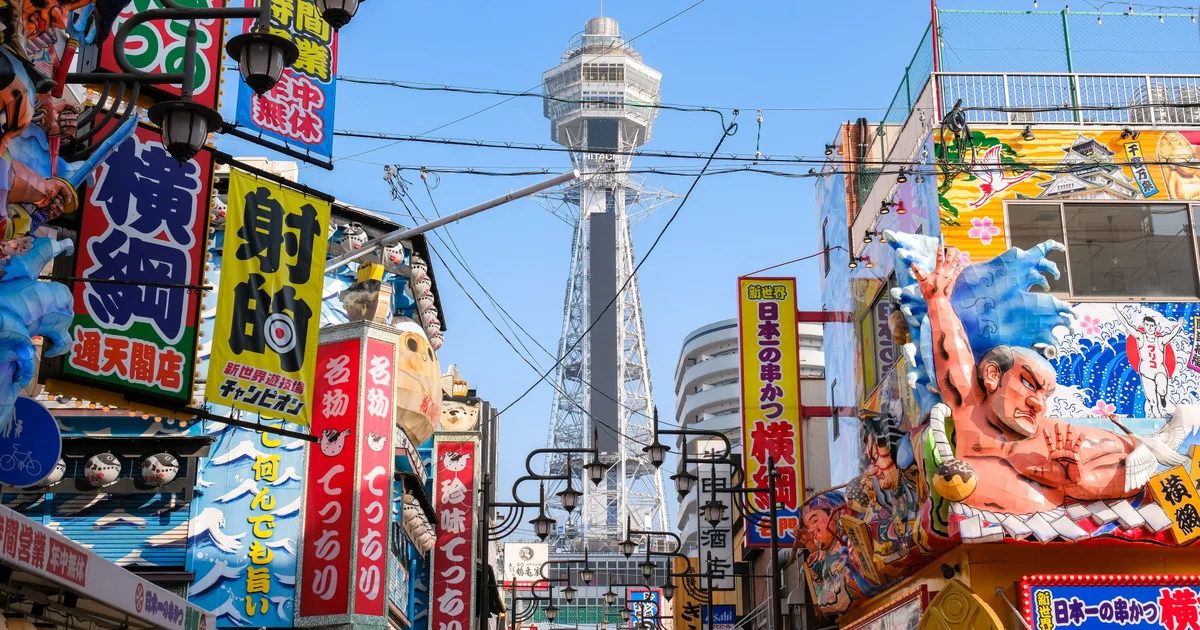
On this page
Spend your first day around Minami: Kuromon, Namba and Dotonbori. Use the second for Osaka Castle and the north side of the city, finishing in Umeda if a skyline view appeals. Keep Shinsekai as a deliberate alternative within Day 1, and give Universal Studios Japan a whole replacement day.
This plan assumes two full sightseeing days. An airport arrival afternoon or a morning before your flight is a shorter block, not another full day. The order below is a suggested itinerary with room for meals and changes; the photographs illustrate the neighborhoods rather than document one personally completed two-day trip.
If Osaka is part of a wider visit, use the four-day Kansai itinerary to decide how much time to give Kyoto and Nara before filling these two days.
Disclosure: The GetYourGuide and Radical Storage cards below contain affiliate links. JAPANODE may earn a commission at no extra cost to you.
Your Two Days in Osaka at a Glance
| Time | Day 1: Minami | Day 2: castle and north Osaka |
|---|---|---|
| Morning | Kuromon and a nearby shopping street | Osaka Castle grounds; tower if you want the museum visit |
| Lunch | One chosen meal or a few market purchases | Lunch near your next neighborhood |
| Afternoon | Namba, a break and flexible shopping | Choose Tenma, an indoor stop or a slower Umeda afternoon |
| Evening | Dotonbori, or a booked Shinsekai food outing | Dinner in Umeda; optional observatory |
The main planning choice is whether each day has a paid anchor. On Day 1, that could be a food tour that replaces dinner. On Day 2, it might be the castle museum or the Umeda Sky Building observatory. You do not have to pay for every viewpoint and activity to make either day worthwhile.
Save the location of your hotel, your return station and any fixed meeting point before leaving. Osaka's districts are easier to enjoy when you can shorten the day without losing track of how to get back.
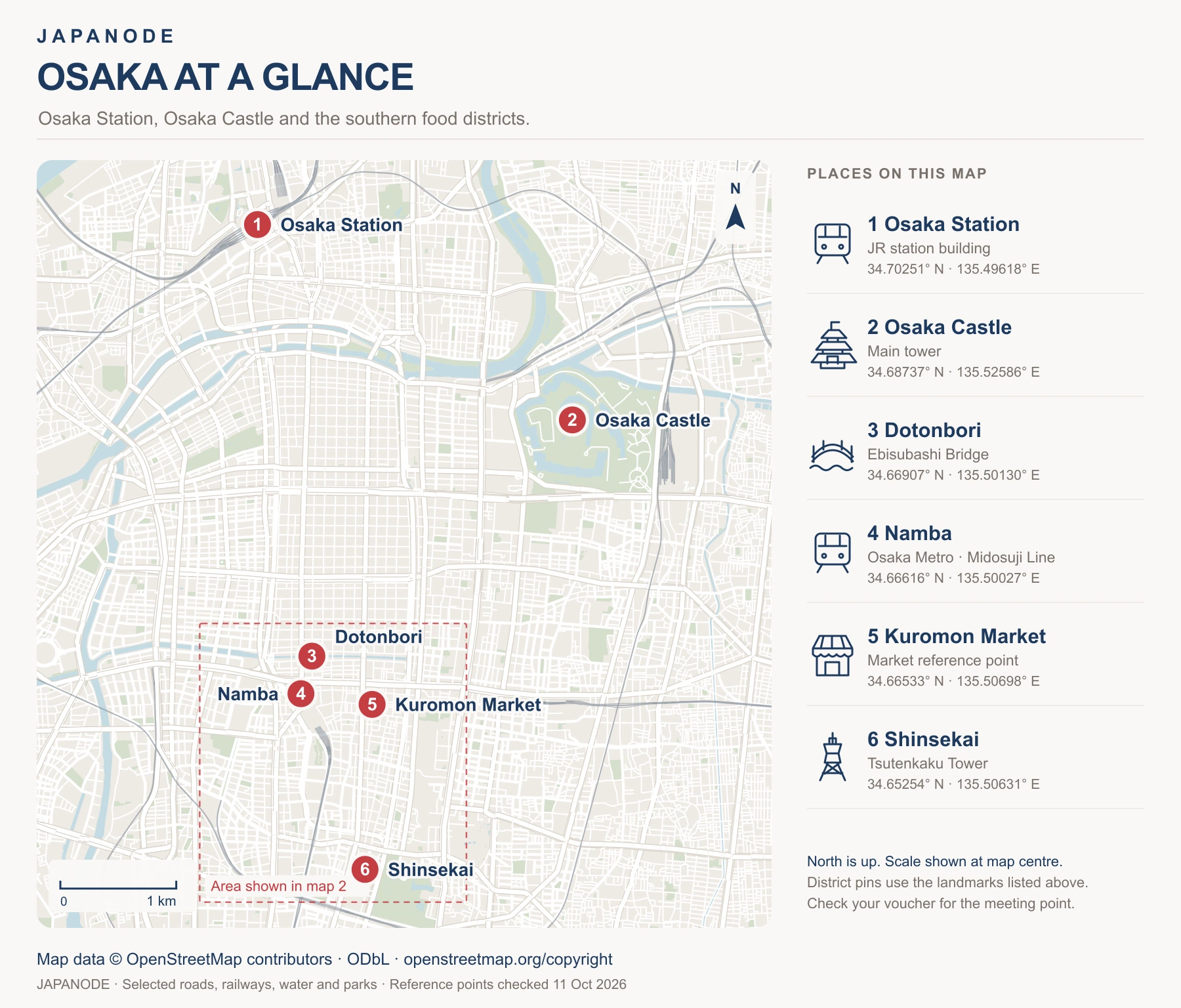
Open the full-size Osaka map. Map data © OpenStreetMap contributors, available under ODbL; map styling by JAPANODE.
Day 1: Walk From Kuromon Toward Namba
Start With a Market and One Nearby Interest
Begin around Nipponbashi and Kuromon Market if food browsing is part of your plan. Check the official Kuromon directory for the individual businesses you want to visit: shops have their own opening hours and days off. There is no single market opening time that guarantees every counter will be ready.
Choose a few potential food stops and one backup. Prices may be per piece, portion or weight, so check before ordering. Ask where to eat your purchase and follow the shop's instructions for trays and packaging. A market visit works better when you leave space to decide what you actually want than when it becomes a list of compulsory snacks.
From this area, choose an interest that brings you toward Namba. Doguyasuji suits a browse for kitchenware and restaurant equipment; the Nipponbashi shopping area may appeal more if your interests are games and collectibles. You can shorten either stop without breaking the afternoon plan.
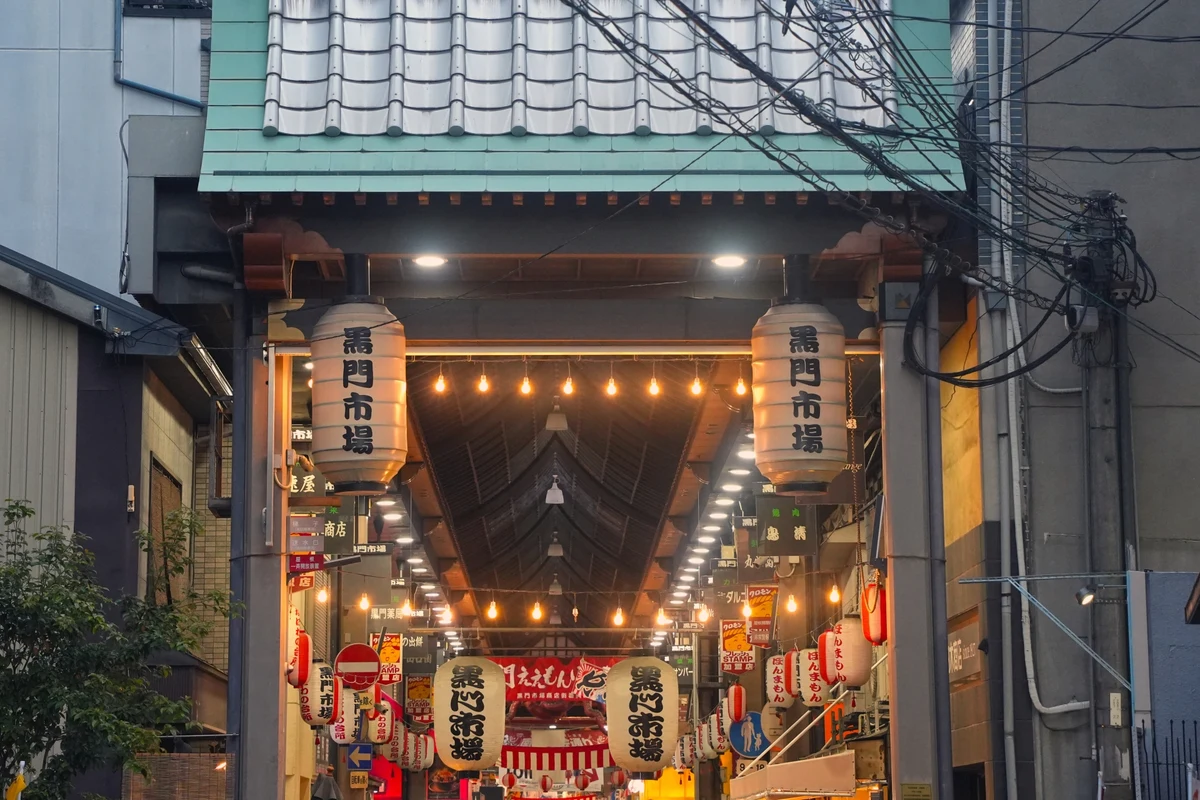
Allow the morning to run at your own pace. If you sit down for a substantial lunch, reduce the snack stops. If you prefer a light market visit, leave time for a proper meal later. The purpose is to enjoy the food and streets, not to keep eating because the next pin on the map says so.
Leave a Break Before Dotonbori
Use the afternoon for Namba shopping, a café or a return to the hotel. This is also the easiest part of the day to shorten when someone needs a rest. A continuous walk from morning until the evening lights can be tiring even when the map distances look modest.
Head toward Dotonbori for the riverfront and illuminated signs later in the day. Treat the riverside as a place to walk and look around; keep moving where passages are busy and stop for photographs where you are not blocking the flow. You can have dinner nearby, but a specific restaurant should be chosen for its menu and terms rather than simply for being beside a landmark.
Decide whether you want a seated dinner or a guided food outing before buying a series of large afternoon snacks. The Osaka food-tour comparison separates included-food tours from walks where food costs extra. That distinction affects both the budget and how hungry you should arrive.
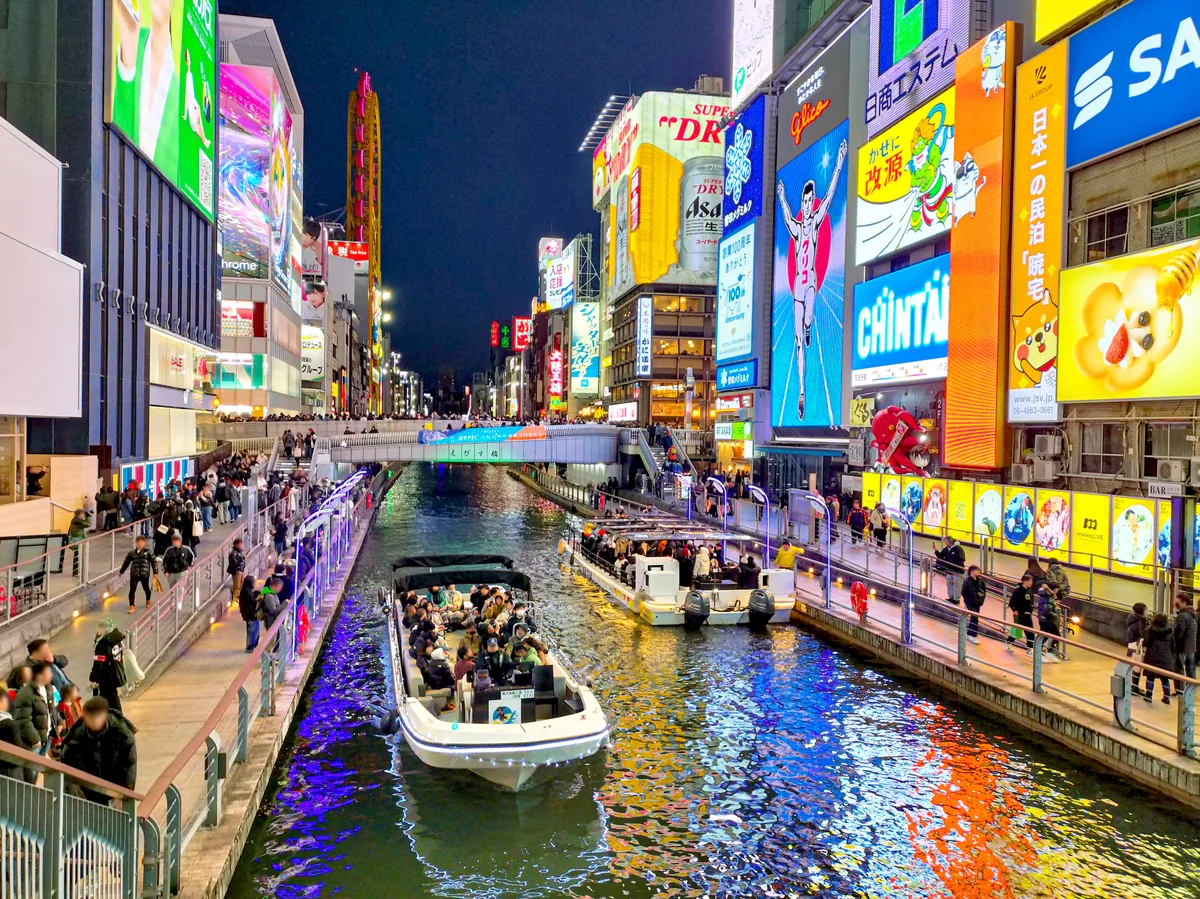
If you have a very early start the next morning, make this an earlier dinner and a shorter walk. The city does not require you to stay out late for the day to feel complete.
Shinsekai: A Day 1 Alternative With a Clear Meal Plan
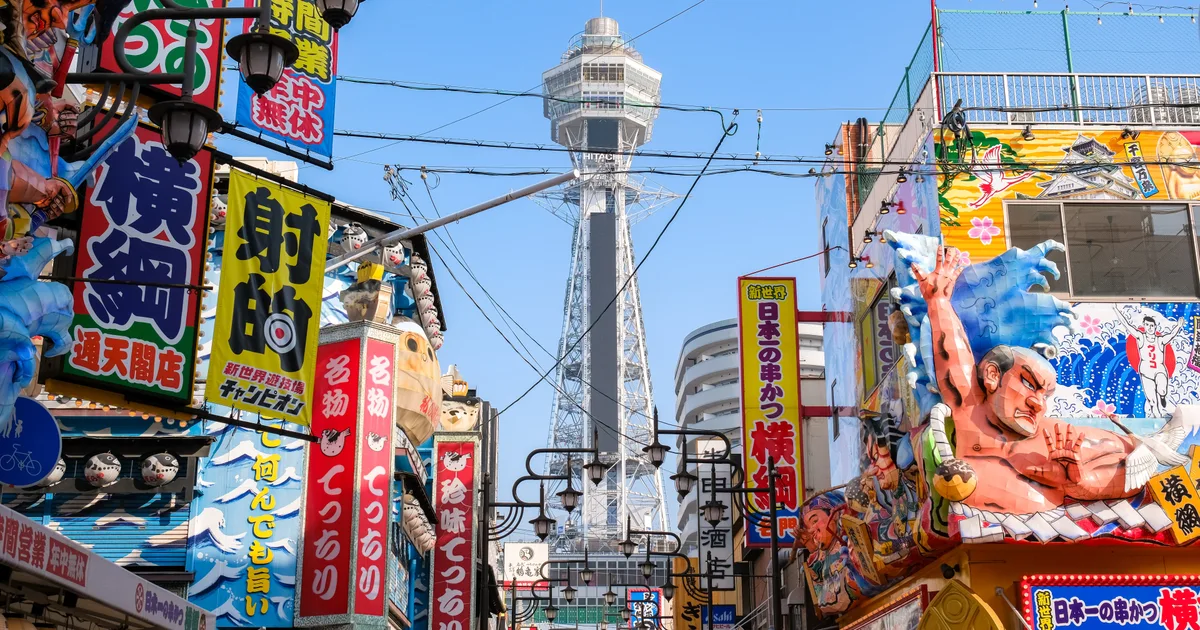
Choose Shinsekai if Tsutenkaku and a food-focused neighborhood outing appeal more than a longer Namba shopping afternoon. Make it a replacement for a substantial block of Day 1. Trying to browse Kuromon, shop extensively, visit the tower, join a three-hour food tour and linger in Dotonbori creates competing meal and travel plans.
I remember visiting Tsutenkaku years ago and having kushikatsu afterward. That memory is the reason this combination has a place in the itinerary. It is not a review of the guided tour below, and the restaurant, prices and conditions from that visit are not being presented as current recommendations.
For a self-guided version, choose a tower visit or a neighborhood walk, then one meal. For a guided version, let the tour organize the eating and keep the preceding meal light enough to enjoy it. Confirm the meeting point on the voucher rather than heading toward the general neighborhood at the start time.
The listed Shinsekai tour currently describes approximately three hours, 15 dishes across five eateries and three drinks. Its published suitability restrictions include vegans and people with gluten intolerance. Menu and dietary requirements need checking before purchase; the number of dishes should not be the only reason to book.
Shinsekai food tour with included tastings
Use this as the food anchor for Day 1, replacing a separate large dinner. Check the available start time, meeting point, menu and dietary suitability before booking.
Best for
Visitors who want a guided food outing rather than arranging several stops independently
Before booking
Allow about three hours; the listing excludes vegans and people with gluten intolerance.
Live price & availability
Powered by GetYourGuide · we may earn a commission at no extra cost to you.
A short Dotonbori walk can still fit afterward if the timing and your energy allow, but it should remain optional. If you prefer to spend the whole evening in Minami, choose an independent meal there and leave Shinsekai for another visit.
Day 2: Osaka Castle, Then Choose Your Northern Stop
Decide Whether You Want the Castle Museum
Start with the Osaka Castle area while you still have time for the walk through the grounds. A station with “Osaka Castle” in its name does not deliver you directly to the tower entrance. Check the approach from your actual train line and allow for the grounds as part of the visit.
Two useful approaches from the bases in this guide are:
| Starting area | Rail route to compare | What to allow for |
|---|---|---|
| Namba | Midosuji Line to Honmachi, then Chuo Line to Tanimachi 4-chome | The transfer and the walk from the station through the grounds |
| Umeda | Walk to JR Osaka Station, then take the Osaka Loop Line to Osakajokoen | JR travel is not covered by a Metro-only day ticket |
The castle's official access page and English access map show station approaches and routes through the park. Choose an exit that works for your mobility and luggage needs; the rail journey alone is not the full visit.
Decide in advance whether you want to enter the main tower or mainly see the exterior and surrounding park. These are different visits. The tower is a museum attraction; a photograph of the exterior does not require you to buy every available ticket in the park.
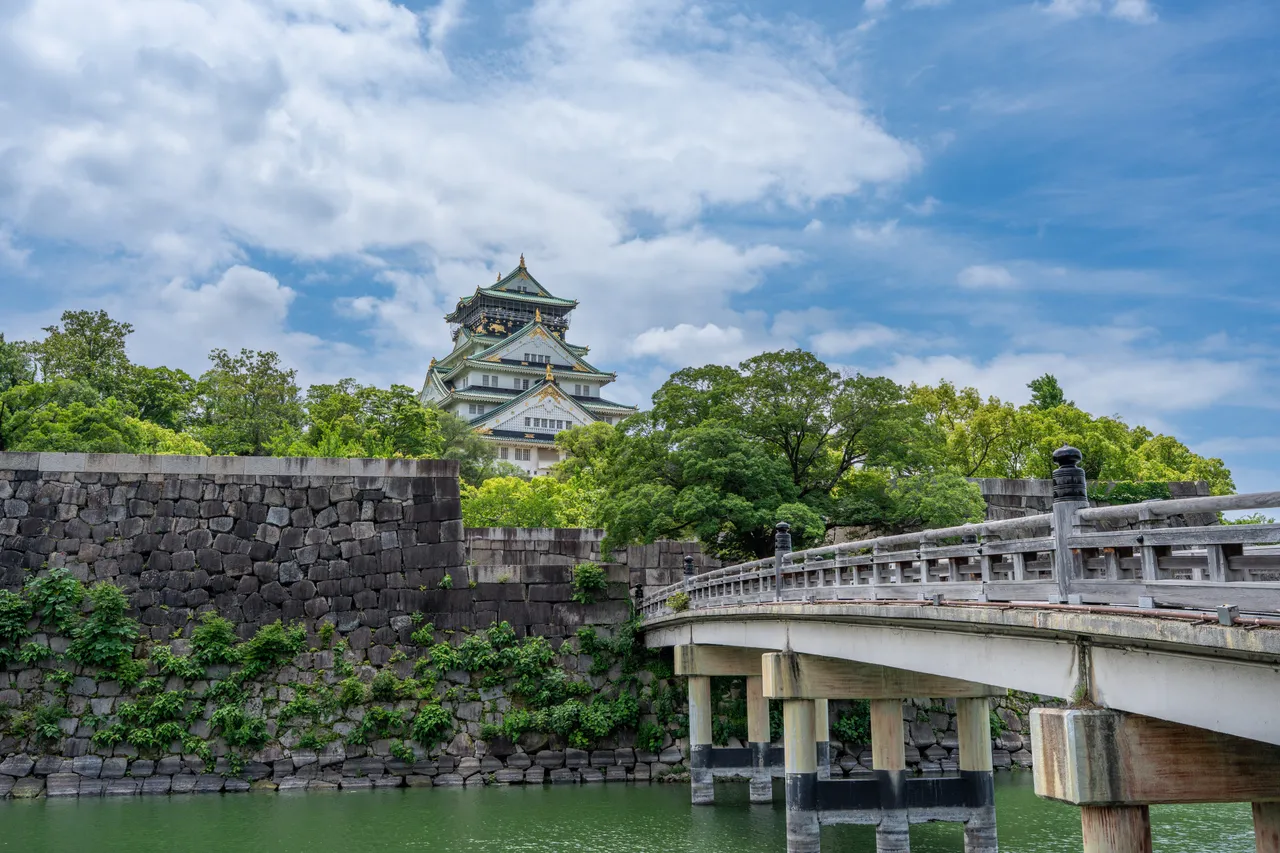
The official castle visitor guide lists adult main-tower admission at ¥1,200. Normal hours are 09:00–18:00, with final entry at 17:30, although the ticket queue can close earlier. The usual closure is December 28 through January 1. Check special operating information for your date before making this the day's paid anchor.
Allow a generous morning rather than promising an exact visit length. If the tower queue is long, decide whether the interior matters enough to use that time. You can keep the grounds visit and give the afternoon more room instead of rushing through both.
Pick Tenma, an Indoor Visit or More Time in Umeda
After the castle, choose one afternoon direction. Tenma and the Tenjinbashisuji area can suit neighborhood walking and food. An indoor attraction may be a better choice in poor weather. Going straight toward Umeda leaves time to browse, rest and find dinner without another district change.
If you choose Tenma, distinguish JR Tenma from Osaka-tenmangu and the nearby subway stations when planning the journey. The Osaka Tenmangu guide explains that area in more detail. You do not need to cover the full shopping street or add every nearby landmark before heading onward.
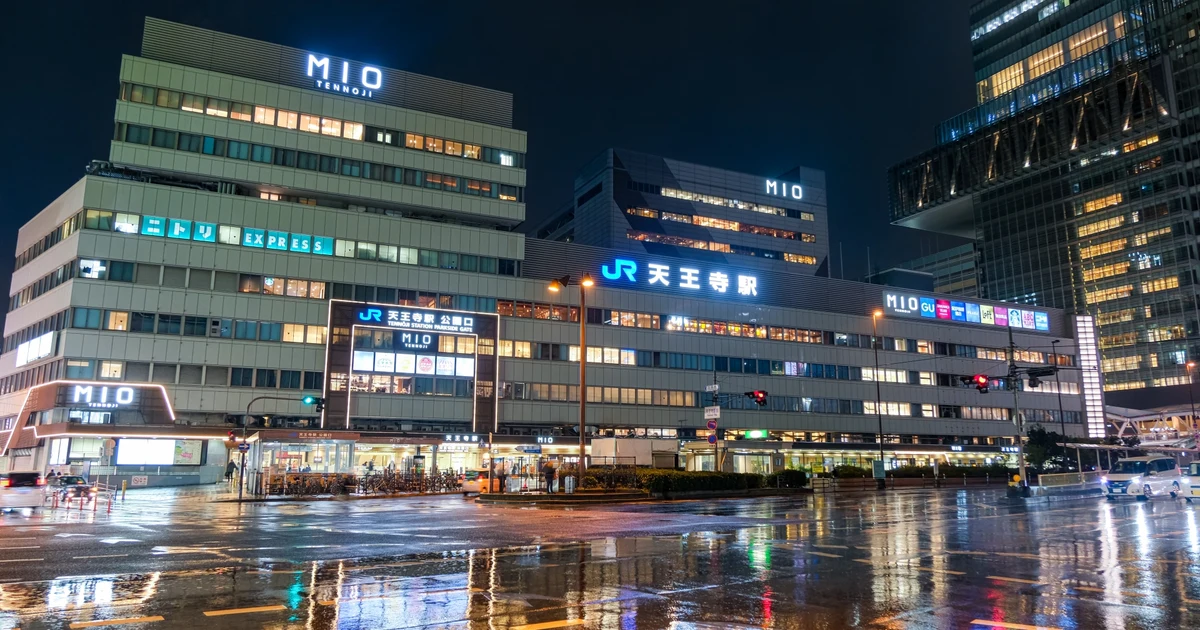
Umeda contains several stations and large connected commercial buildings. Save the exact meeting place if your group splits up; “meet at Osaka Station” is not a sufficiently precise arrangement in a complex this size. The same applies to restaurant reservations inside department stores or station buildings.
For a city view, consider the Umeda Sky Building observatory as an optional paid finish. Its official visitor information lists normal hours of 09:30–22:30, with final entry at 22:00. Check the weather and current notices before choosing the time. Sunset is not a fixed daily clock time, and a booking does not guarantee clear visibility.
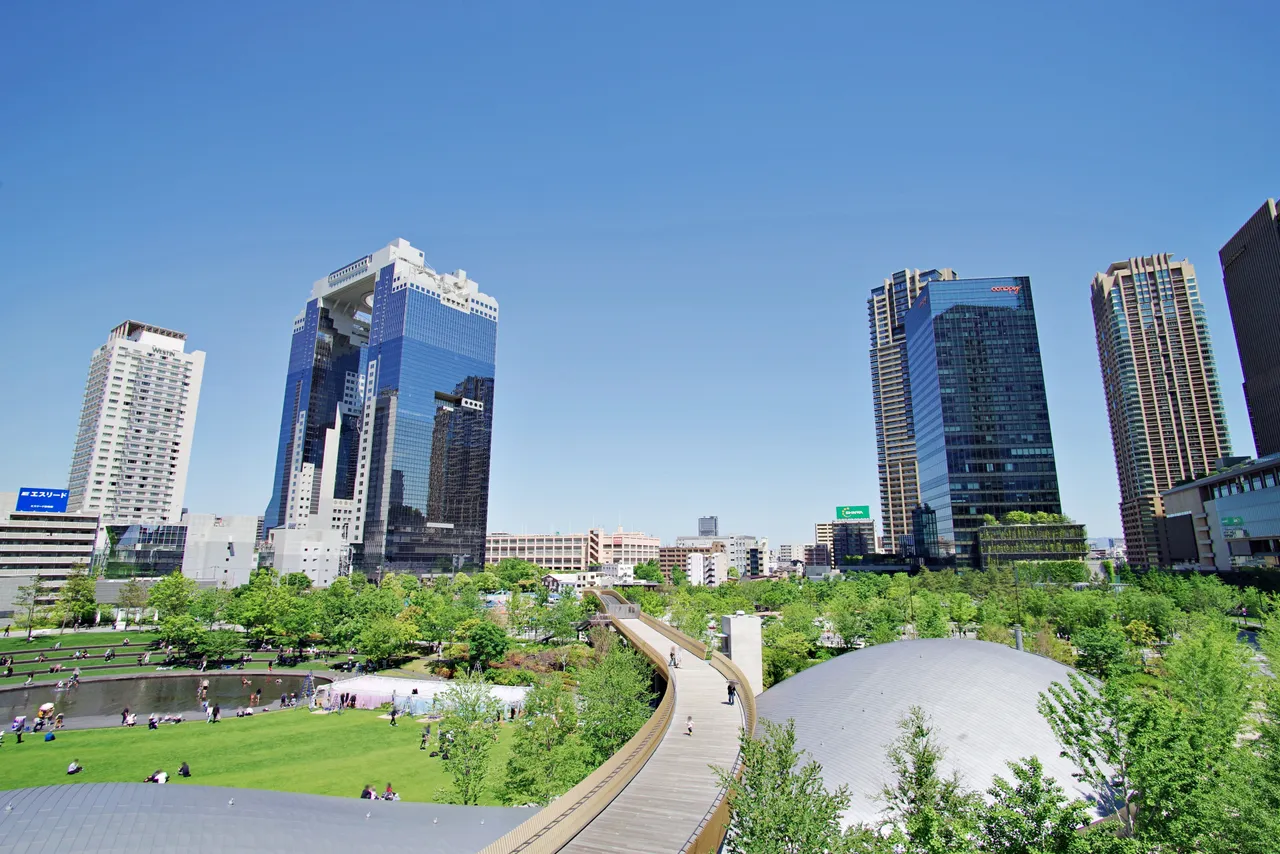
If a tower view is not a priority, have dinner and finish earlier. That creates room for packing or a relaxed final morning, particularly before an airport departure.
Do You Need an Osaka Amazing Pass?
Choose the route first, then compare tickets. Day 1 is mainly walking and food, so it does not automatically justify a sightseeing pass. The regular Osaka Amazing Pass currently costs ¥3,500 for one day or ¥5,000 for two consecutive days, according to the official pass information. These are the regular city products, not similarly named airport-inclusive variants.
For transport alone, Osaka Metro's Enjoy Eco Card lists adult prices of ¥820 on weekdays and ¥620 on weekends and public holidays. It covers the specified Metro and city-bus services, with exclusions including Yumeshima. It does not cover JR journeys or your airport train. Individual fares may cost less when you take only a few rides.
The important Day 2 restriction is Umeda Sky Building. The Amazing Pass attraction conditions limit included observatory admission to the daytime window ending at 15:00. From 15:00, the listed benefit is a 10% admission discount. A sunset or night visit cannot be counted as free in your comparison.
The Eco Card also includes same-day attraction discounts: Osaka Castle admission becomes ¥1,080, and the observatory's regular ¥2,000 admission receives a 10% discount, becoming ¥1,800. Use the card for travel that day and present it when buying the eligible admissions. Check each facility's conditions before choosing a separate online ticket.
Here is an adult comparison using those benefits and only the two paid attractions in this itinerary:
| Day 2 choice | Castle + observatory + transport benchmark | What it means |
|---|---|---|
| Both attractions with Eco Card discounts, weekday | ¥1,080 + ¥1,800 + ¥820 = ¥3,700 | Requires the card's same-day admission benefits |
| Both attractions with Eco Card discounts, weekend or public holiday | ¥1,080 + ¥1,800 + ¥620 = ¥3,500 | The lower transport price makes this equal to the one-day Amazing Pass |
| Amazing Pass, observatory within its included window | ¥3,500 | ¥200 below the weekday Eco Card example, if all your rides are covered |
| Amazing Pass, observatory after 15:00 | ¥3,500 + ¥1,800 = ¥5,300 | More expensive than either Eco Card example when these are your only paid stops |
These examples use the benefits of each ticket, not a promise that one product is cheapest for every traveler. Other discounts, your actual rides and admission conditions can change the result. If you skip an attraction, compare individual transport fares as well; the Eco Card is not compulsory.
Buy the sightseeing pass when the included activities you actually want justify it within their operating conditions. Do not add unwanted attractions simply to make the arithmetic look better. Check admission deadlines, reservation rules and temporary closures before paying.
If Universal Studios Japan Is the Priority
Replace Day 2 with a full USJ day. Keep Day 1 as your central Osaka outing and accept that the castle and Umeda may wait for another trip. Theme-park queues, entry arrangements and the journey back make a fixed castle visit or paid evening reservation an uncomfortable extra commitment.
Use the USJ Express Pass guide to separate park admission from optional Express Pass products and to understand timed-entry arrangements. Choose the park date and ticket details before booking a separate activity that depends on leaving at a particular time.
If you have three full days, the simplest extension is to keep both city days and add USJ. If you have only two, choose which experience matters most rather than squeezing all three days into the same schedule.
Namba or Umeda: Choose a Base Around Your Arrival
Namba suits a trip built around Minami evenings and the first day's walking. Umeda can suit northern Osaka plans and particular onward rail journeys. Neither description replaces checking the actual hotel entrance and the station you need.
Be careful with “Namba”: Nankai Namba, the Metro stations and JR Namba are not interchangeable arrival points. Similarly, an Umeda-area address can still involve a substantial walk through or around the station complex. Compare the final journey with bags before choosing a property because its name includes a familiar district.
For flights, use the Kansai Airport transport guide. Work backward from the airport arrival time you need, including bag collection and the correct departure platform. Keep a departure morning close to your luggage and rail connection.
Ask the hotel about storage before booking an outside service. If you need another option, choose a collection location that fits the end of your day as well as the beginning.
Osaka luggage storage with Radical Storage
Best for
A bag-free city walk before check-in or after checkout
Before booking
Collection requires a return to the selected location during its opening hours.
Why it may fit
Compare storage around the neighborhood or station you will return to before departure. Confirm opening hours, collection time and the final price.
Our luggage storage guide also covers hotel storage and station lockers. Avoid carrying a large suitcase through the market or a food tour simply because the arrival day has been labeled “Day 1.”
Adjust for Rain, Children and Shorter Days
In persistent rain, replace a substantial outdoor block with one indoor anchor. The Osaka rainy-day guide groups options by area so you can avoid crossing the city repeatedly. A covered shopping arcade still involves outdoor journeys to reach it; it is not the same as an entirely sheltered day.
With children, choose one major attraction and one flexible food or shopping block each day. Confirm any tour's age rules and dietary arrangements before relying on it as the family meal. Build in a place to sit down and a simple route back to the hotel.
If you arrive after lunch, start with the Namba and Dotonbori half of Day 1. If you leave after lunch on the second day, choose one nearby morning stop and omit the north-side circuit. Protecting the journey to your flight or onward train is more useful than keeping every heading from the full itinerary.
Make it your trip
Still planning your Japan trip?
Pick the question on your mind. Compare your options, check the details and take one more thing off your list.
Would a JR Pass save you money?
Add your train journeys and compare individual tickets with the nationwide pass. See which costs less for your route.
Calculate my rail costs
Which eSIM fits your Japan trip?
Maps, messages, hotspot use: compare five providers by data allowance, network and plan limits before you choose.
Find my Japan eSIM
What should your travel insurance cover?
Compare medical cover, cancellation and activity limits across five options, with the exclusions worth checking.
Compare cover & limitsFrequently Asked Questions
Two full sightseeing days can cover a focused selection of central neighborhoods, food and one or two major attractions. Arrival and departure time reduces what fits. If Universal Studios Japan is a priority, replace one sightseeing day or add another day.
This itinerary gives Universal Studios Japan its own day. Combining it with the castle and a fixed evening activity makes the plan depend on park queues, travel and admission deadlines. Choose the park day or the city sightseeing route.
Not automatically. Compare the included attractions you will actually visit and the eligible transport you will use. A day focused on walking and meals may not justify a sightseeing pass. Check each attraction's admission conditions as well as the pass price.
The current participating-attractions page limits included observatory admission to the daytime window ending at 15:00. From 15:00 it lists a 10 percent admission discount instead. Do not count a nighttime visit as free when comparing pass costs.
The official adult admission is 1,200 yen as checked on October 23, 2026. Normal hours are 09:00–18:00, with final entry at 17:30; ticket queues may be restricted earlier. The tower normally closes from December 28 through January 1.
Choose one indoor anchor and reduce exposed walking. Use the existing Osaka rainy-day guide for options around Namba, Umeda or Osaka Bay. An aquarium or theme park visit should replace a substantial block of the itinerary, rather than be added to an already full day.

Written by
JAPANODE
Based in Japan, sharing practical travel planning guides for visitors.
You Might Also Like
 Food & Drink
Best Osaka Food Tours: Food Walks, Bar Hopping and DIY
11 min read
 Culture
12 Things to Do in Osaka on a Rainy Day: Indoor & Covered
15 min read
 Itinerary
4-Day Kansai Itinerary: Kyoto, Osaka & Nara (2026 Local's Guide)
18 min read
 Transportation
KIX to Osaka, Kyoto & Kobe: 2026 Transport Comparison Guide
16 min read