On this page
Osaka Tenmangu is an easy shrine stop to combine with a neighborhood walk and something sweet. I spent about 30 minutes at the shrine and also tried warabi mochi from nearby Kanmidokoro Kamakura. Use this guide to reach the shrine, recognize the details we photographed and plan nearby food and shopping stops.
What stayed with me was the setting. The shrine sits right in the city, yet being inside felt a little like stepping into another world. I felt a particular energy there. That is my own impression of the visit; the photographs below show the gates, buildings and smaller details that you can look for yourself.
If you are building a wider trip, use our 4-day Kansai itinerary to place this walk within your Osaka day. Here, the focus is one manageable neighborhood outing.
Osaka Tenmangu at a glance
| Question | What to know |
|---|---|
| Where is it? | 2-1-8 Tenjinbashi, Kita-ku, Osaka |
| Nearest stations | Minamimorimachi on Osaka Metro; Osakatemmangu on the JR Tozai Line |
| Station-to-shrine walk | About five minutes, according to Osaka's official tourism listing |
| Admission | Free for worship; paid services and special events are separate |
| Grounds opening hours | Confirm current gate-opening times with the shrine |
| Prayer services | 9:00 a.m.–5:00 p.m.; final reception at 4:30 p.m. |
| Our time inside | About 30 minutes |
| Suggested outing | Shrine → nearby sweets → a short Tenjinbashisuji walk |
| Best fit | Travelers who enjoy shrine details and exploring a neighborhood on foot |
The admission and walking estimate above come from Osaka's official tourism listing, checked on October 2, 2026. The service hours and final reception time come from the shrine's prayer-service guidance. Service hours do not establish when the grounds open or close; check the shrine's current notices or contact the shrine before an early or late visit. The combined outing is our suggestion, and the 30-minute shrine visit is our actual experience.
Is it worth adding to your Osaka itinerary?
I would add Osaka Tenmangu if you have room for a compact cultural stop, particularly when you also want to explore the nearby shopping street. You can look closely at the main gate and worship hall, pause by the smaller shrine structures, then move straight back into the neighborhood for food.
The main appeal is the combination. The wooden roofs, stone lanterns and prayer plaques give you plenty to notice within a relatively small area. The surrounding streets make the visit feel part of everyday Osaka, rather than a separate excursion requiring a long transfer.
If your day already includes several shrines and you are short on time, weigh it against the other places you most want to see. Our 30 minutes suited a straightforward visit with photographs. Someone who wants to read every information panel or spend time praying may want longer.
How to get to Osaka Tenmangu
The most useful station names to save are Minamimorimachi (南森町) and JR Osakatemmangu Station (大阪天満宮). The first is served by the Osaka Metro Tanimachi and Sakaisuji lines; the second is on the JR Tozai Line. The JR station name here follows the railway operator's English spelling.
The shrine's official access page gives these street-level directions:
- From Minamimorimachi: use Exit 4, head south along Tenjinbashisuji Shopping Street, then turn left at the second junction and continue about 50 meters.
- From Osakatemmangu: use Exit 7, head south into the shopping street, then turn left at the second junction and continue about 50 meters.
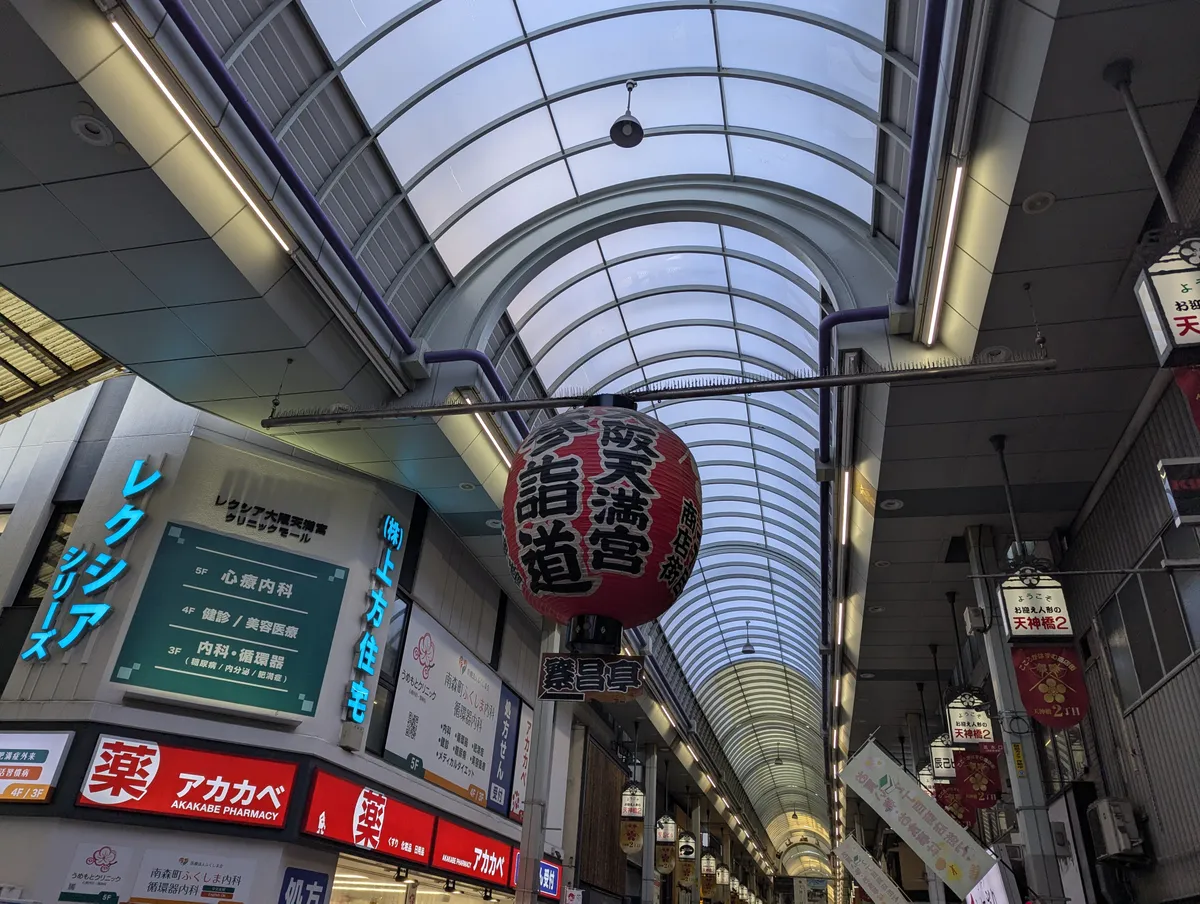
Save the shrine itself as your destination as well as the station. The covered arcade is a useful landmark, but you leave it for the final approach to the shrine.
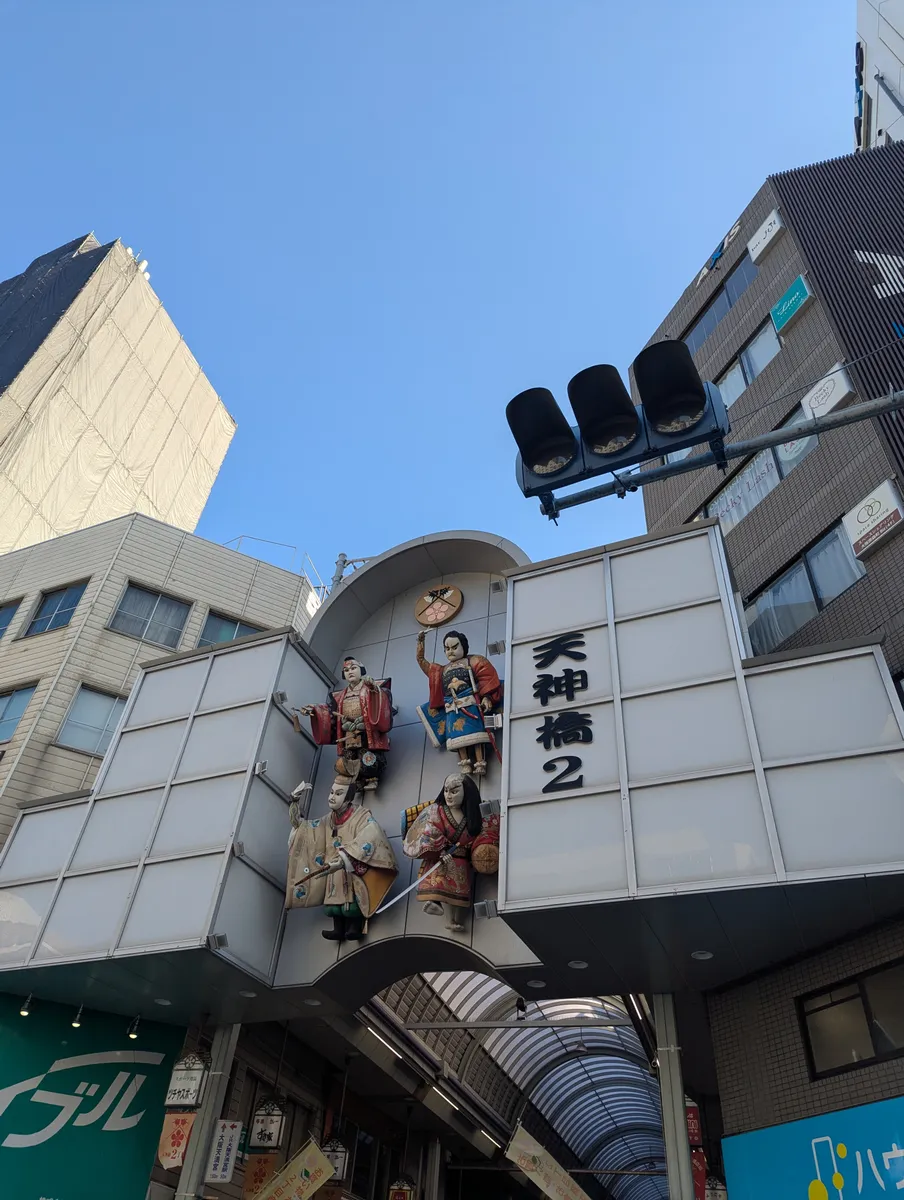
JR Temma (天満), JR Osakatemmangu (大阪天満宮) and Temmabashi (天満橋) are different stations. For the short approach described here, search for Minamimorimachi or Osakatemmangu. Match the name and railway line before following a route.
For a wider explanation of navigating trains and station exits, see our Japan train guide. Our Suica and IC card guide covers using rechargeable transport cards during your trip.
What to see during a 30-minute shrine visit
You do not need to treat the grounds as a checklist. Start with the entrance and main hall, then leave a little time to notice the details around them. These are the parts I photographed during our visit.
The main gate: look up as you pass through
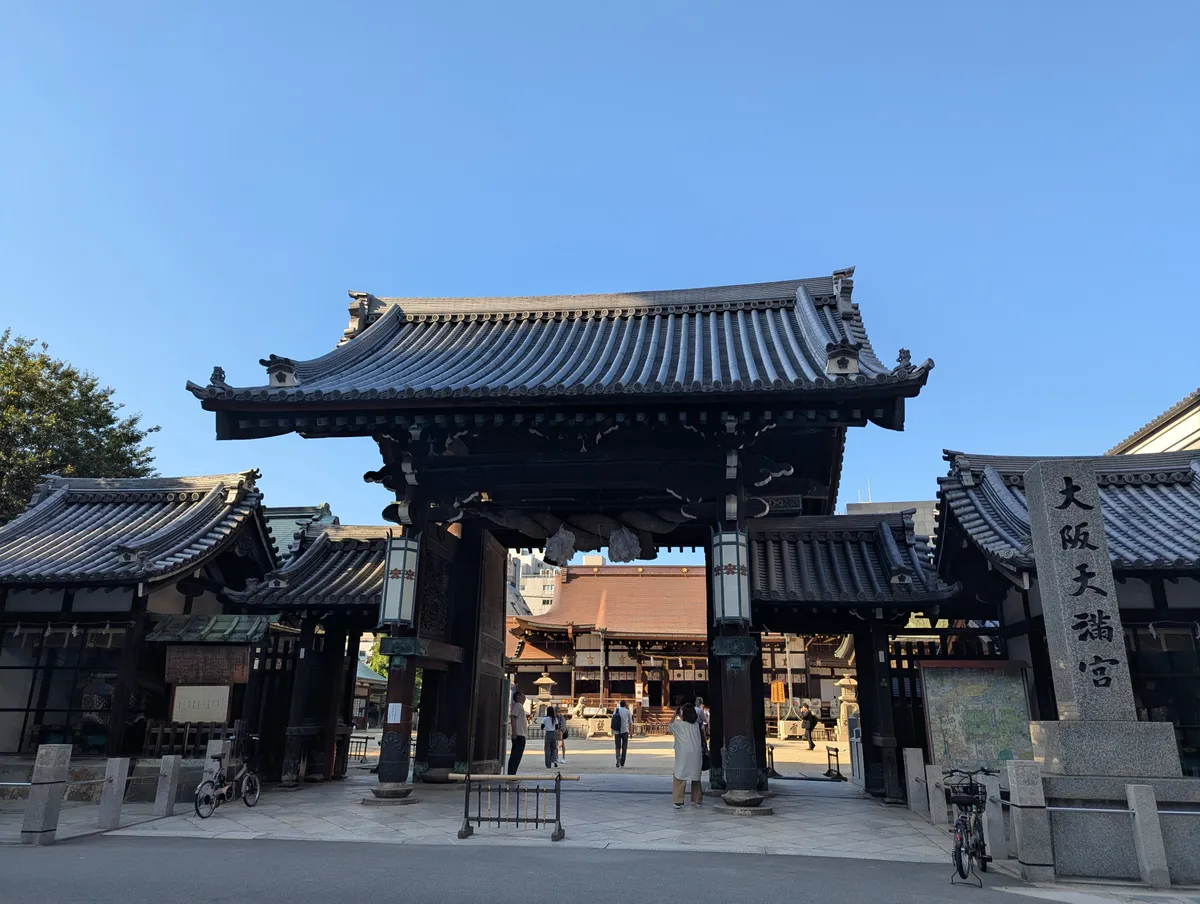
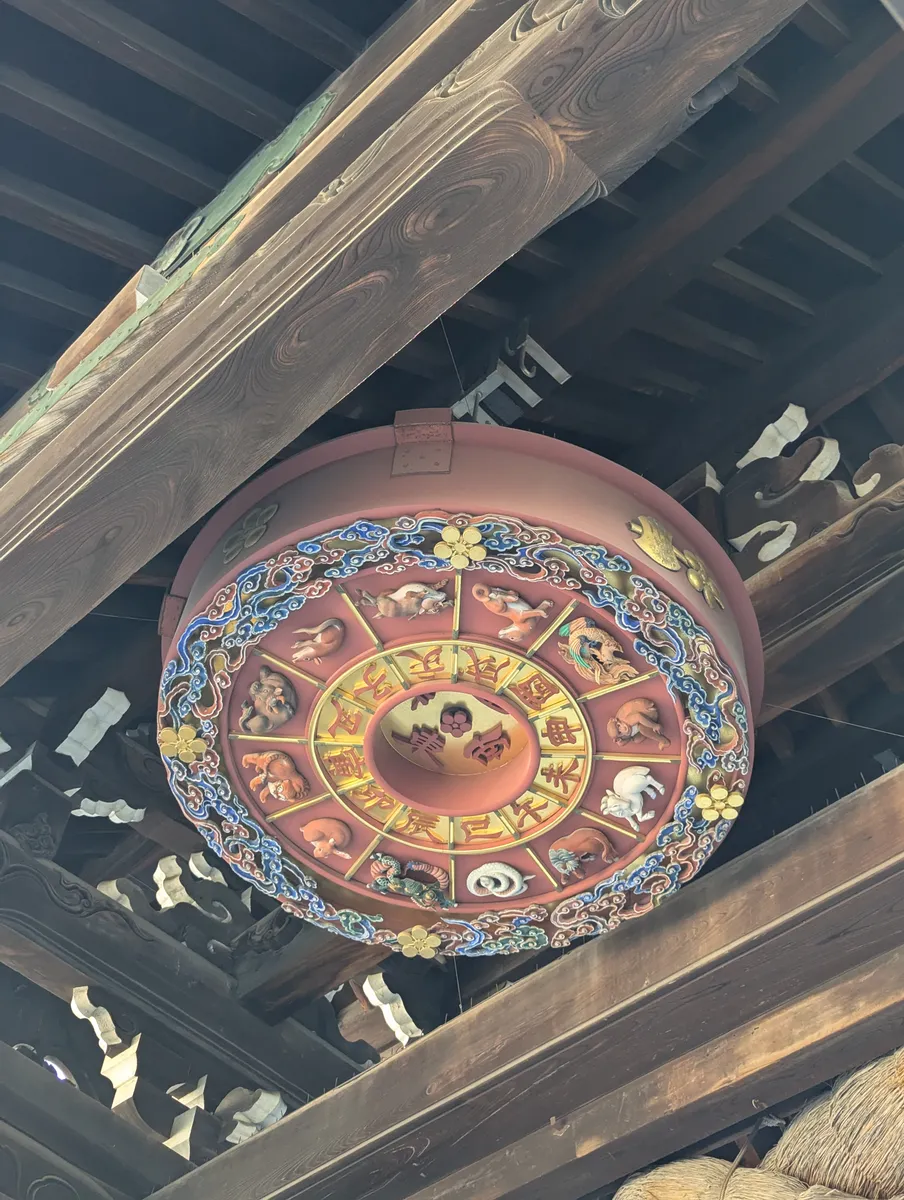
The main gate, or Omote Daimon, makes a strong first impression: dark wood, a broad roof and a heavy sacred rope above the opening. The view through the gate also frames the worship hall beyond it.
Once underneath, look up. There is a colorful circular decoration with zodiac animals set into the ceiling. Osaka's official visitor guide specifically highlights the gate's rope and zodiac compass. It is a small detail that is easy to miss if you walk straight through.
The worship hall and its city setting
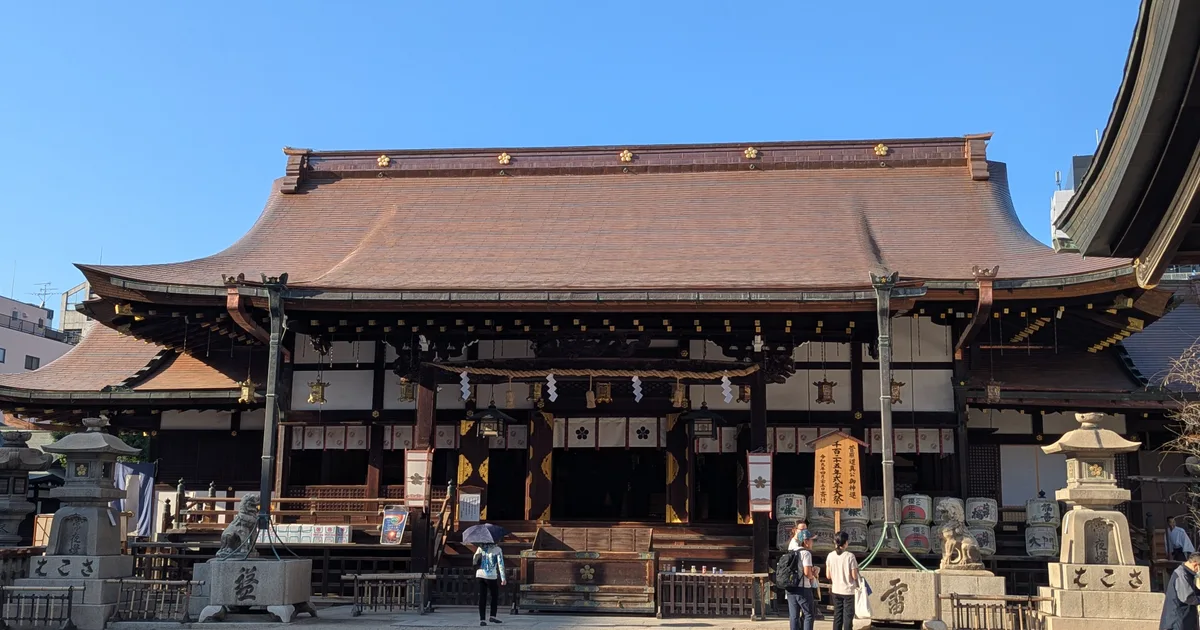
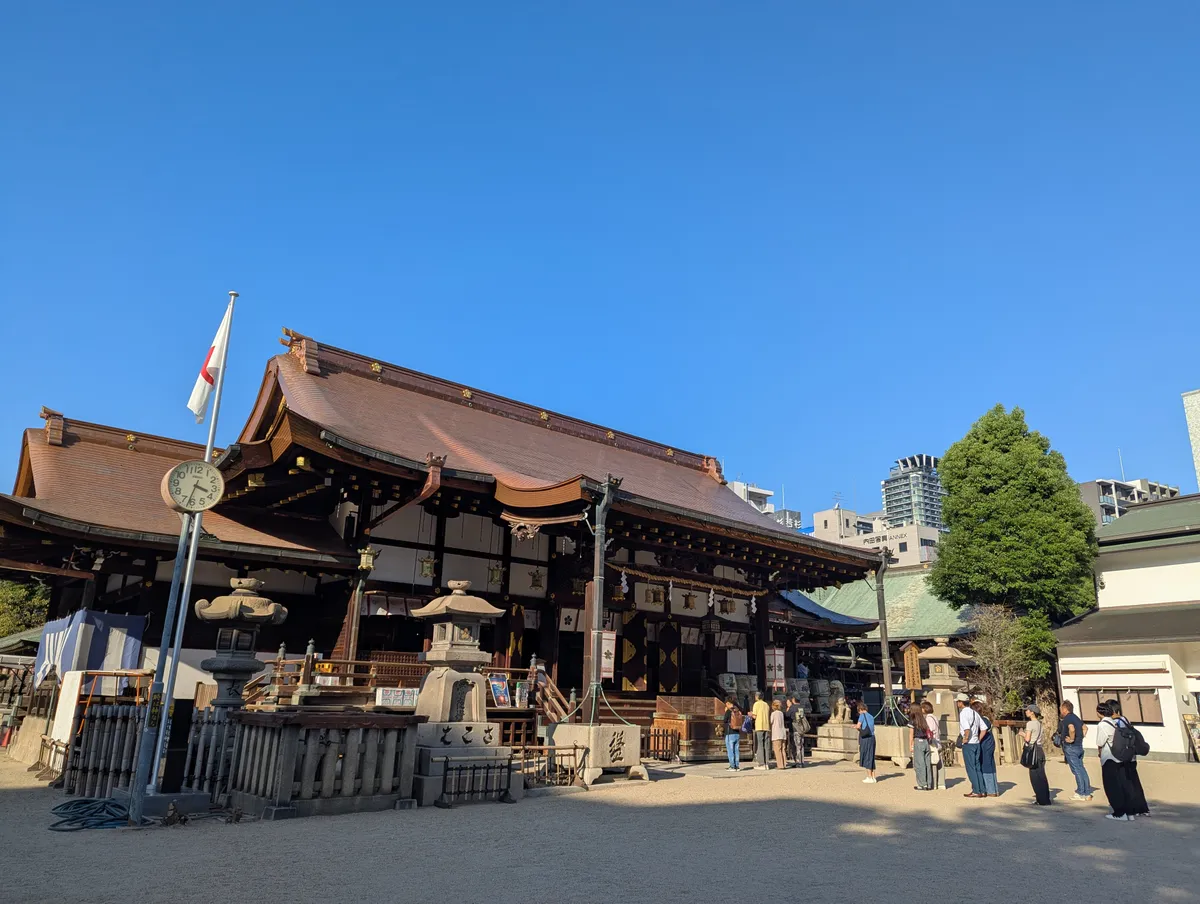
The main hall is the center of the visit. Give people who are praying room to approach, then take your time looking at the roofline, woodwork and stone lanterns from the courtyard.
My photographs include modern buildings behind the shrine roofs. That visual overlap captures what felt so unusual to me: a sacred space sitting within a busy city. You do not have to travel far out of Osaka to find this change of atmosphere.
Osaka Tenmangu honors Sugawara no Michizane, associated with learning. The shrine's own history explains its origins, while the official precinct guide helps you identify the buildings around the grounds.
Prayer plaques and smaller details
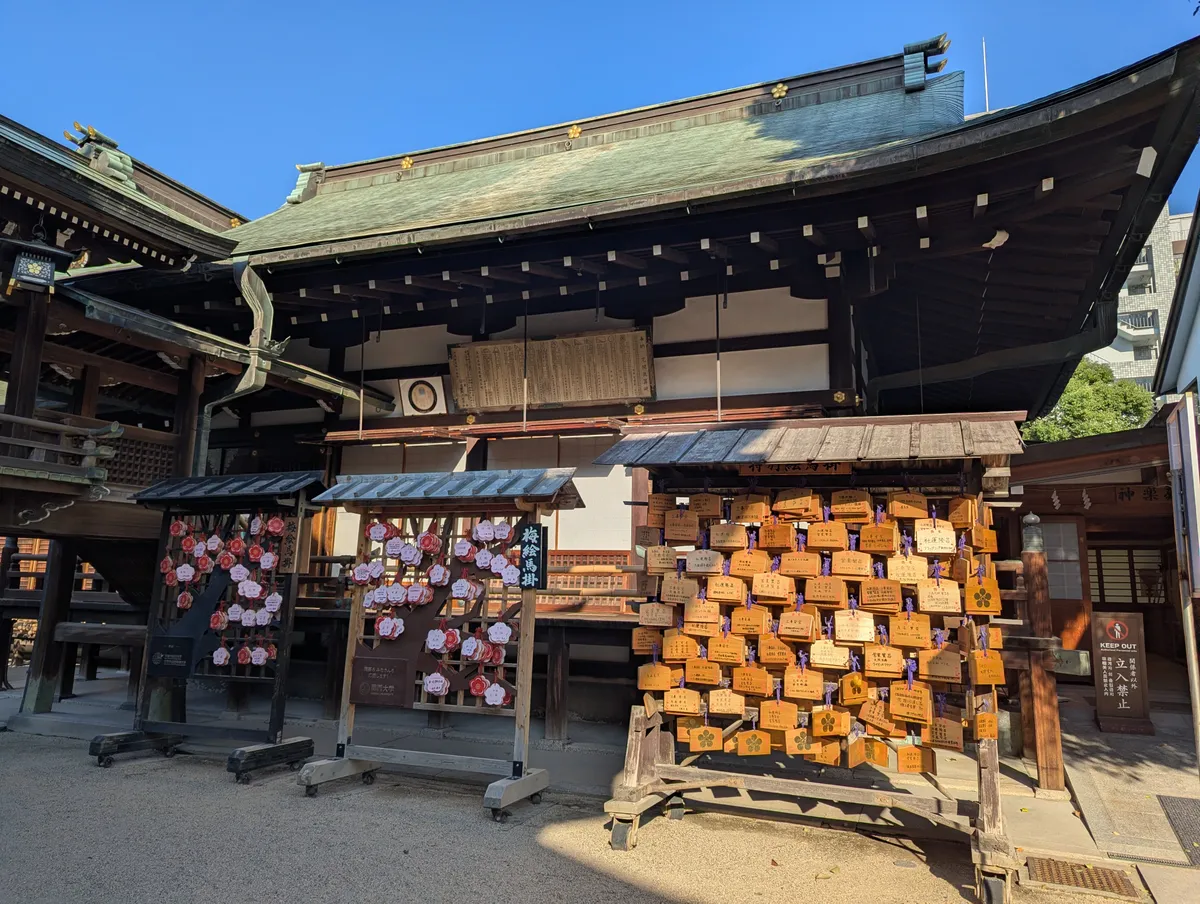
Around the hall, look for the racks of wooden prayer plaques, called ema. The rows of plaques, stone surfaces and roof decorations make worthwhile subjects when you want photographs beyond the main building.
Be considerate about what is written on individual plaques. A wider view of the display can show the setting without turning another person's prayer into the focus of your photograph.
The flower-filled basin and sacred-water structure
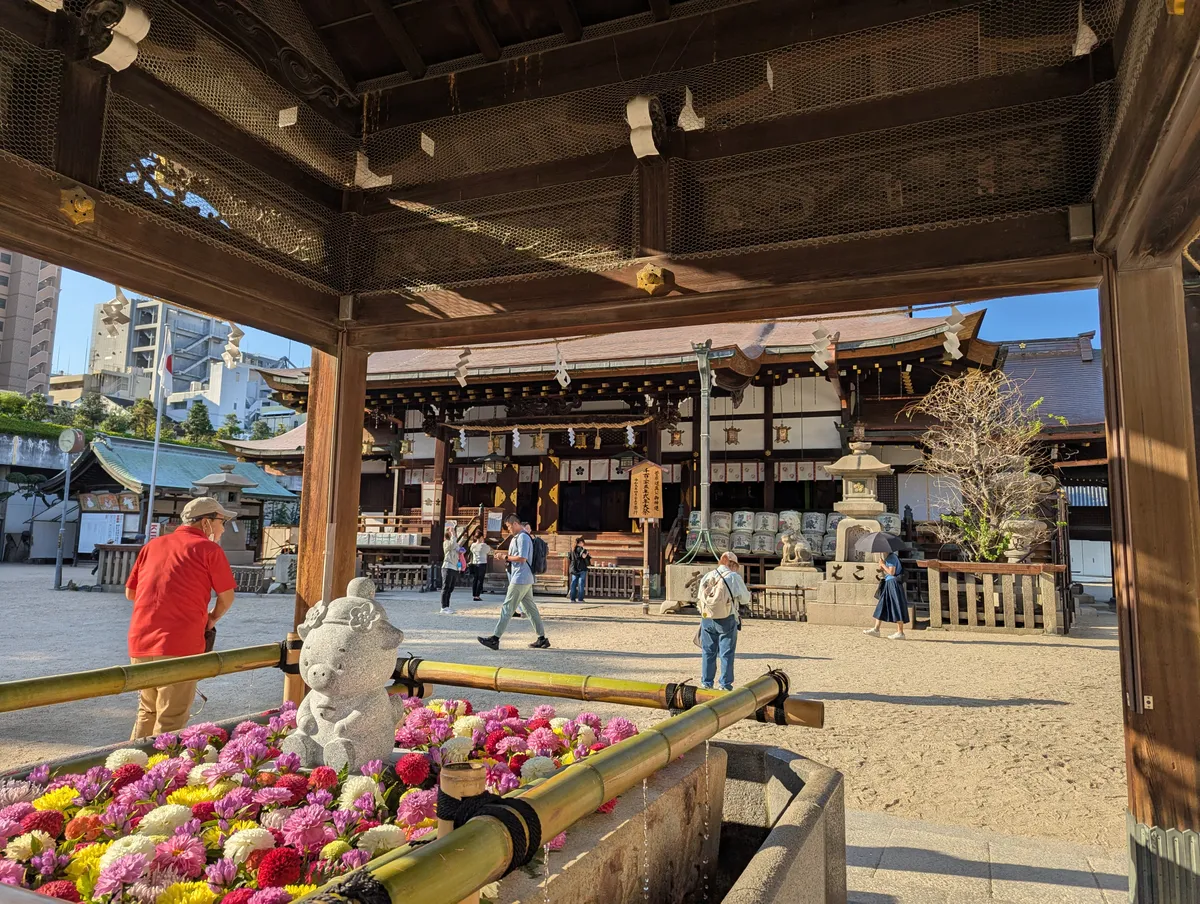
On our visit, the purification basin held a bright arrangement of flowers. Pink, purple and yellow blooms stood out against the stone and wood, with the hall visible behind them. It was one of the most colorful details I photographed.
This kind of flower display is often called hanachozu. Treat the photograph as a record of what was there on our visit: flower arrangements can change, and you should not plan a trip on the assumption that the same display will be waiting.
There is also a separate roofed sacred-water structure in the photo below. Follow the notices at each structure rather than assuming that every basin or water outlet has the same use.
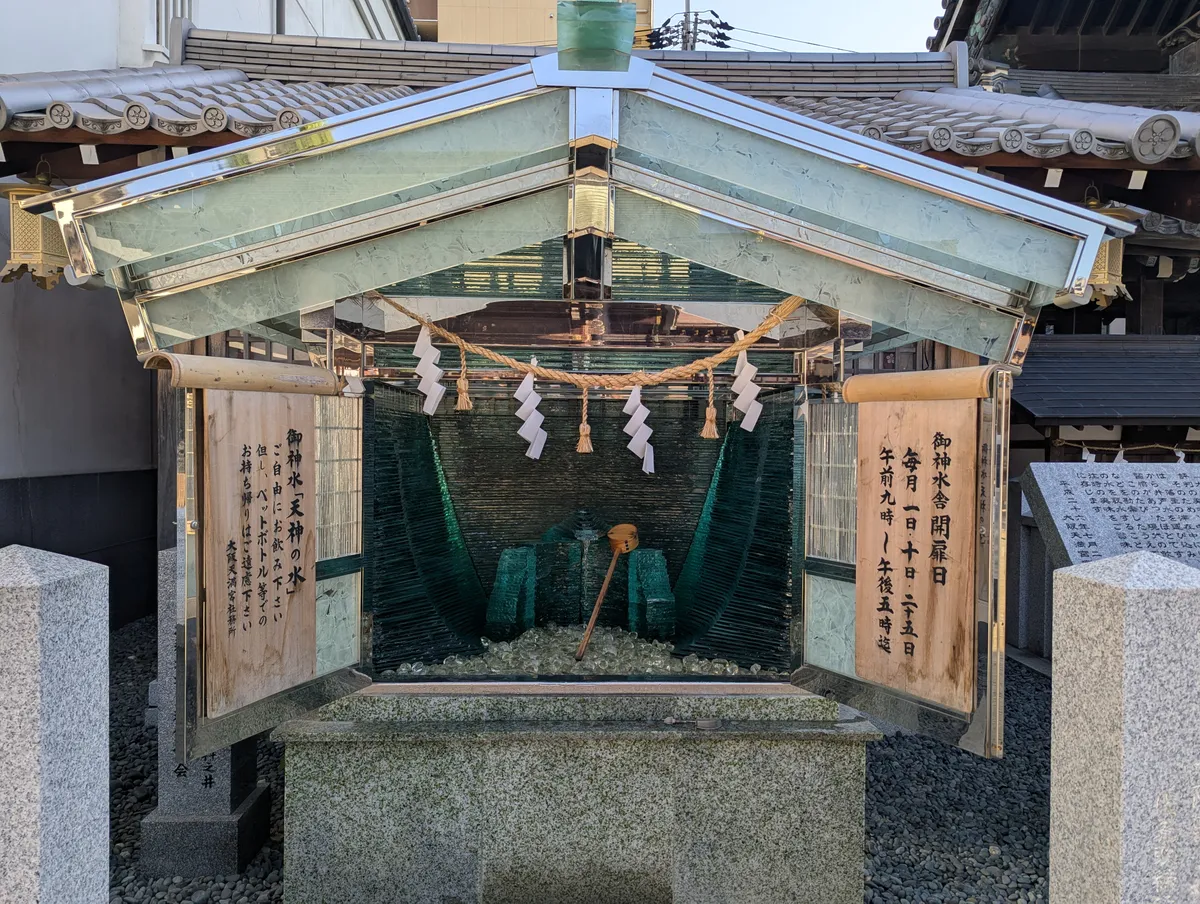
Leave a moment for the edges of the grounds
After the main courtyard, look toward the smaller structures and shaded corners. My photos show stone markers, trees and smaller roofs around the edges. These give the visit a different scale from the wide view of the hall.
Leave a few minutes unplanned to take in the grounds and form your own impression of the shrine.
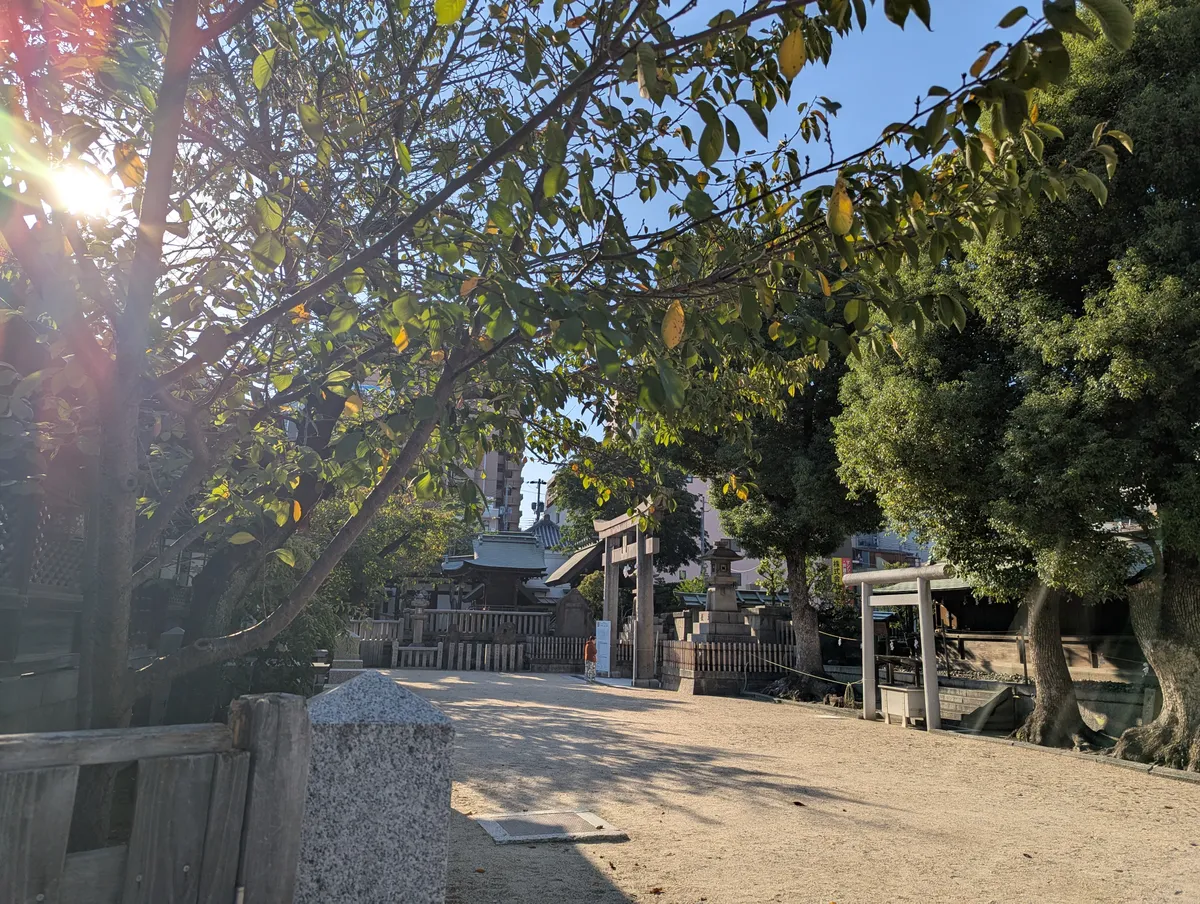
Warabi mochi at Kanmidokoro Kamakura
During this outing, I ate warabi mochi from Kanmidokoro Kamakura, Osaka Tenmangu-mae. The shop's white entrance curtain and vertical lettering are useful details to recognize on the street.
The warabi mochi was very soft, and the kinako paired with it beautifully. I thought it was delicious. That texture and combination were the highlight of the sweets stop for me, and they are the reason I would include the shop in this walk.
Warabi mochi is a Japanese starch-based sweet; kinako is roasted soybean flour. If you have not tried it before, the texture is a good reason to order the sweet itself. The brand's official product page introduces its warabi mochi and other offerings.
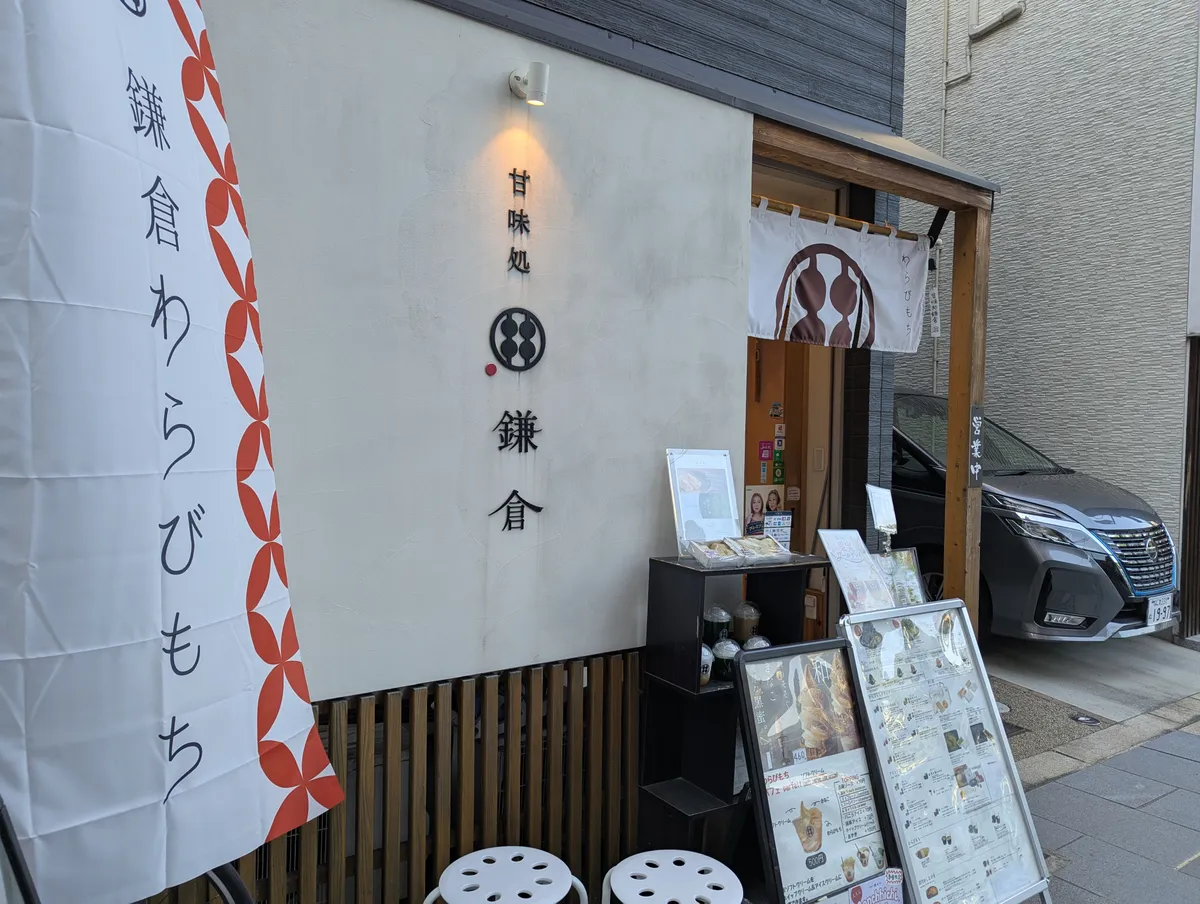
The official shop directory lists this branch at 2-4-4 Tenjinbashi, Kita-ku, Osaka, with telephone 06-7410-3471. Save that branch name when checking a map: Kamakura has shops in several locations.
Check the current menu for prices and availability, and confirm opening hours before making a special trip. The storefront photograph helps you recognize the shop; use the menu in the shop when choosing what to order.
If ingredients matter to you, ask about the exact item you plan to order. In particular, kinako is made from soybeans. A general description of warabi mochi does not confirm the ingredients or preparation of every product on the menu.
Ice cream and drinks across the street
Across from Kamakura, there was another shop selling ice cream and drinks. I noticed people sitting outside eating ice cream. It looked like another option for taking a short break around the shrine.
The name on the sign in our photograph is Hitokuchi no Shiawase (一口の幸せ). The shop's official Instagram identifies its Osaka Tenmangu main branch and advertises mochi ice cream. The photograph records what we saw outside; check the current menu and hours before making a special trip.
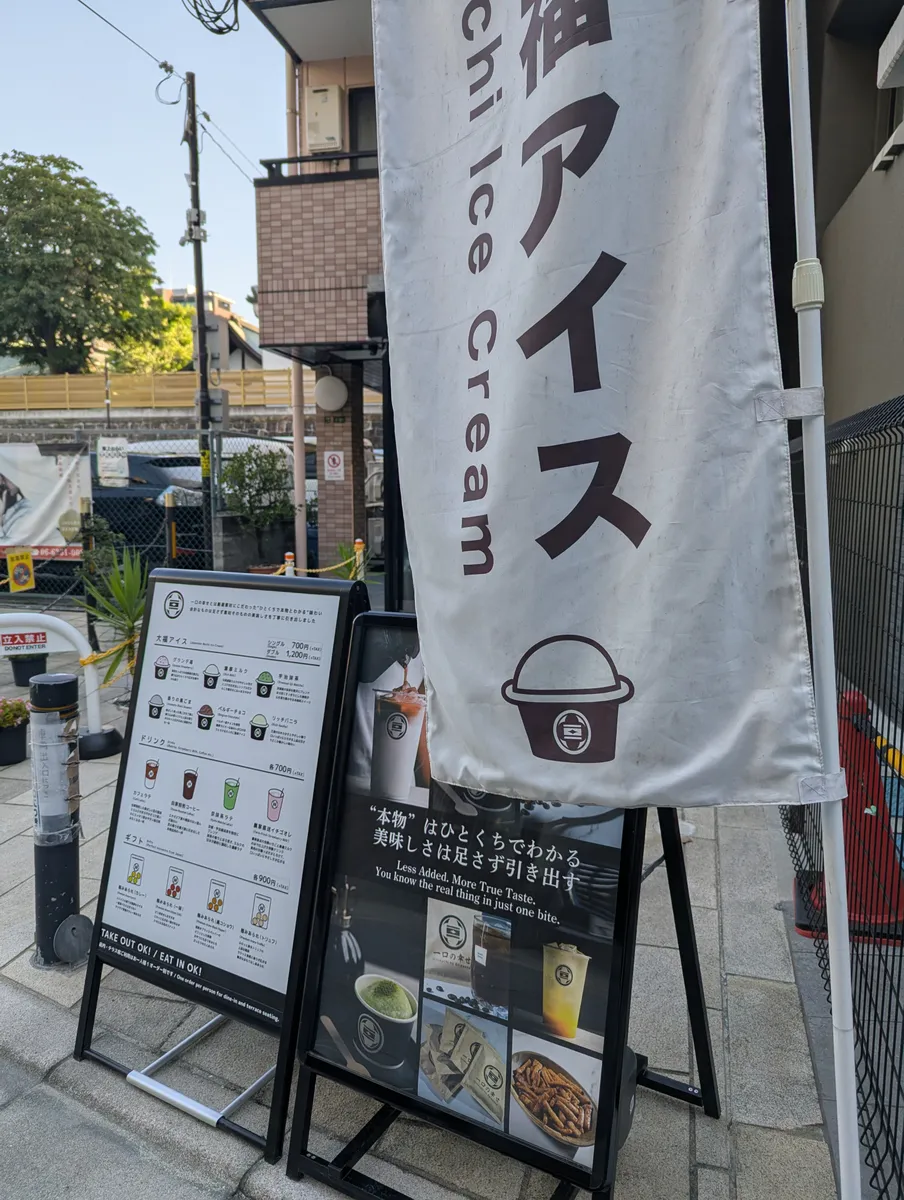
Add a short Tenjinbashisuji Shopping Street walk
The shopping arcade makes a natural extension before or after the shrine. You can browse a few nearby blocks, choose something to eat and return to your station without committing to the entire street.
Osaka's official tourism guide describes Tenjinbashisuji as approximately 2.6 kilometers long, with around 600 shops, and recommends combining it with Osaka Tenmangu. That length matters when planning: a quick look at the southern section and a walk along the whole arcade are different outings.
For this visit, I would keep the shrine and sweets as the anchor, then let your remaining time decide how far to continue. The arcade photographs above show the street's covered roof, hanging lanterns and shopfronts. The final walk to the shrine itself is outdoors, so bring an umbrella if the weather calls for one.
Near the shrine you will also see Tenma Tenjin Hanjotei, identified in the official precinct guide. We photographed its exterior. If you want to attend a performance, check the venue's own program and language arrangements separately; a passing look at the building is easy to include in this outing.
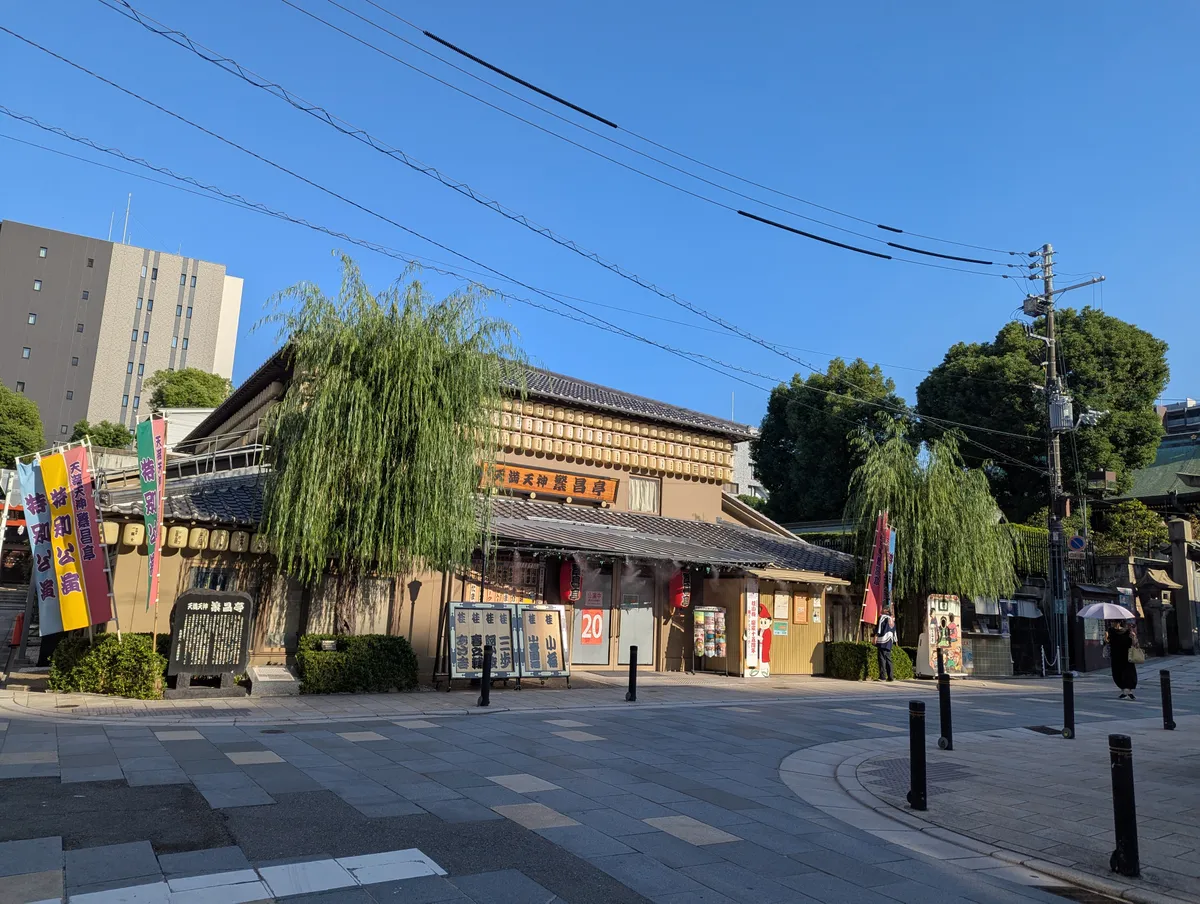
A simple shrine-and-sweets route
Allow 60–90 minutes as a planning estimate for the short version below. The roughly 30 minutes at the shrine reflects our actual visit; the rest is a planning estimate that depends on ordering, browsing and your pace.
- Arrive at Minamimorimachi or Osakatemmangu. Follow the shrine's directions through the southern shopping arcade.
- Visit Osaka Tenmangu. Look up beneath the gate, approach the main hall and leave time for the details around the courtyard.
- Stop at Kamakura. Try warabi mochi if that is what you came for, checking the current menu before ordering.
- Browse nearby shops. Continue along the arcade for as long as your schedule allows, or return to your station.
If you are fitting this around a flight, build the day around your airport journey first. Our Kansai Airport transport guide explains the main routes. If you have checked out and are carrying a suitcase, our Japan luggage-storage guide covers options for leaving it before sightseeing.
Festivals, photography and practical notes
An ordinary visit and Tenjin Matsuri are different plans
Our photographs show an ordinary visit. They do not represent the shrine during its major festival.
The shrine's official Tenjin Matsuri page explains the July 24–25 celebrations, including the river procession associated with July 25. If the festival is your reason for visiting, plan around the current year's program, viewing arrangements and transport notices. A 30-minute neighborhood stop is a different kind of visit.
Photograph with the shrine's current rules in mind
Make room for worshippers, keep entrances clear and follow signs or staff instructions. Ask before photographing an identifiable person at close range.
The shrine's official prayer-service guidance states that photography is not permitted inside shrine buildings, including the main sanctuary and connecting corridors.
There is a specific official photography notice effective April 1, 2026 for omiyamairi and Shichi-Go-San visits. It restricts camera and movie photography for those occasions, including photography by relatives or friends, while making an exception for smartphone and mobile-phone cameras. Its scope matters: it is not a statement that every sightseeing photograph is forbidden. Consult the notice if your visit involves one of those ceremonies.
Mobility and taking a break
The official accessible-visit guide describes entrance slopes, gravel paths, accessible toilets and steps at the worship hall. It also identifies a small entrance beside the main gate for wheelchair access. Check that guide for the route that suits your needs, rather than assuming every entrance is equivalent.
Keep a little flexibility for your sweets stop, too. Shop menus and availability can change. Taking the shrine visit first lets you enjoy the main purpose of the outing, then decide where to pause afterward.
Fit this walk into your Japan trip
This outing works well when you want one shrine visit, a sweet you can try nearby and a short look at an Osaka shopping street. It is also small enough to adapt: spend longer in the grounds, skip the shopping, or leave more time for a food stop.
If you want a guided meal elsewhere in the city, our Osaka food-tour comparison covers Shinsekai, Dotonbori, Kuromon and Uranamba. Its maps show how these southern food districts relate to Osaka Station; allow for the transfer from this shrine-and-sweets outing, and compare food inclusions before booking.
For the wider route, continue with our 4-day Kansai itinerary or 7-day Japan itinerary. All photos here are our own; the roughly 30-minute shrine visit and warabi mochi impressions come from this outing. Practical official information was checked on October 2, 2026.
Make it your trip
Still planning your Japan trip?
Pick the question on your mind. Compare your options, check the details and take one more thing off your list.
How much can you fit into one week?
Connect Tokyo, a Fuji or Hakone day trip, Kyoto and Osaka with a day-by-day route, travel costs and booking advice.
Explore the 7-day route
Which eSIM fits your Japan trip?
Maps, messages, hotspot use: compare five providers by data allowance, network and plan limits before you choose.
Find my Japan eSIM
What should your travel insurance cover?
Compare medical cover, cancellation and activity limits across five options, with the exclusions worth checking.
Compare cover & limitsFrequently Asked Questions
Yes, especially if you enjoy shrine architecture, small details and neighborhood walks. We spent about 30 minutes at the shrine and combined it with nearby warabi mochi and Tenjinbashisuji Shopping Street. It works well as a compact stop during an Osaka day.
Ordinary worship is free. Gate-opening times and service hours are separate: the shrine lists prayer services from 9:00 a.m. to 5:00 p.m., with final reception at 4:30 p.m. Confirm current gate-opening times with the shrine if you plan an early or late visit. Special events and services may have separate arrangements.
Use Minamimorimachi Station on the Osaka Metro Tanimachi or Sakaisuji Line, or Osakatemmangu Station on the JR Tozai Line. The official tourism listing puts the walk at about five minutes. These are different stations from JR Temma Station and Temmabashi Station.
Our shrine visit took about 30 minutes. Allow around 60 to 90 minutes as a suggested planning budget for the shrine, a nearby sweets stop and a short look at the southern end of Tenjinbashisuji Shopping Street. A longer shopping walk needs extra time.
Kanmidokoro Kamakura's Osaka Tenmangu-mae branch is listed at 2-4-4 Tenjinbashi, Kita-ku, Osaka. We ate its warabi mochi during our visit and loved the very soft texture with kinako. Check the shop's current hours and menu before going.
Photography is not permitted inside shrine buildings, including the main sanctuary and connecting corridors. Follow signs and staff directions and avoid disrupting worshippers. A separate rule effective April 1, 2026 restricts camera and movie photography in the grounds for omiyamairi and Shichi-Go-San visits, with an exception for smartphone and mobile-phone cameras. Check the official guidance for your situation.

Written by
JAPANODE
Based in Japan, sharing real travel tips and local insights. We spent about 30 minutes at Osaka Tenmangu and tried warabi mochi from nearby Kamakura; all photographs are our own.
You Might Also Like
 Transportation
Suica & Welcome Suica: Complete Guide for Japan Visitors
10 min read
 Transportation
Luggage Storage in Japan: Lockers, Apps & Delivery
11 min read
 Itinerary
4-Day Kansai Itinerary: Kyoto, Osaka & Nara (2026 Local's Guide)
18 min read
 Itinerary
7-Day Japan Itinerary for First-Timers: Tokyo, Hakone, Kyoto & Osaka (2026)
20 min read