Western Autumn 西の紅葉
10 autumn leaves day trips from Osaka.
From Koyasan's first mountain color to Kyorinbo's late carpet of fallen leaves—choose the western landscape that fits your date.
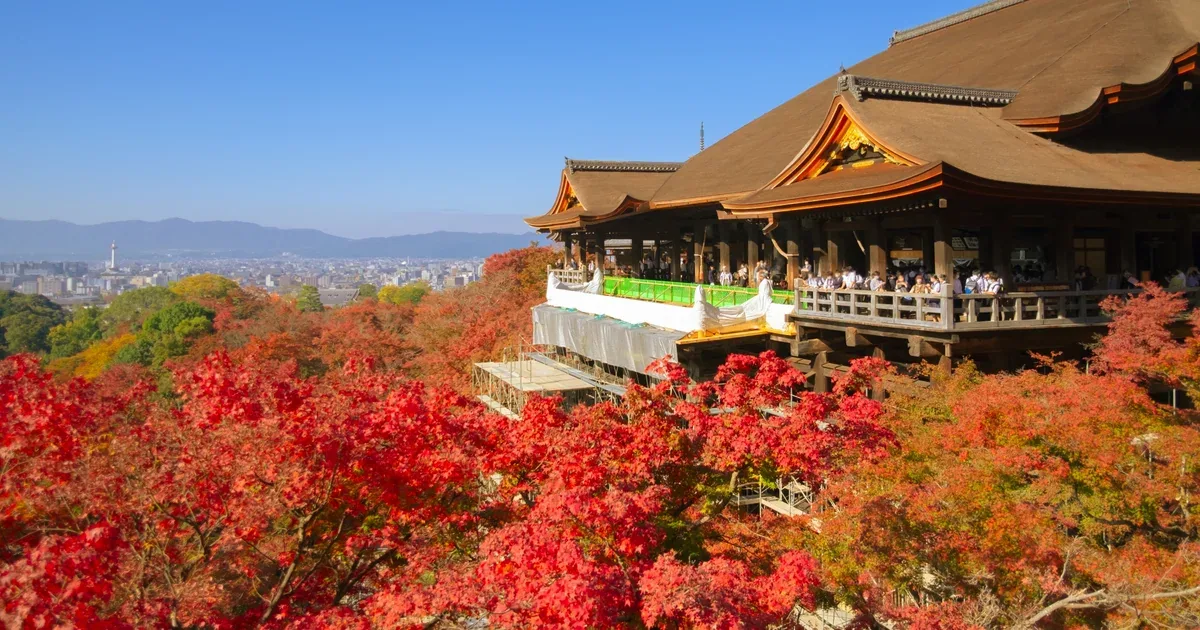
Kiyomizudera · Kyoto
The western leaf tide
Autumn descends from mountain to garden.
Kansai does not turn at once. Color begins in the sacred highlands, moves through temple cities, then settles into lower gardens where fallen leaves become part of the view.
Swipe to compare dates →
Destinations are arranged roughly by the seasonal progression, not as an absolute ranking. These are typical viewing windows, not guaranteed 2026 peak dates. JMC's first forecast places Osaka's city sample-tree color around November 24 for ginkgo and December 4 for maple; Kyoto is around November 27 and December 11. Mountains can be weeks earlier, so check live color, rain and the final transport timetable 48 hours before travel. For the nationwide sequence and booking timeline, see our Japan autumn leaves 2026 guide. For a trip at another time of year, compare our day trips from Kyoto and Osaka by interests, travel time and whether to go independently or join a tour.
The western day-trip radius
Ten landscapes around one Osaka base.
Mountains rise south and east, temple cities sit across the basin, and Himeji extends the journey west. This is a geographic overview, not a rail map—tap a number to open that destination.
Dots mark representative destinations · numbered labels are offset where stops overlap
- 1KoyasanLate Oct–mid Nov2 hr 15 min
- 2Mt. HieiEarly–mid NovAbout 2 hr
- 3Arima & RokkoLate Oct–late Nov60–80 min direct
- 4Mt. YoshinoLate Oct–late NovAbout 90 min
- 5KyotoMid–late Nov30–50 min
- 6NaraMid–late NovAbout 40 min
- 7HimejiMid–late NovAbout 1 hr
- 8KatsuojiMid-Nov–early Dec75–100 min
- 9MinohMid-Nov–early Dec30 min + walk
- 10KyorinboMid-Nov–early Dec90 min + taxi

Before you leave Osaka
Dress for the elevation, not Dotonbori.
Osaka can feel mild while Koyasan, Mt. Hiei and Yoshino are cold at sunrise. Compare monthly temperatures and build layers that work from city trains to shaded temple paths.
The first mountain color
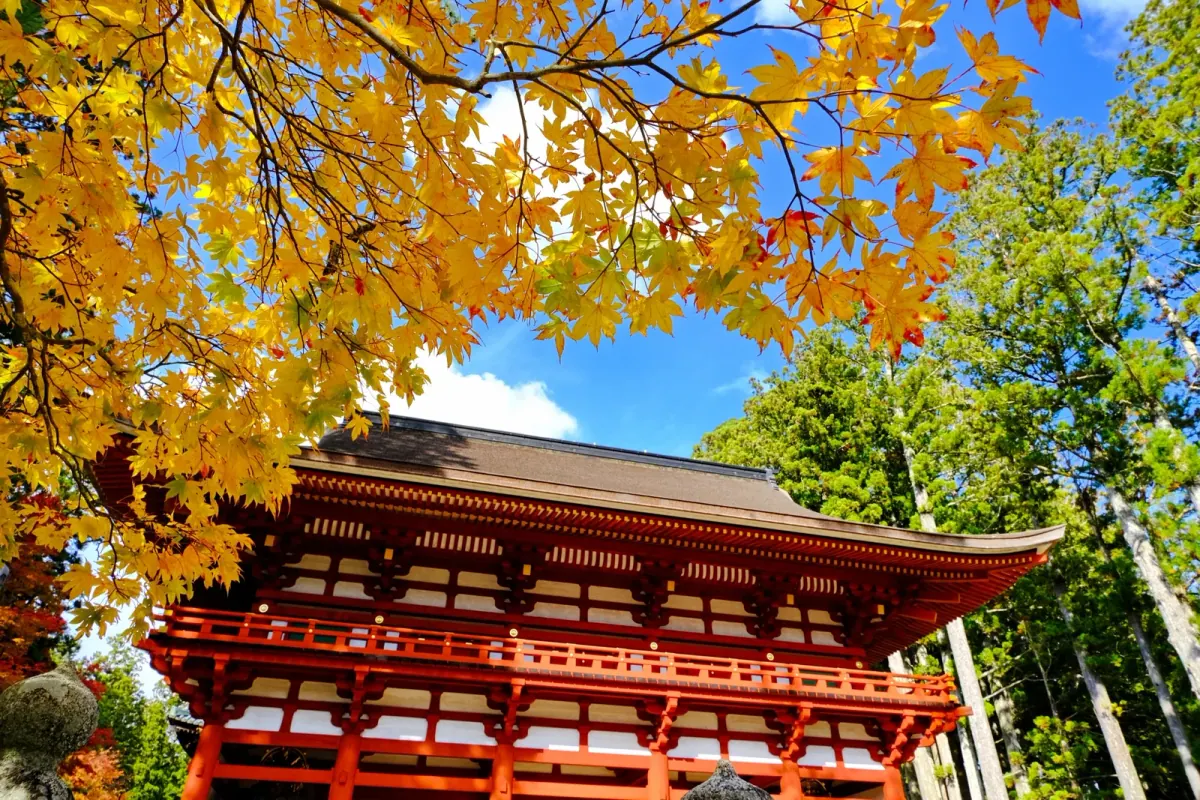
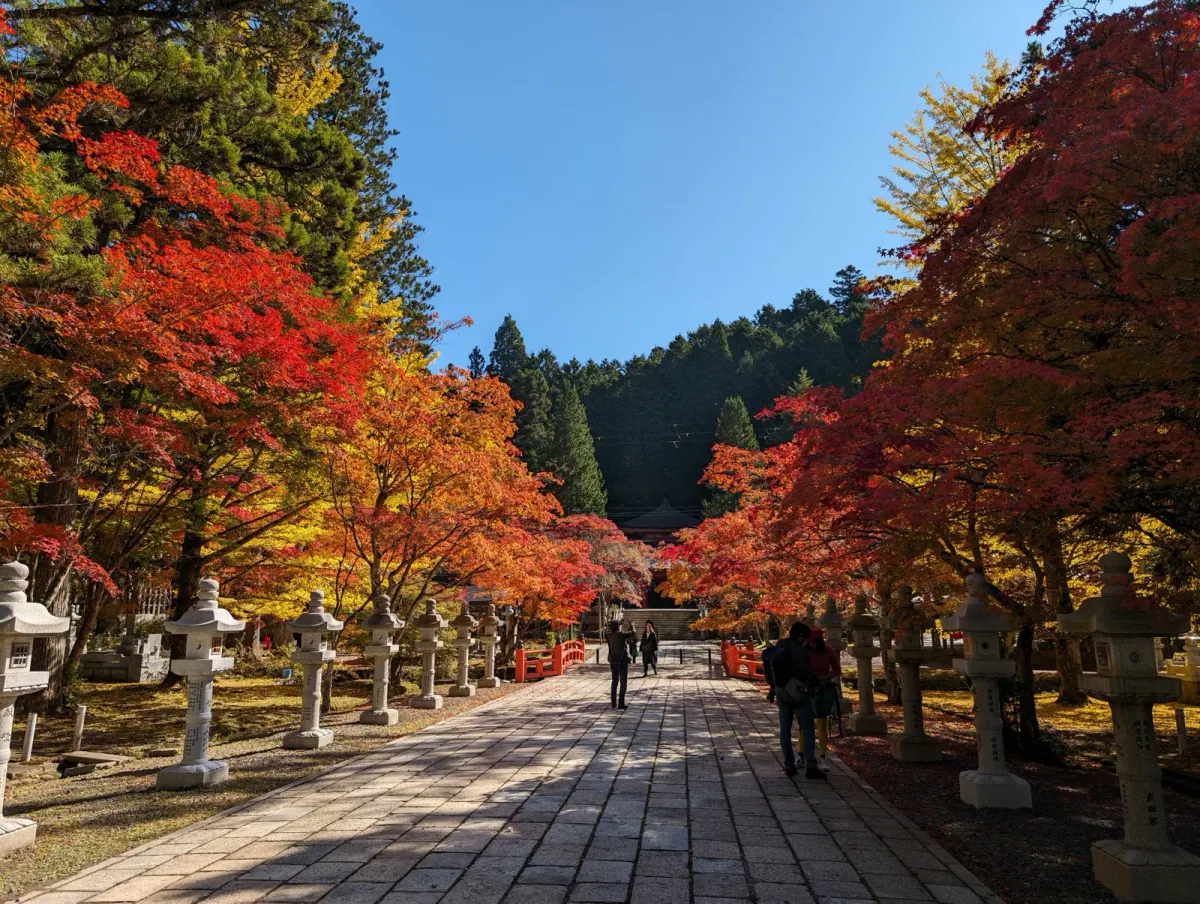
Koyasan
高野山Koyasan is Kansai’s answer for travelers arriving before the cities turn red. Sacred precincts, cedar-shadowed paths and a higher elevation give the mountain an earlier, quieter season than central Kyoto or Osaka.
- Typical window
- Late Oct–mid November
- From Osaka
- About 2 hr 15 min
- Best for
- Early dates · temple atmosphere · overnight potential
Namba → Gokurakubashi → cable car → local bus
The journey is long for a day trip. Keep the route to Danjo Garan, Kongobuji and one manageable part of Okunoin—or stay overnight in a shukubo when the schedule allows.
Bring a warmer layer than you would wear in Osaka.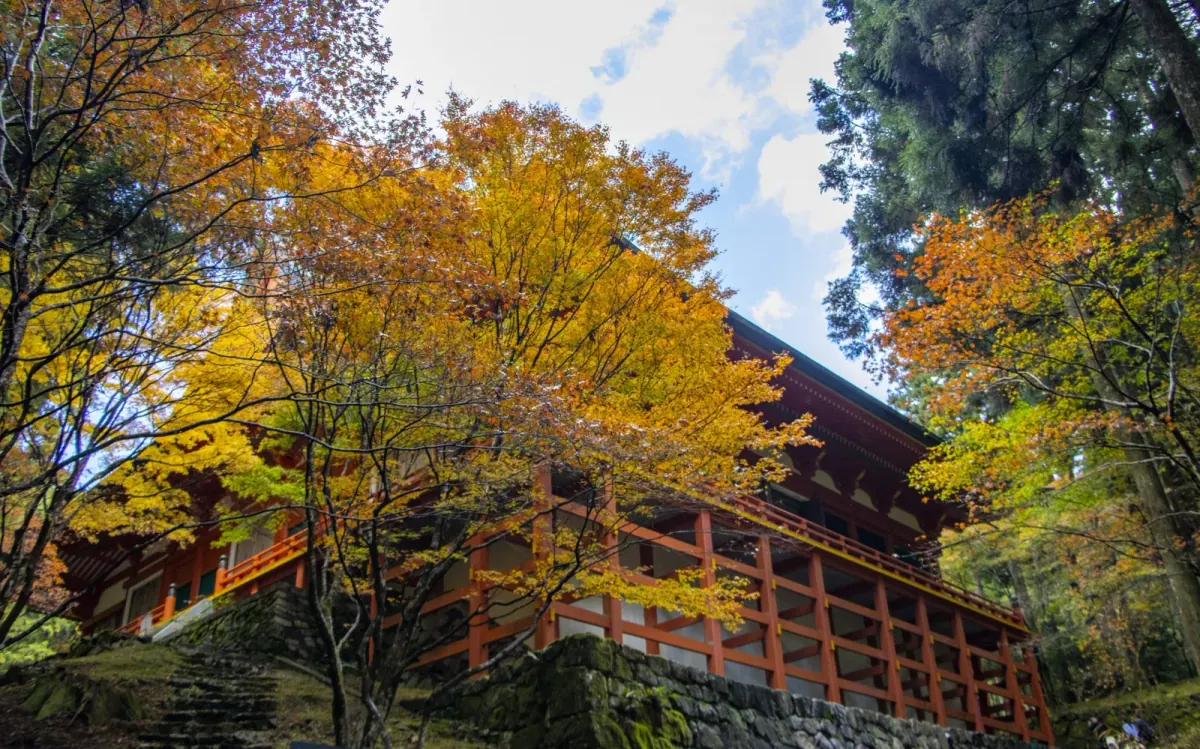
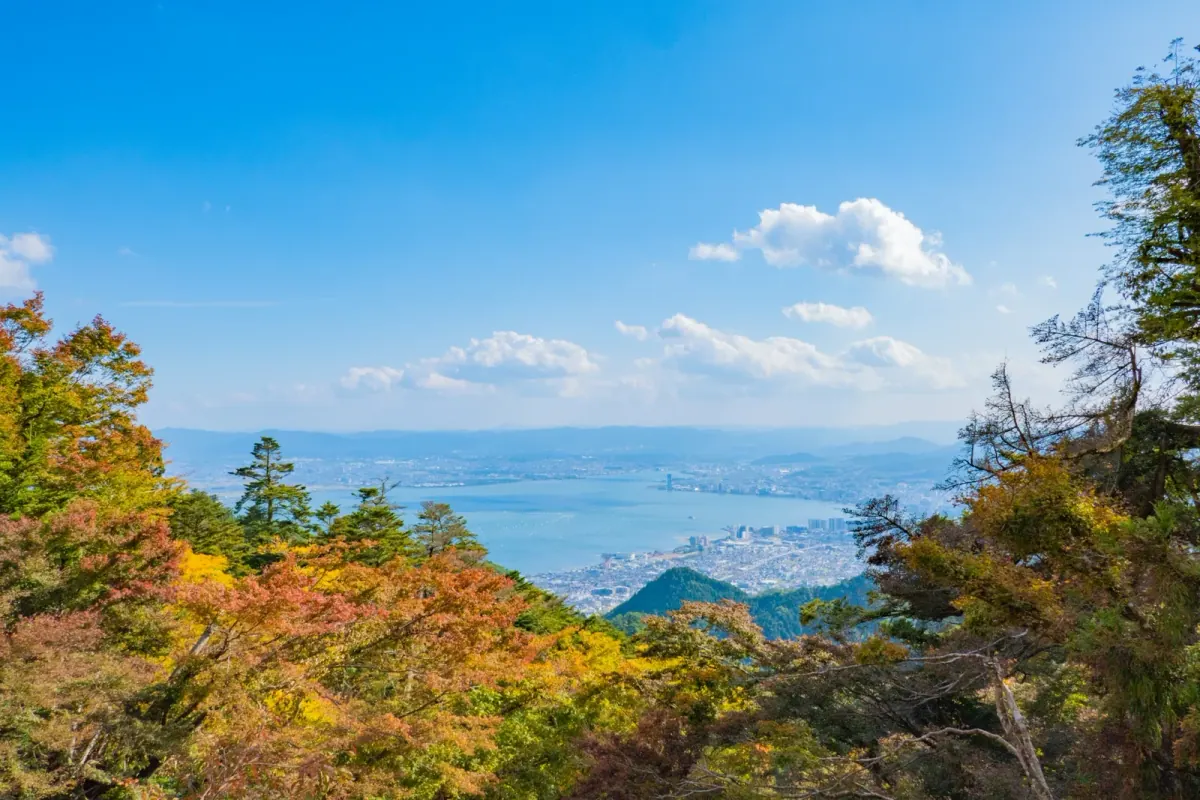
The ridge above two cities
Mt. Hiei & Enryakuji
比叡山・延暦寺Mt. Hiei adds distance and elevation to the temple experience. The reward is a broad mountain precinct, cooler air and Lake Biwa views that make the day feel separate from both Osaka and central Kyoto.
- Typical window
- Early–mid November
- From Osaka
- About 2 hr
- Best for
- Earlier November · mountain temples · Lake Biwa views
Osaka → Kyoto or Otsu side → cable / bus to Enryakuji
Access involves several operators and seasonal timetables. Decide between the Kyoto and Otsu approaches before leaving and save the final cable or bus time.
Avoid a day when wind or low cloud erases the ridge views.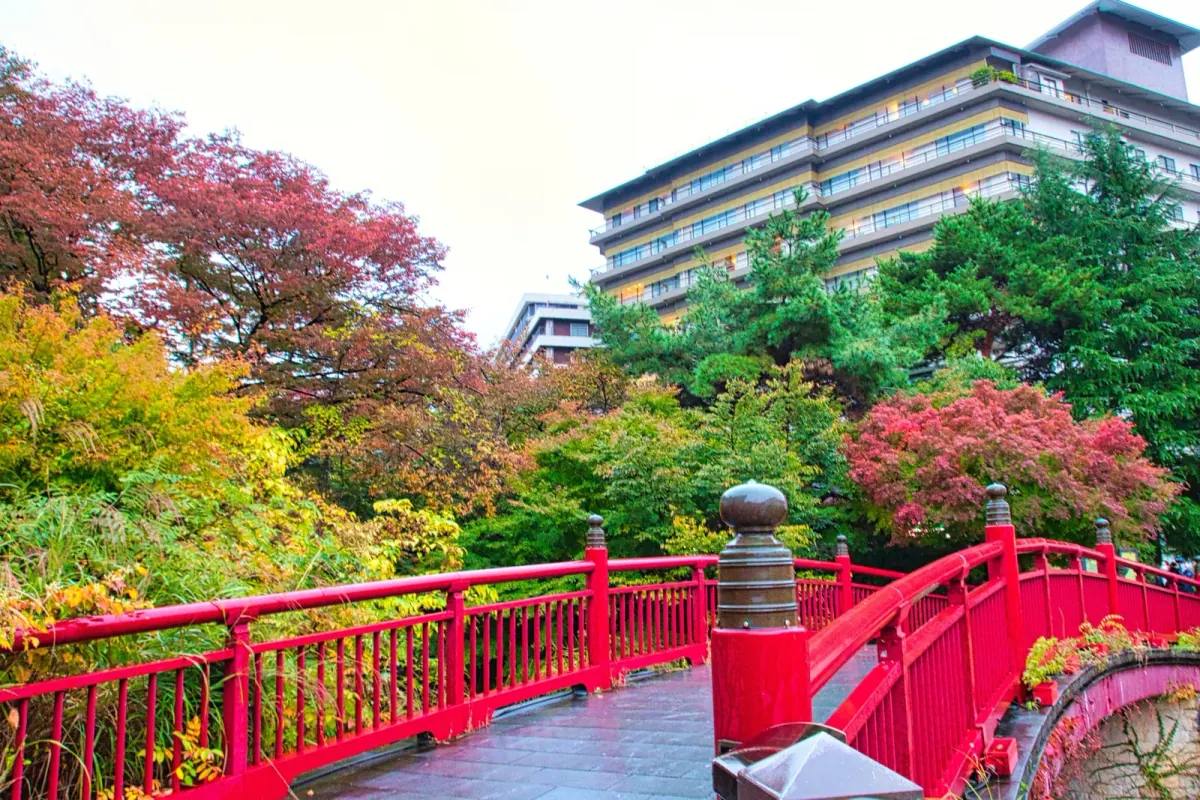
The hot-spring finish
Arima Onsen & Mt. Rokko
有馬温泉・六甲山This is the day for travelers who want leaves to lead somewhere: across the Rokko ridge and down into one of Japan’s oldest hot-spring towns. The bath at the end gives an uncertain-weather day a satisfying second act.
- Typical window
- Late Oct–late November
- From Osaka
- 60–80 min direct
- Best for
- Onsen · couples · scenic transport
Osaka → Arima direct (about 60–80 min); allow 2+ hr when crossing Mt. Rokko
Ropeway and cable operations can change with wind or maintenance. Check the mountain route first; use direct access to Arima as the fallback.
Still rewarding in cloud if the onsen is the main event.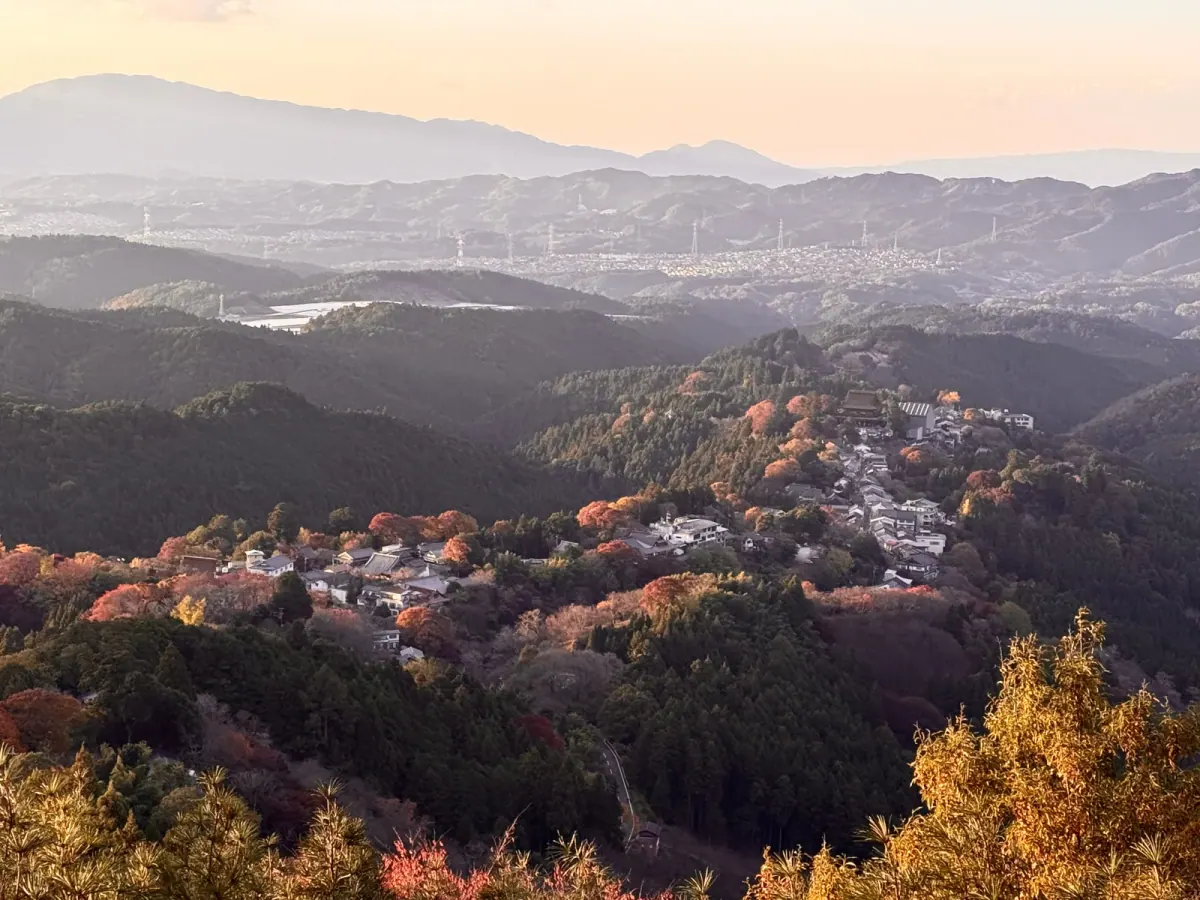
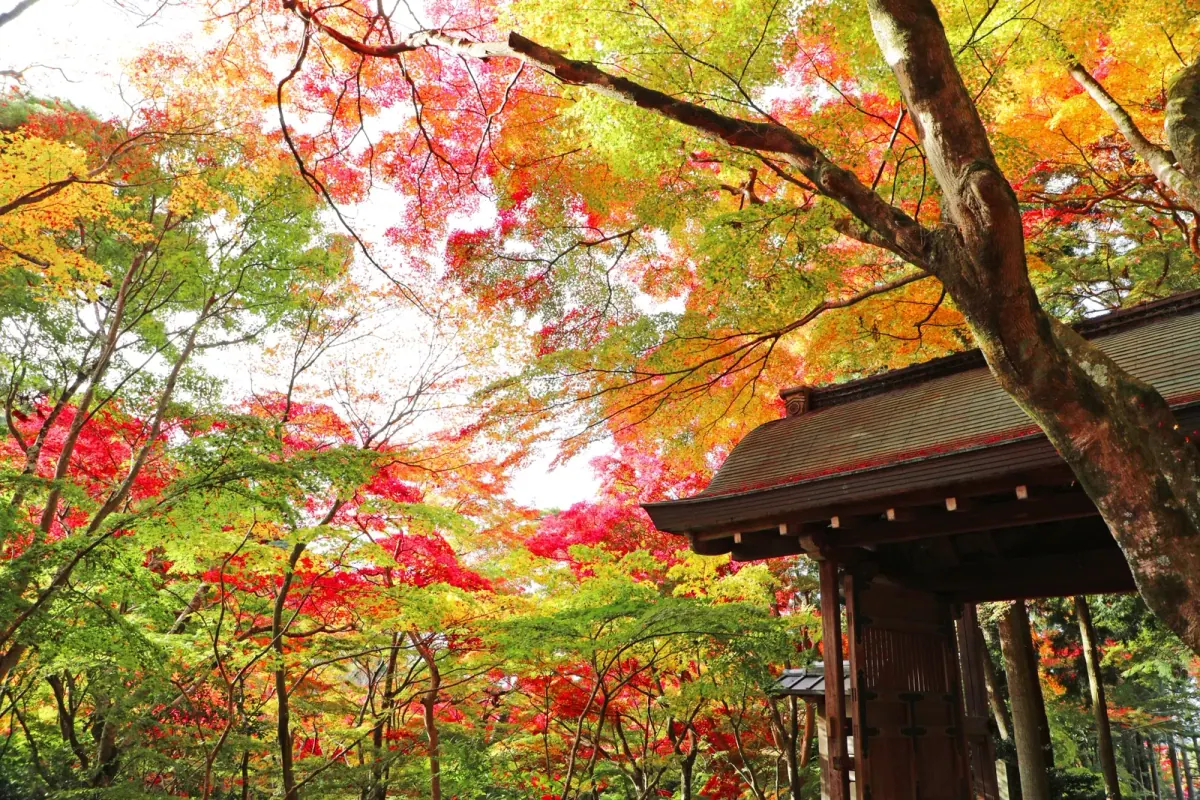
The long mountain view
Mt. Yoshino
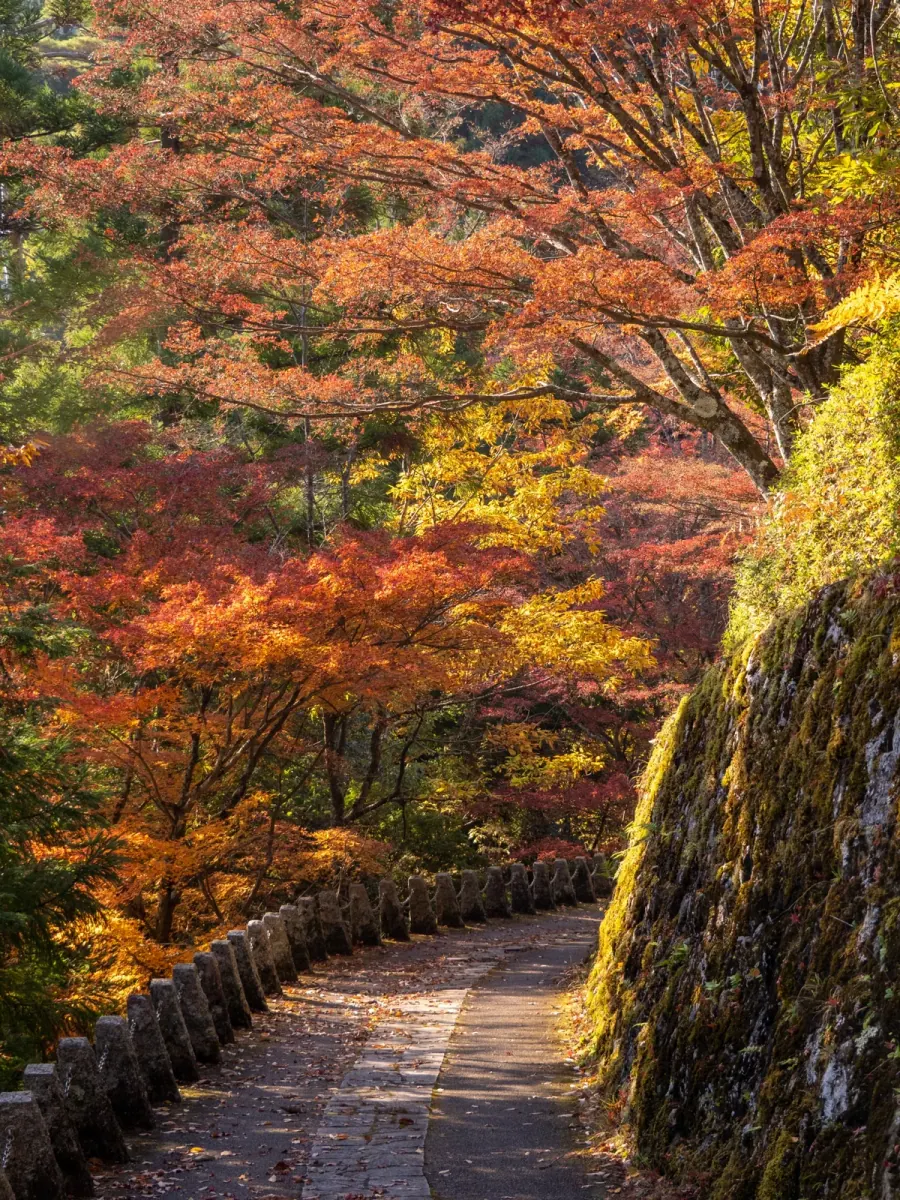
吉野山Famous for spring cherry blossom, Yoshino becomes a more contemplative mountain in autumn. The scale is panoramic rather than garden-like, and the route rewards travelers willing to walk between temple districts.
- Typical window
- Late Oct–late November
- From Osaka
- About 90 min
- Best for
- Hiking · repeat visitors · broad landscapes
Osaka-Abenobashi → Yoshino by Kintetsu → bus or uphill walk
Transport and shop hours are less frequent than in cherry season. Check the return timetable before climbing beyond the area you can comfortably walk back from.
Choose a clear or softly overcast day for the layered ridges.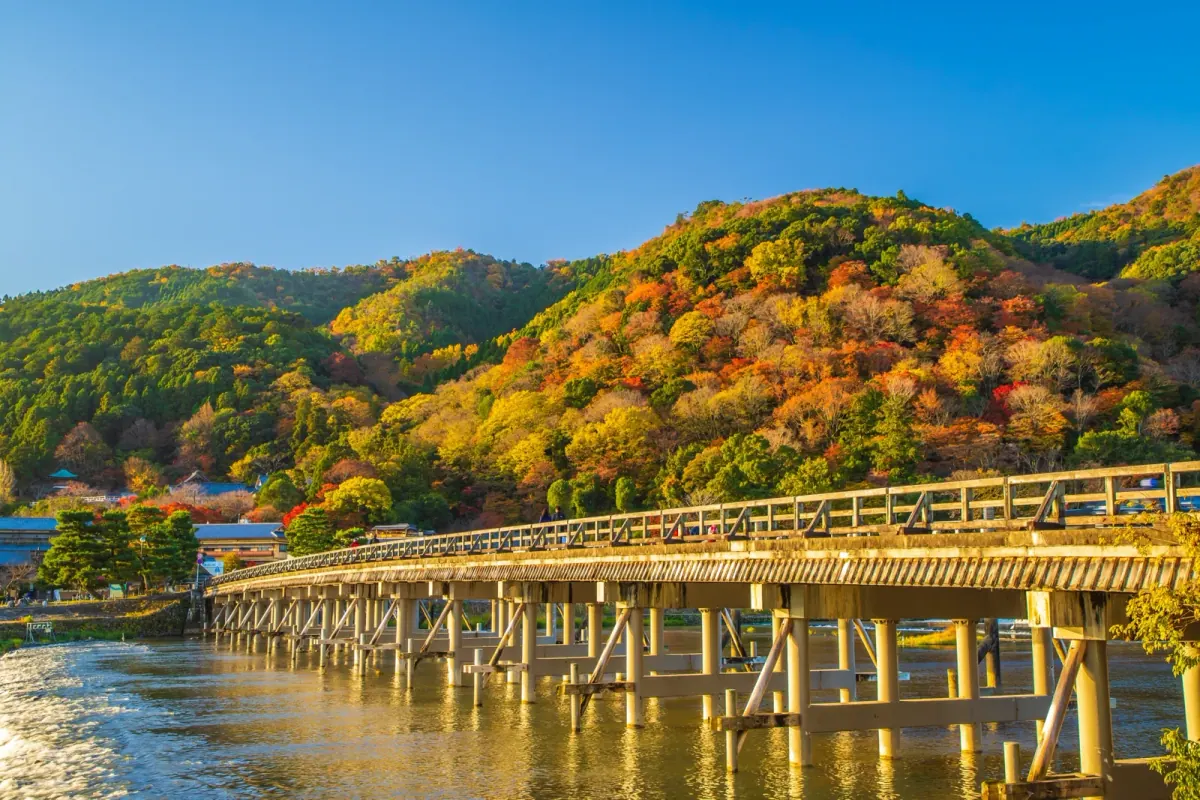
The canonical temple day
Kyoto
京都Kyoto offers the deepest choice of maple gardens, but choice is also the trap. One concentrated district—Higashiyama, Arashiyama or Takao—creates a better autumn day than repeatedly crossing a congested city.
- Typical window
- Mid–late November
- From Osaka
- 30–50 min + local transit
- Best for
- Iconic temples · first visits · evening illuminations
Osaka → Kyoto → choose one cluster: Higashiyama, Arashiyama or Takao
The visual payoff comes with the largest crowds and slow local buses. Start with the place you care about most and treat every later stop as optional.
Light rain enriches temple gardens; avoid relying on distant views.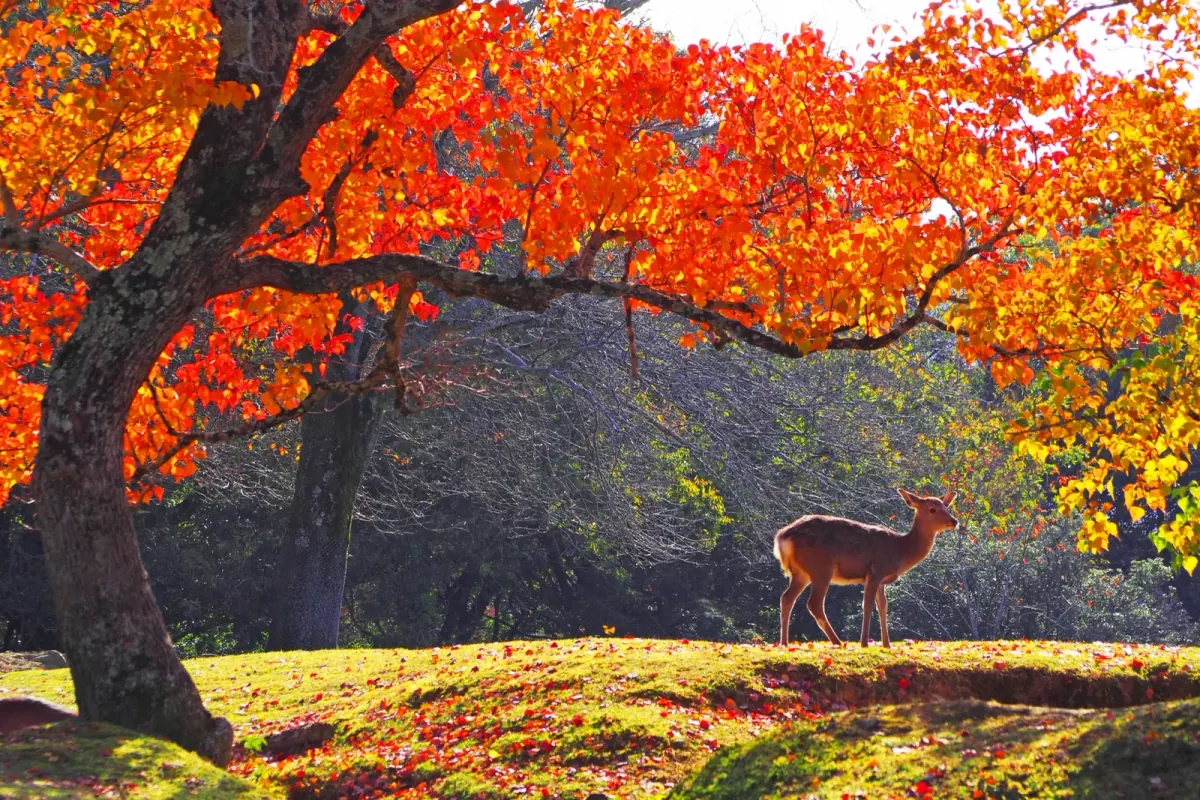
The living landscape
Nara Park
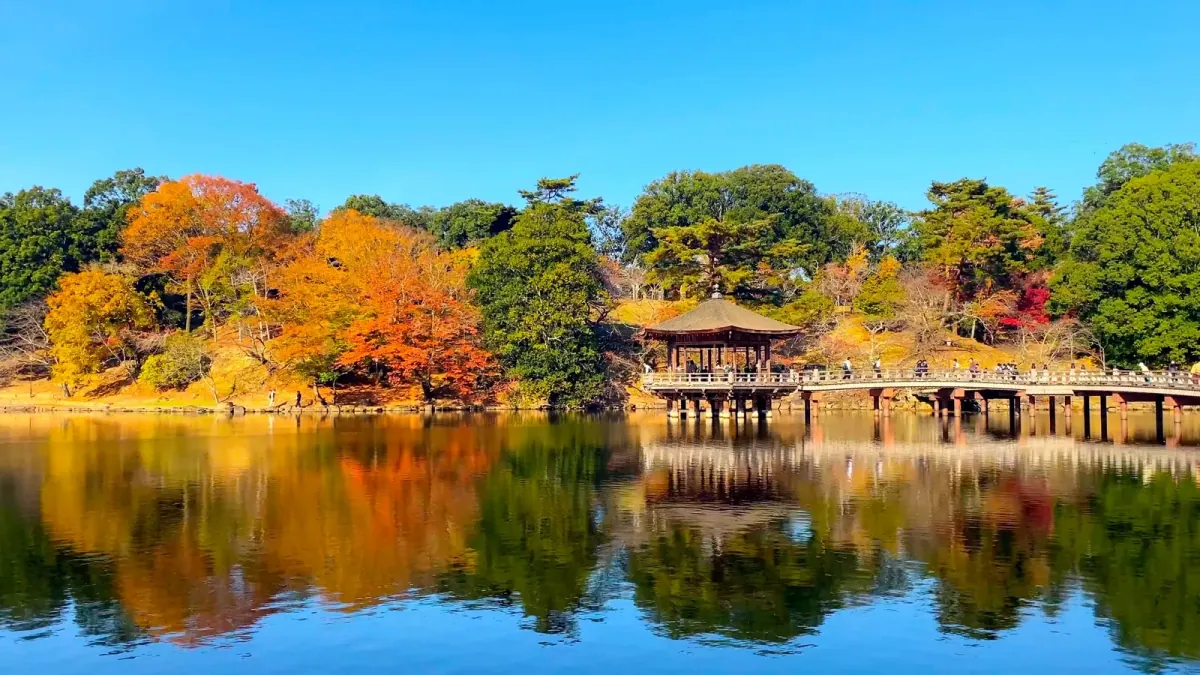
奈良公園Nara’s color belongs to a larger scene: deer beneath maple and ginkgo, stone lantern approaches and gardens reflected in ponds. It is easy from Osaka, yet spacious enough to absorb a full unhurried day.
- Typical window
- Mid–late November
- From Osaka
- About 40 min
- Best for
- Deer · families · historic scenery
Osaka-Namba → Kintetsu-Nara → park and garden area on foot
The deer will not pose on demand. Protect food and maps, use only designated crackers and give the gardens enough time instead of chasing one perfect animal photograph.
Good in soft cloud; stone paths become slippery in rain.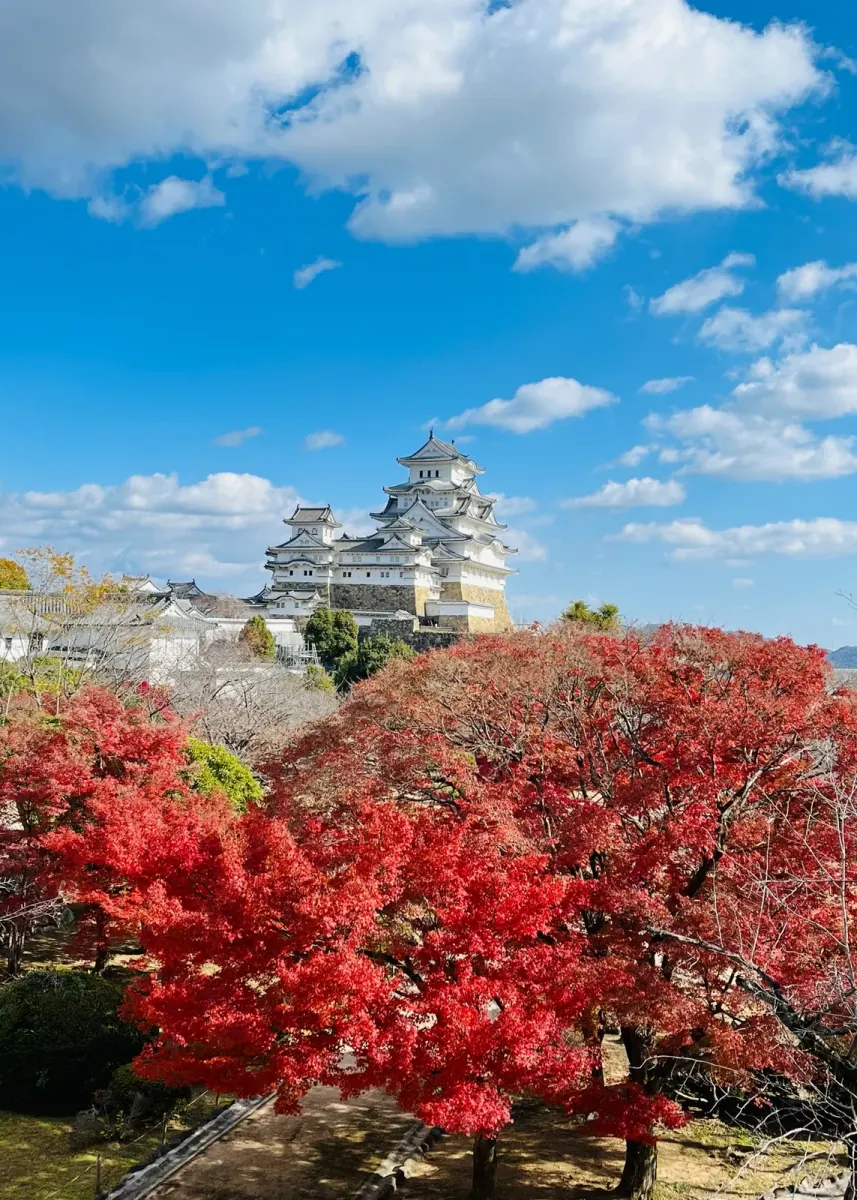
White castle, crimson garden
Himeji & Koko-en
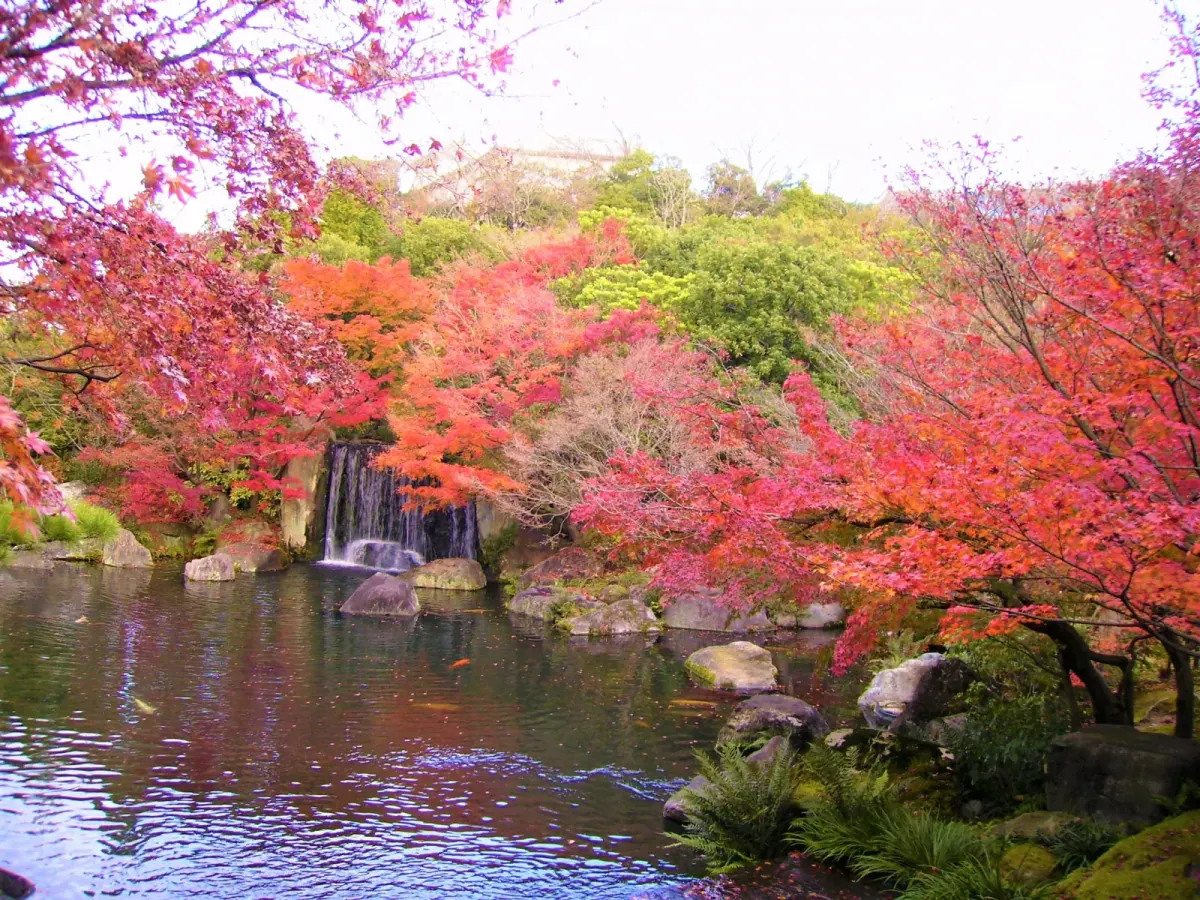
姫路・好古園Himeji gives the day a clean visual contrast: the white castle above, then saturated maples around the ponds and walls of neighboring Koko-en. The garden—not the castle grounds alone—is the foliage anchor.
- Typical window
- Mid–late November
- From Osaka
- About 1 hr
- Best for
- Castle architecture · gardens · straightforward rail access
Osaka → Himeji by JR Special Rapid → castle and Koko-en on foot
Castle queues can consume the best light and its stairs are steep. Enter early, then leave enough time for Koko-en rather than treating it as an afterthought.
Best in clear light, but the garden remains strong under cloud.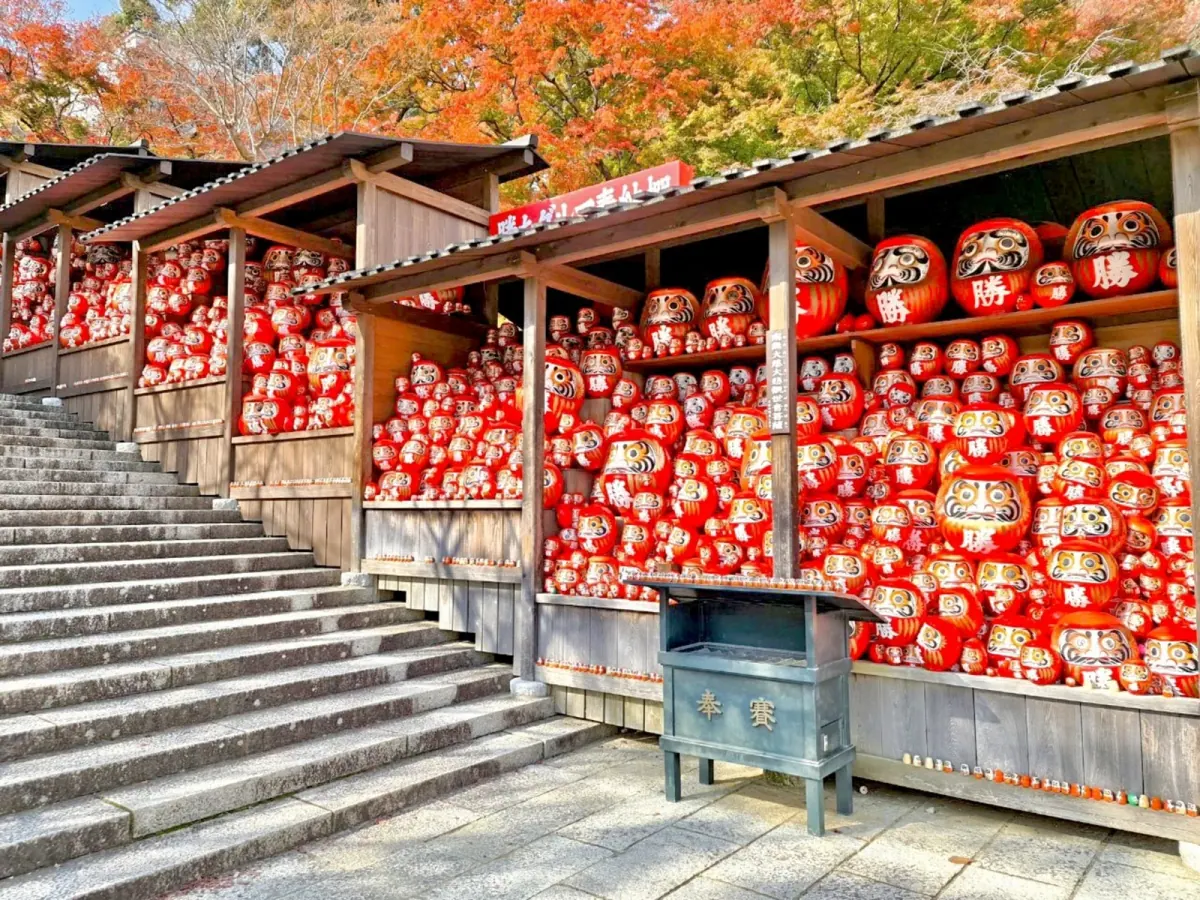
Daruma among the maples
Katsuoji
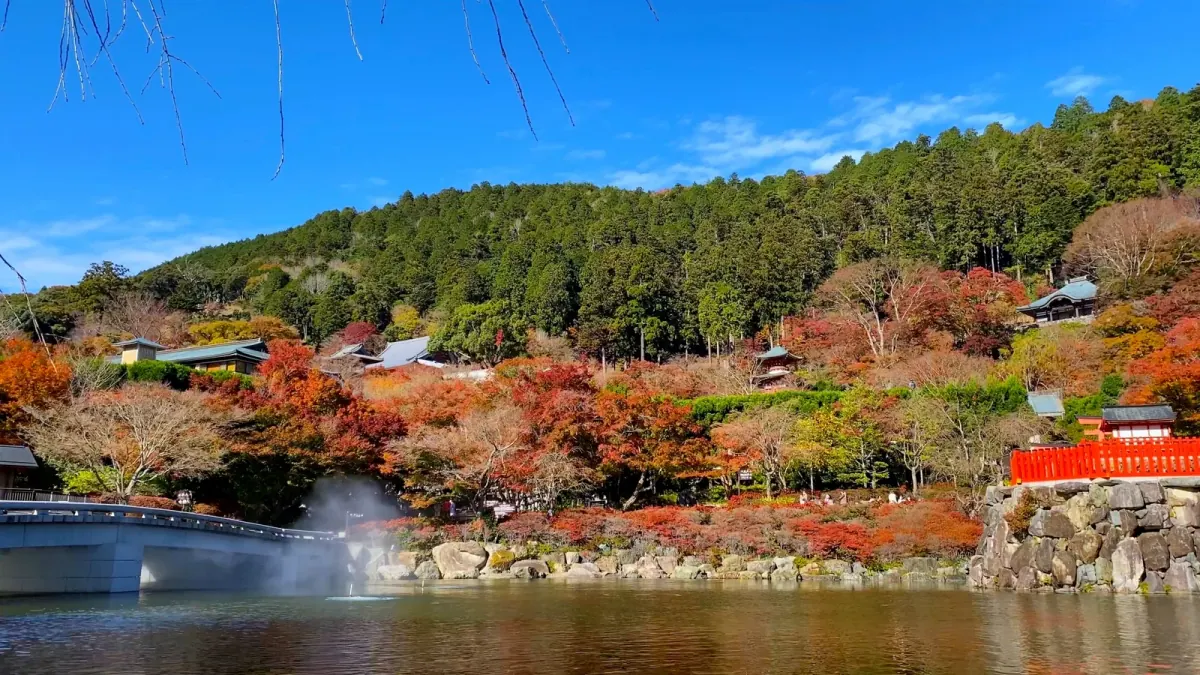
勝尾寺Katsuoji is the most visually distinctive Osaka-area choice. Thousands of small daruma introduce a bright graphic rhythm that no maple garden can imitate, while mist, ponds and hillside halls give the temple cinematic depth.
- Typical window
- Mid-Nov–early December
- From Osaka
- About 75–100 min
- Best for
- Distinctive photos · temple symbolism · late color
Osaka → Minoh-Kayano → Hankyu bus, about 20 min
The road and buses become crowded on peak weekends. Aim for opening time, and do not assume Katsuoji and Minoh Falls are an easy walkable combination.
Mist and light rain can add atmosphere; allow extra bus time.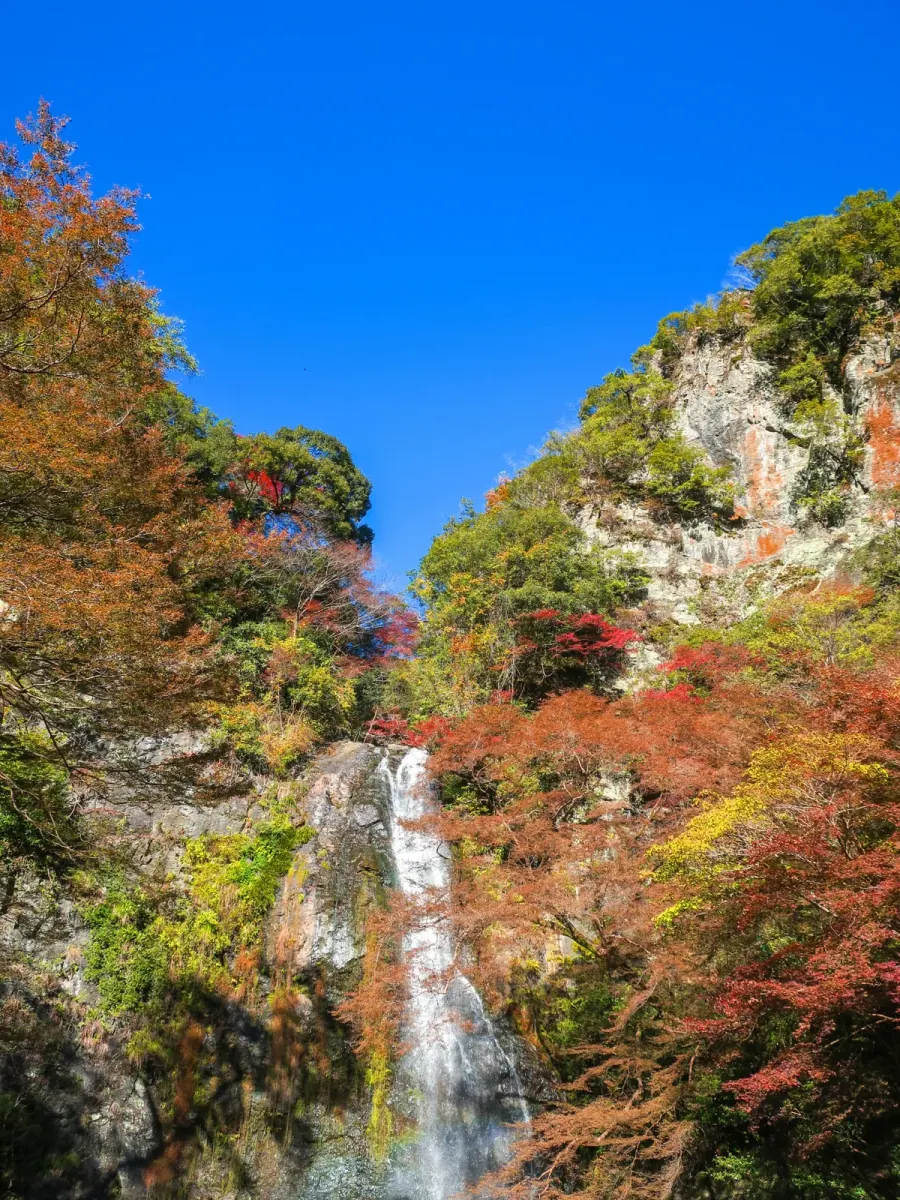
The easy waterfall escape
Minoh Park
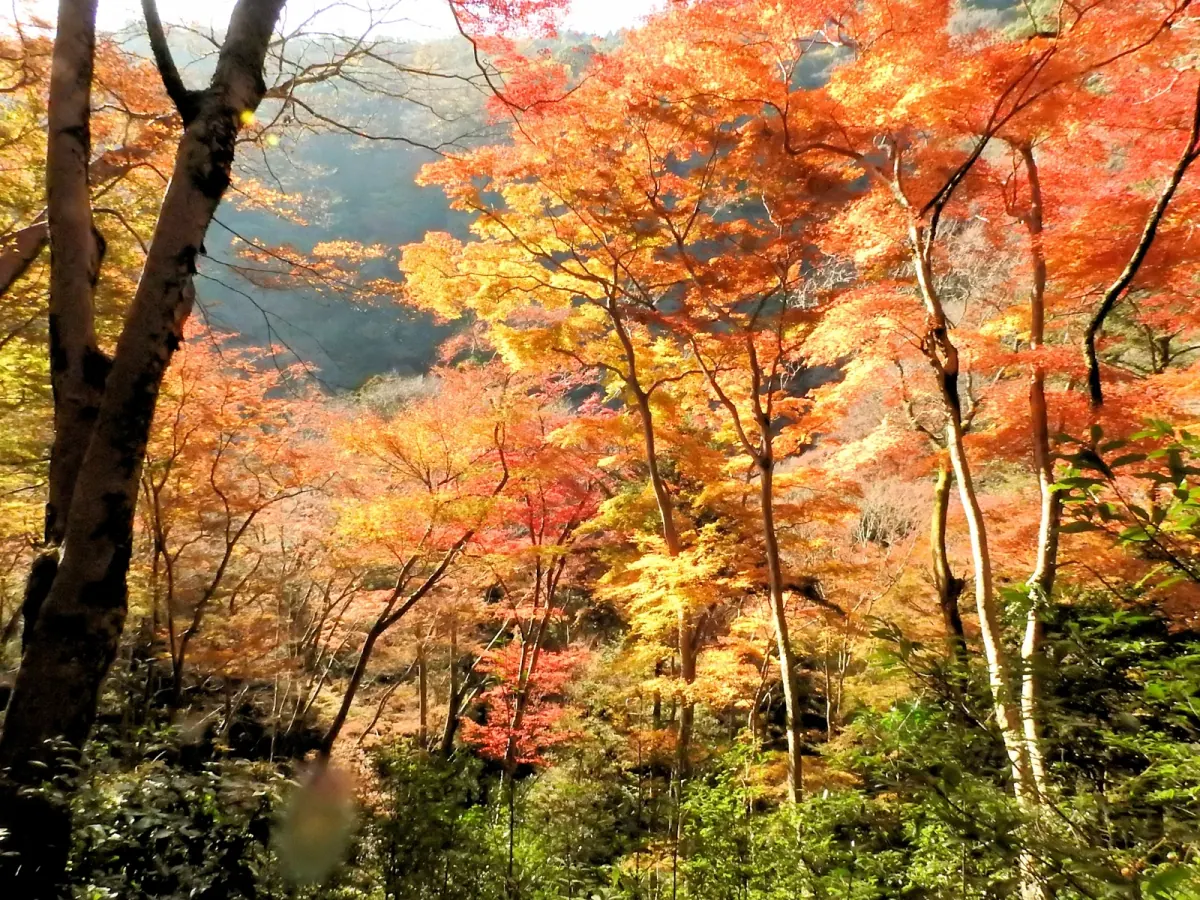
箕面公園Minoh is the low-planning nature answer: a station-to-waterfall walk that exchanges central Osaka for a forested river valley without a limited express, ropeway or complicated reservation.
- Typical window
- Mid-Nov–early December
- From Osaka
- About 30 min + walk
- Best for
- Half days · families · simple logistics
Osaka-Umeda → Minoh by Hankyu → about 40 min on foot
Its ease draws heavy peak-weekend crowds. Start early, wear shoes with grip and remember that the forest path is not designed as a late-night route.
Skip after heavy rain when the riverside path may be slippery.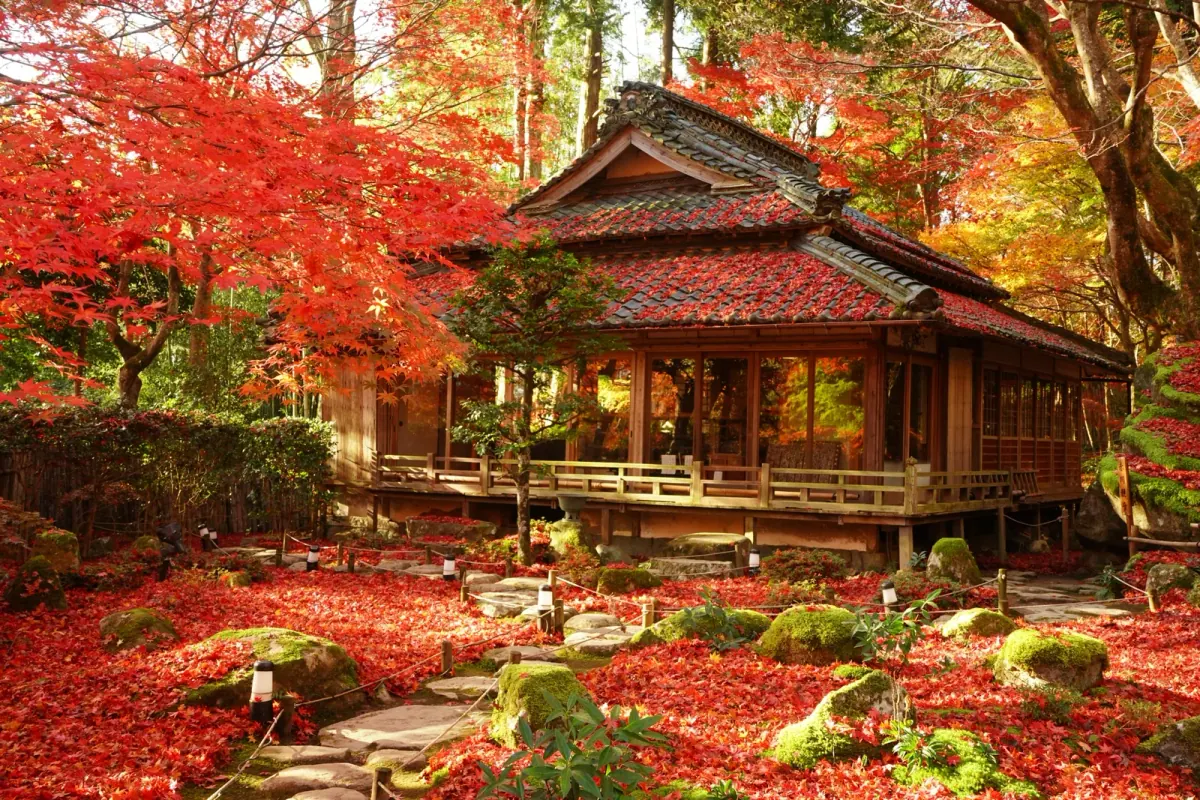
The hidden garden finale
Kyorinbo
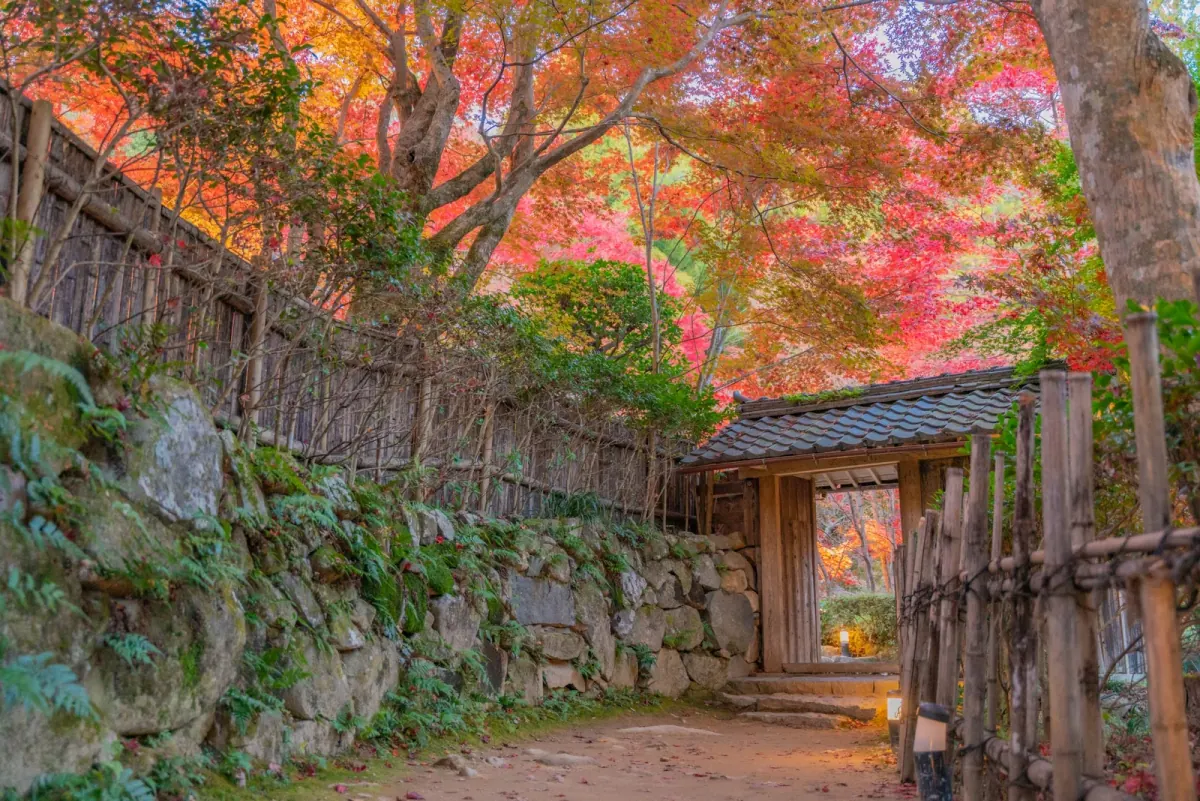
教林坊Kyorinbo closes the journey at an intimate scale. Moss, stone and a carpet of fallen leaves sit close to the old buildings, creating the feeling of stepping inside a painted screen rather than viewing a broad landscape.
- Typical window
- Mid-Nov–early December
- From Osaka
- About 90 min + taxi
- Best for
- Garden detail · fallen leaves · repeat Kansai visitors
Osaka → JR Azuchi → about 10 min by taxi or car
It is not a simple train-only outing, and the seasonal opening is limited. In 2026, it opens daily from November 1–December 15, with additional weekend and holiday dates in October; verify illumination times directly before travel.
Especially beautiful after light rain; expect compact paths.Self-guided or reserved?
Start with the route, not the pass.
Kansai day trips cross JR, Kintetsu, Nankai, Hankyu and local buses. Go independently for one rail-linked destination when you want to react to live color. Consider a reserved tour only when it genuinely bundles distant stops, transport and guidance you would otherwise arrange separately. Choose the destination first; only then decide whether a pass or reservation earns its cost.
Build the independent route
See how reserved seats, IC cards and different rail operators work before committing to one early departure.
Open the train guideCompare two ways to explore western Kyoto
Follow a self-guided Jojakko-ji and riverside route, or compare a guided temple, bamboo and monkey-park walk. The tour meets in Arashiyama, Kyoto, and includes an uphill walk; arrange your own transport from Osaka.
Compare routes and tour datesThe 48-hour field kit
Check four things. Then commit.
- 01Live color
Use the destination’s current report, not the date from an old post.
- 02Mountain weather
Check Koyasan, Hiei or Yoshino—not the temperature shown for Osaka.
- 03Seasonal transport
Confirm cables, ropeways and limited buses before leaving the main rail line.
- 04The return journey
Save the last practical train or bus before entering a garden or trail.
Before you choose
Kansai autumn questions.
What is the best autumn leaves day trip from Osaka?
Choose by your dates and priorities. Koyasan is strongest for an early mountain season, Kyoto for the widest choice of temple gardens, Nara for deer and historic scenery, Katsuoji for daruma-filled temple scenes, Kyorinbo for an intimate moss-and-maple garden, and Minoh for the easiest nature escape from central Osaka.
When is the best time to see autumn leaves near Osaka in 2026?
Japan Meteorological Corporation's first 2026 forecast, released September 2, places Osaka's city sample-tree color around November 24 for ginkgo and December 4 for maple; Kyoto is around November 27 for ginkgo and December 11 for maple. Koyasan and higher areas such as Mt. Hiei are normally earlier. Treat city dates as planning signals and check the exact destination's live status shortly before travel.
Can I visit Kyoto from Osaka as an autumn day trip?
Yes. Trains connect Osaka and Kyoto quickly, but the famous foliage sites are spread across the city and local buses become crowded. Choose one area, such as Higashiyama, Arashiyama or Takao, rather than trying to cross Kyoto repeatedly during the peak season.
Which autumn leaves day trip from Osaka is easiest without a car?
Minoh is the simplest nature trip, with Hankyu trains from Osaka-Umeda followed by a clearly marked walking route to the waterfall. Kyoto, Nara and Himeji are also straightforward by train. Katsuoji requires a bus from Minoh-Kayano, while Kyorinbo is easiest with a taxi from JR Azuchi Station. Mt. Hiei, Koyasan, Mt. Yoshino and the Rokko-Arima area require more transfers and careful attention to the final bus, cable car or ropeway schedule.
Is Koyasan worth visiting as a day trip from Osaka in autumn?
Yes, if you leave early and keep the route focused on Danjo Garan, Kongobuji and one section of Okunoin. The journey is long and the mountain deserves an overnight temple stay when time allows, but its typically earlier color makes it valuable for late-October and early-November visitors.
What should I wear for an autumn foliage day trip from Osaka?
Wear adjustable layers, comfortable walking shoes and a wind-resistant outer layer. Koyasan, Mt. Hiei, Rokko and Yoshino can feel much colder than central Osaka, especially early and late in the day. See the JAPANODE autumn clothing guide for month-by-month packing advice.