On this page
Kyoto autumn leaves are easiest to enjoy when you choose one area for each outing. Start with a broad November to early December travel window, then choose temples using their current foliage reports and opening notices. For a first visit, pair Kiyomizu-dera with Kodai-ji, Arashiyama with Jojakko-ji, or Nanzen-ji with Eikando.
This guide brings together the five places in our Kyoto autumn reel and four more options, with photographs to help you choose the scenery you want. The routes below are alternatives, not a nine-stop day trip. Leave room for lunch, admission queues and the walk back after dark.
All photographs on this page are seasonal reference images, not current foliage reports. This is a research-based guide using official visitor information checked on September 29, 2026; it does not describe a personal visit. Event dates are opening schedules, not predictions of peak color.
Choose Your Kyoto Autumn Area
| If you want… | Start with… | Plan around… |
|---|---|---|
| Temple roofs, city views and old streets | Kiyomizu-dera + Kodai-ji | Southern Higashiyama; hills and an optional evening visit |
| River scenery and a hillside temple | Arashiyama + Jojakko-ji | Western Kyoto; allow time beyond the bridge |
| Large temple gates, gardens and canal history | Nanzen-ji + Eikando | Eastern Kyoto; add nearby Keage Incline |
| A thatched gate and smaller-scale details | Anraku-ji | A northern extension of the eastern route, only when open |
| The Golden Pavilion and its reflection | Kinkaku-ji | A separate northwestern visit block |
| A bridge above a valley of maples | Tofuku-ji | A separate southern visit block; autumn admission rules |
With two Kyoto days, choose two of these areas. With only one, choose the pair that interests you most and keep an evening visit in the same district. Our four-day Kansai itinerary helps fit Kyoto into a wider Osaka, Nara and Kobe trip.
When to See Autumn Leaves in Kyoto
Mid-November to early December is a useful starting point for planning, not a guaranteed peak. Kiyomizu-dera gives this as its usual autumn viewing period and explicitly notes that the best dates change each year. Other locations can be at a different stage on the same day. See the temple's official seasonal guide.
An October article or an early-starting illumination does not mean Kyoto's maples are already red. If your trip is in October, choose places you would enjoy for their buildings, gardens or river scenery even with green leaves. If your dates are flexible, leave one sightseeing day movable until local reports are available.
Use three different checks: the usual season to choose a travel window, a forecast to refine expectations, and a recent local report to choose tomorrow's destination. The Kyoto Autumn Leaves Calendar is useful for the last step, but check its year and update date: when this article was researched, it still displayed the completed 2025 season. An old “peak” label is not a 2026 observation.
For the sequence across Japan and how to adjust a trip when color arrives early or late, use our Japan autumn leaves guide. Here, the focus is deciding where to spend your time in Kyoto.
Five Places from Our Kyoto Autumn Reel
1. Kiyomizu-dera: Temple Roofs above the Maples

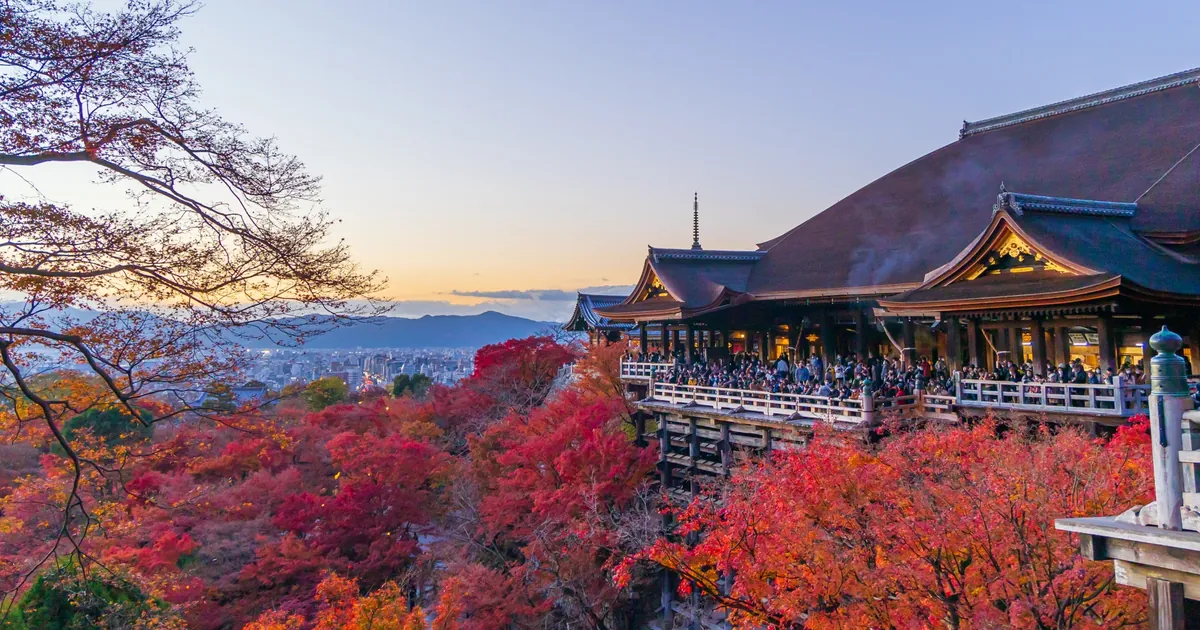
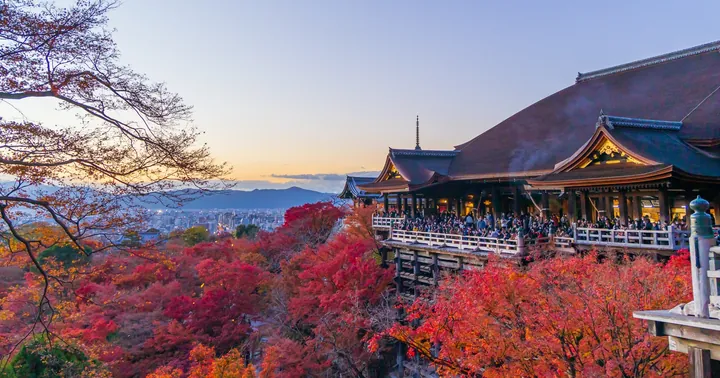
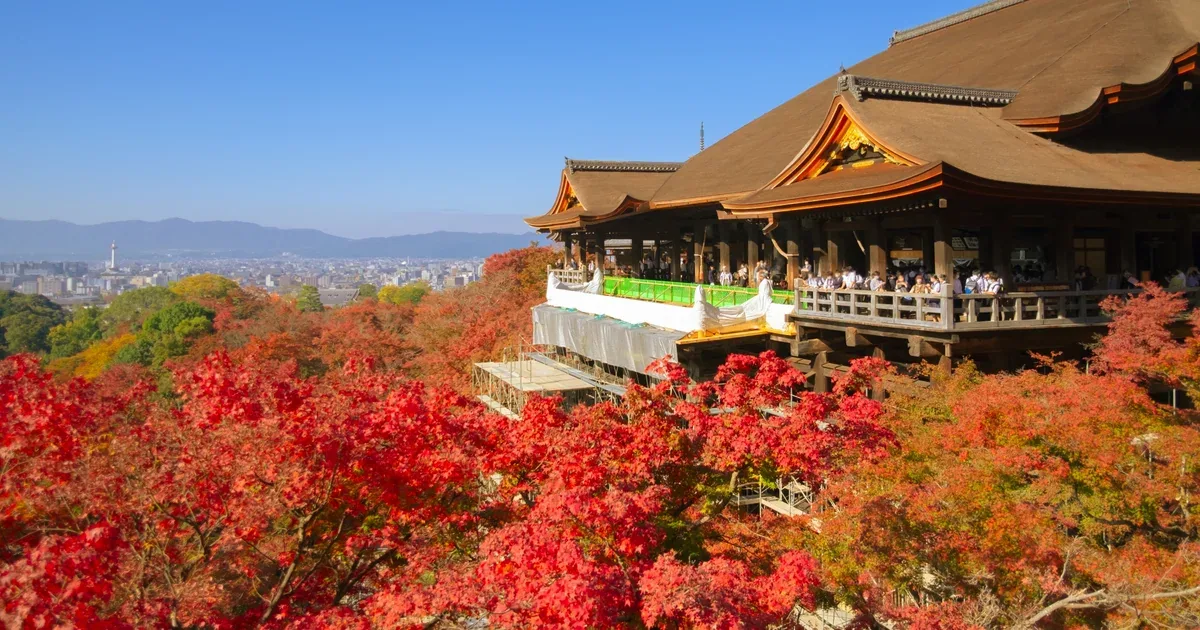
Kiyomizu-dera is the choice for a view that combines temple architecture, a wooded hillside and the city beyond. The cover photograph shows its wooden stage at dusk; the pagoda above gives another perspective on the same temple grounds. Allow time to look beyond a single famous viewpoint.
Build this visit into southern Higashiyama, with the approach streets and Kodai-ji as the natural continuation. The walk uphill is part of the outing, so arriving at a station is not the same as reaching the entrance. Kiyomizu-Gojo on the Keihan line is a possible walking approach; compare it with the options on the official access page.
The temple opens at 6:00 a.m., while closing times vary by season. An early start gives you more daylight for the district, but does not guarantee an empty stage. For autumn evening dates, use the separate night-viewing section below before fixing dinner or return travel.
2. Arashiyama: A River, a Bridge and Wooded Hills
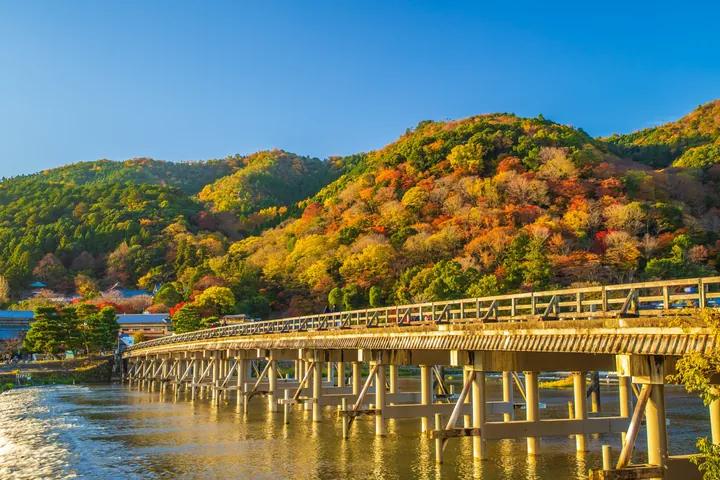
Arashiyama offers a broader landscape: Togetsukyo Bridge across the river, with wooded hills behind it. It suits a day when you want to alternate temple visits with open views and walking outdoors. The autumn scene in the reel is the riverside; a train ride or bamboo-grove visit is a separate addition.
If the scenic railway is part of your day, our Arashiyama and Sagano Romantic Train guide explains one-way routes, station connections, seat-view tradeoffs and the 2026 illuminated trains, with a personal June family ride for context.
Pair the bridge with Jojakko-ji, giving the hillside temple its own share of the day. Avoid using Arashiyama as a quick final stop after several temples across eastern Kyoto. Getting there, crossing the busy center and continuing north all take time.
From Kyoto Station, the city's Saga–Arashiyama access guide recommends the JR Sagano Line to Saga-Arashiyama, followed by a walk. From Kyoto-Kawaramachi, the Hankyu route runs via Katsura. Choose the station that fits your accommodation and walking route; the different Arashiyama stations are not interchangeable entrances to every sight.
3. Kinkaku-ji: The Golden Pavilion and Its Reflection
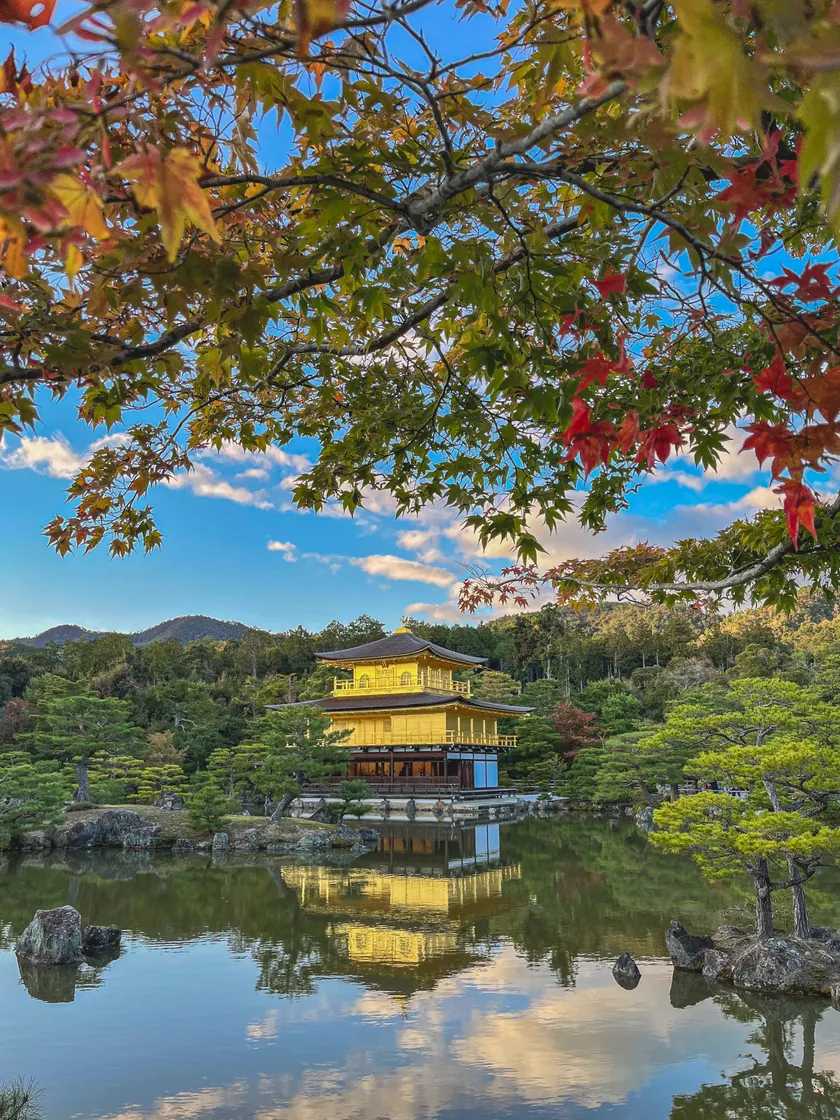
Choose Kinkaku-ji when the pavilion itself is a priority. The combination here is gold architecture, water and seasonal foliage, rather than a whole valley of red maples. Look at both the building and its reflection, with the leaves providing a frame around them.
Kinkaku-ji sits in northwestern Kyoto. Give it a separate visit block instead of treating it as a nearby addition to Kiyomizu-dera or Eikando. If you have limited daylight, decide whether the pavilion matters more to you than a second temple in your chosen walking district.
The official visitor page lists normal opening hours of 9:00 a.m.–5:00 p.m. and general admission of ¥500, subject to special-exhibition changes. The listed bus stop is Kinkakuji-michi. Check the approach from your actual starting point and allow for road traffic on any bus leg.
4. Eikando: Pond Views and Layers of Color

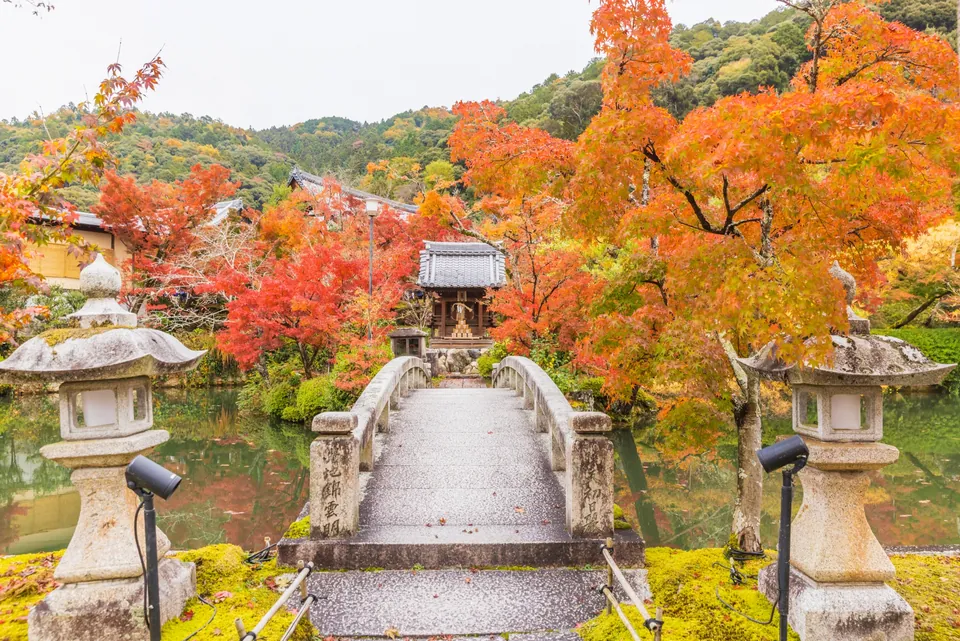
Eikando's pond, stone bridge and temple rooftops create a different kind of autumn composition from the open river at Arashiyama. A wide view brings the water and foliage together; a closer view picks out the bridge and lanterns. Follow the visitor route and barriers, even when a photograph appears to show an inviting path.
This is a practical pairing with Nanzen-ji, approached from the Keage area. Eikando's 2026 Japanese visitor notice lists a walk of about 15 minutes from Keage Station, before any stops along the way.
Decide whether you want a daytime or evening visit. Checked October 11, the current English admission page gives night visits from November 20 to December 6, 2026, with reception 5:30–8:30 p.m., closing at 9:00 p.m., and admission ¥1,000 for junior-high-school age and above. Day and night tickets are separate; daytime visitors must leave by 5:00 p.m. Advance tickets are unavailable: buy on the day, and allow for queues or an earlier reception cutoff when crowded.
5. Anraku-ji: A Thatched Gate and Fallen Leaves

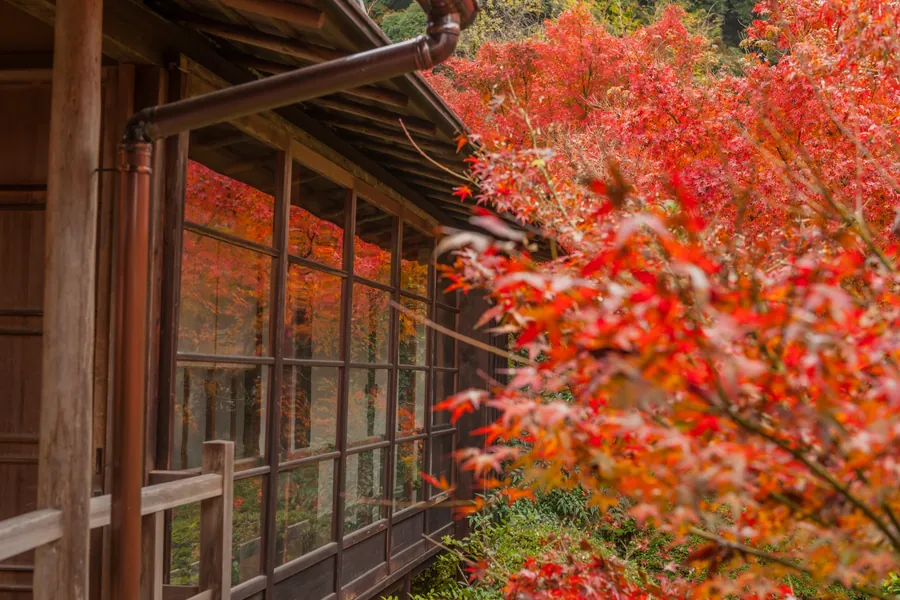
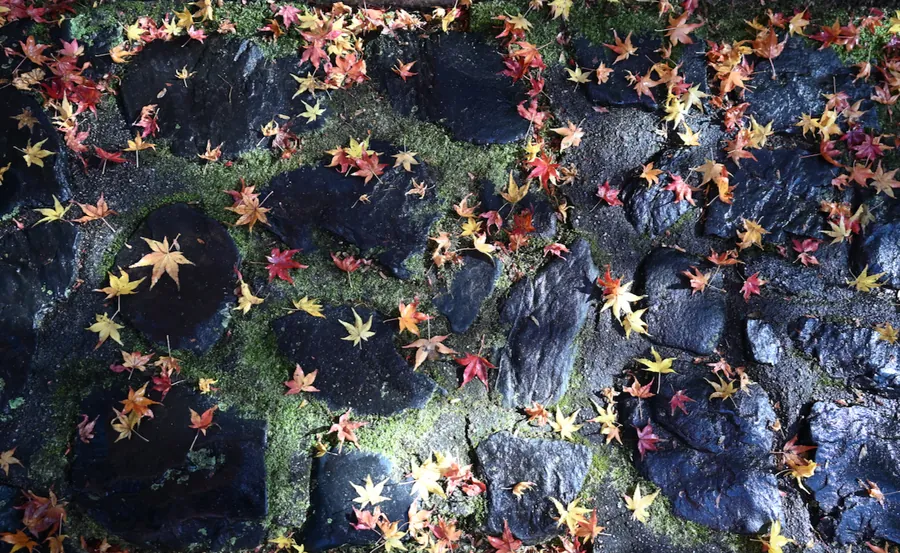
Anraku-ji's stone steps lead the eye toward a thatched gate framed by maples. The smaller photographs show another side of the setting: foliage reflected in wooden-framed windows and individual leaves against dark, mossy stones. It is a good visual contrast to the larger buildings elsewhere in this guide.
Treat Anraku-ji as a conditional stop, not the fixed anchor of your day. The Kyoto Tourism Federation listing says admission is possible only on public opening days and advises checking ahead. Its listed dates were not clearly labeled for 2026 when researched, so they have not been copied into this year's itinerary.
Anraku-ji can extend an eastern Kyoto outing north toward the Philosopher's Path area. Only add it if the opening date and your remaining time work. A photograph of the open gate does not establish access on your date, and “smaller temple” should not be read as a promise of solitude.
Four More Kyoto Autumn Places
6. Nanzen-ji: The Sanmon Gate and Autumn Details

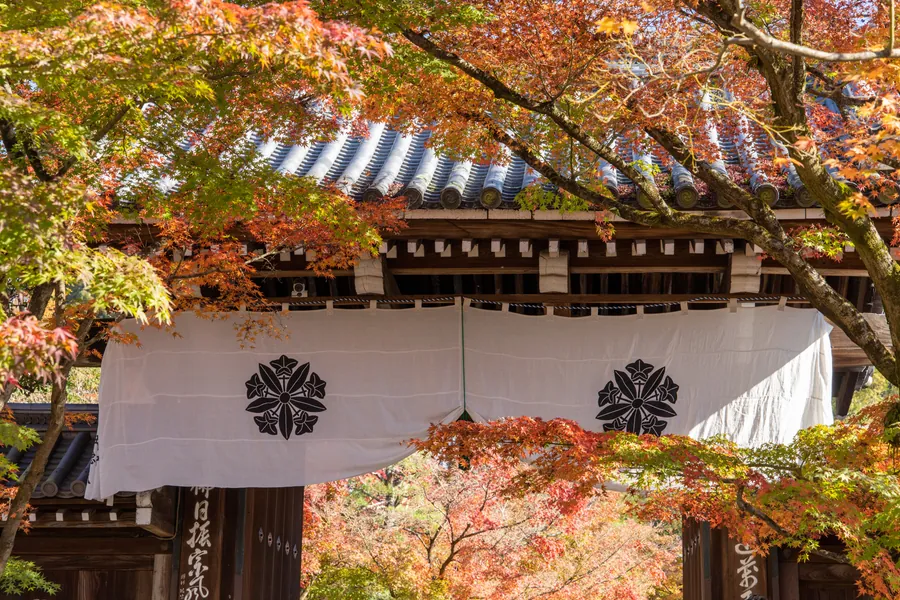
Nanzen-ji brings together the scale of the Sanmon gate and the smaller details of leaves, walls and gateways. It works especially well as part of an eastern Kyoto walk: nearby Keage Incline and the brick Suirokaku aqueduct add canal history to the temple scenery.
Decide which paid areas you want before arriving. The official admission guide lists separate general fees of ¥600 for the Hojo garden, ¥600 for Sanmon and ¥500 for Nanzen-in. These are separate choices, not one all-inclusive ticket.
Opening hours are 8:40 a.m.–5:00 p.m. through November, shortening to 4:30 p.m. from December; reception closes 20 minutes earlier. The temple also warns of slopes and steps. Leave time for the part you most want to enter before continuing to Eikando, especially on a December afternoon.
7. Kodai-ji: Gardens by Day, Reflections after Dark

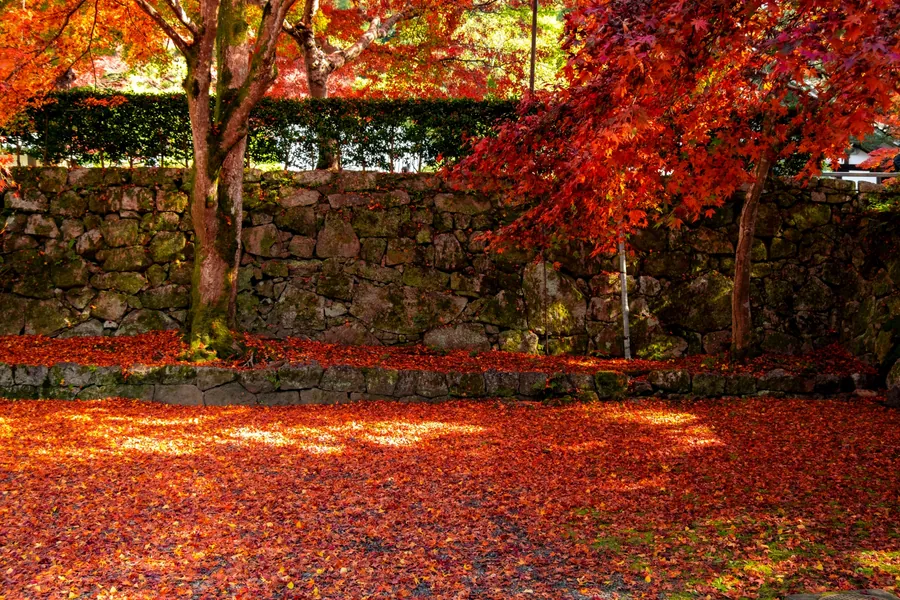
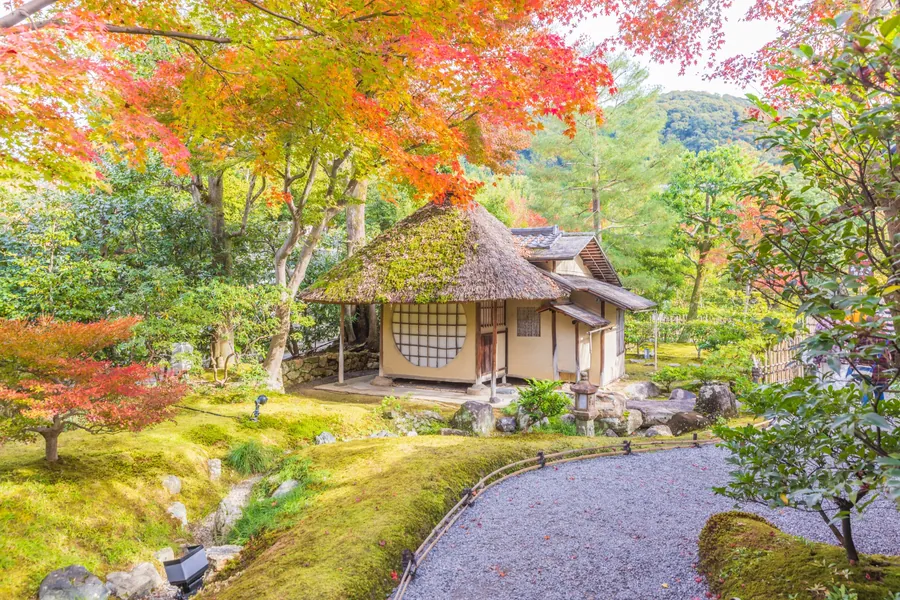
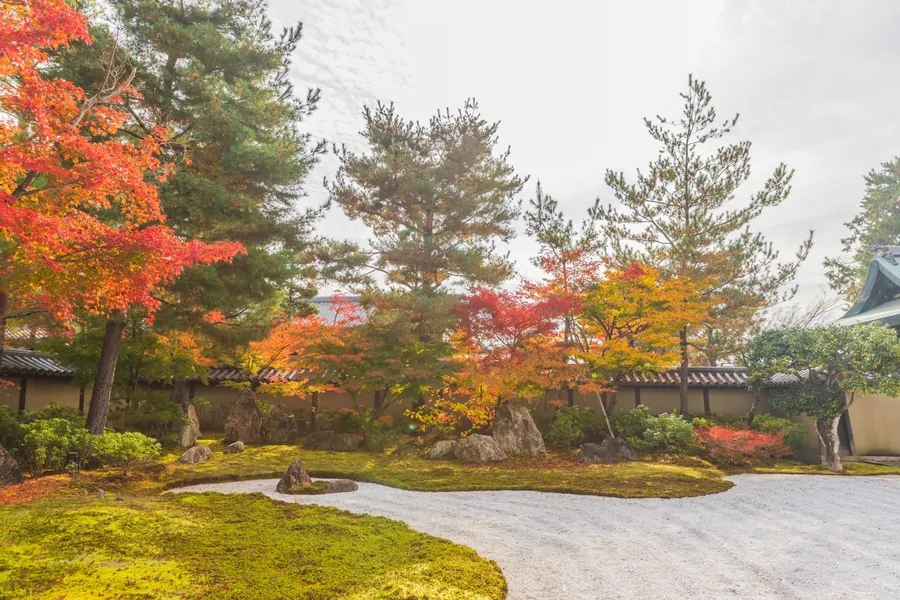
The pond reflection above shows Kodai-ji after dark. The daylight photographs below show why it can also be worth choosing a daytime visit: the teahouse, gravel and moss offer textures that do not depend on an illumination. Choose the atmosphere you want, rather than assuming both sessions are necessary.
Kodai-ji belongs with Kiyomizu-dera and southern Higashiyama. A long lunch or a rest between temples can make more sense than rushing elsewhere before returning for the evening. The southern Higashiyama route below includes a bookable garden tea ceremony near Kiyomizu-dera; our Kyoto tea ceremony guide compares other locations and formats.
For 2026, Kodai-ji has announced autumn evening opening from October 23 to December 13. That early start is an event schedule, not a foliage forecast. See the official event notice and the ticket guidance below; the lighting shown in these reference photographs may differ from the current year's presentation.
8. Jojakko-ji: A Hillside View over Kyoto

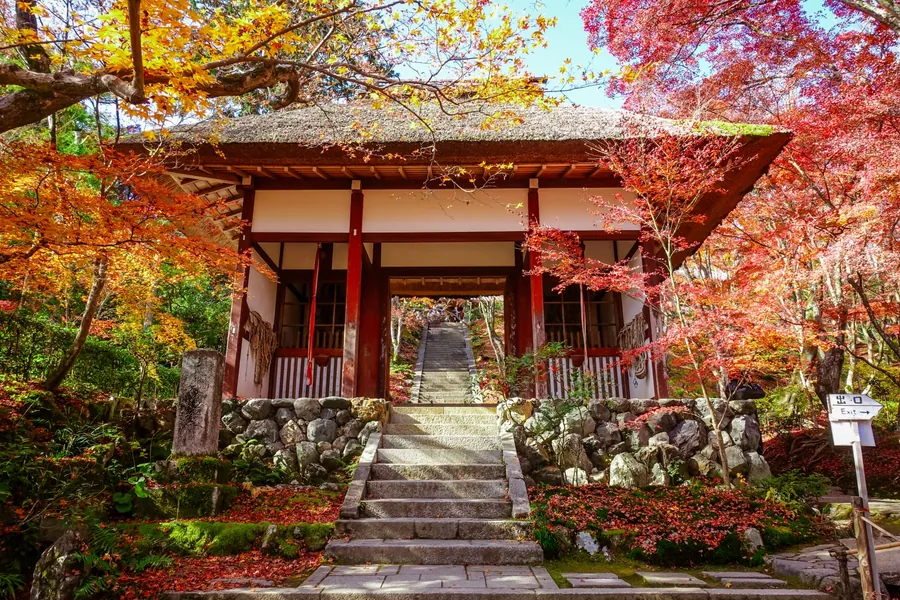
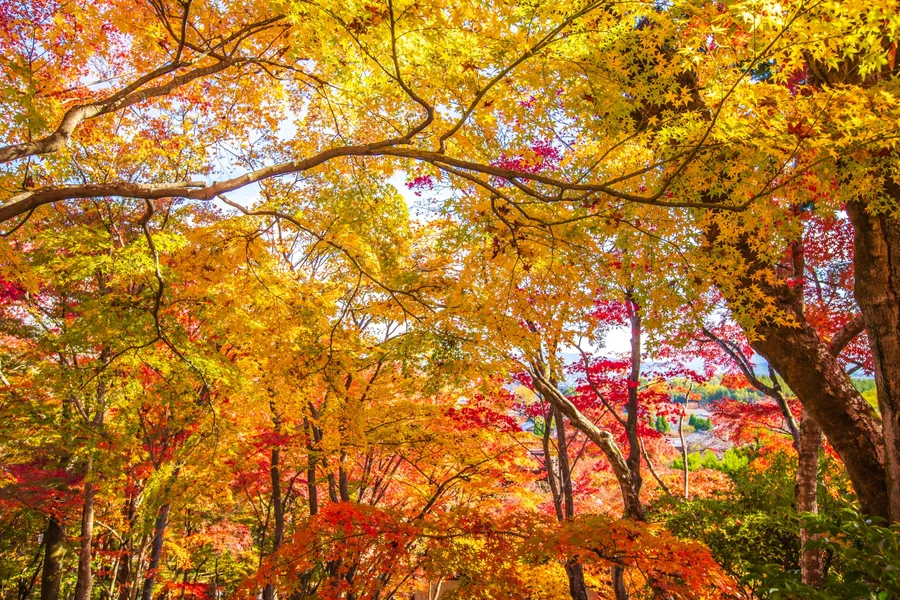
Jojakko-ji adds height and a more enclosed temple setting to an Arashiyama day. The Tahoto pagoda rises above the maples, with the city visible beyond. Around the Niomon gate and beneath the canopy, the view becomes closer and more layered.
This is a visit to budget walking energy for. The hillside paths and stone stairs make it a different proposition from lingering by Togetsukyo Bridge. If someone in your group needs a step-free route, check access with the temple before committing to the upper grounds. Do not assume every photographed viewpoint is accessible to everyone.
The temple's access page lists 9:00 a.m.–5:00 p.m., with reception ending at 4:30 p.m., and admission of ¥500. Its grounds map helps distinguish the gates and pagoda. Reach the temple with enough time to explore, rather than arriving at the final admission minute.
9. Tofuku-ji: A Bridge above the Autumn Canopy

Tofuku-ji's defining view is the roofed Tsutenkyo bridge above a valley of trees. The mixture of green, yellow and red in the photograph is a reminder that an autumn scene does not need every leaf to change at once.
Give this southern Kyoto visit its own block. Tofukuji Station is served by JR and Keihan, followed by a walk to the temple; consult the official access information for your approach.
The admission notice currently lists the autumn period as November 14–December 6. During that period, adult admission to Tsutenkyo and Kaisando is ¥1,000, and the combined ticket with the Hojo garden is unavailable. The Hojo adult fee becomes ¥600 from November 1, 2026. Budget for the areas you actually want, rather than relying on an older combined-ticket price.
The temple may restrict photography on Tsutenkyo and Gaunkyo during crowded autumn periods and prohibits tripods. Follow staff instructions and keep the walkway moving; an unobstructed photograph is not guaranteed.
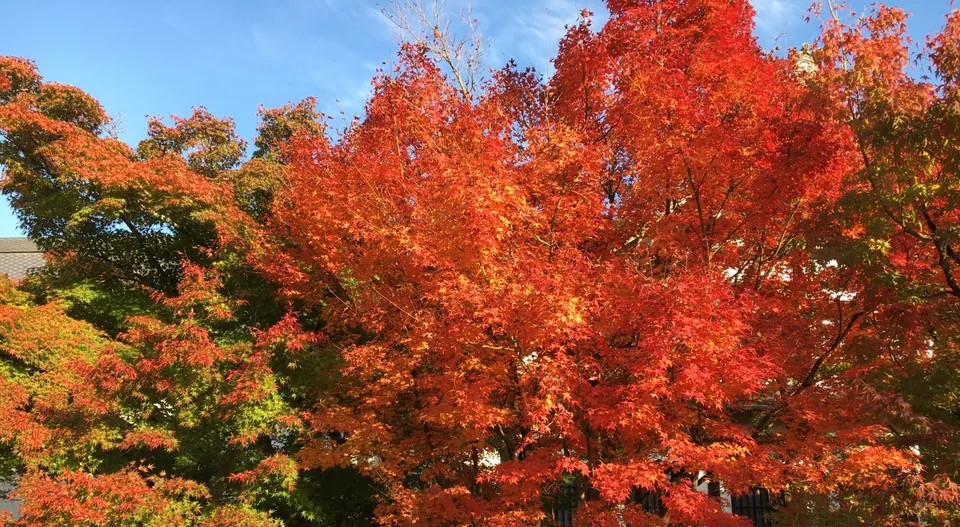
Turn the Places into an Area Route
These are suggested combinations, not timed tours. A pair of temples, a meal and the walks between them can fill a comfortable outing once autumn queues are included. Check the final admission time of your last paid stop first, then work backward.
Eastern Kyoto: Keage, Nanzen-ji and Eikando
Keage Station → Keage Incline → Nanzen-ji and Suirokaku → Eikando is a coherent eastern route. The Lake Biwa Canal Museum's local walking guide places the incline, Nejiri Manpo passage and Suirokaku within the area's canal story. Use its map to understand the connections, then choose your own stops.
Keage Incline is a preserved inclined railway associated with moving boats between canal levels. It is a nearby historical stop, not a passenger train ride or a tenth temple in this guide. The open track bed gives the outing a different texture from the gardens; walk carefully over rails and uneven surfaces.
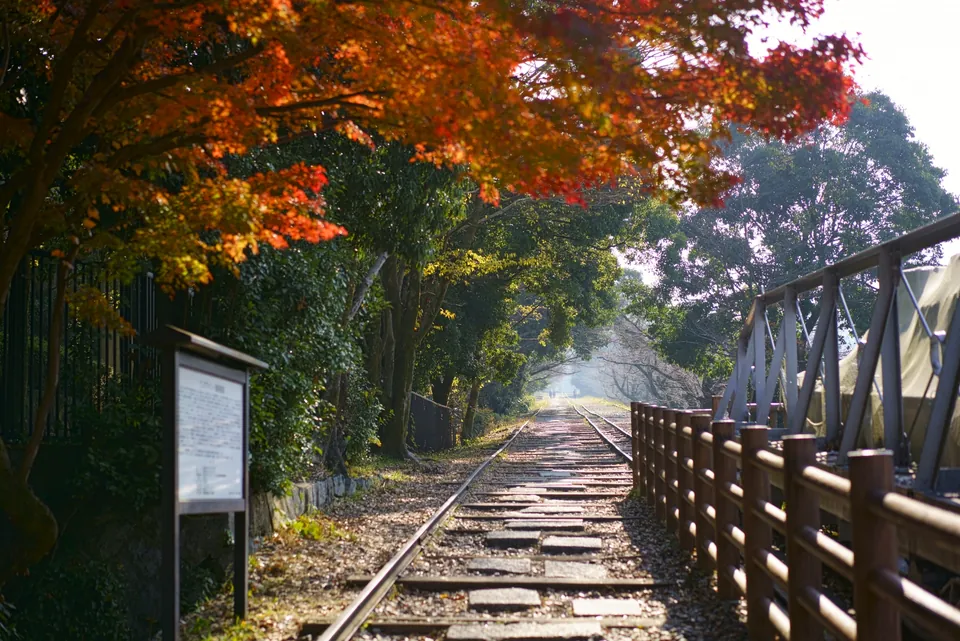
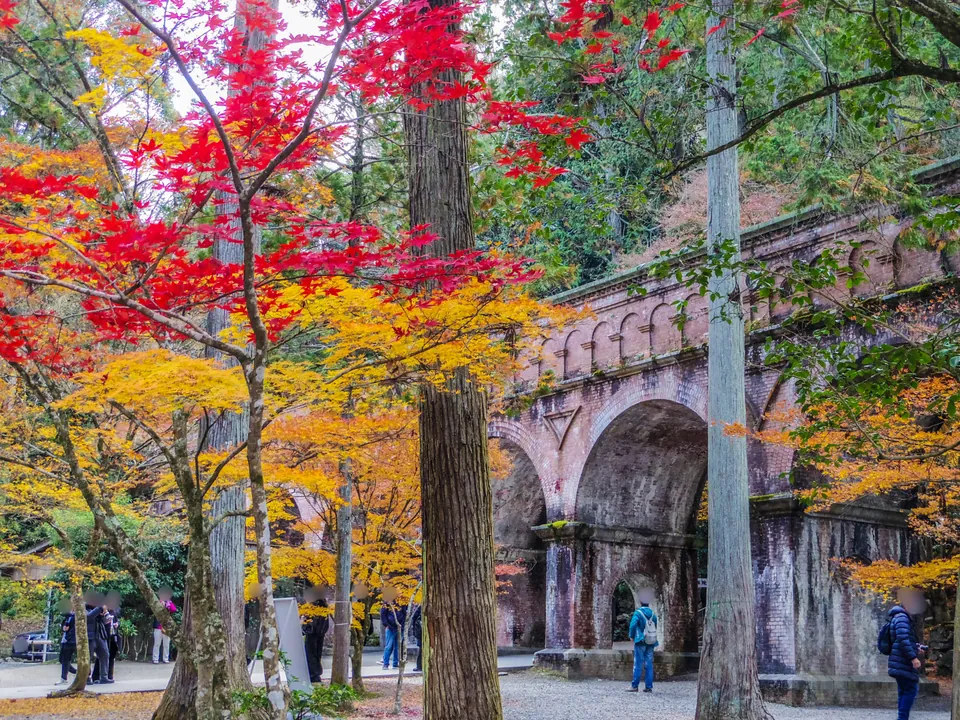
Keep Nanzen-ji's paid areas ahead of their admission cutoff. If staying for Eikando at night, allow a break and a separate ticket. Add Anraku-ji farther north only when its opening is confirmed; dropping that extension leaves more time for the core route.
Western Kyoto: Arashiyama and Jojakko-ji
Saga-Arashiyama Station → Jojakko-ji → lunch → Togetsukyo Bridge and riverside puts the temple with a closing time first and the open scenery later. Reverse the order if your arrival station or preferences make that easier, while protecting enough time for Jojakko-ji.
The two details below belong to Jojakko-ji: the Sanmon name plaque and stone steps among moss and fallen leaves. They are useful reminders that this part of the day is an actual temple walk, with changes in level, rather than simply another riverside photo stop.
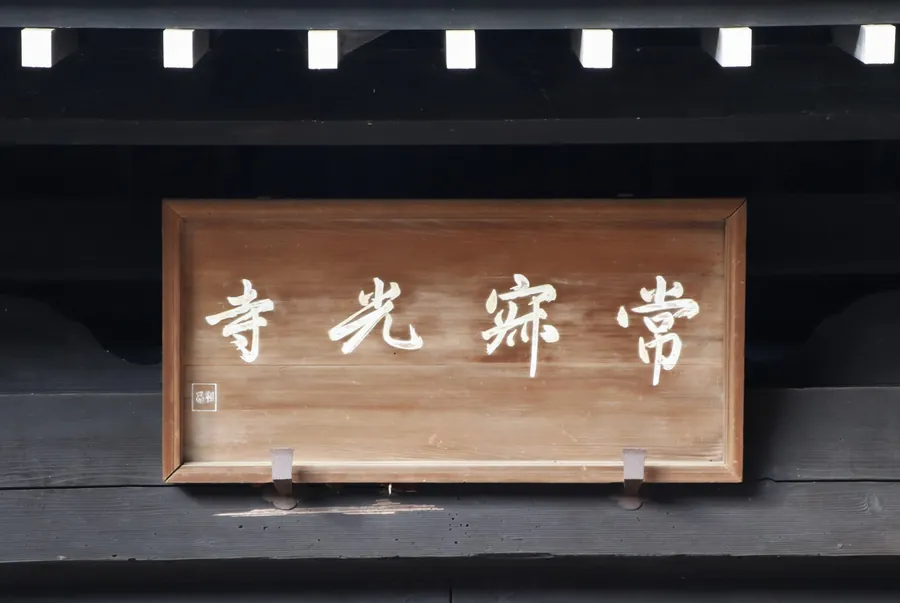
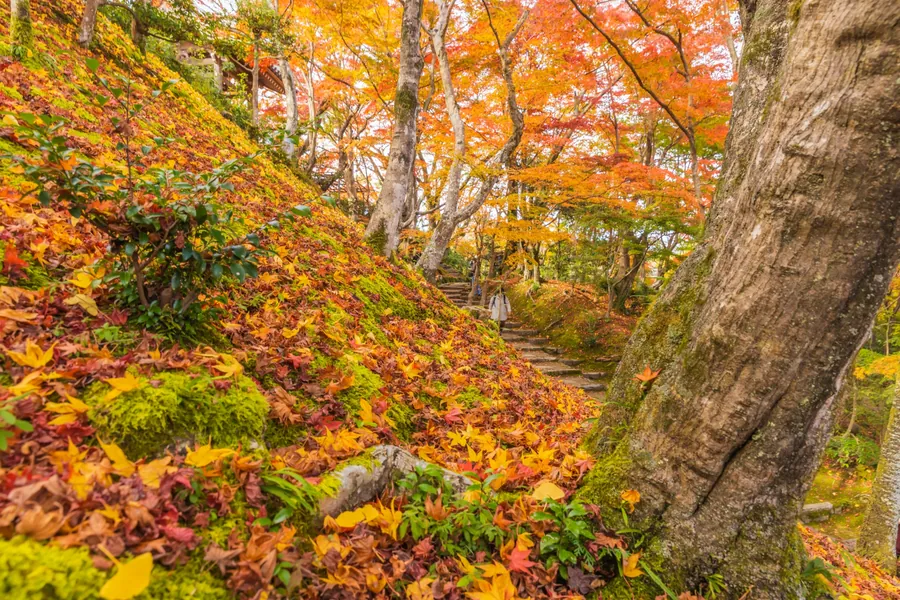
If you prefer a guide, the optional tour below follows a different route, including Tenryu-ji, bamboo, matcha and the monkey park; it does not substitute for the Jojakko-ji plan. The listing includes an uphill hike and steps and says it is unsuitable for wheelchairs or baby strollers. Check the meeting point, inclusions and cancellation terms for your chosen date.
JAPANODE may earn a commission on qualifying bookings made through links on this page.
Arashiyama Bamboo, Matcha, Monkeys & Temple Tour
Why it may fit
A guided outing through Tenryu-ji, the bamboo grove and the monkey park, with matcha along the way. Check this specific tour for your autumn travel dates.
Before booking
Includes uphill walking and steps; unsuitable for wheelchairs or strollers. Jojakko-ji is not on the listed route, and autumn color varies by date.
Southern Higashiyama: Kiyomizu-dera, Tea and Kodai-ji
For southern Higashiyama, start with Kiyomizu-dera, walk through the approach streets and continue toward Kodai-ji. Choose one evening temple if you want to stay after dark. A daytime temple visit followed by dinner and one illumination leaves more breathing room than two evening admission queues.
For a pause between temples, SAKAGUCHIAN's garden tea ceremony near Kiyomizu-dera is a specific experience in the Sannenzaka area. GetYourGuide lists a 45-minute session with an English-speaking instructor, a tea demonstration, your own matcha preparation and a traditional sweet, with a private garden visible from the tea room.
Book a tea break into your autumn Kyoto day: check sessions for your travel dates and reserve one that leaves time for walking and check-in between Kiyomizu-dera and Kodai-ji. Garden foliage is not guaranteed. Check the current meeting instructions, price and cancellation terms before booking.
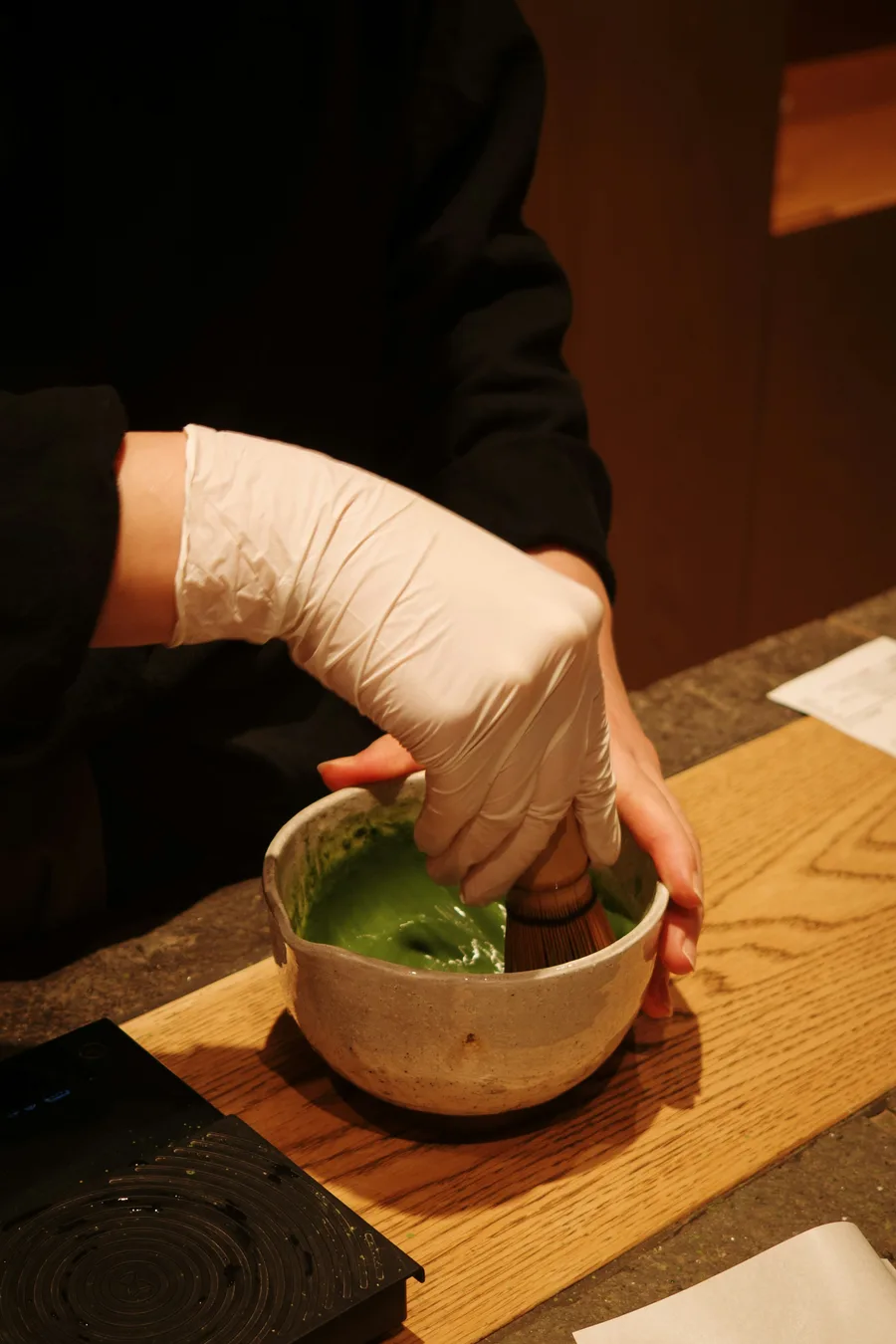
Tea Ceremony in a Garden Tea House near Kiyomizu-dera
Why it may fit
A 45-minute matcha and sweets experience at SAKAGUCHIAN, with a garden view. Add a reserved tea break to your autumn Kiyomizu-dera and Kodai-ji route.
Before booking
The listing excludes children under 7 and large bags. Allow walking and check-in time; autumn foliage depends on the date and weather.
Separate Visit Blocks: Kinkaku-ji and Tofuku-ji
Keep Kinkaku-ji as a northwestern visit block, and Tofuku-ji as a southern one. They need not occupy a whole day each, but allow transport and queue time before committing to a second district. For a day trip from Osaka, choose the Kyoto area first and build the rail journey around it; our autumn day trips from Osaka also offers alternatives if you want a different setting.
Kyoto Autumn Night Visits in 2026
For confirmed dates, prices, day-to-night ticket rules and evening routes, use our Kyoto autumn illuminations guide. It compares Kiyomizu-dera, Kodai-ji, Eikando and Toji so you can choose an evening that fits your daytime sightseeing.

An evening visit changes both the photographs and the logistics. You may be standing still longer, walking on dim paths and finishing after your usual dinner time. Check the last admission, not only the closing time, and leave a margin for the return journey.
| Place | Published 2026 arrangement | What matters for your plan |
|---|---|---|
| Kiyomizu-dera | November 21–30; last entry 9:00 p.m., closes 9:30 p.m. | Use the temple's special night-viewing schedule |
| Kodai-ji | October 23–December 13; lighting from 5:00 p.m., reception ends 9:30 p.m., closes 10:00 p.m. | Day and night admission cost the same; leaving ends use of that ticket |
| Eikando | November 20–December 6; reception 5:30–8:30 p.m., closes 9:00 p.m.; ¥1,000 for junior-high-school age and above | Buy on the day; separate day/night tickets, with reception potentially closing earlier when crowded |
Sources: Kiyomizu-dera's 2026 events, Kodai-ji's autumn announcement, and Eikando's Japanese notice with its current English admission page. Check again close to travel because operating arrangements can change.
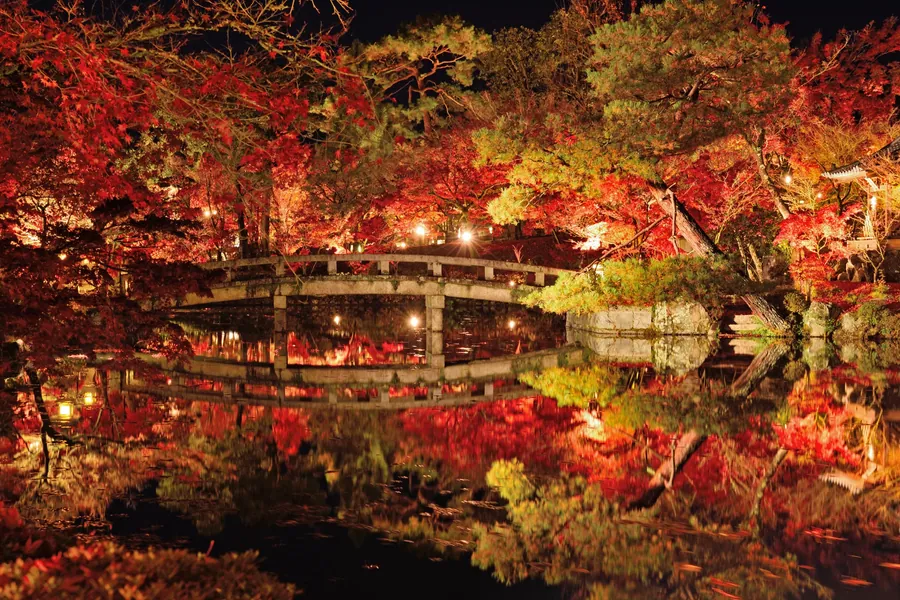
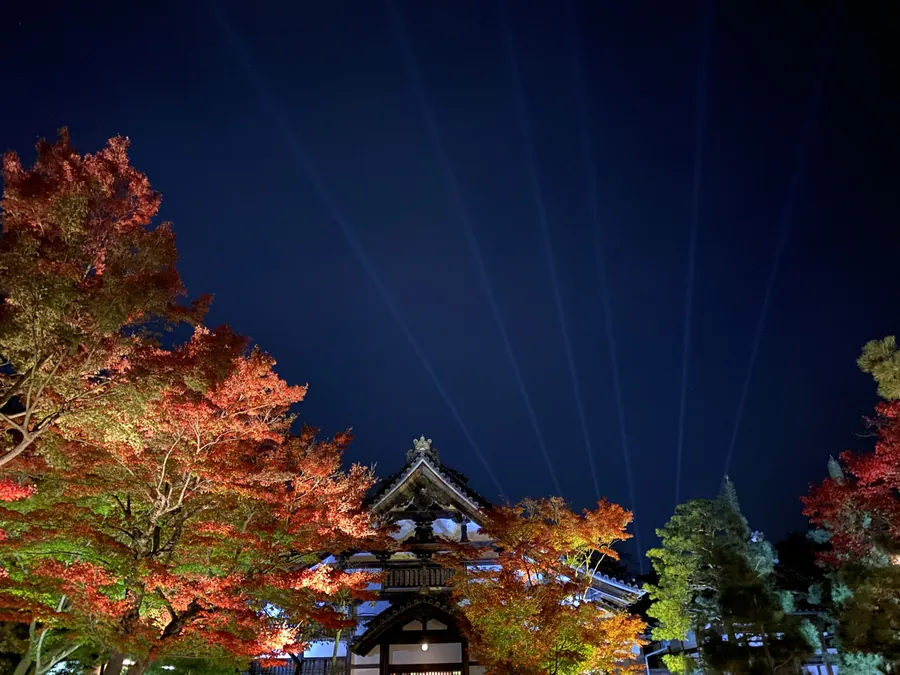
These photographs illustrate earlier lighting scenes, not a promise of the 2026 display. A lit garden can be attractive before peak foliage, but that is a different experience from the full autumn color shown here. Plan the evening around the venue you want to see, not a guarantee of identical photographs.
Where to Stay for Your Kyoto Autumn Route
Choose a base by the journeys you will repeat. Kyoto Station is worth comparing for arrivals, onward travel and JR outings. Shijo–Kawaramachi and central Kyoto suit travelers who want a central base between outings. Higashiyama is worth considering when your main priority is time in the eastern districts, particularly after an evening visit.
The tradeoff is that no single location puts you beside every area in this guide. Before booking, map the hotel entrance to the station and to your first morning stop. Check room size, the final total including taxes and fees, breakfast arrangements and the actual cancellation deadline. A lower headline rate can be less useful if it adds awkward journeys or removes flexibility you need.
Kyoto stays on Booking.com
Why it may fit
Search Kyoto accommodation, then enter your dates and compare location, total price and cancellation terms.
Before booking
Check the live price, availability, eligibility, and terms before paying.
What to Wear and Where to Leave Your Bags
Bring removable layers, walking shoes with grip and a small bag for the layer you take off during the day. An early start or a night visit can call for more warmth than an afternoon walk. Stone steps, loose gravel and fallen leaves also make footwear more important than it looks in a scenic photograph. Use our autumn clothing guide for month-by-month packing, then adjust to the forecast.
On an arrival or departure day, ask your accommodation about bag storage first. Station lockers can work when their size and collection hours fit. Reservable storage is another option if you need a specific location, but check opening hours and the collection deadline against your evening plans. Do not carry a large suitcase through a hillside temple simply to avoid a small detour.

Kyoto luggage storage with Radical Storage
Why it may fit
Compare reservable luggage storage in Kyoto. Check the chosen location's opening hours, collection time and final total.
Before booking
Check the live price, availability, eligibility, and terms before paying.
Our Japan luggage storage guide compares lockers, hotel storage and bookable services. Choose the arrangement that leaves your route simpler, including the return trip to collect your bag.
Before You Set Out
Save the official pages for your chosen temples, confirm that each will be open, and check the latest foliage report and weather. Pick one main area, one optional addition and a place to pause. If the optional stop would force you to hurry through the visit you came for, leave it for another day.
This guide's factual sources are linked beside the relevant opening, transport and admission details. Photographs are credited individually to their PhotoAC contributors; their capture years are not established. The tea card uses an illustrative matcha photograph by Leongsan on Unsplash, not a photograph of SAKAGUCHIAN. Activity details were checked against the individual GetYourGuide listings on September 29, 2026. The route combinations and tradeoffs are JAPANODE's planning suggestions based on that research.
Frequently Asked Questions
Use November into early December as a broad planning window, then check the individual locations. Kiyomizu-dera's official guide gives mid-November to early December as its usual autumn period and notes that timing changes each year. A temple's event dates do not guarantee peak foliage.
No. The photographs are seasonal reference images, not a live report. Check the year and update date on Kyoto's official foliage calendar and each temple's own notices before choosing where to go.
Choose one area for an outing rather than treating all nine as a one-day checklist. Pair Arashiyama with Jojakko-ji, Kiyomizu-dera with Kodai-ji, or Nanzen-ji with Eikando and an optional Anraku-ji visit when open. Give Kinkaku-ji and Tofuku-ji their own visit blocks, allowing for transport, walking and admission queues.
Do not assume it is. Anraku-ji has limited public openings, so confirm the current year's opening dates directly before adding a temple visit to your route. A photograph of the gate does not confirm that the grounds will be open on your travel date.
Eikando's official visitor notice says daytime and nighttime tickets are separate and daytime visitors must leave before the evening session. Check the current notice for dates, prices and entry conditions.
Use removable layers, comfortable walking shoes and a jacket suited to your travel month and forecast. Early starts and evening visits can need warmer clothing than afternoon walks. Use JAPANODE's autumn clothing guide for month-by-month packing advice.

Written by
JAPANODE
Based in Japan, researching practical travel planning, transport and seasonal guides for visitors.
You Might Also Like
 Planning
Japan Autumn Leaves 2026: Forecast & Booking Guide
11 min read
 Day Trips
10 Best Autumn Leaves Day Trips from Osaka in 2026: Kyoto, Nara, Koyasan & More
8 min read
 Itinerary
4-Day Kansai Itinerary: Kyoto, Osaka & Nara (2026 Local's Guide)
18 min read
 Planning
What to Wear in Japan in Autumn: September, October & November Packing Guide
11 min read