
On this page
The most useful way to plan Japan's autumn leaves is not to choose one “perfect week” for the entire country. Choose the right region for your dates, then use the latest forecast and local color reports to make final day-trip decisions.
Japan Meteorological Corporation (JMC) released its second 2026 autumn foliage forecast on October 1. It covers separate maple and ginkgo timing for cities and viewing locations across Japan. Use it to choose a region and rough week, then use live local color reports for the final decision.
- JMC second forecast: Released October 1, 2026
- Tokyo city sample trees: Maple November 28 · ginkgo November 26
- Kyoto city sample trees: Maple December 11 · ginkgo November 27
- Osaka city sample trees: Maple December 4 · ginkgo November 24
- Kyoto live calendar: Check the official calendar for the latest venue reports
- What to do now: Use the second forecast for route planning, keep accommodation flexible, and check live venue status close to travel day.
Disclosure: Some links on this page are affiliate links. JAPANODE may earn a commission at no extra cost to you. Recommendations are based on traveler fit and current terms, not commission alone.
Quick Answer: When and Where to See Autumn Leaves in Japan in 2026
| Your travel period | Best regions to investigate first | Usually too early or too late |
|---|---|---|
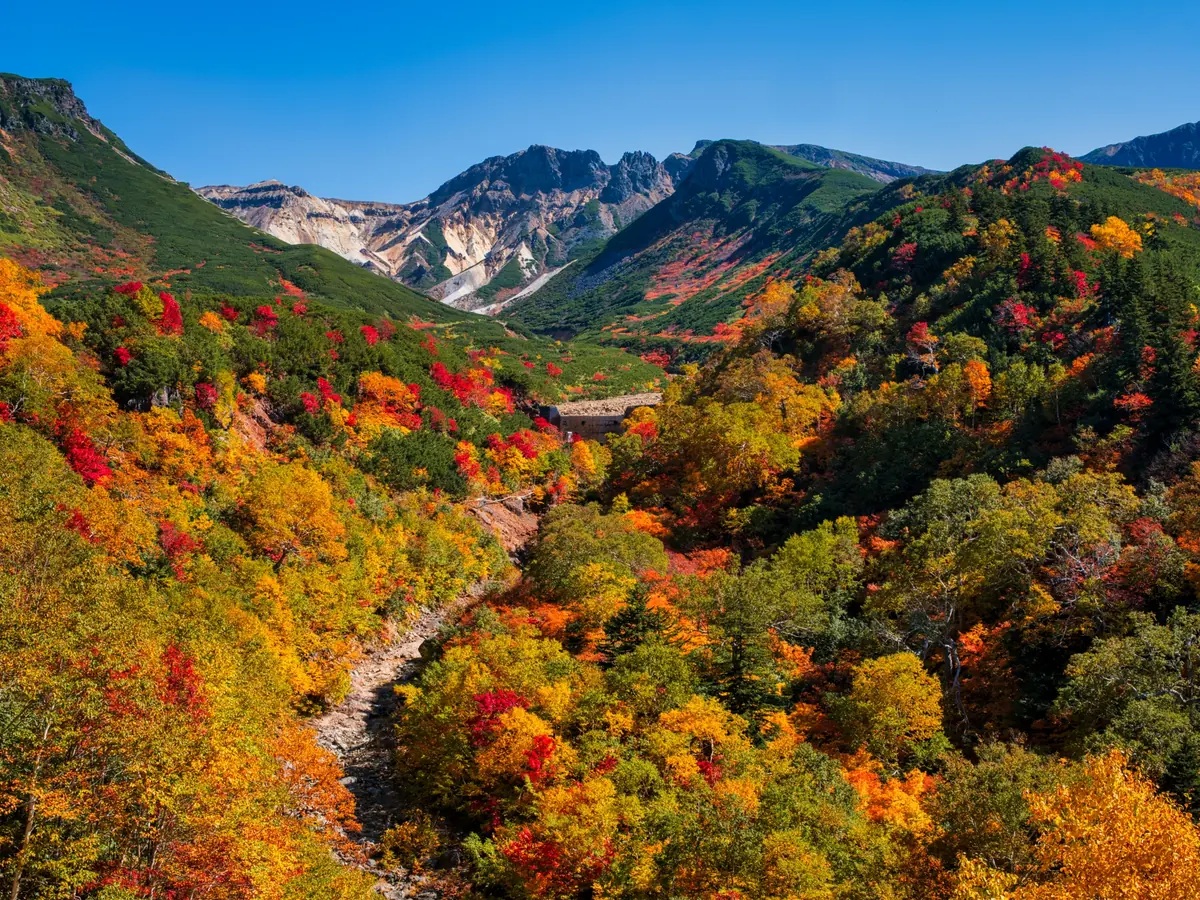
| Mid-September to early October | Daisetsuzan and other high areas of Hokkaido | Lowland Tokyo, Kyoto and Osaka are normally green |
| October | Hokkaido, Tohoku, Nikko's higher elevations and the Japanese Alps | Central Tokyo and lowland Kyoto are normally early |
| Late October to mid-November | Nikko, Karuizawa, Fuji Five Lakes, Hakone, Koyasan and other mountain destinations | Hokkaido's highest areas may be past peak |
| Mid-November to early December | Tokyo, Kyoto, Osaka, Nara, Hiroshima and lower-elevation gardens | High mountain routes may be past peak or closed for winter |
| Early to mid-December | Warm lowlands such as parts of Tokyo, Kyoto and Kamakura—only after checking live status | Most northern and high-elevation foliage seasons are over |
The broad pattern runs from north to south and high elevation to low elevation. It is more useful to think of a moving front than a fixed national season. Even within one destination, a mountain viewpoint, a valley, and a city garden can peak on different weeks.
Is the 2026 Koyo Forecast Out Yet?
Yes. Japan Meteorological Corporation released its second 2026 forecast on October 1, with expected maple and ginkgo timing for cities and viewing locations across Japan. Its next release is planned for early November.
The second forecast is a planning signal, not a reservation for one exact garden. JMC's city dates use sample-tree observation standards, while a mountain, temple garden and exposed avenue can color at different times. A warm summer alone also does not give travelers a reliable date for an individual stop.
2026 Forecast Dashboard
| Provider | 2026 status on October 7 | What it is useful for |
|---|---|---|
| Japan Weather Association / tenki.jp | Check its live 2026 page for the latest available regional update | Regional and spot-level viewing windows |
| Japan Meteorological Corporation (JMC) | Second forecast released October 1; next update planned for early November | Separate maple and ginkgo forecasts, plus city and spot data |
| Kyoto City Official Travel Guide | Check for current venue reports | Current color stage at individual Kyoto locations |
| Japan-guide field reports | Seasonal reporting begins as conditions develop | On-the-ground visual reports from selected destinations |
We will keep the publication date and dashboard aligned with named 2026 releases. A previous-year date is never relabeled as a 2026 forecast.
Turn the broad forecast into a shortlist for your travel dates. Choose a Kyoto area route, or compare day trips from Tokyo and Osaka. These guides keep typical timing separate from live conditions and help you decide what to explore independently and what to reserve.
Plan your Kyoto autumn day
Explore nine places in photographs, pair nearby temples, and plan tea breaks and evening visits around one Kyoto area.
Open the Kyoto autumn guideCompare trips from Tokyo
Choose among Nikko, Kawaguchiko, Hakone and six alternatives by typical timing, weather risk and transport effort.
Open the Tokyo comparisonCompare trips from Osaka
Choose among Kyoto, Nara, Koyasan, Katsuoji and other Kansai routes by date and final transport leg.
Open the Osaka comparisonPlan your Nikko autumn route
Match the lake or temple area to your dates, plan around traffic, compare tours and explore a historic stay at Nikko Kanaya Hotel.
Open the Nikko autumn guideForecast, Average Date and Live Status Are Different
These three types of information solve different problems:
| Information type | Meaning | When to use it |
|---|---|---|
| Typical or average window | A multi-year planning range | Choosing regions and booking flexible hotels months ahead |
| Seasonal forecast | A future estimate based partly on expected temperatures | Adjusting route order after forecasts begin |
| Live color status | What is actually green, changing, at peak or past peak | Selecting a garden or day trip in the final days |
A forecast date for “Tokyo” is not the guaranteed best day for every Tokyo garden. JMC's city forecasts follow the Japan Meteorological Agency's sample-tree observation standard: the date represents when most of the observed tree has turned red or yellow. A shaded garden, exposed avenue, mountain temple, and individual tree variety can behave differently.
Average Autumn Leaves Peak Dates by Region
Use these ranges with the first 2026 forecast to build a route. The ranges remain useful because one city forecast date cannot describe every elevation and garden.
| Region | Typical viewing window | Examples | Main uncertainty |
|---|---|---|---|
| Hokkaido highlands | Mid-September to mid-October | Daisetsuzan, Asahidake, Kurodake | Large elevation differences; early snow and mountain transport |
| Hokkaido cities and Tohoku mountains | October | Jozankei, Hachimantai, Lake Towada, Oirase | Northern weather and elevation |
| Japanese Alps and higher Nikko | October to early November | Kamikochi, Tateyama Kurobe, Oku-Nikko | Mountain conditions and seasonal closures |
| Fuji Five Lakes, Karuizawa, Hakone, Koyasan | Late October to mid-November | Lake Kawaguchiko, Kumoba Pond, Hakone, Koyasan | Wide differences between lakeside, town and mountain areas |
| Central Tokyo, Kyoto, Osaka and Nara | Mid-November to early December | City gardens, temple grounds, ginkgo avenues | Warm autumns can push strong color toward December |
| Warmer lowlands | Late November to mid-December | Kamakura and selected low-elevation gardens | Wind or rain may shorten the final display |
JNTO's October travel guidance emphasizes northern and higher-altitude foliage during October, while warmer destinations such as Tokyo and Kyoto generally come later.
Why Elevation Matters as Much as Latitude
On a mountain, color can descend from the upper slopes to a valley or gateway town over several weeks. That is why “Nikko peak” or “Daisetsuzan peak” is too vague without naming the elevation and exact area.
This gives fixed-date travelers a useful strategy. If central Tokyo is still green in early November, look at higher and cooler options such as Nikko, Lake Kawaguchiko or Karuizawa. If a mountain season has ended, shift toward a lower valley or city garden instead of assuming the entire region is finished.
Red Maples and Yellow Ginkgo Do Not Peak Together
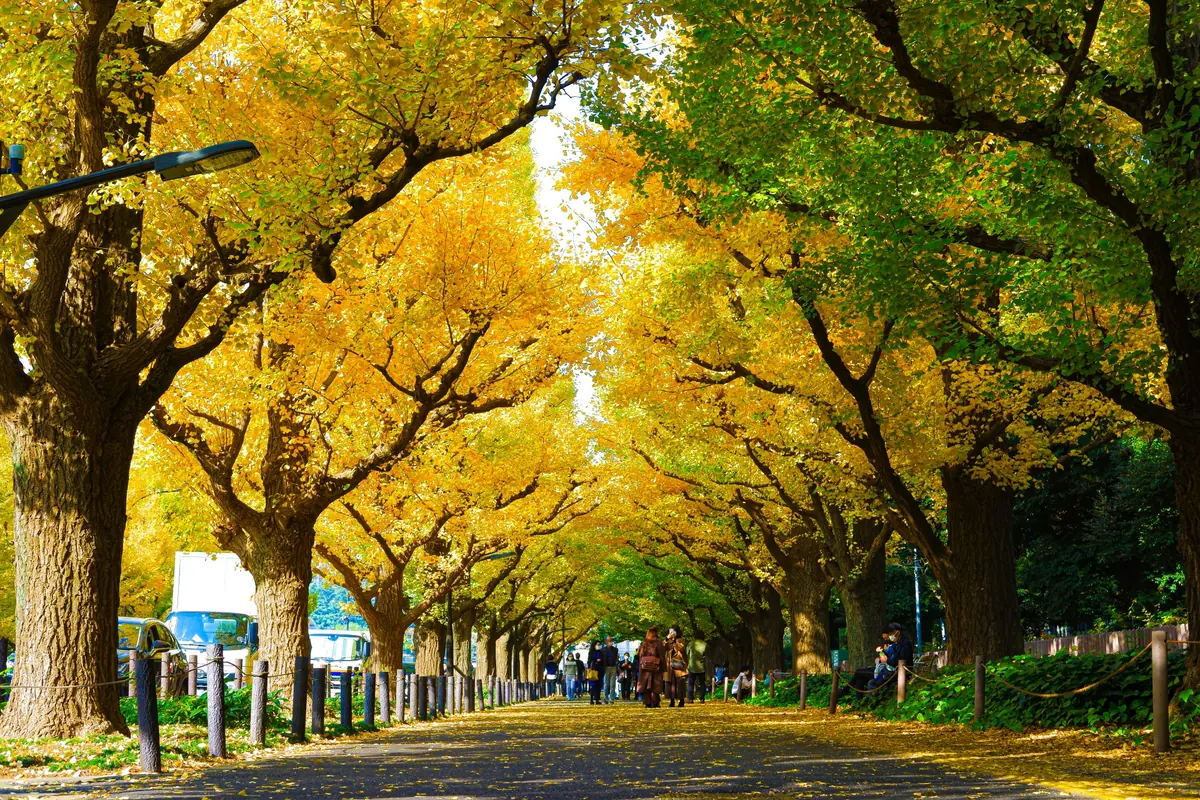
JMC forecasts maple and ginkgo separately because the two displays do not follow an identical timetable. A trip can miss the strongest red maples and still find an excellent golden ginkgo avenue—or the reverse.
JMC's published average sample-tree dates illustrate the difference. Tokyo's average is November 23 for ginkgo and November 28 for maple; Kyoto's is November 24 for ginkgo and December 5 for maple. These are city sample-tree dates, not promises for Meiji Jingu Gaien, a Kyoto temple, or the whole city.
The Booking Timeline: What to Reserve and When
Do not wait for an exact foliage forecast before booking a late-November trip. By the time a September forecast appears, the most convenient cancellable rooms may already be limited. Reserve the parts that are difficult to replace, then keep day trips flexible.
| Timing | What to do |
|---|---|
| 6+ months before | Choose the direction of travel and reserve flexible international transport and accommodation when practical |
| 3–6 months before | Prioritize limited-room ryokan, onsen stays and late-November Kyoto weekends |
| 1 month before | Book eligible reserved trains and limited-capacity scenic transport when sales open |
| 1–2 weeks before | Compare the newest forecast with local status pages; select flexible day trips |
| The day before | Recheck weather, wind, transport, opening hours, admission and illumination rules |
If your dates are fixed, keep destinations flexible. If your destination is fixed, reserve flexible accommodation and build both an earlier high-elevation option and a later low-elevation option into the trip. Do not make a non-refundable hotel change just to chase a forecast that may move again.
If your Kyoto nights are fixed, compare our measured hotel rates and search current prices for your dates before choosing a cancellable room. For accommodation types and booking trade-offs, use our Japan accommodation guide. Compare rail costs with the JR Pass Calculator; an autumn itinerary does not automatically make a nationwide JR Pass good value.
One Month Before: Trains and Limited-Capacity Transport
JR East says eligible tickets on its official reservation service become available from 10:00 JST one month before boarding. Its inventory does not cover every JR company or every route, so use the operator responsible for your train—especially for the Tokaido Shinkansen between Tokyo, Kyoto and Osaka.
The Sagano Romantic Train FAQ says individual online tickets become available at 00:00 JST one month before the boarding date. Same-day tickets may exist, but relying on them during peak autumn travel removes useful certainty. The open-air “Rich” car can also get wet, umbrellas cannot be used aboard it, and rain does not automatically qualify for a refund.
Other ropeways, buses, cruises and temple admissions have their own rules. There is no nationwide one-month rule for every foliage attraction.
Follow the Koyo Front: Region by Region
September to Mid-October: Hokkaido and the Highest Mountains
Daisetsuzan National Park is one of the first major foliage areas to change. Its vast elevation range creates several viewing periods rather than one park-wide peak. The upper mountain environment can also bring rapid weather changes, cold wind, early snow and transport disruption.
Treat this as mountain travel, not a Tokyo-style park visit. Check ropeway operation, trail conditions, bear information, closing times and required equipment with the local operator or visitor center. A clear forecast in Asahikawa does not guarantee safe or comfortable weather on a high trail.
October: Tohoku, Nikko and the Japanese Alps
October is the month to look north or upward. Lake Towada and Oirase, Hachimantai, higher Oku-Nikko, and parts of the Japanese Alps can all be strong candidates depending on the week.
The key question is not “Which place is best?” but “Which elevation fits my date?” In Nikko, the higher Lake Chuzenji and Yumoto areas normally change before the lower shrine district. In the Alps, upper routes may reach autumn early and then transition toward winter while nearby valleys are still colorful.
Our Nikko autumn route guide compares the elevation zones and 2023–2025 observations, explains tour and traffic trade-offs, and includes a personal stay at Nikko Kanaya Hotel.
Early to Mid-November: Fuji, Karuizawa, Hakone and Koyasan
Early November is often awkward for travelers who expect peak color in central Tokyo or lowland Kyoto. Instead of writing off the trip, compare cooler day-trip and mountain-town options.
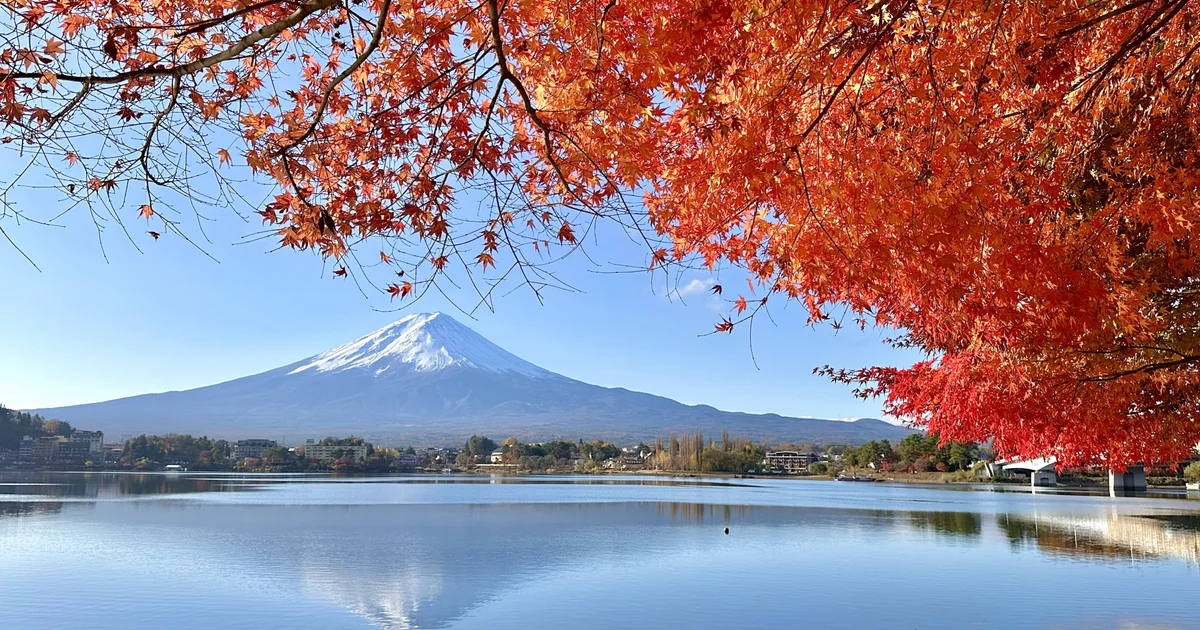
From Tokyo, Lake Kawaguchiko offers the classic Mt. Fuji-and-maples combination; Karuizawa, Hakone and lower Nikko areas provide different timing and weather trade-offs. Our Tokyo autumn day-trip comparison covers nine choices by access, typical timing and crowd level; if Fuji is your priority, compare the guided-tour, train and bus routes separately before booking.
From Osaka, Koyasan and higher Mt. Hiei can color before many lower Kyoto and Osaka sites. Compare them with the other options in our Osaka autumn day-trip guide.
Late November to Early December: Tokyo, Kyoto and Osaka
This is the broad window many first-time visitors have in mind: red maples in temple gardens, golden ginkgo avenues and mild-weather city sightseeing. It is also one of the busiest periods in Kyoto.
Recent seasons show why early December should not be dismissed, but two late years do not prove that every future season will be late. Use the latest 2026 forecast, then switch to local reports during the trip.
Kyoto at Peak: How to Handle the Busiest Weeks
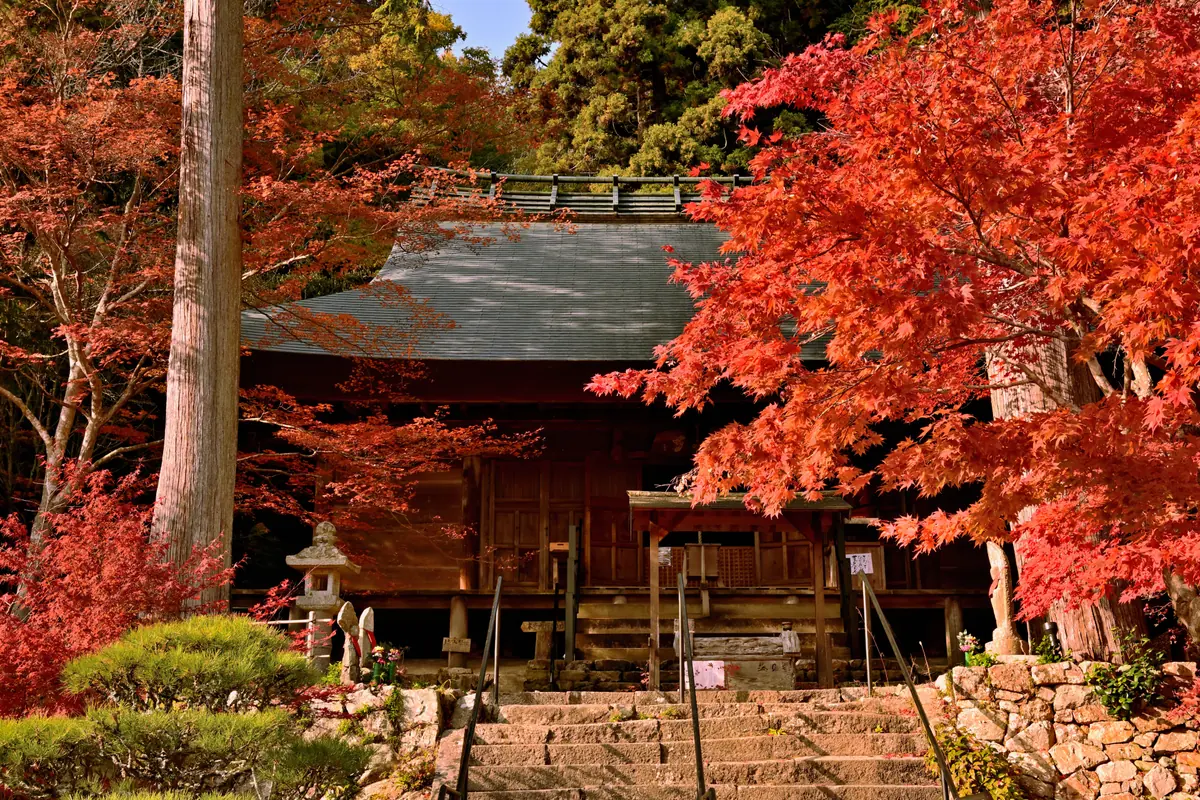
Kyoto has enough variation to absorb some timing error. Takao and other cooler northern or elevated areas can change before many central and southern gardens. Even on the same day, one temple may be green while another is at peak.
The practical mistake is trying to cross the city repeatedly to collect famous names. Choose one compact area—Higashiyama, Arashiyama, northern Kyoto or Takao—and check each venue's current opening hours and admission rules.
Our Kyoto autumn places and area routes guide compares nine locations, with photographs, nearby pairings and the opening checks to make before setting out.
For a western Kyoto outing, use our Arashiyama autumn and Sagano Romantic Train guide to compare a scenic ride with a garden day, choose your direction and seat preference, and plan the railway return.
Kyoto's official autumn guidance recommends traveling by train or subway as close to the destination as possible, transferring to a bus only for the final stretch when needed, and walking from the nearest stop. Some special 2025 bus measures and live cameras have ended, so do not assume they will return unchanged in 2026. Check the current Kyoto comfort and congestion information shortly before travel.
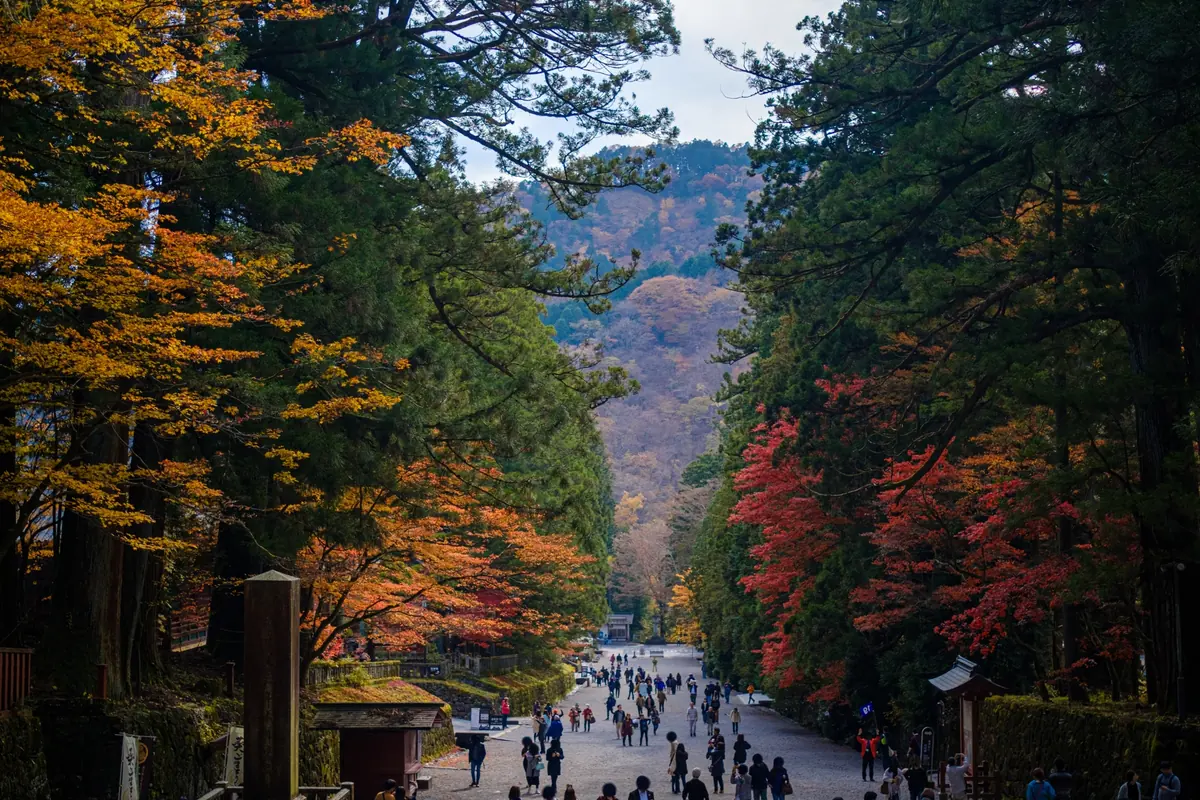
Check Current Color, Not Just a Forecast Date
The Kyoto Autumn Leaves Calendar tracks individual locations as green, beginning to color, partially colored, peak or past peak. Updates normally run during the active season; the page currently shows the completed 2025 season.
Use the nationwide forecast to choose the week, then use the Kyoto calendar to choose the specific area. This two-level approach is more reliable than treating one “Kyoto peak date” as a reservation for every garden.
Morning and Night Visits
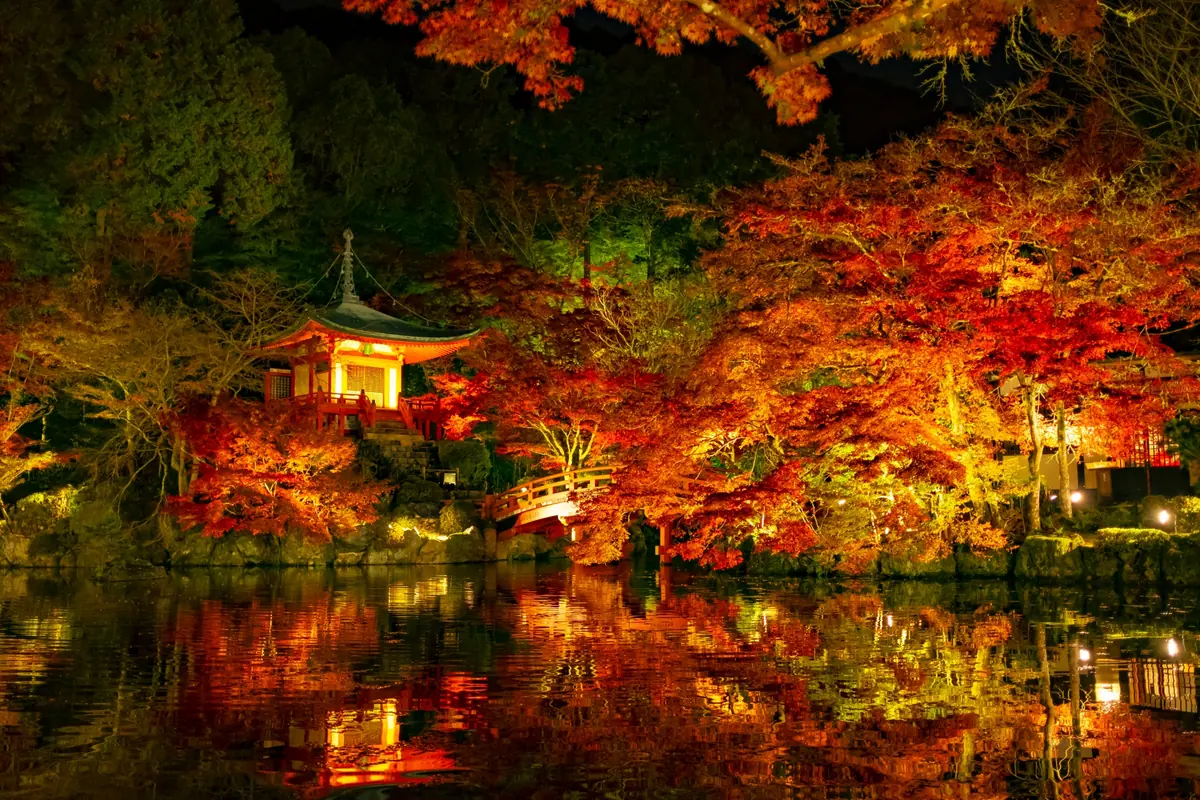
For Kyoto, our autumn illuminations guide compares confirmed 2026 temple dates, last admission, ticket rules and practical evening routes.
Early hours can reduce some crowd pressure, but only if the site is actually open. Check the official opening time rather than following generic advice to arrive at 7:00. Evening illuminations can spread visitors across more hours, but they may use separate tickets, different entrances or photography rules.
Night visits also feel colder because you spend more time standing still. Bring an extra layer and confirm the final train or bus before entering.
This guide does not use a single visit as proof of an annual pattern. We separate multi-year averages, current-season forecasts and live venue status, and we date-stamp information that changes. Before making a final plan, compare a nationwide forecast with the official calendar, operator notice or local weather report for the place you intend to visit.
Beyond Kyoto: Strong Alternatives by Travel Date
Kyoto is not the only answer, and the best alternative depends on when you are traveling.
| If your trip falls in… | Start with… | Why |
|---|---|---|
| October | Hokkaido, Tohoku, Nikko highlands, Japanese Alps | Northern latitude and elevation bring earlier color |
| Late October–early November | Nikko, Fuji Five Lakes, Karuizawa, Koyasan | Useful bridge between high-mountain and city seasons |
| Mid–late November | Kyoto, Nara, Osaka, Tokyo day trips | Wide choice of temple, park and mountain-edge scenery |
| Late November–early December | Central Tokyo, Kyoto lowlands, Osaka, Nara | Main lowland city window in many years |
| Early–mid December | Kamakura and selected lowland gardens | Potential late-season backups, subject to live status |
If accessibility without a car matters, choose a rail-connected base and examine the final transport leg. A famous valley that needs an infrequent bus is not automatically a better choice than a city garden you can reach reliably.
If the Forecast Shifts or You Miss the Peak
Do not treat “not at peak” as a binary failure. Foliage often remains attractive while changing or shortly after the official peak, and different species progress at different speeds.
Use this decision process:
- Leaves are still green: Look north, move higher, or schedule the destination later in your trip.
- Your mountain destination is past peak: Move to a lower valley, gateway town or nearby city.
- Maples are disappointing: Check ginkgo status separately.
- Strong wind has stripped exposed trees: Look for a sheltered garden, valley or different area; confirm with current photos or local reports.
- Kyoto is too crowded: Choose one outer district, use Osaka as a base, or switch to Nara, Shiga or an earlier/later destination that fits your dates.
Late-Season Backups in Early December
Central Tokyo gardens, Kamakura and some lowland Kyoto or Osaka locations can remain useful in early December. None is guaranteed. Before committing to a long day trip, compare live status, recent official posts, current weather and transport.
Kamakura is especially useful because its warmer coastal climate often places it later than higher destinations around Tokyo. The exact timing still varies by temple and year.
Build a Japan Autumn Leaves Itinerary
The easiest route generally moves from an earlier area toward a later one, but flights, hotel value and your non-foliage priorities matter too. Do not rebuild an entire Japan trip for one predicted date.
Seven-Day Framework
- Tokyo base: City sightseeing plus one date-fit day trip
- Kyoto or Osaka base: Choose one Kyoto area and one flexible Kansai day trip
- Open weather day: Keep one day without a distant fixed booking so you can follow the best current conditions
For an early-November trip, the Tokyo day trip might be Nikko or Lake Kawaguchiko, while the Kansai option might be Koyasan. For late November, central Tokyo, Kyoto, Nara and Osaka become more likely.
Ten-Day Framework
- Tokyo and a nearby foliage day trip
- Optional Nagano, Kanazawa or alpine-region stop if the dates fit
- Kyoto and Osaka base
- Flexible final day for a lower-elevation garden or late-season backup
Use our 10-day first-time Japan itinerary for the underlying route, then replace one general sightseeing day with the best foliage option for your dates.
What to Wear for Autumn Foliage Viewing

Wear adjustable layers, broken-in walking shoes and an outer layer you can carry easily. Mountain destinations can be much colder than Tokyo or Osaka, and evening illuminations feel colder than daytime sightseeing because you stand still.
Check the forecast for the exact destination three to five days out. Our Japan autumn clothing guide covers September, October and November separately, including rain gear, Hokkaido, mountain safety and a complete packing list.
The Sources to Check Before Each Foliage Day
| Need | Best source type |
|---|---|
| Nationwide seasonal outlook | JMC and tenki.jp forecast releases |
| Typical regional sequence | JNTO and long-running destination reports |
| Kyoto's current color | Kyoto City Official Autumn Leaves Calendar |
| Weather warnings | Japan Meteorological Agency |
| Train and attraction operation | The responsible railway, bus, ropeway, temple or park |
Save the pages you will actually use before departure. Search results and social posts can be useful clues, but operational decisions should come from the responsible operator.
 Connectivity option
Airalo Japan eSIM
Check foliage, weather and transport updates while traveling
Why it may fit
A data connection makes it easier to compare live color reports, official weather warnings and transport changes while deciding where to go. Check device compatibility and current plan terms before buying.
Before booking
Check the live price, availability, eligibility, and terms before paying.
Plan the Rest of Your Autumn Trip
Planning for spring instead? Our 2027 cherry blossom booking timeline uses the same flexible-route principle for a season whose exact peak cannot be known when flights and hotels first need booking.
Forecast update verified October 7, 2026. JMC's second 2026 autumn foliage forecast was released on October 1, with its next update planned for early November. Forecasts, live color, transport, opening hours and admission rules can change; check the responsible official source close to travel day.
Frequently Asked Questions
Japan Meteorological Corporation released its second 2026 forecast on October 1. Its city sample-tree forecast puts Tokyo maple color around November 28 and ginkgo around November 26, Kyoto maple around December 11 and ginkgo around November 27, and Osaka maple around December 4 and ginkgo around November 24. These are city-level planning dates, not guaranteed peak dates for every garden or mountain, so check local live status shortly before travel.
In an average year, many of Kyoto's lowland temple gardens are strongest from the second half of November into early December, but individual sites differ by elevation, tree variety and exposure. Kyoto's official Autumn Leaves Calendar tracks actual conditions from late October through roughly mid-December, so check it again shortly before your visit.
Usually for central Tokyo's main maple and ginkgo displays, which tend to be strongest from late November into early December. Early November can still work if you travel to higher or cooler destinations such as Nikko, Lake Kawaguchiko, Karuizawa or Hakone. Choose the destination by date rather than treating Tokyo and its day trips as one foliage season.
October is best for northern and higher-elevation areas. Depending on the week, look at Daisetsuzan and other parts of Hokkaido, Hachimantai and Lake Towada in Tohoku, the Japanese Alps, Nikko, Karuizawa and higher areas around Mt Fuji. Lowland Tokyo, Kyoto and Osaka are normally later.
Do not wait for a precise foliage forecast before reserving accommodation. Once your dates are fixed, book a cancellable room, especially for late-November weekends, then adjust only if availability and your fare rules allow. Rail booking rules vary: JR East sells eligible tickets from 10:00 JST one month before boarding, while Sagano Romantic Train online tickets start at 00:00 JST one month before. Recheck each operator and temple after its current schedule is announced.
They are planning tools rather than guarantees. Forecasts estimate broad maple and ginkgo timing from temperature patterns, while an individual garden or mountain can differ because of elevation, tree variety, rain, wind and local exposure. Use the nationwide forecast for routing, then use local status calendars and weather updates during the final days before each visit.

Written by
JAPANODE
Based in Japan, sharing real travel tips & local insights for visitors. Follow us on Instagram @thejapanode for daily Japan content.
You Might Also Like
 Planning
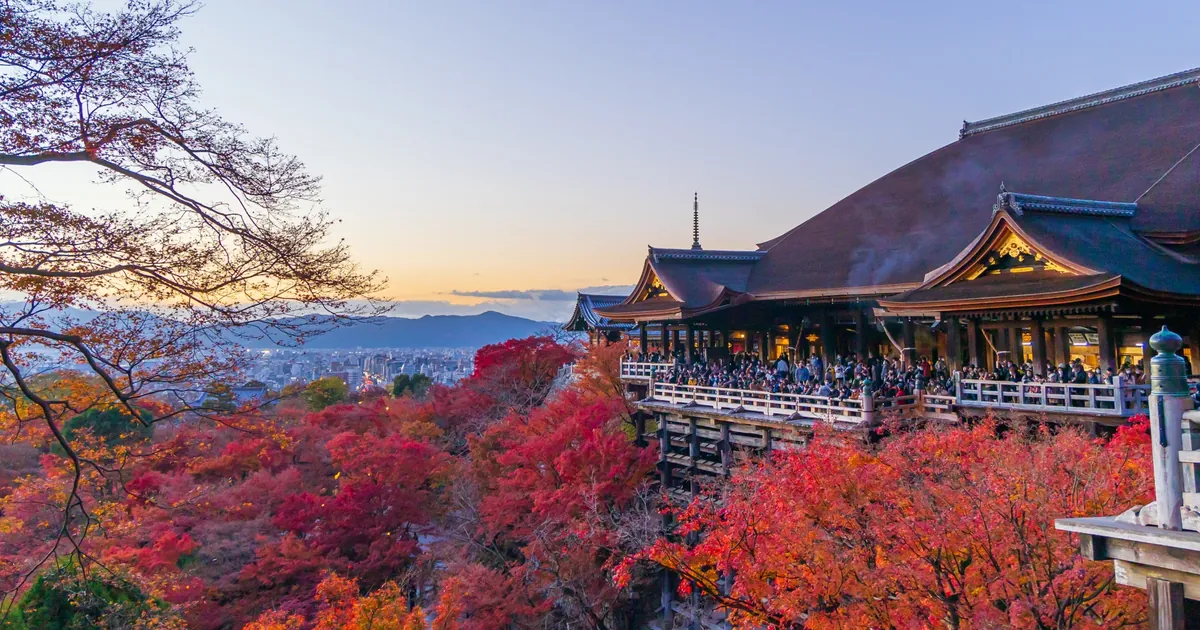
Kyoto Autumn Leaves: 9 Places, Best Time & Area Routes
14 min read
 Day Trips
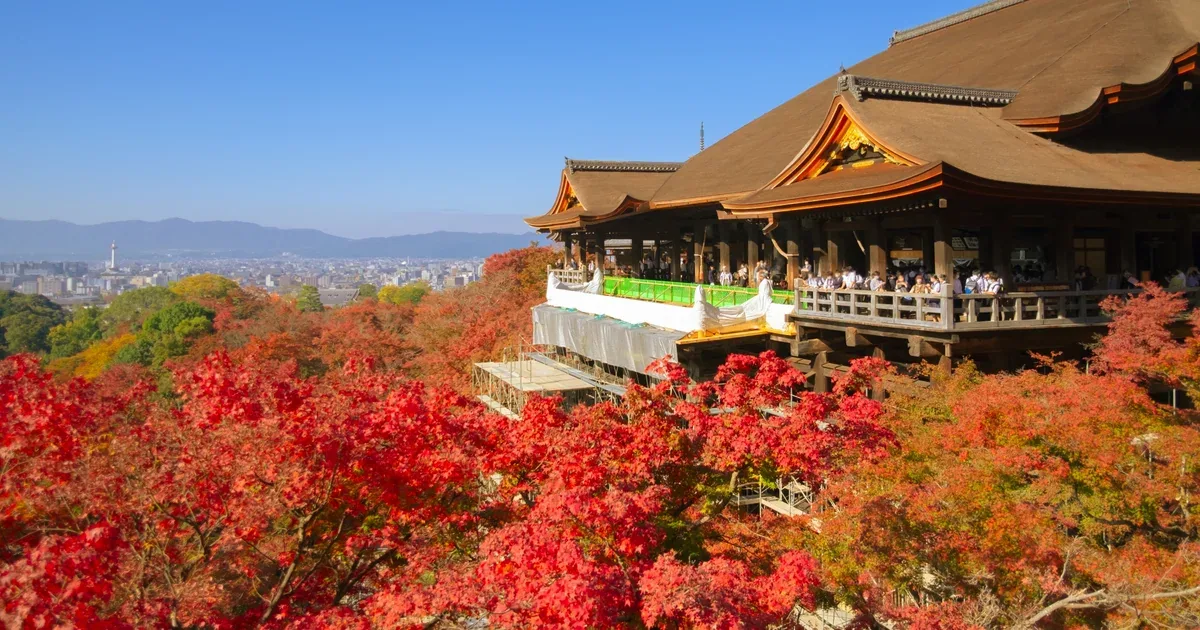
10 Best Autumn Leaves Day Trips from Osaka in 2026: Kyoto, Nara, Koyasan & More
8 min read
Day Trips9 Best Autumn Leaves Day Trips from Tokyo in 2026: Nikko, Mt. Fuji, Hakone & More
9 min read
 Planning
What to Wear in Japan in Autumn: September, October & November Packing Guide
12 min read