
On this page
There is no reliable 2027 cherry blossom forecast yet. As of September 6, 2026, anyone giving an exact 2027 full-bloom date for Tokyo or Kyoto is presenting a guess as a forecast.
That does not mean you should wait. Cherry blossom planning works best when you separate two decisions:
- Book the expensive, replaceable parts early—flights and cancellable accommodation.
- Keep the weather-dependent parts flexible—city order, day trips and the exact park you visit.
The mistake is expecting one booking date to solve both. You can reserve a good trip now without pretending to know what the trees will do seven months later.
Disclosure: Some links on this page are affiliate links. JAPANODE may earn a commission at no extra cost to you. Flexible cancellation is recommended because it fits this trip, not because it pays more.
Quick Answer: The Sakura Booking Countdown
| When | What to do | What not to lock yet |
|---|---|---|
| September–October 2026 | Choose a route, compare open-jaw flights, reserve cancellable hotels | Exact park, picnic day or a single predicted peak date |
| November–December | Secure limited-room ryokan and high-priority experiences; monitor forecast providers | Non-refundable city changes based on social-media predictions |
| January–February 2027 | Compare the first named forecasts, check train sales rules and reserve scarce attractions | A minute-by-minute schedule for every day |
| March | Recheck forecasts, weather and local bloom reports; adjust day trips within your booked route | Cancelling a good hotel before pricing the replacement |
| During the trip | Use official observations and local status pages each evening | Crossing Japan for one viral photo spot |
If you can choose only one principle, use this one: fix the corridor, not the flower date. A late-March-to-early-April route through Tokyo, Kyoto and Osaka gives you more ways to respond than a four-night stay built around one park.
- No 2027 city-level cherry blossom forecast has been released.
- JMA normal dates are historical planning anchors, not 2027 predictions.
- Japan Meteorological Corporation issued its first 2026-season forecast on December 18, 2025; that does not guarantee the same 2027 release date.
- This article should be updated when a named provider publishes its first 2027 forecast.
Key Facts: Normal Dates, Not Promises
The Japan Meteorological Agency defines opening as the first day five or six flowers have opened on a designated sample tree. Full bloom means roughly 80% or more of its buds are open. A city observation does not mean every park in that city looks identical.
| City | JMA normal opening date | JMA normal full-bloom date | 2026 observed opening | 2026 observed full bloom |
|---|---|---|---|---|
| Tokyo | March 24 | March 31 | March 19 | March 28 |
| Kyoto | March 26 | April 4 | March 23 | March 30 |
| Osaka | March 27 | April 4 | March 26 | April 3 |
| Hiroshima | March 25 | April 3 | March 19 | March 30 |
| Nagano | April 11 | April 16 | March 31 | April 6 |
These numbers show why a normal date cannot be treated as a reservation. In 2026, Kyoto reached the JMA full-bloom threshold five days earlier than its normal date, while Osaka was only one day early. Even cities on the same standard itinerary did not move by the same amount.

The useful pattern is geographic: JNTO describes the season as beginning in warmer parts of Japan in late March, moving through much of Honshu in April and continuing into northern areas and Hokkaido into early May. That moving front is your backup plan.
Six or More Months Out: Build a Route That Can Bend
Start with airports, nights per city and cancellation terms. Do not start with a list of famous trees.
For a first trip, an open-jaw route—arrive in Tokyo and depart from Kansai International Airport, or reverse it—usually wastes less time than returning across the country. Our 10-day Japan itinerary uses a Tokyo round trip for a slower, specific route; compare both approaches before choosing.
A resilient spring route has three qualities:
- At least two major bases. Tokyo and Kyoto rarely behave exactly the same.
- One later option. Nagano, a higher-elevation Fuji-area day trip or a northern extension gives you somewhere to look if the main cities run early.
- Enough unreserved time. A free morning is more valuable than a prepaid attraction when the weather clears and local blossoms reach their best.
Do not add five cities only to improve the odds of seeing flowers. Hotel changes consume the same mornings you hoped to spend outdoors. A practical ceiling for a 10-day trip is three bases plus one day trip.

Book Hotels for the Trip You Would Accept Without Sakura
Cherry blossoms should improve the trip, not be the only reason it works. Reserve neighborhoods, room sizes and prices you would accept if the trees were early, late or damaged by rain.
Use cancellable rates where the premium is reasonable, then save three things in one note: the free-cancellation deadline in Japan time, the total including taxes, and the cost of the next-best room. A “refundable” booking is not flexible after its deadline passes.
Our own August 2026 hotel measurement found that city and week mattered more than any universal Japan-wide rule. The same room category can behave very differently in Tokyo and Kyoto. Use the measured Japan hotel price guide to set a baseline before accepting a spring premium.
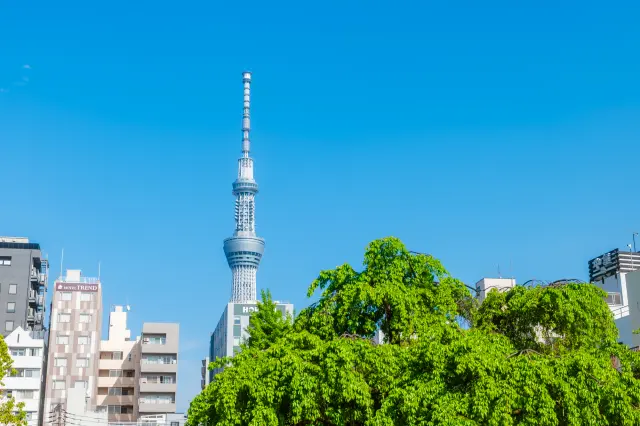 Flexible route first
Compare Cancellable Japan Hotels
Why it may fit
Use a cancellable rate to hold a workable route before the 2027 bloom forecast exists. Check the exact deadline, total price and city tax before booking.
Before booking
Check the live price, availability, eligibility, and terms before paying.
Our editorial check does not rely on a crossed-out price or a vague claim that every hotel becomes twice as expensive. We compare the same city, dates, occupancy, room type and cancellation conditions, then record the final total and free-cancellation deadline. If a flexible rate is acceptable, save the booking and calendar that deadline in Japan time; you can reassess it when the forecast becomes useful.
Three to Five Months Out: Reserve What Has Real Capacity
By November and December, prioritize inventory that is genuinely scarce: a small ryokan, a special room type, a restaurant with a tiny counter, or a ticketed experience you would regret missing.
Do not turn every meal and evening into a reservation. Weather, jet lag and crowds all become harder to manage when the day has four fixed appointments. One anchor booking per day is usually enough.
This is also the time to check passport and entry requirements before non-refundable payments. Use the Japan visa calculator as a starting point, then verify the result with the responsible embassy or Japan's Ministry of Foreign Affairs.
If you are deciding whether to insure prepaid costs, read the trip cancellation insurance guide before buying. Then use the Japan travel insurance selector to choose a first quote by residence and trip shape. A policy does not insure a known forecast change retroactively, and “cancel for any reason” is not a default feature. Read the certificate issued for your country and dates.
When the First Forecast Arrives: Change the Plan Carefully
For the 2026 season, Japan Meteorological Corporation released its first forecast on December 18, 2025 and planned the next update for January 8. That was earlier than many travelers expect. It is evidence of one provider's 2026 schedule, not proof that a 2027 forecast will arrive on the same day.
When the first 2027 forecast appears, record:
- provider and publication date;
- predicted opening and full-bloom dates;
- whether the date refers to a city sample tree or an individual viewing location;
- the next scheduled update;
- what it would cost to change the route now.
Then wait for at least one update before making an expensive change unless your current booking is about to become non-refundable. Early forecasts are most useful for broad direction. They cannot tell you whether wind or rain will shorten the display at one garden months later.
Forecast, Observation and “Best Viewing” Are Different
| Label | What it answers | Best use |
|---|---|---|
| Normal date | What happened on average in 1991–2020 | Choosing a broad travel window |
| Forecast date | What a named model predicts for the coming season | Adjusting city order and backup regions |
| Observed opening/full bloom | What the official sample tree has reached | Understanding city-level progress |
| Local best-viewing report | What an individual park or district looks like | Choosing tomorrow's outing |
Many weak cherry blossom guides collapse all four into one calendar. Keep them separate and the uncertainty becomes manageable.
One Month Out: Trains, Tickets and Route Fine-Tuning
Map every long-distance journey, then buy only the pass or tickets your route justifies. Cherry blossom season does not make the nationwide JR Pass cheaper.
SmartEX says eligible Tokaido, Sanyo and Kyushu Shinkansen reservations can be requested up to one year ahead, but a request made more than one month before travel does not yet confirm the exact train and seat. Other JR companies and private railways use different windows. Read the operator's rule for each route rather than assuming one nationwide deadline.
Run the actual cities through the JR Pass Calculator. For many Tokyo–Kyoto–Osaka trips, individual tickets cost less than a nationwide pass. The JR Pass value guide explains the current prices and Nozomi restrictions.
At the same time, make three flexible lists for each base:
- an early-bloom or warmer option;
- a normal central-city option;
- a later, cooler or higher-elevation option.
You do not need thirty parks. You need three sensible choices that fit the same hotel.
Bloom Week: Use the Forecast Without Chasing It
During the trip, check the responsible weather service, local tourism page, venue account and transport operator. Do this in the evening, then commit to one area the next morning.
The expensive failure mode is chasing a status report across the country after it is already stale. A park marked “full bloom” yesterday may still be beautiful, but the best light, rain and crowds are local problems—not reasons to abandon Kyoto for a same-day trip to Tokyo.
Choose compact areas. In Tokyo, pair one riverside or park outing with nearby neighborhoods. In Kyoto, group eastern, northern or western sights instead of crossing the city repeatedly. Our spring clothing guide covers the layer and rain decisions that change between a sunny afternoon and a cold evening hanami.
For same-day decisions, our editorial workflow is to compare a named forecast with the venue's latest status, the hourly weather and the transport operator. We then choose among places reachable from the same hotel rather than recommending a costly cross-country chase. The source and check time matter: an undated photo or viral post is not enough evidence to rebuild a day.
Famous Places Are Only Part of Sakura Season
Japan's famous sakura sites deserve their reputation, but they are not the only places where spring happens. During the season, cherry trees bloom beside neighborhood rivers, along ordinary streets, around schools and in small parks. For travelers from countries where this is not an everyday landscape, cherry blossoms against ordinary Japanese streets—scenery different from what they see at home—can be as memorable as a headline attraction.

Leave room to notice those unplanned scenes. A tree you pass on the walk back to your hotel is not a consolation prize because it lacks a famous place name. If you spend the entire trip comparing the view in front of you with one perfect social-media frame, you can miss what makes spring in Japan feel different in the first place.
If You Miss the Peak: Move North, Uphill or to Another Variety
Missing one city's Somei Yoshino peak is not the same as missing Japan's cherry blossom season.

- Late March running early: look at cooler parts of the Fuji area, Nagano or later-blooming varieties in the cities already booked.
- Early to mid-April: consider Nagano, higher elevations and northern Tohoku as the front moves north.
- Late April into early May: JNTO points travelers toward northern Tohoku and Hokkaido, subject to that year's observations.
Do not promise yourself that one day trip will rescue the trip. Mountain weather, snow, bus reservations and travel time still apply. Compare the full day, not just the flower date.
Wind and rain matter too. Full bloom is a biological threshold on a sample tree, not a guaranteed week of perfect petals. Keep one indoor alternative—a museum, cooking experience, market or onsen—for the wettest day.
The Booking Rules That Prevent Most Expensive Mistakes
- Never call a normal date a 2027 forecast. Date-stamp the source.
- Hold a coherent route before waiting for precision. Good cancellable rooms are more useful than a speculative peak date.
- Price the replacement before cancelling the original. A free cancellation can still lead to an expensive rebooking.
- Use one anchor reservation per day. Leave room for weather.
- Calculate rail tickets from the route. Do not buy a nationwide pass because spring feels busy.
- Build the trip to succeed without perfect blossoms. Tokyo, Kyoto and Japan's food, neighborhoods and museums do not disappear when the trees shift.
The honest promise is not that this timeline will deliver one flawless peak day. It is that you will have a well-priced trip, several credible bloom options and fewer reasons to panic when a forecast moves.
Last verified September 6, 2026. No 2027 cherry blossom forecast had been released. Primary sources: JMA cherry blossom observations and definitions, JMA 2026 opening observations, JMA 2026 full-bloom observations, Japan Meteorological Corporation's first 2026 forecast, JNTO March guide, JNTO April guide, and SmartEX reservation periods. Forecasts, fares, inventory and cancellation terms change; verify them before payment.
Make it your trip
Still planning your Japan trip?
Pick the question on your mind. Compare your options, check the details and take one more thing off your list.

Which eSIM fits your Japan trip?
Maps, messages, hotspot use: compare five providers by data allowance, network and plan limits before you choose.
Find my Japan eSIM
What should your travel insurance cover?
Compare medical cover, cancellation and activity limits across five options, with the exclusions worth checking.
Compare cover & limitsWould a JR Pass save you money?
Add your train journeys and compare individual tickets with the nationwide pass. See which costs less for your route.
Calculate my rail costsFrequently Asked Questions
If your dates are fixed, start comparing flights and reserving cancellable hotels in September or October 2026. Do not wait for a precise 2027 bloom forecast: no 2027 forecast had been released as of September 6, 2026, and the first Japan Meteorological Corporation forecast for the 2026 season appeared on December 18, 2025.
There are no responsible city-level 2027 predictions yet. The official 1991–2020 normal dates are March 24 for opening and March 31 for full bloom in Tokyo, March 26 and April 4 in Kyoto, and March 27 and April 4 in Osaka. These are planning anchors, not promises for 2027.
For a Tokyo–Kyoto trip, a route that spans late March and early April gives you more options than choosing one supposedly perfect day. Keep the city order flexible, monitor forecasts from winter onward, and add a later-blooming backup at higher elevation or farther north.
Move north or uphill rather than abandoning the trip. Nagano, the Fuji area, northern Tohoku and Hokkaido bloom later than Tokyo in a typical sequence, while late-blooming varieties can extend the season within major cities. Check current local reports before making a costly change.
You can plan the route early, but ordinary rail inventory is not fully confirmed six months out. SmartEX accepts requests up to one year ahead for eligible Tokaido, Sanyo and Kyushu Shinkansen trips, but reservations made more than one month ahead do not yet have a confirmed train and seat. Recheck the operator's current rules for your exact route.
Some properties and dates can rise sharply, but there is no honest national multiplier. City, weekday, room type, cancellation terms and the exact bloom week all matter. Reserve a refundable rate you can accept, compare the final total including local accommodation tax, and do not cancel it for a speculative forecast without checking the replacement price.

Written by
JAPANODE
Based in Japan, sharing real travel tips & local insights for visitors. Follow us on Instagram @thejapanode for daily Japan content.
You Might Also Like
 Planning
Japan Autumn Leaves 2026: Forecast & Booking Guide
11 min read
 Planning
Japan Trip Cancellation Insurance: What Does It Cover?
10 min read
 Itinerary
10-Day Japan Itinerary: Tokyo, Mt Fuji, Kyoto, Himeji & Ise
12 min read
 Planning
What to Wear in Japan in Spring: March, April & May Packing Guide
14 min read