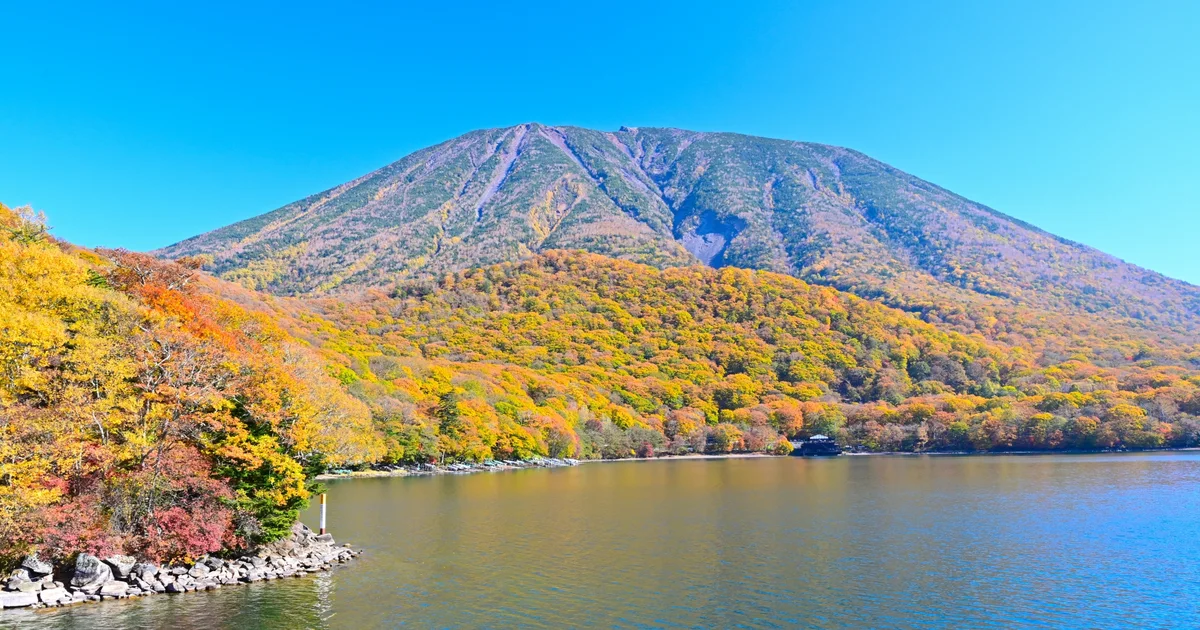
On this page
Choose one elevation zone for a Nikko autumn day trip. The high wetlands, Lake Chuzenji and the World Heritage temples do not reach their best color together, and autumn traffic can make traveling between them the largest part of your day.
Start with the place showing useful color on your actual travel dates, then build the route around reaching it and returning comfortably. A list that combines every famous waterfall, the lake, a wetland walk and the temples can look attractive on a map while leaving little time outside a bus.
This guide separates the main zones, compares dated observations from 2023–2025 and explains how to adapt a 2026 visit. For other options from the capital, see our autumn day trips from Tokyo. For the wider seasonal pattern, use the Japan autumn leaves guide.
If you would rather make a night of it, Nikko Kanaya Hotel adds a different kind of history to a temple-and-maple trip: a classic hotel with a documented Einstein visit and surviving guest books.
Tobu announces a suspension from January 16, 2026 to August 31, 2027 for construction, with a possible extension. Leave the ropeway and its observation-deck experience out of your autumn 2026 plan. Familiar photographs from this viewpoint do not mean it is currently accessible. Check the notice linked from the official NIKKO PASS page for later travel.
Source: Tobu's current NIKKO PASS all area information and service notices, checked October 11, 2026.
Choose a Route by Elevation
Think of the season moving through several landscapes rather than sweeping all of Nikko on one date. Altitude helps explain the broad sequence, but tree species, weather and the exact site still matter.
| Zone | Setting and elevation | Broad autumn planning window | A manageable focus |
|---|---|---|---|
| Yumoto and Lake Yunoko | Upper Oku-Nikko, around 1,500 m | Earlier part of October into mid-October, depending on the year | Lake scenery and a short local walk |
| Senjogahara and Odashirogahara | High wetland zone; Senjogahara around 1,400 m | Grass color can precede the surrounding trees; check separate reports through early and mid-autumn | One suitable wetland walk, with current access checked |
| Ryuzu Waterfall | Upper waterfall area above the lake | Early to mid-October is the tourism association's broad guide; actual color varies | Ryuzu plus one nearby walk |
| Lake Chuzenji and Kegon Falls | Lakeshore zone; the lake is 1,269 m above sea level | Mid-October to early November is the tourism association's broad guide | The lake plus Kegon Falls |
| Central Nikko's shrines and temples | Lower than Oku-Nikko | Later autumn, commonly late October into November | World Heritage-area visits and a nearby garden |
These windows help you choose what to investigate; they are not forecasts for a specific day. The tourism association lists the waterfall and lake windows on its official foliage page. Nikko tourism's local foliage advice describes the progression from the higher mountains toward the lower heritage area. Elevation references: Lake Chuzenji and Senjogahara Plateau.
If a report says grassland is at its best, that does not mean all the maples nearby are red. Likewise, peak at Ryuzu Waterfall should not be copied onto an entire Lake Chuzenji itinerary. Read the named location, what is changing and the date of the observation.
Current 2026 Conditions: What Was Actually Observed?
Nikko tourism's official autumn foliage report includes observations made on October 7, 2026, published on October 8. As checked on October 11:
| Location or feature | October 7 observation |
|---|---|
| Odashirogahara grassland | Grass colors at their best |
| Ryuzu Waterfall | Trees changing color; lower areas still needed more development |
| Lake Yunoko and Yudaki | Changing color |
| Trees around Senjogahara and Odashirogahara | Changing color |
This is a dated snapshot, not a live status display. Other entries on the same page may have older observation dates, so do not assign October 7 to every attraction listed there. Before traveling, reopen the official report and select your route using the newest information for the places you intend to visit.
The practical implication is to distinguish a grassland-color trip from a tree-foliage trip. If your priority is red trees around a waterfall, an attractive photograph of golden wetland grasses answers a different question. Mixed stages can still make an enjoyable day when you know what scenery to expect.
What Happened in 2023, 2024 and 2025?
For a useful comparison, the table below keeps Ryuzu Waterfall as the common location. The source is Japan-guide's dated, on-site autumn reporting, rather than a citywide forecast. The same reports also show how nearby areas differed.
| Year | Reporter visit date | Ryuzu Waterfall assessment | Useful nearby comparison |
|---|---|---|---|
| 2023 | October 17 | At peak | Yumoto was at peak; Senjogahara and Kegon Falls were approaching peak |
| 2024 | October 18 | Approaching peak | The upper waterfall was further along than the lower section; Yumoto and Senjogahara were also approaching peak |
| 2025 | October 20 | At peak | Yumoto was at peak, Senjogahara was approaching peak, and Shoyoen Garden in lower Nikko was only starting |
Sources: Japan-guide's October 17, 2023 field report, October 18, 2024 field report and October 20, 2025 field report. These are the reporter's assessments on those dates.
The comparison suggests mid-October is a useful period to investigate Ryuzu, but does not establish the first or last day of peak color. The visits occurred on different dates. It would be misleading to calculate an exact delay from this table or say every autumn peaks on October 18.
It would also be misleading to compare the October 7, 2026 “changing” report directly with a past October 20 “peak” report and declare 2026 late. They describe different points in the month. Use the history to set expectations, then let current observations decide the route.
Autumn does vary from year to year. For travelers, the particularly useful difference from a single blossom forecast is that Nikko offers several elevations, tree types and grassland scenery. You may be able to change the destination within the region even when you cannot change your holiday dates.
Three Routes That Keep the Day Manageable
These are suggested sequences, not timetabled tours. Check the current Tobu Bus Nikko route and timetable page before selecting departures. The number of stops should shrink if the road journey is running late.
Route 1: Lake Chuzenji and Kegon Falls
Choose this when the lakeshore is the priority or you want a comparatively focused first visit to Oku-Nikko. Travel from the station area toward Chuzenji Onsen, then concentrate on the lake and Kegon Falls. Eat in the same general area instead of adding a long detour for lunch.

This route still uses Irohazaka, so it does not remove the traffic problem. Its advantage is limiting the amount of onward travel after you reach the lake. Keep any extra stop conditional on the return-bus situation and your energy.
Leave Akechidaira out of the 2026 plan. Do not substitute an unofficial roadside stop to imitate the view while the ropeway is closed. The lake and waterfall provide a complete focus without trying to reproduce a particular promotional photograph.
Route 2: Ryuzu Waterfall and One Upper-Area Walk
Choose this when recent reports favor Ryuzu or the upper zone and outdoor scenery matters more than visiting the temples. Pick one additional walking area after checking the available daylight, weather, trail conditions and buses.
A waterfall stop plus a selected section of Senjogahara is a different commitment from completing an extended wetland walk. Decide the actual start and finish stops before boarding, and know which return service you intend to use. Do not treat “Senjogahara” as a single quick photo stop when your chosen walk finishes somewhere else.
Yumoto and Lake Yunoko can instead be the main destination. If reaching them consumes more time than expected, stay with that local scenery and drop the extra waterfall stop. An upper-area day should not rely on adding the World Heritage temples after the journey downhill.
For Odashirogahara, check current access and any separate local transport requirements rather than assuming your main-road bus pass serves every trailhead. The Tobu Bus service notices are the place to begin checking the day's transport arrangements.
Route 3: Lower Nikko and the World Heritage Area

Choose this when lower-area reports are more promising, when the heritage sites are your main reason for visiting, or when an upper-road journey would leave too little time. For example, start around Shinkyo, then choose Rinnoji and Shoyoen Garden, Toshogu, or both if time allows, with a proper lunch break.
This route avoids climbing Irohazaka, but it is not a guarantee of empty streets or immediate entry. Popular heritage sites have their own crowds. The benefit is staying within one lower-area itinerary instead of committing to a distant lake return.
Check the individual admission arrangements for the places you choose. A regional transport pass should not be interpreted as one combined ticket to all temples and shrines. If you want cultural interpretation, a local guide may add value; compare the named sites and admissions in the actual tour description.

Irohazaka Traffic: Plan the Return First

Nikko's official 2026 congestion forecast includes a heavy-congestion category of 120 minutes or more between the station area and Lake Chuzenji. That is a planning forecast for affected days, not a promise of how long any specific bus will take.
Buses share the road congestion. A bus pass changes payment and coverage; it does not create a traffic-free route. Driving or joining a coach tour also does not remove the road bottleneck, so choose those options for their other benefits rather than a guaranteed faster journey.
Before Leaving the Station Area
Look at the current information, your planned return train and the amount of usable time left. If delays already make the upper route unrealistic, choose the lower-area day before spending much of the trip on the road.
For a Tokyo day trip, a late arrival in Nikko makes this decision particularly important. A reserved train home should not depend on taking the last theoretically possible bus from the lake. Give the return a meaningful buffer and understand the ticket rules if you need to change your train.
Once You Are in Oku-Nikko
If the outbound journey runs long, drop the most distant optional stop. Have lunch near the area you are already visiting and start monitoring the return earlier. Adding another viewpoint is rarely worth turning every later connection into a deadline.
Save the route map and your intended stops on your phone. Carry enough battery for schedule checks, and arrange mobile data before the trip if needed; our Japan eSIM guide explains the options. Coverage and a charged phone support planning, but neither makes an unreliable connection reliable.
When an Overnight Stay Helps
An overnight stay in the Lake Chuzenji or Yumoto area can separate the road transfer from the main sightseeing day. Nikko tourism's local crowd-avoidance advice recommends using an upper-area stay to help visit before the main arrival flow.
A practical two-day structure is an upper-area walk on one day and the lower heritage area on the other. Confirm accommodation location, meal arrangements and the buses you need. Staying somewhere labeled “Nikko” does not automatically put you beside Lake Chuzenji.
Stay at Nikko Kanaya Hotel, Where Einstein Signed the Guest Book
Let the hotel be part of the sightseeing. A stay at Nikko Kanaya Hotel pairs autumn walks around Shinkyo and the temples with an evening in a place that has welcomed travelers for generations. It suits a trip where you want time for both the scenery and the stories behind it.
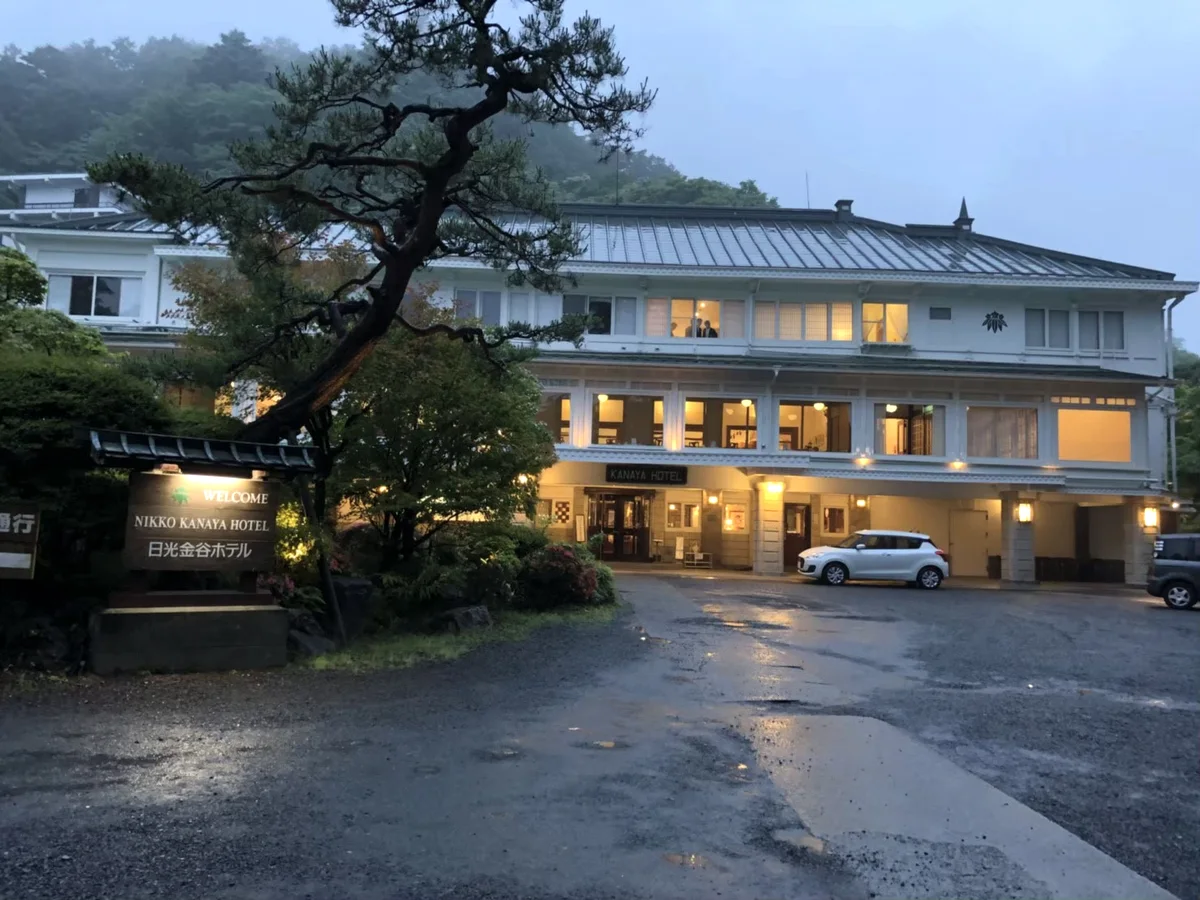
I stayed at Nikko Kanaya Hotel around 2018, and I felt its history throughout the building. The photographs below are my own, from that visit: the building at dusk, the dining room, the decorated ceiling and the staircase. They show why the hotel itself can become part of a Nikko trip.
The year is approximate, and these are older photographs, not a report on today's rooms or facilities. We have gently corrected their brightness while retaining the original scene. The historical facts and current booking details below are checked separately from that personal memory.


Einstein's Visit Has a Paper Trail
The hotel's official history dates Albert Einstein's stay to December 4, 1922; Helen Keller is another recorded guest. The Kanaya Hotel History House goes further than a list of famous names: its website reproduces the 1922 guest book bearing Einstein's signature.
That is a compelling reason to slow down here. You can explore the hotel's story before your trip, then look for the architectural details that connect today's stay with its long past. Ask the hotel which historical materials are currently on view if seeing a particular original document matters to you; the online archive is not a promise of a specific exhibition during your stay.
Historic Character, with Different Generations of Rooms
The hotel traces its origins to Kanaya Cottage Inn, founded in 1873, and moved to its current location in 1893. The original cottage is now the separate Kanaya Hotel History House, an additional visit for travelers interested in the beginnings of foreign tourism in Japan.
At the present hotel, registered historic buildings and carved details give you something to explore beyond your room. Its heritage guide identifies a revolving entrance door already in use before the main building's 1936 remodeling, as well as decorative carvings in the dining areas.
The hotel has continued to evolve: the Annex Royal House reopened after renovation in July 2023. Compare the building and room category when booking. Preserved historic character does not mean every bedroom is unchanged from Einstein's visit, and a standard reservation does not promise his former room.

Why It Fits an Autumn Overnight
Nikko Kanaya Hotel is a lower-Nikko base near Shinkyo and the heritage district. The hotel's English site places Toshogu about a 15-minute walk away. A suggested stay is to devote one day to the shrines and temples, return for a relaxed evening, then use the next day for another lower-area walk or an early departure toward the lake if conditions suit.
Choose it for historic atmosphere and the temple district. If your main aim is waking beside Lake Chuzenji before the uphill traffic builds, a lake-area stay fits that goal better. Chuzenji Kanaya Hotel is a separate property: check the full hotel name before paying. Sleeping at Nikko Kanaya Hotel does not remove the Irohazaka journey from an Oku-Nikko day.
Compare the exact room, meal inclusions, cancellation terms and total for your dates. If historic architecture is central to your stay, ask about the building and room before booking instead of choosing solely by the cheapest category.
Nikko Kanaya Hotel — A Historic Autumn Stay
Make the hotel part of your Nikko trip
Best for
Travelers who want historic character and time around Shinkyo and the World Heritage temples.
Before booking
Located in lower Nikko; Lake Chuzenji still requires the uphill journey, and rooms vary by building.
Why it may fit
A classic hotel with a documented 1922 Einstein visit, historic architecture and a base near Nikko's temples. Compare the room category and meal plan for your dates.
Compare your stay
Check the same dates, room, meals and cancellation terms on each site.
* Affiliate link — JAPANODE receives a commission when a purchase is attributed to this link
Illustrative image. The actual product, venue, or experience may differ.
We may earn a commission if you book through these links, at no additional cost to you. I stayed here around 2018; current room categories, facilities and booking terms may differ from that visit.
Rail Tickets, Bus Passes and Tour Choices
For travel from Asakusa, compare the NIKKO PASS all area with your actual route. If you use a limited express, its reserved-service ticket is separate from the basic fare covered by the applicable pass; see Tobu's limited-express purchasing guide.
The important bus question is how far the product covers. A pass suited to the World Heritage area may not cover the upper destination you have chosen. Compare the operator's Nikko bus-ticket options after drawing the route, then check validity dates and any separate local services.
For a traveler already using a nationwide JR Pass, examine the JR route separately. Do not assume it covers Tobu services or local buses just because the destination is the same. The JR Pass calculator is useful for the broader itinerary; local transport and non-JR supplements still need their own checks.
A tour can be useful if you want a guide and coordinated transport. Before booking, check the actual stops, walking expectations, included admission and approach to congestion. A tour showing Lake Chuzenji, several waterfalls and the temples may spend a significant part of the day traveling; decide whether that matches your priorities.
Choose a Tour Date for the Foliage You Want
Choose your priority location first, then the date and tour. For Ryuzu Waterfall and Lake Yunoko, start with early to mid-October; for Lake Chuzenji and Kegon Falls, investigate mid-October through early November; for lower Nikko's temple-area maples, look toward late October and November. These are broad planning windows, not promises. Use the elevation table and the 2023–2025 observations above, then check the latest official report for the exact stop you care about.
If your travel dates are fixed, reverse the process: choose the area most likely to suit those dates. A tour can combine a green lower district with colorful mountains, or a colorful lower district with upper trees already bare. Do not expect every stop on a full-day itinerary to reach peak color together. Confirm that your priority location is an actual stop on the selected tour, with enough time there, rather than an optional addition or a view through the window.
The coach tour below and the private-car option both use roads that can become heavily congested. Queues at attractions, parking areas and facilities can add further delays. The day may not follow the advertised timings: arrival times, visit order, time at stops and the return to Tokyo can change. Ask the operator how it handles disruption, and keep the evening free of tight train connections, flights or prepaid reservations.
The following are booking options we have researched, not tours we have personally taken. The first is a private vehicle tour; the second is a shared coach tour. The hotel stay described above is a separate experience, and neither listing should be read as including a night at Nikko Kanaya Hotel.
Private Vehicle: Discuss Your Main Foliage Stop
Activity 831451, offered by Tourist Attractions, advertises a customizable private day from Tokyo with pickup. Agree on a realistic main area and a short list of stops before booking; a long menu of attractions is not a promise that all can fit into an autumn day.
Some of the first tour's promotional images look unusually vivid to us. Treat them as inspiration, not a reliable preview of the colors, weather or exact viewpoint you will see. We cannot verify how those images were produced. Compare recent official foliage reports and visitor photographs, and choose your date for the actual location rather than the most dramatic promotional picture.
Check the replacement for Akechidaira before paying. On October 11, 2026, the listing still named Akechidaira Ropeway Observation Deck in its itinerary, despite the official suspension described above. Ask the operator to confirm a feasible route for your date without the ropeway, plus any admission costs and optional stops.
Private Nikko Day Trip from Tokyo
A private-vehicle option for discussing a route around the foliage location you most want to see. Confirm the actual stops before booking.
Best for
Travelers who want to agree on a focused route with the operator.
Before booking
Promotional colors may differ markedly from your visit. Road and site congestion can delay the day; confirm the replacement for the closed Akechidaira Ropeway.
Live price & availability
Powered by GetYourGuide · we may earn a commission at no extra cost to you. Check the private tour's current itinerary and dates
Shared Coach: Toshogu, Kegon Falls and Lake Chuzenji
Activity 862525, operated by AMIGO TOURS JAPAN GK, lists coach transport from Tokyo, Toshogu, Kegon Falls and Lake Chuzenji. This is a broader sightseeing day crossing different foliage zones, so choose it when the combination appeals even if only part of the route has its best color.
The listing describes Shinkyo as a view from the bus in its itinerary; do not assume a dedicated bridge walk. Toshogu admission depends on the option selected, and lunch is listed with the premium option. Check these choices on the booking page. The operator also notes that traffic, weather and road conditions can change the order of visits. Treat the published return time as a plan, and allow for a later arrival in Tokyo.
Nikko Coach Day Trip: Toshogu, Kegon Falls and Lake Chuzenji
A shared coach option combining the lower shrine district with the lake and waterfall. Choose the date for your priority foliage zone.
Best for
Travelers who want transport and a guide for a mixed heritage-and-scenery day.
Before booking
Heavy road and attraction congestion can disrupt the schedule and delay the return. The stops do not peak together; shrine admission and lunch depend on the booking option.
Live price & availability
Powered by GetYourGuide · we may earn a commission at no extra cost to you. Check the coach tour's current options and dates
GetYourGuide activity details checked October 11, 2026 using the listings linked above. Prices, availability and inclusions are controlled by the option you select. These are affiliate placements; JAPANODE may earn a commission if you book, at no additional cost to you.
Clothing, Walking and What to Carry
Pack for the destination's altitude and the forecast, not just the weather in Tokyo. A day that begins on a warm city platform can include a much colder wait beside a high lake. Bring an extra layer, rain protection and shoes suitable for your chosen walk.
Wet leaves, steps and boardwalks need more attention than a paved city route. Check trail or facility closures before setting out, and turn a long walk into a shorter local visit if the weather makes that the more enjoyable choice. See our autumn clothing guide for packing context.
Carry snacks and allow a real meal break, especially if buses are delayed. Keep large luggage out of a walking day where practical. If you use storage, check collection hours against your return route in advance; our Japan luggage storage guide covers the main options.
For future years, keep the elevation-based route choice but recheck every dated condition, closure and transport notice. The most useful plan is one with a clear main destination and an easy stop to drop if the day changes.
Sources checked October 11, 2026. Current foliage conditions are dated official observations; historical conditions are attributed field reports. The Kanaya Hotel memory and photographs come from a personal stay around 2018. Route choices and tour assessments are research-based suggestions, not accounts of taking the featured tours.
Make it your trip
Still planning your Japan trip?
Pick the question on your mind. Compare your options, check the details and take one more thing off your list.
Would a JR Pass save you money?
Add your train journeys and compare individual tickets with the nationwide pass. See which costs less for your route.
Calculate my rail costs
Which eSIM fits your Japan trip?
Maps, messages, hotspot use: compare five providers by data allowance, network and plan limits before you choose.
Find my Japan eSIM
How much can you fit into one week?
Connect Tokyo, a Fuji or Hakone day trip, Kyoto and Osaka with a day-by-day route, travel costs and booking advice.
Explore the 7-day routeFrequently Asked Questions
There is no single peak for all of Nikko. Higher areas around Yumoto and Senjogahara generally change earlier, Lake Chuzenji follows its own local progression, and the lower shrine and temple area is usually a later-autumn choice. Select a zone using recent observations and treat monthly windows as broad guidance.
It may be possible with favorable connections, but autumn road congestion makes a full temple visit plus the lake and upper wetlands an unreliable day-trip plan. Choose a main zone and make any second area optional, or stay overnight for two focused days.
No. Tobu announces a suspension from January 16, 2026 to August 31, 2027 for construction, with a possible extension. Do not include the ropeway in a 2026 autumn route; check the operator before planning a later visit.
Nikko's official 2026 congestion forecast includes days when the journey from the station area to Lake Chuzenji is predicted to take two hours or more. This is a forecast rather than a guaranteed journey time. Buses share the affected roads, so protect your return journey and shorten the route if needed.
A limited-express ticket is separate from the basic fare coverage of the applicable Tobu Nikko pass. Check both your rail reservation and the bus area included in the pass; a World Heritage-area product is not automatically valid for an Oku-Nikko itinerary.
Dated Japan-guide field reports rated Ryuzu Waterfall at peak on October 17, 2023, approaching peak on October 18, 2024, and at peak on October 20, 2025. These are observations on different visit dates, not a record of the first peak day or proof of an exact annual delay.
Yes. The hotel's official history records his stay on December 4, 1922, and the Kanaya Hotel History House website reproduces his signed 1922 guest-book entry. The hotel retains historic architecture and furnishings, but has also undergone renovations; an ordinary booking does not guarantee his former room.
Choose the place whose foliage matters most to you first, then compare its usual seasonal window, the 2023–2025 observations and current local reports with your available dates. Upper Oku-Nikko, Lake Chuzenji and the lower temple area peak at different times. If your dates are fixed, choose a route that fits them rather than expecting every stop to be at peak.
No. Coaches and private vehicles share congested roads, and popular sites can also have queues. Travel times, visit order, time at stops and the return to Tokyo may differ from the advertised schedule. Keep the evening flexible and confirm the operator's plan for delays and closures before booking.

Written by
JAPANODE
Based in Japan, researching practical travel routes, seasonal conditions and transport decisions for visitors.
You Might Also Like
 Planning
Japan Autumn Leaves 2026: Forecast & Booking Guide
11 min read
 Day Trips
9 Best Autumn Leaves Day Trips from Tokyo in 2026: Nikko, Mt. Fuji, Hakone & More
9 min read
 Itinerary
7-Day Japan Itinerary for First-Timers: Tokyo, Hakone, Kyoto & Osaka (2026)
20 min read
 Planning
What to Wear in Japan in Autumn: September, October & November Packing Guide
11 min read