On this page
Quick answer: the best Kyoto rainy-day picks
For most first-time visitors, the best indoor Kyoto experience is Tea Ceremony Ju-An at Jotokuji Temple. It is distinctly connected to Kyoto, lasts about 70 minutes and has far more public review evidence than most small workshops. Choose the samurai sword class if you want to move rather than sit, chopstick making for a short craft, or the sumo show for energetic evening entertainment. If you do not want to reserve anything, the Kyoto Railway Museum is the strongest family backup and Kyoto Station with Porta is the easiest zero-planning refuge.
This is a researched comparison, not a claim that JAPANODE personally attended every activity. We checked current operator information and looked for recurring themes across recent verified traveler reviews, including complaints and practical limitations. Ratings, review counts, availability and cancellation terms change; the booking widgets below show the latest marketplace information for the date you select.
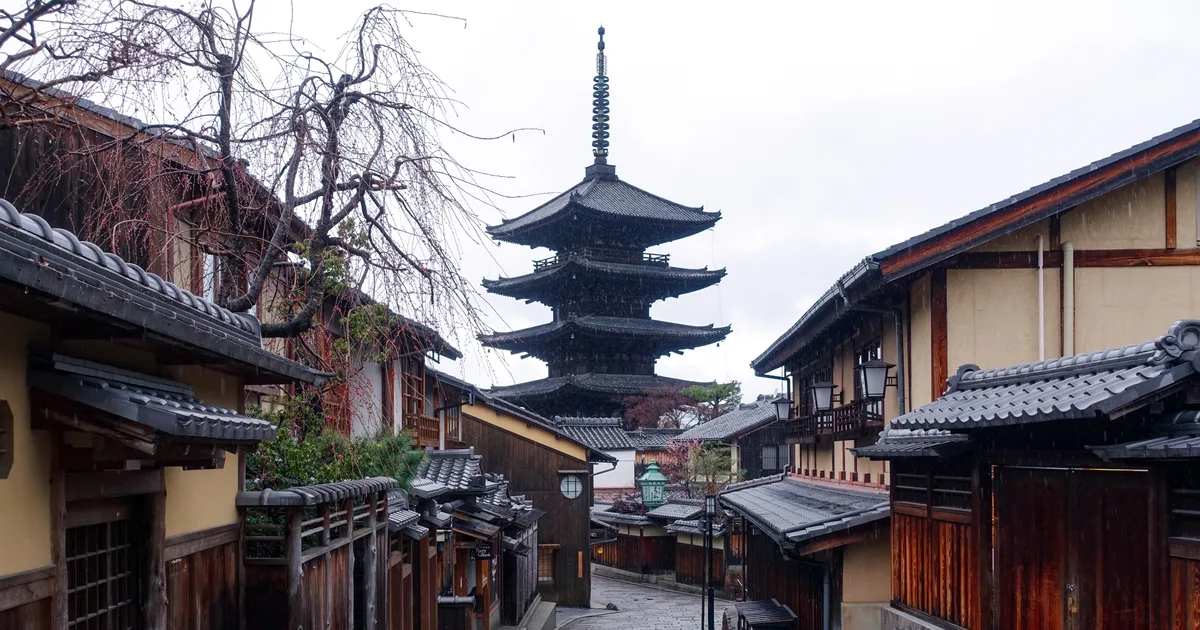
JAPANODE may earn a commission if you book through GetYourGuide links on this page, at no extra cost to you. That relationship does not change the order of our recommendations. All JAPANODE editorial photos in this guide are illustrative and may not show the exact venue or activity. Images inside GetYourGuide widgets are supplied by GetYourGuide or the activity provider and may show a particular option rather than every available session.
Quick comparison: 12 indoor and mostly indoor options
| Activity | Best for | Area | Time to allow | Booking risk | Rain exposure | Main limitation |
|---|---|---|---|---|---|---|
| Tea Ceremony Ju-An | Best overall | Gojo | 70–90 min | Book ahead | Low after arrival | Three steps into the tearoom |
| Samurai sword class | Active culture | Sanjo/Higashiyama | 1.5–2 hr | Book ahead | Low | No observer-only admission |
| Gion chopstick making | Short craft | Higashiyama | About 1 hr | Medium | Low | Check age and access rules |
| Sushi-making workshop | Food and lunch | Kiyomizu-Gojo | About 1.5 hr | Book ahead | Low | Dietary limitations |
| Kyoto sumo show | High-energy show | Venue varies | 75–90 min | Book ahead | Low | Not an official tournament |
| Geisha or maiko show | Performing arts | Option varies | 60–105 min | Book ahead | Option-dependent | Dance is only part of the session |
| Samurai Ninja Museum | Compact family activity | Central Kyoto | About 1 hr | Medium | Low | Guided rather than a large museum |
| Kyoto Railway Museum | Families and train fans | Umekoji | 2–3 hr | Lower | Low after approach | Usually closed Wednesday |
| Kyoto International Manga Museum | Flexible central stop | Karasuma Oike | 2–3 hr | Lower | Low | English reading selection varies |
| Kyoto Aquarium | Younger children | Umekoji | 2–3 hr | Lower | Mixed | Park approach and some exposed areas |
| Okazaki museum cluster | Art and crafts | Okazaki | 2–4 hr | Exhibition-dependent | Mostly low | Short outdoor transfers |
| Kyoto Station and Porta | Zero-planning fallback | Kyoto Station | Flexible | None | Very low | Convenient rather than uniquely Kyoto |
“Indoor” does not mean zero rain. A workshop can be completely sheltered once it starts while still requiring a ten-minute walk from the station. On a genuinely wet day, the best choice is often the one with the simplest station-to-door route, not the one with the highest star rating.
How we selected activities and used public reviews
We assessed each option on four questions: how much of it is truly indoors, how specifically it feels connected to Kyoto, how much reliable review evidence exists, and how difficult it is to reach in rain. We also checked age rules, mobility information, cancellation cutoffs, dietary restrictions and whether a same-day alternative exists nearby.
Review scores are useful only with context. A 4.9 rating based on thousands of bookings is more established than a perfect score from a small early sample. We therefore paraphrase repeated themes from multiple public reviews instead of treating one enthusiastic or disappointed comment as a promise. All GetYourGuide review figures mentioned below were checked on October 1, 2026; use the live widget for the current number.
We excluded several places that are often called rainy-day attractions but still involve long outdoor routes. Temples can be beautiful in light rain, and Nishiki Market has a covered arcade, but neither is a reliably dry substitute for a booked indoor session. If rain is only intermittent, use our 4-day Kansai itinerary for outdoor-area planning and keep one option from this guide as your fallback.
1. Join Tea Ceremony Ju-An — best overall Kyoto experience
Tea Ceremony Ju-An is our best all-around choice because it combines a weather-resistant format with a setting that still feels rooted in Kyoto. The current GetYourGuide listing describes a 70-minute English-language session at Jotokuji Temple, with groups limited to ten. At our check, it held a 4.9/5 score from 3,780 reviews—substantially more evidence than most workshops on this list.
The experience includes an explanation of tea etiquette and meaning, a professional demonstration and a chance to whisk matcha. Across recent verified reviews, travelers repeatedly praise the calm setting and clear explanations. The recurring practical criticism is the meeting point: Kyoto has similarly named places, so save the exact address and map pin offline and arrive early rather than searching in the rain.
The operator specifically tells rainy-day guests that they may wait under the shop gable or in the Grand Tearoom. Accessibility needs closer attention. The temple itself is described as accessible, but the tearoom has three steps and is listed as unsuitable for wheelchair users. Seats or stools may be available for guests who cannot sit on the floor.
If you want to compare this with other formats, locations and accessibility arrangements, use our dedicated Kyoto tea ceremony guide. For a disrupted first-time itinerary, however, Ju-An is the simplest default.
Check Tea Ceremony Ju-An availability
A calm, beginner-friendly tea ceremony at Jotokuji Temple with cultural explanation, a demonstration and a chance to whisk matcha.
Best for
First-time visitors who want a distinctly Kyoto experience without spending half a day outdoors.
Before booking
The temple is accessible, but three steps lead into the tearoom and the listing marks it unsuitable for wheelchair users.
Live price & availability
Powered by GetYourGuide · we may earn a commission at no extra cost to you. Open the tea ceremony listing
2. Learn samurai sword movements — best active indoor class
This class is the strongest choice for travelers who want participation rather than observation. It introduces Kenbu, a stylized sword-performance tradition. That distinction matters: this is choreographed cultural instruction, not combat training and not permission to handle a weapon outside the controlled class.
The current listing offers 1.5- and 2-hour options, English and Japanese instruction, and groups of up to ten. Participants learn how to bow, draw and return the sword, and perform basic stylized movements. Costume, a photo session, a small keepsake and a completion certificate are listed, while the accompanying Kenbu performance is shorter or longer depending on the option.
At our review check, the activity had a 4.9/5 score from 846 reviews. Positive comments commonly focus on patient instruction, the costume and photographs, and the performance. One useful critical theme is that the shorter option can feel light on actual practice. If the price difference is reasonable for your date, compare what the longer option adds rather than booking purely by the cheapest displayed rate.
It is not suitable for children under four. The operator also says there is no observer-only admission, no waiting room and no space for large luggage. Instruction is designed around adults, so families with children aged five to ten should read the participation note before booking. Wear clothes that make costume changes and movement easy.
Check samurai sword class availability
A participatory Kenbu class covering bows, stylized sword movements, costume and photographs in a controlled indoor setting.
Best for
Active travelers and older children who prefer doing something to watching a show.
Before booking
There is no observer-only admission, waiting room or space for large luggage; the shorter option may feel light on practice.
Live price & availability
Powered by GetYourGuide · we may earn a commission at no extra cost to you. Open the samurai class listing
3. Make chopsticks in Gion — best short craft and souvenir
A chopstick-making workshop works well when rain has created an awkward one-hour gap between Higashiyama plans. You leave with something small enough to pack, and the activity asks more of you than simply choosing a souvenir from a shelf.
The workshop is near Yasaka Pagoda in southern Higashiyama. The activity generally involves choosing wood, shaping and smoothing the chopsticks, then finishing them with oil; engraving availability or charges can depend on the selected option. Check the live inclusions instead of assuming every photograph represents the base booking.
Public reviews commonly describe the instruction as approachable for beginners and value having a practical object to take home. For rainy-day planning, the main advantage is its compact duration. The limitation is location: the lanes around the pagoda are outdoors, sloped in places and can become slick, so this makes most sense when you are already in Kiyomizu or Gion rather than crossing Kyoto solely for the class.
The marketplace listing has carried age and wheelchair-access restrictions, which should be reconfirmed for your date. If anyone in your group needs step-free entry or will only accompany the participant, message the operator before paying. A “one-hour activity” also needs check-in and walking time, so leave a buffer before dinner or another timed reservation.
Check Gion chopstick workshop availability
A compact beginner workshop where you shape and finish wooden chopsticks, then take home the result.
Best for
Travelers already sightseeing around Kiyomizu or Gion who need a meaningful one-hour indoor stop.
Before booking
The surrounding lanes are exposed and can be slippery; confirm age, access and engraving charges before paying.
Live price & availability
Powered by GetYourGuide · we may earn a commission at no extra cost to you. Open the chopstick workshop listing
4. Make sushi in a small group — best food activity
Sushi making is the easiest way to turn lunch into a scheduled indoor activity. The selected workshop is designed for beginners, not as professional chef training: expect guided preparation, a meal and techniques you can understand within a short session.
The listing describes an English-language small-group format of roughly 1.5 hours. Recent public reviews repeatedly praise friendly instruction, clear pacing and the amount of food. Its review history is smaller than Ju-An's, so the score should be treated as encouraging rather than equally established.
Dietary fit is the decisive issue. The listing has stated that the workshop is unsuitable for vegetarians and wheelchair users, and food workshops cannot be assumed safe for an allergy merely because one ingredient can be omitted. Send restrictions in writing before booking and wait for a specific response about substitutions and cross-contact. If the reply is unclear, choose a museum rather than using a rainy day to test a risky meal.
This option works best around Kiyomizu-Gojo and southern Higashiyama. It is less convenient from Arashiyama or northern Kyoto, where the wet transfer can consume more time than the class saves. Treat it as lunch plus an activity, allow time to find the entrance, and check exactly what the current package includes.
Kyoto Small-Group Sushi-Making Workshop
Best for
Travelers who want lunch and a hands-on activity in one reservation.
Before booking
The listing has marked the workshop unsuitable for vegetarians and wheelchair users; confirm allergies and cross-contact directly.
Why it may fit
A beginner-friendly indoor workshop combining guided sushi preparation with the meal you make.
5. Watch a live sumo show — best high-energy entertainment
Choose the sumo show when your group wants an evening that feels energetic and easy to follow in English. The current listing describes demonstrations, explanations of rituals and techniques, staged matches, a wrestler photograph and a welcome drink. Some guests may be selected by lottery for an audience challenge, but participation is limited and should never be treated as guaranteed.
At our check, the show held a 4.9/5 score from 498 reviews and ran for 75 to 90 minutes depending on the option. Recent reviews repeatedly praise the English-speaking presentation, the balance of history and humor, and its appeal to families. The review base is still much smaller than the tea ceremony's, but it is large enough to show a consistent pattern rather than a handful of launch-week opinions.
The important expectation is printed on the listing: this is not an official sumo tournament. It is visitor entertainment built around demonstrations and matches. Travelers hoping to see a professional basho atmosphere should instead plan around the official tournament calendar; this show is for learning the basic rituals and enjoying an accessible performance indoors.
The meeting venue changes by date and option, including a venue change shown for late October 2026. Open the live booking details before planning your train route, and measure the walk from the correct station exit. For families, that final transfer can matter more than the nominal show length on a wet evening.
Kyoto Sumo Show and Experience
Best for
Families and groups who want energetic evening entertainment that is easy to follow.
Before booking
This is not an official tournament, audience participation is not guaranteed and the venue can change by date.
Why it may fit
An English-presented visitor show with demonstrations, explanations, staged matches and a wrestler photo.
6. See a geisha or maiko performance — best evening cultural show
This is the calmer alternative to the sumo show. In Kyoto, a fully trained practitioner is called a geiko, while a maiko is an apprentice. The operator says the performer may be a maiko or geiko depending on the day, so do not book on the assumption that one particular person or career stage is guaranteed.
At our check, the experience had a 4.8/5 score from 563 reviews. The live listing offers different formats lasting from about one hour to 105 minutes. The performance itself is not continuous for the whole session: the operator describes two dances totaling about ten minutes, followed by English explanation, questions, photographs and a traditional game. Reviews commonly value the close view and the opportunity to ask questions; mismatched expectations are the main avoidable problem.
Read the option names carefully. The tea-house version may include a Kitano Tenmangu session, allows up to 23 guests and is listed as not wheelchair accessible. The Gion Theater option allows up to 40 and is marked wheelchair accessible. Neither is a private or small-group performance. Meeting points also differ.
Bring socks: the listing requires them and says guests without socks may need to buy a pair. Baby strollers are not allowed. If your priority is the dance alone, this may feel short; choose it when you value context, conversation and photographs as much as stage time.
Kyoto Geisha or Maiko Show
Best for
Travelers who value cultural context and conversation as much as the dance itself.
Before booking
The dances total about ten minutes; venue, group size and wheelchair access depend on the option selected.
Why it may fit
A close-view cultural session combining two short dances with English explanation, questions, photographs and a traditional game.
7. Tour the Samurai Ninja Museum — best one-hour family option
The Samurai Ninja Museum works best as a compact guided activity, especially for families who want interpretation and interaction rather than several hours of reading display labels. Allow about an hour, then pair it with another central Kyoto stop instead of building an entire day around it.
Public feedback tends to praise guides who turn unfamiliar armor, weapons and historical roles into an accessible story. Interactive elements are often the most memorable part for children. The tradeoff is depth: travelers expecting a large institution with extensive galleries may find the guided format smaller and more structured than the word “museum” suggests.
Treat the ticket as timed entry. Check the exact start time, included demonstrations, minimum-age rules and accessibility information on the current listing. Do not assume that a child too young for one interactive component can participate in everything else, or that an accompanying adult can enter without a paid booking.
This is a useful fallback around central shopping and dining because it requires less time than the railway or manga museums. It is also a better fit than an outdoor castle or temple when the forecast has turned into steady rain. If the desired time is sold out, do not cross the city chasing another slot—use Kyoto Station, Porta or the manga museum as your lower-friction backup.
Kyoto Samurai Ninja Museum Guided Tour
Best for
Families who want a structured cultural activity that fits between central Kyoto plans.
Before booking
It is a smaller tourist-oriented guided attraction, not a large museum for independent browsing.
Why it may fit
A compact guided introduction to samurai and ninja history with displays and interactive elements.
8. Spend half a day at the Kyoto Railway Museum — best family backup
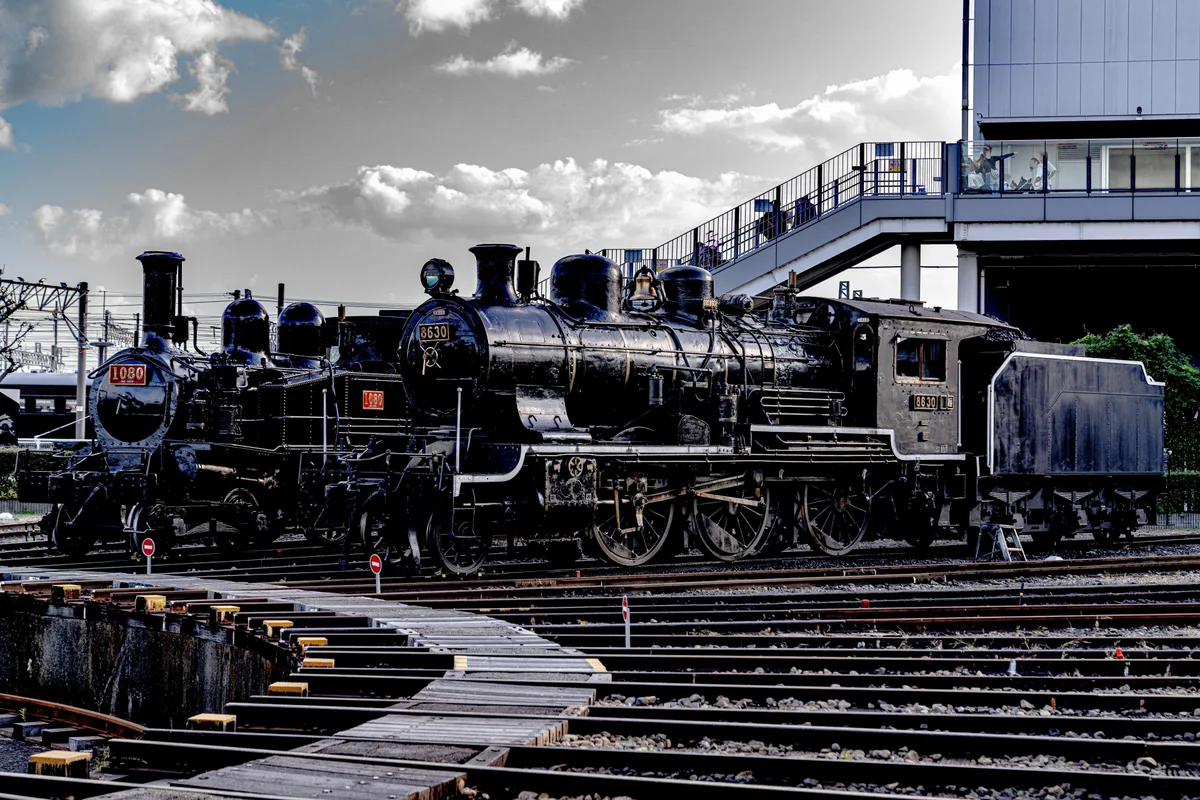
The Kyoto Railway Museum is the safest substantial choice for a family that does not want to commit to a workshop time. It covers railway history through real rolling stock, large displays and hands-on areas, so it can absorb two or three hours without feeling like a rain delay disguised as sightseeing. Train enthusiasts will get more from the technical details, but the scale and physical exhibits make it accessible to children who would not choose a conventional history museum.
As checked on October 1, 2026, the official museum site lists hours of 10:00–17:00, with last admission at 16:30. General adult admission is ¥1,500. It is normally closed on Wednesdays and from December 30 through January 1, with holiday and school-break exceptions, so use the official calendar rather than relying on Google Maps alone.
Advance admission is recommended for smoother entry, and the museum says simulator tickets require advance purchase. Other demonstrations and operating areas can change, so do not promise children a particular simulator or steam program until you have checked that date.
The museum is in Umekoji, close to Kyoto Aquarium. That pairing keeps the day geographically compact, but the park approach is not completely sheltered. Waterproof shoes still matter even when most of the visit is indoors.
9. Read and explore at the Kyoto International Manga Museum — best central flexible option
Think of the Kyoto International Manga Museum as part museum and part reading library. Its “Wall of Manga” and reading areas reward travelers who enjoy browsing, while permanent displays add history and social context. That combination makes it a flexible central stop: you can leave after ninety minutes or stay longer if the collection holds your attention.
The limitation for international visitors is language. The museum has multilingual interpretation and some international material, but most of the enormous reading collection is naturally in Japanese. Visit for the institution, exhibitions and atmosphere rather than expecting every favorite title in English.
The official hours and fees page listed 10:00–17:00, last admission at 16:30 and adult admission of ¥1,200 when checked on October 1, 2026. It normally closes on Wednesdays, or the following day when Wednesday is a national holiday. Tickets can be bought on the day or online, and same-day re-entry is allowed. Scheduled kamishibai, manga studio demonstrations and temporary exhibitions vary, so check the events calendar before promising a child a specific program.
Karasuma Oike is easier to reach than many eastern temples and has plenty of indoor food and coffee options nearby. That makes the museum especially useful when rain arrives after you have already started a central Kyoto day.
10. Visit Kyoto Aquarium — best for younger children
Kyoto Aquarium is the better Umekoji choice for younger children or anyone who needs a slower visual activity. It is mostly indoor, not perfectly rainproof: the approach through Umekoji Park is exposed, and parts of the visitor route or scheduled programs may involve outdoor or semi-outdoor areas.
The main planning advantage is location. If one child loves trains and another prefers animals, the aquarium and railway museum can share the same day without a cross-city bus journey. Kyoto Station is close enough to provide a dependable meal and shopping fallback afterward.
Operating hours and programs vary by date, and maintenance can affect access. Check the official Kyoto Aquarium site on the morning of your visit instead of copying a fixed timetable from an old blog or PDF. The same applies to feeding times and performances: they are bonuses, not the basis of a rain plan until confirmed.
Allow two to three hours for an unhurried family visit, plus the walk from the station. If rain is severe enough to make that park connection unpleasant, remain at Kyoto Station rather than treating “aquarium” as a guarantee of door-to-door shelter.
11. Build an Okazaki art-and-craft museum day — best culture cluster
Okazaki lets you build an indoor culture day without committing to one commercial experience. Start with the Kyoto Museum of Crafts and Design inside Miyakomesse. Its permanent display introduces the breadth of Kyoto’s traditional industries through objects, explanations and manufacturing videos. Craft demonstrations and hands-on programs vary by day, so treat the published event calendar as the deciding factor rather than assuming one will be running.
Then choose the Kyoto City KYOCERA Museum of Art if the current exhibition appeals to you. The building and collection galleries can be worthwhile, but special-exhibition tickets, closing days and admission areas differ. Its official information page lists general hours of 10:00–18:00 with last admission at 17:30 and a usual Monday closure, except when Monday is a public holiday.
This is a cluster, not one enclosed complex. You will need short outdoor walks between Miyakomesse, the art museum, cafes and the subway or bus stop. It works in ordinary rain with an umbrella, but not as well as Kyoto Station when wind is strong.
Check each exhibition calendar before traveling. Museums can be technically open while the gallery you wanted is changing exhibitions. The same caution applies to Kyoto National Museum, which sometimes has periods when only the garden is available; never make it your default rainy-day answer without confirming the gallery schedule.
12. Use Kyoto Station and Porta as a no-booking fallback
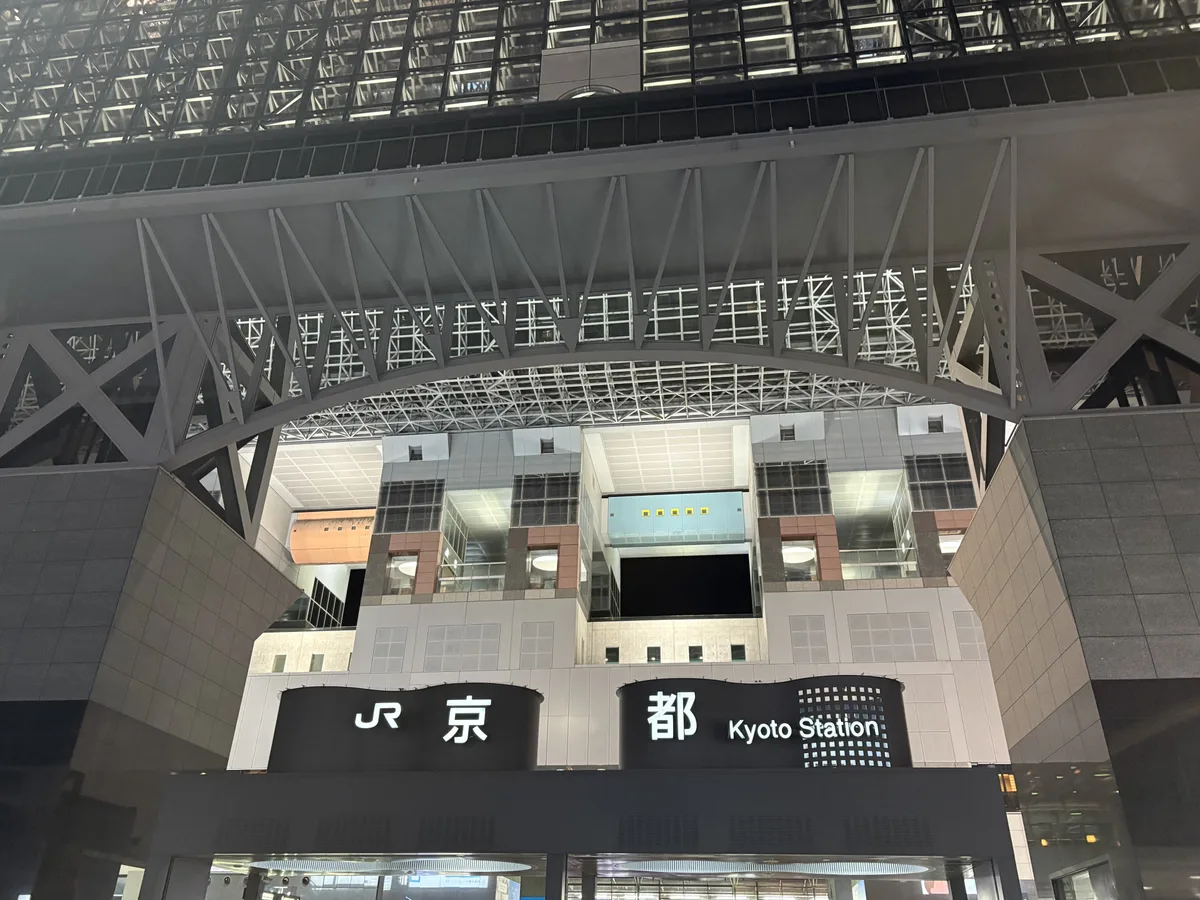
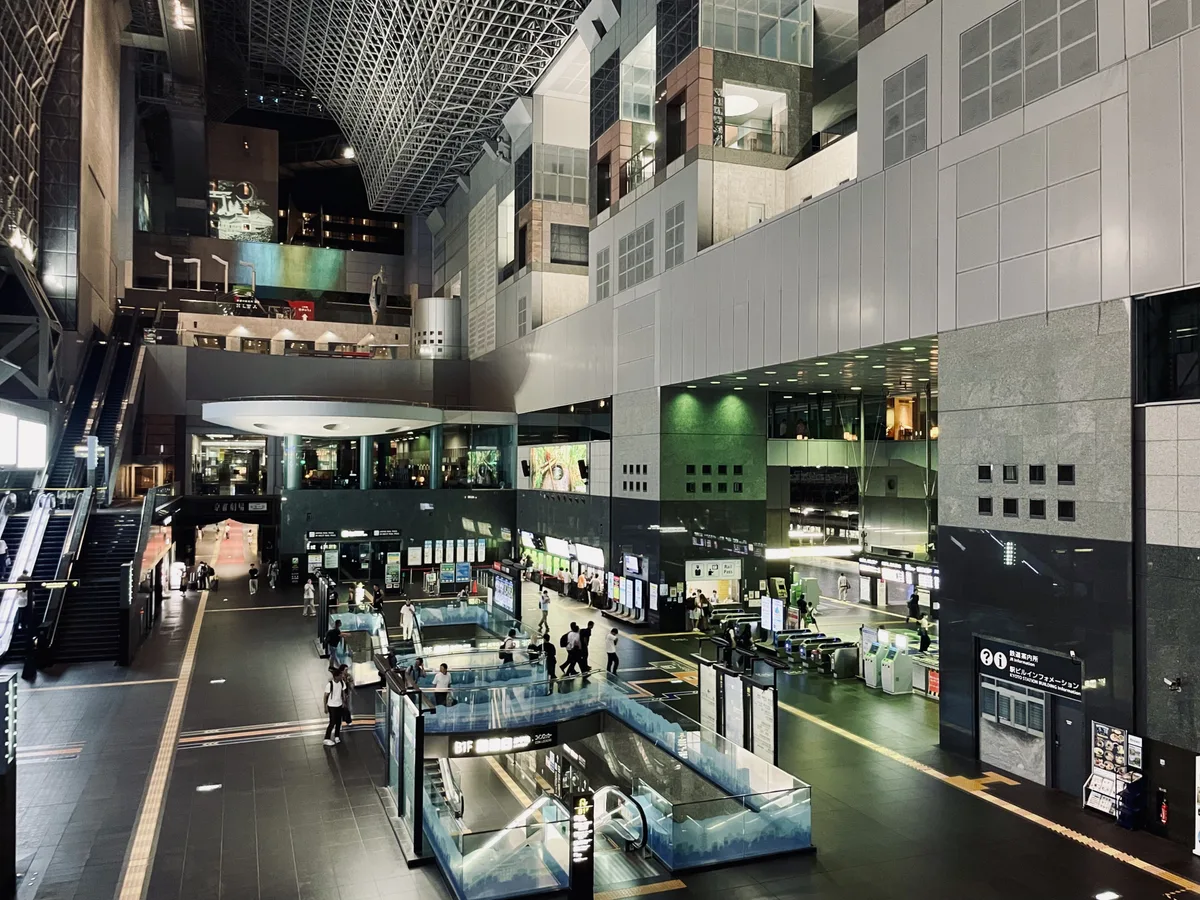
Kyoto Station and the connected Porta shopping and dining areas are the least romantic recommendation on this list—and the most useful when the weather has defeated a complicated plan. You can eat, buy practical supplies and souvenirs, find a pharmacy or bookstore, and rebuild the next day’s itinerary without another wet transfer.
Use the official Porta guide and floor information to choose a meal or shop. Individual opening hours vary. The tourist information center in the station building is also useful when weather is affecting trains or attractions, but follow railway announcements for service status rather than relying on a shopping-center directory.
Do not assume every famous part of Kyoto Station is covered. Observation areas, terraces and some transitions through the building can be exposed. If the goal is to stay dry, focus on the concourse, station-building floors and underground Porta connections instead of trying to complete an architectural sightseeing route.
This is a fallback, not a replacement for Kyoto’s cultural sites. Its value is friction: no advance booking, many food choices and immediate rail access. If a workshop sells out or a museum is closed, an hour here is better than spending the same hour on a slow wet bus to another uncertain option.
Three rain-proof Kyoto day plans by area
Kyoto Station and Umekoji: easiest family day
Start at the Kyoto Railway Museum when it opens, then move to the aquarium only if the family still has energy. Finish with dinner at Kyoto Station or Porta. This plan avoids a cross-city bus and gives you an easy exit whenever children are tired. The weak point is the outdoor connection through Umekoji Park, and Wednesday closures can remove the railway museum, so check calendars before leaving the hotel.
Central Kyoto and Gion: strongest cultural day
Reserve either Ju-An or the chopstick workshop, not both unless the times and locations connect cleanly. Add the Samurai Ninja Museum during the day and the geisha or maiko show in the evening. This produces the most Kyoto-specific rainy itinerary, but Gion’s lanes are still outdoors. Use rail where possible, identify the correct station exits and avoid adding Arashiyama simply because there is space on a map.
Okazaki and Higashiyama: art plus an active class
Book the samurai sword class first, then choose either the Museum of Crafts and Design or the KYOCERA Museum based on that day’s calendar. The areas are reasonably close, but not connected by a continuous covered route. This plan works in normal rain; on Monday, check museum closures before committing, and in wind-driven rain use a central or station-area plan instead.
Ordinary rain is not the same as hazardous weather
For ordinary rain, Kyoto remains manageable with waterproof shoes, spare socks and a realistic route. Save the correct station exit, keep an umbrella bag handy indoors and allow extra time for buses, which can slow considerably in traffic. A workshop ticket does not remove the walk to its entrance.
Heavy rain, flooding risk and typhoon conditions are different from a normal wet sightseeing day. Check the Japan Meteorological Agency warning portal and current railway notices before leaving. Follow official instructions and remain at your accommodation when travel is unsafe, even if that means losing a reservation. No indoor ticket is worth a hazardous transfer.
JMA publishes advisories, warnings and emergency warnings for different hazards and locations. Read the message for Kyoto rather than trying to judge safety from the color of a weather-app icon. Operators may keep an activity technically open while your own route to the venue is disrupted.
Booking checklist for a wet Kyoto day
- Select the exact date and group size. A product appearing in search results does not mean your time is available.
- Read the cancellation cutoff in Japan time. “Free cancellation” still has a deadline.
- Save the meeting point offline. Confirm the correct venue when a listing offers multiple options.
- Check access rules. Look for minimum age, stairs, floor seating, stroller, wheelchair and observer restrictions.
- Ask food questions in writing. Vegetarian wording does not establish allergy or cross-contact safety.
- Measure the exposed walk. Check the distance from the correct station exit to the actual entrance.
- Keep one nearby no-booking backup. A museum or Kyoto Station is more useful than a second reservation across town.
- Recheck weather and trains. Do this before leaving, not only when you booked.
Final recommendation
For a first Kyoto visit, book Tea Ceremony Ju-An. Choose the samurai sword class for an active traveler or older children, and use chopstick making or the Samurai Ninja Museum for a short gap. At night, pick the sumo show for energy or the geisha/maiko show for performance, explanation and questions.
Without a reservation, go to the Kyoto Railway Museum with children or retreat to Kyoto Station and Porta when opening calendars and weather are uncertain. The right rainy-day activity is not automatically the highest-rated one: it is the option that suits your group and avoids an unnecessary wet journey across the city. For a wider shortlist beyond Kyoto, compare our best experiences in Japan by time, weather and booking needs.
Also visiting Osaka? Our Osaka rainy-day guide compares indoor workshops, sumo and taiko shows, the aquarium and museums, with covered shopping backups and area-based plans.
Make it your trip
Still planning your Japan trip?
Pick the question on your mind. Compare your options, check the details and take one more thing off your list.
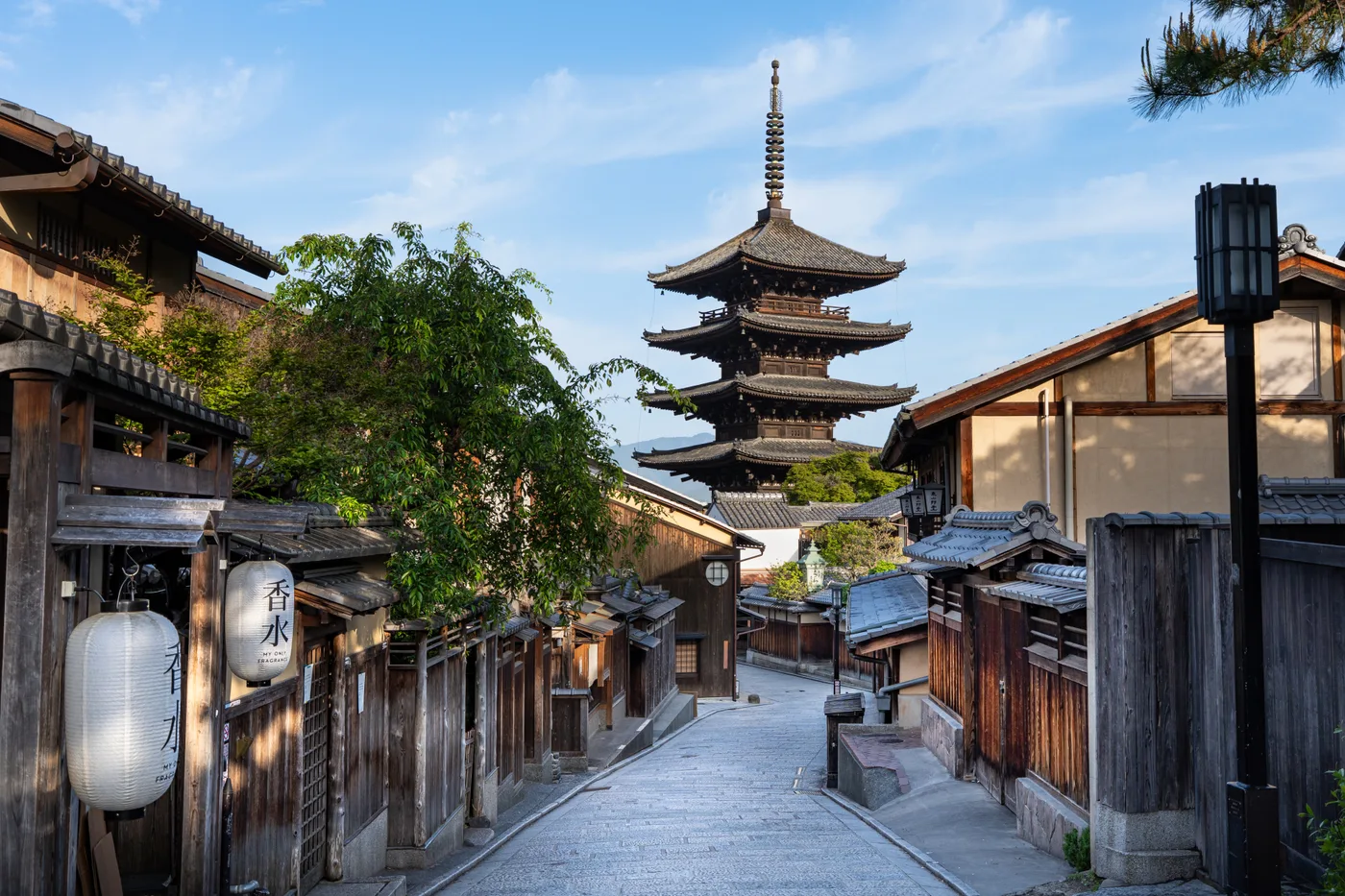
How much can you fit into one week?
Connect Tokyo, a Fuji or Hakone day trip, Kyoto and Osaka with a day-by-day route, travel costs and booking advice.
Explore the 7-day route
Which eSIM fits your Japan trip?
Maps, messages, hotspot use: compare five providers by data allowance, network and plan limits before you choose.
Find my Japan eSIM
What should your travel insurance cover?
Compare medical cover, cancellation and activity limits across five options, with the exclusions worth checking.
Compare cover & limitsFrequently Asked Questions
For most first-time visitors, a tea ceremony is the strongest all-around choice because it is distinctly associated with Kyoto, takes place mostly indoors and fits into a half day. A samurai sword class is better for an active session, while the Kyoto Railway Museum is the easiest substantial no-booking alternative for families.
The Kyoto Railway Museum, Kyoto International Manga Museum, Kyoto Aquarium and Kyoto Station's shopping and dining areas are the most dependable low-planning backups. Same-day workshop and show inventory changes, so check the exact date and participant count before relying on an available time shown in search results.
Some temples are atmospheric in ordinary rain, but most are not fully indoor attractions. Covered halls still require outdoor walks, wet stone paths and travel between buildings. This guide separates genuinely indoor activities from places that are merely partly sheltered so you can judge the rain exposure honestly.
The Kyoto Railway Museum, Kyoto Aquarium, Samurai Ninja Museum and a one-hour chopstick-making workshop are the simplest family-oriented choices. Check minimum ages, stairs, stroller rules and whether every accompanying adult needs a paid booking before reserving.
Accessibility depends on the venue. Tea Ceremony Ju-An states that the temple is accessible but its tearoom has three steps and is not wheelchair accessible. Some other operators offer chairs, tables or step-free rooms with advance notice, so compare the dedicated JAPANODE Kyoto tea ceremony guide before booking.
No indoor ticket is worth crossing the city during hazardous weather or disrupted transport. Check Japan Meteorological Agency warnings and railway notices, follow official instructions and remain at your accommodation when conditions are unsafe, even if that means missing a reservation.

Written by
JAPANODE
Based in Japan, sharing real travel tips & local insights for visitors. Follow us on Instagram @thejapanode for daily Japan content.
You Might Also Like
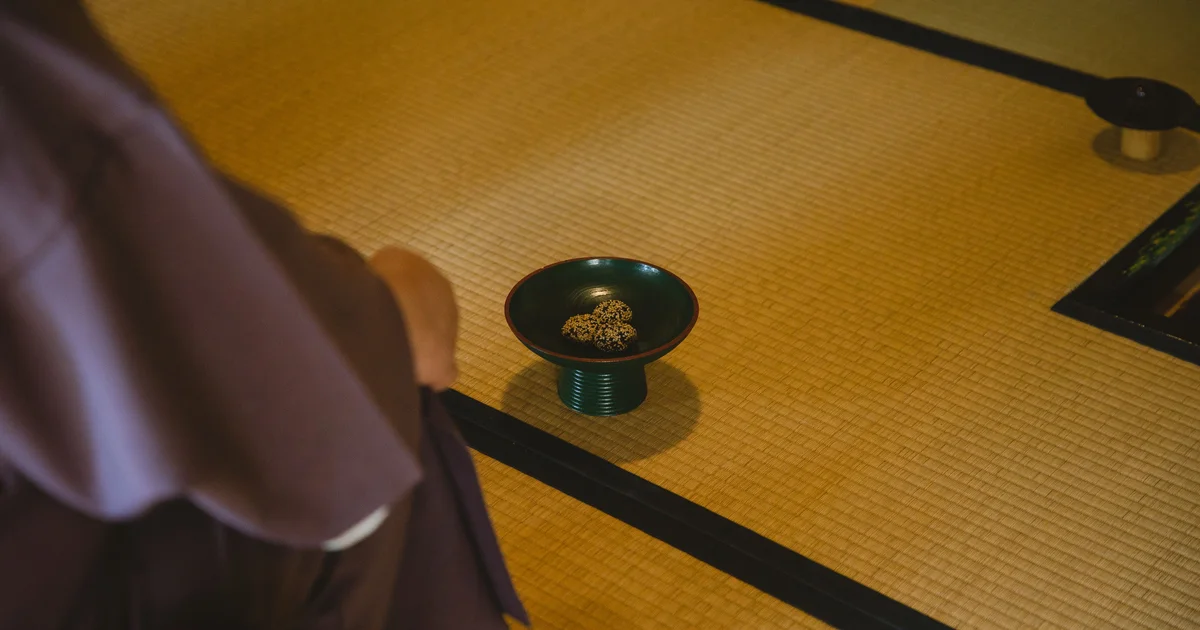 Culture
5 Best Tea Ceremony Experiences in Kyoto (2026 Comparison)
16 min read
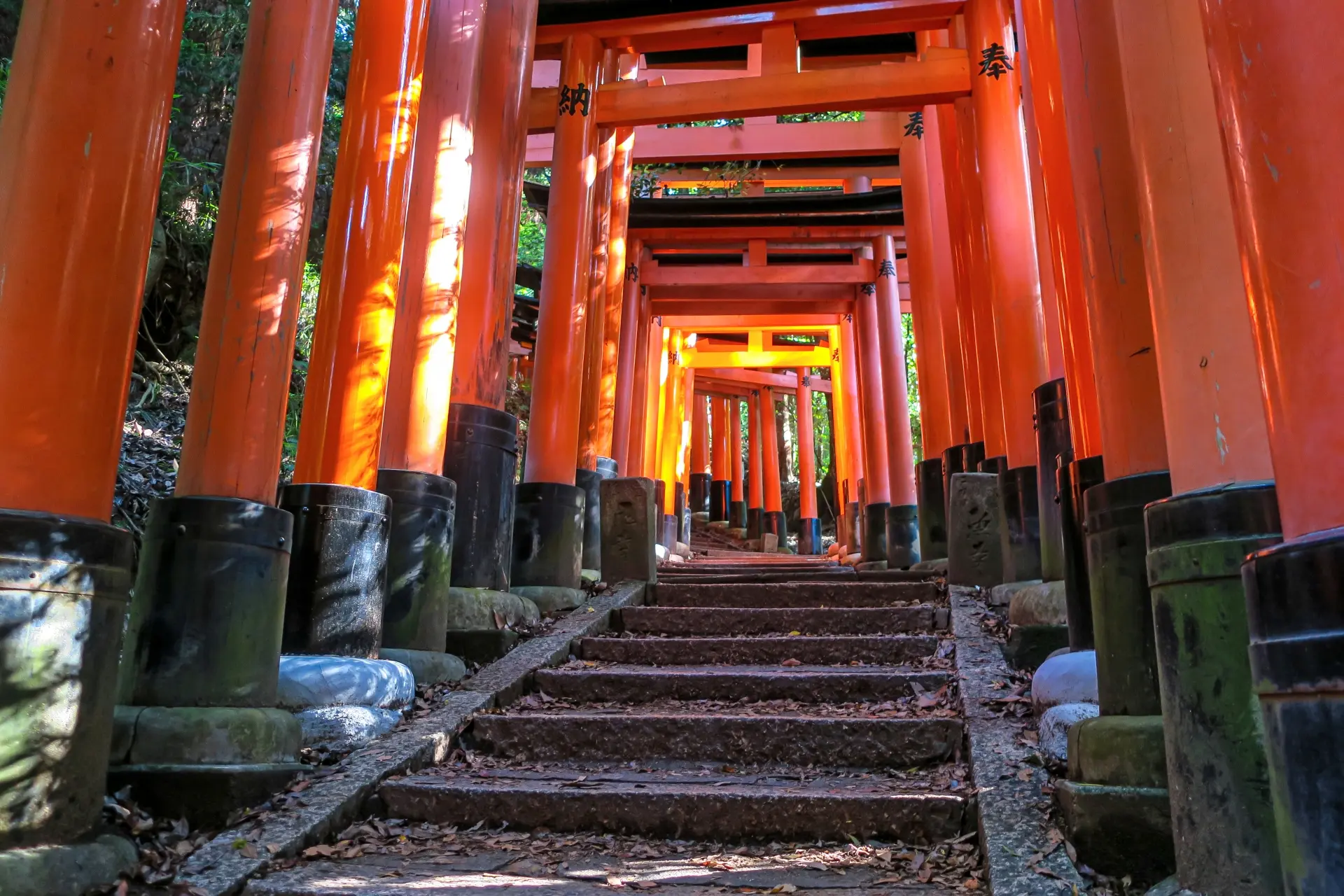 Itinerary
4-Day Kansai Itinerary: Kyoto, Osaka & Nara (2026 Local's Guide)
18 min read
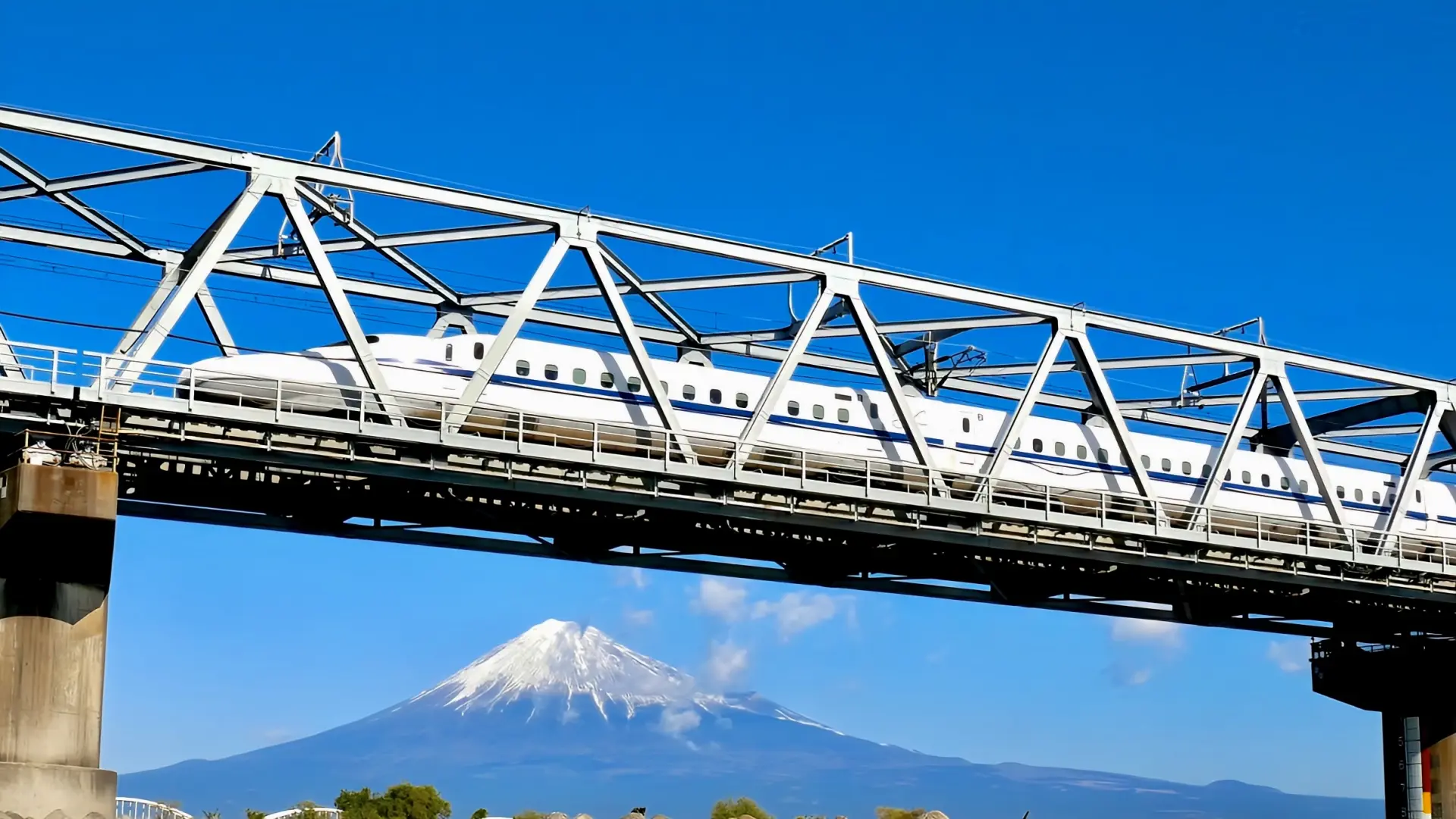 Itinerary
7-Day Japan Itinerary for First-Timers: Tokyo, Hakone, Kyoto & Osaka (2026)
20 min read
 Culture
Zen & Wabi-Sabi in Japan: Tea Ceremony, Zazen, Koyasan (2026)
20 min read