On this page
Tokyo rush hour is not one city-wide wall of people. It is a series of highly specific bottlenecks: one direction, one short section and often one hour when commuters are moving toward offices and schools. A train can feel manageable at 7:15, extremely crowded at 8:10 and ordinary again after 9:30. The opposite direction may be much easier at the same time.
That distinction matters for visitors. Most tourists do not need to travel with the commuter flow, but a hotel location, an early Mt Fuji departure or an airport transfer can put you directly into it. This guide translates Tokyo's official crowding data into practical choices: when to leave, which transfers deserve extra care and what to do with a suitcase, stroller or tired child.
On weekdays, schedule your first long train journey before 7:30 or after 9:30. If you wake up in the middle of the rush, eat breakfast or explore near your hotel first. Moving one museum or neighborhood later is usually easier than forcing a family and several suitcases through a peak-hour interchange.
Tokyo rush hour: the quick answer
The official Tokyo travel guide describes rush hour as approximately 7:30–9:30 and 17:30–19:30, with the morning being the tighter squeeze.
| Time on a weekday | What to expect | JAPANODE's recommendation |
|---|---|---|
| Before 7:30 | Commuting has started, but the main peak is still ahead | Good for an early sightseeing start if you know the route |
| 7:30–9:30 | Main morning rush; inbound sections can be packed | Avoid cross-city travel, large luggage and unfamiliar transfers |
| 9:30–16:30 | Usually the easiest daytime window | Best for hotel changes, airport transfers and family travel |
| 17:30–19:30 | Evening commuter peak; outbound trains get busier | Stay in the neighborhood where you finish sightseeing if possible |
| Later evening | Commuter pressure eases, but entertainment hubs and last-train periods can still be busy | Check the final train and do not rely on an untested late connection |
| Weekends and holidays | No normal office rush, but attractions and event routes can fill | Plan around opening times, concerts and sports events instead |
These are planning windows, not guarantees. Weather, a delayed train, a large event and even the position of one car can change the experience. Use the live tools later in this guide when the exact ride matters.
Direction matters more than the line name
Tokyo's morning crowd moves broadly toward central employment districts. In the evening, much of that flow reverses. This is why advice such as “avoid the Chuo Line” is incomplete: the Chuo Rapid from Nakano toward Shinjuku at 8:00 is not the same journey as Shinjuku toward Nakano, and neither describes the whole day.
The national crowding rate is also more specific than it first appears. Japan's Ministry of Land, Infrastructure, Transport and Tourism (MLIT) calculates it as passengers divided by available capacity during the busiest one-hour period. Its fiscal 2025 Tokyo-area table names the line, direction, section and measured hour.
Official guidance describes 100% as seated passengers plus people standing at straps or poles, while at 150% shoulders may touch but a newspaper could still be opened. These descriptions are old-fashioned—almost everyone now looks at a phone—but the percentages remain useful for comparing corridors. The definitions are published in MLIT's railway terminology guide.
Tokyo's busiest train sections in the morning
Tokyo-area major sections averaged 143% in the fiscal 2025 survey, up from 139% the previous year. The government states that the figures represent the busiest one-hour average, based mainly on passenger data from one or more days in October and November 2025. The table below selects the corridors most useful for visitor planning rather than presenting all 31 measured sections.
| Morning line & direction | Peak section | Time | Rate |
|---|---|---|---|
| Tokyo Metro Hibiya toward central Tokyo | Minowa → Iriya | 7:50–8:50 | 163% |
| Tokyo Metro Tozai toward central Tokyo | Kiba → Monzen-nakacho | 7:50–8:50 | 160% |
| JR Sobu Rapid toward Tokyo | Shin-Koiwa → Kinshicho | 7:31–8:31 | 160% |
| JR Tokaido toward Tokyo | Kawasaki → Shinagawa | 7:39–8:39 | 159% |
| JR Chuo Rapid toward Shinjuku | Nakano → Shinjuku | 7:35–8:35 | 158% |
| JR Keihin-Tohoku toward central Tokyo | Kawaguchi → Akabane | 7:20–8:20 | 158% |
| Tokyo Metro Marunouchi toward central Tokyo | Shin-otsuka → Myogadani | 8:00–9:00 | 154% |
| Tokyo Metro Ginza toward Asakusa | Akasaka-mitsuke → Tameike-sanno | 8:00–9:00 | 153% |
| Toei Shinjuku toward central/west Tokyo | Nishi-ojima → Sumiyoshi | 7:40–8:40 | 152% |
| Tokyo Metro Chiyoda toward central Tokyo | Machiya → Nishi-nippori | 7:45–8:45 | 150% |
Read the table through your hotel location rather than memorizing ten lines:
- West of Shinjuku: take particular care with the Chuo Rapid heading into Shinjuku.
- East of central Tokyo: the Hibiya, Tozai, Toei Shinjuku and Sobu Rapid corridors all have measured inbound bottlenecks.
- Kawasaki or Yokohama: the Tokaido Line squeeze occurs on the approach to Shinagawa.
- North or northeast of central Tokyo: watch the Keihin-Tohoku and Chiyoda directions toward the city.
- Already in central Tokyo: the Ginza and Marunouchi rows show that a short central crossing can still be busy at the peak.
Two cautions make this table more useful.
First, 163% on one Hibiya Line section does not mean every Hibiya Line train is more crowded than every Yamanote Line train. The official comparison uses selected sections that can be measured consistently over time. The Yamanote Line is not one of the 31 rows, so it cannot be honestly ranked from this table.
Second, a percentage is an average across trains in that hour. One delayed train may be much tighter than the train directly behind it. Waiting for the next service can therefore help, but only if the platform itself is safe and the following train is not showing the same crowd level.
What this means for common Tokyo sightseeing routes
Shinjuku and Shibuya mornings
If you stay west of central Tokyo, Shinjuku can become the point where commuter lines, the Yamanote Line, subways and private railways all meet. The challenge is not only the train. It is reading signs, changing levels and reaching the correct exit while the station is working at commuter speed.
For a relaxed first visit, do not schedule an 8:15 journey into Shinjuku merely to start sightseeing somewhere else. Explore your hotel neighborhood, have breakfast, or start with a west-side attraction you can reach on foot. Cross the city after 9:30.
An early trip from Shinjuku to Lake Kawaguchiko is a different problem. You may be moving against part of the inbound flow, but you still need to reach and navigate one of the world's busiest station complexes during the rush. Reserve the Fuji Excursion or highway bus, locate the departure area in advance and arrive with a time buffer. Our Mt Fuji day-trip guide compares the direct train, bus, tour and self-drive options.
Tokyo Station, Ginza and the east side
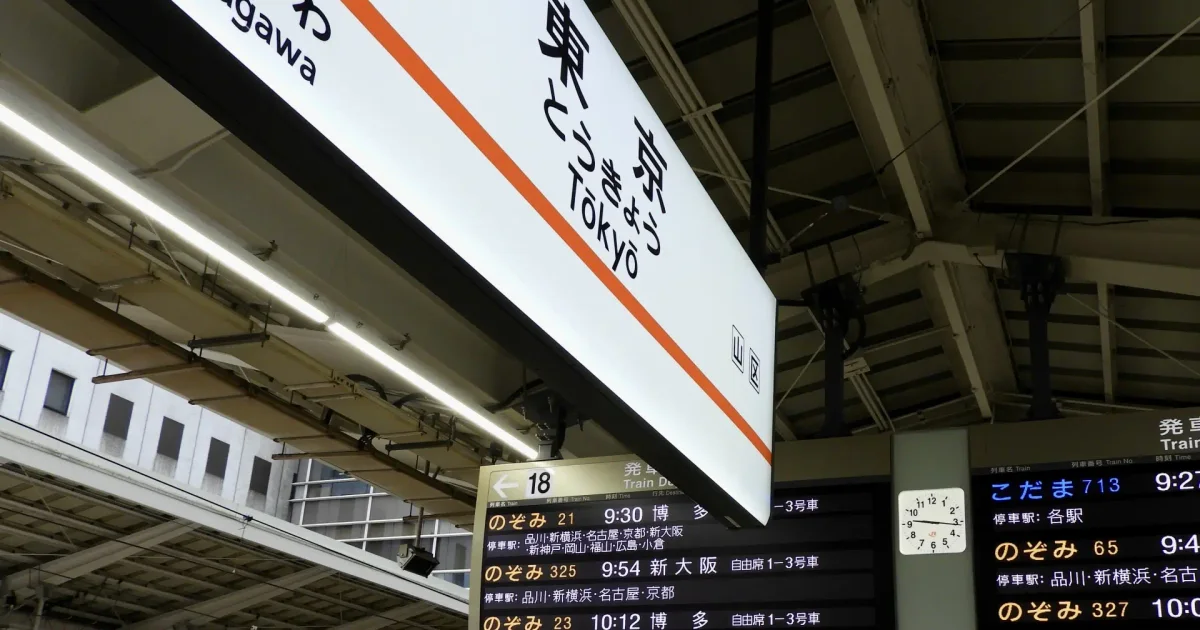
Tokyo Station is easiest when it is a destination, not an improvised meeting point. If you have a reserved Shinkansen, arrive early and follow the color-coded signs for the correct operator and gate. Do not add an optional breakfast on the opposite side of the station unless you understand the layout.
For Tsukiji, Ginza, Asakusa, Ueno and Akihabara, a good itinerary keeps the day geographically coherent. JAPANODE's 10-day first-timer route groups Tsukiji and Asakusa on one East Tokyo day for this reason. Fewer cross-city jumps mean fewer chances to meet the commuter peak—and more time actually seeing Tokyo.
The Ginza Line can feel busy beyond rush hour because it connects major visitor districts and uses relatively compact trains. Midday crowding is inconvenient, but it is normally a different experience from an inbound commuter bottleneck at the morning peak.
The Yamanote Line
The Yamanote Line is the route most visitors recognize, and it can be crowded around Shinjuku, Shibuya, Shinagawa, Tokyo and Ueno. It is also frequent and circular, which makes it tempting for every journey.
Do not treat it as mandatory. Google Maps may show a subway or a short walk that avoids a major JR interchange. For example, a direct subway that leaves you near the correct exit can be easier than taking the Yamanote Line and crossing a huge station to transfer. Choose the route with the simplest station experience, not automatically the one with the fewest minutes.
Airport arrivals during Tokyo rush hour
Airport access becomes difficult at the city transfer, not necessarily on the airport train itself.
From Haneda, Keikyu and the Tokyo Monorail use commuter-style trains. The difficult part can be transferring at Shinagawa or Hamamatsucho with luggage while local commuters are moving through the same gates. If your flight timing places you there around the morning peak, a direct Airport Limousine Bus, taxi or a slower breakfast at the airport may be worth the extra cost or time. See the Haneda Airport transport guide for destination-by-destination choices.
From Narita, the Narita Express and Skyliner offer reserved seats, so the airport section is more predictable. The pressure begins after Tokyo, Shinagawa, Shibuya, Shinjuku, Nippori or Ueno if you transfer to an ordinary commuter line. A hotel-area bus can be the better door-to-door option with children or multiple bags. Compare the routes in our Narita Airport transport guide.
Immigration, baggage claim and the airport transfer take time. Check the expected city transfer time, not only the scheduled landing time. A flight landing during rush hour may reach central Tokyo after the worst has passed; an earlier arrival can place the transfer directly inside the peak.
Traveling with luggage, children or a stroller
Large suitcases
A large suitcase is permitted on most ordinary Tokyo trains, but “permitted” and “comfortable” are different questions. On a packed train it is hard to keep the bag stable, move away from the door and exit quickly. It also takes space that passengers need to board.
Use this order of preference:
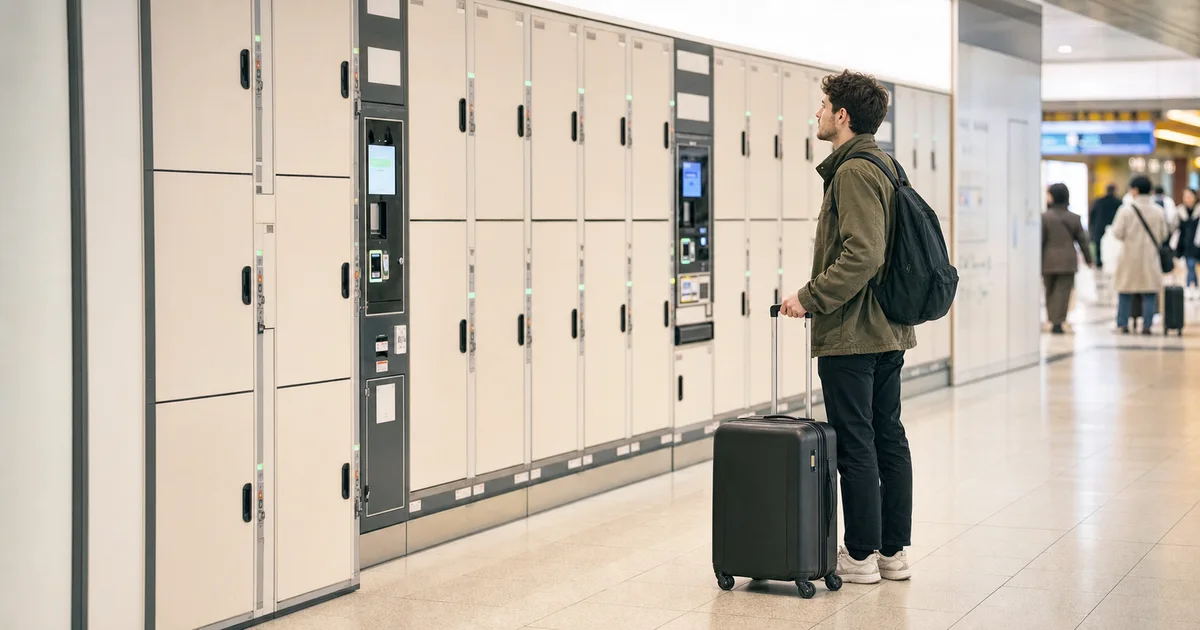
- Ask whether your hotel can hold the bag before check-in or after checkout.
- Use a reserved-seat airport train or direct bus when it fits the route.
- Send the suitcase to the next hotel and travel with a day bag.
- Reserve storage near the station or neighborhood you will revisit.
- If none of those works, wait until the peak passes before making the transfer.
Our Japan luggage-storage guide compares hotel storage, lockers, Bounce, Radical Storage, ecbo cloak and luggage delivery. Some links are affiliate links; JAPANODE may earn a commission at no extra cost to you. The nearest well-reviewed location with suitable opening hours is more important than the brand.

Radical Storage in Tokyo
6% off with code JAPANODE
Why it may fit
Compare reservable staffed storage around Tokyo Station, Shinjuku, Shibuya, Ueno and other useful neighborhoods before traveling through the city bag-free.
Before booking
Check the live price, availability, eligibility, and terms before paying.
JAPANODE6% off
Children and strollers
The best family strategy is time, not bravery. If possible, avoid the morning peak completely. Keep one adult responsible for the child and the other for bags; decide where you will exit before boarding; and do not split the group across closing doors to catch a train. Another service is usually only minutes away.
Tokyo Metro asks passengers to give priority seats to people with infants and publishes separate guidance for stroller safety. It also operates women-only cars on some lines during the morning rush. The applicable line, car, time and eligible passengers vary, so read the platform signs instead of relying on one nationwide rule. Tokyo Metro's official riding considerations cover priority seats, phones, women-only cars and strollers.
How to ride safely if you cannot avoid rush hour
Sometimes the hotel, reservation or flight decides the time. If you must travel during the peak:
- Know the direction and platform before entering the gate. Route-search outside the station where you have space to stop.
- Keep your IC card or ticket ready. Do not block the gate while searching through a wallet.
- Let people exit first. Stand beside the door markings, then follow the boarding line.
- Take your backpack off your back. Hold it in front or place it on a rack only if you can retrieve it safely.
- Move into the car when space opens. Stopping immediately inside the door prevents others from boarding.
- Do not force a closing door. Wait for the next train.
- Prepare to exit one station early. Move gradually toward the door rather than pushing across the car at the last second.
- Keep your group plan simple. If separated, everyone gets off at the agreed destination; nobody jumps between cars.
- Use quiet phone etiquette. Texting is normal, but calls inside the train are discouraged.
For IC cards, train types, station signs and Shinkansen rules, use the broader Japan train-system guide.
Check live crowding before you board
Static statistics explain patterns; live tools help with the next train.
JR East app
JR East states that its app displays crowding on trains running across major Kanto-area routes. Open the operational-status section, choose the train-location view and select a line. The crowding information is shown in five levels and reflects approximately five minutes earlier. Limited express services are not included. See the JR East official explanation.
Tokyo Metro my! app
The Tokyo Metro my! app shows real-time crowding in four levels by individual car across all Tokyo Metro lines. That can help you walk to a less crowded part of the platform rather than abandoning the route. Tokyo Metro explains the feature in its official app guide.
Tokyo Metro also states in an English safety document that the app is available only in Japanese. Treat the colored crowd levels as useful visual information, but do not make it the first Japanese-only interface you try while standing in a busy doorway.
You need a reliable connection to check live train locations, platform changes and walking routes. If your home carrier's roaming is expensive, compare the practical alternatives in our Japan eSIM guide and install the chosen plan before departure.
Weekends, holidays and event crowds are different
Saturday and Sunday do not reproduce the normal weekday commuter pattern. That does not mean empty trains. Asakusa, Shibuya, Harajuku, Tokyo Station and theme-park routes can be busy through the middle of the day, while concerts, baseball games and festivals produce short, intense flows before and after an event.
The planning method changes:
- Check the attraction's opening time and arrive early.
- Search the date for stadium, arena and festival events near your route.
- Do not leave a major venue at the same moment as the entire audience if you have no deadline.
- Walk one station when the route is simple and the weather is reasonable.
- Expect Tokyo Station and major shopping districts to stay busy even without commuters.
Crowding caused by tourism or an event is less predictable from annual commuter statistics. Live train information and a geographically compact itinerary matter more.
A better Tokyo day without the crush
Here is the difference between a map-efficient day and a traveler-efficient day.
The difficult version: leave a west-Tokyo hotel at 8:10 for Tsukiji, return across the city to Harajuku after lunch, go back east to Tokyo Station for dinner, then carry shopping bags through the evening peak.
The better version: eat breakfast near the hotel, leave after 9:30, group Tsukiji with Ginza, Asakusa or Ueno, and save Harajuku–Shibuya–Shinjuku for another geographically coherent day. The second plan may look less ambitious, but it spends less time underground and gives each neighborhood room to breathe.
That is JAPANODE's core recommendation: optimize for the day you will experience, not the number of pins you can connect. Tokyo's rail system makes almost every route possible. Good planning means recognizing the few hours when “possible” is not the same as enjoyable.
Plan the rest of your Tokyo transport
Understand Japan's Train System
IC cards, train types, station signs, Shinkansen rules and the basics every first-time visitor needs.
Read the train guideArriving at Haneda
Compare Keikyu, the Monorail, buses and taxis by the Tokyo neighborhood where you are staying.
Plan your Haneda transferTravel Tokyo Without the Suitcase
Compare hotel storage, station lockers, reservable services and luggage delivery before crossing the city.
Compare luggage optionsLast verified: September 19, 2026. Core data: MLIT fiscal 2025 metropolitan-area crowding results, MLIT route-by-route table, GO TOKYO subway guide, JR East crowding information and Tokyo Metro real-time crowding guide. Timetables, app interfaces and congestion patterns change; check live operator information on the day you travel.
Frequently Asked Questions
Tokyo's main weekday rush hours are approximately 7:30–9:30 in the morning and 17:30–19:30 in the evening. The morning squeeze is generally more intense. Each line has its own peak hour and direction, so a train at 8:00 can feel very different from the same route after 9:30.
For sightseeing, plan your first cross-city train before 7:30 or after 9:30 on weekdays. Between about 10:00 and 16:30 is normally easier for luggage, strollers and unfamiliar transfers, although tourist districts and event days can still be busy.
There is no single answer for an entire line. Japan's official statistics measure a particular direction, section and peak hour. In the latest fiscal 2025 data, the Hibiya Line's Minowa-to-Iriya section recorded 163%, while the Tozai Line from Kiba to Monzen-nakacho and JR Sobu Rapid from Shin-Koiwa to Kinshicho each recorded 160%. That does not mean every train on those lines is equally crowded all day.
Yes, especially around major hubs such as Shinjuku, Shibuya, Shinagawa, Tokyo and Ueno. However, the Yamanote Line is not listed in the national government's 31-section comparison, so it should not automatically be called Tokyo's most crowded line. Direction, station and exact time matter more than the line name alone.
You can, but a large suitcase can be difficult to control and may block doors or aisles on a packed commuter train. If possible, use a reserved-seat airport train, direct bus, taxi, hotel storage or luggage delivery, or wait until after the morning peak before making a cross-city transfer.
The JR East app shows crowding for trains running on major routes in the Kanto area, using information from about five minutes earlier. The Tokyo Metro my! app displays real-time crowding by car on all Tokyo Metro lines, although Tokyo Metro notes that the app is available only in Japanese.

Written by
JAPANODE
Based in Japan, sharing real travel tips & local insights for visitors. Follow us on Instagram @thejapanode for daily Japan content.
You Might Also Like
 Transportation
Luggage Storage in Japan: Lockers, Apps & Delivery
11 min read
 Itinerary
10-Day Japan Itinerary: Tokyo, Mt Fuji, Kyoto, Himeji & Ise
12 min read
 Transportation
Haneda Airport to Tokyo in 2026: Monorail, Keikyu, Limousine Bus & Taxi
12 min read
 Day Trips
Mt Fuji Day Trip from Tokyo: Tour, Train & Bus Compared (2026)
17 min read
 Transportation
Narita Airport to Tokyo in 2026: Skyliner, N'EX, Bus & Taxi
22 min read
 Transportation
The Complete Guide to Japan's Train System for First-Time Visitors
16 min read