On this page
Use trains and the subway for the parts of Kyoto they serve well, walk within an area, and add buses or taxis where they solve a real gap. The most useful route is not always the one with the fewest transfers on a map: road congestion, station access, luggage and the final walk all matter.
Do not buy a day pass until you know which operators your itinerary uses. Kyoto's subway, city buses, JR, Hankyu, Keihan and Randen do not form one universally covered ticket network.
This guide focuses on getting around the city. For the sights and a manageable regional schedule, use the four-day Kansai itinerary. Official transport information below was checked on October 17, 2026.
The Network in Practical Terms
| Network | Useful starting role | What to check |
|---|---|---|
| Municipal subway | A rail backbone through parts of the city | The walking or bus connection to your destination |
| JR | Kyoto Station connections and particular sightseeing corridors | The train's stopping pattern and separate fare |
| Keihan | Eastern and southern corridor choices | Which station leaves the best final walk |
| Hankyu | Central Kyoto and western-route options | The transfer and station appropriate to the destination |
| Randen | Local western Kyoto travel | Its own fare and ticket coverage |
| Buses | Connections that rail does not complete | Operator, direction, fare area and road conditions |
Choose the actual station, not just the neighborhood. Different railway companies can have stations with similar area names but different positions. That matters when carrying luggage or meeting a guide at a specific exit.
For a wider explanation of the railway system, see the Japan train guide.
Current Bus and Pass Prices to Compare
| Product or journey | Adult price checked | Important limitation |
|---|---|---|
| Ordinary city-bus ride within the flat-fare area | ¥230 | Other areas and services can differ |
| Express sightseeing bus | ¥500 | Check operating days and service details |
| Subway and Bus 1-Day Pass | ¥1,100 | Specific networks and route exclusions apply |
| Kyoto City Subway 1-Day Pass | ¥800 | Subway coverage, not all city railways |
Sources: Kyoto's official bus guide and transportation tickets and passes. These are product-specific prices, not a claim that every Kyoto journey costs ¥230.
The combined pass is a one-day product. Do not treat it as a rolling 24-hour ticket merely because Tokyo has a product described that way. Read the current usage rules for the version you buy.
Does the ¥1,100 Pass Pay Off?
Add the eligible journeys you will actually take. Five ordinary ¥230 bus rides total ¥1,150, only ¥50 more than the pass. Four total ¥920, which is ¥180 less than the pass.
That is useful arithmetic, but it is not an instruction to take five buses. A day with a long walking block and two bus rides may be more enjoyable and cheaper. A day using JR and Keihan can leave much of your transport outside the pass.
For a mixed subway-and-bus day, use the actual subway fares rather than applying one assumed fare to every ride. Include only services and sections covered by the product. If the proposed route uses an excluded train, keep that fare in the pass version of the budget.
The combined pass may also offer convenience. Decide whether that convenience is worth any difference after you have checked coverage. Buying a pass first and forcing the itinerary to match it reverses the useful order.
Paying With an IC Card or Cash
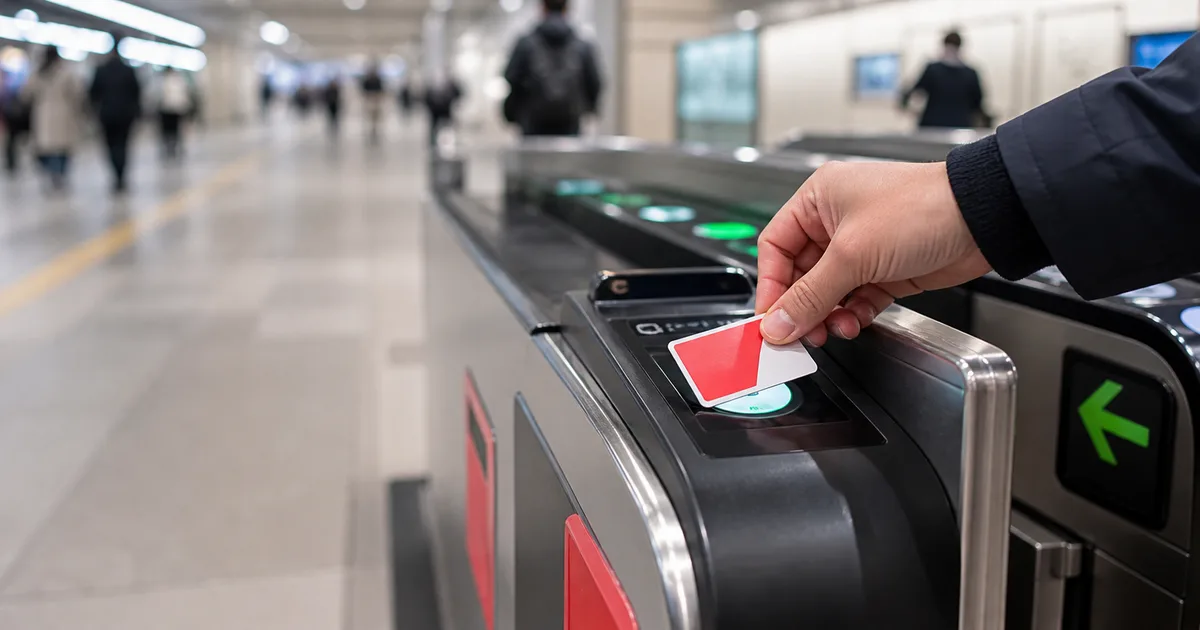
Kyoto's visitor information confirms transportation IC-card payment on city buses. The Suica and Welcome Suica guide explains compatible products and top-up considerations.
For Kyoto City Bus, the transport bureau's boarding guide distinguishes these two patterns:
| Service | Board | Exit | Pay |
|---|---|---|---|
| Ordinary Kyoto City Bus routes | Rear door | Front door | When leaving |
| Sightseeing Express EX100 / EX101 | Front door | Rear door | When boarding |
These instructions apply to Kyoto City Bus, not every bus operator in the city. Follow the vehicle signs and driver instructions, especially on routes outside the flat-fare zone where the fare varies with the journey.
Do not assume every cash fare box has identical behavior. The current official bus guide distinguishes city buses and West Japan JR buses from other operators when explaining change. An older blanket instruction that no Kyoto bus can give change can therefore be misleading.
Prepare your payment before the point where your service collects it. Keep the card you intend to use separate from other cards so that you do not accidentally present multiple contactless products together. If something goes wrong, ask the driver rather than blocking the flow while repeatedly trying the same action.
Routes Worth Comparing for Major Areas
These are starting points, not a promise that one route is always fastest. Use the actual hotel address and current route search.
| Destination area | A sensible comparison | Final detail |
|---|---|---|
| Kiyomizu-dera / Higashiyama | Rail plus a local connection versus a direct bus | The uphill approach remains part of the trip |
| Arashiyama / Saga | JR, Hankyu or Randen depending on your starting point | Arrival stations serve different parts of the area |
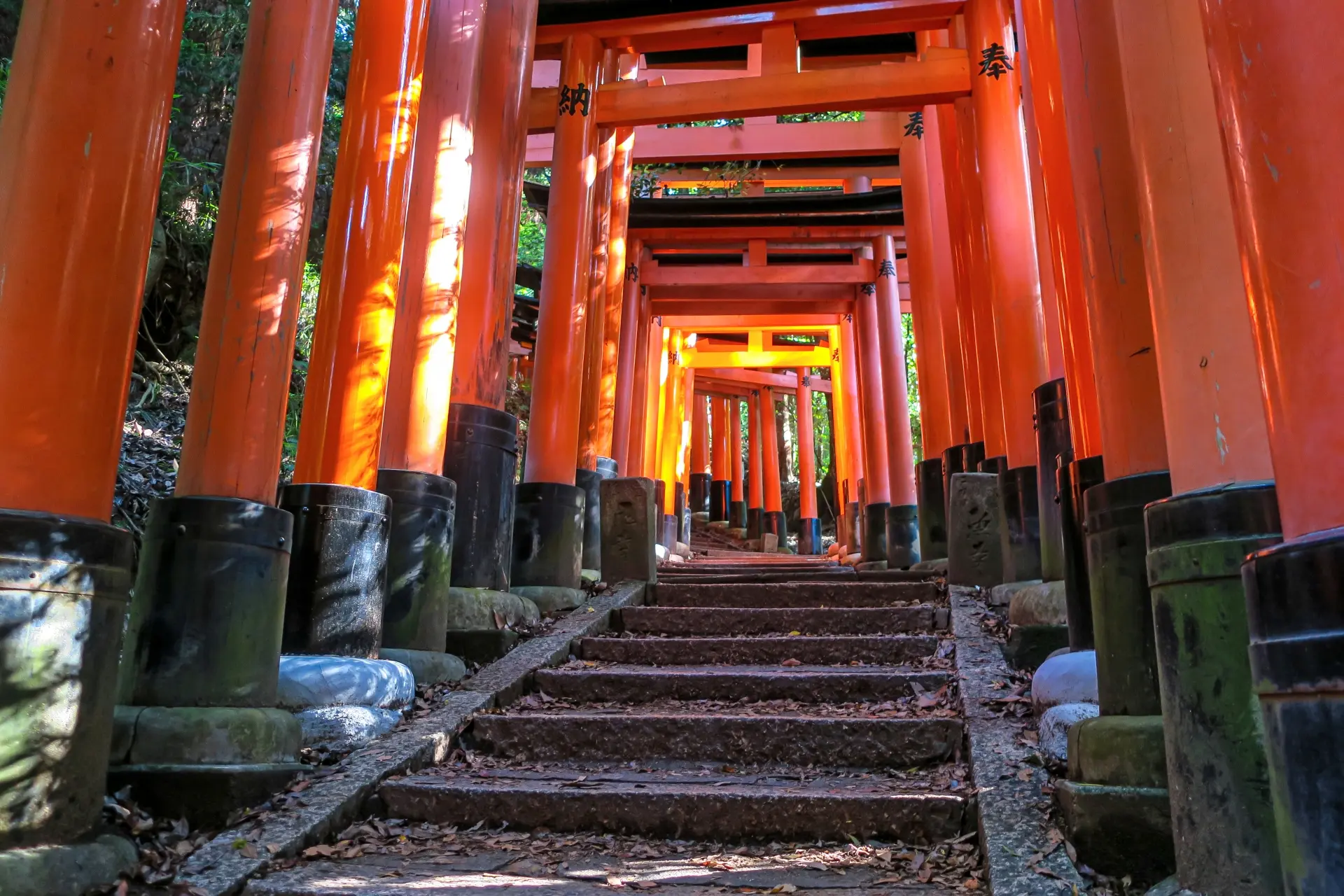
| Fushimi Inari | JR or Keihan options | Confirm the chosen train stops where you need |
| Kinkaku-ji | Subway toward Kitaoji plus a bus versus a longer bus journey | Check the correct stop and walking approach |
Kyoto's Kiyomizu-dera access guide specifically promotes combining transport modes. Its Kinkaku-ji access guide includes the Kitaoji connection for Kinkaku-ji. The Saga and Arashiyama area guide is useful for planning the western day.
Do not compare only the time spent inside the vehicle. Add the walk to the first stop, waiting, transfer distance and the approach to the attraction. A nominally faster journey can be less practical with children, mobility needs or luggage.
Station Names to Save Before You Leave
Searching for the attraction name is useful, but saving the intended station helps you notice an unsuitable route result. These are common starting options for the three-day Kyoto itinerary; the best route still depends on the hotel and the attraction entrance.
| Journey | Useful station or interchange | Common point of confusion |
|---|---|---|
| Kyoto Station to the Arashiyama area | JR Saga-Arashiyama | It is a different arrival point from Hankyu Arashiyama and Randen Arashiyama |
| Central Kyoto to western sightseeing | Hankyu via Katsura, or a suitable Randen connection | Changing railway company can mean a separate fare |
| Kyoto Station to Fushimi Inari | JR Inari on the Nara Line | The final destination is Inari, not Nara city |
| Gion side to Fushimi Inari | Keihan Gion-shijo to Fushimi-inari | Not every train category stops at the same stations |
| Central Kyoto toward Kinkaku-ji | Subway to Kitaoji, then the appropriate local bus | The subway does not reach the temple entrance |
The city's Fushimi Inari access page explains the two rail approaches. Use the current departure display for train stops; copying an old local-versus-rapid rule can send you onto an unsuitable service when timetables change.
A Bus-Stop Name Has a Direction
A navigation result naming a stop is only part of the instruction. Check which side of the road and which platform or stop letter you need, then compare the bus number and destination display. Stops around a major station can be spread out. Give yourself enough time to find the right boarding point before the scheduled departure.
Save the Japanese destination name alongside the English one if that makes it easier to compare signs or ask for help. At the attraction end, check the return stop before walking away. It may not be directly opposite the place where you arrived.
Do Not Use a Sightseeing Pass for a Different Hotel Transfer
A useful sightseeing ticket can be the wrong product for arrival with luggage. Price the hotel transfer on its own, especially if it uses JR or a private railway. Then decide whether a pass makes sense for a later full day. Activating a calendar-day product late in the afternoon may leave little time to recover its cost.
Keep the airport, Osaka–Kyoto journey and Kyoto local travel as separate budget lines unless a specific ticket explicitly combines them. The Kansai Airport guide covers the first of those decisions. A ticket that pays for the airport train does not automatically pay for a Kyoto sightseeing bus, and the reverse is also true.
Express Sightseeing Buses
The official Higashiyama access page lists EX100 and EX101 between Kyoto Station and Gojo-zaka on weekends and holidays. Check current days, stops and pass acceptance before building the morning around them.
An express sightseeing service is not the same as every ordinary city bus, and it is not necessarily a guided tour. Read the product description rather than assuming that a higher fare includes narration, reserved seating or admission.
These buses can be useful when their route matches the trip. They do not eliminate all queues or road traffic, so allow a margin before a timed reservation.
Why Area-Based Days Help
Transport gets easier when the itinerary asks less of it. A day in southern Higashiyama, a separate western day and another southern or central block reduce repeated cross-city travel.
Before looking for a better pass, inspect the sequence of sights. If you are moving east to west, back east for lunch and north for the afternoon, rearranging the day may save more time than changing tickets.
Keep one fallback in the same area for rain or fatigue. An indoor activity nearby can preserve the day; a replacement on the opposite side of the city can turn a weather adjustment into another long transfer. Our Kyoto rainy-day guide provides options.
When a Taxi Can Be a Reasonable Choice
A short taxi journey can make sense when it closes an awkward gap, serves travelers with limited mobility or avoids a difficult transfer with luggage. Compare the actual pickup, destination and party size rather than assuming taxis are always either wasteful or essential.
Road traffic still affects a taxi. If you need to cross a congested area at a busy time, a rail route may be more predictable. For a timed reservation, plan the margin around the journey conditions rather than the most optimistic navigation estimate.
Keep the destination's Japanese name and address available. If accessibility or a particular vehicle type matters, arrange it explicitly rather than relying on the first vehicle you find.
Luggage Changes the Answer
Separate the hotel transfer from sightseeing whenever practical. Ask the property about storage and delivery arrangements, including what happens if you arrive before check-in.
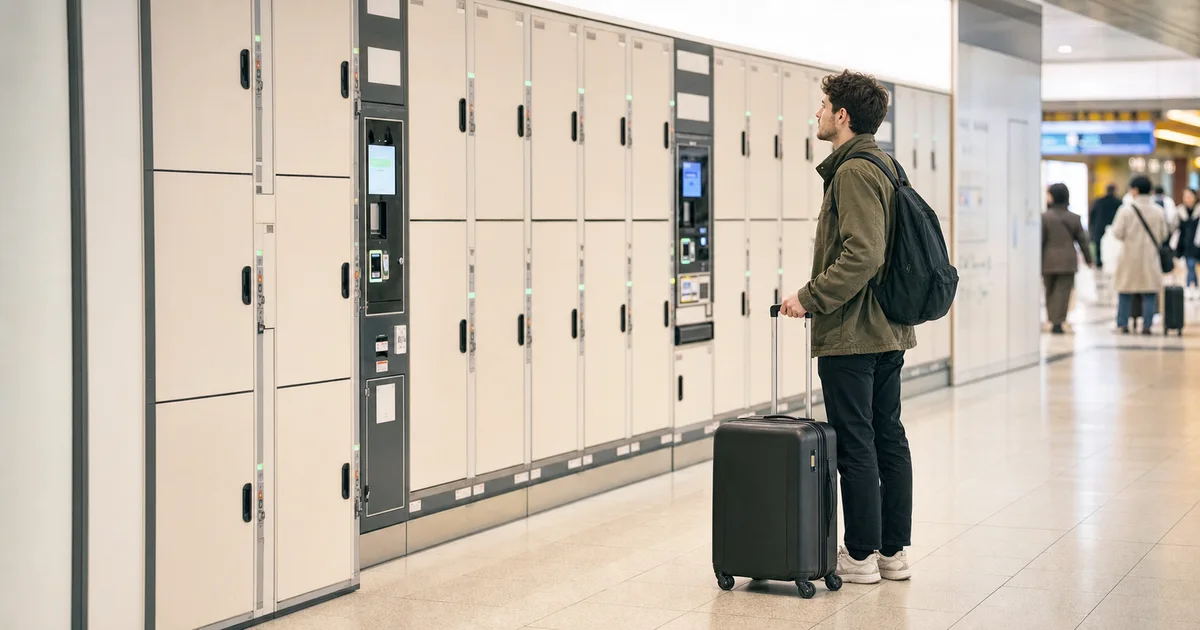
The Japan luggage-storage guide explains alternatives. Compare the cost of storage with the difficulty of taking a full-size suitcase through narrow walking streets and busy local transport.
If you have to travel with luggage, choose the route around elevators, space and the actual hotel entrance. A slightly longer rail journey can be easier than a nominally direct crowded bus.
A Departure-Morning Checklist
Confirm the operator, direction, stop and payment method before leaving the hotel. Check whether the day is a weekend or holiday when relying on a service with limited operation. Save the meeting point for any reserved activity and identify which part of the route has the least flexibility.
Keep enough time to recover from taking the wrong exit or missing one departure. Kyoto is easier to enjoy when the next connection is useful rather than absolutely necessary to preserve the entire day.
Make it your trip
Still planning your Japan trip?
Pick the question on your mind. Compare your options, check the details and take one more thing off your list.
Would a JR Pass save you money?
Add your train journeys and compare individual tickets with the nationwide pass. See which costs less for your route.
Calculate my rail costs
Which eSIM fits your Japan trip?
Maps, messages, hotspot use: compare five providers by data allowance, network and plan limits before you choose.
Find my Japan eSIM
How much can you fit into one week?
Connect Tokyo, a Fuji or Hakone day trip, Kyoto and Osaka with a day-by-day route, travel costs and booking advice.
Explore the 7-day routeFrequently Asked Questions
Kyoto's official visitor information lists 1,100 yen for adults and 550 yen for children, checked October 17, 2026. Check route exclusions before buying.
Compatible transportation IC cards are accepted on the city bus network and many other services. Payment procedures and coverage depend on the operator and route.
It is not a universal rail pass. JR, Hankyu, Keihan and Randen journeys require their own valid ticket or IC payment unless a different specific product covers them.
No. Add the fares for eligible journeys you will actually take. A day with only a few bus rides or substantial private-rail travel may be cheaper with individual payment.

Written by
JAPANODE
Based in Japan, sharing practical travel planning guides for visitors.
You Might Also Like
 Transportation
Suica & Welcome Suica: Complete Guide for Japan Visitors
10 min read
 Transportation
Luggage Storage in Japan: Lockers, Apps & Delivery
11 min read
 Itinerary
4-Day Kansai Itinerary: Kyoto, Osaka & Nara (2026 Local's Guide)
18 min read
 Transportation
The Complete Guide to Japan's Train System for First-Time Visitors
16 min read