
On this page
Taxis in Japan are most useful when they solve a specific problem: a short final journey with luggage, a difficult transfer, an evening return or a route that public transport does not handle conveniently. Start with that journey, then choose how to arrange it. You can use a taxi rank, an app such as GO or Uber, or help from your accommodation.
Do not assume the app name determines the vehicle or the final price. Uber offers different products in Japan, and a taxi requested through an app can have charges beyond the meter fare. GO's registration process also deserves attention before arrival, especially if your travel eSIM provides data but no SMS-capable number.
This guide draws on official service information checked November 12, 2026. This article contains affiliate links for prebooked airport transfers. If you book through them, we may earn a commission at no extra cost to you. The GO and Uber help links here are ordinary source links.
Choose how to get a taxi
| Option | Useful when | Check before relying on it |
|---|---|---|
| Taxi rank | You are already at a station, hotel or other signed pickup area | Queue, destination, luggage space and payment |
| GO | You want to request a supported taxi through an app | Registration, current pickup coverage, payment and any fees |
| Uber | You already use the app or want to compare its available products | The exact service, fare method, capacity and pickup instructions |
| Hotel-arranged ride | You need help communicating the journey | Booking conditions, price basis and whether a vehicle is confirmed |
| Prebooked transfer | A specified vehicle or airport arrangement is important | Passenger and bag limits, waiting policy and cancellation terms |
An app can make the destination easier to communicate, but it cannot guarantee that a suitable vehicle will be nearby. A taxi rank avoids account setup but may have a queue. Hotel assistance can reduce communication work, but the booking still has conditions you should understand.
For a short city ride, compare those options without overcomplicating the decision. For a flight, a wheelchair requirement, large luggage or a child-seat request, investigate the vehicle and arrangements in advance rather than relying on whichever car appears first.
GO: prepare the account before you need the ride
GO's official English page describes its taxi-request process and support for international credit cards and Apple Pay. It also lists coverage in all 47 prefectures. Prefecture-level coverage does not establish immediate availability at every address, and payment support does not guarantee every individual card will work.
Install the app and review the registration flow while you have a stable connection. Check the phone-number country code, the verification process and the payment method you intend to use. Leave time to resolve a setup problem before the trip rather than discovering it beside a busy road.
A data-only eSIM is not an SMS number
GO's registration guide asks for a mobile number that can receive SMS in its standard flow. Its verification troubleshooting page explains limitations with data-only devices and describes an identity-verification option. Check the current supported route for your account instead of assuming every traveler must use the same method.
If you intend to use your home number, confirm it can receive the necessary messages while traveling and check the carrier's charges. Buying a data package for Japan does not automatically provide a Japanese number. Our eSIM comparison explains the buying decision, while your carrier remains the source for the home number's service.
If registration is not working, keep a practical fallback: a signed taxi rank or help from your accommodation. A ride to the hotel should not depend on successfully finishing a new account under time pressure.
Set the pickup point carefully
Enter both the destination and the place where the driver can actually collect you. Check the side of the street, building entrance and any instructions shown in the app. The nearest point on a map is not always a legal or convenient stopping place.
Before boarding, match the assigned vehicle details with the arriving taxi. Keep the destination in the app and the hotel's Japanese address available in case a clarification is needed. Confirm changes through the driver or app rather than assuming a message was seen.
Uber: read the service name, not just the logo
Uber's Japan product guide lists Uber Taxi alongside other services, with availability varying by location. The claim that Uber in Japan is always a taxi, or always the same as a private-car service abroad, is too broad.
For Uber Taxi, the help page describes a metered fare and possible additional charges. Other products can have different pricing, payment and reservation arrangements. Inspect the option offered for your pickup point and read its details before confirming.
This also affects the vehicle decision. A service that accepts a certain number of riders does not necessarily fit that many people plus large bags. If capacity matters, check the specific product and operator rather than relying on the largest number mentioned anywhere in Uber's documentation.
Why the estimate and final charge can differ
Uber's app-usage-charge explanation lists a ¥100 app charge per eligible trip, in addition to the meter and any booking fee, from September 28, 2026. It applies to specified taxi services in covered areas; the notice excludes airport flat-fare trips. Check the information icon for the actual option in the app rather than assuming the charge applies to every Uber ride.
Record whether you are looking at a fixed fare, an upfront price or a meter estimate. Those labels do not mean the same thing. A number on the screen is useful only when you understand what it includes and what circumstances can change it.
Do not assume Uber is cheaper because you normally use it at home. Compare the displayed journey with an appropriate local alternative, including vehicle size and any charges. Convenience may still justify the choice even when it is not the lowest quote.
Using a taxi rank or hailing a taxi
JNTO's taxi guide explains the basics of taking a taxi and notes that payment options can be more limited outside major cities. A rank is often the easiest approach when you are already at a transport hub and do not need a special vehicle.
Join the marked queue and follow local pickup instructions. If you hail a taxi, choose a place where it can stop safely. Show the destination's Japanese name and address, or a clear map location, rather than depending only on an English hotel name that may resemble another property.
The rear passenger door is commonly operated by the driver. Let the driver handle it where appropriate rather than forcing it open or shut. Check payment and luggage space before settling in, especially if either could affect whether the ride works for you.
Keep the receipt or app trip record after arrival. If something is left in the vehicle, the operator and journey details are much more useful than trying to reconstruct the ride from memory. For app bookings, use the support process associated with that actual trip.
What will the ride cost?
There is no single national taxi fare that accurately prices every journey. The city, operator, vehicle, distance, time and booking method can all matter. This guide deliberately does not turn a short Tokyo fare example into a promise for Kyoto, Sapporo or a rural destination.
Before comparing options, ask what the quote includes. Depending on the service, relevant items can include the meter fare, dispatch or reservation charges, an app fee, tolls or time-related additions. Check which apply to your journey rather than adding every possible item automatically.
For a group, compare the total cost with the public-transport cost for the same people. A taxi can look different when its total is shared, but that arithmetic is valid only if everyone and the luggage fit in one suitable vehicle. If you need two cars, compare two-car costs.
Airport flat fares are a separate product
A published airport flat fare can have conditions about pickup area, destination, reservation, tolls and operating hours. It is not interchangeable with the price of joining any airport taxi queue or requesting any app product.
Use our Haneda family-transfer guide or Narita transport comparison for the airport decision. Check the operator's current terms for the precise journey rather than carrying a city-center taxi estimate into an airport budget.
For travelers who want a vehicle arranged before arrival, Kiwitaxi is another option to compare with rail and airport taxis. Enter your flight, hotel address, passenger count and complete luggage list to obtain a quote. Confirm the waiting policy, cancellation deadline and any child-seat request before paying. A private transfer may cost more than public transport, particularly for one or two people.
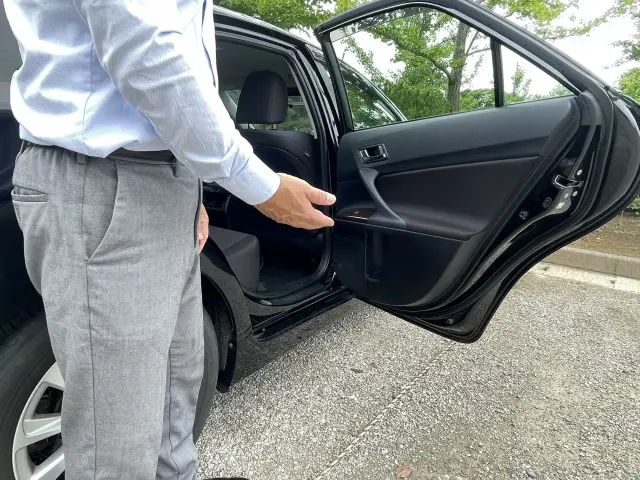
Haneda Airport to Tokyo private transfer
Best for
Travelers who want to arrange the airport-to-hotel vehicle before landing.
Before booking
Often costs more than rail. Child seats, extra waiting and itinerary changes can involve additional charges.
Why it may fit
Compare a prebooked vehicle for your Haneda arrival and exact hotel address. Choose the vehicle by passenger and suitcase capacity, then confirm pickup instructions.
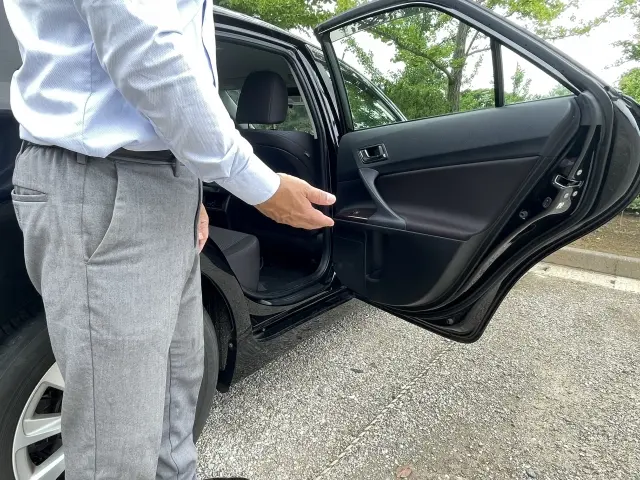
Narita Airport to Tokyo private transfer
Best for
Groups comparing a door-to-door arrival with train connections and luggage handling.
Before booking
Traffic can affect arrival time. Check the final total and included waiting time for your booking.
Why it may fit
Get a quote for your Narita arrival, destination address and group size. Compare the selected vehicle's luggage allowance with what your party will actually bring.
Payment: confirm the method before the journey
Many taxis accept cards, and app payment can be convenient, but acceptance is not universal. Look at the vehicle's payment information or the method selected in the app. If you intend to pay with cash, make sure you have enough for a realistic fare and a suitable fallback for an unexpected change.
For an app-paid trip, check whether the payment is already arranged before paying again in the vehicle. If the driver indicates a different process, clarify it and keep the receipt. Resolve a duplicate charge through the relevant operator or app using the trip record.
Our cash, cards and ATMs guide helps plan the wider payment mix. Treat taxi payment as one part of that plan rather than assuming a phone wallet removes the need to check accepted methods.
When a taxi helps, and when the train still wins
For a short final leg, a taxi may reduce transfers and walking. For a long journey along a frequent rail corridor, public transport may be easier to predict and better value. Compare the complete door-to-door journey, including getting to the station or waiting for the car.
In Kyoto, the city's official taxi guidance warns that major-station taxi ranks can develop long queues during tourist seasons. A taxi is therefore not automatically a way to bypass all waiting. Use our Kyoto transport guide to decide where rail, walking and a short taxi ride fit together.
Likewise, switching from a crowded train to a taxi does not establish a faster trip through city traffic. Our Tokyo rush-hour guide covers timetable and route choices that may solve the problem without changing transport modes.
For a late return, confirm the practical options before staying out. An app on the phone is useful, but “there will be a car when we want one” is not a confirmed reservation.
Families, bags and specific access needs
Tell the operator the real passenger count and luggage. Include a stroller, large suitcases or equipment when asking about space. The word “van” does not by itself establish the seating arrangement, luggage capacity or availability of a child seat.
If a child seat or accessible vehicle is important to your party, request and confirm it with the operator before booking. This guide does not use a legal exception as a reason to recommend traveling without appropriate equipment. The practical question is whether the vehicle suits the people taking the journey.
If baggage is the main reason for taking a taxi, compare a short ride with leaving bags at a suitable storage location. The luggage storage guide can help you consider that alternative before carrying everything through a sightseeing day.
A useful five-minute preparation before arrival
Finish account setup where possible, confirm the home number's SMS arrangements, save the accommodation address and decide on a fallback pickup method. If the ride needs a specific vehicle, secure that arrangement separately.
On the day, check the pickup point, assigned car, fare basis and payment method before confirming. Those small checks make the ride easier to manage whether you choose GO, Uber, a rank or help from the hotel.
Official guidance checked November 12, 2026: GO registration and payment information, Uber's Japanese service and fee explanations, JNTO and Kyoto City's taxi guidance. Transfer conditions were checked against Kiwitaxi's booking guidance and child-seat information. Availability, fees and app flows can change; confirm the terms shown for your own trip. No live ride request or purchase was made for this research.
Make it your trip
Still planning your Japan trip?
Pick the question on your mind. Compare your options, check the details and take one more thing off your list.
Would a JR Pass save you money?
Add your train journeys and compare individual tickets with the nationwide pass. See which costs less for your route.
Calculate my rail costs
Which eSIM fits your Japan trip?
Maps, messages, hotspot use: compare five providers by data allowance, network and plan limits before you choose.
Find my Japan eSIM
How much can you fit into one week?
Connect Tokyo, a Fuji or Hakone day trip, Kyoto and Osaka with a day-by-day route, travel costs and booking advice.
Explore the 7-day routeFrequently Asked Questions
Yes, in supported areas. Uber lists several products in Japan, including Uber Taxi and other vehicle services. The available products, prices and payment methods depend on the location; inspect the actual option shown in the app.
GO supports visiting travelers and describes phone verification and international payment options. Check the current registration requirements for your number and device. Complete registration before you urgently need a ride.
The usual registration flow requires a number that can receive SMS. A data-only travel eSIM does not itself provide that capability. Check GO's current registration and identity-verification help, or use a taxi rank or ask your hotel to arrange a ride.
No. Compare the actual service and displayed charges. App, dispatch, reservation or other fees may apply, and different vehicle products can use different fare methods. There is no universal cheapest option.
Many do, especially in major cities, but it is not universal. Check the vehicle's accepted payment methods or the app's selected payment method before the journey, and keep a suitable fallback.

Written by
JAPANODE
Based in Japan, creating practical travel guides from official tourism, transport and service-provider information.
You Might Also Like
Planning
Cash, Cards and ATMs in Japan: A Practical Payment Guide
9 min read
Transportation
Kyoto Transport: Trains, Buses, IC Cards and Day Passes
7 min read
Transportation
Haneda Airport Transfers for Families: Seats, Bags & Costs
12 min read
Transportation
Tokyo Rush Hour Guide: Train Times and Routes to Avoid
11 min read