On this page
For autumn leaves without leaving Tokyo, choose one garden or ginkgo avenue and give it a half day. Start with Rikugien for a landscaped garden, Koishikawa Korakuen for a garden near Iidabashi and Tokyo Dome, or Meiji Jingu Gaien for an avenue of yellow ginkgo trees. Shinjuku Gyoen fits naturally into a Shinjuku day.
You do not need to fit all four into a single outing. The useful choice is between a garden walk, a street-side avenue and a separately ticketed evening visit. Each asks for a different amount of time and a different kind of transport planning.
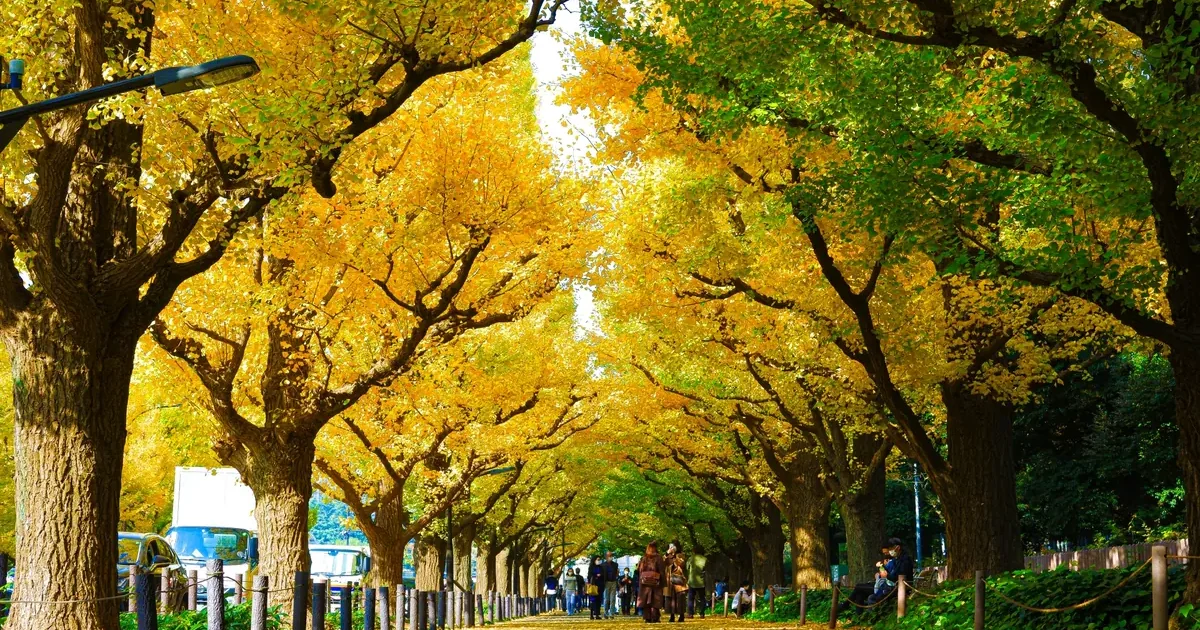
This is a research-based guide, checked October 31, 2026. The route combinations are editorial suggestions, and the photograph is a seasonal reference. We have not verified a current color stage for each garden and do not present these images as today's leaves.
November 13–24: Koishikawa Korakuen. November 25–December 6: Rikugien. Rikugien's advance sale is scheduled to start November 1 at 9:00 a.m. JST. Use the official ticket links in the evening section below, and check availability for your own date.
Choose Your Tokyo Autumn Outing
| What you want | Start here | Build the rest of the outing around it |
|---|---|---|
| A landscaped garden with water and autumn trees | Rikugien | Komagome, one unhurried garden visit and a meal |
| Garden scenery near other central-city plans | Koishikawa Korakuen | Iidabashi or the Tokyo Dome area; choose the correct gate |
| A yellow ginkgo avenue | Meiji Jingu Gaien | Aoyama, with time for a meal or cafe afterward |
| A larger garden during a Shinjuku day | Shinjuku Gyoen | A morning garden visit, lunch and an afternoon indoors |
| A garden after dark | The event operating on your date | A separate evening ticket, dinner and a warm layer |
Choose your main stop before adding a second one. A quieter pace leaves room to wait for a photograph, follow a garden path that looks inviting, or take a break without spending the day watching the clock. Changing districts is possible, but it should earn its place in your itinerary.
If your dates are early for central Tokyo, compare autumn day trips from Tokyo. That guide covers higher and more distant places, including Nikko, Hakone and Mt. Takao. A mountain excursion is a different day from visiting a city garden between other plans.
When to See Autumn Leaves in Tokyo
GO TOKYO's official autumn guide gives mid-November to early December as a broad city viewing season. Treat it as the period to investigate, not a promise that every tree will look its best on the same afternoon.
Ginkgo and maple trees create different scenes. If you want a golden avenue, prioritize a ginkgo location; if your ideal photograph is a red tree reflected in water, investigate garden reports. Switching between those goals may be more useful than chasing an exact citywide forecast date.
Our Japan autumn leaves guide explains the current nationwide forecast and the difference between a sample-tree date and a local observation. Before a specific outing, read the garden's own announcements and look for a dated report or photograph of the place you intend to enter.
Keep the event calendar separate. An illumination can open while foliage is still developing, and its closing date does not move simply because the leaves are late. Choose whether the lighting, garden design or strongest natural color matters most to you, then keep one alternative available.
Rikugien: Give One Garden Time
Rikugien is a good starting choice when you want the garden itself to be the main activity. Plan to explore at walking pace, with time to stop instead of treating the grounds as a quick photograph between trains. A nearby meal is a more relaxed companion than another timed attraction across the city.
The garden's official visitor page lists ordinary adult admission at ¥300, with daytime opening 9:00 a.m.–5:00 p.m. and last admission 4:30 p.m. Its access guidance gives about seven minutes on foot from JR Komagome's south exit or Tokyo Metro Komagome. These are normal visitor arrangements; evening entry follows the separate rules below.
Save the entrance, not just the center of the garden, on your map. The closest point to the railway on a map is not necessarily the gate accepting your ticket. Before leaving, check the latest notices for any path restrictions or changes that affect the part you most want to see.
For a half day, start with the garden and put lunch afterward. This gives you flexibility if you arrive later than expected or decide to stay longer. If an evening ticket is the reason for your visit, reverse the structure: eat first, arrive for the event with time to spare, and keep the rest of the evening free.
Koishikawa Korakuen: Choose the Entrance First
Koishikawa Korakuen suits a day based around Iidabashi or the Tokyo Dome area. The garden can provide the outdoor part of the day without requiring a journey to the edge of Tokyo. Its east and west entrances make the direction of arrival worth deciding in advance.
The official garden page lists daytime adult admission at ¥300, opening 9:00 a.m.–5:00 p.m., and last entry 4:30 p.m. For the west gate, it lists roughly three minutes from Oedo Line Iidabashi exit C3 or eight minutes from JR Iidabashi's east exit. For the east gate, JR Suidobashi's west exit is about five minutes away.
Those walking times describe access to a gate; they do not include a garden visit, a ticket queue or finding your platform. Add the time your group needs rather than turning the shortest published walk into a tight connection.
One practical daytime combination is the garden followed by lunch around Iidabashi. Another is a garden visit before other plans near Tokyo Dome. For the night event, use the west gate to enter and east gate to leave, then plan dinner or your station connection around that one-way arrangement. Do not assume the daytime entrance you used previously is also the night entrance.
Meiji Jingu Gaien: The Ginkgo Avenue
The famous avenue is in Meiji Jingu Gaien near Aoyama, separate from the Meiji Jingu shrine setting near Harajuku. Put the avenue's full name into your map. Searching only for “Meiji Jingu” can lead you to a different outing.
The outer garden's own seasonal page describes the ginkgo-lined approach and its changing appearance. This is an avenue experience: trees, perspective and a walk through the surrounding city, rather than an enclosed maple garden with a single admission route.
Combine it with an Aoyama meal or cafe and leave the afternoon adaptable. If the avenue is busy, enjoy the walk and choose a photograph that works from a permitted pedestrian space. Do not step into traffic or block a crossing to recreate an empty-road image.
This guide does not assume a particular 2026 festival, illumination or road closure at the avenue. Check current notices and signs on arrival. A seasonal photograph establishes the kind of scene the trees can create; it does not establish access arrangements or today's color.
Shinjuku Gyoen and Flexible Alternatives
Shinjuku Gyoen is useful when your hotel or later plans are already around Shinjuku. Put it before shopping or dinner, because autumn closing comes well before the evening. A morning garden visit also makes it easier to shorten the outdoor part if rain develops.
According to the Ministry of the Environment's admission guide, the October 1–March 14 schedule is 9:00 a.m.–4:30 p.m., with last entry at 4:00 p.m. Ordinary adult admission is ¥500. Normal Monday closures shift to the next weekday after a Monday holiday; the published November 1–15 chrysanthemum-exhibition period is an exception with daily opening.
Use the official access page to choose a gate that suits your arrival and onward plans. For a wider itinerary, our five-day Tokyo plan includes a Shinjuku day with room for the evening.
Yoyogi Park or Hama-rikyu can be alternatives when they fit your existing route; GO TOKYO includes both in its foliage guide. They are not extra stops you need to add to this list. Choose a place because it fits the day, then check its own admission, hours and recent reports before setting out.
For persistent rain, use our Tokyo rainy-day guide to choose an indoor replacement. There is little value in paying for transport across town just to spend a rushed, uncomfortable half hour outside.
Tokyo Autumn Illuminations in 2026
All times below are Japan Standard Time. These are scheduled openings, not confirmed peak-color dates.
| Garden | 2026 dates | Evening hours |
|---|---|---|
| Koishikawa Korakuen | Nov 13–24 | 18:00–21:00 |
| Rikugien | Nov 25–Dec 6 | 18:00–20:30 |
Last entry: 20:00 at Koishikawa Korakuen and 19:30 at Rikugien. Both list standard evening tickets at ¥1,000 in advance or ¥1,200 on the day. Closing time and last admission are different.
Sources: Koishikawa Korakuen's 2026 notice and Rikugien's event and ticket page, checked October 31.
Both gardens close at 5:00 p.m. and reopen at 6:00 p.m. for the evening event. Plan a break outside and buy the appropriate evening ticket; ordinary daytime admission does not allow you to stay through the changeover.
Buying the Right Evening Ticket
For Koishikawa Korakuen, the official advance-sale window ends November 12 at 11:59 p.m. Use the event notice for purchasing and any updated availability. Nighttime entry is through the west gate and exit through the east gate.
For Rikugien, online advance sales are scheduled from November 1 at 9:00 a.m., until 11:59 p.m. the day before the selected visit, subject to availability. Entry is through the main gate; the main and Somei gates are exits. The official page links a multilingual purchase option and says that printed or screenshot tickets do not replace the live smartphone ticket screen.
Treat the admission cutoff as a limit, not a target arrival time. A late arrival gives you less time to walk, and a queue can consume part of the evening. Choose one event as the main outing and put dinner before it or leave a flexible meal afterward. The two events occupy different dates, so they are alternatives for different parts of the season.
Three Half-Day Plans
These are flexible sequences, not timed tours or promises about how long a queue will take.
| Plan | Suggested sequence | Leave out if time is short |
|---|---|---|
| Garden-focused daylight | Komagome → Rikugien → a nearby meal | A second garden across town |
| Garden and central-city evening | Iidabashi → Koishikawa Korakuen → lunch or other nearby plans | An extra district before a night booking |
| Ginkgo and city time | Meiji Jingu Gaien → Aoyama meal or cafe | A separate mountain day trip |
A Shinjuku Gyoen morning can replace any of these when it is more convenient. If combining daylight sightseeing with a garden illumination, leave enough time for dinner, the changeover and the correct entrance. A comfortable break is part of the plan, especially with children or anyone who tires from standing.
For transport, compare the actual lines before buying a pass. Our Tokyo Subway Pass guide explains coverage and when ordinary fares make more sense. JR and subway travel are separate choices; the cheapest-looking pass is not useful if it excludes the trains you need.
Clothing, Bags and the Final Check
Dress for time spent standing after dark as well as the afternoon walk. Carry a removable warm layer and wear shoes you already find comfortable. Our autumn clothing guide covers November layers; adjust them to the forecast for your travel day.
Keep luggage out of the garden plan when possible. Ask your hotel about storage or compare the options in our Japan luggage storage guide. If collecting a bag after an illumination, the storage closing time matters just as much as the garden closing time.
Before leaving, check the named garden's latest notice, your ticket date, entrance, last-entry time and route home. Save a rain alternative and make sure your phone can display any required ticket. One well-chosen place with time to enjoy it is enough for a satisfying autumn afternoon.
Frequently Asked Questions
GO TOKYO gives mid-November to early December as the broad viewing season. Maples and ginkgo trees can peak at different times, and a city forecast is not an exact date for an individual garden. Check the named garden's recent updates before visiting.
No. Rikugien, Koishikawa Korakuen, Meiji Jingu Gaien and Shinjuku Gyoen offer different city outings. Choose one main garden or avenue near your other plans. Mountain destinations require a separate timing and transport decision.
No. The famous ginkgo avenue is in Meiji Jingu Gaien near Aoyama, separate from the Meiji Jingu shrine setting near Harajuku. Search for the avenue itself when choosing a station or walking route.
No. The 2026 events at Rikugien and Koishikawa Korakuen require their own evening tickets. Both gardens close at 5 p.m. before reopening at 6 p.m. Do not plan to remain inside on an ordinary daytime ticket.
Koishikawa Korakuen is scheduled for November 13–24, and Rikugien for November 25–December 6. These are event dates, not promises of peak leaves. Rikugien's advance tickets are scheduled to go on sale November 1 at 9 a.m. Japan time.
Compare the lines and individual fares for your actual route. One garden and a nearby meal may not justify a pass, and a subway ticket does not cover JR trains. Choose your destination before choosing a transport product.

Written by
JAPANODE
Based in Japan, researching practical routes and official visitor information for travelers.
You Might Also Like
 Itinerary
Tokyo 5-Day Itinerary: A Practical Area-by-Area Plan
9 min read
 Planning
Japan Autumn Leaves 2026: Forecast & Booking Guide
16 min read
 Day Trips
9 Best Autumn Leaves Day Trips from Tokyo in 2026: Nikko, Mt. Fuji, Hakone & More
9 min read
 Planning
What to Wear in Japan in Autumn: September, October & November Packing Guide
13 min read