On this page
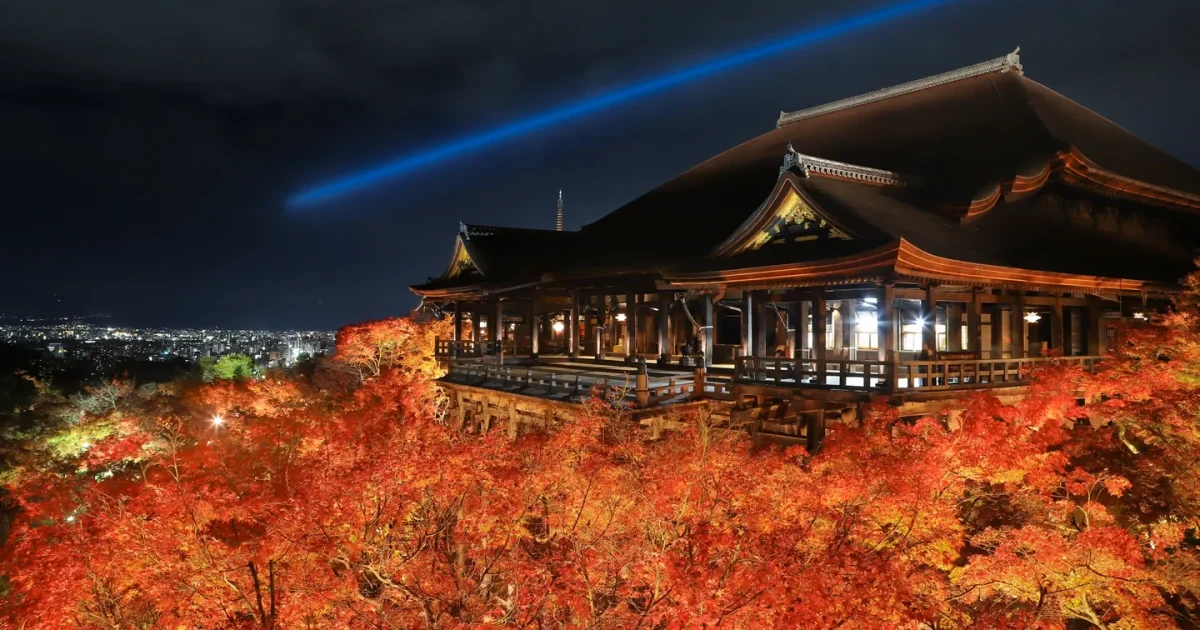
Choose one Kyoto autumn illumination as the anchor of your evening. Kiyomizu-dera suits a southern Higashiyama day, Eikando pairs with Nanzen-ji, Kodai-ji fits a garden-focused evening near the old streets, and Toji works well when you want to finish near Kyoto Station.
The most useful choice is often the one that fits your dates and daytime route. A famous temple across the city can become a stressful final stop when you add dinner, admission queues and the journey back. This guide compares four confirmed night visits and explains how to turn them into a realistic evening.
The dates below are published opening schedules. They do not confirm that leaves are red on those dates. This is a research-based planning guide; photographs show earlier seasonal scenes. The 2026 dates must be rechecked before using this guide for a later year.
For daytime sightseeing and a wider choice of gardens, start with our Kyoto autumn leaves guide. Here, the focus is what changes after dark: entry rules, warmth, photography, dinner and getting home.
Confirmed Kyoto Autumn Illumination Dates for 2026
All times are Japan Standard Time. Adult prices below refer to the stated evening visit, not every exhibition or optional area within a temple.
| Temple | 2026 dates | Evening timing | Adult admission |
|---|---|---|---|
| Kodai-ji | Oct 23–Dec 13 | Lights from 5:00 p.m.; last entry 9:30 p.m.; closes 10:00 p.m. | ¥800 |
| Toji | Oct 31–Dec 13 | 6:00–9:30 p.m.; last entry 9:00 p.m. | ¥1,000 |
| Eikando | Nov 20–Dec 6 | Entry 5:30–8:30 p.m.; closes 9:00 p.m. | ¥1,000, junior-high-school age and above |
| Kiyomizu-dera | Nov 21–30 | Extended opening until 9:30 p.m.; last entry 9:00 p.m. | ¥500 |
Sources: Kodai-ji's event notice and admission page; Toji's 2026 autumn notice; Eikando's current visitor information; Kiyomizu-dera's night-viewing notice and the Kyoto City official 2026 illumination listing.
Keep the distinction between last entry and closing time. Arriving just before a listed cutoff may leave little time inside, and crowd controls can affect admission. Aim for a visit you can enjoy without rushing through the grounds toward the exit.
Which Events Fit Your Travel Dates?
Before November 20, the dates above give you Kodai-ji and, from October 31, Toji. From November 21–30, all four schedules overlap. In December, Kiyomizu-dera's autumn night opening has finished; Eikando continues through December 6, with Kodai-ji and Toji through December 13.
These overlaps help you choose an evening, but do not prove which temple will have the best foliage. If a specific venue matters most, plan around its confirmed opening. If color matters more than the event, leave the venue choice flexible until recent garden reports are available.
Choose Your Temple by the Day You Already Have Planned
Kiyomizu-dera: Finish a Southern Higashiyama Day

Choose Kiyomizu-dera when you want the illuminated wooden stage and hillside setting to be the main event. It fits a day exploring the streets around Kiyomizu and Kodai-ji without crossing Kyoto again after dinner.
The temple's Japanese night-viewing notice explicitly says reservations are unnecessary for its special night viewing. That does not mean entry will be immediate. Keep enough time for the uphill approach and the queue, especially if you are carrying a camera or traveling with someone who walks slowly.
The official access page warns that map apps can suggest routes that do not enter the temple. Check the temple's own approach guidance instead of following a shortcut blindly. Save the route back to your station while you have time to look at it calmly.
Kodai-ji: Garden Reflections and a Longer Event Season

Kodai-ji is a good choice if your dates fall outside Kiyomizu-dera's short late-November opening. Its 2026 event spans a longer part of autumn, giving October and early-December visitors an evening option even when foliage timing differs.
Its official notice says there is no daytime-to-nighttime replacement session, but leaving the grounds ends use of that ticket. That matters if you plan to go out for dinner and return: do not assume the same admission permits re-entry. Decide whether to eat before entering or after you leave.
A later closing time can be useful, but should not turn the visit into an endurance test. If you have been walking since breakfast, a seated break before admission may improve the evening more than adding another temple.
Eikando: A Separate Evening after Nanzen-ji
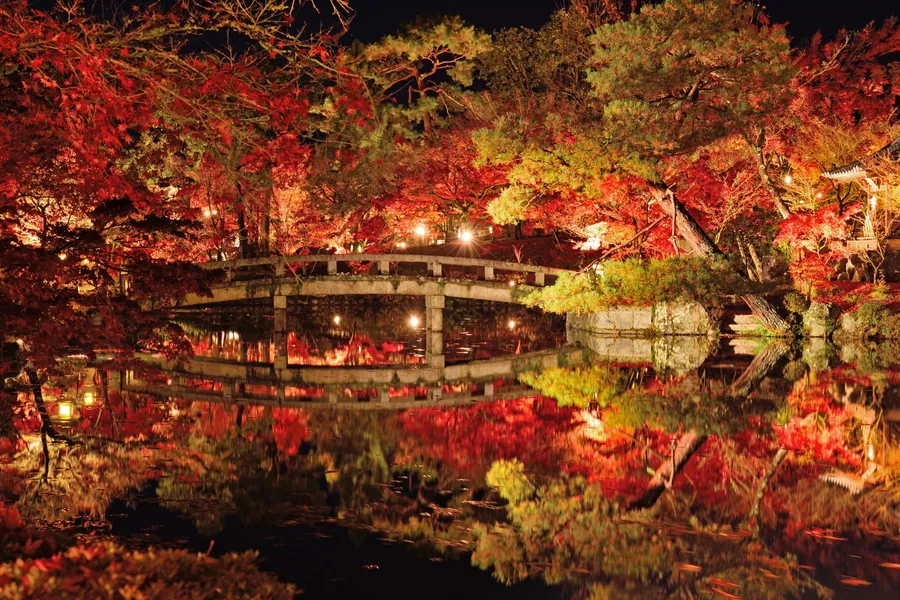
Eikando is the natural night option for an eastern Kyoto day. Explore Nanzen-ji and the nearby canal scenery in daylight, then take a break before the evening session.
Eikando's current notice says advance admission tickets are unavailable. Buy on the day. Daytime visitors must leave by 5:00 p.m., and a daytime ticket does not carry over into the evening. The temple also warns that reception may close earlier when congestion requires it.
If you want both visits, budget two admissions and a gap between them. The daytime exhibition and evening garden experience are different visits; a double visit makes sense when that temple is your priority, but is unnecessary for a first introduction to Kyoto's autumn nights.
Toji: A Station-Area Evening with a Pagoda View

Toji suits travelers staying near Kyoto Station or returning there for onward transport. Its autumn night opening includes the illuminated grounds, Kondo and Kodo. Do not confuse the evening ticket with daytime combinations or the separate daytime opening of the pagoda's first floor.
This can be a useful alternative when your day has already taken you across the city. Check the entrance and your route back before fixing dinner. If you have a late train, work backward from retrieving your bags and reaching the correct platform, not simply from the temple's closing time.
Toji's broader setting offers a different composition from a close-up maple garden. Choose it because you want the temple buildings and evening atmosphere as well as foliage, especially early in the event period.


Three Practical Evening Routes
The following are planning suggestions, not guided-tour timetables. The walking, meal and admission buffers need to match your pace and the conditions that day.
| Route | Daytime anchor | Break | Evening anchor | Return plan |
|---|---|---|---|---|
| Southern Higashiyama | Kiyomizu approach streets or another nearby daytime visit | Early dinner or tea | Kiyomizu-dera or Kodai-ji | Choose your rail or bus approach before entering |
| Eastern Kyoto | Keage, Nanzen-ji and canal scenery | A seated meal before the night session | Eikando | Check the walk toward Keage and onward transport |
| Kyoto Station area | Your daytime sightseeing elsewhere | Return to your hotel or leave bags | Toji | Leave time for bag collection and the station |
Southern Higashiyama: Make the Second Temple Optional
Kiyomizu-dera and Kodai-ji are plausible partners because they belong to the same district. Still, two paid night visits can mean two queues, extra walking and a late meal. Choose the one you care about most and protect time for it.
If you finish early and still have energy, check the other venue's last-entry time before deciding to continue. An optional second stop should feel like a bonus, not a booking you have to rush toward. Families and visitors with an early departure the next morning may prefer one garden followed by dinner.
For a cultural experience before the evening visit, Sakaguchian's tea ceremony near Kiyomizu-dera fits this district. The checked GetYourGuide listing describes a 45-minute session with an English-speaking instructor, matcha and Japanese sweets. Choose an available daytime session, leaving time for a meal and the temple queue. The tea ceremony has its own admission and meeting point; temple night admission is separate. Check the current child-age restriction and other participation conditions before booking.
A Garden Tea Ceremony before Your Temple Evening
Add a tea ceremony near Kiyomizu-dera to a southern Higashiyama day, then leave time for dinner before the illumination.
Best for
Travelers who want matcha and a cultural introduction before a Kiyomizu-dera or Kodai-ji evening.
Before booking
A separate experience: it does not include temple night admission. Check session times, child-age rules and the walk to your chosen temple.
Live price & availability
Powered by GetYourGuide · we may earn a commission at no extra cost to you. Check tea ceremony times on GetYourGuide
Eastern Kyoto: Plan for the Gap between Sessions
Eikando's entry rules make the interval important. Do not fill the late afternoon with a distant attraction just because daytime sightseeing has ended. Stay in the area, take a rest and return with enough time for the evening queue.
A Kyoto tea ceremony can be a separate daytime experience, but choose the actual venue by location. A tea session near Kiyomizu is not automatically convenient for an Eikando evening across eastern Kyoto.
Station Area: Keep Your Departure Flexible
For an Osaka-based trip, check the return route before leaving your accommodation. The best station depends on where you are staying in Osaka, so do not assume Kyoto Station is always your final interchange. Our four-day Kansai itinerary gives the wider trip context.
If you are leaving Kyoto with luggage, separate sightseeing from bag collection. A storage location's opening hours can become the earliest deadline of the evening. Compare options in our Japan luggage storage guide.
How Foliage Timing Changes the Choice
An illumination can be worth seeing before peak leaves because the buildings and lighting are part of the experience. Decide whether that is enough for you. If your main goal is red maple photography, the opening calendar alone cannot tell you when to visit.
On October 11, the English Kyoto foliage calendar still showed the completed 2025 season. Kyoto's seasonal-information page lists foliage updates from late October. Check the year and the update date of each report before using it.
What the Previous Three Autumns Tell Us
Kyoto's JMA sample-tree maple dates were December 13 in 2023, December 20 in 2024 and December 10 in 2025. The October 1 forecast for 2026 is December 11. Those markers demonstrate annual variation, but do not mean you should wait until mid-December for these night visits.
These dates come from JMA's maple observation records and the Japan Meteorological Corporation's October 1 forecast. They refer to a Kyoto sample-tree marker, not the measured peak at every temple or garden. Individual gardens can be colorful much earlier. Several evening events end before those sample-tree dates. Match a local foliage report with a confirmed event date, rather than substituting one for the other.
Tickets, Tours and What You Actually Need to Reserve
Start with the temple's own admission route. A paid guide can add cultural explanation, meeting support or a structured evening; it is not automatically needed to obtain ordinary admission.
Before paying for a tour, identify the named temple and check four details: the event date, whether admission is included, where the group meets, and where it finishes. A listing described as an evening Kyoto walk might focus on streets and neighborhoods without entering any illuminated garden.
Likewise, do not interpret “ticket included” as queue-free access unless the provider explicitly states that arrangement. A small group still has to follow the temple's crowd controls. Choose a guide for the service you want, and compare the total with the direct admission shown above.
For a different evening experience, our Arashiyama autumn and Sagano train guide explains the illuminated railway. Treat that as an alternative evening in western Kyoto, with its own reserved departure and return journey.
A Gion Night Walk on Another Evening
If you have another evening in Kyoto, a guided Gion walk offers a different way to enjoy the city after dark. The GetYourGuide listing describes a 100-minute English-language walk, usually limited to about ten people, starting outside Minamiza Theatre. The guide explains the district's streets, geisha culture and shrine customs.
This is a neighborhood walking tour, not admission to the four autumn temple illuminations above. Geiko or maiko sightings are not guaranteed. Choose a separate evening rather than squeezing the tour between temple queues and last-entry deadlines. Its route includes stairs and is not suitable for wheelchairs, strollers or visitors with limited mobility. Check the available start time for your date, arrive at least five minutes early, and allow extra time if reaching the meeting point by bus or taxi.
Discover Gion after Dark with a Local Guide
Spend another Kyoto evening exploring traditional streets and local culture on a guided Gion walk.
Best for
Travelers who want cultural context for Gion's streets on another evening in Kyoto.
Before booking
Does not include the four temple autumn illuminations. Geisha sightings are not guaranteed; stairs make the route unsuitable for wheelchairs, strollers and limited mobility.
Live price & availability
Powered by GetYourGuide · we may earn a commission at no extra cost to you. Check Gion night walk times on GetYourGuide
Stay in Gion for a Southern Higashiyama Evening
Hotel The Celestine Kyoto Gion is a hotel to consider when you want your Kyoto stay to include the Gion and southern Higashiyama area. Staying in this district lets you plan a local return after a Kiyomizu-dera or Kodai-ji evening instead of automatically crossing the city to Kyoto Station. Save the actual walking route, including slopes and steps, before heading out.
The hotel's official access page places it about a ten-minute walk from Gion-Shijo Station's Exit 1. This location fits a southern Higashiyama evening; an Eikando, Toji or Arashiyama visit still needs its own transport plan. This is a location-based suggestion, not a personal review of a stay.
Hotel The Celestine Kyoto Gion
Make your temple evening part of a Kyoto stay
- Gion location
- Compare rooms and meal plans
- Four booking sites
Best for
Travelers planning a Gion stay with a Kiyomizu-dera or Kodai-ji evening.
Before booking
The location does not remove walks, slopes or admission queues; other Kyoto districts still require transport.
Why it may fit
Consider a Gion base for daytime walks and a southern Higashiyama temple evening. Compare the same dates, room category, meals and cancellation terms across booking sites.
Compare your stay
Check the same dates, room, meals and cancellation terms on each site.
* Affiliate link — JAPANODE receives a commission when a purchase is attributed to this link
The GetYourGuide and hotel booking links are affiliate placements. JAPANODE may earn a commission if you book, at no additional cost to you. Availability, prices and booking conditions depend on the option you select.
Clothes, Photography and Comfort after Dark
Night viewing involves more standing than a daytime walk. Bring a layer you can put on in the queue, comfortable shoes and a small bag that keeps your hands free. See our autumn clothing guide for month-by-month packing, then check the evening forecast.
Avoid making the visit depend on a long-exposure photograph. Eikando prohibits tripods and similar equipment, and each venue can impose its own restrictions. Read the current rules and follow staff instructions about where you can stop. A clear path matters more than reproducing a photograph from a previous season.
Rain can change both the atmosphere and the walking conditions. Plan an indoor break, protect your camera and allow extra time on steps. If anyone in your group needs step-free access, verify the night route with the actual venue; the daytime access description may not answer every evening question.
Carry enough phone battery for navigation and your return journey. If a child or companion is tired, shorten the evening. One comfortable visit is usually a more satisfying memory than finishing a list while watching the clock.
Before You Leave Your Hotel
Check that the venue is open on your exact date, then save its last-entry time, admission rule and return route. Look at the latest foliage report separately. Agree on a meal plan and make any second temple optional.
For future autumn trips, retain the district pairings but revisit the annual schedule. A 2026 date, price or ticket rule should never be silently carried into 2027. The permanent value of this guide is helping you choose an evening that fits the rest of your trip.
Sources checked October 11, 2026. Event information comes from the linked temple notices and Kyoto City tourism information. Route combinations and booking tradeoffs are JAPANODE's planning suggestions, not reports of personal attendance.
Make it your trip
Still planning your Japan trip?
Pick the question on your mind. Compare your options, check the details and take one more thing off your list.

Which eSIM fits your Japan trip?
Maps, messages, hotspot use: compare five providers by data allowance, network and plan limits before you choose.
Find my Japan eSIM
What should your travel insurance cover?
Compare medical cover, cancellation and activity limits across five options, with the exclusions worth checking.
Compare cover & limitsWould a JR Pass save you money?
Add your train journeys and compare individual tickets with the nationwide pass. See which costs less for your route.
Calculate my rail costsFrequently Asked Questions
Confirmed dates checked October 11 include Kodai-ji from October 23 to December 13, Toji from October 31 to December 13, Eikando from November 20 to December 6, and Kiyomizu-dera from November 21 to November 30. These are event dates, not guaranteed peak foliage dates.
Rules differ by venue. Kiyomizu-dera says reservations are unnecessary. Eikando says advance tickets are unavailable and admission is purchased on the day. Check the official notice for each venue; a guided tour reservation does not automatically include temple admission or priority entry.
No. Daytime visitors must leave before the night session, and daytime and nighttime admission use different tickets. Build a break into your itinerary if you want to visit twice.
Toji is a practical option for a Kyoto Station-based evening. Confirm the entrance and walking route, and allow time to collect any stored luggage before your onward train. It is in a different area from the Higashiyama temples.
It can work for nearby venues with overlapping dates, such as Kiyomizu-dera and Kodai-ji, but queues and walking can make the evening rushed. Choose one main venue and make a second visit optional. Check last admission separately from closing time.
Do not assume so. The dates in this guide are confirmed for 2026 only. Use the area routes for future planning, then confirm the next season's event dates, prices and ticket rules when the temples announce them.

Written by
JAPANODE
Based in Japan, researching practical travel routes, seasonal events and booking decisions for visitors.
You Might Also Like
 Planning
Kyoto Autumn Leaves: 9 Places, Best Time & Area Routes
14 min read
 Planning
Japan Autumn Leaves 2026: Forecast & Booking Guide
11 min read
 Itinerary
4-Day Kansai Itinerary: Kyoto, Osaka & Nara (2026 Local's Guide)
18 min read
 Planning
What to Wear in Japan in Autumn: September, October & November Packing Guide
11 min read