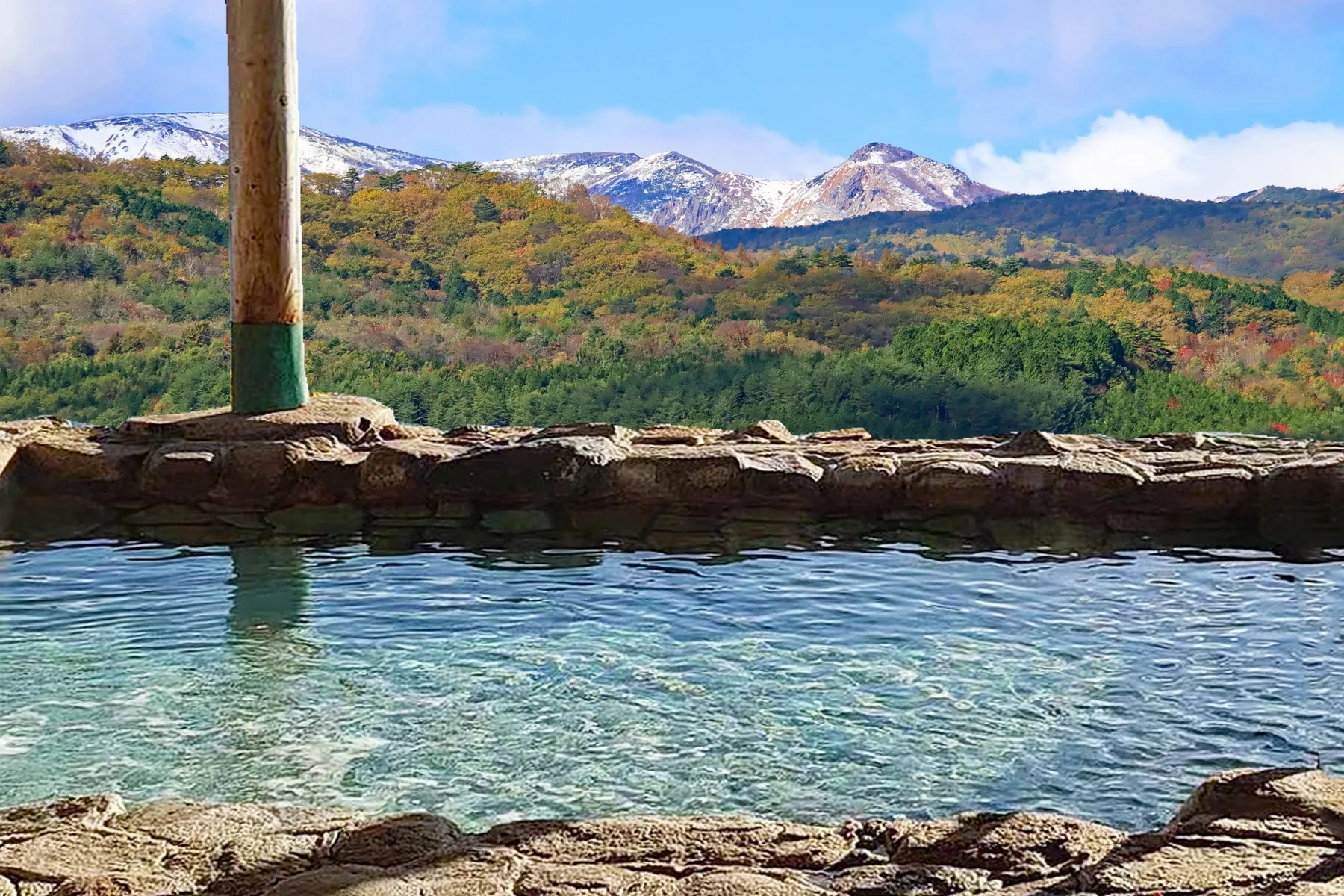
Onsen / Water, landscape & the art of a pause
The warmth
beneath.
A forest pool. A wooden tub facing the mountains. A pause at a footbath. Across Japan, onsen opens onto many different ways to spend a day.
From Hokkaido to Kyushu
One country.
Many ways to soak.
Japan's hot springs reach from the north to the southern islands of Kyushu. They sit among mountains, beside the sea and within towns. Even the word onsen leaves a lot to discover: the water, the shape of the bath and the life around it.
Start with the setting you want. Then look more closely at the spring and the way you would like to use it.
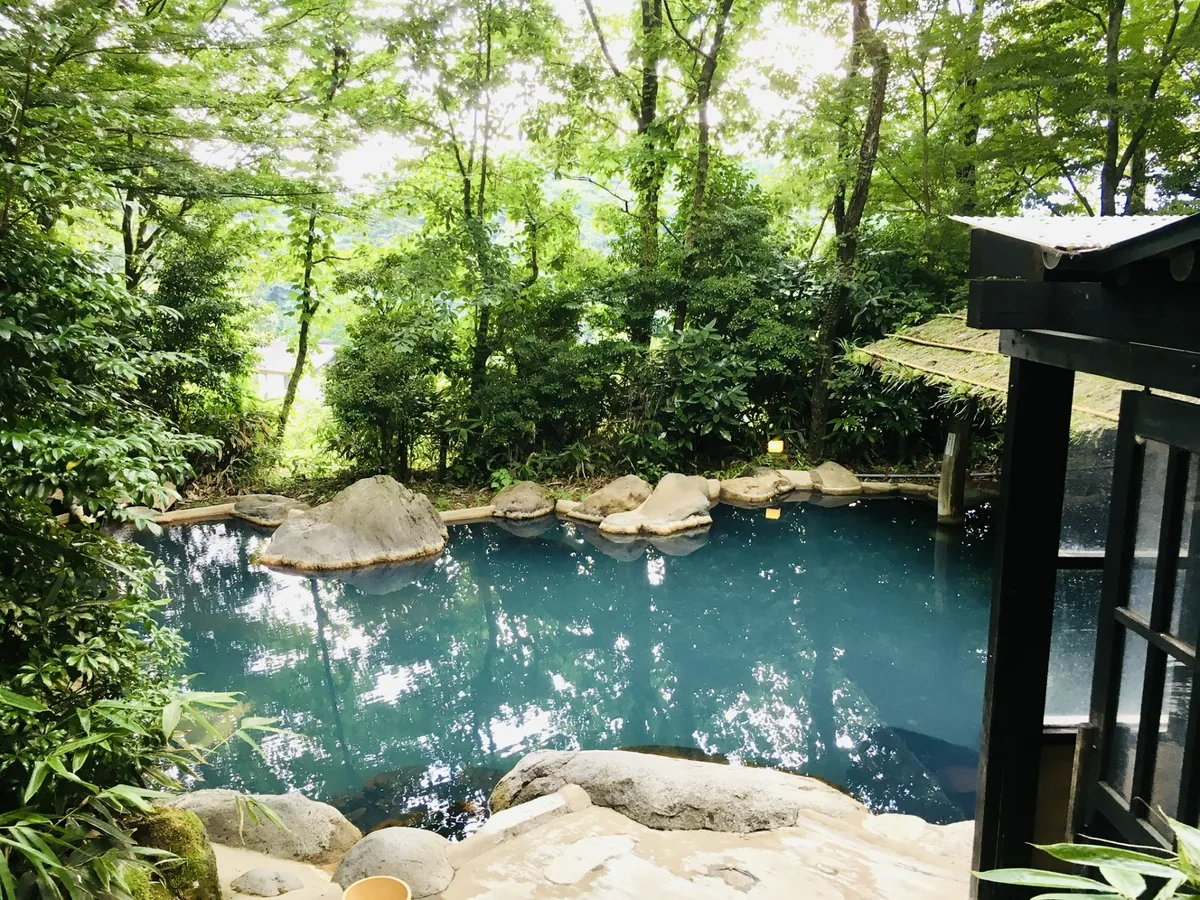
Rotenburo / Open-air bathing
Under the trees.
A rock-edged pool brings the surroundings close: branches above, stone beside the water, light changing across the surface. Rotenburo describes an outdoor bath; its spring water and facilities still vary from place to place.
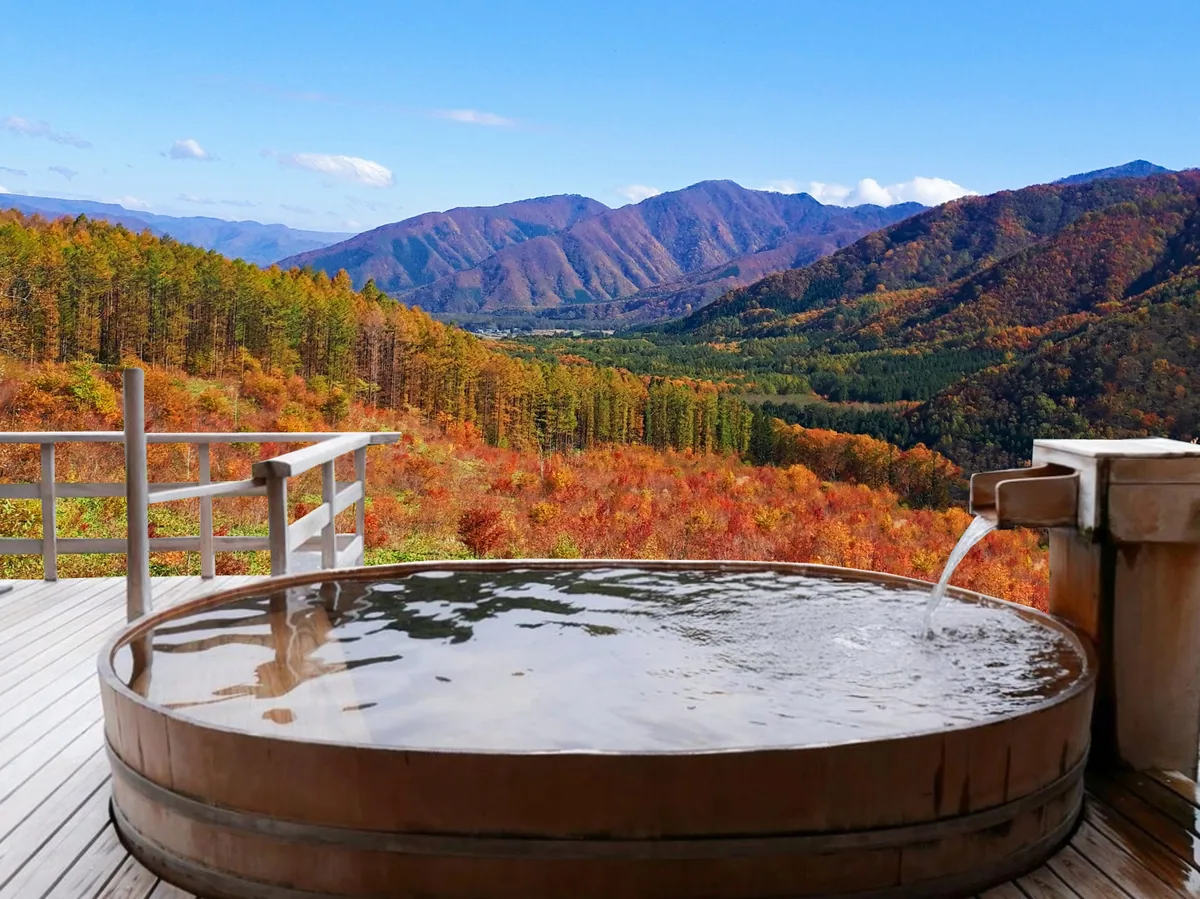
Wooden tubs / A different scale
Beyond the edge.
A bath can be a broad pool or a small wooden tub. Here, the rim frames a whole valley. The season becomes part of the view, giving you another reason to choose when to go.
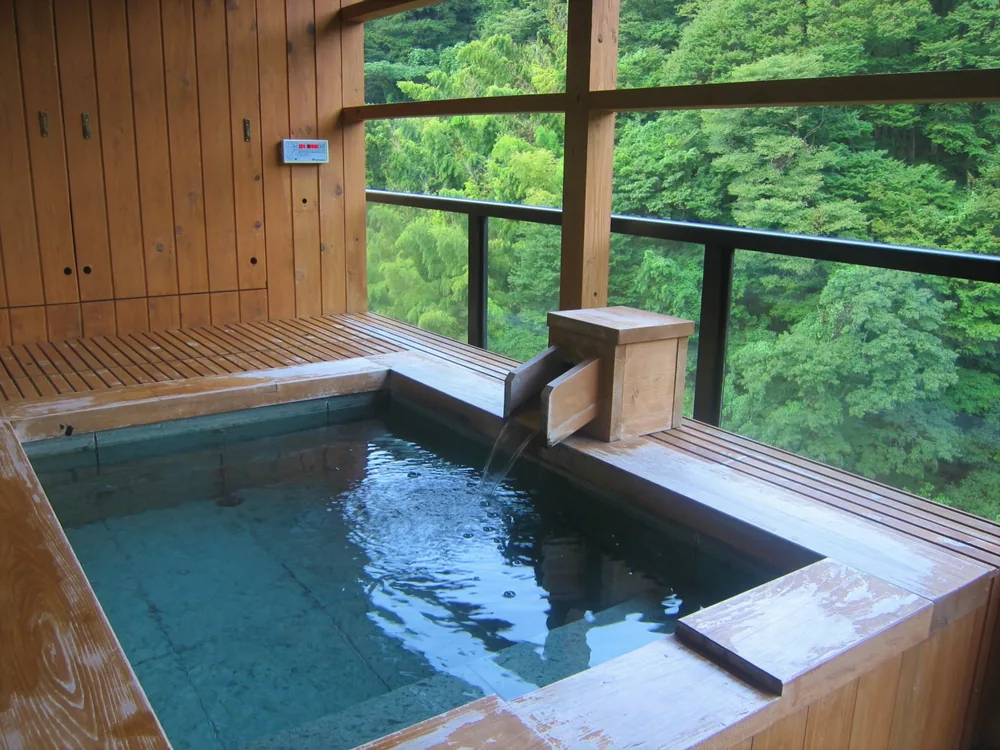
Indoor bathing / A view from within
Inside, by the window.
The landscape does not disappear when you step indoors. A window can frame the trees while the room gives the bath a quieter sense of enclosure. If you want a private bath, check that option separately; size alone does not tell you whether a bath is shared.
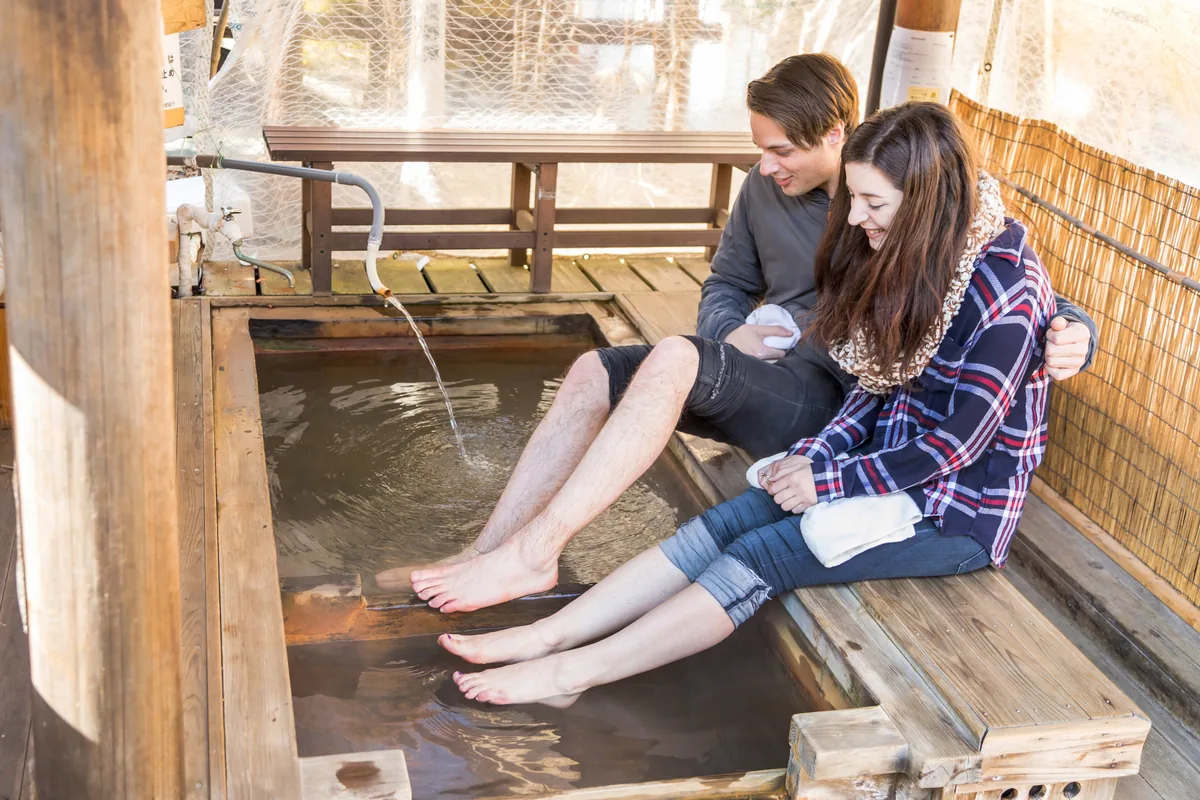
Ashiyu / Footbaths
Just your feet.
An ashiyu offers a smaller encounter with the water: sit at the edge and soak your feet while keeping your clothes on. Carry a small towel for afterward. It can be a pause in a town walk rather than the focus of a whole afternoon.
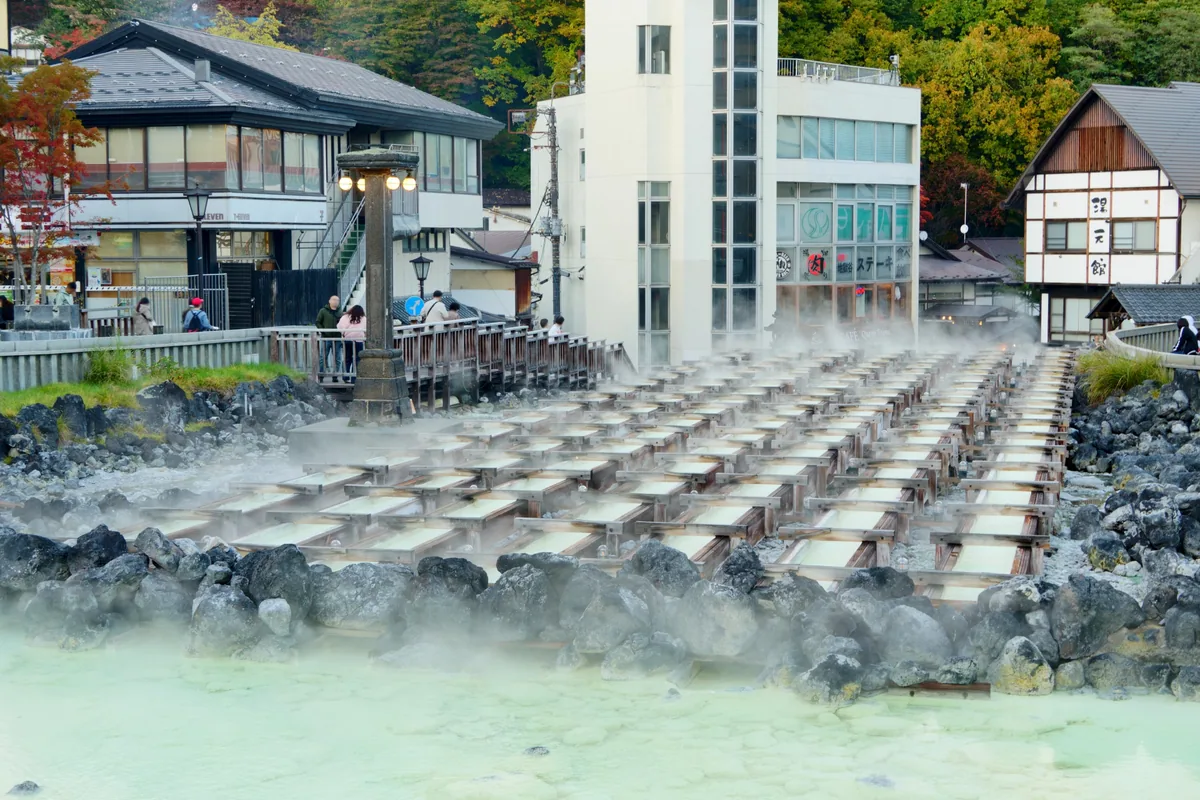
The photographs illustrate different bathing settings; they do not identify the destinations below or the Tokyo and Osaka experiences. Outdoor baths and footbaths: JNTO's onsen guide ↗.
A few places to begin
Follow the warmth
across Japan.
Hokkaido / The north
Noboribetsu
The volcanic landscape of Jigokudani makes the source of the town's hot water part of the visit.
Explore Noboribetsu ↗Gunma / Mountain country
Kusatsu
A hot-spring destination at the base of Mount Kusatsu-Shirane, with time to spend in the town as well as its baths.
Explore Kusatsu & the parks ↗Hyogo / A town to walk
Kinosaki
Walk between public bathhouses in a yukata and let the town become part of your stay. Check which baths are open.
Explore Kinosaki ↗Kagoshima / Southern Kyushu
Ibusuki
Even immersion is optional: Ibusuki is known for seaside sand baths warmed by underground hot springs.
Explore Ibusuki ↗
The landscape, in liquid form
A bath begins
below ground.
In many of Japan's volcanic regions, water travels underground, warms through geothermal heat and picks up dissolved substances from the rocks it encounters. The route helps shape what eventually reaches the surface.
That is why one spring can be clear while another is cloudy, rusty or strongly scented. Japan also has non-volcanic hot springs. There is no single color, smell or mountain view that every onsen must share.
Water enters the ground.
Underground pathways bring water into contact with minerals.
Geothermal heat warms the water.
A spring or well brings it within reach of a bath.
Conceptual sequence; not a cross-section of a particular spring. Water sources and heating mechanisms vary.
A source-water threshold, not a bathing recommendation. Under Japan's Hot Springs Act, qualifying water emerges from the ground at 25°C or above, or meets a specified substance threshold. A qualifying spring can therefore be cooler than you expect.
What the water does
Three things
your body can feel.
Minerals are only part of the story. Warm water also acts through heat, buoyancy and pressure—effects you can experience in an ordinary bath, too.
Warmth
Heat warms the body and affects circulation. A comfortably warm bath can feel relaxing; making it hotter or staying longer does not automatically make it more beneficial.
Choose a comfortable temperature. Leave the bath if you feel overheated or unwell.Buoyancy
The water supports some of your weight. That lighter feeling can reduce the load on joints while you are immersed. Notice the support without turning the bath into an exercise pool.
Move carefully when getting in or out; the support changes as you leave the water.Water pressure
Water presses on the immersed body. This affects circulation and can also add a burden to the heart and lungs. The deeper the immersion, the more this matters.
A health condition may change which temperatures and bathing styles are appropriate.The physical effects of bathing: Ministry of the Environment
Spring-specific indications describe potential therapeutic uses, not a guaranteed result from a holiday soak. Do not replace medical care with onsen bathing. If you have a heart, lung or other condition that affects heat tolerance, ask your clinician about bathing before your visit.
Official guidance on benefits, contraindications and safe bathing
Read the water before you enter
The most useful
thing in the room
may be a sign.
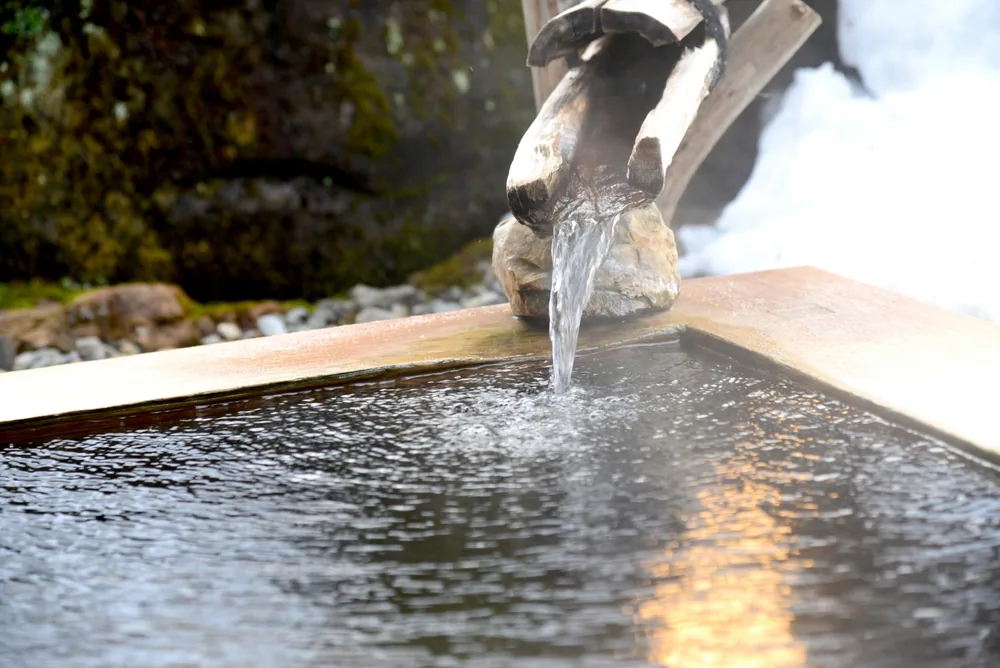
Look for the posted analysis and bathing information. It explains the spring's composition, source temperature, cautions and how the water is used. A beautiful photograph cannot tell you those things.
Heating, added water, circulation and disinfection affect how a facility manages its baths. “Natural” is not a complete description of the bathing conditions, and a strong smell is not a score for how good a spring is.
If the language is unfamiliar, ask staff which bath is suitable for a first visit and whether any specific precautions apply. Learning one detail about the water is a good way to turn a soak into a connection with the place.
Water analysis and required information: Ministry of the Environment
The hours between baths
A slower
kind of
itinerary.
The tradition of toji puts time at a hot-spring destination at the center of a stay. Bathing is part of it; so are rest, meals and the surrounding environment.
The Ministry of the Environment's discussion of modern toji emphasizes stepping out of the everyday routine. For a traveler, that can be as simple as leaving an afternoon open rather than filling every gap.
Walk through the town. Have something to eat. Read, talk, or sit somewhere with a view. Make the bath one part of an unhurried visit, with breaks and hydration in between.
The setting and rhythm of modern toji: Ministry of the Environment
The shared ritual
Arrive clean.
Leave the rush outside.
Before the water
Check the facility's tattoo and clothing rules. Wash and rinse in the washing area before entering the shared bath. Keep your phone in the locker.
In the bath
Enter gradually, keep towels and hair out of the water, and leave space for other bathers. Take a short first soak and get out before feeling overheated.
Afterward
Stand up slowly, dry off before returning to the changing room, drink water and rest. Skip alcohol before bathing. The pause afterward belongs to the experience.
From the story to your itinerary
Begin with
the bathing ritual.
You can meet Japan's bathing culture within a city day. These guided visits use tattoo-friendly sento: neighbourhood public bathhouses where you can learn the customs, take a soak and leave a little of the day behind.
Sento describes a public bathhouse; onsen refers to qualifying hot-spring water. The two experiences below focus on everyday bathing culture; they do not promise natural hot-spring water or the mountain settings shown in our photographs.
Tokyo / Tattoo-friendly / Our pick for a first visit
Your first bath in Tokyo.
Let someone show you how. This one-hour sento visit pairs a soak with an English-speaking local guide, so you can learn the customs as you take part.
The operator selects a tattoo-friendly bathhouse and says a same-gender guide accompanies you inside. Learn the washing routine, what to do with your towel and how to share the bath comfortably.
Admission, towel rental and toiletries are included. The current listing meets at Shin-Okubo Station and limits the group to six people. It is a compact introduction you can build into a Tokyo stay; transport and drinks cost extra.
Guests bathe nude in separate men's and women's areas. This is a shared public bathhouse. Confirm the bathhouse's access rules and any support you need with the operator before booking.
The GetYourGuide link is an affiliate link. JAPANODE may earn a commission at no extra cost to you. Check the selected date, inclusions and cancellation terms before booking.
Osaka / Tattoo-friendly / Neighbourhood bathing culture
A neighbourhood pause in Osaka.
Meet a local guide, learn the stories and customs of the sento, then make time for the water. The experience brings an ordinary part of Osaka life into your trip.
The current listing allows 1.5–3 hours, with English guiding and up to four guests. It includes indoor and open-air baths, a cold bath, a steam sauna, towels and toiletries. The operator selects a tattoo-friendly sento; the dry sauna costs extra.
Allow time for the etiquette introduction and conversation afterward. Check the meeting point and duration for your selected departure.
The guide is male and can accompany men inside their bath. Women use the separate women's area independently, with guidance before and after bathing. No swimwear is worn. Check access restrictions before reserving.
The GetYourGuide link is an affiliate link. JAPANODE may earn a commission at no extra cost to you. Check the selected date, inclusions and cancellation terms before booking.
A little preparation
Before you go.
Are an onsen, a sento and a rotenburo different things?
They describe different aspects of a bath. Onsen refers to qualifying hot-spring water. Sento is a public bathhouse, which may or may not use it. Rotenburo means an open-air bath. A venue can fit more than one description.
Should I choose a spring to treat a medical condition?
Use professional medical advice for that decision. Posted indications do not promise a cure, and heat, water pressure or particular constituents can be unsuitable for some people. A travel booking page cannot assess your individual health needs.
Are these Tokyo and Osaka experiences tattoo-friendly?
Both operators say they select tattoo-friendly sento. That applies to the bathhouse used for your experience, not every bath in either city. Confirm any individual concerns with the operator before booking.
Do these city experiences use natural hot-spring water?
They are advertised as local sento visits. The Osaka listing explicitly describes a public bathhouse rather than a natural hot spring, and the Tokyo listing does not establish a qualifying spring source. Choose them for bathing culture and guided etiquette; choose a verified onsen separately if the spring water is your priority.
Can I wear a swimsuit or reserve a private bath?
The two guided sento experiences involve nude bathing in separate men's and women's areas; swimwear is not worn. They are shared public bathhouse visits, not private-bath bookings. Private baths elsewhere require separate arrangements, and their fees, access and tattoo rules vary.
Do I need a full day or an overnight stay?
A day-use bath can be one quiet stop in a city itinerary. An overnight stay gives you time for meals, the town and rest around bathing. Choose the rhythm you want, then compare the exact accommodation and bath arrangements.