On this page
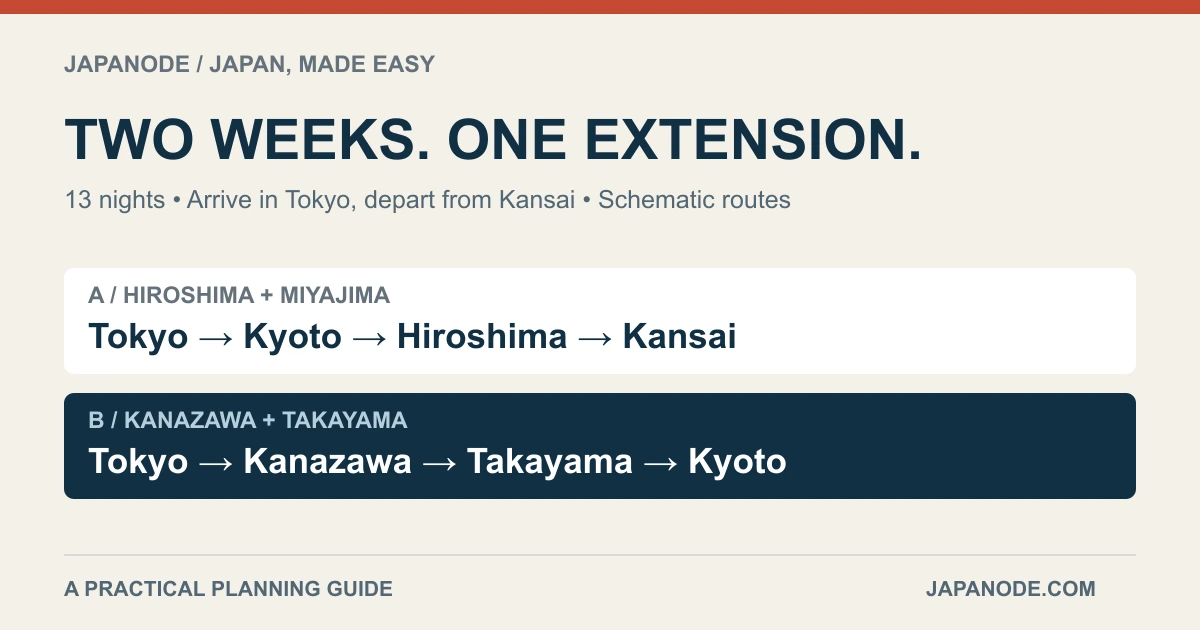
Two weeks is enough time to stop treating Japan like a race. Keep four nights in Tokyo and four in Kyoto, then choose one extension:
- Route A — Hiroshima and Miyajima: better for modern history, an island stay and simple Shinkansen logistics.
- Route B — Kanazawa and the Alps: better for gardens, preserved towns, mountain scenery and a stronger change of pace.
Do not add both by default. The extra pin on the map costs two hotel changes, several luggage decisions and the unplanned afternoon that makes a long trip enjoyable.
Both routes assume 13 nights / 14 calendar days, arriving in Tokyo and departing from Kansai International Airport. Reverse the order if the flight price is better. An open-jaw ticket removes the need to cross the country again on Day 13.
Disclosure: Some links on this page are affiliate links. JAPANODE may earn a commission at no extra cost to you. Every paid suggestion has a self-guided alternative, and the nationwide JR Pass is not recommended unless your own calculation supports it.
Quick Answer: Two Weeks, Two Routes
| Decision | Route A: Hiroshima & Miyajima | Route B: Kanazawa & the Alps |
|---|---|---|
| Best for | History, coastal scenery, sacred island, simpler rail | Gardens, crafts, old towns, mountain landscapes |
| Bases | Tokyo 4 / Kyoto 4 / Osaka 1 / Hiroshima 2 / Miyajima 1 / KIX 1 | Tokyo 4 / Kanazawa 2 / Takayama 2 / Kyoto 4 / KIX 1 |
| Hardest transfer | Hiroshima or Miyajima back to Osaka/KIX | Shirakawa-go highway bus and Takayama–Kyoto transfer |
| Weather sensitivity | Moderate; rain affects Miyajima but rail is simple | Higher in snow season; mountain buses and walking conditions matter |
| Nationwide JR Pass | Usually not worth ¥80,000 | Usually not; key buses are not covered |
| Choose this if… | Peace Memorial Museum and Miyajima are must-sees | You want the trip to feel different after Tokyo |
The routes share a planning philosophy, not every night. Route A travels west to Hiroshima and returns to Kansai for departure. Route B leaves the Golden Route early, crosses the Alps, then finishes in Kansai. Neither backtracks to Tokyo.
Key Facts: Nights, Rail Math and Booking Pressure
| Planning fact | Current answer |
|---|---|
| 14-day ordinary Japan Rail Pass | ¥80,000 online; ¥84,000 via an overseas designated agency for exchange orders purchased on or after October 1, 2026 |
| Kansai-Hiroshima Area Pass comparison | ¥17,000 for five days; check the covered trains and dates against the western extension |
| Tokyo → Kanazawa | About 2 hours 30 minutes on the Hokuriku Shinkansen according to official Kanazawa tourism information |
| Kanazawa → Shirakawa-go | Roughly 1 hour 20–30 minutes by highway bus; there is no train station in Shirakawa-go |
| Hiroshima → Miyajima | Allow for the train to Miyajimaguchi, walking and ferry waiting; the ¥100 visitor tax is separate from JR pass coverage |
For Route A, compare the Tokyo–Kyoto ticket plus the five-day western block with the nationwide product. The official Kansai-Hiroshima Area Pass is ¥17,000, checked October 17, 2026. Its Shinkansen coverage starts at Shin-Osaka, so it does not cover the Kyoto–Shin-Osaka Tokaido Shinkansen segment. If you use it on days 9–13, the day-14 airport journey is outside its validity. Price those excluded journeys separately.
Route B includes the Kanazawa–Shirakawa-go–Takayama highway-bus corridor, which the nationwide pass does not cover. Use our regional JR pass comparison to inspect the actual lines and dates. A pass to Kanazawa is not automatically a pass through Shirakawa-go and Takayama.
Use the JR Pass Calculator, then read the JR Pass guide for Nozomi/Mizuho supplements and regional alternatives.
A two-week trip does not require fourteen days of nationwide rail coverage. Compare the journeys you will actually take, the pass window and excluded transport before paying. The regional-pass and ordinary-ticket alternatives deserve a full calculation.
This is a researched itinerary proposal, not a firsthand account of traveling either complete route. Source-linked rules and prices are separated from our suggested pacing and budget assumptions.
Before Booking: Five Decisions That Shape the Whole Trip
1. Confirm Open-Jaw Airfare Before Hotels
Search Tokyo arrival/Kansai departure as a multi-city ticket, then compare it with a Tokyo round trip plus the final train. The cheaper airfare can still be worse after adding one night, a long transfer and the risk of crossing Japan before an international flight.
Do not travel from Hiroshima, Takayama or Kanazawa to an international departure on the same morning. Spend Night 13 in Osaka, near KIX or in Kyoto with a realistic airport train.
2. Choose the Extension Before Buying Rail Products
Hiroshima is a rail extension. The Alps route is a rail-and-bus route. A pass decision made before this choice is not a decision—it is a guess.
3. Limit One-Night Stays
Route A has three one-night stops: Osaka, Miyajima and the final airport-area night. If you dislike packing, keep night 9 in Kyoto instead of Osaka and spend all three Hiroshima/Miyajima nights in Hiroshima, visiting the island as a day trip. The total remains 13 nights. Route B has no one-night stop until the final airport-area night.
4. Forward the Large Suitcase Once
On Route A, forward the main suitcase from Kyoto or Osaka to the final Kansai hotel and take a small bag to Hiroshima/Miyajima. On Route B, forward it from Tokyo to Kyoto and carry a four-night bag through Kanazawa, Shirakawa-go and Takayama. Confirm receiving dates with both hotels.
The luggage storage guide compares forwarding, lockers, staffed counters and app-based storage.
5. Treat Arrival Day as a Real Day
Day 1 is airport transport, hotel check-in, food and one neighborhood. It is not Shibuya, Asakusa, teamLab and an evening tour. The route has enough days; use them.
Route A: Tokyo, Kyoto, Hiroshima and Miyajima
Days 1–4: Tokyo Without Crossing the City Repeatedly
| Day | Plan | Sleep |
|---|---|---|
| 1 | Arrive, set up an IC card, explore the hotel neighborhood | Tokyo |
| 2 | East Tokyo: Tsukiji or Toyosu, Asakusa, optional Ueno | Tokyo |
| 3 | West Tokyo: Meiji Jingu, Shibuya, Shinjuku | Tokyo |
| 4 | One day trip: Fuji, Kamakura or Nikko—or a quiet Tokyo day | Tokyo |
Group neighborhoods by geography. Use the Tokyo area-by-area itinerary to choose sightseeing blocks, remembering that this route includes only three full Tokyo days after arrival.
For Mt Fuji, keep Day 4 movable until the weather picture is clearer. A fixed tour reduces logistics but does not guarantee the mountain. The Mt Fuji day-trip guide compares train, bus, tour and self-drive options.
Days 5–8: Four Nights in Kyoto
| Day | Plan | Sleep |
|---|---|---|
| 5 | Shinkansen to Kyoto; walk the Kamogawa or central streets | Kyoto |
| 6 | Eastern Kyoto: Kiyomizu-dera, Higashiyama, Gion | Kyoto |
| 7 | Western or northern Kyoto: Arashiyama plus one nearby area | Kyoto |
| 8 | Nara day trip or a second unhurried Kyoto day | Kyoto |
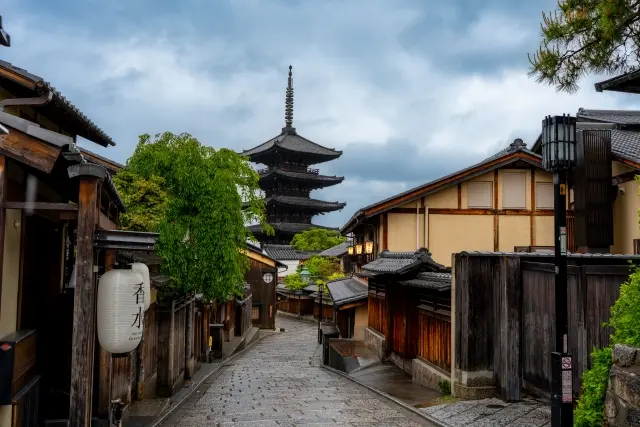
Use the three-day Kyoto plan for the full sightseeing days and the Kyoto transport guide for the operator choices. Four nights protect Kyoto from becoming a sequence of early alarms. Choose Nara if the Great Buddha, deer park and temple landscape matter; keep Kyoto if another transfer sounds tiring.
Reserve accommodation near Kyoto Station for rail convenience or around central Kawaramachi/Gion for evenings on foot. The right answer depends on which inconvenience you prefer.
 Four-night base
Where to Stay in Kyoto
Why it may fit
Compare Kyoto Station for easy transfers with central Kyoto for evenings on foot. Check the final total, local tax and cancellation deadline.
Before booking
Check the live price, availability, eligibility, and terms before paying.
Day 9: Osaka as a Transition, Not a Kyoto Substitute
Take a local train to Osaka, leave luggage and spend the afternoon around one area: Namba and Dotonbori for food, Umeda for skyline and transport, or the castle district for history. Sleeping in Osaka makes the westward Shinkansen easier and gives the final Kansai night a familiar fallback.
The 4-day Kansai itinerary covers the regional train logic and deeper Osaka/Kyoto trade-offs.
Day 10: Himeji on the Way to Hiroshima
Check out, store luggage at Himeji or use a forwarding plan, and visit Himeji Castle before continuing to Hiroshima. The castle's steep interior is not an effortless stop with large bags or limited mobility. Kokoen Garden is a good alternative or addition when time allows.
Do not add Kobe to this transfer day. Himeji plus two Shinkansen segments and hotel check-in are enough.
Day 11: Hiroshima's History Deserves a Full Day
Start with Peace Memorial Park and the Peace Memorial Museum. Allow the museum to set the pace; do not schedule a cheerful food tour immediately after it because a list says both fit geographically.
Keep the afternoon for Shukkeien, a shorter walk or rest, then choose dinner when you know how the day feels. Do not plan entry to Hiroshima Castle's keep: the official castle site confirms that it closed in March 2026; exterior viewing and specified surrounding facilities remain possible. Check the Peace Memorial Museum's official visitor information for admission and opening arrangements before travel.
Day 12: Miyajima as a Day Trip or Overnight
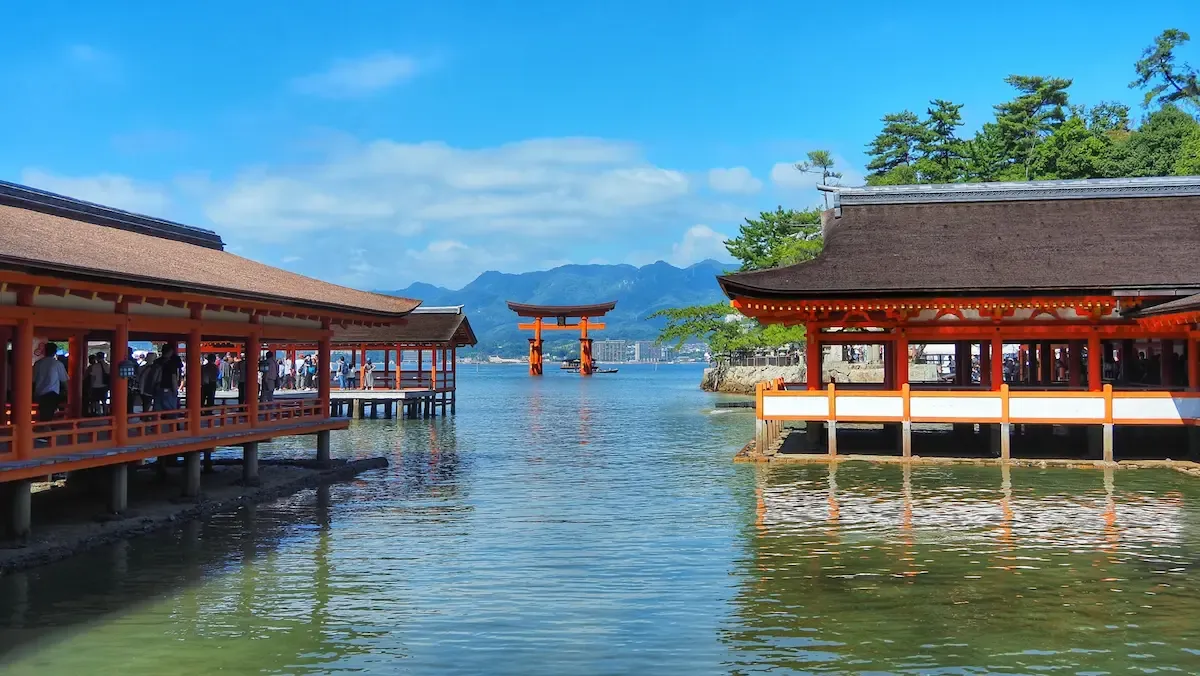
The simplest route is JR from Hiroshima to Miyajimaguchi, then the JR ferry. An overnight removes the pressure to leave with the biggest day-trip crowds and lets you see the island after many visitors have gone, but it costs another hotel change.
If you stay, carry only one night of luggage. Check the tide information for the torii view, the last transport, ropeway operation and hiking conditions. The ¥100 Miyajima visitor tax applies to most arrivals even when the JR ferry ride itself is covered by a pass.
Compare the official Hiroshima–Miyajima access options if you prefer a boat from central Hiroshima. A different ferry operator is not automatically included in a JR pass. For the island plan, use our Hiroshima and Miyajima guide.
Days 13–14: Return to Kansai, Then Fly
Return to Osaka or a KIX-area hotel on Day 13. This is a buffer, not a wasted day. If everything runs normally, enjoy a final dinner; if weather or transport changes, you still protect the international flight.
On Day 14, use the Kansai Airport transport guide to choose JR Haruka, Nankai Rapi:t, airport bus or another route based on the actual hotel.
Route B: Tokyo, Kanazawa, Shirakawa-go, Takayama and Kyoto
Route B keeps the same four Tokyo nights, then changes direction before Kyoto.
| Day | Plan | Sleep |
|---|---|---|
| 1–4 | Tokyo core plus one flexible day trip | Tokyo |
| 5 | Hokuriku Shinkansen to Kanazawa; Omicho Market or easy central walk | Kanazawa |
| 6 | Kenroku-en, castle area, Higashi Chaya and/or Nagamachi | Kanazawa |
| 7 | Highway bus to Shirakawa-go; continue by bus to Takayama | Takayama |
| 8 | Takayama old town, morning market, Takayama Jinya or Hida Folk Village | Takayama |
| 9 | Limited Express Hida toward Nagoya, then Shinkansen to Kyoto | Kyoto |
| 10–12 | Eastern Kyoto, western Kyoto, and Nara or Osaka | Kyoto |
| 13 | Move to Osaka/KIX area; final meal and flight buffer | Osaka/KIX |
| 14 | Depart KIX | — |
Why Kanazawa Comes Before Takayama
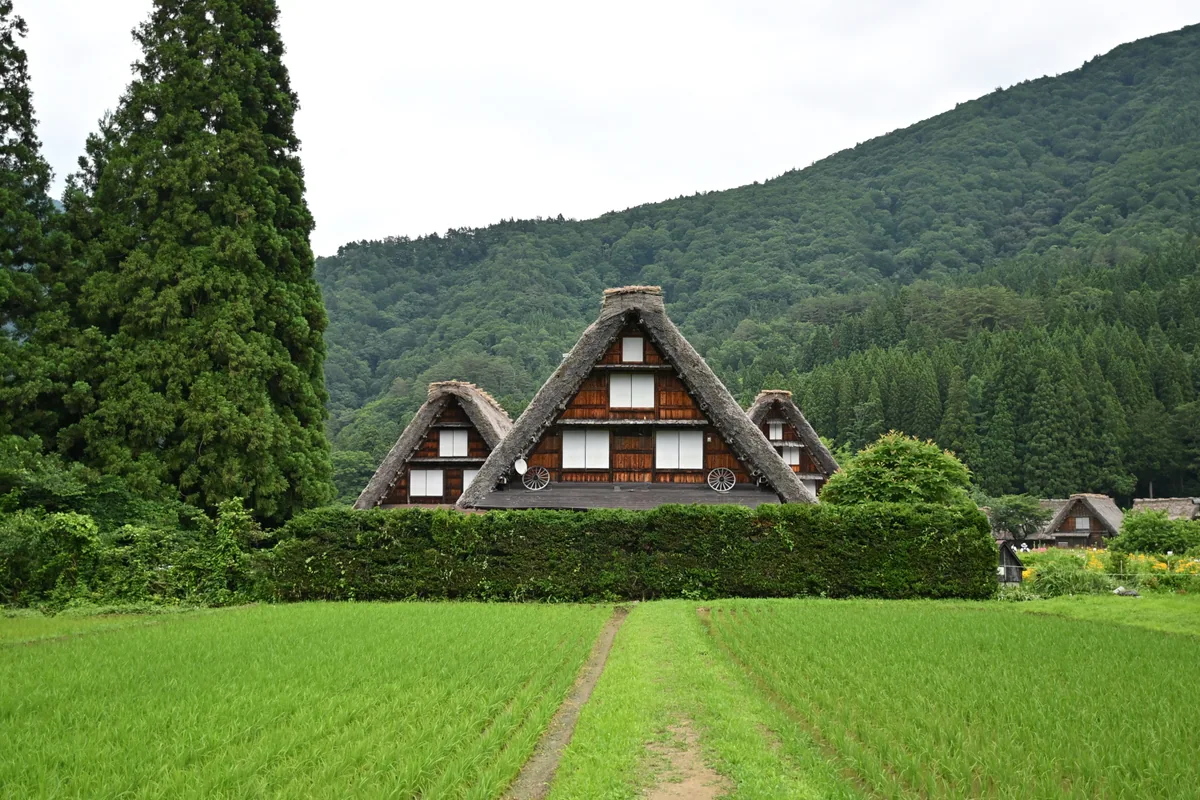
Tokyo to Kanazawa is direct on the Hokuriku Shinkansen and takes about 2 hours 30 minutes according to Kanazawa's official tourism guide. Kanazawa to Shirakawa-go takes roughly 1 hour 20–30 minutes by highway bus, and Shirakawa-go to Takayama is roughly 50 minutes.
There is no train station in Shirakawa-go. That is the route's defining constraint. Use the Nohi Bus timetable and booking links for both legs. Reserve the Kanazawa–Shirakawa-go and onward Shirakawa-go–Takayama services as separate journey segments where required. A direct Kanazawa–Takayama ticket is not a promise that you may break the journey for several hours. The operator warns that congestion and snow can cause substantial delays; avoid a tight onward train on the village day. Our Shirakawa-go access guide compares the practical routes.
A Single Booking for the Day 7 Transfer
LIMON Tours also sells a one-way Kanazawa–Shirakawa-go–Takayama transfer with a short village stop and luggage transport. It is a transport service, not a guided tour. At the October 17 check, the listing showed a 13:50 departure, roughly 80 minutes in Shirakawa-go and a scheduled 17:40 arrival in Takayama; confirm your departure date's instructions and allow for traffic or snow delays.
Choose it for a brief stop with one transport booking. For a half-day visit, lunch and time inside several houses, retain the separate Nohi Bus reservations described above. Do not combine this afternoon departure with a plan to spend the whole morning in the village.
Kanazawa to Takayama via Shirakawa-go
A one-way transfer matching Route B, with a short independent visit to Shirakawa-go between the two cities.
Best for
Travelers who want to reach Takayama the same day with one transport booking.
Before booking
The village stop is brief and there is no sightseeing guide. Use separate scheduled buses for a longer visit; arrival times can change.
Live price & availability
Powered by GetYourGuide · we may earn a commission at no extra cost to you.
One Shirakawa-go Day, Not a Village Checklist
Arrive with a reserved onward plan where required, walk the village, choose one house or viewpoint, eat, and continue. Winter changes the calculation: snow can be beautiful, but footwear, daylight and disruption risk matter more than photography.
If you want a slower village experience, stay overnight and remove one Kanazawa or Kyoto night. Do not force an overnight into the same 14 days without taking time from somewhere visible.
Takayama Needs Two Nights to Justify the Bus
Two nights produce one full day. That is enough for the preserved Sanmachi area, Takayama Jinya, a market and either Hida Folk Village or an onsen detour. One night produces two partial days dominated by arrival and departure.
The official Takayama guide says the Limited Express Hida trip to Nagoya takes about 140 minutes; from there, continue by Tokaido Shinkansen to Kyoto. Verify the through timetable because construction, seasonal service and train patterns can change.
The Budget for Either Route
Build the total from 13 nights and 14 calendar days, not fourteen hotel nights by accident. The following is a per-person calculation with hypothetical inputs, excluding international flights, shopping and insurance. None of its room or transport allowances is a bookable offer.
| Cost | Explicit assumption | Example total |
|---|---|---|
| Accommodation | 13 nights × ¥9,500 per person | ¥123,500 |
| Food and drinks | 14 days × ¥4,500 | ¥63,000 |
| Intercity trains and buses | Assumed allowance; replace with ticket quotes | ¥50,000 |
| Local transport | 14 days × ¥1,000 | ¥14,000 |
| Admission and activities | 14 days × ¥2,000 | ¥28,000 |
| Contingency | Separate reserve | ¥30,000 |
| Illustrative total | ¥308,500 |
For a shared room, divide the actual room total by its occupants before inserting it. If a ryokan night includes dinner and breakfast, remove those meals from the separate food allowance. If a regional pass is used, replace the relevant ordinary-ticket quotes with the pass plus excluded fares, rather than adding both.
The Japan trip budget guide provides the wider framework. For Tokyo, use the city budget worksheet; for payments, use the cash and ATM guide. Price the extension's accommodation and transport before assuming that the Hiroshima or Alps option will be cheaper on your dates.
Booking Order
- Flights: price open-jaw and round-trip options with the final ground transfer.
- Hotels: reserve Tokyo, Kyoto and the extension's small-inventory night first; use cancellable rates where practical.
- Shirakawa-go buses or Miyajima accommodation: whichever route creates the real bottleneck.
- Long-distance trains: follow the responsible operator's current sales window.
- One or two must-do experiences: do not pre-book every day.
- Luggage forwarding: confirm hotel acceptance and delivery time.
- Connectivity and insurance: compare exact trip terms before departure.
You will use mobile data more on Route B because bus stops, weather and transfers are less forgiving than a Tokyo subway ride. Compare network, data and device compatibility in the Japan eSIM guide.
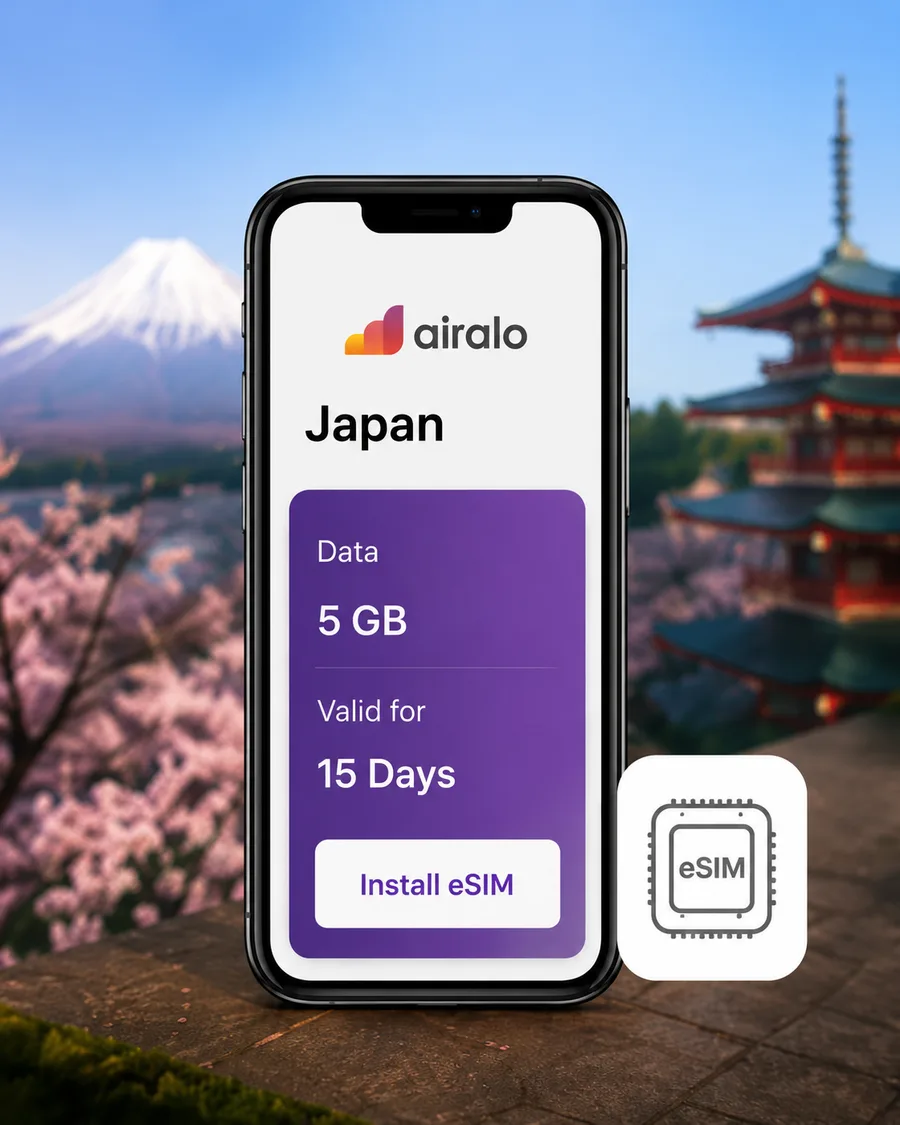 14-day connectivity
Airalo Japan eSIM
Maps and transport checks across a two-week route
Why it may fit
A prepaid eSIM avoids airport pickup and keeps bus, weather and rail information available between cities. Confirm device compatibility, network and live price before purchase.
Before booking
Check the live price, availability, eligibility, and terms before paying.
For travel insurance, compare medical cover, trip interruption, prepaid costs and activity exclusions in the Japan travel insurance guide. Buying a policy does not make a winter mountain transfer risk-free.
Pacing Rules for a Trip That Still Feels Good on Day 12
- Keep one half-day unassigned in Tokyo and Kyoto.
- Do not plan a day trip the morning after a late arrival.
- Forward the large suitcase before the route's most awkward transfer.
- Put the most important outdoor day where it can move.
- Treat museum-heavy or emotionally difficult days as full days.
- Spend the last night within a direct, well-understood trip of the departure airport.
The best two-week route is not the one with the most famous names. It is the one where Day 13 still contains curiosity rather than only laundry, sore feet and a train you cannot miss.
Editorial route and source review: October 17, 2026. Primary sources: official Japan Rail Pass prices, Japan Rail Pass conditions, official Kanazawa access guide, official Shirakawa-go access guide, official Takayama access guide, official Hiroshima–Miyajima access guide, JR West ticket search. Fares, bus reservations, timetables, taxes and operating conditions change; confirm them for the travel date.
Make it your trip
Still planning your Japan trip?
Pick the question on your mind. Compare your options, check the details and take one more thing off your list.
Would a JR Pass save you money?
Add your train journeys and compare individual tickets with the nationwide pass. See which costs less for your route.
Calculate my rail costs
Which eSIM fits your Japan trip?
Maps, messages, hotspot use: compare five providers by data allowance, network and plan limits before you choose.
Find my Japan eSIM
What should your travel insurance cover?
Compare medical cover, cancellation and activity limits across five options, with the exclusions worth checking.
Compare cover & limitsFrequently Asked Questions
No. Two weeks is enough to see Tokyo and Kyoto at a humane pace, include one day trip, and add either Hiroshima and Miyajima or Kanazawa, Shirakawa-go and Takayama. The key is limiting the route to a manageable number of bases rather than filling every spare night with another city.
Choose Hiroshima and Miyajima for modern history, a sacred island and a simple Shinkansen extension west. Choose Kanazawa and Takayama for gardens, preserved districts, mountain scenery and a slower contrast with Tokyo and Kyoto. The Alps route requires more bus planning and is more weather-sensitive in winter.
Do not buy it automatically. The adult ordinary 14-day pass is ¥80,000 through the official online channel. Compare individual tickets and, for the western extension, a shorter regional pass. The Alps route includes highway buses outside nationwide JR Pass coverage.
Use 13 nights of your actual room quote plus 14 days of meals, local travel and activities, then add intercity tickets and a contingency. The worked example in this guide totals ¥308,500 per person using explicitly hypothetical inputs; it is not a market average or bookable package.
Four nights in Tokyo and four in Kyoto is a strong first-trip core. It provides three usable sightseeing days in each region without turning arrival and transfer days into races. The remaining five nights can support Hiroshima–Miyajima or Kanazawa–Takayama plus a final airport night.
Technically yes, but it creates a fast trip with more transfers and less time in each place. For most first-time visitors, choose one extension. Combine both only if transport itself is part of the experience and you are comfortable reducing Tokyo or Kyoto.

Written by
JAPANODE
Based in Japan, sharing real travel tips & local insights for visitors. Follow us on Instagram @thejapanode for daily Japan content.
You Might Also Like
 Itinerary
10-Day Japan Itinerary: Tokyo, Mt Fuji, Kyoto, Himeji & Ise
12 min read
 Itinerary
4-Day Kansai Itinerary: Kyoto, Osaka & Nara (2026 Local's Guide)
18 min read
 Itinerary
7-Day Japan Itinerary for First-Timers: Tokyo, Hakone, Kyoto & Osaka (2026)
20 min read
 Transportation
Is the JR Pass Worth It in 2026? Prices & Break-Even Routes
15 min read